🇬🇱 Greenland Travel Guide
A Land of Ice, Silence, Vast Horizons & Deep Inuit Heritage
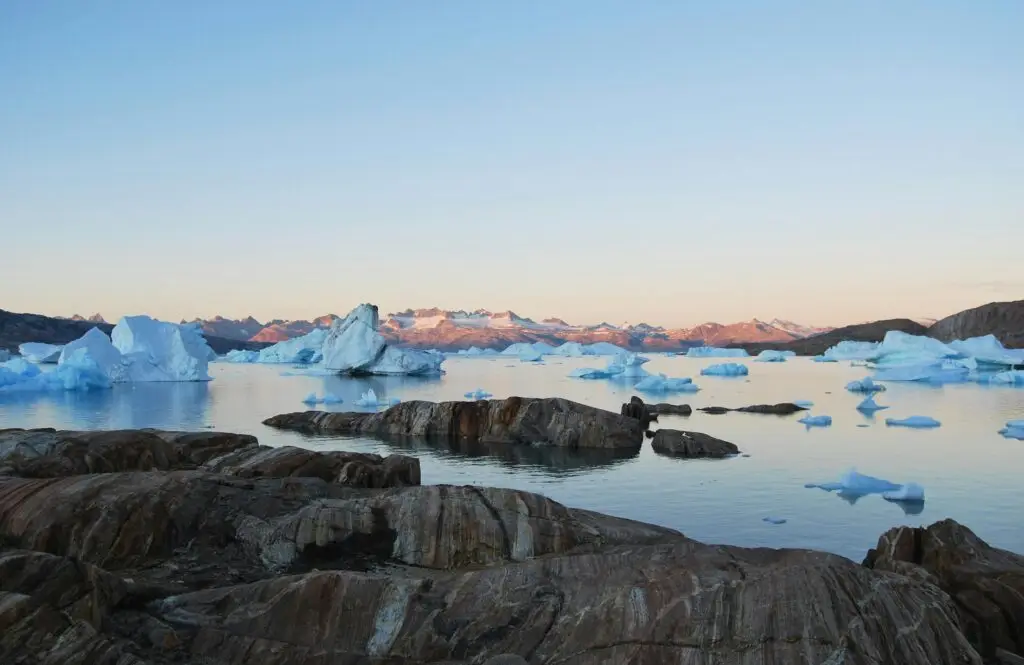
Greenland is a place that feels almost beyond imagination. It is not a destination you simply visit; it is a world you enter. A world of colossal icebergs drifting through deep-blue fjords, glaciers that crack and thunder in the distance, mountains carved by ancient ice, and skies that glow pink, gold or deep violet depending on the season. It is a land where silence has weight. Where the air is so clear it feels like glass. Where life adapts to extremes in ways that are both fragile and resilient. Where ancient Inuit traditions shape daily existence as naturally as the tides and seasons.
Greenland is the largest island in the world, yet one of the most sparsely populated. Most of its land is covered by the Greenland Ice Sheet, a massive body of ice that holds stories thousands of years old. Human life exists only along the edges of the coast, in colorful villages perched on rock, surrounded by mountains, sea ice and ever-changing weather. There are no highways connecting towns. Instead, travel happens by boat, helicopter, snowmobile or dogsled. Distances feel vast not just physically but emotionally. Every journey feels like an expedition, even if it’s only between neighboring settlements.
But perhaps the strongest impression Greenland gives is a sense of pure, untouched honesty. The landscapes are raw and elemental. The culture is grounded in connection to nature. Time feels slower. Light feels sharper. And the land seems to breathe with a rhythm older than human memory.
Part 1 of this Greenland guide introduces you to the island’s atmosphere, culture, climate, and the first major region: Nuuk, the capital — a place where tradition and modernity meet at the edge of ice and sea.
The First Impression — A World That Feels Like the Edge of the Earth
Your first moment in Greenland is unforgettable. As your plane descends, you see enormous mountains rising from cold water, their dark rock dusted with snow even in summer. Icebergs drift like silent sculptures. Fjords open like long, deep corridors between cliffs. There are no forests, no big cities, no sprawling suburbs — just raw nature stretching endlessly in every direction.
The air feels colder, cleaner and sharper the moment you step outside. It carries the scent of sea salt, ice and stone. The light is incredibly bright, almost silver, as if the sun is touching the ground more directly. The silence is deep, interrupted only by distant dogs barking or the gentle hum of fishing boats.
Everything feels vast.
Everything feels ancient.
Everything feels emotionally powerful.
Greenland doesn’t overwhelm you with noise or movement; it overwhelms you with space, with simplicity, with a sense of being very close to the natural world.
For many visitors, the first breath of icy Greenlandic air becomes a moment of realization: you are far from everything, yet you feel strangely at peace.
The Climate — A Land Defined by Seasons, Light & Cold
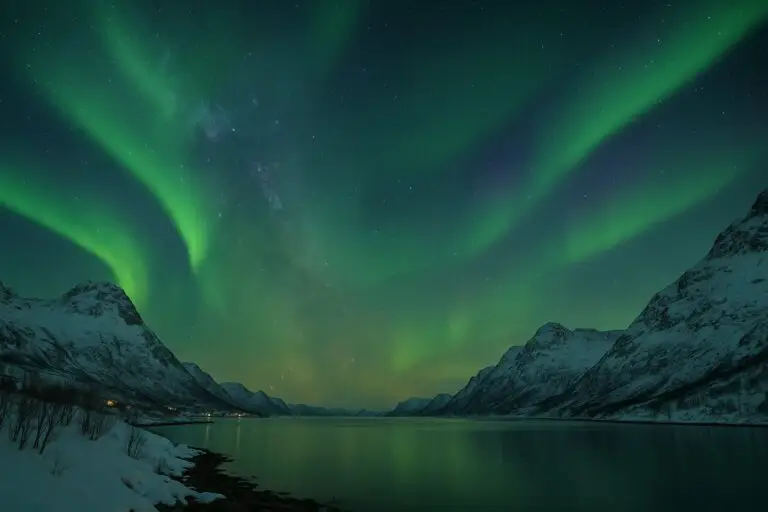
Greenland’s climate shapes every part of life. Winter brings long darkness, frozen seas, blizzards and deep cold. Days are short, nights stretch endlessly, and the aurora dances across the sky in veils of green light that seem almost alive. The cold is not just a temperature; it is a presence. It makes the air crisp, the landscapes sharp, the silence deeper. The world becomes white and blue, softened by snowdrifts and illuminated by the glow of streetlamps on ice.
Summer transforms everything. The sun barely sets, bathing mountains, fjords and icebergs in soft golden light at midnight. Flowers bloom between rocks. Children play outside at 1 AM. Fishermen work long hours. The sea opens again. The ice melts and breaks apart. Birds fill the sky. Whales migrate along the coast. The entire island feels awake, energized, stretched into daylight.
Greenland’s climate teaches patience, respect and adaptability. It shapes culture, diet, housing, transportation and even the rhythm of conversations. Life here follows nature, not the other way around.
Inuit Culture — A Deep Connection to Land, Animals & Ancestors
Greenland’s identity is inseparable from Inuit culture. For thousands of years, Inuit communities have lived in harmony with the harsh Arctic environment, developing knowledge, traditions and values that reflect deep respect for nature. This culture is not a relic of the past — it is thriving, evolving and alive in daily life.
Inuit culture emphasizes community, sharing, storytelling, resilience and creativity. Music, dance and drum traditions are passed down through generations. Crafts like tupilak carving, beadwork, sealskin clothing and kayak building carry ancestral knowledge. Hunting remains deeply important — not for sport, but for cultural identity, survival and connection to the land.
Language holds this world together. Greenlandic, or Kalaallisut, flows like a natural melody, rich with words describing ice, weather and relationships. Many Greenlandic expressions carry meanings linked to the environment — words for types of snow, forms of ice, kinds of wind or emotional states tied to the land.
Inuit culture teaches that humans are not separate from nature but part of it. Every mountain, every fjord, every iceberg holds meaning. Greenland is a place where culture and landscape are woven together in one continuous story.
Nuuk — A Small Capital with a Big Heart
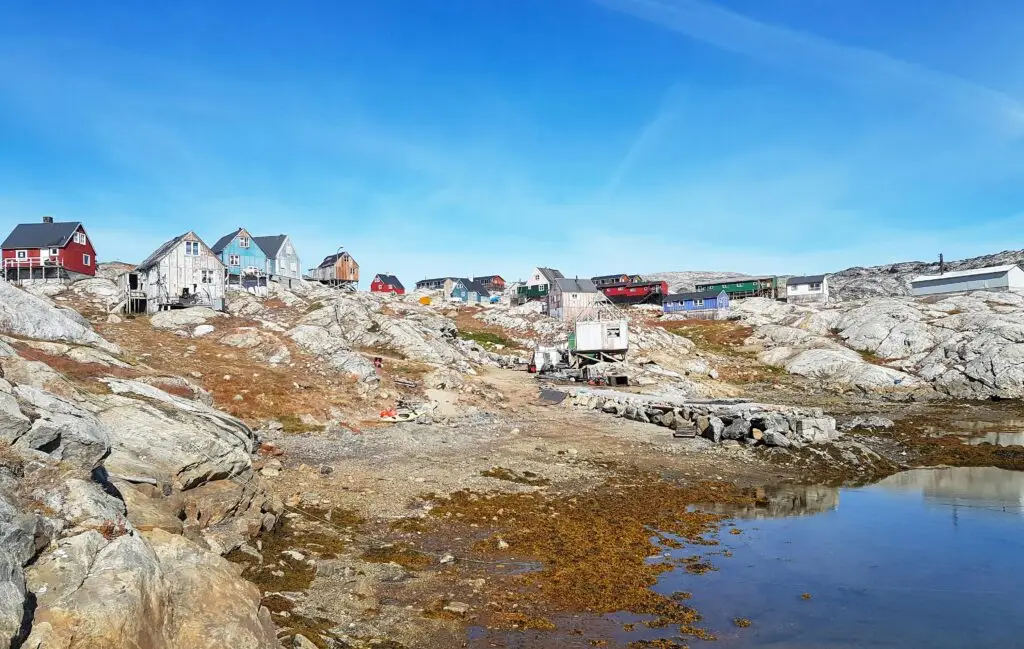
Nuuk, the capital of Greenland, is unlike any other capital on earth. It is small, intimate, colorful and surrounded by enormous nature. Sitting at the edge of a long fjord system, the city is framed by mountains rising sharply into the sky and water stretching deep into the horizon. The houses are painted in bright shades of red, yellow, green and blue, standing out against rock and snow like cheerful strokes of paint.
Nuuk feels modern yet deeply traditional. It has museums, cafés, government buildings, local fashion boutiques, fishing harbors, schools and a vibrant art scene. But it also has a closeness to nature that makes the city feel peaceful and grounded. You can walk from downtown to the water in minutes. You can see whales just outside the harbor. Snow falls softly on quiet streets. The sea ice forms close to the shoreline in winter. The mountains feel ever-present, like silent guardians watching over the city.
Walking through Nuuk, you feel a blend of cultures — Greenlandic, Danish, international — woven together into something unique. The atmosphere is friendly, warm and genuinely welcoming.
Daily Life in Nuuk — A Blend of Tradition & Modern Arctic Living
Life in Nuuk is shaped by contrasts. On one street, you see modern apartments overlooking the fjord; on another, traditional wooden houses stand proudly with brightly colored facades. People commute to work, study at the university, shop in small grocery stores, drink coffee in local cafés and gather for music events in the evening. Yet at the same time, hunting boats rest in the harbor, dogsled teams wait on the outskirts of town, and the smell of dried fish hangs gently in the air near traditional markets.
Weather influences everything. On stormy days, wind sweeps through the city with incredible force, waves crash against rocks, and visibility sometimes vanishes in a curtain of snow. On quiet sunny days, the fjord sparkles, children play outside and locals take long walks along the coastline.
The people of Nuuk balance these extremes with resilience and humor. Conversations are warm. Neighborhoods feel like communities. The city moves at a slower pace, but with purpose.
The Nuuk Fjord — A Vast World of Mountains, Water & Light
One of Nuuk’s greatest treasures is the enormous fjord system that stretches behind the city — one of the largest fjords in the world. Even a short boat ride takes you into a world of deep tranquility, where the only sounds are wind, waves and the distant break of ice.
The fjord is home to whales, seals, seabirds and shifting pack ice. Mountains rise in jagged shapes, their peaks covered in snow even in early summer. Waterfalls slide down cliffs in thin white threads. Icebergs drift gently, glowing blue in sunlight. The air feels fresher, cleaner and more silent the farther you travel.
Being in the Nuuk fjord reminds you how small humans are compared to nature — yet how deeply connected we can feel to it.
Water, Ice & Color — The Visual Poetry of Nuuk
Nuuk changes constantly with weather and light. On some days, low clouds hang over the mountains, turning the world into shades of grey and silver. On others, the sky glows bright blue and the fjord reflects the light like glass. In winter, the city becomes a world of white snowdrifts, glowing windows and aurora shimmering above rooftops in hypnotic green waves. In summer, sunlight lasts deep into the night, painting buildings and mountains in warm golden tones.
Color is everywhere — in houses, in the sky, in the ice, in traditional clothing, in fishing boats floating at the harbor. Nuuk feels like a living painting, always shifting and always full of beauty.
Cultural Life — Museums, Art & Music in the Arctic
Despite its size, Nuuk has a vibrant cultural scene. The National Museum of Greenland holds ancient artifacts, Inuit tools, traditional clothing, kayaks, masks and the famous Qilakitsoq mummies — preserved naturally in ice for over 500 years. The museum tells the story of Greenlandic history with depth and emotion, showing how deeply the island’s people have adapted to their environment.
Local artists create paintings reflecting ice, mountains, animals and spiritual symbolism. Sculptors carve mythical figures from stone and bone. Traditional drum dancers perform powerful, rhythmic movements. Musicians blend ancient melodies with modern sound. Nuuk’s culture is alive, proud and expressive.
The city’s cultural life reflects Greenland itself — grounded in deep heritage, shaped by nature and constantly evolving.
The Emotion of Nuuk — A First Gateway into the Arctic World
Nuuk gives visitors their first emotional understanding of Greenland.
A sense of scale.
A sense of silence.
A sense of strength.
A sense of resilience.
A sense of beauty shaped by cold, light and ancient land.
It is a place where modern life meets traditional heritage, where people live with purpose and where nature remains the strongest force in daily existence. You leave Nuuk with a deeper appreciation for life in the Arctic and a feeling that you have entered a world far beyond ordina
Ilulissat, Icefjord, Disko Bay, Midnight Sun, Northern Lights & the Moving Silence of the Arctic
If Nuuk introduces you to Greenland’s cultural heart, then Ilulissat introduces you to its soul. This small town on the western coast is one of the most extraordinary places on Earth — a place defined not by people or buildings but by ice. Ice that moves, breathes, cracks, glows, floats and transforms the landscape into something almost otherworldly. Ice that is alive.
Here, nature is not a backdrop. It is the main character. Ilulissat sits at the mouth of the Ilulissat Icefjord, a UNESCO World Heritage Site where icebergs the size of skyscrapers drift slowly into Disko Bay. They groan, crack, shatter and rotate as they move, creating sounds that echo across water like ancient drums. The light reflects off them in shades of blue, silver and crystal white. Each iceberg feels like a sculpture carved by time.
This is the Greenland most people dream of — a world of deep silence, enormous frozen shapes, endless horizons and the overwhelming beauty of the Arctic.
Part 2 explores this world in detail, from the icefjord to the midnight sun, from dogsled traditions to the emotional impact of walking along the edge of a moving glacier.
Arrival in Ilulissat — A Town Surrounded by Ice Giants
Flying into Ilulissat is an experience that stays with you forever. As the plane descends, the landscape becomes a maze of icebergs — bright white shapes floating in deep blue water. Some are small, sharp and jagged; others are enormous, rising from the sea like frozen mountains. Sunlight reflects off them in blinding flashes. The icefjord extends inland like a frozen river, stretching beyond the horizon.
The town itself appears suddenly, perched on rocky hills dotted with colorful houses. Red, yellow, blue and green homes stand against dark cliffs, creating a burst of color in an otherwise icy world. Dogs bark in the distance. Fishing boats glide across the water. The air is crisp and cool, carrying the clean scent of salt and snow.
Ilulissat feels remote, yet full of life — a community shaped by ice, weather, and deep cultural heritage. It is a place where the line between human existence and powerful nature feels thin, yet beautifully balanced.
The Ilulissat Icefjord — A Moving World of Ice & Light
The Ilulissat Icefjord is not just a natural wonder; it is one of the most dramatic, awe-inspiring landscapes on the planet. This fjord is fed by Sermeq Kujalleq, one of the fastest-moving glaciers in the world. Ice moves from the glacier toward the sea at astonishing speed, breaking off into massive icebergs that float out into Disko Bay.
Standing at the edge of the icefjord feels like standing before a sleeping giant. The landscape shifts constantly. Ice groans as pressure builds. Distant cracks echo like thunder. Pieces of ice fall, shatter and send ripples through the fjord. The wind carries the cold breath of the glacier.
In the early morning, the ice glows in soft pink and lavender tones. By midday, sunlight hits the icebergs directly, turning them bright white and electric blue. At sunset, the colors deepen — gold, orange, red, violet — each reflecting on ice the way fire reflects on water.
Every moment looks different. Every moment feels alive.
Walking along the wooden paths at the Icefjord Centre, you feel surrounded by silence so powerful it presses gently against your ears. The only sounds are wind, water and the deep, ancient voice of the ice.
Sermeq Kujalleq — One of Earth’s Most Impressive Glaciers
Sermeq Kujalleq is not easily seen from town, but its presence is everywhere — in the ice that floats through Disko Bay, in the sound of cracking glacier walls, in the cold breath that drifts across the fjord. This glacier is enormous, moving at speeds of up to 40 meters per day in summer, making it one of the most active glaciers in the Arctic.
Scientists have studied Sermeq Kujalleq for decades because it provides insight into climate change, sea level rise and the movement of ancient ice sheets. But standing before it, science feels secondary. What you feel most is the weight of time. This ice is thousands of years old. It carries air bubbles from distant eras. It holds memories of climates long gone. And as it moves and breaks, you witness a process older than humanity itself.
The emotional impact of Sermeq Kujalleq is immense — it makes you feel small, humbled, and deeply connected to Earth’s history.
Disko Bay — A World of Floating Cathedrals
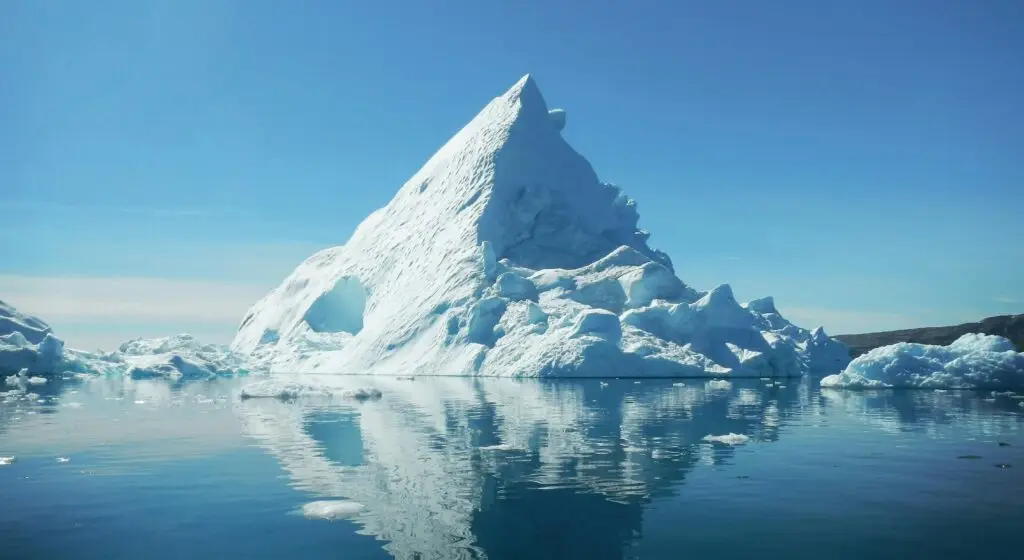
The icebergs that drift from Ilulissat eventually scatter across Disko Bay, creating a world of floating shapes that look like giant cathedrals, castles, arches, towers and abstract sculptures. Each iceberg is unique. Some rise sharply like jagged peaks. Others have smooth, curved sides shaped by waves and sun. Some are deep blue, indicating ancient compressed ice. Others are white and luminous.
Seeing Disko Bay from a boat is one of Greenland’s most unforgettable experiences. The water is calm, almost glasslike. Icebergs drift slowly. Sunlight reflects off their surfaces, creating glowing halos. Sometimes you hear loud cracks as pieces of ice fall into the water. Sometimes you see seals resting on ice floes, their dark bodies contrasting with the bright ice.
The bay feels like a floating gallery of nature’s most impressive artwork.
At night, if the aurora borealis appears, the scene becomes even more surreal — green light dancing above white ice, creating one of the most magical views in the world.
The Midnight Sun — A World Without Darkness
In summer, Ilulissat experiences the midnight sun, a phenomenon where the sun remains above the horizon for weeks. This continuous light transforms everything. The sky glows in soft gold through the entire night. The sea reflects warm colors like molten metal. People walk outside at midnight wearing sunglasses. Children play long after usual bedtime. Fishermen work late into the night.
The midnight sun feels dreamlike. You lose track of time. Days blend together. The constant light gives a sense of freedom, of endless possibility. Even at 2 AM, the icefjord glows softly, icebergs shining like lanterns on the water.
The light feels alive — warm, endless, and deeply peaceful.
The Northern Lights — Dancing Spirits in the Polar Sky
When winter arrives and darkness returns, Ilulissat becomes one of the world’s best places to witness the aurora borealis. The cold air creates clear skies. The long nights offer hours of viewing. And the lack of light pollution makes the colors incredibly vivid.
Standing outside on a quiet winter night, wrapped in warm clothing, you look up and see green ribbons spreading across the sky like flowing water. Sometimes the aurora moves softly, shifting in gentle curves. Sometimes it dances rapidly, flickering like flames. Sometimes it forms a giant arc across the entire horizon. The colors change — green, yellow, white, pink, purple — blending in ways that feel impossible to describe.
The aurora is one of the most emotional experiences in Greenland. Many locals say it feels like the sky is alive, like spirits are dancing above the ice.
It is a moment where time seems to stop.
A moment where you realize how vast the universe is.
A moment that stays inside your heart forever.
Sled Dogs — The Heartbeat of Arctic Tradition
Ilulissat is also one of the largest sled dog towns in Greenland.
The dogs live in open kennels outside the town, their howls rising together in a rustic, haunting harmony. They are strong, with thick fur, bright eyes and a deep instinct to run. Dogsledding is more than a sport or activity — it is cultural heritage. For centuries, sled dogs helped hunters travel long distances over ice, pull heavy loads and survive harsh winters.
Riding a dogsled in Ilulissat is an emotional experience.
The dogs pull with powerful strides.
The sled glides across snow in soft silence.
Mountains rise all around you.
The wind brushes your face sharply.
The world feels white, open, infinite.
Sled dogs represent the deep connection between people and nature in Greenland — a partnership built on respect, endurance and trust.
Hiking Along the Icefjord — Endless Horizons & Arctic Wind
The hiking trails around Ilulissat are some of the most beautiful in the Arctic. Wooden boardwalks lead to viewpoints above the icefjord. Rocky paths climb small hills, offering sweeping views of icebergs drifting out to sea. The air is crisp. The ground is covered in moss, wildflowers, small shrubs and smooth granite shaped by glaciers thousands of years ago.
Walking here feels like walking on the edge of the world.
The silence moves with you.
The wind carries the scent of snow and ocean.
The icefjord lies deep and vast below.
Shadows shift across ice as clouds drift above.
Light changes constantly, turning the landscape into a living painting.
It is one of the most spiritually intense hiking experiences on earth.
Life in Ilulissat — Between Silence & Daily Rhythm
Despite being surrounded by monumental nature, Ilulissat is a lively town with grocery stores, cafés, restaurants, schools, a hospital and a harbor full of fishing boats. People gather in small bakeries, go hunting with family, take children to school on snowmobiles, meet friends at the local sports hall, or head out onto the fjord to fish for halibut.
The mix of ancient tradition and modern life is everywhere.
A fisherman uses a smartphone while repairing nets.
A child carries a backpack decorated with icebergs.
Hunters return with seal meat while tourists drink coffee in warm cafés.
Dogs bark at snowmobiles.
Boats pass under the glowing midnight sun.
Ilulissat feels balanced — a place where culture adapts without losing its heart.
The Emotional Essence of Ilulissat & Disko Bay
Ilulissat is one of the few places in the world that can change you.
It changes the way you see nature.
It changes the way you understand silence.
It changes your sense of scale, of time, of life itself.
You remember:
The blue glow of ice.
The thunder of calving glaciers.
The soft breath of cold wind.
The golden glow of midnight sun.
The dance of aurora above frozen world.
The deep cry of sled dogs in the night.
The stillness of water reflecting icebergs like mirrors.
The overwhelming beauty of a world shaped entirely by nature.
Ilulissat is not just a location — it is an experience, a memory, a feeling that remains long after you leave.
Sisimiut — A Town Between Mountains & Sea
Sisimiut is Greenland’s second-largest town, though “large” is relative here. With only a few thousand inhabitants, it feels intimate, colorful and vibrant — a town built between steep mountains and icy ocean, where traditional hunting culture mixes with modern Arctic living in an effortlessly natural way. As you approach Sisimiut by boat or plane, the view is striking: brightly painted houses cling to rocky hillsides, streaks of snow lie between slopes even in summer, and the coastline curves around sheltered inlets where fishing boats gently move with the tide.
Sisimiut has a dynamic energy. The town feels alive with movement — fishermen loading their boats at dawn, sled dogs barking in the cold morning air, children running between houses, snowmobiles buzzing toward distant hills in winter, hikers preparing for long treks across tundra in summer. The wind carries the smell of saltwater, fish, snow and burning wood from homes where heaters crackle softly during colder months.
Walking through Sisimiut, you feel the presence of the mountains everywhere. They rise sharply behind the town, like massive stone guardians. In winter, they are completely covered in snow, reflecting soft Arctic light. In summer, they reveal deep green moss, rugged rock and streams of melting water. The landscape shapes the rhythm of life — when people travel, hunt, fish, hike, or simply sit outside to breathe the cold, refreshing air.
Sisimiut is also a cultural town. The local museum, housed in old wooden buildings painted red, showcases the history of Inuit migration, hunting traditions, early colonial trade, dogsled culture and everyday life across centuries. Craftsmen carve reindeer antlers and whale bone into intricate designs. Fishermen bring halibut and char to the market. The town feels proud, warm and grounded.
The Arctic Circle Trail — A Journey Through Silence & Wide Earth
Sisimiut is the endpoint of the Arctic Circle Trail, one of the most iconic long-distance hikes in the Arctic. The trail begins in Kangerlussuaq and stretches more than 160 kilometers across untouched wilderness — a world of lakes, valleys, tundra, mountains, wildflowers, reindeer, rocks and endless open sky. There are no roads, no towns, no noise. Just nature, weather and time.
Hikers who complete the trail arrive in Sisimiut transformed by the silence and vastness they experienced. Many say the journey strips away everything unnecessary, leaving only the essential connection between self and landscape. Sisimiut, with its warm lights, colorful houses and comforting human presence, becomes a welcome embrace after days spent in remote wilderness.
Even if you do not hike the entire trail, the first sections around Sisimiut offer a taste of this wide, beautiful world. Lakes reflect the sky with perfect clarity. Arctic cotton flowers sway in the wind. Reindeer move gracefully across slopes. The land feels ancient, calm and endlessly open.
Kangerlussuaq — Gateway to the Ice Sheet
While most towns in Greenland lie on the coast, Kangerlussuaq sits inland, surrounded by vast tundra and dry Arctic landscapes shaped by glaciers over thousands of years. The airport here is Greenland’s largest, originally built by the U.S. military during World War II. But beyond its runways, Kangerlussuaq offers a unique natural experience — one of the easiest and most dramatic access points to the Greenland Ice Sheet.
Driving from town toward the ice cap feels like a journey across different planets. The road — one of the longest in Greenland — passes through rolling hills covered in low vegetation, crosses small rivers, climbs rocky slopes and eventually reaches a viewpoint where the ice sheet looms like a frozen ocean stretching endlessly into the distance. The ice rises in bright white and blue curves, cracked in deep lines that catch the sunlight. The air becomes colder, sharper. The silence becomes even more profound.
Standing at the edge of the ice sheet is an emotional moment. This ice holds more than 100,000 years of history. Every line, bubble and layer inside it tells a story of climate, temperature and ancient atmosphere. It is one of the last true frontiers of Earth — a place where human presence feels tiny, temporary and fragile.
Kangerlussuaq is also home to musk oxen, one of the most iconic animals in Greenland. These massive creatures, with thick fur and heavy curved horns, roam freely across the tundra. Seeing one in the wild feels like witnessing a prehistoric survivor walking across a timeless landscape.
In winter, Kangerlussuaq is one of the best places in Greenland to see the northern lights. The clear inland skies create ideal conditions for aurora displays that stretch across the entire sky in dramatic arcs of green and purple.
South Greenland — A Softer Arctic of Fjords, Farms & Gentle Valleys
Traveling south brings you to one of Greenland’s most surprising regions — a place where the Arctic reveals its softer side. Unlike the dramatic ice of Ilulissat or the harsh tundra of Kangerlussuaq, South Greenland is home to rolling green hills, farms with grazing sheep, quiet fjords, blooming wildflowers in summer and some of the most fertile land in the Arctic.
This region feels peaceful, almost pastoral. Small villages sit beside calm water, their houses painted in bright colors. Icebergs still drift through fjords, but they seem gentler, more spaced out, glowing softly in the long summer light. People here farm sheep, grow small crops, fish along the coast and live in communities that feel close-knit and emotionally warm.
Qaqortoq — The Bright Southern Pearl
Qaqortoq is the largest town in South Greenland and one of the most beautiful in the entire country. It sits on a hillside overlooking a blue fjord, surrounded by mountains that glow golden in summer and white in winter. The town feels open, colorful and filled with life. Streets curve around rocky hills. Children play near the harbor. Fishermen unload their catch at the docks. People sit outside cafés enjoying the mild southern air.
The town is known for its art. Stone sculptures are carved directly into large rocks around the town, creating an outdoor gallery that gives Qaqortoq a creative, expressive atmosphere. Traditional Greenlandic houses stand beside modern buildings, blending old and new in a harmonious way.
The lake in the center of town reflects the surrounding houses in soft, still water. In summer, the hills bloom with flowers. In winter, everything becomes quiet and snow-covered, the town glowing with warm yellow light.
Narsaq — Fjords, Ice, Valleys & the Whisper of Old Norse Settlements
Further south, Narsaq sits between fjords filled with icebergs drifting slowly from inland glaciers. The land here feels generous compared to northern Greenland — green slopes, fertile valleys and gentle hills. Farmers tend sheep. Small boats move through calm water. The mountains behind town rise in layered shapes, their peaks catching the golden light of the midnight sun.
Narsaq is also one of the best places to explore Norse history. Greenland was once home to Viking settlers who arrived around the year 985 AD, building farms and small communities in these southern valleys. Their ruins remain today — stone walls, ancient foundations, forgotten fields. Walking through these ruins feels surreal. You stand in a peaceful Greenlandic valley, surrounded by mountains and icebergs, while touching stones that were placed there a thousand years ago by Norse hands.
The Norse presence in Greenland ended mysteriously. Many theories exist: climate change, conflicts, disease, isolation. But the land still holds their memory, preserved under moss and Arctic wind.
Hvalsey Church — A Silent Witness to a Lost Civilization
One of the most important Norse ruins in Greenland is Hvalsey Church, located in a quiet fjord near Qaqortoq. Built around the 14th century, it is the best-preserved medieval building in the entire Arctic. The stone walls still stand tall, surrounded by grass, mountains and water sparkling under the sun.
Hvalsey Church is emotionally powerful.
Standing among its weathered stones, you feel history pressing gently around you.
You imagine the final Norse wedding held here in 1408, the last written record of Greenland’s Norse population.
You feel the silence of centuries.
You feel the wind moving through empty doorways.
You feel the weight of time, loss and mystery.
The ruin stands alone, ancient and resilient — a reminder that cultures rise and fall, but the land remains.
Sheep Farms & Southern Life — The Human Side of Greenland’s Green Valleys
South Greenland is the only region with significant agriculture. Small sheep farms sit near fjords, their red barns and simple houses creating postcard-perfect scenes. During summer, sheep graze across open slopes. Farmers move between fields with quiet determination. Families gather outside during long days of sunlight, enjoying the mildest climate in Greenland.
Life here feels deeply connected to land and seasons.
In summer, people pick berries, harvest small crops, travel by boat through calm fjords and enjoy the warmth that fills the valleys.
In winter, snow returns, ice forms on water, and communities come together indoors to share food, stories and warmth.
The south feels softer than the rest of Greenland — not weaker, but gentler, more welcoming, more human.
The Emotional Rhythm of West & South Greenland
This region of Greenland gives travelers a deeper understanding of the island — not just its ice, but its life.
You feel:
The warmth of small communities.
The pride of hunters and fishermen.
The ancient presence of Norse ruins.
The soft green valleys of summer.
The cold breath of winter winds.
The vastness of the inland ice sheet.
The gentle sway of boats in southern fjords.
The resilience of people adapting to harsh conditions.
The beauty of snow-covered mountains glowing under northern lights.
The feeling of standing between past and present, ice and greenery, silence and human warmth.
West and south Greenland reveal the full spectrum of Arctic life — powerful, fragile, ancient, modern, harsh and incredibly beautiful.
East Greenland, Tasiilaq, Ammassalik, Remote Arctic Life, Polar Bears, Ice Caves, Expeditions & the Emotional Heart of the Far North
East Greenland is unlike any other part of the country. It feels wilder, more remote, more dramatic and more mysterious. If West Greenland shows the balance between modern life and ancient nature, East Greenland shows the raw essence of the Arctic. The landscapes are sharper, the mountains steeper, the glaciers more massive, the weather more unpredictable, and the communities more isolated. Everything feels vast, untouched and emotionally powerful.
Only a few thousand people live in East Greenland, spread across scattered settlements carved into rocky coastlines. Travel is difficult. Storms roll in quickly. Sea ice blocks access for long periods. But the reward for reaching this part of the world is indescribable. East Greenland is a place where nature dominates completely — shaping the land, the culture, the silence, and the rhythm of everyday life.
Part 4 explores this side of Greenland: from the remote settlement of Tasiilaq to the towering fjords and polar bears of Ammassalik, from winter’s deep darkness to the glowing aurora over frozen seas, from ice caves to the emotional essence of what it means to stand at the edge of the Earth.
Tasiilaq — A Remote Arctic Town Surrounded by Jagged Mountains & Deep Fjords
Tasiilaq, the largest town in East Greenland, sits on Ammassalik Island, surrounded by dramatic mountains rising sharply from icy water. The first impression is breathtaking. Peaks with razor-sharp ridges tower over the town. Houses painted in bright colors cling to rocky slopes. The fjord cuts deep into the landscape, creating a long channel of dark water filled with floating ice. Everything feels steep, vertical, elemental — as if the landscape has been carved by a giant hand.
The atmosphere in Tasiilaq is different from anywhere else in Greenland. It feels quieter, more intense, more connected to extreme nature. The wind carries the smell of salt, ice and snow. Dogs bark from distant kennels. The mountains echo with the sound of shifting ice. Clouds roll between peaks in heavy grey waves. The town feels small compared to the overwhelming landscape, but this contrast gives it a special charm — a sense of humanity living in respectful harmony with wild Arctic forces.
Walking through Tasiilaq, you see daily life unfold with simplicity and resilience. Children slide down snowy slopes in winter. Hunters prepare sleds for long journeys across frozen fjords. Fishermen return with halibut, char or seal. Families gather inside warm homes as the cold presses against the windows. The town feels alive yet calm, shaped by weather and tradition rather than rush or noise.
The Flower Valley — A Gentle Contrast to Harsh Mountains
Just outside Tasiilaq lies a place that surprises many visitors: the Flower Valley. In summer, this lush valley bursts with Arctic wildflowers, mosses, small streams and gentle slopes that contrast beautifully with the jagged mountains surrounding it. Pink, yellow, blue and white flowers bloom across the ground, creating a tapestry of color under the soft Arctic light.
Walking through the Flower Valley feels like stepping into a hidden oasis. The air smells fresh and earthy. Water flows gently through small rivers. The mountains rise like ancient walls on either side, framing the valley in dramatic beauty. In early summer, sunlight lasts nearly all day, giving the valley a warm golden glow that makes everything look magical.
It is one of the most peaceful places in East Greenland — a reminder that even the harshest landscapes hold moments of soft beauty.
Ammassalik Region — A World of Ice, Silence & Wild Nature
The region around Tasiilaq, known as the Ammassalik region, is one of the wildest places in the Arctic. Vast fjords stretch deep into the land. Glaciers carve valleys of blue ice. Mountains rise in sharp shapes, their peaks slicing into the sky. Sea ice covers the coast in winter, transforming the world into a white desert that feels endless and untouched.
Travel between settlements often happens by boat in summer and by dogsled or snowmobile in winter. Weather can change in minutes — calm one moment, stormy the next. The silence is immense. The landscapes are overwhelming. The distances feel enormous even when they are not far on a map.
The Ammassalik region is not just remote; it is spiritually powerful. This is the Arctic at its most raw and elemental — a place where every sound, every movement, every breath feels meaningful. A place where you understand that nature has the final word.
Polar Bears — The Wild Kings of East Greenland
East Greenland is the part of the country where polar bears are most often seen — not in towns, but along remote coasts, drifting sea ice and distant fjords. The presence of polar bears adds a sense of both danger and awe to the region. These animals are massive, strong and perfectly adapted to Arctic conditions. They move silently across ice, swim long distances through freezing water, and hunt seals with remarkable skill.
Most locals have deep respect for polar bears. They understand the power, intelligence and unpredictability of these animals. Encounters are rare for travelers, but the knowledge that polar bears roam the land adds a humbling sense of wilderness to every journey in East Greenland.
The polar bear is more than an animal here — it is a symbol of the Arctic itself.
Ice Caves — Blue Cathedrals Carved by Time
One of the most breathtaking experiences in East Greenland is exploring ice caves formed inside glaciers. These caves glow in shades of deep blue, turquoise and crystal ice. Light filters through thick layers of frozen water, creating patterns that look like stained glass in a cathedral. The air inside is cold and still. Every surface sparkles. The ice feels ancient, filled with tiny bubbles from air trapped thousands of years ago.
Walking inside an ice cave feels sacred.
You move slowly, carefully.
You hear faint sounds of melting water dripping in the distance.
Light shifts as clouds pass above the glacier.
You touch walls of ice that formed before human history began.
It is one of the purest, most emotional experiences in Greenland.
Ice caves change every year. New ones form as glaciers move and melt. Old ones collapse. They are temporary, fragile and extraordinary — a reminder of the ever-changing nature of ice.
Winter in East Greenland — Darkness, Storms & Northern Lights
Winter in East Greenland is intense. Darkness covers the land for long periods. Storms roar through fjords with incredible force. Snow falls in heavy waves, covering mountains, houses, boats and sled paths. Sea ice forms thick and strong, locking the coastline in a frozen grip that can last for months. The cold becomes a constant presence, sharp and powerful.
Yet winter also brings beauty. The aurora borealis dances across the sky in shimmering curtains of green, purple and white. The stars appear brighter in the long darkness. The snow reflects moonlight in soft blue tones. Dogsled teams move across frozen fjords in complete silence, creating a connection between land, animals and humans that feels ancient and timeless.
Life continues despite the conditions.
Hunters travel long distances.
Children play outside wrapped in thick clothing.
Families gather indoors with candles, hot meals and stories.
The community becomes closer, warmer, more united.
Winter in East Greenland is not just a season — it is an experience of endurance, beauty and respect for nature.
Summer in East Greenland — Light, Warmth & Endless Horizons
When summer arrives, East Greenland transforms completely. The sea ice breaks apart, drifting away in shimmering white pieces. The days grow long, then endless. Sunlight glows over the mountains for almost 24 hours a day. The land comes alive with color — green moss, blooming flowers, clear streams, and soft tundra that feels almost spring-like compared to the rest of the Arctic.
Boats return to the water.
Fjords open for travel.
Whales pass through coastal waters.
Birds fill cliffs and islands in enormous numbers.
Hikers climb steep mountain ridges for panoramic views of ice, sea and sky.
Summer feels like relief, celebration and renewal.
East Greenland smiles under the endless sun.
Dog Sledding — Tradition That Defines the Arctic Spirit
While West Greenland has sled dogs primarily north of the Arctic Circle, East Greenland’s entire culture is built on dog sledding. The dogs are strong, loyal and adapted to harsh conditions. Their thick fur protects them from freezing storms. Their endurance allows them to pull heavy sleds across long distances. Their instincts guide hunters safely through white landscapes where paths disappear under snow.
Dog sledding in East Greenland is not tourism — it is life.
It is tradition.
It is heritage.
It is identity.
Riding with a dogsled team across frozen fjords is an unforgettable experience.
The dogs move with power and rhythm.
The sled glides smoothly over snow.
Mountains rise on both sides.
The sky glows in soft winter light.
You feel connected to centuries of Arctic history with every movement.
Remote Villages — The Human Heart of East Greenland
Scattered along the coast are small settlements where life is humble, resilient and deeply rooted in tradition. Colorful houses stand against dramatic landscapes. Boats rest along rocky shores. Smoke rises from chimneys in winter. Children run along snow-covered paths. Hunters work with dogsleds, rifles and skin clothing. Women prepare food, sew clothing or gather with neighbors in warm community halls.
These villages feel emotionally powerful because they show the true strength of Arctic life — a life built on cooperation, respect and survival.
People rely on each other.
They share food, stories and warmth.
They live with patience, courage and deep understanding of nature.
Visiting these settlements is like stepping into a timeless world.
Expeditions — Greenland at Its Most Raw & Magnificent
East Greenland is home to some of the world’s most spectacular expeditions. Climbers scale granite peaks that rise in impossible angles. Kayakers paddle between icebergs in remote fjords. Skiers cross glaciers under endless sky. Photographers chase aurora and sunrise over frozen seas.
Every expedition feels like a journey into pure wilderness — untouched, unpredictable and breathtaking.
Here, you feel the true meaning of adventure.
Not adrenaline, but presence.
Not speed, but awareness.
Not challenge, but connection.
East Greenland is the kind of place where you rediscover what it means to be small, humble and alive.
The Emotional Essence of East Greenland — The Last Frontier of Silence
East Greenland reveals the deepest emotion of the Arctic — a sense of raw, overwhelming beauty that feels almost spiritual.
The mountains stand like ancient guardians.
The glaciers breathe with slow, powerful movement.
The ice glows in shades of blue that don’t exist anywhere else.
The wind carries the stories of ancestors across frozen fjords.
The sky dances with northern lights like a living painting.
You feel something in East Greenland that is rare in the modern world —
a sense of pure, untouched Earth.
A place where silence is not empty but full.
A place where cold becomes a teacher.
A place where light shapes emotion.
A place where distance feels infinite yet comforting.
A place where humans live in harmony with forces far greater than themselves.
East Greenland stays in your heart long after you leave.
It changes how you see nature.
It changes how you understand solitude.
It changes how you feel about the world.
It is not just a destination.
It is a memory carved deep into your soul.
 Related Articles
- Kakslauttanen Arctic Resort
- Top 10 Most Unique Places to Stay in Europe
- 10 Incredible Castles Around the World