
🇬🇩 Grenada Travel Guide
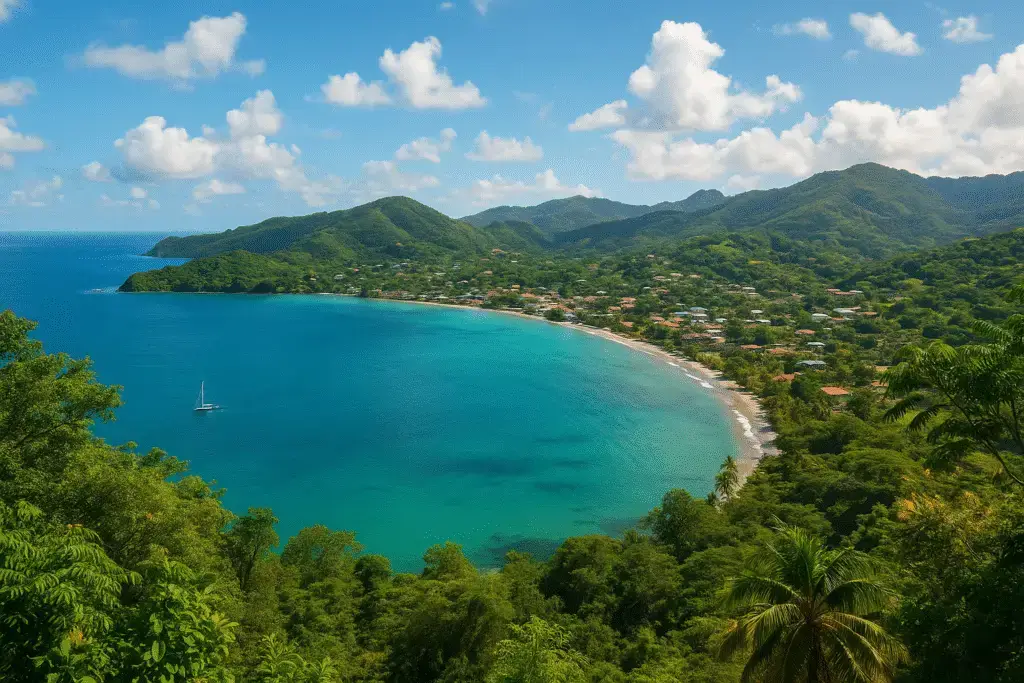
The Spice-Scented Island of Emerald Hills, Turquoise Bays & Caribbean Warmth
Grenada is an island that greets you first with scent. Before you even see the golden beaches or the emerald mountains, you smell nutmeg drifting through warm air, cinnamon carried on the breeze, cloves, cocoa, bay leaves, tropical fruits and the earthy sweetness of rain-soaked soil. It feels as if the island breathes spices. They grow everywhere — in gardens, in the hills, along the roadsides, in the forests. Grenada is not just a Caribbean island with beaches; it is a living fragrance, an island with a scent so deeply tied to its identity that locals simply call it “The Spice Isle.”
When you arrive, the air feels soft and warm. Palm trees sway gently. The hills rise like green velvet. The architecture glows with pastel Caribbean colors — pale blues, bright yellows, deep reds, warm oranges — each one shining under the island sun as if freshly painted by nature itself. The sea shifts constantly between shades of turquoise and sapphire. Fishing boats rock gently along the shore. The sound of waves is steady, patient and calming.
But Grenada is more than scenery. It is a place with soul. A place where people greet you with genuine warmth, where strangers start conversations easily, where storytelling is a natural part of life, and where the pace is slow enough to remind you what matters. It is an island where culture blends African heritage, French charm, British influence and pure Caribbean spirit into something distinctly Grenadian.
Part 1 of this guide explores the heart of Grenada’s culture, the colorful capital St. George’s, and the early emotional impression the island gives visitors — an impression that lingers long after you leave.
The First Impression — An Island Wrapped in Color, Light & Warm Breeze
Grenada feels alive from the moment your feet touch the ground. The airport is small and warm, with open windows that let the sea breeze drift inside. Outside, you see hills rising steeply from the coast, covered in dense green vegetation, and small houses painted in soft Caribbean hues. Taxi drivers greet you with easy smiles. The air smells sweet and earthy. Everything feels calm and inviting.
Driving from the airport toward St. George’s, the road curves gently along the coast. Blue ocean flashes between trees. Bougainvillea flowers spill over stone walls in bright pink clusters. Sea grapes sway in the wind. The hills appear layered, falling gently toward the shoreline. The light is bright but not harsh — a golden softness that makes everything look slightly magical.
Grenada feels untouched, authentic, grounded and full of charm. It gives you an immediate sense of belonging — like a place you’ve known before, even if you’ve never been here.
St. George’s — The Most Beautiful Capital in the Caribbean
St. George’s, built around a horseshoe-shaped harbor and surrounded by steep hills, is often considered the most picturesque capital in the Caribbean. It is a town of color, curves, cobblestones and colonial architecture. Red-roofed buildings climb the hillsides, stacked at different angles like pieces of an old Caribbean puzzle. The water in the harbor glows deep and calm, reflecting boats and the pastel facades of waterfront buildings. Everywhere you look, the scenery feels cinematic.
The town is small but filled with life.
Vendors sell spices in woven baskets.
Locals chat outside shops.
Church bells ring softly in the distance.
The scent of nutmeg cake and fresh bread drifts through the streets.
Bright murals decorate walls, telling stories of history and culture.
The light in St. George’s is special. In the morning, the sun rises over the hills, casting long shadows across the harbor. By midday, everything glows brightly. In the evening, golden light spills across the water as fishing boats return home. When night rises, the town lights shimmer on the calm ocean like scattered stars.
St. George’s feels warm, gentle, intimate and deeply alive.
The Carenage — A Harbor Full of Stories
The Carenage is the heart of St. George’s — a curved waterfront lined with historic warehouses, stone buildings, small cafés and moored fishing boats painted in bright colors. Walking along the Carenage feels like stepping into the island’s living history. Ships once docked here carrying spices, sugar, cocoa and rum. Today, the atmosphere remains working-class and charming, with fishermen unloading their catch and boats rocking gently against wood pilings.
The Carenage smells of salt, sea breeze and spices. You hear footsteps on the old stone walkways. You see pelicans dive into the water. You watch waves ripple gently as boats pass. Life here feels unhurried. The conversations are long and filled with laughter. The rhythm of daily life unfolds at the pace of the island.
From the Carenage, narrow alleyways climb upward, winding through colorful homes and stone staircases until they reach viewpoints overlooking the whole harbor. From above, the view is breathtaking — red rooftops, sparkling water, a ring of hills and the bright Caribbean sky stretching endlessly.
The Carenage is one of the most atmospheric places in the Caribbean — historic, beautiful and full of local character.
Fort George — A View Across Centuries
Rising above the harbor is Fort George, a 1700s stone fortress built by the French and later used by the British. The climb to the fort is steep, but once you reach the top, the entire island seems to spread before you: the curve of the Carenage, the bright roofs of St. George’s, the open blue sea, the rolling hills and the soft clouds drifting across a warm sky.
The fort itself is worn and weathered, its walls covered in moss and small plants, its cannons rusted by time. But the atmosphere is powerful. The wind blows strongly across the hill. The stones feel heavy with history. The silence is broken only by the sound of seabirds.
Standing here, you feel connected to the past — to sailors, soldiers, traders and islanders who looked out across the same view centuries ago. Grenada’s history is not polished or hidden; it is part of the landscape, part of the stones, part of the wind. And Fort George is one of the places where that history feels most alive.
Market Square — The Living Soul of Grenadian Daily Life
Grenada’s Market Square is not a tourist show; it is a genuine, bustling center of daily life. Here, locals gather to buy fruit, vegetables, spices, fish, homemade jams, cocoa sticks, fresh juices and bread still warm from neighborhood bakeries. The scent is incredible — cinnamon, nutmeg, coffee, ripe bananas, ginger, crushed bay leaf, ground turmeric and fresh herbs mixing in the warm air.
Vendors sit behind wooden tables piled high with colorful produce. Women in bright clothing call out friendly greetings. Children run between market stalls. The atmosphere is busy but warm — full of smiles, jokes and lively conversation.
The market is also where you feel the spice identity of Grenada most strongly. You see nutmeg wrapped in its red membrane, fresh cinnamon bark rolled into sticks, cloves with their distinctive scent, vanilla pods, cocoa balls for hot chocolate, and bottles of homemade rum infused with herbs.
Market Square shows you the heart of Grenadian culture — vibrant, flavorful, warm and deeply connected to the land.
The Spice Identity — Nutmeg, Cocoa & the Scent of the Island
Grenada’s nickname, The Spice Isle, is not just a slogan; it is a defining feature of the island’s character. Nutmeg, cinnamon, mace, turmeric, cloves, ginger, bay leaves and cocoa are grown in the island’s fertile volcanic soil. These spices influence everything: the food, the drinks, the culture, the economy and even the landscape.
Walking through Grenada, you smell spices in the air.
You see nutmeg trees growing beside the road.
You see cocoa pods hanging in yellow and orange from branches.
You see cinnamon drying in the sun.
You hear farmers talking proudly about their crops.
You taste warm spice bread sold in small bakeries.
Grenada’s spice production is deeply tied to its history — a story of colonialism, trade, resilience, storms, recovery and community spirit. Today, spices remain a symbol of Grenadian pride, a flavor that represents the island’s identity.
The scent of nutmeg drifting through humid air feels like Grenada welcoming you home.
St. George’s Bay — The Softest Light at Sunset
As the day comes to an end, St. George’s becomes even more beautiful.
The sun sets behind the hills, casting golden light across the harbor.
The water reflects soft hues of pink and orange.
Boats return slowly, their motors humming gently.
Voices echo across the Carenage as people gather to talk about the day.
The breeze cools and carries the scent of spices and sea salt.
The city glows softly under the last rays of daylight. Street lamps flicker on. Music drifts from bars and restaurants. The evening feels warm, calm and peaceful. This is the Grenada that stays with you forever — a place where the simple beauty of light on water can feel profoundly emotional.
The Emotional Essence of Part 1
Grenada’s introduction is not defined by one landmark or one beach; it is defined by atmosphere.
The warmth of its people.
The colors of its capital.
The scent of its spices.
The calm of its harbor.
The golden softness of its light.
The gentle curves of its hills.
It is a place where you slow down, breathe deeper, and feel connected to the world around you.
Grenada is beauty, warmth, color, scent, flavor and soul — all woven together in a way that feels almost magical.
Grand Anse, Pristine Coastlines, Turquoise Bays, Island Luxury & the Magical Underwater Sculpture Park
If the northern hills and St. George’s introduce you to Grenada’s soul, then the southern coast introduces you to its irresistible beauty. This part of Grenada is a world of calm turquoise water, pristine beaches, rolling palm trees, soft white sand and bays shaped like crescents of light. The south is where the Caribbean Sea feels warmest, where the coastline curves gently between hills, where sailboats rest peacefully in sheltered harbors and where the island’s famous beaches stretch out in perfect harmony with the sky.
This region is home to Grand Anse, often described as one of the most beautiful beaches in the world — a place of soft sand, calm water and a sense of dreamy serenity. But the south also holds secret coves, luxury resorts, fishing villages, island nightlife, coral reefs, underwater art installations and some of the best scuba diving and snorkeling in the Caribbean.
Part 2 explores the coast, the magic of the sea and the underwater world that gives Grenada its sense of quiet, shimmering wonder.
Grand Anse — The Jewel of Grenada’s Coast
Grand Anse is not a beach you simply visit. It is a beach you feel.
A place where time slows down.
Where the sea seems to glow from within.
Where the sand is soft and white like powdered sugar.
Where the horizon stretches endlessly in a line of pure turquoise.
The beach extends for almost three kilometers, curving elegantly between gentle headlands. The water is warm and calm, protected from strong waves, making it perfect for swimming. Palm trees lean softly toward the sea, offering patches of shade that sway with the breeze. The sky above is usually clear, soft blue, dotted with a few white clouds drifting leisurely across the afternoon.
The energy of Grand Anse is peaceful but not empty. Families picnic in the shade. Locals play dominoes beneath almond trees. Vendors walk the shore selling fresh fruit, cold drinks or handmade crafts. The wind carries the faint scent of sunscreen, salt, coconut oil and tropical flowers. At midday, the sun reflects off the water in shimmering patterns that look like flickering fragments of light.
Walking Grand Anse at sunset is a moment of pure serenity.
The sky turns orange and pink.
The sea darkens to a calm shade of blue.
The sun dips gently beneath the horizon.
Boats appear as silhouettes drifting across golden water.
The world feels soft, slow and completely at ease.
It is no surprise that many travelers consider Grand Anse one of the most beautiful beaches on earth — a place where the Caribbean feels like a living postcard.
Morne Rouge Bay (BBC Beach) — Soft Waves & Quiet Calm
Just around the corner from Grand Anse lies Morne Rouge Bay, also known as BBC Beach — a smaller, quieter cove with some of the calmest waters on the island. Here the sea is often as smooth as glass, reflecting clouds and sunlight in a perfect mirror. The sand is soft and pale, and the slope into the water is gradual, making it an ideal place for floating, relaxing or spending gentle hours under the warm Caribbean sun.
Morne Rouge feels more intimate than Grand Anse.
The waves are gentle whispers.
The atmosphere is quieter, more sheltered.
Children laugh softly as they play in the shallows.
Fishermen pass by slowly in small wooden boats.
The wind rustles the leaves of sea grape trees.
Sitting here, you feel almost suspended in time, wrapped in warm air and stillness.
Lance Aux Épines — The Southern Peninsula of Calm Seas & Elegant Homes
Further along the south coast lies Lance Aux Épines, a peaceful peninsula lined with rocky coves, small beaches, upscale villas, boutique hotels and calm water protected by offshore reefs. This area is ideal for kayaking, paddleboarding and early morning swims when the sea is a gradient of blue and the sunlight touches the water softly.
The coastline here feels refined, elegant and secluded. Palm trees cast long shadows across gardens. Bougainvillea climbs over stone walls. The breeze carries the scent of salt and flowering shrubs. The sea is a quiet companion, reflecting the colors of the sky and the movement of the wind.
In the afternoon, sailboats often glide into the bay, their white sails glowing in the sun. The combination of gentle waves, light, color and calm gives Lance Aux Épines an atmosphere of complete relaxation.
Prickly Bay — Sailboats, Sunsets & Gentle Waves
Prickly Bay is one of the island’s beloved anchorages — a natural harbor protected from strong currents, making it a popular stop for yachts and sailboats from all over the world. The water here is a deep, soothing blue. Boats sway quietly in the breeze. The shoreline is lined with palm trees, beach bars and small cafés where people gather to watch the sunset.
Prickly Bay feels social and peaceful at the same time.
Yachties share stories from distant islands.
Locals gather for drinks as evening light settles over the water.
Music plays softly from open-air restaurants.
The aroma of grilled seafood drifts through warm air.
The sky burns orange and red as the sun sinks behind the hills.
The combination of boats, sunsets and soft Caribbean air creates a mood that feels effortlessly joyful.
True Blue Bay — Colorful, Creative & Full of Island Spirit
True Blue Bay is one of Grenada’s most colorful corners — a lively waterfront area filled with bright buildings, tropical gardens, local crafts, eco-friendly hotels and cafés overlooking calm blue water. It’s a place where creativity thrives, where local art mixes with Caribbean hospitality, and where music, food and storytelling fill each day with energy.
The water in True Blue is calm and inviting, perfect for kayaking or paddleboarding. Boats move slowly across the bay, leaving gentle trails in the water. The atmosphere is warm, friendly and relaxed. The scent of spices and Caribbean cooking drifts from small restaurants. Lights reflect on the water in the evening, creating a soft glow that feels welcoming and beautiful.
True Blue represents the artistic soul of the island — vibrant, colorful and full of charm.
Underwater Magic — Coral Reefs, Tropical Fish & Sunlit Water
Grenada’s coastline is not only beautiful above water. Beneath the surface lies a world of color, movement and life. Coral reefs stretch along the island’s southern edge, home to fish in shades of yellow, blue, silver, orange and emerald. Sunlight filters through clear water, illuminating coral in soft, glowing patterns. Sea fans sway gently in ocean currents. Schools of fish move in synchronized waves. The silence is soothing, broken only by the sound of your breath.
Snorkeling here feels like floating through a moving painting — surrounded by color, light and gentle motion.
Diving takes the experience deeper. Walls covered in soft coral rise beneath you. Shipwrecks rest silently on sandy seabeds, their structures now home to sea creatures. Spotted eagle rays glide gently through open water. Sea turtles swim with calm, steady grace. The underwater world near Grenada feels vibrant, healthy and full of quiet wonder.
The Molinere Underwater Sculpture Park — A World Where Art Meets the Ocean
One of the most unique experiences in all of the Caribbean is the Molinere Underwater Sculpture Park, an underwater museum of life-sized statues placed on the sea floor. Created by artist Jason deCaires Taylor, the sculptures were designed not only as art but also as an artificial reef — a structure that promotes coral growth and provides shelter for marine life.
Swimming or diving here feels surreal.
Figures stand silently in shallow blue water.
Some are covered in coral.
Some have schools of fish swirling gently around them.
Sunlight filters through the surface, casting dancing patterns of light on the sculptures.
The atmosphere is peaceful, mysterious and dreamlike.
Among the sculptures are circles of human figures holding hands, symbolic representations of community, portraits of locals and abstract forms designed to be slowly transformed by the sea. The longer the sculptures remain underwater, the more nature reshapes them — coral settles, algae grows, fish build homes among the forms.
The sculpture park is a place where art, ocean, time and nature come together beautifully.
La Sagesse — The Quiet Side of Paradise
For those seeking peace far from crowds, La Sagesse is one of Grenada’s most tranquil beaches. Located on the southeastern coast, it is a long curve of golden sand framed by hills covered in green vegetation. The sea here is calm, shallow and warm. The wind whispers softly through coconut palms. The atmosphere feels untouched, natural and deeply serene.
La Sagesse is a place for long walks, quiet reflection and gentle moments. The water laps softly against the sand. Birds fly low across the shoreline. The only sounds are waves, wind and distant palm leaves brushing against each other.
It is one of Grenada’s best-kept secrets — a sanctuary of calm.
The Sound of the Caribbean Sea — Grenada’s Most Beautiful Rhythm
One of the most enchanting things about Grenada’s south coast is the soundscape. The sea becomes a constant companion, whispering, humming and moving with gentle rhythm.
In the morning, the sound is soft and soothing.
In the afternoon, the waves sparkle with shifting light.
At sunset, the sea glows orange beneath the sky.
At night, the rhythm becomes deeper, slower and almost hypnotic.
This constant ocean music creates a sense of peace that stays with you long after you leave the island.
The Emotional Beauty of Part 2
The southern coast of Grenada is not defined solely by its beaches or its sunlit water. It is defined by the feeling it creates within you — a sense of gentle happiness, calmness, freedom and connection to nature.
You feel it in the softness of the sand.
You feel it in the warmth of the water.
You feel it in the quiet sway of boats.
You feel it in the orange glow of sunsets.
You feel it in the weightlessness of snorkeling above coral reefs.
You feel it in the surreal stillness of the underwater statues.
You feel it in the laughter of families along Grand Anse.
You feel it in the breeze drifting across the coast.
Grenada’s south is beauty expressed through color, water, light and peaceful rhythm.
The Rainforest Heart of the Island: Grand Etang, Seven Sisters, Waterfalls, Wildlife, Volcanic Highlands & the Wild Eastern Coast
While the southern coast of Grenada is a world of turquoise water and serene beaches, the island’s interior reveals a completely different universe — a lush, mist-covered landscape of tropical rainforest, volcanic mountains, hidden waterfalls, cool breezes, freshwater lakes and deep green valleys that feel ancient and untouched. Grenada’s heart is wild, fertile and deeply alive. Here the air is heavier with moisture, the scent of earth and vegetation is stronger, and the sounds of nature replace the rhythmic hum of the ocean. This is the island’s spiritual center, where the pulse of the rainforest beats softly beneath the canopy.
Grenada is not just a beach destination. It is a place where the mountains rise into clouds, where rain falls softly through giant leaves, where rivers form pools of cool, blue-green water, and where nature seems to whisper stories that belong only to this island. The forests, wildlife and waterfalls of Grenada reveal a deeper layer of the island — a part that feels sacred and timeless.
Part 3 takes you deep into this natural world, from the volcanic lake of Grand Etang to the thundering Seven Sisters Waterfalls, the rugged trails of the highlands, the cool shaded forests of the center, and the dramatic wild coastline of the island’s eastern edge.
Grand Etang National Park — A Misty Wonderland in the Mountains
High in the volcanic highlands of central Grenada lies Grand Etang National Park, a protected rainforest where the air is cooler, the colors are more intense and the atmosphere feels ancient. As you drive upward into the mountains, the temperature drops slightly and mist begins to cling to the tops of trees. Sunlight filters through the fog in soft beams. Ferns, orchids and moss blanket the ground. The sound of birds becomes clearer and more melodic. Everything feels still, quiet and enveloped in green.
Grand Etang is named after its volcanic crater lake, a serene body of water surrounded by dense forest. The lake appears almost perfectly round, its calm surface reflecting clouds and tree branches. On misty mornings, the lake looks mysterious, as if guarding secrets beneath its dark surface. Ripples spread gently from the movement of fish. Dragonflies hover close to the water. Birds glide over the surface, their wings casting soft shadows. It is a place for reflection, peace and slow breathing.
The trails around the lake wind through thick vegetation, passing ancient trees with roots tangled like sculptures, tropical flowers glowing with bright color, and vines hanging like ropes from branches. The forest hums with life. You hear water dripping from leaves, insects buzzing softly and the distant call of exotic birds hidden in the canopy. Occasionally, a sudden rustle announces the presence of a Mona monkey — small, agile and curious creatures brought to Grenada during the colonial period. They watch visitors with intelligent, expressive eyes, their bodies moving lightly through the branches with effortless grace.
Grand Etang feels like stepping into a living rainforest story — vibrant, untouched and alive.
Seven Sisters Waterfalls — The Island’s Most Magical Jungle Experience
Deep within the rainforest, reached by a muddy trail that cuts through thick vegetation, lie the Seven Sisters Waterfalls, a series of cascading pools hidden in the heart of Grenada’s jungle. The journey to the falls is part of the magic. The path is narrow and earthy, lined with giant leaves, tree trunks covered in moss, and the sound of rushing water growing louder as you move deeper into the forest. Humidity wraps around your skin. The smell of wet earth fills the air. Sunlight flickers through branches in glowing patches.
When you reach the first waterfall, the scenery feels almost dreamlike. Water pours down smooth rock into a clear, emerald pool. Mist rises gently from the falls. The pool is cold, refreshing and startlingly pure. Swimming here feels like being reborn — the cold water shocking at first, then deeply calming. The jungle surrounds you with its soft breathing. The sound of the waterfall echoes through the trees. You feel connected to something ancient, something powerful.
Climbing further reveals additional falls, each more dramatic than the last — taller cascades, wider pools, deeper forest. Some travelers continue the full trek to all seven, but even the first two or three feel magical enough to stay imprinted on your memory forever.
The Seven Sisters is one of those places where Grenada’s soul feels sacred. The beauty is not polished or curated. It is raw, natural and deeply emotional.
Annandale Falls — A Tropical Curtain of Water Close to Civilization
While Seven Sisters requires a jungle hike, Annandale Falls sits closer to the coast and is easier to access. Yet it has its own charm — a tall curtain of water plunging into a deep pool surrounded by green walls of vegetation. The air here is cool and filled with the sound of falling water. Ferns and vines grow thickly on the rocks. Small fish swim in the pool. The water feels refreshing, especially on hot days when sunlight filters through trees in golden beams.
Annandale is a place where locals and travelers mix naturally. Children often play in the pool. Families picnic nearby. Musicians sometimes play drums or guitars under shady trees. The atmosphere is peaceful, friendly and full of island warmth.
The Rainforest Trails — Where Silence Feels Alive
Grenada’s interior is crossed with hiking trails that wander through valleys, climb steep hills, cross streams and pass through sections of dense, humid forest. Walking these trails feels like stepping away from the world and entering a sanctuary of silence and life.
The soundscape changes constantly — the rustle of leaves, the drip of water, the soft buzz of insects, the distant call of birds. The air becomes more humid as you move deeper. Your skin glistens with moisture. The scent becomes richer — earth, leaves, roots, water, distant flowers. Everything seems alive and breathing.
Sometimes the trail opens suddenly to a viewpoint where the entire island spreads beneath you — green hills, blue ocean, clouds drifting low and slow over mountain ridges. Other times you walk through narrow passages where tall plants brush gently against your arms. The rainforest of Grenada feels intimate, close and protective.
Wildlife of Grenada — A Symphony of Hidden Creatures
The forests of Grenada are filled with wildlife that moves quietly through branches, soil, air and water. The most iconic animal is the Mona monkey, often seen near Grand Etang. They move gracefully through the canopy, pausing to watch hikers with curiosity.
But the rainforest is home to much more — although many creatures remain unseen. Birds with bright feathers call from hidden perches, frogs sing at dusk near forest ponds, butterflies drift through shafts of sunlight, and lizards bask on warm stones. The forest is full of subtle movement, small signs of life folding into the natural rhythm of the mountains.
At night, the rainforest becomes even more mysterious. The sounds intensify — insects buzzing, leaves rustling, distant frogs calling. The forest breathes in a quiet but powerful symphony.
Volcanic Landscapes & Cooling Mountain Air
Grenada’s volcanic origins shape the entire interior. The soil is rich and dark. The mountains rise sharply. Rivers cut deep into the earth. The forest floor is thick and moist. Large round boulders sit strangely positioned, remnants of ancient eruptions. Hot springs bubble from underground. The air feels cooler as you climb higher — fresher, lighter, easier to breathe after the heat of the coastline.
In the highlands, cloud forests appear — pockets of vegetation that cling desperately to slopes covered in mist. Moss grows thick on tree bark. Ferns unfurl in delicate spirals. Everything is covered in soft, glowing green. The higher you climb, the more the world feels distant and untouched.
The volcanic highlands are one of Grenada’s greatest treasures — a reminder that the island is not only beautiful but shaped by forces deep within the earth.
The Eastern Coast — Where the Atlantic Shows Its Power
If Grenada’s southern coast is calm and Caribbean, the eastern coastline is dramatic, rugged and shaped by the wild Atlantic Ocean. The waves crash powerfully against rocky cliffs. The wind blows stronger. The beaches here are quieter, more remote and often untouched by tourism.
The villages on this side of the island feel peaceful and traditional. Fishing boats rest on beaches of darker sand. Nets dry in the sun. Coconut palms sway in stronger breeze. The sound of the ocean is more intense — deep, rhythmic and full of movement. The landscape is raw and emotional, revealing the island in its wilder form.
Places like Soubise, Grenville, Belle Isle and Conference Bay offer a glimpse of Grenada’s authentic coastal life. The houses feel simple, the roads quieter, the atmosphere slow and grounded.
The eastern coast is Grenada’s most honest side — untouched, humble, wild and full of natural strength.
Rivers, Pools & Quiet Valleys — The Soft Pulse of Nature
Everywhere in central and eastern Grenada, small rivers flow quietly through forests, carving pools and waterfalls into the earth. These streams create refreshing sanctuaries where locals and travelers rest beneath trees, listen to water sliding over rocks and cool their skin in crystal-clear pools.
In these hidden valleys, the air feels different — cooler, quieter, filled with the gentle scent of river water. Birds fly low across the surface. Light reflects off smooth stones. The rhythm of nature moves without interruption.
These places represent the quiet heart of the island — the spaces where time seems to slow to the speed of flowing water.
The Emotional Essence of Part 3
Grenada’s interior is not just scenery; it is a world of sensation.
The cool touch of waterfall spray on your skin.
The moist air of the rainforest moving slowly around you.
The deep green of moss glowing in diffused light.
The distant call of monkeys in the canopy.
The quiet ripple of water sliding into pools.
The feeling of mist brushing your cheeks on mountain ridges.
This part of Grenada feels alive.
It breathes, it moves, it whispers.
It shows you the island’s soul not through beaches but through nature’s raw, fertile beauty.
Grenada’s rainforest heart is something unforgettable — a world where silence becomes a companion, where water becomes a guide, and where the mountains remind you how small and connected you are.
Carriacou, Petit Martinique, Island Traditions, Deep Cultural Heritage & The Emotional Spirit of the Grenadines
If mainland Grenada holds the heart of the island, then Carriacou and Petit Martinique hold its soul. These two small islands, floating like emerald jewels to the northeast of Grenada, belong to the Grenadines — a chain of islands known for turquoise water, quiet beaches and an atmosphere that feels suspended in time. Carriacou and Petit Martinique move at a different rhythm. Life slows. The sea becomes the center of everything. Clouds drift lazily across blue sky. Boats glide through calm water with effortless grace. The days stretch comfortably, filled with soft light, gentle breezes and the calm of simplicity.
This is the part of Grenada where you understand what the Caribbean truly means: not just beaches and sun, but a way of living, a way of being, a way of breathing. Carriacou teaches you the value of slowness. Petit Martinique teaches you the meaning of resilience. Together they reveal the island’s deepest emotional truth — that the Caribbean is not a place you visit; it is a feeling that enters your heart.
Part 4 explores these sister islands, their culture, their beauty and the intangible spirit that makes the Grenadines one of the most magical regions on earth.
Carriacou — The Island Where Time Moves with the Sea
Carriacou, often called “The Isle of Reefs,” is a place defined by calm water, coral gardens, wooden sailing boats and a peaceful rhythm that feels almost hypnotic. The island is small, with rolling hills that slope gently toward bays of clear turquoise. The coastline is dotted with fishing boats painted in bright colors. The villages feel warm and friendly. The air smells of sea breeze, fresh bread and distant cooking drifting from open windows.
Entering Carriacou feels like stepping into a simpler time — not old-fashioned, but grounded, restful and deeply human. There are no towering hotels, no overwhelming crowds, no noise. Just quiet beauty, authentic Caribbean life and the endless presence of the sea.
The main village, Hillsborough, stretches along a wide beach where the water glitters under sunlight. The atmosphere is relaxed, with small grocery shops, cafés, bakeries and wooden houses painted in soft ocean colors. People greet you as you walk by. Conversations are slow and genuine. Children play by the shore. The day moves with the rise and fall of the tide.
Carriacou’s beauty is not loud. It is gentle, soft, calm and incredibly pure.
Paradise Beach — A Shoreline Painted in Light
Just west of Hillsborough lies Paradise Beach, a name that almost understates its beauty. The sand is pale and silky, stretching in a graceful arc beneath the shade of palm trees. The water is impossibly clear — a shade of turquoise that looks almost unreal. Small waves lap gently against the sand, leaving delicate patterns of foam that dissolve in warm sunlight.
From the shore you can see the island of Sandy Island, floating on the horizon like a sliver of white sand rising from blue water. Boats drift peacefully between the islands. Pelicans dive into the sea with soft splashes. Fishermen mend nets along shaded sections of beach. The light is golden and warm, especially in the late afternoon when the sun sits low and the sea becomes a mirror of color.
Paradise Beach is a place where hours disappear effortlessly. You swim, float, sit in the shade, walk slowly along the shoreline, breathe the salty air and feel time melting away.
Sandy Island — A Dream of White Sand and Bright Water
A short boat ride from Carriacou brings you to Sandy Island, a thin stretch of perfect white sand surrounded by shallow turquoise water and some of the most vibrant coral reefs in the Grenadines. There are no buildings, no roads, no noise — only sand, sea and sky.
The water here feels lighter, clearer, illuminated by sunlight in shimmering patterns. Swimming around Sandy Island is like entering a different world. Schools of fish move around you in silver waves. Sea turtles glide gracefully through warm water. Coral formations glow in shades of pink, purple, orange and green beneath the surface. The silence underwater is peaceful and deep.
Sandy Island is one of those places that feels almost imaginary — a perfect expression of Caribbean tranquility.
Windward — The Village of Boatbuilders
On the eastern side of Carriacou is Windward, a village famous for its tradition of wooden boat building. For generations, skilled craftsmen have shaped wooden schooners using nothing but local timber, hand tools and knowledge passed down through families. These boats are not just vessels; they are works of art, each one reflecting the island’s maritime heritage and the pride of its people.
Walking through Windward, you often see boats in various stages of construction, their wooden ribs rising like the skeletons of sea creatures. The smell of fresh-cut wood mixes with sea breeze. Children watch from nearby, absorbing skills they will someday inherit. Older craftsmen work slowly, intentionally, shaping planks with quiet precision.
This tradition is a reminder that Carriacou is an island forged by the sea.
Petit Martinique — Where Life Is Written by the Wind and Waves
North of Carriacou lies Petit Martinique, a tiny island of just a few hundred people. Remote, peaceful and ruggedly beautiful, it is one of the most authentic islands in the entire Caribbean. Life here is defined by the sea. Fishing boats rest along the shoreline. Nets dry in the wind. Houses cluster near the coast, painted in cheerful colors. The air smells of salt and wood. Conversations flow easily between neighbors. The pace is slow but full of warmth.
Petit Martinique has no large towns, no luxury resorts, no crowds. It is quiet, humble and deeply traditional. The people are warm and proud, their lives shaped by the ocean and the strong sense of community that binds everyone together. The island feels safe, familiar and as gentle as a calm wave.
Walking around Petit Martinique, you feel the land breathing under your feet. The hills rise in soft steps. The sea glitters with open horizon. The sound of wind mixes with distant voices and the gentle hum of fishing boats. Everything feels deeply honest.
Island Festivals — A Celebration of Spirit and Tradition
Grenada, Carriacou and Petit Martinique are islands of celebration. Festivals are not just events — they are expressions of identity, heritage and joy. Music, dance, drums, costumes and storytelling create a sense of unity that feels both ancient and spontaneous.
Carriacou’s Parang Festival, held during the Christmas season, fills the island with traditional string music, sweet voices, storytelling songs and laughter. Musicians gather in groups, moving from village to village, singing songs about love, history, humor and island life. The atmosphere becomes warm, nostalgic and full of Caribbean cheer.
The Maroon & String Band Music Festival blends African, European and indigenous rhythms with ceremonial traditions of gratitude, endurance and community. You hear drums echo deep into the night. You feel the pulse of the land through the music. The energy becomes spiritual.
Festivals on Petit Martinique are smaller but filled with passion. Boat races draw crowds from nearby islands. Community gatherings overflow with food, rum and joy. Children dance barefoot in the sand. Elders share stories with proud smiles.
These celebrations reveal the true heart of the Grenadines — a people who honor their past, rejoice in their present and carry their traditions forward with pride.
The Sea Between the Islands — Light, Space & Infinite Blue
The water that separates Grenada, Carriacou and Petit Martinique is not empty space. It is a landscape of its own — a shimmering expanse of turquoise, jade and sapphire that connects the islands emotionally and physically.
Traveling between the islands, you feel the wind cooling your skin. You see flying fish leap from the water in silver arcs. You watch lines of sunlight dance across waves. The sea becomes a moving mirror reflecting clouds, sky and distant hills. Every journey feels peaceful and meditative, as if the ocean itself is guiding you gently between worlds.
The Grenadine waters are among the calmest and clearest in the Caribbean. They carry stories between islands, hold memories in their depths and shape the lives of everyone who calls this region home.
The Emotional Essence of Grenada & the Grenadines — A Closing Tribute
Grenada is not just a destination.
It is a feeling.
A scent of spices drifting on warm wind.
A memory of turquoise water touching soft sand.
A sound of drums echoing through a festival night.
A taste of cocoa and nutmeg lingering on your tongue.
A vision of green mountains rising into mist.
A rhythm of life slow enough to hear your own heartbeat.
Carriacou adds gentleness — the hum of waves, the laughter of families, the comfort of simplicity.
Petit Martinique adds strength — the resilience of fishermen, the pride of generations, the deep connection to the sea.
Together, the three islands feel like chapters of the same story:
one of warmth, community, beauty, history, music and pure Caribbean spirit.
Grenada stays with you long after you leave.
In the scent of cinnamon.
In the memory of waterfall spray on your skin.
In the soft glow of sunset on Grand Anse.
In the quiet beauty of Carriacou’s beaches.
In the honesty of Petit Martinique’s people.
In the feeling that the world can still be gentle, if you let it.
Grenada is not just an island.
It is a place that lives inside you —
calm, colorful, fragrant, musical, emotional
and impossibly beautiful.
 Related Articles
- Kakslauttanen Arctic Resort
- Top 10 Most Unique Places to Stay in Europe
- 10 Incredible Castles Around the World