
GUATEMALA TRAVEL GUIDE
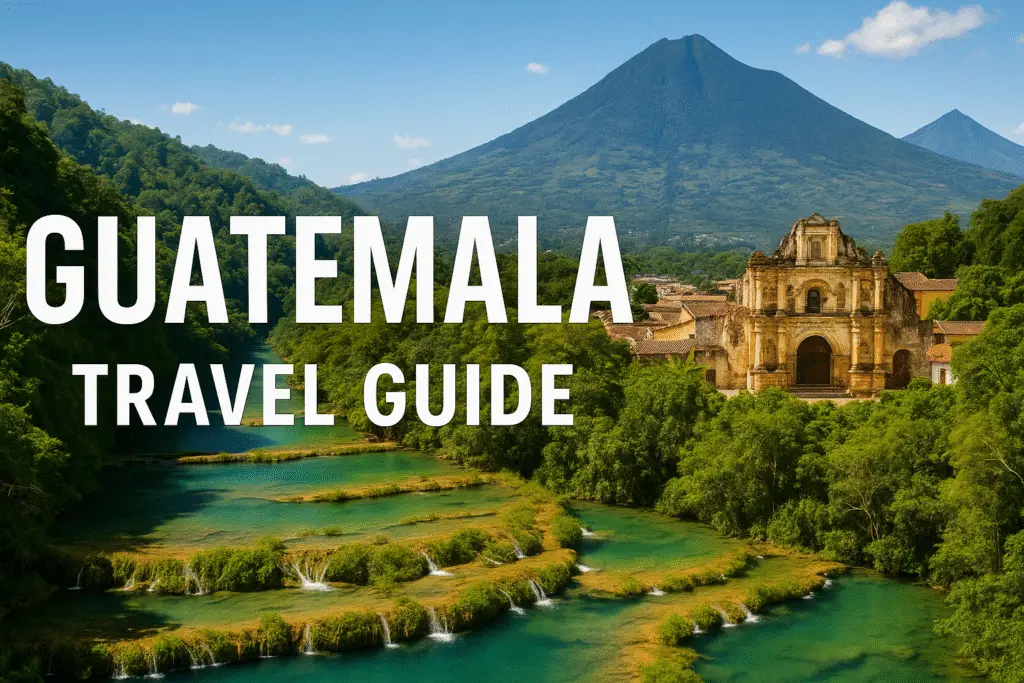
Guatemala is one of the most culturally rich, visually dramatic, and historically fascinating countries in Central America. It is a land defined by volcanoes, highland lakes, ancient Maya cities, colorful markets, coffee plantations, colonial architecture, and indigenous traditions that remain deeply alive. For many travelers, Guatemala is the most rewarding country in the region because it offers a blend of landscapes, culture, and history that is unmatched in its intensity and authenticity.
The country’s geography is nothing short of breathtaking. Towering volcanoes rise above misty valleys; cloud forests hide waterfalls and orchids; rivers cut through deep canyons; and ancient ruins emerge from thick jungle. In the highlands, vibrant indigenous communities preserve centuries-old languages, clothing, and craftsmanship. Markets explode with color — woven textiles, pottery, jade jewelry, fresh fruit, and flowers. Meanwhile, Guatemala’s Caribbean coast feels entirely different, influenced by Garifuna culture, tropical weather, and coastal rhythms.
Guatemala is a country where tradition is not just preserved — it is lived daily. Over 40% of the population identifies as Maya, and many communities continue to speak indigenous languages, wear handwoven clothing, and practice ancestral ceremonies. This cultural vibrancy gives the country a sense of authenticity rarely found elsewhere. Visitors experience a living heritage in every village, every textile market, every festival, and every prayer murmured in candlelit churches.
The country’s natural beauty is equally captivating. Perhaps nowhere is this more evident than Lake Atitlán, often described as one of the most beautiful lakes in the world. Surrounded by three volcanoes and dotted with small villages, Atitlán offers a peaceful atmosphere combined with cultural richness and breathtaking views. Each village has its own identity — from the artistic spirit of San Juan La Laguna to the backpacker energy of San Pedro, and the traditional life of Santiago Atitlán.
Another cornerstone of Guatemalan travel is Antigua, a remarkable colonial city framed by volcanoes and filled with cobblestone streets, pastel buildings, ancient churches, and lively cafés. Once the capital of Spanish Central America, Antigua is now a UNESCO World Heritage Site and one of the best-preserved colonial destinations in the world. The city blends history with modern energy — traditional bakeries sit beside boutique hotels, and local artisans share space with international restaurants. Travelers can spend days exploring Antigua’s ruins, markets, plazas, and museums, while using it as a base for hikes, coffee tours, and cultural experiences.
The country’s capital, Guatemala City, is a dynamic mix of old and new. While often overlooked, it contains some of the region’s most important museums, such as the National Museum of Archaeology and Ethnology, which stores invaluable Maya artifacts. The city also has vibrant food markets, historical districts, and modern shopping centers. It is a cultural and economic hub where the country’s diversity truly comes together.
Of course, Guatemala’s Maya heritage is one of its greatest treasures. The ancient city of Tikal, located deep in the northern Petén jungle, is one of the most spectacular archaeological sites in the world. Tikal’s massive temples rise above the rainforest canopy, surrounded by the sounds of howler monkeys, parrots, and tropical wildlife. The combination of nature and archaeology creates an unforgettable experience — one that feels both ancient and alive. Other Maya sites such as Yaxhá, El Mirador, Iximché, and Uaxactún offer equally fascinating insights into Guatemala’s ancient civilizations.
Culturally, Guatemala is defined by its artistry. Weaving is one of the most important traditions, with women in villages hand-weaving textiles using traditional backstrap looms. Each village produces its own patterns and colors, telling stories through fabric. Pottery, woodcarving, silverwork, jade stone carving, and painting also flourish throughout the country. These traditions are not merely products for tourists — they are ancestral crafts passed down through generations.
Guatemala is also one of the world’s great coffee-producing nations. The volcanic soil, high altitude, and ideal climate create exceptional beans grown on small family farms. Coffee tours around Antigua, Atitlán, and Cobán allow visitors to walk through plantations, learn about cultivation, and taste freshly brewed Guatemalan coffee.
Beyond culture and landscapes, Guatemala offers adventure for all types of travelers. Volcanic hikes are among the most iconic activities in the country. The trek to Volcán Acatenango is especially legendary — hikers camp above the clouds with dramatic nighttime views of neighboring Volcán Fuego erupting in bursts of orange lava. For many, it becomes the most unforgettable experience of their entire trip. Other active volcanoes like Pacaya allow travelers to walk across volcanic rock fields and roast marshmallows using geothermal heat.
The jungles of Guatemala provide opportunities for nature lovers. The northern region of Petén is home not only to Tikal but also to vast rainforest protected areas, lagoons, and wildlife reserves. Travelers encounter toucans, spider monkeys, coatis, macaws, iguanas, and occasionally even jaguars in remote areas. Cobán and the Verapaces region offer limestone mountains, caves, natural pools, and waterfalls. One of the country’s most famous natural attractions is Semuc Champey, a series of turquoise pools cascading through a jungle valley — a place that feels untouched and magical.
Guatemala’s Caribbean coast offers another unique experience. The town of Livingston, accessible only by boat, is a melting pot of Afro-Caribbean Garifuna, Maya, and Ladino culture. The Rio Dulce area, with its lush river canyons lined with tropical vegetation, leads travelers from the inland lakes to the Caribbean Sea. Here, travelers enjoy boat trips, waterfalls, hot springs, and peaceful river lodges.
Travel through Guatemala is not just about sightseeing — it is about experiencing the country’s deep cultural spirit. Holy Week (Semana Santa) in Antigua is one of the world’s most stunning religious festivals, with ornate carpets made of flowers and colored sawdust covering the streets. Day of the Dead celebrations include giant kite festivals in Sumpango and Santiago Sacatepéquez. Local markets such as Chichicastenango offer a mesmerizing blend of commerce, spirituality, and indigenous traditions.
Food in Guatemala reflects the country’s cultural richness. Traditional dishes include pepián (a hearty stew of meat, vegetables, and spices), kak’ik (a Mayan turkey soup), jocon (a green sauce made with tomatillo and herbs), tamales, fresh corn tortillas, plantains, and a wide variety of tropical fruits.
Travelers are often surprised by how warm and welcoming Guatemalans are. Hospitality is a defining feature of the country. Whether staying in homestays, guesthouses, or small hotels, visitors frequently describe deep connections with local families and guides. The people of Guatemala are proud of their heritage, and many share their stories, crafts, and traditions with those who take the time to learn.
For all its beauty, Guatemala remains a country where tourism feels intimate and personal. It has not been overtaken by mass development, and many destinations still feel authentically local. This gives travelers the rare chance to explore ancient ruins without crowds, walk through traditional villages unaltered by commercialization, and witness daily life in a way that feels genuine.
Guatemala is a destination for travelers seeking something real — a country where nature, culture, and human history converge powerfully.
Regions, Antigua, Lake Atitlán, Guatemala City, Petén & Tikal — fully detailed
Guatemala’s charm lies in the diversity of its regions. From the volcanic highlands to the Caribbean coast and the vast northern jungles, each region feels like a completely different world. Understanding these areas helps travelers appreciate why Guatemala is considered one of the most rewarding destinations in Central America.
THE MAIN REGIONS OF GUATEMALA
Guatemala can generally be divided into several major travel regions:
The Central Highlands (including Antigua and Lake Atitlán), Guatemala City, Petén (jungle and Maya ruins), The Western Highlands, The Caribbean Coast (Livingston & Río Dulce), and The Verapaces (Cobán & Semuc Champey).
Each offers unique experiences, landscapes, and cultural depth.
1. The Central Highlands – Volcanoes, Colonial Cities & Maya Culture
The Central Highlands are the heart of Guatemala’s cultural legacy. This region contains iconic destinations such as Antigua, Lake Atitlán, and the Mayan market towns of Chichicastenango and Sololá. The landscapes are dominated by volcanoes, terraced fields, and valleys dotted with traditional villages.
Here, travelers find cobblestone streets, handmade textiles, outdoor markets, and centuries-old traditions alive in daily life. The climate is mild year-round thanks to altitude, making this region extremely comfortable for travel.
2. Guatemala City – The Capital & Cultural Hub
Guatemala City, or Guate, is the modern engine of the country. While often overlooked, it contains museums, historical districts, contemporary restaurants, business centers, and vibrant neighborhoods. It is also the main transportation hub, connecting the country by road and air.
Travelers who spend time here discover a city full of contrasts — colonial remnants, modern architecture, lively plazas, and important archaeological collections.
3. Petén – Jungle, Wildlife & Ancient Maya Cities
The northern region of Petén is a vast rainforest filled with national parks, lagoons, wildlife reserves, and magnificent Maya ruins. The most famous is Tikal, but other sites like Yaxhá, Uaxactún, and El Mirador make Petén one of the most significant archaeological regions in the Americas.
Travel through Petén feels adventurous and remote. Wildlife sightings are common — howler monkeys, toucans, parrots, coatis, and sometimes even jaguars.
4. The Verapaces – Waterfalls, Caves & Mountains
The regions around Cobán (Alta and Baja Verapaz) offer limestone mountains, cloud forests, natural pools, coffee farms, and waterfalls. Semuc Champey, with its emerald pools, is the highlight. This is a wild region full of natural beauty and perfect for adventure travelers.
5. The Caribbean Coast – Garifuna Culture & River Landscapes
Guatemala’s small Caribbean coastline feels like a different country. Livingston is a vibrant Garifuna, Afro-Caribbean, and indigenous community accessible only by boat. The Río Dulce region offers canyon-like river walls, jungle lodges, manatees, hot springs, and peaceful lakes.
ANTIGUA – A COLONIAL MASTERPIECE SURROUNDED BY VOLCANOES
Antigua is one of the most beautiful cities in Latin America, and for many travelers, it becomes their favorite place in Guatemala. The city is wrapped in history — cobblestone streets, ruins of ancient churches, pastel-colored buildings, and ornate courtyards filled with flowers. Towering above everything are three giant volcanoes: Agua, Fuego, and Acatenango.
Walking through Antigua feels like stepping into another era. The city is a UNESCO World Heritage Site, and its colonial architecture has been carefully preserved. Yet it is also a lively, modern place with cafés, boutique hotels, rooftop restaurants, chocolate shops, markets, and international energy. Travelers often spend days wandering the streets, visiting ruins, drinking coffee in courtyards, exploring museums, and enjoying the laid-back rhythm of life.
One of Antigua’s biggest draws is its volcano hikes. Volcán Pacaya offers a more accessible trek across lava fields with views of volcanic cones. For the adventurous, Acatenango is one of the most dramatic hikes in the world. Camping overnight on its slopes allows hikers to watch Volcán Fuego erupting in fiery bursts throughout the night — a spectacle of glowing lava and thunderous booms that feels almost unreal.
The culture in Antigua is also rich. Artisans sell woven textiles, leather goods, jade jewelry, and handmade crafts in markets and shops. Local bakeries serve fresh bread and pastries, while traditional Guatemalan restaurants prepare stews, tamales, soups, and roasted meats.
Antigua becomes especially vibrant during festivals. During Semana Santa (Holy Week), the streets transform into elaborate carpets of flowers and colored sawdust as processions move through the city. The atmosphere is spiritual, artistic, and emotional — one of the most spectacular cultural events in the world.
With its charm, history, volcanoes, markets, and cultural spirit, Antigua is often considered the perfect base for exploring Guatemala.
LAKE ATITLÁN – VOLCANOES, VILLAGES & MAGIC
Lake Atitlán is frequently described as one of the most beautiful lakes on Earth. Ringed by three volcanoes — Atitlán, Tolimán, and San Pedro — the lake sits in a volcanic crater surrounded by hills, forests, and terraced agriculture. The water reflects the sky in shades of blue, silver, and gold depending on the time of day. Sunrises and sunsets here feel mystical.
Atitlán is not just seen; it is felt. The energy of the lake, the presence of Maya culture, and the peaceful rhythm of the villages create an atmosphere that is deeply calming and inspiring.
Each village around the lake has its own identity:
Panajachel
The main transport hub and gateway to the lake. Lively, full of craft markets, restaurants, cafés, and lake views. Most travelers arrive here before taking boats to other villages.
San Pedro La Laguna
Popular with backpackers, digital nomads, and long-term travelers. It has cafés, bars, Spanish schools, yoga studios, hiking access, and an energetic social scene.
San Juan La Laguna
One of the most artistic and authentic villages around the lake. Known for women’s weaving cooperatives, natural dye workshops, murals, and quiet beauty.
Santa Cruz La Laguna
A peaceful, steep-hillside village accessible by boat, with eco-lodges, diving centers, and some of the best lake views.
Santiago Atitlán
The largest traditional Maya town on the lake. Its culture is strong, visible in clothing, markets, and spiritual traditions including the unique deity Maximon.
Jaibalito
A tiny, serene village perfect for travelers who want a quiet escape surrounded by nature.
Activities around Lake Atitlán include hiking, kayaking, yoga retreats, weaving workshops, coffee tours, boat hopping, and learning about Maya spirituality. The lake’s beauty and cultural richness create one of the most memorable experiences in Guatemala.
GUATEMALA CITY – CULTURE, MUSEUMS & URBAN ENERGY
Guatemala City is the most modern and populous city in the country. While many travelers pass through quickly, the city offers depth for those who choose to explore.
Zone 1
The historic center, with colonial architecture, plazas, cathedrals, museums, and cultural institutions. The National Palace and Central Market provide insight into local life.
Zones 4 & 10
More modern areas with restaurants, coffee shops, hotels, nightlife, and business centers. These zones are popular with both locals and travelers.
Museums
One of the highlights of Guatemala City is its museums.
The National Museum of Archaeology and Ethnology contains one of the world’s best collections of Maya artifacts, including sculptures, stelae, ceramics, jade, and royal items. The Ixchel Museum of Indigenous Textiles showcases Guatemala’s weaving traditions, while the Miraflores Museum displays artifacts from the ancient Maya city of Kaminaljuyú.
Guatemala City is fast-paced, complex, and full of contrasts. It is the cultural and economic heart of the country and provides an important context for understanding Guatemala today.
PETÉN & TIKAL – JUNGLE, PYRAMIDS & ANCIENT CIVILIZATION
Petén, covering almost one-third of Guatemala’s land area, is a vast region of rainforest, wildlife, wetlands, and Maya ruins. It feels wild, remote, and full of mystery — a place where the ancient past meets the thriving jungle ecosystem.
The town of Flores, built on a small island connected by a causeway, serves as the base for exploring the region. Flores has colorful buildings, lakeside restaurants, calm water views, and easy access to Tikal and other archaeological sites.
The crown jewel of Petén is Tikal, one of the most powerful Maya cities to ever exist. Walking into Tikal feels like entering a lost world. The temples rise from the jungle canopy like stone mountains, surrounded by howler monkeys, tropical birds, and thick forest. Temple IV, one of the tallest structures, offers a panoramic view over miles of jungle — a sight that becomes magical at sunrise or sunset.
Tikal’s plazas, pyramids, palaces, and causeways reveal a sophisticated ancient society. Archaeologists believe Tikal was home to tens of thousands of people and served as a major political, economic, and spiritual center. The combination of ruins and wildlife makes Tikal unforgettable.
Nearby sites such as Yaxhá, El Mirador, Nakum, and Uaxactún offer quieter, deeply atmospheric alternatives for travelers who want to explore ancient cities without crowds.
Petén is where travelers connect with Guatemala’s most ancient past and feel the scale of its natural world.
Río Dulce, Livingston, Semuc Champey, Chichicastenango, food, culture, best time, safety, and transportation
Guatemala is a country of dramatic contrasts, and nowhere is this more evident than in the regions away from the main tourist trail. The Caribbean coast, the lush river valleys, the limestone mountains of the Verapaces, and the bustling highland markets all reveal different sides of Guatemalan identity. This section explores these areas in immersive detail, offering your readers a deeper understanding of the country’s natural and cultural richness.
RÍO DULCE – RIVER PARADISE, JUNGLE LODGES & HOT SPRINGS
Río Dulce is one of the most beautiful and tranquil regions of Guatemala. Centered around the town of Fronteras (also known as Río Dulce Town), this region sits between Lake Izabal and the Caribbean Sea. The area feels tropical and peaceful, with calm waters, lush vegetation, and towering cliffs.
The Río Dulce itself is a wide, calm river lined with mangroves, jungle trees, and small communities accessible only by boat. Travelers explore the region by taking boat trips that reveal riverfront lodges hidden deep in the vegetation, birdlife gliding above the water, and fishermen casting nets in the early morning light.
One of the highlights of this region is Castillo de San Felipe, a restored 17th-century Spanish fortress built to protect Lake Izabal from pirates. Its thick stone walls, red rooftops, and lakeside setting make it one of the most photogenic historic sites in Guatemala.
Further along the river, travelers encounter a dramatic canyon where walls of limestone rise vertically from the water and tropical plants cling to the rock. Hot springs bubble along the riverbanks, and wildlife thrives in the surrounding forest — toucans, iguanas, howler monkeys, and river birds appear frequently.
Many travelers spend a night or two in jungle lodges accessible only by boat. These eco-lodges offer overwater cabins, peaceful hammocks, views of passing boats, and a complete immersion in nature’s sounds and rhythms. Evenings are quiet, filled with the sound of insects and the gentle movement of water against the shore.
LIVINGSTON – A UNIQUE BLEND OF CULTURES
Livingston, reachable only by boat from Río Dulce or Puerto Barrios, is one of the most culturally unique places in Guatemala. It is home to a vibrant Garifuna community whose Afro-Caribbean heritage shapes the town’s music, dance, cuisine, and traditions. The atmosphere here feels unlike anywhere else in the country — a tropical fusion of Caribbean energy, indigenous culture, and local Guatemalan life.
Colorful houses line sandy streets, reggae music drifts through the air, fishermen bring in fresh catches, and locals welcome visitors with warm smiles. Livingston is known for its relaxed vibe, tropical weather, and delicious seafood dishes such as tapado, a coconut-based seafood stew that blends Caribbean flavors with local ingredients.
The boat ride from Río Dulce to Livingston is one of the most scenic journeys in the country. Passing through river canyons, mangroves, bird colonies, and small village communities, travelers experience the full beauty of Guatemala’s Caribbean wetlands. The journey feels like a peaceful adventure — slow, quiet, and full of life.
While Livingston itself is small, it serves as a cultural hub. Travelers can learn about Garifuna drumming, dance, and spirituality while enjoying the warmth of a coastal community that has preserved its heritage for centuries.
SEMUC CHAMPEY – NATURAL POOLS IN THE JUNGLE
Semuc Champey is one of Guatemala’s most extraordinary natural wonders. Located deep in the mountains of Alta Verapaz, this series of turquoise pools sits above a limestone bridge under which the Cahabón River thunders through hidden underground channels. From above, Semuc Champey looks like a chain of emerald jewels nestled within lush rainforest.
Reaching Semuc Champey requires a journey through winding mountain roads and small villages, but the effort is widely considered worthwhile. Travelers arrive to find a paradise of:
- glowing turquoise water
- natural infinity pools
- limestone formations
- forest-covered hills
- caves, waterfalls, and river rapids
A viewpoint hike leads to a spectacular overlook where travelers see the pools from above, shimmering beneath the canopy. The descent leads to the water’s edge, where visitors can swim, relax, and enjoy the peaceful surroundings. The water is cool and refreshing, providing the perfect escape from Guatemala’s tropical heat.
Near Semuc Champey, the Kanba Caves offer adventure tours where visitors explore underground rivers by candlelight, climb waterfalls inside the caves, and swim through narrow channels. The combination of caves, pools, and mountain scenery makes this region a highlight for adventurous travelers.
CHICHICASTENANGO – MARKETS, SPIRITUALITY & TRADITION
Chichicastenango, often called “Chichi,” is home to one of the most vibrant and culturally significant markets in the Americas. Held on Thursdays and Sundays, the market transforms the town into a bustling sea of color, sound, and scent.
Vendors from surrounding Maya villages arrive wearing traditional clothing — woven huipiles, embroidered skirts, and brightly colored shawls. Their stalls overflow with:
- textiles
- ceramics
- wooden masks
- handmade jewelry
- spices
- fruits and vegetables
- flowers
- religious items
But Chichicastenango is more than a market — it is a spiritual center. The town blends Catholic and Maya traditions in a way that is truly unique. The church of Santo Tomás sits atop an ancient Maya temple platform, and the steps are frequently used for Maya rituals. Incense, candles, and flower offerings create a mystical atmosphere around the church.
Nearby, the sacred hill of Pasucal is a site where shamans perform ceremonies honoring earth spirits, ancestors, and natural forces. Travelers who respect the culture may witness or participate in traditional rituals that have been practiced for centuries.
Chichicastenango is a place where the past and present intertwine seamlessly, offering visitors a profound cultural experience.
CULTURE, FOOD & FESTIVALS IN GUATEMALA
Guatemala’s cultural identity is shaped by Maya heritage, Spanish influence, and centuries of local tradition. The result is a rich tapestry of customs, celebrations, music, and cuisine.
Guatemalan Cuisine
Guatemalan food is hearty, flavorful, and deeply connected to indigenous traditions. Corn, beans, cacao, herbs, and local vegetables form the foundation of the cuisine.
Popular dishes include:
- Pepián – a thick, spicy stew made with roasted seeds, chilies, and chicken
- Kak’ik – a traditional Mayan turkey soup featuring a rich red broth
- Jocon – chicken in a green tomatillo-and-herb sauce
- Fiambre – a colorful cold salad eaten during the Day of the Dead
- Tamales – made with corn masa and wrapped in banana leaves
- Plantains, served fried, stewed, or stuffed
- Fresh fruit, including papaya, pineapple, mango, and watermelon
Chocolate has deep roots in ancient Maya culture, and local cacao tours around Atitlán and Petén teach visitors about its history and production.
Music & Dance
Traditional music includes marimba ensembles, Maya ceremonial songs, and Garifuna drumming. In towns like Livingston and Hopkins (in Belize), Garifuna drumming creates powerful rhythms often accompanied by dance, storytelling, and spiritual expression.
Festivals & Traditions
Guatemala’s festivals are among the most spectacular in the world. The most famous is Semana Santa (Holy Week) in Antigua, where streets are covered with intricate “alfombras” made from flowers, sawdust, pine needles, and fruit. Religious processions pass slowly over the carpets as incense fills the air.
Other major celebrations include:
- Día de los Muertos (Day of the Dead) – featuring kite festivals in Sumpango
- Fiesta de Santo Tomás in Chichicastenango – a blend of Maya and Catholic rituals
- Independence Day – parades, fireworks, and patriotic celebrations
These events blend indigenous spirituality with colonial traditions, creating deeply meaningful and visually stunning experiences.
BEST TIME TO VISIT GUATEMALA
Guatemala’s climate varies by region and elevation. The highlands are cool and spring-like year-round, while the lowlands and Caribbean coast are warmer and more tropical.
Dry Season (November to April)
Best time for clear skies, hiking, volcano viewing, and beach visits.
Rainy Season (May to October)
Mornings often remain sunny; rain typically falls in the afternoons. The landscape becomes lush and green, and crowds diminish.
Festivals Season (March–April)
Semana Santa is peak cultural season, drawing visitors from around the world.
Overall, Guatemala is a year-round destination, but the dry season is easiest for travel.
SAFETY IN GUATEMALA
Guatemala is generally safe for travelers who take normal precautions. Tourist areas such as Antigua, Atitlán, Flores, and Río Dulce are accustomed to visitors and maintain a welcoming atmosphere.
Safety tips include:
- avoid walking alone late at night in isolated areas
- use registered shuttles or taxis
- keep valuables secure
- stay informed about local conditions
Maya villages and rural regions are peaceful and friendly. Travelers often describe feeling welcomed and respected by locals throughout the country.
TRANSPORTATION IN GUATEMALA
Transportation varies by region. Options include:
- Tourist shuttles – popular, safe, and efficient for travel between major destinations
- Chicken buses – colorful local buses; authentic but crowded
- Boats – essential around Lake Atitlán and Río Dulce
- Domestic flights – connect Guatemala City and Flores
- Private drivers – common for inter-city travel
- Tuk-tuks – convenient for short distances
Most travelers use a mix of shuttles and boats.
WHERE TO STAY IN GUATEMALA (QUICK OVERVIEW)
Antigua:
Colonial hotels, boutique stays, and rooftop views.
Lake Atitlán:
Lakefront lodges, eco-hotels, cliffside retreats, and artistic guesthouses.
Flores (Tikal region):
Island hotels, jungle lodges, and lake-view suites.
Río Dulce:
Riverside eco-lodges accessible only by boat.
Semuc Champey:
Riverside hostels and forest retreats.
Guatemala City:
Modern hotels in Zones 10 and 13.
Itineraries, routes, and final conclusion
Guatemala is one of the rare destinations where ancient history, cultural richness, and breathtaking landscapes come together with incredible harmony. To help travelers plan their trip, the following itineraries offer balanced routes covering the country’s highlights while keeping travel times reasonable. Like the rest of this guide, these itineraries are written in immersive, flowing paragraphs so they integrate naturally into your long-form country page.
7-DAY GUATEMALA ITINERARY
Perfect for first-time visitors who want culture + volcanoes + lakes
Days 1–3: Antigua (colonial beauty + volcano views)
Travelers begin their journey in Antigua, the cultural heart of Guatemala. These first days are spent exploring cobblestone streets, colorful buildings, historic churches, and quiet courtyards filled with jacaranda trees. Visitors wander through bustling markets, sample Guatemalan coffee, and take rooftop photos of the surrounding volcanoes. Short excursions include visiting nearby villages, climbing Pacaya Volcano, or touring coffee plantations. Evenings in Antigua are calm and beautiful, with soft lantern light against centuries-old walls.
Days 4–6: Lake Atitlán (volcanoes + villages + culture)
On Day 4, travelers journey into the highlands to Lake Atitlán. The lake immediately captivates with its serene blue water and towering volcanic backdrop. Over two or three days, visitors explore a selection of lakeside villages by boat. San Juan La Laguna offers weaving cooperatives and natural dye workshops. San Pedro provides hiking, cafés, and youthful energy. Santa Cruz and Jaibalito offer peaceful lakefront retreats. Travelers spend their days kayaking, browsing handicraft markets, taking cooking classes, or hiking to viewpoints overlooking the lake.
Day 7: Return to Guatemala City or airport
On the final day, travelers depart Atitlán and return to Guatemala City for their flight. Many leave Guatemala feeling deeply connected to its landscapes and traditions.
This itinerary offers the perfect balance between culture, nature, and relaxation.
10-DAY GUATEMALA ITINERARY
Culture, lakes, nature, and ancient ruins
Days 1–3: Antigua
Travelers begin in the colonial city, absorbing its museums, architecture, and vibrant culinary scene. A hike up Pacaya Volcano or an overnight trek up Acatenango creates a memorable early highlight.
Days 4–6: Lake Atitlán
Visitors then travel to Lake Atitlán for three days of peaceful beauty and cultural learning. They explore the villages, take weaving or chocolate workshops, kayak between coves, and hike ridge trails for panoramic lake views.
Days 7–10: Tikal & Flores (Maya ruins + jungle + wildlife)
On Day 7, travelers fly or take a shuttle north to the Petén jungle. Their base becomes the colorful island town of Flores, a charming lakeside community perfect for sunset walks and relaxing evenings.
The final days focus on exploring Tikal, one of the world’s greatest archaeological sites. Travelers climb ancient temples rising above the jungle canopy, walk through plazas once filled with Maya royalty, and listen to howler monkeys echoing through the trees. Optional excursions include visiting Yaxhá at sunset, exploring Uaxactún, or visiting remote wildlife-rich areas deeper in the forest.
This itinerary allows travelers to see both Guatemala’s cultural highlands and its extraordinary ancient cities.
CONCLUSION — WHY GUATEMALA IS ONE OF THE MOST ENCHANTING DESTINATIONS IN THE WORLD
Guatemala is a country that stays with travelers long after they leave. It is not a place of superficial tourism or overly commercial attractions — instead, it offers authenticity, warmth, and cultural depth. Every village, every market, every mountain trail tells a story. The connection between people and land is strong, and visitors feel this spirit in everything from the woven textiles to the rituals performed in candlelit churches.
The landscapes are breathtaking: volcanoes rising above valleys; a lake that glows at sunrise; jungles filled with wildlife; ancient temples hidden within thick forest. Yet beyond the scenery, what makes Guatemala truly special is the resilience and vibrancy of its people. Indigenous traditions remain deeply alive, languages are preserved, handwoven clothing is worn daily, and cultural pride is strong.
Travelers who venture into Guatemala often describe the country as transformative — a place that opens the heart, inspires creativity, and awakens curiosity. It is a destination for those who seek understanding rather than entertainment, culture rather than cliché, and authentic connection rather than manufactured experiences.
With this guide, your readers now have a deep, comprehensive foundation to explore the wonders of Guatemala. This long-form content gives your website authority, SEO strength, and the perfect structure for future internal links as you expand your Central America section.
 Related Articles
- Kakslauttanen Arctic Resort
- Top 10 Most Unique Places to Stay in Europe
- 10 Incredible Castles Around the World