
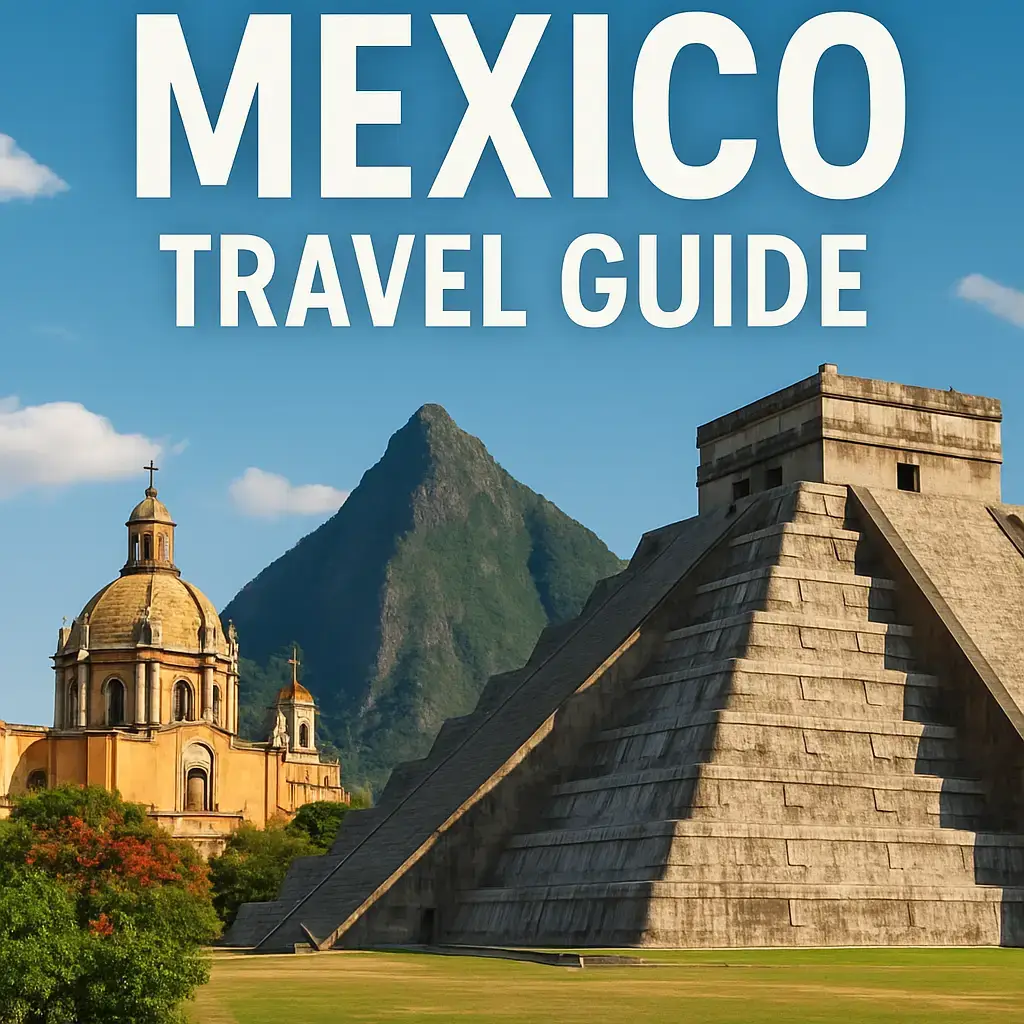
MEXICO TRAVEL GUIDE
A complete guide to the beaches, ancient ruins, cities, colonial towns, food, cenotes, mountains, deserts, forests, islands, wildlife and culture of Mexico.
INTRODUCTION: WHY MEXICO IS ONE OF THE MOST DIVERSE COUNTRIES ON EARTH
Mexico is a country overflowing with life, color, flavor, and history. It is a land where turquoise Caribbean waters meet ancient Maya cities hidden in the jungle, where Pacific waves crash against golden surf beaches, where snow-dusted volcanoes rise above cities of millions, and where art, culture, fiestas, and spirituality weave through everyday life.
Few destinations combine so many landscapes in one nation: tropical jungles, deserts, canyons deeper than the Grand Canyon, mountains taller than the Alps, colonial towns of Spanish architecture, beach resorts with crystal-clear water, cenotes carved by time, and archaeological sites older than Rome. Add to that world-famous cuisine, vibrant festivals, warm hospitality, and a history stretching from ancient civilizations to contemporary megacities, and Mexico becomes a country travelers return to again and again.
This 5,000-word guide covers every major region in Mexico, including beaches, cities, ruins, food, islands, itineraries, national parks and cultural highlights—perfect for your Mexico page.
1. MEXICO CITY — THE GIANT CAPITAL OF ART, CULTURE & HISTORY
Mexico City (CDMX) is one of the largest and most exciting cities in the world. Built on the ruins of ancient Tenochtitlán, it blends Aztec history, Spanish colonial architecture, modern skyscrapers, museums, green parks, and a food scene that rivals any global city.
Historic Center (Centro Histórico)
The heart of the city is dominated by the enormous Zócalo, one of the largest public squares on Earth. Nearby stands the Metropolitan Cathedral, the National Palace, and the Templo Mayor, where Aztec ruins remain visible beneath the streets.
Chapultepec & Museum District
Chapultepec Park is one of the world’s largest city parks. It contains forests, lakes, the Chapultepec Castle, and the National Museum of Anthropology, widely considered one of the best museums in the Americas.
Coyoacán & Frida Kahlo Museum
South of the center, the bohemian district of Coyoacán is filled with cafés, markets, and the famous Casa Azul, where artist Frida Kahlo lived and painted.
Roma & Condesa
Tree-lined neighborhoods with boutique shops, street art, parks, and trendy restaurants. They’re modern, stylish, and very walkable.
Xochimilco Canals
Colorful trajineras (boats) float along ancient Aztec canals, creating a festive atmosphere of music, food, and celebrations on the water.
Mexico City is a world-class destination that deserves 4–5 days to explore fully.
2. THE YUCATÁN & RIVIERA MAYA — BEACHES, CENOTES & ANCIENT MAYA CITIES
The Yucatán Peninsula is Mexico’s most famous tourist region, combining Caribbean beaches, underwater worlds, ancient ruins, colonial towns, cenotes, and eco-adventures.
Cancún
Cancún’s Hotel Zone features long white-sand beaches, turquoise water, resorts, nightlife, malls, restaurants, and water sports. It is the entry point for many visitors.
Playa del Carmen
A lively beach town with pedestrian Fifth Avenue (La Quinta Avenida), beach clubs, restaurants, and easy access to cenotes, Xcaret theme parks, and Cozumel island.
Tulum
Once a quiet backpacker town, Tulum is now famous for:
Stylish jungle hotels
White-sand beaches
Beach clubs
Eco-friendly resorts
Bohemian lifestyle
The Tulum Ruins sit atop cliffs overlooking the Caribbean—one of the most photographed archaeological sites in Mexico.
Cozumel Island
Cozumel is one of the world’s top diving destinations, with coral reefs, underwater walls, and crystal-clear water. It is quieter than Cancún, with a relaxed island feel.
Isla Mujeres
Located a short ferry ride from Cancún, Isla Mujeres is known for Playa Norte, often ranked among the best beaches in the world.
Chichén Itzá
One of the New Seven Wonders of the World, Chichén Itzá is an ancient Maya city featuring the famous pyramid El Castillo, the Great Ball Court, and sacred cenotes.
Valladolid
A beautiful colonial city filled with colorful homes, cenotes, and churches. It’s the perfect base for exploring Chichén Itzá and natural pools like Cenote Suytun and Cenote Ik Kil.
Mérida
Mérida is the cultural heart of Yucatán, known for its colonial architecture, museums, Mayan heritage, and local cuisine.
Cenotes
The Yucatán is dotted with thousands of limestone sinkholes called cenotes, filled with crystal-clear water. Famous ones include:
Cenote Dos Ojos
Gran Cenote
Cenote Zací
Cenote Azul
Swimming in a cenote is a must-do when visiting Mexico.
3. THE PACIFIC COAST — SURFING, CLIFFS, WHALES & SUNSETS
Mexico’s Pacific coastline runs more than 7,000 km and includes surf towns, beach resorts, fishing villages, and dramatic cliffs.
Puerto Vallarta
A classic beach destination combining:
Old Town cobblestone streets
Lively nightlife
Whale watching
Jungle mountains
Luxury resorts
The Malecon boardwalk stretches along the sea with sculptures, performers, and sunsets.
Riviera Nayarit
Just north of Puerto Vallarta, this region includes:
Sayulita (surf + bohemian lifestyle)
San Pancho
Punta Mita (luxury resorts)
It’s popular for weddings, family trips, and wellness escapes.
Los Cabos (Cabo San Lucas & San José del Cabo)
Located on the Baja California Peninsula, Los Cabos features desert landscapes, rock formations, and luxury hotels.
Highlights include:
The famous El Arco rock arch
Whale watching (January–March)
Surfing on the East Cape
Snorkeling at Cabo Pulmo National Park
Vibrant nightlife
Mazatlán
A blend of beaches, local culture, seafood, and a historic center.
Acapulco
Known for its dramatic cliffs and La Quebrada cliff divers, Acapulco was iconic in the mid-20th century and remains culturally significant.
Oaxaca Coast — Puerto Escondido & Huatulco
The state of Oaxaca has some of Mexico’s most beautiful beaches.
Puerto Escondido is a surf paradise known for Playa Zicatela and laid-back vibes.
Huatulco offers nine bays filled with protected wildlife, beaches, and clear water.
4. BAJA CALIFORNIA & SEA OF CORTEZ — DESERT MEETS OCEAN
Baja California is one of Mexico’s most unique regions—arid desert backed by two oceans, with world-famous marine life, mountains, cacti forests, and pristine beaches.
La Paz
A peaceful city along the Sea of Cortez with turquoise beaches like Playa Balandra, considered one of Mexico’s most beautiful.
Loreto
A charming town with access to marine parks, islands, whale watching, and desert mountains.
Guerrero Negro & Whale Watching
Baja is one of the best places in the world to see:
Gray whales
Whale sharks
Dolphins
Sea lions
Every year, gray whales migrate to Baja’s lagoons to give birth—an unforgettable experience.
Todos Santos
A coastal desert town known for art galleries, surf spots, and boutique hotels.
5. NORTHERN MEXICO — CANYONS, DESERTS & ADVENTURE
Northern Mexico features mountain ranges, deserts, canyons deeper than the Grand Canyon, and vibrant border cities.
Copper Canyon (Barrancas del Cobre)
Located in Chihuahua, the Copper Canyon system is bigger and deeper than the Grand Canyon. It offers:
The El Chepe train (one of the world’s most scenic rides)
Indigenous Tarahumara communities
Waterfalls, cliffs, hiking
It’s a dream destination for adventurers.
Monterrey
A modern industrial city surrounded by mountains. Highlights include:
Parque Fundidora
The Macroplaza
Cerro de la Silla
Cola de Caballo Waterfall
Chihuahua City
A mix of colonial heritage, museums, and the gateway to Copper Canyon.
Baja Desert Landscapes
Northern Mexico’s desert regions are filled with cacti forests, unusual rock formations, and star-filled skies.
6. CENTRAL MEXICO — COLONIAL HERITAGE, ART & VOLCANOES
Central Mexico is the cultural heart of the nation—colonial towns, archaeological sites, mountains, art cities, and one of the world’s largest megacities.
Puebla
Puebla is known for:
Colonial architecture
Colorful tiles
Cathedral
Mole poblano cuisine
Nearby Cholula has the world’s largest pyramid (by volume), with a church built on top.
Querétaro & San Miguel de Allende
San Miguel de Allende is one of Mexico’s most beautiful cities, with:
Baroque churches
Cobblestone streets
Art galleries
Rooftop restaurants
It is a UNESCO World Heritage Site and a major artist community.
Guanajuato
A colorful city of tunnels, plazas, museums, and steep alleys. The annual Cervantino Festival celebrates art and culture.
Mexico’s Volcanoes
Central Mexico is ringed by volcanoes:
Popocatépetl
Iztaccíhuatl
Nevado de Toluca
Paricutín (one of the world’s youngest volcanoes)
These mountains offer hiking, photography, and dramatic landscapes.
7. THE SOUTH — OAXACA, CHIAPAS & CULTURAL DEPTH
Southern Mexico is rich in indigenous cultures, archaeological sites, mountains, forests, and traditional markets.
Oaxaca City
Oaxaca is Mexico’s cultural capital, known for:
Traditional cuisine
Mezcal
Indigenous art
Monte Albán ruins
Markets
Festivals like Guelaguetza
The city is colorful, historic, and atmospheric.
Hierve el Agua
A natural wonder featuring petrified waterfalls and mineral pools overlooking mountains.
Chiapas
A region of deep jungles, waterfalls, lakes, and Maya heritage.
San Cristóbal de las Casas
A mountain town filled with colonial streets, indigenous villages, markets, and a cool climate.
Sumidero Canyon
A dramatic canyon with towering walls, accessible by boat.
Palenque Ruins
One of the most important Maya sites, surrounded by jungle and waterfalls.
8. ARCHAEOLOGICAL SITES — THE ANCIENT CIVILIZATIONS OF MEXICO
Mexico’s ancient civilizations created some of the world’s most impressive architecture.
Most important sites:
Chichén Itzá (Yucatán)
Teotihuacán (near Mexico City)
Palenque (Chiapas)
Tulum (Quintana Roo)
Uxmal (Yucatán)
Monte Albán (Oaxaca)
Ek Balam
El Tajín
Calakmul (Campeche jungle)
These ruins offer an extraordinary look into Mexico’s pre-Hispanic past.
9. MEXICAN FOOD — ONE OF THE WORLD’S GREAT CUISINES
Mexican cuisine is UNESCO-recognized for its cultural importance.
Signature dishes
Tacos
Mole
Enchiladas
Tamales
Pozole
Birria
Ceviche
Elote
Chilaquiles
Regional specialties
Cochinita pibil (Yucatán)
Tlayudas (Oaxaca)
Carnitas (Michoacán)
Salsas & chiles
Mezcal & tequila
Mexican food is rich, diverse, creative, and rooted in tradition.
10. WILDLIFE & NATURE — WHALES, TURTLES, JAGUARS & BIOSPHERES
Mexico offers incredible wildlife experiences.
Marine life
Whale sharks (Isla Holbox, La Paz)
Humpback whales (Baja, Puerto Vallarta)
Sea turtles (Oaxaca, Riviera Maya)
Dolphins & manta rays
Land wildlife
Jaguars (Campeche, Chiapas, Sian Ka’an)
Spider monkeys
Crocodiles
Scarlet macaws
Flamingos (Yucatán’s Río Lagartos)
Nature reserves
Sian Ka’an Biosphere
Calakmul Biosphere
Monarch Butterfly Reserve
Sumidero Canyon
Copper Canyon
Mexico’s ecosystems are incredibly varied.
11. SEASONS & BEST TIME TO VISIT
Dry season (November–April)
Best for beaches, cities, and most outdoor activities.
Wet season (May–October)
Lush landscapes; afternoon rain; good for waterfalls.
Hurricane season (June–November)
Affects Caribbean & Pacific coasts.
12. TRANSPORTATION IN MEXICO
Domestic flights cover long distances
ADO buses are excellent for travel in the Yucatán & south
Renting a car is common in Baja, Yucatán, and Pacific
Ferries connect islands
Taxis & rideshare options available in cities
13. SUGGESTED ITINERARIES
7-Day Highlights
Mexico City → Teotihuacán → Cancún → Chichén Itzá → Tulum
10-Day Beaches + Ruins
Cancún → Cozumel → Tulum → Valladolid → Mérida
14-Day Culture + Nature
Mexico City → Oaxaca → Chiapas → Yucatán
21-Day Ultimate Mexico
Add Copper Canyon, Baja, or Pacific Coast
14. TOP 25 PLACES TO VISIT IN MEXICO
Mexico City
Chichén Itzá
Tulum
Cancún
Playa del Carmen
Cozumel
Isla Mujeres
Oaxaca City
Hierve el Agua
Palenque
San Miguel de Allende
Guanajuato
Puerto Vallarta
Los Cabos
La Paz
Isla Holbox
Mérida
Copper Canyon
Monarch Butterfly Reserve
Riviera Nayarit
Puerto Escondido
Huatulco
Baja whale watching
Sumidero Canyon
Valladolid
CONCLUSION
Mexico is one of the world’s most captivating countries—vibrant, ancient, modern, colorful, wild, spiritual, and endlessly diverse. Whether you dream of cenotes, jungle ruins, Caribbean beaches, Pacific surf, colonial towns, deserts, volcanoes, or world-class cuisine, Mexico offers countless bucket-list experiences.