
🇳🇮 Nicaragua Travel Guide
Volcanoes, Lakes, Colonial Cities, Jungles, Islands, Beaches & the Soul of Central America
Nicaragua is a country of astonishing contrast and emotional depth. It is a land where fire and water shape everything — volcanoes rise in jagged silhouettes along the horizon, lakes shimmer beneath the sunlight, rivers cut through tropical forests, and the Pacific Ocean crashes onto wide black-sand beaches. Colonial cities glow in bright colors, jungles echo with the calls of monkeys and birds, and islands offer peace that feels timeless. Nicaragua has soul, warmth, and poetry. Its landscapes are dramatic, yet its spirit is gentle; its history turbulent, yet its heart incredibly open.
Traveling through Nicaragua feels like discovering a country that still breathes at its own rhythm. It is quieter than many tourist hotspots, more authentic, more grounded, and more connected to nature and community. Locals greet you with warmth and sincerity, children run through plazas in small towns, fishermen pull their nets at sunrise, and farmers tend to volcanic soil that produces some of the region’s best coffee. Despite challenges in its recent history, Nicaragua remains one of the most captivating destinations in Central America — a place of beauty, resilience, culture, and simplicity.
This guide explores Nicaragua in long, flowing sections: colonial Granada, historic León, the volcanic island of Ometepe, the Corn Islands in the Caribbean, the surf towns of the Pacific, the jungles of the Río San Juan, the highlands, and the soul of the country reflected in its cuisine, traditions, daily life, and emotional atmosphere.
The Atmosphere of Nicaragua — Warm, Calm, Natural & Authentic
Nicaragua’s atmosphere is unmistakable. There is a softness in the air, even during the heat of the afternoon. Palm trees sway slowly. Smoke rises gently from volcanoes. Horses trot across rural roads. Markets buzz but never feel overwhelming. Life moves at a measured pace, shaped by climate, culture, and tradition.
The country’s rural areas feel peaceful and grounded: wooden houses with tin roofs, fields of corn and beans, cows grazing beside dirt roads, and families gathering on porches at sunset. The laughter of children echoes across fields. Dogs sleep in the shade. The sound of church bells mixes with roosters crowing in the morning. The smell of wood fires drifts through villages.
In the cities, Nicaragua feels lively but not rushed. People stroll through plazas lined with palm trees. Music plays softly from doorways. Street vendors sell fruit, empanadas, and fresh juices. Colonial churches rise above cobblestone streets, their facades glowing in yellow, white, or orange. The atmosphere is friendly, colorful, warm, and deeply human.
Nature forms the backbone of the country. Everywhere you go, you are close to forests, volcanoes, lakes, and the sea. Nicaragua feels open, alive, and refreshingly authentic — a place where culture and land exist in harmony.
Granada — The Jewel of Colonial Nicaragua
Granada is one of the most beautiful colonial cities in Latin America. Its streets shimmer in bright colors: mustard-yellow churches, rose-pink facades, blue and green houses with tiled roofs, and courtyards filled with tropical flowers. The city sits beside Lake Nicaragua, the largest lake in Central America, and its historic center is filled with plazas, markets, cafés, and horse-drawn carriages.
The Cathedral of Granada, standing proudly over the main plaza, glows golden at sunset. Its towers overlook Parque Colón, where locals gather beneath the shade of palm trees to talk, read, and enjoy the breeze. Narrow streets lead to hidden courtyards, art galleries, small restaurants, and colonial mansions converted into boutique hotels.
Near the lake lies the Malecón, where visitors stroll along the waterfront as waves lap gently against the shore. Dozens of small islands known as Las Isletas dot the lake, formed long ago by volcanic eruptions. Palm-lined islets with birds, simple houses, and fishing boats create a peaceful archipelago perfect for a sunset boat ride.
Granada feels elegant, historic, tropical, and romantic — a city made of colors, sunlight, and easy charm.
León — Revolution, Volcanoes & Artistic Energy
León is Granada’s fiery sibling — a city of students, poets, revolutionaries, and artists. Its colonial architecture is beautiful but more rugged than Granada’s, with wide streets, large murals, and a youthful atmosphere shaped by the presence of universities. León Cathedral, the largest in Central America, rises like a white giant above the city, its rooftop offering sweeping views of surrounding volcanoes.
The city’s energy is intellectual and expressive. Murals portray the struggles and victories of Nicaragua’s modern history. Writers, musicians, and students gather in cafés. Markets overflow with color and noise. Street life is raw, vibrant, and full of personality. León carries the weight of history but expresses it through art, education, and activism.
Outside the city, volcanoes dominate the landscape. Cerro Negro, a young and active volcano, offers one of the most unique adventures in the world: volcano boarding down its black gravel slopes. Telica Volcano’s crater glows red with molten lava at night. San Cristóbal, the tallest volcano in the country, towers above fields and farms.
León feels fearless, intellectual, rough-edged, and passionate — a place where history and youth collide.
Ometepe — A Twin-Volcano Island in a Freshwater Sea
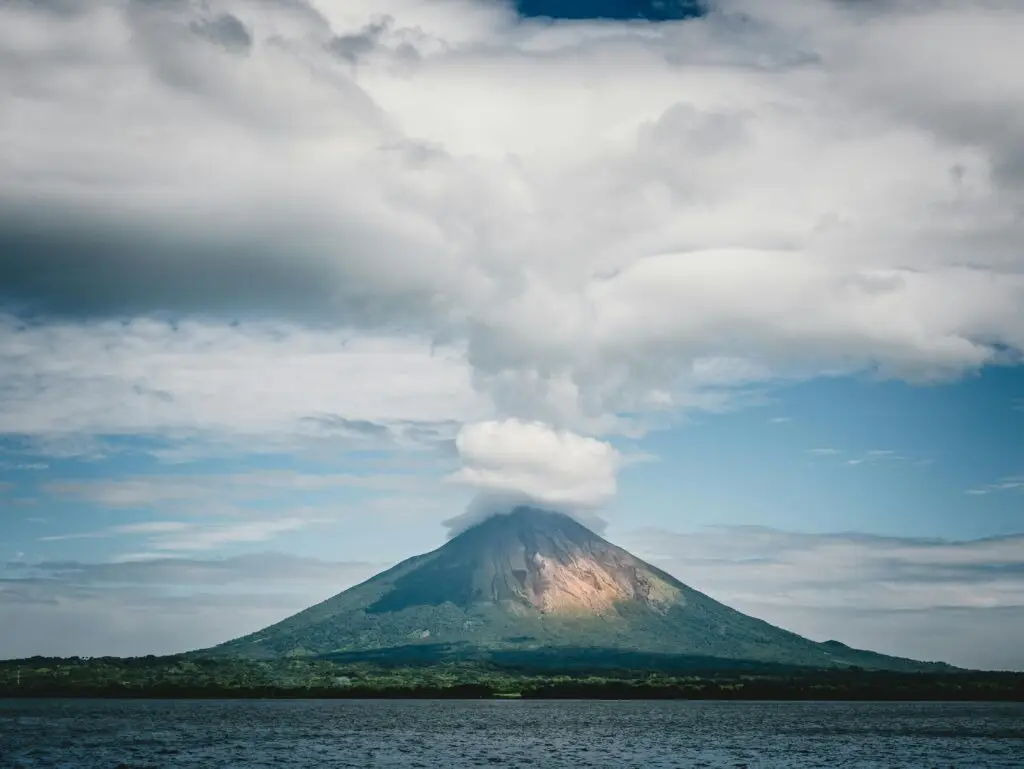
In the middle of Lake Nicaragua lies Ometepe, a mystical island formed by two volcanoes rising dramatically from the water. Concepción, perfectly cone-shaped, and Maderas, covered in cloud forest, dominate the horizon like twin guardians of the island. Beaches of black volcanic sand circle the coastline. Howler monkeys call from trees. Waterfalls tumble from mist-covered cliffs.
Life on Ometepe is quiet and simple. The island has small villages, farms growing plantains and coffee, horseback trails, and peaceful beaches. Roads are bumpy but scenic. Families ride motorcycles with children on their laps. Cows wander along the roadside. Horses drink from streams. The atmosphere is slower, softer, and more connected to nature than anywhere else in the country.
Hiking Maderas leads through cloud forest alive with butterflies, orchids, moss, and birds. Concepción’s volcano route is more challenging, offering sweeping views of the lake from its slopes. Freshwater springs like Ojo de Agua offer crystal-clear pools surrounded by trees and sunlight.
Ometepe feels spiritual, peaceful, and timeless — a place shaped by water, fire, and silence.
The Corn Islands — Caribbean Blue, Peaceful Villages & Island Life
Far from the mainland, in the Caribbean Sea, lie two of Nicaragua’s most enchanting destinations: Big Corn Island and Little Corn Island. These are islands of white-sand beaches, turquoise water, coral reefs, coconut groves, and slow island rhythms.
Big Corn Island is larger, with small neighborhoods, palm-shaded beaches, fishing docks, and a laid-back Creole culture. Music fills the air. People speak English Creole. The atmosphere is relaxed and friendly. Colorful houses sit beneath coconut palms, and fishing boats rest on calm water.
Little Corn Island is even more tranquil — no cars, no noise, only sandy paths lined with palms, turquoise shallows filled with fish, and hammocks swinging in the breeze. Days pass slowly here: snorkeling over coral reefs, drinking coconut water, walking barefoot on the beach, watching the sunrise turn the sea into gold.
The Corn Islands feel like a hidden Caribbean paradise untouched by mass tourism.
San Juan del Sur — Surf, Sunsets & Coastal Energy
San Juan del Sur, on the Pacific coast, is a lively surf town famous for beaches, nightlife, and some of the most beautiful sunsets in Central America. The town itself sits in a crescent bay with fishing boats drifting in the water and hills rising behind colorful houses.
Nearby beaches like Playa Maderas, Playa Remanso, and Playa Hermosa offer waves perfect for surfers of all levels. Dirt roads lead to small beach huts, surf schools, cafés, and wide sandy shores backed by cliffs and forests. Sunsets here are legendary: the sky explodes in red, orange, and purple as the sun sinks into the ocean.
San Juan del Sur blends youthful energy with coastal beauty. Travelers from around the world gather in bars, restaurants, and beachfront lounges, creating an international yet relaxed atmosphere.
Masaya — The Mouth of Fire
Masaya Volcano is one of Nicaragua’s most iconic natural wonders. Unlike many volcanoes that require long hikes, Masaya allows visitors to stand at the rim of an active crater glowing with molten lava. At night, the crater lights up like a furnace, with fiery magma bubbling and swirling beneath a plume of smoke.
The experience is dramatic, primal, and unforgettable. Nearby, Masaya’s artisan market showcases handmade hammocks, carved wooden masks, ceramics, leather goods, and colorful crafts produced by local artisans.
The town of Masaya feels local and spirited — markets, music, and community life blending with one of the most active volcanic regions in Central America.
Mombacho & The Cloud Forest
Mombacho Volcano towers above Granada, covered in thick cloud forest that feels cool, refreshing, and full of biodiversity. Trails lead through tall trees draped with moss, ferns growing along pathways, and orchids hiding in branches. The air is crisp and damp, filled with birdsong and the distant sound of wind moving through the leaves.
At the base of the volcano lie coffee plantations where beans grow in rich volcanic soil. The region feels green, fertile, and harmonious.
Río San Juan — Jungle Rivers & Caribbean Rainforest
The Río San Juan region offers some of Nicaragua’s wildest landscapes — dense forests filled with monkeys, birds, caimans, and butterflies; wide rivers flowing slowly through the jungle; and wooden houses on stilts in quiet riverside villages.
El Castillo, a historic town overlooking the river, has a small fortress built in the 17th century to defend against pirates. The views are spectacular: river, forest, sky, and small boats drifting across the water.
Further downstream, the Indio Maíz Biological Reserve contains some of the richest biodiversity in Central America — towering trees, rare mammals, tropical birds, and untouched rainforest.
The Río San Juan feels remote, peaceful, and deeply connected to nature.
Matagalpa & Jinotega — Coffee Highlands & Misty Mountains
In the northern highlands, mountains rise into cool, cloud-covered peaks. Coffee farms stretch across green hillsides. Rivers run cold and clear. Pine forests whisper in the wind. The towns of Matagalpa and Jinotega are surrounded by natural reserves, waterfalls, hiking trails, and viewpoints overlooking valleys of deep green.
Coffee culture is strong here. Plantations welcome visitors to learn about the growing and roasting process while enjoying the aroma of freshly brewed coffee. The atmosphere is fresh, cool, and comforting — a sharp contrast to the hot lowlands.
Culture of Nicaragua — Tradition, Family, Art & Happiness
Nicaraguan culture is grounded in simplicity, warmth, community, and resilience. People value family, hospitality, and shared moments. Celebrations involve traditional dances, folk music, colorful costumes, processions, fireworks, and street festivals.
Music fills daily life: marimba melodies, romantic boleros, folk songs, and modern Latin rhythms. In the Caribbean regions, reggae, salsa, and Creole music create a different heartbeat.
Craftsmanship thrives throughout the country: pottery from San Juan de Oriente, handmade hammocks from Masaya, woven baskets, wood carvings, leatherwork, and paintings filled with bright colors and surreal imagery.
Daily life feels humble and joyful. People gather in plazas. Children play baseball and soccer. Markets overflow with fruit, vegetables, and local dishes. Tradition is strong, but so is a sense of easygoing happiness.
Food of Nicaragua — Simple, Fresh & Full of Comfort
Nicaraguan cuisine is warm, hearty, and based on maize, beans, rice, plantains, cheese, and tropical fruit. Gallo pinto, a mix of rice and beans, is a beloved staple served with eggs, cheese, and tortillas. Indio viejo, a thick maize stew with meat, peppers, and onions, reflects Indigenous roots. Nacatamales — corn dough steamed in plantain leaves — appear at family gatherings.
Plantains are served fried, mashed, or baked. Fresh fish and seafood dominate coastal areas. Coffee from the highlands is rich and smooth. Mangoes, papayas, pineapples, and bananas grow abundantly.
Food in Nicaragua feels homemade, comforting, and rooted in tradition.
The Emotional Essence of Nicaragua
Nicaragua lingers in the memory.
It stays in the sound of waves smashing on black-sand beaches.
In the calls of howler monkeys echoing across forests at dawn.
In the golden glow of Granada’s cathedral at sunset.
In the steam rising from volcano craters.
In the feeling of warm wind brushing your face as you ride past fields and mountains.
In the simplicity of rural life, the kindness of strangers, the laughter of children in small villages.
In the clear water of the Corn Islands, where time moves slowly and gently.
In the courage of a country that has endured and continues to rise.
In the soul of a land shaped by fire, water, and heart.
Nicaragua is raw, beautiful, peaceful, emotional, and full of life.
It is a country that invites you not just to visit — but to feel.
 Related Articles
- Kakslauttanen Arctic Resort
- Top 10 Most Unique Places to Stay in Europe
- 10 Incredible Castles Around the World