
🇵🇦 Panama Travel Guide
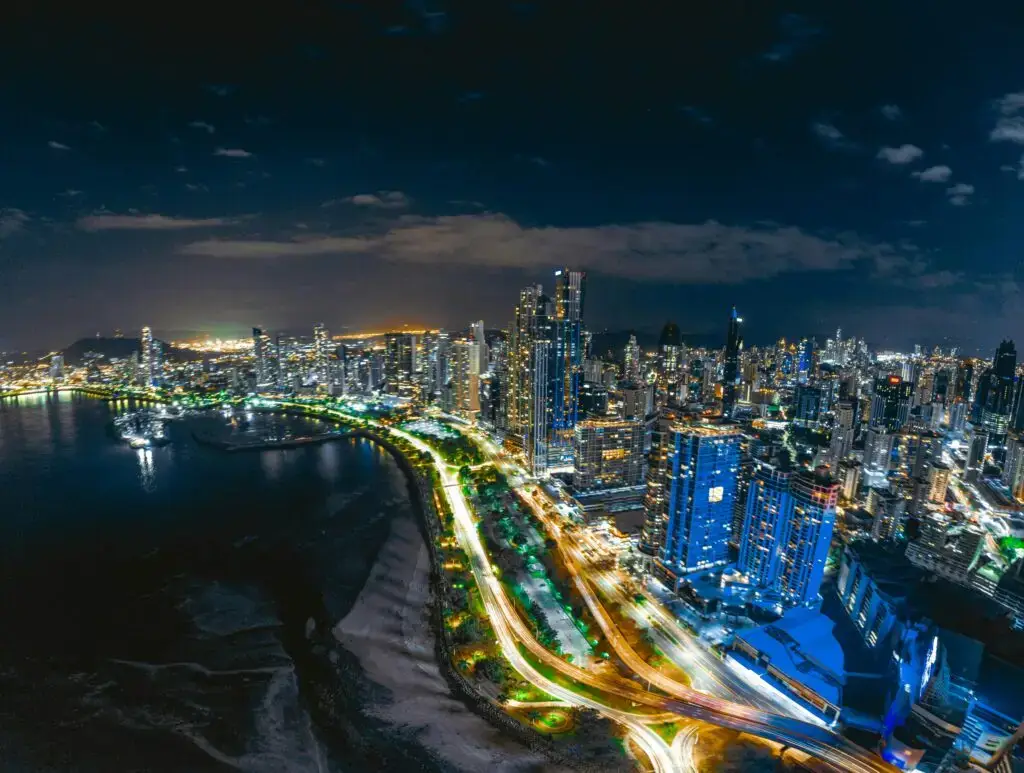
Where Rainforest Meets Skyline, Where Caribbean Colors Meet Pacific Calm, Where Ancient Culture Lives Beside Modern Vision
Panama is a country defined by contrast and connection — a place where two oceans meet, where skyscrapers reflect the morning sun while rainforest hums just beyond the horizon, where Indigenous traditions mix naturally with cosmopolitan energy, and where islands drift across turquoise water like drops of emerald scattered on glass. It is a slender bridge between continents, but culturally and geographically, it feels like a world of its own. Everything here is intense and alive: the green of the jungle, the blue of the Caribbean, the gold of Pacific sunsets, the vitality of the people, the power of the canal, and the softness of beaches that stretch into warm, shimmering light.
Panama is modern yet ancient, wild yet organized, peaceful yet full of energy. Walking through its capital, you see futuristic towers rising above the bay. Traveling just an hour away, you find yourself in forests echoing with bird calls, rushing rivers, misty mountains and Indigenous communities whose traditions predate the canal by centuries. The Pacific coast feels wide and calm, shaped by long stretches of beach and slow-moving tides. The Caribbean side feels colorful, musical, raw and filled with island life. The sense of diversity is overwhelming in the best way. This is a country with countless faces — each region singing its own story, each landscape shaping its own rhythm.
This first part of the guide explores Panama’s emotional heart: its iconic capital, its colonial gems, its wildlife-filled rainforests, its historic canal and its unique blend of cultures. From Casco Viejo’s cobblestones to the jungles around Gamboa, from the Caribbean breeze drifting across San Blas to the cosmopolitan pulse of Panama City, the contrasts come together to reveal a country that feels both ancient and futuristic.
Panama City — A Skyline Rising Between Oceans & Rainforest
Panama City is unlike any other capital in Central America. It rises tall and bright, full of steel and glass, more reminiscent of Miami or Singapore than of its regional neighbors. The Pacific Ocean curves around the city’s coastal strip, reflecting towers that glow gold at sunrise. The Cinta Costera, a sweeping waterfront boulevard, wraps around the bay where locals jog, cycle and enjoy the breeze. The atmosphere feels modern, dynamic and full of possibility — a place where business, culture and coastal living blend seamlessly.
Yet despite its modern appearance, Panama City is shaped by nature. Behind the skyline are hills covered in rainforest, remnants of an ecosystem that once stretched across the entire isthmus. The sound of tropical birds mixes with city noise. Warm wind from the Pacific drifts through the skyscraper canyons in the afternoon. Afternoons soften into pastel sunsets, turning the sky orange, pink and purple as the sun sinks behind distant mountains.
Walking through the downtown districts — Punta Pacifica, San Francisco, Obarrio and Avenida Balboa — you feel the city’s international atmosphere. Restaurants serve cuisines from every corner of the world. Cafés brew coffee from highland farms. Street vendors sell empanadas, fruit and snacks. Cars weave among modern boulevards. Towering condominiums rise high above parks and plazas. Panama City is an economic and cultural hub, the crossroads of the Americas.
But the city’s soul lies not only in its skyscrapers — it lies in the contrast between the futuristic skyline and the ancient worlds that surround it.
Panama City feels vibrant, ambitious, global and deeply connected to the ocean.
Casco Viejo — Colonial Beauty, Rooftop Views & Romantic Old-World Charm
Just west of the modern center lies Casco Viejo, a neighborhood that feels like another world. Founded in 1673 after the original city was destroyed by pirates, Casco Viejo is a masterpiece of colonial architecture: pastel-colored houses with balconies draped in flowers, narrow streets paved with old stone, plazas lined with cafés and churches whose bells echo through warm afternoon air.
Walking through Casco Viejo is like stepping into a postcard. The early mornings are quiet, filled with the gentle sound of waves and footsteps along old cobblestones. By midday, sunlight warms the façades, and people gather in shaded squares drinking iced coffee and chatting under trees. In the evening, the neighborhood transforms: rooftops glow with lanterns, music drifts across balconies, bartenders mix cocktails overlooking the skyline, and the warm Caribbean breeze fills the air.
The architecture blends Spanish, French and Caribbean influences. Some buildings are fully restored, painted in soft blues, whites and earth tones, while others remain partially crumbled, their walls covered in vines — reminders of the city’s layered history. The mixture of restored elegance and decayed beauty gives Casco Viejo an emotional depth, a sense of time passing gently but persistently.
Local life here is intimate. Art galleries display paintings inspired by Panama’s Indigenous cultures and landscapes. Restaurants serve Panamanian dishes made with local ingredients — yucca, plantains, fresh fish, coconut rice, ceviche, corn cakes, tamales and tropical fruit. Street cats lounge in the shade. Children play soccer on cobblestone corners. Tourists photograph the narrow streets. Locals sit on balconies watching evening settle over the bay.
From many rooftops, you see the astonishing contrast: the old city glowing beneath you, and the modern skyline rising across the water like a wall of light. This view captures Panama’s identity perfectly — historic, modern, Caribbean, Pacific, old and new, all at once.
Casco Viejo feels artistic, romantic, historical and deeply atmospheric.
The Panama Canal — A Human Masterpiece Surrounded by Wild Nature
The Panama Canal is not just an engineering marvel — it is the heartbeat of the country, a symbol of connection and human ingenuity. Stretching across the isthmus from ocean to ocean, the canal has shaped global trade, politics and culture for more than a century. It is incredible to witness ships — some taller than buildings — rise and fall within the locks as they cross Central America through a corridor of water surrounded not by industry, but by dense tropical rainforest.
The view from the Miraflores or Agua Clara locks is hypnotic. Massive vessels glide silently into chambers, water rises or drains, gates open like enormous metal doors, and the ships continue their journey toward the Atlantic or Pacific. The process appears elegant and effortless, yet behind it lies unimaginable engineering.
What surprises many visitors is how wild the surroundings are. Just minutes from the locks, rainforest spreads across hills. Monkeys swing through trees. Sloths cling to branches. Toucans move between the canopy. Crocodiles glide along the banks. The canal zone feels like a national park that happens to contain one of the world’s greatest transportation routes.
Traveling by boat along parts of the canal — especially Gatún Lake and the narrow Culebra Cut — brings you face to face with this mixture of engineering and nature. Small islands dot the lake. The water reflects clouds. The line between human creation and natural beauty becomes blurry.
The canal feels monumental, calm, profound and humbling — a place where human ambition meets the timeless power of the rainforest.
Amador Causeway — Ocean Views, Boats & Skyline Horizons
At the mouth of the canal, the Amador Causeway stretches into the Pacific like a long, sunlit ribbon. Built from excavated rock during the canal’s construction, it now connects three small islands — Naos, Perico and Flamenco — creating a relaxing waterfront escape just minutes from downtown Panama City.
Walking or cycling along the causeway, you feel the ocean on both sides. Boats drift across the water. The breeze carries the scent of salt and tropical flowers. Restaurants line the route with outdoor seating where you can watch sunsets that turn the ocean gold and the skyline pink.
The view of Panama City from the causeway is extraordinary. The towers stand like shimmering blades rising above the water, glowing in soft evening light. Pelicans dive for fish. Cruise ships dock offshore. Locals jog, skate and picnic along the pathway.
The causeway feels fresh, breezy, relaxed and beautifully connected to city and sea.
Rainforest at the City’s Edge — Metropolitan Park, Gamboa & Soberanía
One of Panama’s most rare qualities is the proximity of rainforest to its capital. Within minutes, you can leave skyscrapers behind and enter forests filled with wildlife, silence and green light.
Metropolitan Natural Park, inside the city, is a sanctuary where walking trails climb hills covered in tropical trees. The forest is alive with birds, iguanas, monkeys and butterflies. From the viewpoints, you see both jungle and skyline — an unforgettable contrast.
Further north lies Soberanía National Park, part of a vast protected area that spans the canal zone. Here, the famous Pipeline Road — one of the world’s best birdwatching trails — cuts through deep forest. Birdsong fills the air. Leaves drip with humidity. The canopy glows green under filtered sunlight. Sloths hide among branches. Troops of monkeys move in shadows. The forest feels ancient, quiet and full of secrets.
Near Gamboa, the Chagres River flows gently through dense vegetation, feeding Gatún Lake. The area is rich with wildlife. Boat trips reveal crocodiles sunbathing on riverbanks, turtles resting on logs, herons stalking along the shore and capuchin monkeys peering curiously from trees.
These forests show a different face of Panama — lush, humid, calming and wild.
Panama’s Indigenous Communities — Tradition, Identity & Ancestral Wisdom
Panama is home to several Indigenous groups whose traditions and territories shape the cultural identity of the country. Among them, the Guna, Emberá, Wounaan, Ngäbe-Buglé and others maintain languages, communities and customs that trace back centuries before European arrival.
In the rainforest near the Chagres River, Emberá communities live in stilted houses made from natural materials. Their villages feel peaceful and connected to nature, with paths winding between palm-thatched huts and rivers flowing beside lush vegetation. The Emberá are known for their traditional body painting made from jagua fruit, their vibrant woven baskets and their deep knowledge of medicinal plants. Visitors are welcomed with music played on handmade flutes and drums, and with stories of their history and relationship with the land.
Along the Caribbean, the Guna Yala territory stretches across a chain of islands and mainland forests. The Guna people are known for their molas — intricately embroidered textiles that tell stories of nature, mythology and daily life. Their culture values community decision-making, spiritual connection and harmony with nature.
These communities bring emotional depth to Panama. Their languages, art, ceremonies and ways of life enrich the cultural soul of the nation.
Panama’s Indigenous heritage feels respectful, wise, spiritual and full of identity.
Pacific Coast Near the Capital — Warm Beaches, Soft Waves & Coastal Calm
Just west of Panama City begins a series of beaches that stretch along the Pacific for miles — Playa Bonita, Veracruz, Punta Chame, Playa Blanca and others. The coastline here feels relaxed, warm and open. Tides move widely across soft sand. Fishermen cast nets in shallow water. Small boats rest on the shore. Pelicans glide above waves.
The Pacific near the capital is not dramatic or rugged — it is calm, wide and peaceful. People come here to relax, swim, eat seafood and enjoy sunsets that melt into the horizon in shades of amber and rose.
The atmosphere is coastal simplicity wrapped in warm air.
The Atlantic-Caribbean Side — Colorful, Raw & Dreamlike
While the Pacific near Panama City feels soft and golden, the Caribbean side of Panama feels wild, bright and full of life. The water shifts between turquoise and aquamarine with sunlight. Palm trees lean over white sand that stays cool underfoot. Coral reefs shimmer beneath the surface. The air feels humid, tropical and infused with salt and music.
You sense immediately that the Caribbean shapes culture in a different way — more rhythm, more color, more warmth in the voices of the people. Houses painted in blue, yellow and pink line village roads. Children run barefoot with laughter echoing across beaches. Coconut palms sway above shallow lagoons. Boats drift slowly, guided by local fishermen.
This coast leads into the San Blas Islands, where the Guna Yala territory transforms the Caribbean into a chain of paradise islands, each one isolated, pure and surrounded by impossibly clear water.
But the deep dive into San Blas comes in Part 2.
Bocas del Toro (Introduction) — Bohemian Caribbean Life on a Tropical Archipelago
Near the Costa Rican border lies Bocas del Toro — a collection of islands known for their bright colors, reggae energy, thriving coral reefs and calm Caribbean water. Bocas feels playful, youthful, warm and incredibly relaxed. Houses stand on stilts above blue water. Water taxis zip between islands. Music drifts from beach bars. Surfers ride waves along forest-covered shores. Jellyfish glow beneath docks at night. Monkeys call from mangroves. The atmosphere is equal parts tropical paradise and bohemian escape.
This introduction only scratches the surface — Part 2 will explore Bocas del Toro in deep detail, from Red Frog Beach to Starfish Beach to Dolphin Bay.
Colonial Towns Beyond Casco — Penonomé, La Villa de Los Santos & Cultural Roots
Outside the capital, Panama’s interior is filled with towns that reveal the country’s rural charm. La Villa de Los Santos is known as the birthplace of Panamanian independence. Its streets feel quiet and filled with stories. Traditional houses display wooden doors, clay roofs and bright courtyards. Music plays during festivals celebrating folklore and national pride.
Penonomé, located in Coclé Province, serves as a gateway to surrounding mountains and rivers. The town feels peaceful and suburban, surrounded by fields, fruit farms and warm breezes.
These towns reflect the cultural heartland of Panama — friendly, calm, airy and full of heritage.
The Feel of Panama — Warm, Modern, Ancestral & Coast-to-Coast Beautiful
Panama is a country you experience not only through your eyes, but through sensation.
You feel its warmth in the breeze from two oceans.
You feel its modern pulse in the capital’s skyline.
You feel its ancient soul in the ruins, forests and Indigenous communities.
You feel its Caribbean rhythm in villages with brightly painted houses.
You feel its Pacific calm in pale sunsets and long beaches.
You feel its wild heart in the rainforest that breathes around the canal.
Everything flows together into one identity — energetic, spiritual, natural, ambitious and profoundly alive.
Panama welcomes you with contrast and complexity. It is a nation that moves between worlds with ease and confidence, inviting travelers to explore its diversity and discover its soul.
Caribbean Islands, Mountain Highlands, Cloud Forests, Wildlife Sanctuaries & the Emotional Soul of Panama
If the first part of Panama introduces you to the country’s energy — the skyline, the canal, the rainforest, the old streets and the Pacific breeze — then this second part reveals its heart. Here lie the places that capture travelers’ imaginations: the San Blas Islands shimmering in impossible shades of turquoise, the wild archipelago of Bocas del Toro pulsing with Caribbean rhythm, the cloud forests of Boquete where mist floats between ancient trees, the volcanic craters of El Valle de Antón, and the Pacific coastline where waves roll endlessly under orange sunsets.
Panama’s true magic unfolds when you leave the capital and move into these coastal and mountain worlds. The diversity becomes overwhelming in its beauty — tropical islands so pure they feel untouched by time, mountains so green they glow at dawn, forests filled with hummingbirds, and small towns where life moves at a peaceful, familiar rhythm.
This is the Panama that stays in your heart long after the journey ends.
San Blas (Guna Yala) — 365 Islands of Pure Caribbean Paradise
San Blas is the crown jewel of Panama’s Caribbean coast — a chain of more than 300 islands, each one small, pristine and surrounded by electric-blue water. Many are nothing more than circles of white sand with a few palm trees, floating like emerald droplets across the sea. Others have small Guna communities living in harmony with the ocean, practicing traditions that have endured for centuries.
Arriving in San Blas feels like entering a dream. The water is so clear you can see starfish resting on the sea floor. The sand is powdery and bright, shimmering under the Caribbean sun. Palm trees lean toward the water, their leaves whispering softly in warm breeze. Small boats glide between islands, carrying travelers, fishermen and Guna families moving between village and mainland.
The beauty here is delicate, pure and emotionally overwhelming. Every island feels like a personal paradise. Swimming in San Blas is a surreal experience — the water is warm, shallow and glowing with shades of turquoise, mint, sapphire and crystal. Coral reefs grow beneath the surface, filled with colorful fish drifting through the current. Sunlight filters through the water, creating patterns that dance across the sand.
Life on the islands follows a gentle rhythm. Days begin with soft light spreading across the horizon. Fishermen set out in wooden canoes. Children play on the beach. Women in traditional clothing — bright skirts, beaded jewelry and colorful molas — prepare food or sew intricate patterns. The ocean glistens as the sun climbs higher. In the afternoon, the heat softens into a warm breeze with waves rolling gently against the shore. At sunset, the sky becomes a canvas of orange and lavender, reflected perfectly in the calm sea.
Nights in San Blas are silent except for the shifting wind and the soft sound of waves. Stars shine intensely without city lights. The Milky Way stretches across the sky. Campfires glow on distant islands. You feel connected to nature in a way that is deeply grounding.
The Guna people protect these islands fiercely. Their culture is built around community, autonomy, storytelling and respect for land and sea. They limit development to preserve the islands’ natural beauty. Visiting San Blas is not about luxury resorts — it is about simplicity, authenticity and connection to a culture that has survived through strength and unity.
San Blas feels sacred, peaceful, untamed and breathtakingly beautiful — a place where the world slows down and nature speaks.
Bocas del Toro — Caribbean Freedom, Color, Music & Island Adventure
Bocas del Toro is one of the most vibrant archipelagos in the Caribbean — a collection of islands where life moves to the rhythm of reggae beats, ocean breeze and tropical sunlight. Everything here feels warm, creative, bohemian and joyful. Houses rise on stilts above blue water. Jungle reaches down to the beaches. Small boats — the island taxis — zip between islands, leaving white trails through turquoise sea. In the evenings, lights shimmer across the water as music drifts from bars and restaurants along wooden boardwalks.
The main island, Isla Colón, is the heart of the archipelago. The town of Bocas is lively, colorful and full of backpackers, surfers, divers, local families and travelers from all over the world. Small bakeries serve fresh bread in the morning. Fruit stands offer pineapples, mangoes, bananas and coconuts. Dive shops open early for trips to coral reefs. Surfers strap boards to bicycles and ride toward the waves. The island energy is contagious — relaxed, free-spirited and full of life.
To the south, Isla Bastimentos offers a wilder, more natural environment. Red Frog Beach is one of the most beautiful beaches in Panama — a long stretch of golden sand backed by rainforest where monkeys move through trees and small red frogs hop across the forest floor. The waves crash powerfully here, creating a dramatic contrast between land and sea. The nearby mangroves are calm and glassy, perfect for kayaking at dawn when the water reflects the rising sun.
Further across the archipelago lies Isla Carenero, smaller and quieter but full of coastal charm. Wooden houses painted in bright blues and yellows stand above shallow water. Hammocks sway on porches. Children jump from docks into warm sea. The island feels intimate and relaxed.
Bocas del Toro is also known for its incredible marine life. Coral reefs surround the islands, home to sea turtles, parrotfish, rays, nurse sharks and countless tropical species. At night, bioluminescent plankton glow when you move your hands through the water, creating magical trails of blue light.
Then there is Dolphin Bay, where small pods glide through calm water, rising gracefully to breathe. The atmosphere feels like a sanctuary — soft, quiet and full of awe.
In Bocas del Toro, nature, music, culture and sea blend into one vibrant world. Life is unhurried. Days stretch long. Nights shimmer with sound. It is a place people come for a few days, then stay for weeks — drawn by the ease, the beauty, the warmth, the rhythm.
Bocas feels joyful, colorful, tropical and deeply alive.
Boquete — Cloud Forests, Coffee Mountains & Cool Misty Serenity
High in the Chiriquí highlands lies Boquete, a town embraced by mountains, cloud forests and breezes carrying the scent of coffee flowers. The air here is cool and refreshing — a gentle contrast to the heat of the lowlands. Mist moves like soft breath through the trees. Rivers flow rapidly across rocks. The mountains glow blue at dawn and gold at sunset.
Boquete is known for some of the best coffee in the world. Farms stretch across slopes, blanketed in green leaves and red coffee cherries. Walking through these hills is a sensory experience — the smell of ripe coffee fruit, the sound of birds calling from branches, the sight of sunlight filtering through tall shade trees that protect the plants. Farmers explain the complexities of growing, harvesting and roasting beans. Tasting coffee here feels almost spiritual — rich, smooth, floral and shaped by volcanic soil and mountain rain.
Beyond coffee, Boquete is a paradise for nature lovers. The trails of Barú Volcano National Park lead through cloud forests where orchids cling to branches, moss blankets tree trunks and hummingbirds flash iridescent colors among the flowers. The path to Volcán Barú itself is challenging but rewarding. From the summit, on clear mornings, you can see both the Pacific Ocean and the Caribbean Sea — a view so rare and breathtaking it feels almost unreal.
Waterfalls surround Boquete, tumbling down cliffs into cold, refreshing pools. Rivers flow fast through the valley, carving channels through volcanic rock. The town is quiet, clean and friendly — a place where people enjoy small cafés, mountain air and peaceful streets.
At night, Boquete becomes cool and still. Stars appear through drifting clouds. The sound of the river echoes softly. The mountains form dark silhouettes against the sky. Everything feels safe, calm and connected to nature.
Boquete feels rejuvenating, serene, mystical and full of fresh mountain spirit.
El Valle de Antón — A Town Inside a Volcanic Crater
El Valle de Antón is one of the most unique places in Panama — a peaceful town built inside the caldera of an ancient volcano surrounded by lush mountains. The air is cool and fragrant with flowers. Trees sway gently in valley breeze. The landscape feels untouched, delicate and naturally beautiful.
The crater walls rise like green guardians around the town, creating a sense of enclosure and calm. The valley floor is fertile, full of gardens, farms, waterfalls and forests. Walking or cycling through El Valle feels soothing — colorful houses, flowers in full bloom, small cafés, local markets selling fruits, vegetables and handmade crafts.
Hiking paths lead to viewpoints where the entire crater spreads out below you like a vast green bowl. Rivers and waterfalls move across volcanic rock. Butterflies dance in shafts of sunlight. The sound of water, wind and birds creates a natural symphony.
Hot springs bubble beneath the surface. Rock formations shaped by ancient volcanic activity rise from the earth. The town’s wildlife rescue center cares for exotic animals from surrounding forests.
El Valle feels peaceful, slow, gentle and deeply healing — a perfect escape into nature.
Pacific Beaches — Sunset Coastlines, Surf Towns & Warm Golden Light
The Pacific coast of Panama stretches long and wide, lined with beaches that glow gold under the sun. The ocean here feels powerful yet calm, with rhythmic waves that soothe the senses. Tides shift dramatically, leaving vast stretches of sand exposed during low tide. The sunsets along this coast are unforgettable — the sky turns deep orange and pink, reflected in shimmering water.
Towns like Santa Catalina, Playa Venao, Cambutal and others create a coastal lifestyle shaped by surfing, seafood, sunlight and simplicity. Surfboards lean against palm trees. Fishermen pull nets from the water at dawn. Restaurants serve fresh ceviche with lime. Dogs sleep in the shade. Travelers read books in hammocks while wind rustles through palm leaves.
Santa Catalina is a gateway to Coiba National Park, one of the wildest and most biodiverse marine parks in the Americas. The water here is clear and deep, home to sharks, turtles, dolphins, whales, rays and huge schools of fish. Coiba feels untouched — an island with golden beaches, dense forests and coral reefs protected by distance and isolation.
Playa Venao, on the Azuero Peninsula, has a youthful energy. Surfers ride waves that break smoothly along the crescent-shaped beach. Music drifts from hostels and cafés. Travelers gather for sunset, talking and laughing as the sky turns purple.
The Pacific coast of Panama feels warm, relaxing, wild and emotionally soothing.
Wildlife & National Parks — A Country Pulsing With Life
Panama’s ecosystems are astonishingly rich. Its position as a land bridge between North and South America allows species from both continents to coexist. The result is a country filled with exotic animals, tropical plants and diverse habitats.
Rainforests hum with insects. Monkeys move through tree canopies. Sloths cling lazily to branches. Toucans flash colorful beaks. Frogs sing at night. Rivers carry life through valleys. Coral reefs protect coastlines. Mountains shelter cloud forests where rare birds hide among moss-covered branches.
Parks like Darien National Park, Coiba, Soberanía, Barú Volcano, La Amistad and Chagres protect some of the world’s most important biodiversity. These areas feel ancient, untouched and deeply sacred.
Nature in Panama feels alive, magical, abundant and full of spirit.
The Emotional Soul of Panama
Panama is more than a destination — it is a feeling that stays with you.
You remember the sound of waves hitting San Blas sand.
You remember the glow of Bocas nights with music drifting over water.
You remember the cool mist of Boquete touching your skin at sunrise.
You remember the stillness of El Valle’s crater, breathing quietly beneath mountains.
You remember the rainforest singing softly around the canal.
You remember the warmth of people, the taste of fresh fruit, the sunset over the Pacific, the scent of wet earth after tropical rain.
Panama leaves a mark through contrast — urban and wild, Caribbean and Pacific, traditional and modern — blended into one identity that feels both ancient and new.
It is vibrant, peaceful, powerful, gentle, colorful, spiritual and deeply alive.
Panama stays in your heart.
 Related Articles
- Kakslauttanen Arctic Resort
- Top 10 Most Unique Places to Stay in Europe
- 10 Incredible Castles Around the World