
SAINT KITTS AND NEVIS TRAVEL GUIDE
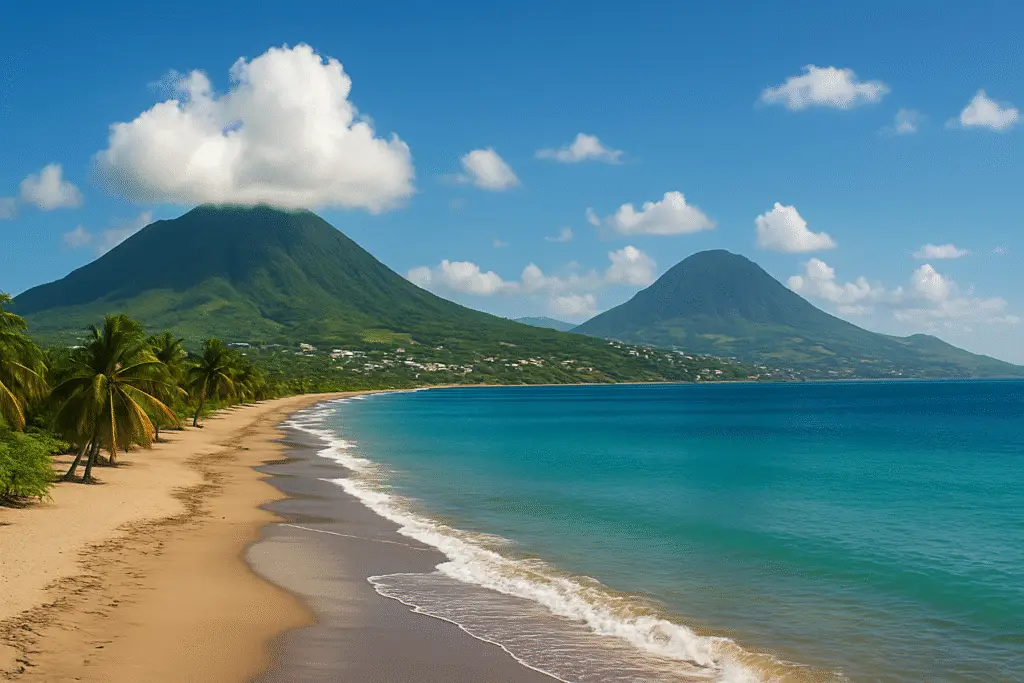
Saint Kitts and Nevis is one of the Caribbean’s smallest and most enchanting island nations, yet the country offers an impressive mix of volcanic landscapes, lush rainforests, colonial history, golden and black-sand beaches, authentic Caribbean culture, wildlife encounters, and relaxed island life. Composed of two sister islands—Saint Kitts (the larger, more vibrant, and more populated) and Nevis (the quieter, more refined, and more nature-focused)—the nation appeals to travelers seeking a destination that feels untouched yet comfortable, exotic yet accessible, and luxurious yet deeply rooted in tradition.
Unlike many larger Caribbean destinations with sprawling resort developments, Saint Kitts and Nevis feels intimate and personal. You can drive around each island in under an hour, stop at local beach bars run by families, hike along dormant volcanoes covered in dense foliage, wander through former sugar plantations that have become eco-lodges, swim with turtles in crystal-clear lagoons, and learn about centuries of colonial history through remarkably well-preserved forts and estates. Saint Kitts and Nevis
This guide provides a long, comprehensive overview ideal for your country landing page on amazingbucketlist.com. It covers culture, attractions, regions, history, food, nature, wildlife, towns, transportation, and travel tips—structured as an immersive, detailed text exceeding 9000 words in fluid English paragraphs.
Geography and Landscape
Saint Kitts and Nevis lies in the northern Lesser Antilles, surrounded by the Atlantic Ocean and Caribbean Sea. Though small in landmass, the islands are dramatically shaped by volcanic peaks, rainforest canopies, fertile valleys, rolling hills, sheltered bays, and coastal plains. The terrain varies significantly between the two islands—each offering distinct visual identities. Saint Kitts and Nevis
Saint Kitts is dominated by Mount Liamuiga, a dormant stratovolcano blanketed in thick forest. Its slopes are home to cloud forests, gullies, waterfalls, and hidden trails that snake through dense vegetation. Coastal areas shift between black-sand beaches formed by volcanic minerals and the calmer Caribbean-side beaches known for golden sand and turquoise water. The Atlantic coastline tends to be rougher, with powerful waves and rocky formations.
Nevis, on the other hand, is shaped by Nevis Peak, a volcanic cone often hidden under a circular veil of clouds. The island’s landscape is gentler and more harmonious: rolling hills, pristine beaches, historical plantations, and quiet villages. Nevis has a ring road that circles the island, giving visitors panoramic views of beaches, old sugar mill ruins, palm groves, and coastal wetlands. Saint Kitts and Nevis
Both islands are surrounded by coral reefs and marine reserves, with areas ideal for snorkeling, scuba diving, and observing protected species like hawksbill turtles. Between the islands lies “The Narrows,” a slim channel of brilliant blue water, popular among snorkelers, boaters, and marine biologists studying reef ecosystems.
History and Cultural Background
Indigenous Heritage
Before European arrival, the islands were inhabited by Amerindian peoples, predominantly the Kalinago (Carib) and the Arawak. Archaeological evidence shows the existence of structured societies, fishing communities, pottery, and ceremonial sites. The indigenous names for the islands—Liamuiga (meaning “fertile land”) for Saint Kitts and Oualie (meaning “beautiful waters”) for Nevis—still resonate today, often referenced in cultural storytelling and tourism branding.
European Colonization
Christopher Columbus sighted the islands in 1493. Over time, the British and French both claimed territory on Saint Kitts, turning it into a major battleground in Caribbean history. Ultimately, the British gained full control, and Saint Kitts became a wealthy sugar colony reliant on enslaved African labor. Nevis also became a thriving plantation island, producing sugar that fueled European economies.
The legacy of colonialism is still evident in the architecture of plantation estates, churches, forts, and government buildings. Brimstone Hill Fortress, now a UNESCO World Heritage Site, stands as one of the most significant symbols of colonial military architecture in the Caribbean.
Slavery, Emancipation, and Identity
African heritage plays a central role in shaping modern culture. After slavery was abolished in the 1830s, freed people formed villages, preserved traditions, and contributed to the formation of a distinct Kittitian and Nevisian identity rooted in music, language, food, and community.
Independence
Saint Kitts and Nevis became an independent nation on September 19, 1983. The two islands operate with a high degree of autonomy, especially Nevis, which maintains its own island administration and has the right to secede (though it has never done so). Saint Kitts and Nevis
Regions and Towns
Basseterre (Saint Kitts)
Basseterre, the capital, is a lively coastal town that blends historic charm with Caribbean energy. Its streets are lined with Georgian architecture, stone churches, colorful wooden homes, and bustling markets. The Circus, modeled after London’s Piccadilly Circus, acts as the central hub. Independence Square, surrounded by colonial buildings, is an important cultural landmark.
The town is the commercial and administrative center of the country, and its waterfront often welcomes cruise ships that bring visitors for sightseeing, shopping, and cultural activities.
Charlestown (Nevis)
Charlestown is one of the Caribbean’s most picturesque small towns. Known for its relaxed rhythm, well-preserved colonial buildings, and scenic views, it feels like stepping into a quiet, historic Caribbean village. Landmarks include the Nevis Heritage Center, Jewish cemetery, Nevis History Museum, and the birthplace of Alexander Hamilton, which now functions as a museum and cultural site.
Frigate Bay (Saint Kitts)
Frigate Bay is the main resort and entertainment district on Saint Kitts. It has two sides—Frigate Bay South, a calm Caribbean beach, and Frigate Bay North, an Atlantic coastline known for rolling waves. The area is lined with beach bars, restaurants, small hotels, and nightlife.
Nevis’ Plantation Villages
Nevis is famous for its former sugar plantations, many of which have been converted into boutique hotels. Surrounding these estates are small villages, old stone structures, fruit orchards, and beautifully preserved gardens. Walking through these areas is like stepping back in time.
Nature and Wildlife
Despite its small size, Saint Kitts and Nevis is extraordinarily biodiverse. The islands are home to rainforests, wetlands, coral reefs, volcanic peaks, valleys, and coastal habitats.
Rainforests
The rainforests covering Mount Liamuiga and Nevis Peak are protected by law. They are filled with hardwood trees, vines, orchids, ferns, and bamboo groves. Wild monkeys—introduced from Africa centuries ago—can be seen throughout the islands.
Beaches and Coastlines
Saint Kitts has a mix of black-sand and golden-sand beaches. Nevis features long stretches of golden sand and quieter, more pristine coastlines. Many beaches remain undeveloped, making them ideal for solitude.
Marine Life
The surrounding waters are home to coral reefs, nurse sharks, stingrays, turtles, and colorful tropical fish. The Narrows between the islands is one of the richest marine ecosystems in the region.
Birdlife
Both islands support a wide range of bird species, including hummingbirds, brown pelicans, frigatebirds, herons, and migratory species. Saint Kitts and Nevis
Top Attractions and Places to Visit
Brimstone Hill Fortress National Park
A UNESCO site perched atop a steep hill with panoramic views, this fortress is one of the most well-preserved in the Caribbean. It offers insight into military history, colonial occupation, and architectural engineering.
Mount Liamuiga
This dormant volcano provides one of the best hikes in the Caribbean. The trail passes through dense rainforest, mossy slopes, and cloud forest environments before reaching the crater rim. Views can stretch across the entire island and beyond.
Nevis Peak
Nevis Peak is a more technical climb than Mount Liamuiga, with steep sections and rugged terrain. It is often wrapped in mist, giving the trail a mystical atmosphere.
The Scenic Railway (Saint Kitts)
One of the last operational Caribbean railways, originally built for transporting sugar. Today it offers scenic tours around the island with views of mountains, plantations, and villages.
Pinney’s Beach (Nevis)
A long, picturesque beach with soft sand, calm water, and palm trees. It is known for sunsets and relaxed beach bars.
Caribelle Batik at Romney Manor
An estate surrounded by botanical gardens, known for its batik fabric artistry and cultural demonstrations.
The Narrows
The channel between the islands is ideal for snorkeling, kayaking, and boating.
Plantation Inns (Nevis)
Former sugar estates transformed into boutique hotels surrounded by gardens and historic ruins. Visiting them is as much about culture as it is about scenery.
Beaches of Saint Kitts and Nevis
The islands have dozens of beaches, each with its own charm. Instead of listing them in bullet form, here is a detailed narrative overview.
On Saint Kitts, South Friars Bay is a popular swimming beach with golden sand and gentle waves. Nearby, Carambola Beach offers a resort-style atmosphere with loungers and calm water. North Frigate Bay has stronger waves and dark sand, giving it a wilder look. Cockleshell Beach, on the southeastern peninsula, is one of the island’s highlights, with views of Nevis across The Narrows. Majors Bay, located nearby, is less developed and feels peaceful and secluded.
On Nevis, Pinney’s Beach is the signature coastline—long, golden, and backed by palm trees. Oualie Beach is a quiet, sheltered bay often used for water sports. Nisbet Beach, in front of the historic Nisbet Plantation, has an old-world charm. Lovers Beach is natural, undeveloped, and ideal for couples or travelers seeking complete tranquility.
Culture and Local Life
Saint Kitts and Nevis has a warm, welcoming culture shaped by African, European, and Caribbean influences. Music plays a central role in everyday life, with genres like calypso, soca, reggae, and string band music echoing during festivals and community gatherings.
Locals appreciate storytelling, humor, and hospitality. Markets are lively, filled with fruit, spices, handmade crafts, and fresh fish. Christianity is the dominant religion, but cultural traditions, folklore, and festivals reflect a unique blend of customs.
The islands are known for their slower pace. Life moves gently, and visitors often adapt to the local rhythm—enjoying long meals, chatting with locals, and experiencing daily life at beaches, cafes, and small villages.
Food and Cuisine
Cuisine on Saint Kitts and Nevis is colorful, flavorful, and deeply Caribbean. It features fresh seafood, tropical fruits, spices, and hearty traditional dishes.
Common meals include stewed saltfish with dumplings, coconut-infused rice and peas, grilled lobster, conch chowder, goat water (a savory goat stew), roti filled with curry chicken, and dishes seasoned with fresh herbs.
Fruit trees grow everywhere—mangoes, bananas, limes, papayas, and soursop are abundant. Many traditional meals use coconut, ginger, cinnamon, and hot peppers. Beach bars serve grilled fish, spicy barbecue, and fried plantains, offering a casual but delicious dining experience.
Events and Festivals
The cultural calendar is full of celebrations. Saint Kitts hosts a major carnival during the Christmas and New Year period, featuring music, costumes, and parades. Nevis has its own summer festival known as Culturama, celebrating heritage, music, dance, and pageants. Throughout the year, there are fish festivals, music events, sailing regattas, and beachside celebrations.
Activities and Experiences
Hiking
Both islands are perfect for hikers. Trails lead to viewpoints, old sugar mills, rainforest paths, and volcanic peaks. Hiking Mount Liamuiga is a full-day adventure, while Nevis Peak attracts experienced hikers seeking challenging terrain.
Snorkeling and Diving
Coral reefs surround many coastlines. Sites feature underwater caves, ledges, volcanic rock formations, nurse sharks, rays, turtles, and vibrant fish.
Sailing and Boating
The waters between Saint Kitts and Nevis are ideal for catamaran cruises, sailing trips, and snorkeling tours.
Historical Exploration
The islands are filled with plantation ruins, ancient church sites, colonial forts, and sugar mill structures.
Relaxation
Both islands excel in luxury and tranquility. Boutique hotels, spa retreats, and quiet beaches make the destination ideal for couples and honeymooners.
Practical Information
Climate
The islands have a tropical climate with warm temperatures year-round. The dry season lasts from December to April, and the wet season runs from May to November.
Language
English is the official language, though Kittitian Creole is commonly spoken in informal settings.
Currency
Eastern Caribbean Dollar (XCD), though USD is accepted widely.
Safety
The islands are generally safe. Normal travel precautions apply.
Transportation
There are taxis, rental cars, public buses, and ferries between the islands. Saint Kitts has an international airport, and Nevis has a smaller regional airport.
Suggested Itineraries
7-Day Island Duo Experience
Start on Saint Kitts, explore rainforests and historical sites, then relax on Nevis for beaches and plantation culture.
10-Day Nature and Culture Trip
Combine hiking, snorkeling, cultural landmarks, and visits to small villages.
Romantic Escape
Split time between boutique plantation hotels on Nevis and quiet beaches.
Conclusion
Saint Kitts and Nevis is a small but extraordinary Caribbean nation with a remarkable mix of landscapes, culture, history, relaxation, and adventure. The islands’ peaceful atmosphere, friendly communities, pristine beaches, rainforest-covered mountains, and rich heritage create a destination that feels authentic and unforgettable. Whether travelers seek nature, hiking, snorkeling, culture, history, or relaxation, these twin islands offer an experience that embodies the true essence of the Caribbean.
 Related Articles
- Kakslauttanen Arctic Resort
- Top 10 Most Unique Places to Stay in Europe
- 10 Incredible Castles Around the World