
🇨🇰 Cook Islands — Full Country Guide
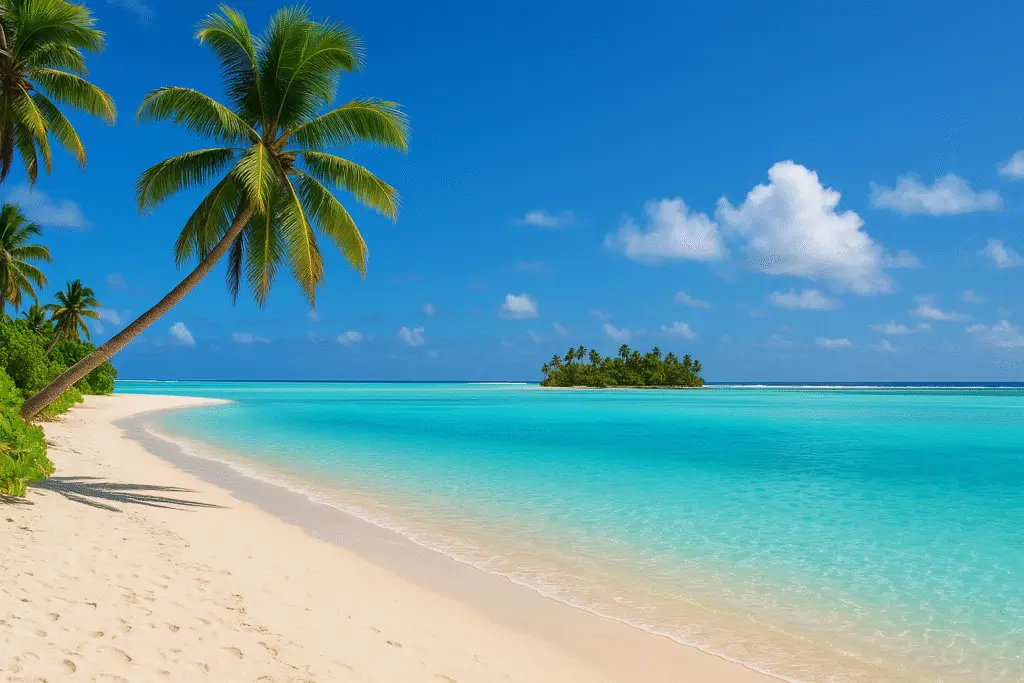
The Cook Islands, a breathtaking archipelago scattered across the South Pacific between French Polynesia and Samoa, represent one of the most enchanting island nations in the region. Known for turquoise lagoons, fertile volcanic interiors, white-sand beaches lined with palms, and vibrant Polynesian culture, the Cook Islands offer a unique blend of natural beauty, traditional life, and quiet modern comforts. Despite their small population and remote location, the islands have developed a distinctive identity shaped by ancestral voyaging traditions, colonial history, commercial contact, and the enduring importance of family and land.
The country consists of 15 islands divided into two major groups: the Southern Cook Islands and the Northern Cook Islands, spread over nearly 2 million square kilometers of ocean. Most of the population lives in the Southern Islands — especially Rarotonga, which acts as the commercial center and main gateway. The economy relies heavily on tourism, but the essence of the Cook Islands goes far beyond visitors. It is a culturally rich nation defined by hospitality, communal life, and deep respect for tradition.
Sunrises illuminate the smooth curve of lagoons, fishermen set out in small boats, elders gather under shade trees to talk, and children splash in warm Pacific shallows. On Sundays, powerful singing fills churches, echoing across valleys. At night, dancers rehearse under moonlight accompanied by drums and chants, retelling ancient stories. This is life in the Cook Islands — calm, communal, and deeply connected to the land and sea.
✅ Quick Facts
| Category | Details |
|---|---|
| Official Name | Cook Islands |
| Capital | Avarua (Rarotonga) |
| Population | ~17,000 |
| Official Languages | English, Cook Islands Māori |
| Currency | New Zealand Dollar (NZD) |
| Government | Self-governing in free association with New Zealand |
| Number of Islands | 15 |
| Region | Polynesia |
| Time Zone | UTC –10 |
| Main Tourism Centers | Rarotonga, Aitutaki |
🌏 Geography & Island Groups
The Cook Islands are divided into:
- Southern Cook Islands — more populated, mountainous, volcanic
- Northern Cook Islands — sparsely populated, low coral atolls
The islands lie in the vast South Pacific quadrant between Samoa and Tahiti, surrounded by deep ocean, lagoons, and reef systems. Because of the wide dispersion of islands, culture varies from place to place, but shared Polynesian identity ties the nation together.
Southern Islands
Include:
- Rarotonga
- Aitutaki
- Atiu
- Mauke
- Mitiaro
- Mangaia
- Palmerston
These islands are volcanic with lush mountains, fertile valleys, and protected lagoons.
Northern Islands
Include:
- Manihiki
- Rakahanga
- Penrhyn (Tongareva)
- Pukapuka
- Nassau
- Suwarrow
These are low-lying coral atolls with fewer residents and limited infrastructure, but they are culturally fascinating and biologically rich.
🏛 History
Early Settlement
Polynesian navigators settled the Cook Islands around 1,000–1,500 years ago, likely arriving from Tahiti and Samoa. They used advanced voyaging canoes and navigational knowledge — reading stars, swells, birds, cloud formations — to cross immense ocean distances.
The settlers brought:
- Crops like taro, coconut, breadfruit
- Domesticated animals
- Tools, arts, and oral traditions
Each island developed local leadership structures with high chiefs (ariki), priests, and clan networks. Villages were organized around agriculture, fishing, and ceremonial life.
European Contact
The islands were first sighted by Spanish explorers in the 16th century. British Captain James Cook visited several islands in the 1770s, giving the archipelago its modern name, though he did not visit them all. The 19th century brought missionaries, traders, and whalers, leading to cultural and religious transformation.
Mission Influence
Christianity spread through the islands, changing traditional religious practice but blending with local culture. Today, church life remains central to society.
Colonial Era & New Zealand Relationship
In 1888, the islands became a British protectorate. In 1901, administrative control shifted to New Zealand. In 1965, the Cook Islands became self-governing in free association with New Zealand, a unique arrangement that continues today. Cook Islanders hold New Zealand citizenship and enjoy freedom of movement.
👥 Culture & Society
The culture of the Cook Islands is deeply rooted in Polynesian tradition. Values emphasize:
- Family (kopu tangata)
- Respect for elders
- Spirituality
- Community cooperation
- Relationship with nature
Cook Islands Māori is widely spoken. Each island has its own dialects, songs, stories, and customs. People often live in extended family compounds, sharing responsibilities and resources.
Community & Social Structure
Villages are structured around clan networks and hierarchical leadership. Chiefs (ariki) still hold ceremonial significance. Modern households blend traditional and contemporary lifestyles.
Arts & Performance
The Cook Islands are famous for their music and dance. Drums, ukulele, singing, and chanting accompany fast hip movement. Dancers wear costumes of tapa cloth, shells, feathers, and hand-woven fibers.
Traditional arts include:
- Wood carving
- Tattoo
- Tapa cloth making
- Weaving mats, baskets, hats
Art reflects stories of gods, ancestors, voyages, and land.
Religion
Christianity dominates, especially:
- Protestant
- Catholic
Churches form community centers. Sunday is dedicated to worship, rest, and family meals.
🌿 Natural Environment
The Cook Islands encompass diverse environments — volcanic peaks, coral reefs, limestone terraces, wetlands, and coconut forests. Mountains rise from deep Pacific seafloor; valleys hold taro fields and freshwater streams.
Flora
- Coconut palms
- Banana, papaya
- Taro, breadfruit
- Hibiscus
- Tropical hardwoods
Aitutaki and Rarotonga are lush, while atolls have sparser vegetation.
Fauna
Land animals are limited: mainly birds, lizards, and insects. Bird species include:
- White terns
- Frigatebirds
- Tropicbirds
- Cook Islands fruit doves
Marine biodiversity is rich, with sea turtles, tropical fish, rays, sharks, and coral species. Whales migrate seasonally.
🌊 The Ocean & Lagoon
The lagoon is central to Cook Islands life. Traditionally, the sea provided:
- Food
- Transportation
- Spiritual identity
Communities mastered fishing techniques using traps, nets, spears, and lines. Navigation knowledge remains respected. Today, lagoons also support recreation and ecological conservation.
Aitutaki’s lagoon is often called one of the most beautiful in the world — a mosaic of blue, jade, and turquoise water dotted with sandy motu (islets).
🏝 Major Islands
✅ Rarotonga
The main island and cultural heart. A round volcanic island with a ring road circling its coastline. Mountains rise sharply from shore. Small villages sit along the coast, each with churches, shops, and beachside homes.
Inside the island lies lush rainforest, waterfalls, and valley farms. Rarotonga blends modern amenities with traditional lifestyle
Aitutaki
Aitutaki is often considered the gem of the Cook Islands. The island consists of a triangular lagoon ringed by bright turquoise water, scattered with small white-sand islets (motu) that seem to float on glass. Aitutaki is quieter than Rarotonga, with a gentle pace of life and strong village traditions.
The lagoon supports fishing, swimming, canoeing, and reef exploration. Inland, the island rises modestly, with small farms, coconut groves, and family compounds. The people of Aitutaki maintain close cultural ties, and music and dance remain central to community identity.
Evenings are magical — orange sunsets fall behind coral heads, and drums can often be heard from community halls where dancers rehearse ancient stories.
✅ Atiu
Atiu (Enuamanu) is known for its limestone caves, dense forest, and cliff-ringed coastline. It is one of the oldest islands in the archipelago, geologically uplifted and formed from coral.
Here, villagers practice traditional crafts, grow taro and coffee, and live life that has changed little over generations. Atiu is famous for its Kopeka birds — swiftlets that nest in caves and navigate by sound, echo-locating in darkness.
The island is ideal for travelers interested in quiet nature, cultural connection, and outdoor exploration.
✅ Mauke
Called “the garden of the Cook Islands,” Mauke is lush, flat, and peaceful. Red soil supports agriculture; taro patches, citrus groves, and flower gardens flourish. Villages are well-kept, and families take pride in home cultivation.
The coastline includes fossil coral cliffs, hidden swimming coves, and reef shelves alive with marine life. Mauke’s pace is slow and contemplative.
✅ Mitiaro
Mitiaro has limestone caves, underground swimming pools of crystal clarity, and a strong village culture centered on agriculture and fishing. The interior holds swamps filled with taro fields; families harvest together, continuing traditions dating back centuries.
✅ Mangaia
Mangaia is geologically ancient — the oldest island in the Cook Islands. Its rugged fossilized coral cliffs (makatea) circle the island like a protective ring. The interior is deeply green, with valleys and fertile land.
Mangaia is quiet but culturally alive. Villagers uphold traditional arts such as carving and weaving.
✅ Palmerston
Palmerston Island lies isolated in the west. The atoll has a unique history — nearly the entire population descends from one English sailor who settled there in the 19th century and married Polynesian women. Today, family ties define life on the atoll.
Visitors experience extraordinary hospitality, fish-rich lagoons, and deep storylines of heritage.
✅ Northern Group
The northern atolls differ significantly from the southern islands. They are flat, low, and sparsely populated. Life moves slowly. Local economies rely on fishing, small agriculture, copra production, and sometimes pearl culture.
Manihiki
Known for black pearl cultivation. Lagoon culture is strong, and families are tightly knit.
Penrhyn (Tongareva)
One of the most remote atolls — vast lagoon, small population, deep traditional ties.
Pukapuka
Culturally distinct with its own traditions and language features. Considered one of the most unique cultural communities in the Pacific.
Suwarrow
Uninhabited except for caretakers. A national park full of seabirds, reef life, and quiet tropical wilderness.
These northern islands exemplify isolation — long boat voyages define supply chains and migration.
🏙 Towns & Village Life
The Cook Islands have no large cities. Avarua, on Rarotonga, is the capital — a compact coastal township with government buildings, churches, markets, and small businesses. Roads circle Rarotonga, connecting villages such as Arorangi, Matavera, Turangi, Titikaveka, and Ngatangiia.
Villages consist of family houses built near lagoon shorelines. Many compounds include several homes around shared land, reflecting close family bonds. Children play freely; elders rest beneath shade trees. Community halls host celebrations, dance practice, and gatherings.
Agriculture and fishing remain essential. Coconut palms, bananas, taro, papaya, and breadfruit grow near homes. Men fish offshore reef passages or inside lagoon waters using simple methods passed down generations.
Evenings bring laughter, singing, and relaxation. The soundscape is gentle — waves on the reef, wind through palms, drums during rehearsal, and cicadas singing at night.
🐠 Marine Life & Ocean Culture
The Cook Islands sit within one of the richest marine regions on Earth. Coral reefs teem with species. Shallows sparkle with parrotfish, butterflyfish, wrasse, and damselfish. Deeper passages attract reef sharks, groupers, and rays.
Lagoon waters provide resources central to daily life:
- Fish
- Octopus
- Crabs
- Shellfish
Traditional fishing techniques are still practiced. Some communities create fish traps using stone walls; others spear fish at night using torches. Outrigger canoes remain symbols of cultural pride.
Whales migrate seasonally, often seen near Rarotonga during the austral winter. Dolphins sometimes play near boats. Sea turtles glide through lagoon water, feeding on seagrass.
For Cook Islanders, the ocean is both pantry and identity — it supplies food, carries history, and shapes spiritual belief. The ocean is treated with deep respect; its rhythms guide life.
🦅 Wildlife
Land animals are limited. The islands host birds, reptiles, and insects.
Notable species:
- Fruit doves
- Kingfishers
- Tropicbirds
- Frigatebirds
- White terns
- Swifts (Atiu’s cave-dwelling Kopeka)
The northern atolls provide nesting grounds for thousands of seabirds, especially Suwarrow and Manihiki.
Fruit bats (flying foxes) live on some islands, feeding on nectar and fruit.
Reptiles include skinks and geckos, often seen near gardens and houses.
🌺 Flora
The Cook Islands support tropical flora including:
- Coconut palms
- Breadfruit
- Pandanus
- Banana
- Papaya
- Hibiscus
- Bougainvillea
Valleys hold taro patches, citrus groves, and hardwood stands. Coastal shrubs protect shorelines.
Traditional gardens supply families with vegetables, fruit, and ceremonial plants.
🛖 Traditional Life & Culture
Traditional life in the Cook Islands revolves around communal values, family, and spirituality. Although modern influences are visible, cultural identity remains strong. Elders guide community decisions, preserve stories, and teach younger generations. Respect for ancestors and land forms the foundation of Cook Islands worldviews.
Family & Community
The extended family (kopu tangata) plays a central role in daily life. Multiple generations often live close together, sharing responsibilities such as cooking, fishing, childcare, and gardening. Family land passes through generations, reinforcing identity and belonging.
A sense of mutual support is powerful — neighbors look after one another, host celebrations together, and collectively mourn losses. Community events, sports matches, and church activities bring people together frequently.
Maneaba
The village meeting house, or maneaba, is a key institution. It serves as a place for:
- Council meetings
- Dance practice
- Celebrations
- Ceremonies
- Storytelling
- Conflict resolution
Its design is symbolic, with each family assigned seating positions that reflect lineage and status. Within the maneaba, important issues are discussed openly, guided by custom, respect, and elder leadership.
Social Etiquette
Politeness, humility, and generosity are essential values. Visitor hospitality is genuine and warm. Elders are spoken to with courtesy; shoes are removed before entering homes; and sharing food is a gesture of friendship.
🎶 Arts, Music & Dance
Art is a living expression of Cook Islands history, memory, and joy. Music and dance are central to cultural identity.
Dance
Dance is perhaps the most iconic art form. Performances blend rhythmic drumming, chanting, storytelling, and expressive movement. Dancers wear vibrant skirts made from fibers, feathers, and shells. Movements vary by island, but hip motion and coordinated group sequences are common.
Dance communicates legend, love, spirituality, humor, and historical events. It is performed at festivals, weddings, birthdays, and community shows. Young people often learn dance from school age.
Drumming
Cook Islands drumming styles are famous across Polynesia. Ensembles use various drums, including:
- Pate (slit-log drum)
- Pa‘u (large drum)
- Kiete (supporting drum)
Drumming is fast, powerful, and precise. Performers maintain deep stamina and concentration. Drum rhythms form the musical heartbeat of island celebrations.
Weaving & Crafts
Women weave mats, baskets, hats, skirts, and decorative items from pandanus and coconut fibers. Weaving is a respected skill passed down through families. Finished pieces are used daily and in ceremonies.
Wood carving flourishes on some islands — particularly paddles, drums, and ornamental items. Designs reflect mythology, voyaging motifs, and animal symbolism.
Tattoo
Tattooing has resurfaced as a modern expression of tradition. Patterns honor lineage, tribal identity, and personal story.
🍽 Food & Cuisine
Cook Islands cuisine is grounded in local ingredients — seafood, coconut, root crops, and fruit. Traditional foods include:
- Fish (tuna, parrotfish, reef species)
- Coconut in many forms
- Taro
- Breadfruit
- Banana and papaya
- Chicken and pork
Fishing remains essential to daily nutrition. Methods include netting, spearing, handlines, and reef gathering.
Common Dishes
- Seafood cooked in coconut cream
- Barbecued fish
- Breadfruit baked or boiled
- Taro steamed in underground ovens
- Tropical fruit desserts
Underground earth ovens (umu) cook food slowly over hot stones and are used during celebrations.
Sharing meals with neighbors and family strengthens social bonds. Sundays often include large communal feasts after church.
🌤 Climate
The Cook Islands have a warm tropical climate year-round. Temperatures vary only slightly, generally between 22°C and 30°C (72–86°F). Trade winds keep the islands comfortable. Rainfall peaks from November to April; the dry season runs May–October. The islands rarely experience extreme cold or heat.
Cyclone season aligns with the warm months, though major storms are infrequent. Coastal breezes and lagoon currents moderate humidity.
🚗 Transportation
Getting Between Islands
Transportation varies depending on island group:
- Domestic flights link Rarotonga with Aitutaki, Atiu, Mauke, Mitiaro, and Mangaia.
- Northern atolls are reached by long-range flights (infrequent) or cargo vessels.
Sea journeys can take days or even weeks. Northern islands are isolated, requiring careful planning.
Getting Around Rarotonga & Aitutaki
A single ring road circles Rarotonga. People travel by:
- Cars
- Scooters
- Bicycles
- Bus
- Walking
On Aitutaki, roads connect villages and island viewpoints. Travel is slow and relaxed.
💬 Language
Cook Islands Māori (Te Reo Māori Kūki ‘Āirani) is widely spoken, though each island has its own accent or variation. The language is part of the Eastern Polynesian language family, related closely to Tahitian and New Zealand Māori. English is the second official language and used in government, business, and tourism.
Local expressions, proverbs, and poetic speech reflect deep connection to land and ancestry. Storytelling is central — elders recount myths, genealogy, canoe voyages, and moral lessons.
🏛 Government & Identity
The Cook Islands are self-governing in free association with New Zealand. This means:
- The Cook Islands manage domestic affairs
- New Zealand supports defense and some diplomatic matters
- Cook Islanders have New Zealand citizenship and travel freely
Despite strong ties with New Zealand, Cook Islands identity is firmly Polynesian and embedded in local language, culture, and tradition.
📜 Traditional Beliefs
Traditional spirituality centered on gods, ancestors, and natural forces. Spirits inhabited trees, mountains, and the sea. Ceremonies honored gods of war, fishing, and voyaging. Many traditional beliefs remain woven into folklore and cultural memory.
Christianity is now dominant, yet respect for ancestors and nature continues under modern faith practices.
🧭 Sample Cultural Experiences
Visitors spending time with Cook Islands communities often enjoy:
- Listening to elders tell stories beneath shade trees
- Learning dance and drumming
- Watching outrigger canoe training
- Visiting family taro patches
- Sharing home-cooked meals
- Attending Sunday church service
- Joining community celebrations
- Participating in weaving or carving workshops
These immersive experiences reveal the heart of island life where tradition is lived rather than observed.
🧘 Pace of Life
The rhythm of daily life is slow and calm. People rise early to work gardens, fish, and prepare meals. Afternoons may be spent resting, weaving, or completing chores. Evenings bring social interaction and prayer.
Locals prioritize relationships over rigid schedules. Family is central — birthdays, weddings, and homecomings become major celebrations. The Cook Islands represent a lifestyle centered on simplicity, beauty, and human connection.
🏞 Landscapes & Natural Highlights
The landscapes vary widely across the 15 islands.
Some islands are volcanic with dramatic inland peaks, while others are low-lying coral atolls surrounded by shimmering lagoons.
Volcanic Islands (Southern Group)
- Mountainous interiors
- Lush valleys
- Streams and waterfalls
- Fertile soils for agriculture
Rarotonga, Atiu, Mangaia, Mauke, and Mitiaro all feature elevated terrain.
Jagged ridges, forested slopes, and hidden caves define the inland environment. Hiking trails take visitors into quiet mountain valleys, past taro fields and wild ginger.
Coral Atolls (Northern Group)
- Flat, sandy motu (islets)
- Large lagoons
- Coconut groves
- Sparse vegetation
Manihiki, Penrhyn, Pukapuka, and Suwarrow consist of coral rings surrounding turquoise lagoons.
Life follows the rhythm of the sea — fishing, lagoon travel, and reef gathering remain central.
These atolls feel far from the world.
Nights are silent except for wind and waves breaking on the reef.
🐢 Marine Conservation
Because the Cook Islands rely heavily on the ocean, conservation has become a major national priority.
In 2017, the Cook Islands designated Marae Moana, one of the world’s largest marine protected areas, covering their entire exclusive economic zone.
This enormous conservation initiative:
- Protects coral reefs
- Limits commercial fishing
- Supports scientific research
- Preserves fish stocks for future generations
Traditional fishing rights remain honored, blending modern conservation with ancestral practices.
Sea turtles nest on quiet beaches; humpback whales migrate seasonally through deep channels; and reef ecosystems continue to thrive under local stewardship.
⛪ Spiritual Life
Christianity shapes weekly rhythm.
Sundays are peaceful — few businesses open, village roads quiet, and families gather.
Church choirs are extraordinary; harmonies lift through open-air windows and echo across valleys.
Even those who are not religious find these services deeply moving.
Faith and culture mingle seamlessly — births, weddings, funerals, and seasonal festivals all involve church participation.
Despite modernity, spiritual life feels grounded and integral to identity.
🏠 Housing & Architecture
Traditional houses once used materials like:
- Coconut timber
- Pandanus thatch
- Coral foundations
Many homes today are built from concrete, but traditional design influences persist — open walls for airflow, wide verandas, and communal outdoor cooking spaces.
Family compounds consist of separate buildings:
- Sleeping houses
- Cooking shelters
- Storage areas
- Outdoor areas for weaving and socializing
On outer islands, traditional homebuilding persists, reflecting adaptation to tropical climate and natural materials.
👶 Childhood & Education
Children in the Cook Islands grow up surrounded by family, ocean, and community.
Their childhood is defined by:
- Swimming in lagoons
- Bike rides to neighbors
- Church activities
- Cultural practice
- Outdoor games
They learn skills early:
- Fishing
- Weaving
- Dancing
- Gardening
Education is available on most major islands, with secondary schooling centered on Rarotonga.
Many young adults pursue higher education or work opportunities in New Zealand or Australia, but strong ties ensure many return for family gatherings and cultural obligations.
💼 Economy & Livelihood
The economy is based on:
- Tourism
- Agriculture
- Fishing
- Handicrafts
- Overseas remittances
Rarotonga and Aitutaki are tourism hubs.
Visitors come for:
- Beaches
- Culture
- Diving
- Honeymoons
- Outdoor recreation
Agriculture includes:
- Taro
- Bananas
- Citrus
- Coffee (especially on Atiu)
- Copra (dried coconut)
Fish from lagoons and reefs feed households and supplement income.
Handicrafts — weaving, carving, shell jewelry — are sold locally and abroad.
Because of limited land resources, many Cook Islanders work overseas and support family through remittances.
🌏 Environmental Challenges
Like many Pacific Island nations, the Cook Islands face environmental pressures:
- Sea-level rise
- Coral bleaching
- Cyclones
- Invasive species
- Limited freshwater resources
Communities adapt through:
- Water collection systems
- Coastal protection
- Marine conservation
- Organic farming
Traditional ecological knowledge informs modern resource management.
Respect for nature is deeply ingrained and guides resilience.
🧗 Outdoor Activities
The Cook Islands invite outdoor exploration. Popular activities include:
- Lagoon swimming
- Hiking volcanic peaks
- Exploring limestone caves
- Snorkeling coral gardens
- Canoeing
- Whale watching (seasonal)
- Birdwatching
- Cultural village visits
Trails on Rarotonga and Atiu pass through dense forest, historic terraces, and sacred sites.
Lagoon waters are calm and safe, with coral heads to explore just meters from shore.
🎉 Festivals & Celebrations
Cook Islanders love celebration — events feature drumming, dance, feasts, and craft displays.
Festivals honor cultural pride, harvest, and religion.
Major annual events include:
- Te Maeva Nui — marks self-government; features dance competitions, drumming, and parades
- Cultural village festivals — unique to islands such as Aitutaki or Atiu
- Church celebrations — especially around Christmas and Easter
During festivals, locals dress in colorful pareu (sarongs), head garlands, and floral adornments.
🧳 Travel Experience
Traveling in the Cook Islands means slowing down and engaging deeply with place.
The hospitality is genuine — visitors are welcomed into homes, offered food, and encouraged to experience life as locals do.
A trip may include:
- Morning swims in calm lagoons
- Bicycle rides along quiet roads
- Listening to drums during rehearsal
- Visiting plantations
- Learning to weave from elders
- Enjoying home-cooked meals
- Stargazing beside the reef
Island time is real — schedules are flexible, conversations stretch leisurely, and nature dictates mood.
There is little rush, noise, or commercial pressure — simplicity prevails.
🧭 Suggested Itineraries
1 Week
- Rarotonga cultural immersion
- Lagoon swimming, reef exploration
- Island road trip
2 Weeks
- Add Aitutaki lagoon + village life
- Hiking and drum dance
- Visit outer motu
3 Weeks
- Add Atiu or Mauke
- Caves, coffee farms
- Cultural weaving or carving workshops
🌟 Why the Cook Islands Are Special
The Cook Islands offer a rare combination of natural calm, cultural depth, and welcoming hospitality.
This is a place where:
- The ocean is life
- Family is central
- Stories echo through drumming
- Nature is respected
- Elders are honored
- Time moves gently
The islands provide some of the Pacific’s most spectacular lagoons and beaches, but what lingers in memory is the feeling of community — the unity of people who know each other, share meals, celebrate together, and maintain ancient traditions within modern life.
The Cook Islands teach that home is not just where you live, but where your ancestors walked; where your community stands beside you; where stories are passed from elder to child; and where the drumbeat never fades.
It is a place that reminds us that richness comes from connection — to land, people, and spirit.
The Cook Islands are not merely visited, but felt — carried forward in heart and memory long after one leaves.
Peace, beauty, and belonging define this island world in the center of the Pacific.
Related Amazing Bucketlist Articles
- 5 Once-in-a-Lifetime Floating Stays
- Hurawalhi Island Resort
- Top 10 Most Romantic Countries in the World for Couples