🇵🇫 — COMPLETE COUNTRY GUIDE
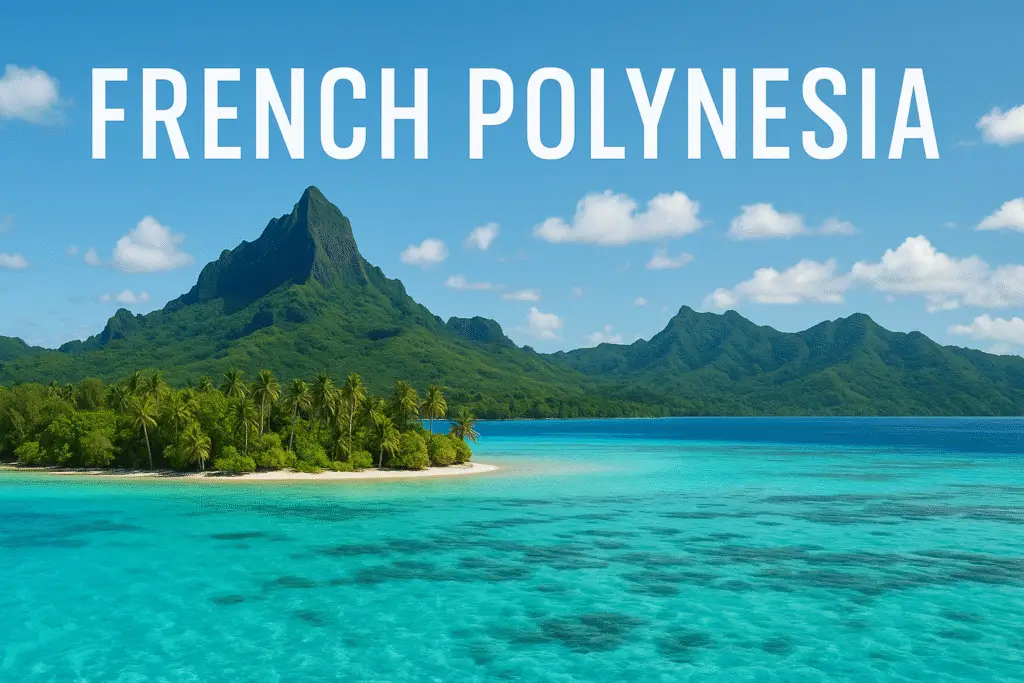
French Polynesia is one of the most enchanting and geographically vast island regions on Earth — a sweeping Polynesian nation made of azure lagoons, volcanic peaks draped in green, coral atolls scattered across endless blue horizons, and a culture rooted in ancestral navigation, community, spirituality, and the deep intelligence of the sea.
Located in the South Pacific, stretching over an area the size of Europe, it consists of 118 islands and atolls divided into five major archipelagos:
- Society Islands – including Bora Bora, Tahiti, Mo’orea, Taha’a, Huahine, Maupiti
- Tuamotu Archipelago – coral atolls including Rangiroa, Fakarava, Tikehau, Manihi
- Marquesas Islands – remote volcanic peaks including Nuku Hiva, Hiva Oa, Ua Pou, Ua Huka
- Austral Islands – rugged and remote islands including Rurutu, Raivavae, Rimatara
- Gambier Islands – including Mangareva, center of Catholic culture
Each island and archipelago has its own identity — some are mountainous with dramatic ridges and waterfalls, others are atolls low to the sea, ringed by fragile reef ecosystems that glow in shades of turquoise and silver. Together they form a cultural universe where ancestral navigation and modern life intersect, where the ocean shapes language, architecture, values, and spirituality.
French Polynesia is an overseas collectivity of France, meaning it is semi-autonomous but connected economically and politically to the French Republic. It uses the CFP franc (XPF) and blends French and Polynesian influence in food, architecture, language, education, and culture. Yet the heart of life here is deeply Polynesian — rooted in community, family, respect, and intimate knowledge of the sea.
From the soaring volcanic spires of Moorea and the mythic lagoon of Bora Bora to the infinite coral ring of Rangiroa and the sacred peaks of the Marquesas, French Polynesia is a world of sensory abundance. Waves whisper over shallow reefs. Church bells echo in coastal villages. Fishermen paddle outrigger canoes at dawn. Feasts celebrate family, harvest, and faith. Dancers move to the pounding rhythm of to’ere drums, telling stories of love, voyaging, and ancestral gods.
This guide explores French Polynesia in detail — history, culture, geography, island groups, daily life, environment, spirituality, arts, food, and the unique rhythms of a world where land, sea, and spirit remain inseparable.
✅ QUICK FACTS
| Category | Details |
|---|---|
| Official Name | French Polynesia |
| Capital | Papeete (Tahiti) |
| Population | ~280,000 |
| Currency | CFP Franc (XPF) |
| Language | Tahitian, French |
| Government | Overseas collectivity of France |
| Number of Islands | 118 |
| Region | Polynesia |
| Largest Island | Tahiti |
| Time Zones | UTC –9.5 to –10 |
| ISO country code | PF |
🌏 GEOGRAPHY
French Polynesia covers a maritime territory larger than Western Europe — yet its landmass is tiny. Most of its 118 islands are either volcanic islands rising dramatically from the sea or coral atolls forming low rings around tranquil lagoons.
The five main archipelagos span thousands of kilometers:
✅ 1) Society Islands
Central, volcanic, lush; home to the most famous destinations.
- Bora Bora
- Tahiti
- Mo’orea
- Huahine
- Taha’a
- Maupiti
- Raiatea
Mountains rise sharply from lagoons; waterfalls fall into deep valleys; villages line the coast.
✅ 2) Tuamotu Archipelago
Largest chain of atolls on Earth — low coral rings around vast lagoons.
- Rangiroa
- Fakarava
- Manihi
- Tikehau
Flat, with coconut groves and pearl farms.
✅ 3) Marquesas Islands
Remote, rugged volcanic peaks without protective lagoons.
- Nuku Hiva
- Hiva Oa
- Ua Pou
- Ua Huka
Steep valleys, ancient temples, strong art traditions.
✅ 4) Austral Islands
Cooler climate, isolated, agricultural.
- Rurutu
- Raivavae
- Tubuai
- Rimatara
✅ 5) Gambier Islands
Remote volcanic islands in a wide lagoon.
- Mangareva
Small population, strong Catholic influences.
Together, they form a maritime universe connecting ancient navigation routes across thousands of kilometers.
🏛 HISTORY
Ancient Settlement
French Polynesia was settled thousands of years ago by Polynesian navigators who crossed the Pacific guided by stars, waves, birds, and ocean patterns. Founder voyages connected distant islands — Samoa, Tonga, Rarotonga, Marquesas, Society Islands — forming a vast cultural network.
People built paepae (stone platforms) and marae — sacred temples where chiefs, priests, and communities honored gods and ancestors. Society revolved around chiefly leadership, agriculture, fishing, and ceremonial life.
European Contact
Spanish explorers arrived in the 16th century. Cook explored the Society Islands in the 18th century, bringing charts and cultural exchange. Missionaries followed, influencing religion and education.
French Administration
In the 19th century, France claimed Tahiti and surrounding islands. Over time, more islands were annexed; the region became French Polynesia.
Modern Era
French Polynesia now has internal autonomy while remaining part of France. It has parliamentary government, French infrastructure, and Polynesian cultural identity.
👥 PEOPLE & CULTURE
French Polynesia is a Polynesian society enriched by French influence. Most inhabitants are Polynesian or mixed heritage; others include Europeans and Chinese families with generations of history on the islands.
Life centers on:
- Family (ʻohana)
- Community
- Church
- Lagoon
- Food
- Music & dance
- Taro and breadfruit agriculture
- Ocean knowledge
The pace is relaxed; community gatherings are frequent, especially for:
- Weddings
- Sunday church
- Feasts (ma’a Tahiti)
- Dance festivals
- Fishing expeditions
Language
Two main languages:
- Tahitian (Reo Tahiti)
- French (official government language)
Island groups have their own Polynesian languages — Marquesan, Tuamotuan, Austral languages — each unique.
🎶 ARTS, MUSIC & DANCE
Music and dance are vital to cultural identity.
The traditional drum orchestra features:
- To’ere (slit drum)
- Pahu (bass drum)
- Ukulele
- Voices
Dance is expressive — hips, hands, and rhythms tell stories of heroes, gods, voyages, and nature. Costumes use:
- Flowers
- Pandanus
- Coconut fibers
- Shells
- Feathers
Festivals such as Heiva gather troupes from across islands.
Weaving, carving, tattooing, and canoe building are important artistic traditions. Tattoos reflect genealogy, protection, and identity.
🏝 SOCIETY ISLANDS
The Society Islands form the most well-known and visited region of French Polynesia. Composed of soaring volcanic islands ringed by lagoons, they embody the image many people imagine when dreaming of the South Pacific: towering green peaks, warm turquoise water, white-sand motu, rhythmic drums, breadfruit trees, and reef life of astonishing color.
The Society Islands divide into two sub-groups:
✅ Windward Islands
- Tahiti
- Mo’orea
- Tetiaroa
- Mehetia
✅ Leeward Islands
- Bora Bora
- Raiatea
- Taha’a
- Huahine
- Maupiti
Each island offers a unique cultural and geographic personality.
We begin with the cultural and economic center — Tahiti.
🌺 TAHITI
Tahiti is the largest island in French Polynesia and serves as its administrative, commercial, and transportation hub. Home to the capital city Papeete, it offers a blend of Polynesian tradition, French influence, modern bustle, and ancient mountain landscapes.
Geography
Tahiti is composed of two connected volcanic masses:
- Tahiti Nui — the larger, main island
- Tahiti Iti — the smaller and more remote peninsula
Steep ridges, river valleys, and waterfalls fill the interior. Most people live along the coastline; the inland mountains remain wild and sparsely explored. Waterfalls such as Faarumai tumble from mossy cliffs, while deep valleys hold archaeological sites, taro fields, and sacred spaces.
Culture
Tahiti is highly multicultural — Polynesian heritage lives alongside French language, cuisine, and architecture. Food trucks (roulottes) offer nightly gatherings with family and friends. Markets sell flowers, fruit, fish, monoi oil, woven hats, and handicrafts.
Key Highlights
- Papeete Market (Le Marché) — crafts, fruit, fresh fish
- Museum of Tahiti and the Islands
- Arahoho Blowhole
- Faarumai Waterfalls
- Preserved valleys of Papenoo and Papeari
- Black-sand beaches of the east coast
- Teahupoo — one of the world’s most famous surf breaks
Daily Life
Tahiti is busier than other islands — traffic, shops, restaurants, and schools give it an urban feel. Yet traditional rhythms remain strong: church on Sundays, dance rehearsals, canoe races, and gatherings for feasts.
Why Tahiti is special
Tahiti is the cultural heart of the region — where tradition and modernity coexist. It is not just a transit point; it is a deeply historic island that reflects the full Polynesian story.
🌄 MO’OREA
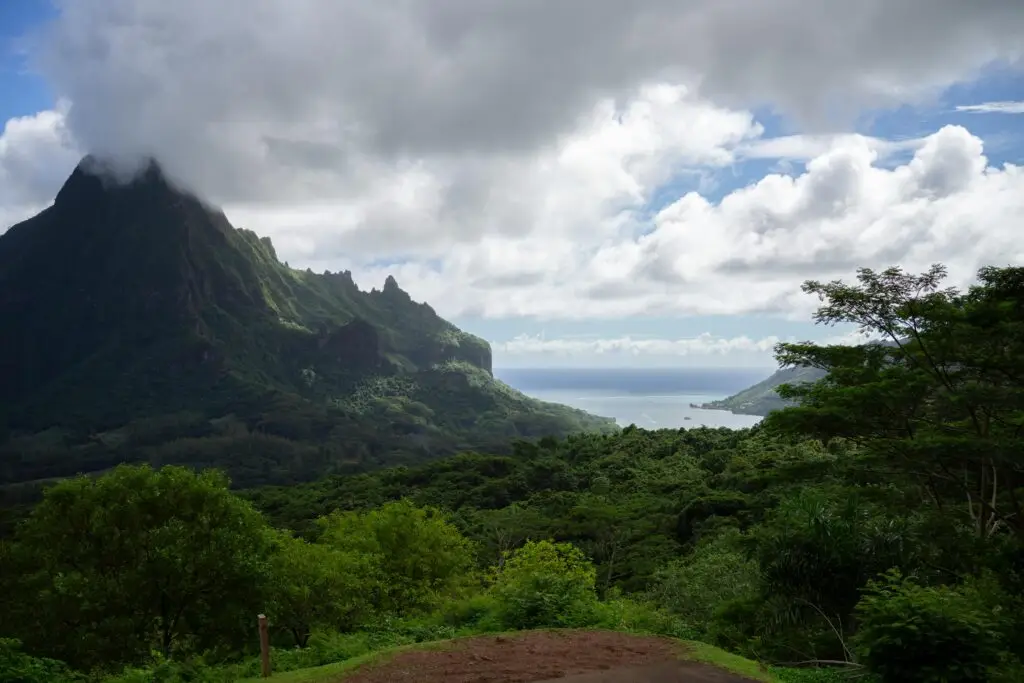
Just northwest of Tahiti, separated by a channel that takes only ~30 minutes by ferry, lies Mo’orea, an island of dramatic volcanic peaks, hidden valleys, pineapple plantations, and tranquil lagoons. Many consider Mo’orea one of the most beautiful islands in the Pacific due to its sharp mountain ridges and accessible landscapes.
Geography
Mo’orea looks like a giant green crown floating on blue water. Two deep bays — Cook’s Bay and Opunohu Bay — cut into its northern coast. Above them, the volcanic spires rise sharply, covered in rainforest and cloud.
The lagoon encircling Mo’orea glows turquoise — shallow enough to see stingrays gliding over white-sand bottom.
Highlights
- Cook’s Bay & Opunohu Bay
- Belvedere Lookout
- Pineapple plantations of Opunohu Valley
- Motu (islets) along the north coast
- Hiking trails to mountain viewpoints
Culture
Mo’orea balances quiet village life and tourism. People cultivate pineapple, breadfruit, and bananas; fishermen gather in lagoons; musicians practice in community halls.
Traditional dancing, tattooing, canoeing, and craftwork remain important. Villages host celebrations marked by hymn singing and feasts.
Why Mo’orea is special
It combines dramatic geography with easy access — a relaxed alternative to Tahiti, where mountain and lagoon coexist peacefully.
💎 BORA BORA
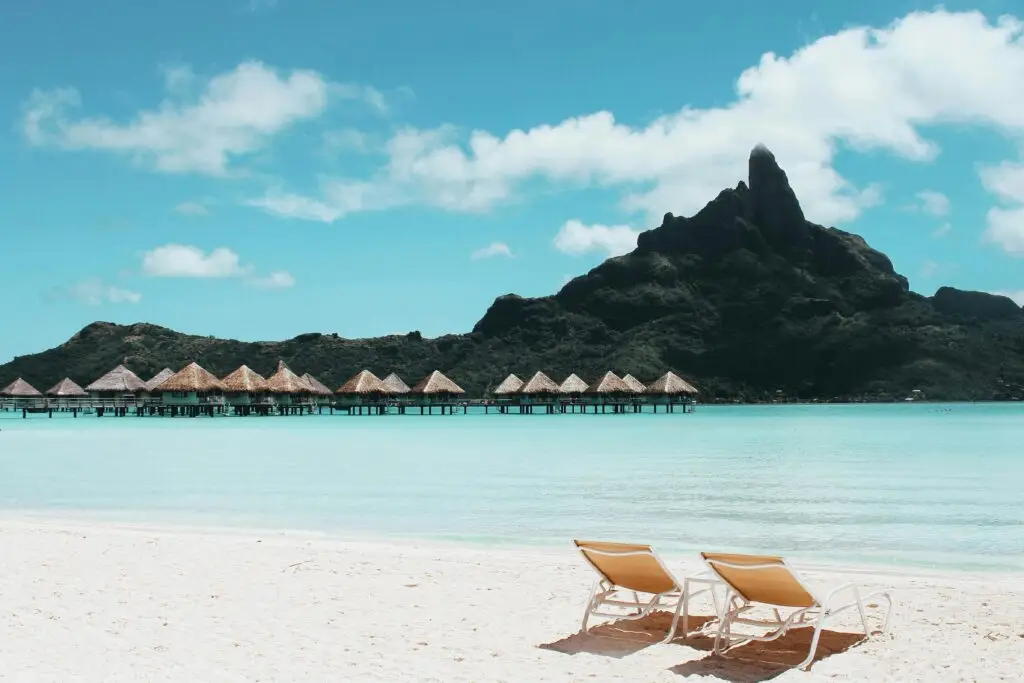
Bora Bora is perhaps the most famous island in the world — a place that evokes dreams of luminous lagoon waters, overwater bungalows, coconut palms, and a volcanic core that rises like a crown from the horizon.
It is often called the “Pearl of the Pacific.”
Geography
Bora Bora is formed by an extinct volcano whose jagged peaks — Mount Otemanu and Mount Pahia — dominate the island.
Surrounding the main island is a large turquoise lagoon protected by a barrier reef. Scattered around this lagoon are tiny motu (islets) with white-sand beaches and coconut palms.
The lagoon is shallow, clear, and filled with marine life. Passes in the reef connect lagoon to open ocean, where manta rays, sharks, and schools of fish swim.
Cultural Impressions
Although tourism flourishes, deep Polynesian culture persists — wood carving, storytelling, drumming, and symbolic tattooing remain central to identity.
Villages like Vaitape form the heart of Bora Bora’s community rhythm, where fishing boats, children on bicycles, and church gatherings create everyday life beneath the famous peaks.
Highlights
- Mount Otemanu
- Coral gardens
- Lagoon boat journeys
- Motu beaches
- Village of Vaitape
- Ancient marae sites
- Scenic coastal road
Lagoon Life
The lagoon defines Bora Bora — it is where people swim, fish, travel, and gather.
Sharks and rays glide gracefully; coral gardens glow with color; boats circle through calm waters.
Polynesian navigators historically traveled between Bora Bora, Raiatea, and Tahiti by canoe, carrying goods, stories, and rituals. Migrations, alliances, and chiefs shaped this cultural network.
Why Bora Bora is special
Its lagoon is among the most beautiful in the world — vast, vivid, and peaceful — with mountains rising in dramatic silhouette. The harmony of sea and volcano creates an unforgettable atmosphere.
We will later add more elaboration on Bora Bora in a deeper sub-section to allow future linking.
🟣 RAIATEA
Raiatea, anciently known as Hava’i, is the spiritual and historical center of Polynesia.
Many oral histories describe Raiatea as the departure point of voyaging migrations that settled Hawaii, Aotearoa (New Zealand), and the rest of Polynesia.
Cultural Importance
Raiatea is home to Taputapuātea, the most important marae complex in Polynesia — a religious and civic center where chiefs, navigators, and priests gathered to perform rituals, teach navigation, and connect with gods.
It is recognized as a UNESCO World Heritage Site.
Geography
Raiatea is mountainous, covered in rainforest. The lagoon encircles the island, connecting it to neighboring Taha’a. The two islands share the same barrier reef.
Way of Life
Raiatea is less touristic than Bora Bora, preserving a strong traditional atmosphere. Villages, churches, and family gardens line the shoreline.
Canoes gather in lagoon channels; fishermen cast nets in shallow waters.
Why Raiatea is special
It is the cultural root of the Polynesian world — a place of living history, deep spirituality, and ocean intelligence.
🌼 TAHA’A
Taha’a is called the Vanilla Island — the fragrant heart of French Polynesia’s vanilla cultivation. Its mountains are gentle, its villages quiet, and its coastline dotted with motu.
Geography
Taha’a shares its lagoon and barrier reef with Raiatea. This double-island system allows calm travel between them by boat.
The lagoon is rich with coral gardens and clear water.
Vanilla
Vanilla farms line valleys and hillsides. Flowers are hand-pollinated; pods are cured in sun and shade. Families pass knowledge through generations, supporting a local economy rooted in land, climate, and patient craft.
Why Taha’a is special
It is peaceful, traditional, aromatic — a place where Polynesian agriculture flourishes.
🌺 HUAHINE
Huahine has a mystical aura — lush valleys, ancient temples, pearl farms, and quiet villages create a world of depth and elegance.
Geography
The island is actually two connected pieces — Huahine Nui and Huahine Iti — surrounded by lagoon and reef.
Deep bays cut between mountains, where breadfruit, papaya, coconut, and taro grow in abundance.
Culture & Tradition
Huahine is known for strong tradition and preserved archaeological sites, including marae and stone fish traps. The villages feel intimate; children play along waterfront roads; fishermen collect lagoon treasures.
Why Huahine is special
It blends sacred history, natural richness, and quiet simplicity.
🌴 MAUPITI
Maupiti is what Bora Bora once was — intimate, quiet, deeply Polynesian, with a lagoon of astonishing beauty.
Towering volcanic cliffs overlook turquoise channels and narrow coastal roads.
There are no large hotels; life is community-focused.
Highlights
- Lagoon islets
- Village life
- Slow rhythm
- Reef passes for snorkeling
Why Maupiti is special
It feels timeless — peaceful, authentic, untouched.
🐚 TUAMOTU ARCHIPELAGO
The Tuamotu Archipelago is the largest chain of coral atolls on Earth — a constellation of pale turquoise rings scattered across immense Pacific blue.
These islands are low-lying, narrow slivers of coral encircling calm lagoons that shimmer in infinite shades of green and blue.
There are no mountains here — only sky, sea, coconut groves, sand, and the hum of island life.
Life is simple: fishing, pearl farming, weaving, quiet roads, and lagoons filled with fish and coral.
The Tuamotu are the spiritual home of pearl cultivation.
Their calm lagoons produce some of the world’s finest Tahitian black pearls, ranging from silver blue to deep green.
Major atolls include:
- Rangiroa
- Fakarava
- Tikehau
- Manihi
- Others stretching for thousands of kilometers
🌊 RANGIROA
Rangiroa is one of the world’s largest atolls, shaped like a necklace of coral encircling a giant inner sea.
The lagoon is so vast that it holds entire reefs, motu, coral gardens, dolphins, and endless stretches of luminous water.
Geography & Nature
The atoll ring is made of dozens of motu connected by narrow channels.
The Tiputa Pass and Avatoru Pass connect the lagoon to the open sea — both world-famous for dolphin encounters and diving.
Marine life thrives:
- Sharks
- Dolphins
- Turtles
- Manta rays
- Pelagic species
Sunlight reflects off white coral sands, and the horizon blends seamlessly with sea and sky.
Life
Rangiroa is peaceful: villages with coral roads, fishermen preparing their nets, children biking beneath coconut trees.
Pearl farms float on the surface; lagoon shallows sparkle beneath the sun.
Why Rangiroa is special
One of the largest and most vibrant lagoons in the world — a calm world within the sea.
🌊 FAKARAVA
Fakarava is a UNESCO Biosphere Reserve — an atoll of extraordinary ecological importance.
Its South Pass (Tumakohua) is famous for swirling reef life, schools of sharks, and coral walls bathed in blue light.
Landscape
Wide lagoon, pink-sand motu, coconut groves.
Villages are small, friendly, and traditional.
Bicycles glide over sandy roads; churches glow in pastel colors.
Why Fakarava is special
Bright coral, abundant sharks, rare bird species — a lagoon world alive with color.
🌺 TIKEHAU
A round atoll celebrated for its soft pink-tinged sands, clusters of coconut palms, and calm lagoon.
Highlights
- Bird colonies
- Quiet motu
- Lagoon life
- Fishing culture
Why Tikehau is special
Gentle beauty and quiet simplicity.
🌸 MANIHI
One of the original homes of Tahitian pearl cultivation.
Lagoon glows silver at sunrise; pearl farms dot its surface.
⛰ MARQUESAS ISLANDS
The Marquesas stand apart — wild, remote, untamed, and dramatic.
Unlike the Society and Tuamotu Islands, the Marquesas have no protective lagoons around their shores.
Volcanic cliffs plunge straight into the sea; mountains rise like cathedrals; valleys run deep and green.
These islands feel ancient, mythic, powerful.
Life here is rooted in:
- Ancestral memory
- Horse riding
- Wood carving
- Tattooing
- Poetry
- Sacred valley sites
Major islands:
- Nuku Hiva
- Hiva Oa
- Ua Pou
- Ua Huka
- Tahuata
- Fatu Hiva
⛰ NUKU HIVA
The largest of the Marquesas — a land of deep bays, high plateaus, and remote valleys where wild horses roam.
Geography
Its coastline alternates between cliffs, inlets, black-sand beaches, and dramatic peaks.
The interior holds:
- Waterfalls plunging from steep walls
- Forest paths leading to ancient stone platforms
- Villages in deep valleys
Culture
Tattooing is deeply rooted here; designs reflect genealogy, strength, land, and sea.
Ceremony and chant preserve memory.
Why Nuku Hiva is special
Wild nature — ancient, untamed, and deeply spiritual.
🌿 HIVA OA
A cultural center known for poets, artists, and legendary archaeological sites.
Culture & Spirituality
Here lived:
- Paul Gauguin, painter
- Jacques Brel, musician
Their graves rest overlooking sea and mountain.
Ancient sites with tiki statues echo ancestral story.
Why Hiva Oa is special
Art, ancestral stone temples, and poetic landscape.
⛰ UA POU
Tall basalt pillars — needle-like spires — rise dramatically from its center, giving the island a unique silhouette.
Why Ua Pou is special
Its volcanic peaks give it a powerful and recognizable identity.
🌲 UA HUKA
More arid; known for wood carving and horse culture.
Carvers create tiki, bowls, and traditional sculpture.
🐋 AUSTRAL ISLANDS
Remote, cooler, agricultural — the Austral Islands lie far south.
They are more isolated than the Society Islands and less volcanic than the Marquesas.
Life is simple: farming, fishing, carving.
Major islands:
- Rurutu
- Tubuai
- Raivavae
- Rimatara
🐋 RURUTU
Rurutu is known for its rugged coastline, limestone caves, and whale-rich waters from July to October.
Villages dot coastal areas; weaving is strong; life is calm.
🌼 RAIVAVAE
Often considered one of the most beautiful islands — lagoon, small peaks, and quiet village life.
⛪ GAMBIER ISLANDS
Far to the southeast lies the Gambier group, centered on Mangareva — a volcanic island surrounded by a large lagoon dotted with small motu.
Culture
Christian mission influence remains strong; churches and stone structures still stand, blending Polynesian and European heritage.
Why Gambier is special
Remote, spiritual, full of historic stone mission buildings and blue water.
🌺 DAILY LIFE & SOCIETY
Life in French Polynesia is guided by rhythm — of tides, sun, festivals, and family.
Days begin early: fishermen launching boats at dawn, fruit vendors loading trucks, children walking to school beneath breadfruit trees. The atmosphere is warm and communal; people greet one another with smiles, embraces, and soft ia ora na.
Family (‘ohana) is central. Multiple generations often live close together — grandparents helping raise children, parents working coastal or agricultural jobs, siblings assisting one another with household duties, fishing, or taro fields. Family gatherings are frequent: Sunday lunches under pandanus roofs, coconut scraping for desserts, songs around a ukulele.
Each island has its own rhythm —
Tahiti’s energy is busy, with buses, shops, cafés, and markets;
on outer islands, life slows — boats, bicycles, coconut work, weaving, and church gatherings define time.
Living is close to the land and sea. People harvest:
- Breadfruit
- Taro
- Coconut
- Banana
- Fish
They raise pigs and chickens; households share food widely, especially during celebrations.
The lagoon is a playground for children — swimming, paddling, learning to read waves, collecting shells. As they grow, they learn navigation, fishing, and knowledge of reefs inherited from elders.
Evenings are simple — cooking, church choir rehearsal, dance practice, family conversation on woven mats. Stars gleam overhead, bright against the ocean horizon.
💬 LANGUAGE
French Polynesia is linguistically rich.
Two primary languages anchor daily life:
1) Reo Tahiti (Tahitian)
— The ancestral Polynesian language.
2) French
— The language of government, administration, schooling.
But across archipelagos, there are several distinct Polynesian languages:
- Tahitian
- Tuamotuan
- Marquesan (North & South)
- Austral languages
- Mangarevan (Gambier)
These languages maintain local identity. They express deep relationship with nature, land, and ancestors.
Words describe specific wind patterns, waves, plant varieties, and emotions.
Many households are bilingual; children speak French at school, Polynesian language at home. Efforts continue to preserve and teach traditional languages.
🌺 CUSTOMS & VALUES
Polynesian culture is rooted in respect, generosity, and balance.
It honors:
- Family
- Community
- Elders
- Ancestral wisdom
- Sacred land and ocean
The world is understood as deeply interconnected.
Land (fenua), reef, lagoon, wind, and spirit form a whole — one cannot be separated from the other.
Key values:
- Generosity (tautua / aroha): Sharing food and care without expectation.
- Respect for elders: Elders guide through story and memory.
- Community cooperation: Families help build houses, prepare feasts, repair canoes.
- Humility: Speaking softly, thanking through gifts rather than words.
- Harmony with nature: Using land thoughtfully, asking permission from sea and spirits.
These values are embodied through behavior — quiet politeness, thoughtful speech, helpfulness, and spiritual attentiveness.
🧭 NAVIGATION & VOYAGING TRADITION
Polynesian ancestors were among the greatest navigators in human history.
They crossed the Pacific using:
- Stars
- Sun position
- Swell patterns
- Cloud shapes
- Bird flight
- Wind memory
- Sound of waves
- Underwater reef “feel”
Navigation was sacred — knowledge held by priests and navigators who memorized star maps passed through generations.
Canoes traveled thousands of kilometers from Raiatea — the ancestral heart — to Hawaii, Rapa Nui, and New Zealand.
These voyages were planned, studied, and ritualized.
Landfall was read through:
- Bird pathways
- Reflection of lagoon light beneath clouds
- Swell behavior shifting over distant reef
This heritage remains central to identity.
Voyaging canoes are still built and sailed today — especially in Raiatea and the Marquesas — reconnecting youth with ancestral knowledge.
🍽 FOOD & COOKING TRADITIONS
Cuisine blends local harvest with French influence.
At a typical Polynesian meal, you may find:
- Fish
- Poisson cru (raw fish in coconut milk)
- Breadfruit
- Taro
- Banana
- Rice
- Coconut desserts
- Roast pig
- Fresh fruit juices
The most traditional preparation is ahimaʻa, or underground oven:
Food wrapped in leaves — pig, fish, taro, banana — cooked slowly over hot stones.
This method appears throughout French Polynesia and marks:
- Weddings
- Birthdays
- Celebrations
- Homecomings
Coconut is essential:
Milk, flesh, and cream blend with seafood and fruit.
Breadfruit is roasted or mashed; taro is steamed; banana eaten raw or cooked.
French influence adds:
- Baguettes
- Pastry
- Cheese
- Coffee
Island pride lies in preparing food with care, sharing abundantly, and honoring guests.
🎶 DANCE, MUSIC & PERFORMANCE
Dance (‘ori) is a profound expression of Polynesian culture.
Performed at ceremonies, festivals, and gatherings, it tells stories of:
- Love
- Voyages
- War
- Harvest
- Nature
- Spirituality
Costumes use:
- Feathers
- Shells
- Flowers
- Pandanus
They reflect land and identity.
Instruments:
- To‘ere — slit drum
- Pahu — bass drum
- Ukulele
- Conch shells
The Heiva festival is French Polynesia’s largest celebration — dance groups from across islands perform powerful choreographies accompanied by drums and chant.
Song expresses emotion, devotion, history.
Church choirs blend traditional melodies with Western harmony; voices ring through valleys each Sunday morning.
🌀 SPIRITUALITY & THE SACRED
Spirituality is woven throughout daily life.
Before missionary arrival, religion centered on atua — gods linked to land, sea, and sky — and tupuna — ancestral spirits.
Temples called marae hosted ceremony, offering, initiation, political decisions, and community gathering.
Some remain active today, especially in Raiatea and the Marquesas.
Christianity arrived in the 19th century, quickly becoming dominant. Today, most families attend church weekly — singing and prayer form the heart of spiritual practice.
Yet ancestral beliefs persist beneath Christian practice:
- Respect for sacred mountains
- Veneration of ancestor spirits
- Ceremonial gift exchange
- Tattoo as spiritual protection
The spiritual worldview blends both traditions.
🎨 TATTOO & SYMBOLISM
Tattooing (tatau) carries profound meaning.
Designs reflect:
- Genealogy
- Protection
- Courage
- Connection to land
- Spiritual guardians
- Personal history
Traditionally, tattooing was sacred — performed by expert priests, accompanied by prayers and rituals.
Symbols are not random decoration — they hold identity and memory.
Lines echo waves, wind, birds, shark teeth, voyaging, and family lineage.
Today, tattoo remains central to Polynesian identity — modern techniques allow precise execution while maintaining heritage significance.
🌿 ENVIRONMENT & NATURE
French Polynesia’s ecosystems are diverse:
- Coral reefs
- Volcanic mountains
- Rainforests
- Atolls
- Mangrove systems
- River valleys
Forests shelter native birds; lagoons nurture fish vital to food and culture; reefs guard islands from storms.
Yet environmental challenges exist:
- Coral bleaching
- Cyclone damage
- Invasive species
- Coastal erosion
- Waste management on small islands
Communities lead conservation projects — replanting corals, protecting reefs, teaching youth about sustainable fishing.
On outer islands, families respect fishing seasons and taboo zones.
Traditional knowledge guides when to harvest, where to rest reef systems, and how to maintain balance.
💼 ECONOMY
The economy of French Polynesia blends traditional subsistence practices with modern commercial industries.
Although the islands are widely dispersed and differ in resource availability, life everywhere is closely tied to the ocean and land.
Key economic pillars include:
✅ Tourism
✅ Pearl cultivation
✅ Agriculture & fishing
✅ Public administration (supported by France)
Tourism
Tourism is the largest source of revenue.
Visitors come for:
- Lagoon landscapes
- Mountain scenery
- Overwater bungalows
- Culture & dance
- Marine recreation
Tahiti, Bora Bora, and Mo’orea receive most arrivals, followed by the Tuamotu atolls and Marquesas.
Tourism influences:
- Craft markets
- Hospitality professions
- Transport
- Culinary evolution
Despite its scale, tourism is still moderate compared to other global destinations, which helps preserve cultural and ecological balance.
Pearls
French Polynesia produces the world-famous Tahitian black pearls, grown mainly in the Tuamotu and Gambier lagoons.
They vary in color — silver, pistachio, charcoal, peacock green — and are valuable exports.
Pearl farming requires:
- Clean lagoons
- Skilled grafting
- Years of patient care
Many families run small farms, passing knowledge to new generations.
Agriculture & Fishing
Island agriculture remains essential:
- Taro
- Breadfruit
- Bananas
- Coconuts
- Vanilla (largely from Taha’a)
Fishing provides protein and livelihood — reef and pelagic fish supplement household diets.
In some villages, fish traps still line lagoons; older men teach seasonal knowledge of species.
France’s Economic Role
French Polynesia receives financial support from France, funding:
- Education
- Transport
- Healthcare
- Infrastructure
Government jobs are a major source of income in Tahiti.
Handicrafts
Craft markets feature:
- Shell jewelry
- Woven pandanus hats & bags
- Wood carving
- Bone & mother-of-pearl ornaments
These crafts are economically important for families, especially in remote islands.
🚢 TRANSPORTATION
Because the islands are spread over enormous distances — some separated by thousands of kilometers — transportation is essential to daily function.
Between Islands
- Air travel connects archipelagos
- Boats connect homes to nearby motu and reef channels
Tahiti is the main hub; from there, flights reach Mo’orea, Bora Bora, Marquesas, Australs, and Tuamotus.
Cargo ships distribute:
- Food
- Construction material
- Fuel
to even the most remote islands.
Within Islands
On mountainous islands:
- Coastal roads encircle major landforms
- Bicycles, scooters, and small cars are common
On atolls:
- Roads are flat and simple
- Boats link motu across lagoon
The canoe remains symbolic and practical — used for fishing, racing, and cultural ceremony.
🎉 FESTIVALS & CELEBRATIONS
Festivals bring life to villages, celebrating harvest, tradition, and identity.
✅ Heiva i Tahiti
The biggest cultural celebration — held annually in July.
Includes:
- Traditional dance competitions
- Music
- Sport
- Crafts
- Canoe races
Villages practice for months; costumes are woven by hand; songs tell stories of gods, land, and love.
The energy is extraordinary — drums pounding, feathers dancing, voices lifting in harmony.
✅ Island Festivals
Each island hosts its own events — honoring:
- Yams
- Fishing season
- Church anniversaries
- Arrival of ancestors
These gatherings involve processions, feasts, and dance.
✅ Religious Celebrations
Christian traditions remain central — Easter, Christmas, and saints’ days fill churches with song.
🌴 FRENCH POLYNESIA: ISLAND DETAILS
💎 BORA BORA —
Bora Bora is a masterpiece of nature — a volcanic heart encircled by translucent lagoon.
To understand Bora Bora fully, one must look beyond postcard imagery to the deeper structure of land, community, spirituality, and ecology.
The Volcano
Mount Otemanu rises like a jagged green peak crowned by cloud. Its vertical walls are ancient. The mountain seems alive — constantly shifting light and mood.
Mount Pahia stands beside it, completing the twin spires overlooking the island.
The Lagoon
The lagoon is calm, with sandy bottom and coral patches.
Every shade of blue appears:
- Pale mint near shore
- Luminous turquoise mid-lagoon
- Deep cobalt near the reef
Sharks, rays, and tropical fish move gently.
Coral gardens host life that sustains local fishing.
Motu Islands
Motu encircle the lagoon — small islets fringed with coconut palms.
Families traditionally grew fruit and coconut here, fishing from shoreline reefs.
Some motu remain undeveloped, keeping traditional spirit alive.
Cultural Soul
Despite fame, Bora Bora’s villages preserve heritage:
- Tattooing
- Wood carving
- Drum dance
- Canoe making
Community events occur around churches, sports fields, and shoreline.
Traditional Sites
Ancient marae remain, marking places of ceremony and navigation.
Life Rhythm
Mornings: fishermen out, children riding bikes, boats moving to reef.
Afternoons: weaving mats, carving, lagoon swimming.
Evenings: church singing, quiet conversation, stars.
Why Bora Bora is more than luxury
Even as resorts draw global attention, the island’s core remains cultural — rooted in Polynesian knowledge and land memory.
🌈 MO’OREA —
Mo’orea is a dramatic landscape of cathedral-like mountains and bright green valleys.
Mountains
Pineapple fields fill Opunohu Valley; trails lead to peaks shaped like crowns and shark teeth.
Belvedere Lookout provides a view of Cook’s and Opunohu bays at once — a blending of volcanic geometry and gentle lagoon.
Villages
Villages line the north and west coasts — quiet, connected, vibrant.
People gather at small stores, churches, gardens, and beaches.
Children learn to paddle dugout canoes early.
Lagoon
Shallow, warm, full of rays and sharks.
People interact closely with sea — net fishing, snorkeling, paddling.
Life Rhythm
Slower than Tahiti; more intimate than Bora Bora.
Mo’orea is beloved by artists, writers, and those seeking quiet connection.
🌺 RAIATEA —
Raiatea is central to Polynesian identity — considered the cradle of ancient culture.
Taputapuātea
The most sacred marae in all Polynesia, where priests, navigators, and chiefs met to honor gods and invoke guidance.
Voyaging began here — canoes departed from Raiatea to Hawai’i, Aotearoa, and Rapa Nui.
This site is UNESCO recognized for its historical depth.
Community
Strong cultural foundations — dance, chant, sailing.
Families maintain gardens; artisans carve canoe hulls and ceremonial boards.
Lagoon
Shared with Taha’a — intricate coral gardens.
Raiatea is home to traditional navigation revival — youth learn to sail double-hulled canoes.
🌼 TAHA’A —
Taha’a is fragrant — vanilla fields perfume the air.
Vanilla
Flowers are hand-pollinated; pods dry for months.
Vanilla is woven into dessert, perfume, and local cuisine.
Lagoon
Coral gardens among the finest in Polynesia.
Quiet motu line outer reef.
Taha’a feels deeply agricultural, communal, peaceful.
Next section will continue the extended islands (Huahine, Maupiti, Tuamotus, Marquesas…).
🌺 HUAHINE — EXTENDED
Huahine is often described as mysterious — quiet, ancient, fertile, and deeply spiritual.
Its landscape feels untouched: lush rainforests, soft valleys, and bright lagoons encircle two connected islands — Huahine Nui and Huahine Iti.
Landscape
Steep hills drop into bays of translucent green.
Villages sit along the waterfront — each with a church, school, and gathering place.
Fruit trees line roads:
- Coconut
- Papaya
- Mango
- Breadfruit
- Banana
The interior is full of archaeological sites hidden in gardens, forests, and river mouths.
Sacred Sites
Huahine is rich with marae — remains of ancient temples where priests and chiefs once performed ceremony and governed.
Stone fish traps still rest in the lagoon, showing ancestral engineering and understanding of tides.
Culture
Huahine is community-based with strong tradition.
People fish, farm, weave, and gather.
Children paddle in the lagoon after school; elders sit in shade weaving palm leaves.
Lagoon
The lagoon glows clear turquoise and stays calm year-round.
Coral gardens flourish; fish swarm in shallow bays.
Rhythm
Life on Huahine is unhurried, introspective, and modest — perfect for travelers seeking stillness.
🌴 MAUPITI — EXTENDED
Maupiti is one of the most traditional and least developed islands in the Society group.
It is the quieter sister of Bora Bora, with similar lagoon beauty but minimal tourism.
Geography
A single volcanic peak rises in the center.
The lagoon is wide, shallow, and full of coral.
Motu encircle the lagoon like beads.
Culture
Families live from fishing, farming, and handicrafts.
Culture is preserved — tattooing, wooden carving, canoe building, and ceremonial exchange remain strong.
Experience
Those who visit discover:
- Soft beaches
- Village charm
- Calm lagoon
- Quiet evenings
Maupiti is serene, with a timeless heart.
🐚 TUAMOTU — EXTENDED DETAILS
Beyond Rangiroa, Fakarava, Tikehau, and Manihi, many atolls share similar rhythm:
flat horizon, quiet waves, coconut groves, pearl farms, children riding bikes on coral roads, and sky wide as the sea.
They feel infinite — a geometry of blue.
Life is deeply oceanic —
Villagers dive, sail, harvest coconuts, weave mats, dry fish, sing in church, and gather beneath breadfruit for shared meals.
Every day is synchronized to the lagoon and tides.
⛰ MARQUESAS — EXTENDED DETAILS
The Marquesas are unlike any other Polynesian islands.
They rise like stone fortresses, cliffs plunging into sea where humpback whales roam.
Villages sit deep in valleys.
Stone platforms hide beneath breadfruit trees.
Horses wander.
Rain clouds cling to ridges.
Life is strong, poetic, artistic; carving and tattoo flourish.
⛰ Nuku Hiva —
Steep valleys hold ancient tikis and ceremonial platforms where chiefs once gathered.
Waterfalls fall hundreds of meters through jungle into pools.
Remote villages can only be reached by boat or horse.
The ocean here is powerful.
Fishermen study currents and wind; sailing canoes remain vital memory.
🌿 Hiva Oa —
Known for its intense spiritual gravity.
Ancient stone images stand in forest shade.
Artists are drawn here — Gauguin and Brel lived and died on Hiva Oa, finding inspiration in land and people.
Villages are tucked among hills; music fills evenings.
🗻 Ua Pou —
Perhaps one of the most majestic landscapes: basalt pinnacles rise from its center like stone spears.
Villages lie beneath these spires, connected by winding roads.
Artists carve wood and bone; drumming and tattoo are vibrant.
🪵 Ua Huka —
Dry and quiet; woodcarving is masterful.
Islanders breed horses, which roam ridges and plains.
🌊 THE AUSTRAL ISLANDS —
The Australs lie far south, cooler in climate, rural in lifestyle.
People here farm:
- Taro
- Banana
- Coffee
- Garden vegetables
Caves dot limestone coasts; whales appear seasonally.
🐋 Rurutu — Extended
Whale-rich waters bring life to coastlines — mothers and calves swim just meters from shore.
Villages specialize in weaving mats and baskets.
People move slowly — nature sets pace.
🌼 Raivavae — Extended
Sometimes called “little Bora Bora,” with a vast lagoon and small peaks rising softly.
⛪ GAMBIA / GAMBIER —
Mangareva and surrounding islets form a peaceful lagoon.
Stone churches and mission buildings reflect 19th-century influence.
Pearls remain essential to economy.
Community is close-knit, spiritual, and agricultural.
🌟 WHY THESE ARCHIPELAGOS FEEL SO DIFFERENT
Each archipelago holds its own mana — spiritual power:
- Society Islands → beauty + lagoon + heritage
- Tuamotu → lagoon worlds + pearls
- Marquesas → mountains + tattoo + carving + wild nature
- Australs → farms + whales + cool air
- Gambier → spiritual calm + pearls
The contrast is immense — traveling between them feels like moving through different worlds, yet united by one Polynesian heart.
🌍 CONNECTED THROUGH OCEAN
Historically, each island group shared stories, genealogy, food, ceremonies, and partnership.
Even today, voyaging canoes travel between archipelagos, reviving ancient paths.
Elders speak of currents that carry memory —
waves remembering mountains, reefs, and ancestors.
🌤 CLIMATE SUMMARY
French Polynesia lies in a tropical region with two broad seasons:
✅ Dry season (May–October)
- Cooler
- Steady breezes
- Clear seas
✅ Wet season (November–April)
- Warmer
- More humidity
- Afternoon rain
- Possibility of cyclones
Tuamotu atolls are drier.
Marquesas have less rainfall and no large lagoons.
Australs are cooler due to southern latitude.
Evenings are soft, breezy, and filled with stars.
🚶 NATURE EXPERIENCES
Across French Polynesia, nature invites exploration:
- Reef snorkeling
- Diving with rays & sharks
- Hiking valleys & ridges
- Whale encounters
- Horse riding (Marquesas)
- Mountain viewpoints
- Coral gardens
- Lagoon paddling
- Waterfall swimming
Remote islands offer deep silence —
waves, birds, wind.
🐠 MARINE LIFE
The Pacific waters host:
- Dolphins
- Whales
- Sharks
- Rays
- Sea turtles
- Reef fish
- Coral gardens
Rays move like silk; sharks like shadows; turtles graze coral.
On Rangiroa, schools of dolphins play in channels; on Bora Bora, rays glide across sandy floors.
Marine world is sacred — families teach respect: take only what is needed, honor fish season, protect lagoon.
🌋 ENVIRONMENTAL CHALLENGES
French Polynesia’s ecosystems are extraordinarily rich yet fragile.
The balance between lagoon, reef, forest, and land has sustained communities for centuries.
Today, several modern pressures challenge this equilibrium.
✅ Climate Change
Rising sea temperatures bleach coral, reducing habitat for fish.
Storm intensity increases; rainfall patterns shift.
Atolls — only a few meters above sea level — are especially vulnerable.
✅ Coral Stress
Coral reefs protect islands from waves, feed communities, and support cultural identity.
Temperature rise, pollution, and invasive species can weaken reef systems.
Traditional stewardship — seasonal fishing and taboo zones — helps maintain balance.
✅ Urban Growth & Waste
Tahiti faces greatest development pressure.
Waste management challenges arise due to limited land area.
Communities work to recycle, compost, and protect water systems.
✅ Overfishing
While many families fish responsibly, some regions experience pressure from modern gear and population growth.
Village councils and elders still enforce sustainable practice in many islands.
✅ Invasive Species
Non-native animals — rats, cats, pigs — threaten native birdlife and plants.
✅ Mining (limited)
Mining does not exist on most islands, but where activity occurs (mainly imported, small-scale), environmental care is needed.
✅ Pearl Farming
Pearl farms require pristine lagoons.
Their existence often encourages lagoon protection — a positive collaboration between economy and nature.
🌴 CONSERVATION
Efforts to preserve heritage and nature are widespread.
✅ Marine Protected Areas
Some lagoons and reefs are officially protected.
In Tuamotus and Society Islands, communities designate zones of:
- No fishing
- Seasonal harvest only
- Lagoon replanting of coral fragments
✅ Coral Restoration
Teams replant damaged coral colonies using underwater nurseries.
✅ Traditional Knowledge
Indigenous ecological understanding is central:
- Fish spawning seasons
- Reef closures
- Tree harvesting limits
- Ceremonial respect
Elders teach youth to read:
- Stars
- Swell
- Birds
- Reef signs
This keeps ancient resource management alive.
🌺 POLYNESIAN WORLDVIEW
Polynesian worldview is holistic — land, sea, wind, body, and spirit are united.
People do not own land; rather, they belong to it.
Identity ties to mountains, valleys, and lagoons.
Every space has a story:
a pathway once walked by ancestors,
a rock used for ceremony,
a bay guided by stars.
There is no separation between physical and spiritual worlds.
Trees carry ancestral presence; currents carry memory; fish are kin reflecting ocean’s gift.
Mana
Mana describes spiritual force present in:
- People
- Sacred objects
- Chiefs
- Landforms
Respectful conduct maintains harmony.
Tapu
Tapu (taboo) protects people and places.
It can restrict fishing seasons or forbid entry to sacred sites.
It ensures natural and spiritual well-being.
🌙 CONNECTION TO ANCESTORS
Ancestral presence guides everyday life.
Ceremony invokes them; tattoos honor them; songs remember them.
Stories trace lineage through land and sea to gods and voyagers who crossed oceans.
Many families keep genealogies connecting them to other islands in Polynesia, including:
- Hawai‘i
- Aotearoa (New Zealand)
- Rapa Nui
- Samoa
- Tonga
- Cook Islands
This shared lineage binds distant islands into one cultural universe.
🌀 THE OCEAN AS UNIVERSE
The sea is not a boundary — it is a highway, a source of life and knowledge.
For Polynesians, ocean is teacher, ancestor, protector.
It holds:
- Food
- Transport
- Identity
- Spiritual history
Navigators learn:
- How moon phases affect tides
- Where birds indicate land
- How clouds reveal lagoons
- How swells reflect seamounts
This understanding creates a living map.
🛶 CANOE HERITAGE
Double-hulled canoes once connected all of Polynesia.
They carried:
- Families
- Chiefs
- Art
- Language
- Animals
- Plants
When canoes landed on new islands, people built homes, planted taro and breadfruit, and created new centers of culture.
Today, canoe revival movements reconnect youth with ancestral identity.
Raiatea hosts canoe voyages to Hawai‘i and Aotearoa — no modern instruments used, only stars and sea.
💒 RELIGION TODAY
Christianity entered Polynesia in the 19th century and integrated deeply into society.
Today, most families attend church regularly.
Choirs practice weekly — voices fill villages with layered harmonies.
Yet the ancestral spirit remains integrated:
- Marae are preserved
- Stories continue
- Tattoo retains sacred meaning
- Land is still spiritually alive
This forms a blended spirituality — respecting both church and ancestors.
🧵 HANDICRAFTS & ART
Craft traditions are strong:
- Wood carving
- Bone & shell jewelry
- Tapa cloth
- Weaving
- Tattoo design
Each object holds cultural depth — not just decoration, but story and meaning.
Wood Carving
Famous in Marquesas — tiki figures, bowls, ceremonial clubs.
Weaving
Women weave pandanus into hats, mats, baskets.
Mats are significant gifts marking ceremony.
Shell & Pearl Work
Mother-of-pearl, shells, and pearls form jewelry worn in dance or daily life.
🌿 TRADITIONAL HOMES & VILLAGES
Traditional homes (fare) once used:
- Wood
- Bamboo
- Pandanus thatch
Today, many homes use modern materials but retain open walls and airy design.
Villages are coastal — built along lagoon edges.
Layout includes:
- Church
- School
- Store
- Boat shed
- Meeting space
Even in remote atolls, paths and community rhythm remain strong.
🐴 ANIMALS
Domestic animals:
- Dogs
- Chickens
- Pigs
- Horses (Marquesas)
Wildlife includes:
- Fruit bats
- Sea birds
- Reef fish
Marquesan horses wander valleys freely; fishing dogs run beaches.
🐚 REEF & LAGOON LIFE
Reef ecosystems sustain life — providing:
- Protein
- Tools
- Understanding of seasons
Coral portfolios vary by region:
- Society Islands → volcanic + lagoon
- Tuamotu → atoll reefs
- Marquesas → few reefs, deep water
Fish remain central to diet and ritual.
🌈 WHY FRENCH POLYNESIA IS UNIQUE
French Polynesia is unlike any place on Earth because:
✅ It spans five different worlds:
- Volcanic peaks
- Immense lagoons
- Wild highlands
- Coral atolls
- Spiritual valleys
✅ It holds deepest Polynesian heritage:
Where canoe voyaging, marae, tattoo, dance, and language connect a vast ocean network.
✅ It blends ancient + modern:
Traditional homes beside French cafés; tattoos beside cathedrals.
✅ Each archipelago has its own role:
- Society Islands — physical & cultural heart
- Tuamotu — infinite lagoons + pearls
- Marquesas — raw mountain soul + tattoo
- Australs — agriculture + whale paths
- Gambier — spirituality + pearl tradition
✅ The lagoon system is world-class:
One of the largest & clearest on Earth.
✅ Nature & culture live together:
Spiritual practices guide ecological balance.
✅ People remain deeply connected to ocean:
Navigation, fishing, ceremony, and story revolve around sea.
✅ Islands are scattered yet united:
Different worlds sharing one cultural ancestry.
French Polynesia is not simply a destination — it is a living civilization woven across ocean and feathered by history, spirituality, and art.
🌏 SMALL ISLAND & ARCHIPELAGO INDEX
✅ Society Islands
- Tahiti
- Mo’orea
- Bora Bora
- Raiatea
- Taha’a
- Huahine
- Maupiti
- Tetiaroa
- Mehetia
✅ Tuamotu Archipelago
- Rangiroa
- Fakarava
- Tikehau
- Manihi
- Ahe
- Apataki
- Kaukura
- Arutua
- Makemo
- Hao
- Anaa
- Niau
- Raroia
- Takaroa
- Takapoto
✅ Marquesas Islands
- Nuku Hiva
- Hiva Oa
- Ua Pou
- Ua Huka
- Tahuata
- Fatu Hiva
- Mohotani
✅ Austral Islands
- Rurutu
- Raivavae
- Rimatara
- Tubuai
- Rapa
✅ Gambier Islands
- Mangareva
- Aukena
- Taravai
- Akamaru
You can later build sub-pages for the most significant of these. The above list is complete enough for menu structures.
❤️ WHY TRAVELERS FEEL SO CONNECTED TO FRENCH POLYNESIA
French Polynesia is not only visually stunning — it is emotionally profound.
Travelers often describe a deep sense of peace, belonging, and inspiration when visiting.
Here’s why:
✅ The Ocean Is Alive
The lagoon is not decoration — it’s a living universe full of spiritual meaning.
Its color, movement, and silence feels sacred.
✅ Nature Feels Intimate
Mountains seem ancient and wise.
Trees carry memory.
Birds glide through soft air.
Sunrise paints volcanic ridges pink; sunset dyes lagoon violet.
Nothing feels random — every place feels like it has a story.
✅ Connection to People
Polynesian hospitality is genuine, humble, and warm.
Visitors are welcomed like family — fed, taught, invited to dance, pray, and celebrate.
This is not performance; it is genuine communion.
✅ Slow, Rhythmic Time
No need to rush.
Morning starts with birds and ocean wind.
The day moves with tide.
Evening brings soft songs, family talk, and warm air.
✅ Deep Culture
Dance, tattoo, belief, canoe, and story are not superficial — they live in daily life.
This depth gives visitors a sense of witnessing something ancient and alive.
✅ A Feeling of Spirit
There is mana — invisible force — in peaks, lagoons, and sacred marae.
Even without words, visitors feel it.
French Polynesia touches the heart in ways few destinations can.
🧭 HOW FRENCH POLYNESIA FITS INTO THE POLYNESIAN TRIANGLE
French Polynesia sits within the Polynesian Triangle, alongside:
- Hawai‘i (north)
- Aotearoa New Zealand (southwest)
- Rapa Nui (southeast)
These three corners define a region settled by Polynesian navigators using star paths and ocean swells.
French Polynesia is central in this triangle — both geographically and culturally — forming the ancestral homeland of many Polynesian groups.
🏁 CONCLUSION
French Polynesia forms a world of endless ocean and living culture — a network of islands connected by story, memory, and canoe.
It blends volcanic peaks with coral lagoon, ancient temples with church choirs, and traditional values with French influence.
Each archipelago has its own character:
🏝 Society Islands — mountains + lagoon + culture
🐚 Tuamotu — infinite atolls + pearls
⛰ Marquesas — jagged mountains + deep ancestral art
🌿 Austral — quiet farmland + whales
⛪ Gambier — spiritual calm + pearl heritage
Together, they create a nation whose borders are not drawn by land, but by waves.
Here, life flows with moon and tide.
The canoe remains symbol of identity.
Dance tells stories.
Tattoo expresses lineage.
Families gather in laughter.
The ocean connects more than it separates.
French Polynesia is not merely a destination —
it is a civilization across water,
a bright constellation of cultures,
a place where ancient memory lives in modern hearts.
Those who visit leave with more than photos —
they leave with a sense of belonging,
a reminder that the world is wide yet connected,
and that home can be an island,
a story,
or a journey across sea.
Related Amazing Bucketlist Articles
- 5 Once-in-a-Lifetime Floating Stays
- Hurawalhi Island Resort
- Top 10 Most Romantic Countries in the World for Couples