🇲🇭 THE ULTIMATE TRAVEL GUIDE
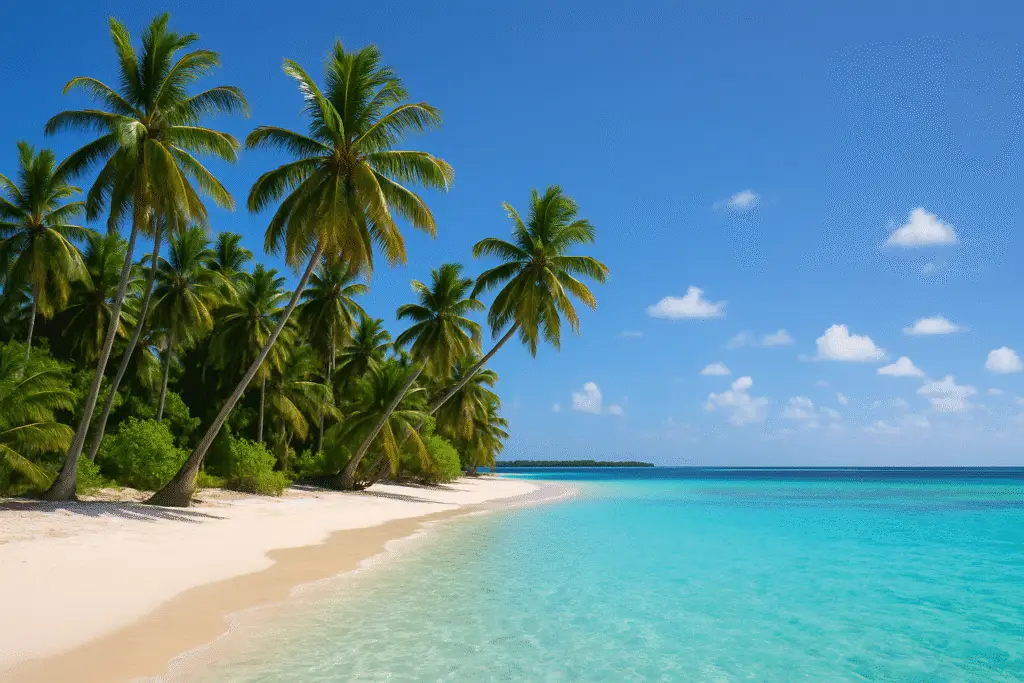
The Republic of the Marshall Islands (RMI) is a remote nation of shimmering turquoise lagoons, palm-lined coral atolls, and cultures deeply shaped by the Pacific Ocean. Strung like a delicate necklace across the heart of Micronesia, the Marshall Islands are made up of around 1,200 tiny islands and islets across 29 coral atolls, creating a world where land is narrow but ocean horizons stretch endlessly.
Despite its small landmass, the Marshall Islands cover a maritime territory immense in scale. Ocean currents bring abundant marine life, coral reefs brim with color, and shallow lagoons protect local fishing communities. The islands offer a combination of peaceful village life, remarkable World War II history, underwater heritage, and some of the most pristine ocean environments on the planet.
Life here moves according to tides, weather, and tradition. Elders hold cultural knowledge passed down for centuries. Children play barefoot along coral shorelines. Canoes glide across water so clear you can see reef fish below. Families gather under breadfruit trees to share stories and food. The Marshall Islands are governed by the ocean — both spiritually and physically — forming one of the last places in the world where traditional Pacific navigation remains alive.
This guide explores the Marshall Islands in depth: geography, culture, people, history, nature, atolls, cities, experiences, cuisine, transportation, and more.
✅ QUICK FACTS
| Category | Details |
|---|---|
| Official Name | Republic of the Marshall Islands |
| Capital | Majuro |
| Secondary Hub | Kwajalein |
| Population | ~42,000 |
| Region | Micronesia, Pacific Ocean |
| Atolls | 29 |
| Islands & Islets | ~1,200 |
| Languages | Marshallese, English |
| Currency | US Dollar (USD) |
| Government | Parliamentary republic |
| Time Zone | UTC +12 |
| Major Religion | Christianity |
| Independence | 1986 |
🌺 OVERVIEW OF THE MARSHALL ISLANDS
The Marshall Islands stretch across two parallel island chains:
- Ratak Chain (Sunrise Chain) – Eastern atolls
- Ralik Chain (Sunset Chain) – Western atolls
These narrow atolls, rarely more than a few hundred meters across, sit atop ancient volcanic seamounts, creating ring-shaped lagoons and ocean-facing reefs. Lagoons are calm, shallow, and full of life, while the ocean side drops quickly into deep blue.
The islands are defined not by land but by sea. On average, land elevation stands just one to two meters above sea level, creating unique environmental challenges but also a world profoundly shaped by intimacy with the ocean.
Tourism remains small, giving travelers a chance to experience Pacific life immersed in local rhythm rather than a commercialized setting.
The Marshall Islands are ideal for:
- Cultural immersion
- Reef exploration
- WWII wreck sites
- Lagoon swimming
- Island-hopping
- Learning about traditional navigation
- Deep rest and reflection in quiet nature
🗺 GEOGRAPHY + NATURAL STRUCTURE
The Marshall Islands sit between Hawai‘i and the Federated States of Micronesia. They consist of:
- 29 atolls + 5 solitary islands
- Each atoll made up of dozens of tiny islets
- Coral reef platforms forming protective blue lagoons
The two chains:
✅ Ratak (Sunrise) Chain
Includes:
- Majuro
- Arno
- Mili
- Maloelap
- Aur
- Utirik
- Likiep
The Ratak chain has more population, more development, and the capital Majuro.
✅ Ralik (Sunset) Chain
Includes:
- Kwajalein
- Bikini
- Rongelap
- Enewetak
- Jaluit
- Wotho
- Lae
The Ralik chain has major WWII sites and atolls shaped by Cold War history.
🌊 THE ATOLL LANDSCAPE
Atolls form when coral reefs grow around submerged volcanoes. Over millions of years, the volcanic islands sink, but coral continues to grow upward, leaving behind a ring-shaped reef enclosing a lagoon.
Today, the Marshall Islands remain a textbook example of atoll formation.
Most land is:
- Narrow, often < 300 m wide
- Low-lying
- Sandy coral soil
- Covered in breadfruit, coconut palms, pandanus
These landscapes encourage lifestyles shaped by the sea — fishing, canoe-building, family networks, and reef stewardship.
🏛 HISTORY
🌴 Early Settlement
The islands were settled by skilled Micronesian navigators at least 2,000–3,000 years ago. They arrived in outrigger canoes and established communities based on clan lineage, navigation, and resource knowledge. Traditional Marshallese navigators mastered stick charts, a unique mapping system that interprets wave patterns and currents.
🇪🇸 European Arrival
Spanish explorers first sighted the islands in the 16th century. In the late 1800s, Germany took control of the islands for copra trade. After World War I, Japan administered the islands under a League of Nations mandate.
⚔️ WWII Era
During World War II, Japan fortified Kwajalein, Maloelap, Wotje, and other atolls.
The US captured major atolls like Kwajalein and Enewetak in 1944. Many now-submerged shipwrecks, planes, and bunkers remain, making the Marshall Islands a major historical site for WWII research and diving.
☢️ Nuclear History
From 1946–1958, the United States conducted 67 nuclear tests on Bikini and Enewetak Atolls. The most powerful, “Castle Bravo” (1954), rendered several islands uninhabitable. Communities were displaced, leaving lasting cultural and environmental impacts.
Today, Bikini Atoll is a UNESCO World Heritage Site — significant for both its ecological regeneration and historical memory.
🇺🇸 Compact of Free Association (COFA)
The Marshall Islands became independent in 1986, entering a COFA agreement with the United States. RMI citizens may live, work, and study in the US, and the US provides financial support and defense arrangements.
👥 CULTURE & TRADITION
Marshallese culture revolves around:
- Family
- Clan identity
- Ocean stewardship
- Generosity
- Land connection
- Respect for elders
Marshallese society traditionally organizes through matrilineal clans, meaning land passes through women. Extended families share resources, raise children collectively, and maintain deep bonds across atolls.
🌀 Traditional Navigation
Marshallese navigators developed some of the most sophisticated non-instrument methods in the Pacific. Their famous stick charts use curved sticks to represent swells, while shells mark islands. Knowledge of:
- Water temperature
- Cloud formations
- Star paths
- Wave reflections
allowed long-distance ocean voyages.
Traditional canoe-building remains an honored craft.
🎶 Arts & Music
Songs accompany celebrations, canoe departures, and religious gatherings. Dance is graceful and symbolic, often telling history or clan narratives.
Handicrafts include:
- Woven mats
- Pandanus baskets
- Shell jewelry
- Model canoes
🏝 Village Life
Villages are organized around family networks. Gatherings occur at community meeting houses. Children play outside, swimming in lagoons, climbing palm trees, and helping families gather breadfruit or fish.
Hospitality is strong — visitors are welcomed with food, conversation, and warmth.
🌿 NATURE — LAND & SEA
The Marshall Islands lie within the Coral Triangle’s greater ecological sphere, making them rich in marine diversity.
Land environments include:
- Coconut groves
- Pandanus forests
- Breadfruit trees
- Salt-tolerant shrubs
- Marshlands
Wildlife on land includes:
- Birds
- Lizards
- Coconut crabs
- Fruit bats
But the star of Marshall Islands nature is the ocean.
🐠 MARINE LIFE
The reefs surrounding each atoll hold:
- Parrotfish
- Butterflyfish
- Reef sharks
- Manta rays
- Turtles
- Surgeonfish
- Groupers
- Snappers
- Napoleon wrasse
Live coral gardens host hard and soft coral colonies. In deeper waters, large pelagic fish circle reefs.
Because tourism is limited, marine environments remain exceptionally healthy, especially in remote northern atolls.
🌋 WORLD WAR II & UNDERWATER HERITAGE
The Marshall Islands are a major center for World War II history.
✅ Kwajalein Atoll
Largest coral atoll lagoon in the world.
Once a major Japanese base, now home to US military projects and restricted zones.
✅ Bikini Atoll
Site of nuclear tests.
Now:
- UNESCO World Heritage Site
- One of the world’s most unique dive locations
Battleships, submarines, and aircraft lie preserved under clear water.
✅ Wotje & Maloelap
Japanese fortifications remain:
- Bunkers
- Runways
- Towers
- Relics slowly reclaimed by nature
🏝 MAJOR ATOLLS & ISLANDS
Below are the islands and atolls most central to travel.
✅ Majuro Atoll
Majuro is the most populated atoll and the main entry point.
It is a long chain of motus linked by roads, forming a thin ribbon of land around a vast blue lagoon.
Highlights
- Laura Beach
- Local markets
- Small museums
- Lagoon swimming
- Village crafts
Majuro blends quiet neighborhoods with government buildings, churches, schools, and small businesses.
✅ Arno Atoll
Near Majuro; calm, traditional, and peaceful.
Great for lagoon swimming, reef shorelines, canoe culture.
✅ Kwajalein Atoll
One of the world’s largest atolls.
Home to:
- WWII remnants
- US military base
Access is limited, but surrounding islands hold stories of war, migration, and culture.
✅ Bikini Atoll
Among the most historically significant atolls.
Though uninhabited due to nuclear contamination, its lagoon tells the story of atomic testing.
Nature has returned in surprising strength.
✅ Rongelap Atoll
Formerly affected by nuclear fallout, slowly re-emerging.
Surrounded by rich marine life.
✅ Enewetak Atoll
Site of extensive nuclear testing.
Now remote, calm, and open to controlled visits.
✅ Maloelap Atoll
Beautiful coral islands, WWII ruins, quiet communities.
✅ Jaluit Atoll
Former Japanese administrative center.
Mangroves, quiet villages, cultural heritage.
🏙 CITIES & SETTLEMENTS
There are no large cities. Life revolves around villages.
✅ Majuro (Capital)
Majuro town is linear, following the atoll shape.
Shops, schools, churches, restaurants, and government buildings cluster along the central road.
Nearby Laura Beach offers white sand and clean water.
✅ Ebeye
Located on Kwajalein Atoll, Ebeye is densely populated, full of life, youth, and activity.
🚤 OCEAN EXPERIENCES & ACTIVITIES
- Lagoon swimming
- Canoeing
- Traditional sailing
- Reef snorkeling
- WWII shipwreck viewing
- Island-hopping
- Birdwatching
- Cultural ceremonies
Every atoll offers calm water and healthy coral.
🍽 FOOD & LOCAL CUISINE
Daily food revolves around:
- Breadfruit
- Coconut
- Fish
- Rice
- Pandanus
- Bananas
Coconut is central — in cooking, drinking, and medicine.
Fish appears grilled, baked, or raw. Breadfruit is roasted, fried, or cooked into soups. Pandanus fruit is eaten fresh or dried.
Food represents sharing — families eat together, and visitors are warmly included.
🌤 CLIMATE
The Marshall Islands have a warm tropical climate year-round.
- Average temperatures: ~28–30°C
- Rainfall varies by atoll
- Dry season: Dec–April
- Wet season: May–Nov
Winds influence sea conditions, canoe travel, and fishing.
🚗 TRANSPORTATION
Getting Between Atolls
- Domestic flights (Air Marshall Islands)
- Cargo boats
- Local boats
On Land
- Majuro has a single main road
- Pickup trucks, shared taxis
Most movement is by boat.
🛖 LIFESTYLE & DAILY LIFE
Life is communal.
Children play outdoors, families gather under shade, and elders guide decisions. Sunday is dedicated to church, family, and rest.
Marshallese people are known for being warm, humorous, and respectful. Time moves slowly — guided by the sea, weather, and community.
🧭 SAMPLE TRAVEL ITINERARY
10–14 Days
- Majuro
- Arno
- Maloelap
- Jaluit
- Optional dive visit to Bikini
Traveling between atolls takes patience, flexibility, and willingness to adapt to schedules shaped by weather.
🌟 WHY THE MARSHALL ISLANDS ARE SPECIAL
The Marshall Islands stand apart because they are not shaped for tourism — they remain shaped for their people, for their history, and for the ocean.
Here you will find:
- Coral reefs flourishing with life
- Navigation traditions practiced for centuries
- WWII history visible in both land and sea
- Villages connected by kinship
- Music, weaving, and canoe craft traditions
- Lagoons glowing with soft turquoise light
- Skies streaked with sunsets over quiet water
This is a place where story lives in every wave, every wind shift, every reef pass.
What makes the Marshall Islands unforgettable is not only beauty — though beauty is everywhere — but spirit.
A spirit of resilience, generosity, and balance.
A spirit that remembers ancestors and looks forward with hope.
The Marshall Islands are a living classroom of Oceania — where you learn not through museums but through people, water, and experience.
Even after you leave, the memory of these islands remains —
the sound of ocean wind,
the shape of palm silhouettes against pink twilight,
the rhythm of waves on coral rock.
The Marshall Islands are quiet, powerful, enduring —
a world like no other.
Related Amazing Bucketlist Articles
- 5 Once-in-a-Lifetime Floating Stays
- Hurawalhi Island Resort
- Top 10 Most Romantic Countries in the World for Couples