
🇳🇷 NAURU — THE ULTIMATE TRAVEL GUIDE
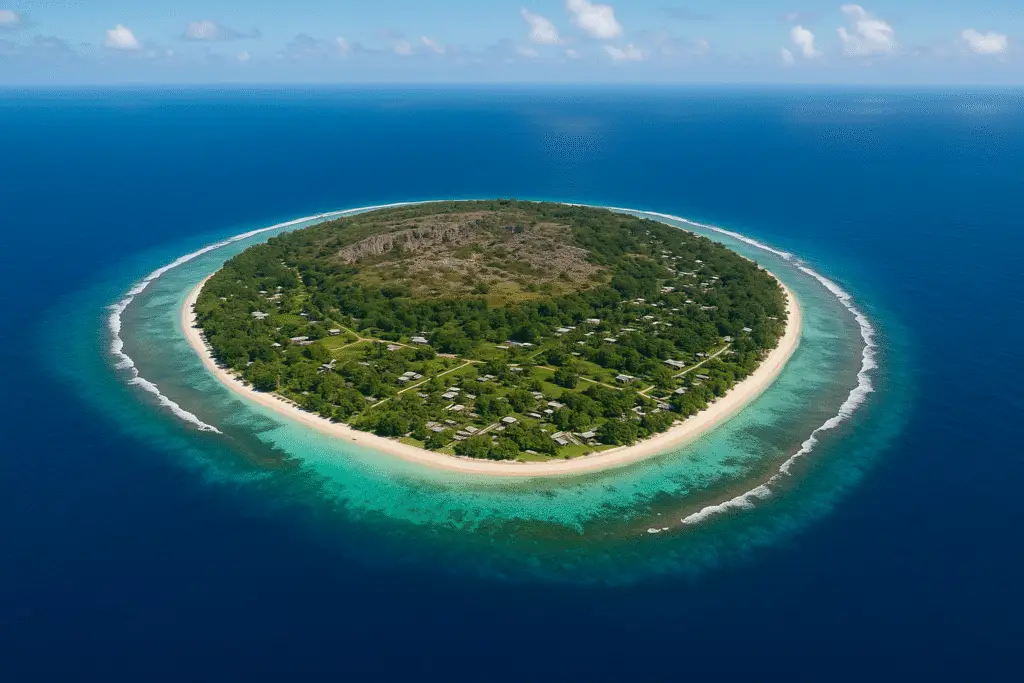
Nauru is one of the smallest and most unique nations on Earth, a single oval-shaped raised coral island in the western Pacific Ocean, positioned quietly between Micronesia, Kiribati, and the Solomon Islands. Few travelers have ever stepped foot on its shores, and even fewer know its deep story. Nauru holds a history shaped by ancient settlement, powerful geological wealth, dramatic environmental transformation, colonial interests, and cultural resilience. Though tiny in size and population, Nauru stands tall in memory, community, identity, and heritage.
The island, barely 21 square kilometers in area, is ringed by a narrow band of coastal plains lined with coconut palms, fish traps, small homes, and quiet roads that circle the perimeter like a ribbon. Inland, the island rises to a limestone plateau once rich in phosphate, now sculpted into jagged coral pinnacles and fields shaped by mining. Between coastline and plateau lie pockets of villages, sports fields, churches, government buildings, and lush residential gardens where breadfruit, pandanus, and tropical flowers flourish. The ocean surrounding Nauru shimmers in shades of sapphire, turquoise, and silver, dotted with reef breaks and fishing boats moving across the tide.
Nauru lives at a gentle pace. Days begin early with sun over the horizon and families gathering outside. Children walk to school, fishermen prepare lines, and elders sit near shaded houses telling stories of earlier times. Despite its size, Nauru has a rich and distinctive cultural tradition, shaped by Pacific ancestry, island interaction, and a collective spirit anchored in family and land. While modern challenges exist, the heart of Nauru lies in its people, community strength, and deep connection to their island home.
What follows is an in-depth guide to Nauru — history, culture, people, landscapes, nature, economy, life today, and travel experience — written for educational and tourism context, in long flowing paragraphs with minimal full stops.
✅ QUICK FACTS
| Category | Details |
|---|---|
| Official Name | Republic of Nauru |
| Capital | No official capital, government offices in Yaren |
| Population | ~12,000 |
| Location | Western Pacific Ocean |
| Land Area | ~21 km² |
| Language | Nauruan, English |
| Currency | Australian Dollar (AUD) |
| Government | Republic |
| Time Zone | UTC +12 |
| Highest Point | Command Ridge |
| Known For | Phosphate, coastal reef, unique history |
🌏 GEOGRAPHY & LANDSCAPE Nauru
Nauru is among the world’s smallest sovereign nations by land mass, a raised atoll formed from ancient coral uplifted over time. The island is shaped like an oval ring. A narrow fertile coastal belt surrounds the island, offering habitable land where most people live. This coast is edged by coconut palms, trees, simple houses, public buildings, and quiet community areas. The coastline is ringed by a shallow reef, limiting natural harbors and shaping fishing culture. Just beyond the reef, water drops rapidly into the deep Pacific.
Inland, the island rises toward a limestone plateau. Historically rich in phosphate formed from millennia of seabird guano, this interior plateau is dotted with pinnacles and uneven coral landscape, shaped by decades of mining. This inland terrain, known locally as Topside, holds dramatic coral towers, caves, limestone fields, and the scars of extraction. Though mining altered the landscape, nature pushes slowly back with grasses, shrubs, and pockets of regrowth.
The highest elevation is Command Ridge, offering broad views of the sea and plateau. Surrounding the inland cliffs are small freshwater pockets, historical sites, and former mining structures now quiet in the tropical heat.
Life unfolds mostly along the coastal ring road, where families live close to the ocean. The sea is the defining feature of the island’s geography. Nauru’s reef offers fishing grounds that sustain the community, while waves break steadily along coral edges. Sunrises and sunsets color the sky with warm hues, reflecting the island’s peaceful rhythm.
🏛 HISTORY
Nauru’s story begins long before global record. The island was settled by Micronesian and Polynesian peoples at least three thousand years ago. These early inhabitants developed a distinctive culture adapted to the island’s environment. Clan structure, fishing, gardening, and traditions defined daily life. The island was once divided into twelve distinct tribes, each with its own lineage and territory. Remnants of their symbols and historical markers endure in cultural memory.
In the nineteenth century, whaling ships and traders arrived. Soon after, German influence established formal control. In the early 1900s, Nauru caught the world’s attention due to a remarkable discovery: phosphate, a mineral derived from ancient bird droppings. Phosphate proved extremely valuable as agricultural fertilizer. Mining began under German rule, then continued under Australian, British, and New Zealand administration after World War I.
During World War II, Nauru fell under Japanese occupation. Many Nauruans were relocated to other Pacific islands, and wartime scars remain in bunkers, relics, and memories.
After the war, mining resumed and intensified. In 1968, Nauru became an independent republic. The country took control of its phosphate reserves and for a period became one of the wealthiest nations per capita in the world. Roads, schools, hospitals, and modern infrastructure developed rapidly.
However, phosphate deposits eventually dwindled. Heavy reliance on a single non-renewable resource brought challenges. Economic shifts, environmental degradation from mining, debt, and complex political decisions altered national trajectory.
In recent decades, the country has diversified income through fishing licenses, international agreements, and some external partnerships — but Nauru remains defined by resilience, adaptation, and strong identity.
👥 PEOPLE & CULTURE
Nauruan culture is deeply communal. Families share responsibilities, land, and daily life. Children often grow up surrounded by extended relatives, learning family history, songs, and customs. Respect for elders is central. Community ties run through shared meals, celebrations, church gatherings, and sporting events.
Language identity is strong. Nauruan is the indigenous tongue, a distinct Micronesian language spoken widely, while English is used in government, school, and external communication.
Traditional dances, songs, and storytelling form a living archive of the island’s memory. Celebrations often feature music, rhythmic clapping, and movement inspired by the ocean. Crafts include weaving, woodwork, and ornament making.
Food culture centers around fish, coconut, breadfruit, and imported staples. Fishing remains both practical and cultural. Families gather for meals with grilled fish, rice, coconut dishes, tropical fruits, and baked treats.
Sports are popular, particularly Australian rules football, a legacy of Australian influence. Tournaments bring excitement, community pride, and lively crowds.
Though modern influences shape daily life — technology, modern schooling, global media — Nauru’s cultural core remains anchored in kinship, land, and the sea.
🏝 DISTRICTS OF NAURU
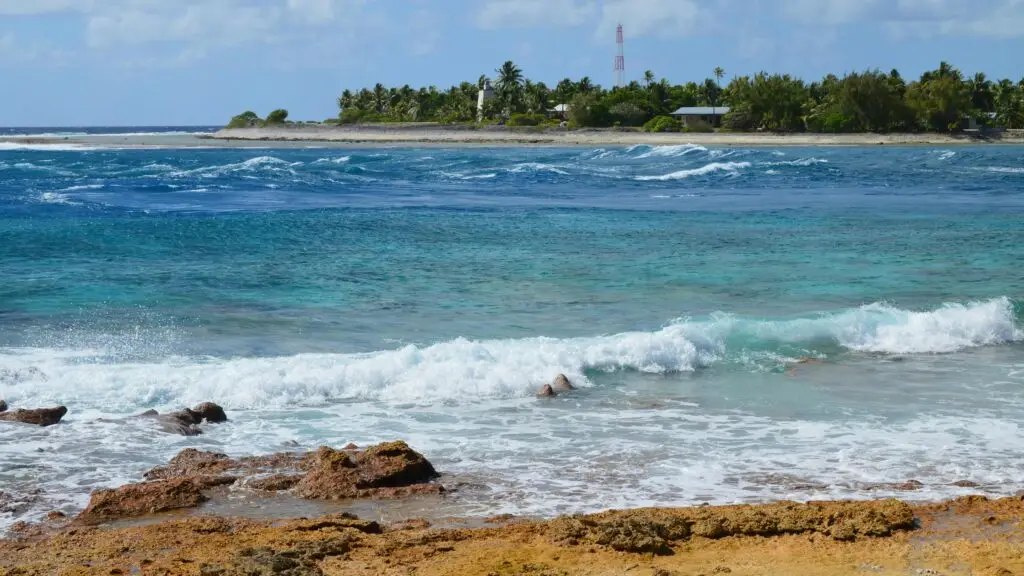
Nauru has 14 districts, forming a ring around the island. These districts organize community identity and location. Though small, each district has its own character, family clusters, churches, and gathering places.
- Aiwo
- Anabar
- Anetan
- Anibare
- Baitsi
- Boe
- Buada
- Denigomodu
- Ewa
- Ijuw
- Meneng
- Nibok
- Uaboe
- Yaren
Yaren functions as the government center, holding parliament, administrative offices, and educational institutions.
The interior district Buada is unique because it surrounds a freshwater lagoon, the only naturally occurring freshwater body on the island, surrounded by vegetation and a pleasant microclimate.
Districts are linked by a paved ring road that encircles the entire island. Locals travel by car, motorbike, or foot along this route, passing homes, government buildings, ocean overlooks, and small shops.
🌿 NATURE & WILDLIFE
Nature on Nauru is shaped by ocean and limestone. While mining changed the interior dramatically, coastal zones hold thriving plant life — coconut palms, pandanus, hibiscus, breadfruit, and coastal shrubs. Villages often have small gardens of fruit trees, ornamentals, and vegetables.
Birdlife is notable. Historically, seabirds nested across the island, contributing to phosphate deposits. Today, seabirds can still be seen along coasts and cliffs, gliding on sea winds. Migratory birds occasionally stop on the island. Native species adapted to limestone habitat once occupied Topside, though mining reduced their range.
Fish surround Nauru in abundance — tuna, reef fish, flying fish, and seasonal species move through warm tropical waters. Dolphins occasionally play near the reef, and marine ecosystems host coral patches, shells, sea grasses, and reef organisms.
The Buada Lagoon area remains particularly green, with small groves of vegetation providing shade and habitat.
Nature reflects resilience — coastal trees stand strong in sea breezes, coral nurtures marine life at the reef edge, and inland lands slowly recover piece by piece.
🌊 THE OCEAN & MARINE LIFE
The sea is everything to Nauru — food source, highway, identity, and spiritual anchor. Currents carry nutrient-rich waters that support tuna and pelagic species. Nauru’s exclusive economic zone is vast compared to its tiny landmass, providing fishing rights that support national revenue.
Local fishermen launch simple boats to catch reef fish and tuna. Children swim in clear shallows during heat of the day. The reef protects the coast from waves, with breaks allowing access to open sea. Coral patches grow along inner reef edges, offering habitat to small marine creatures and colorful fish.
Marine culture shapes family identity. Canoes once played a key role in mobility and fishing. Though motorboats are common now, traditional knowledge of weather, tides, and currents remains deeply respected.
The sea teaches patience, unity, and respect.
🏙 LIFE ON NAURU TODAY
Daily life on Nauru is relaxed, social, and community-centered. Schools play a major role in youth life. Houses often gather multiple generations. Church communities provide spiritual activity, events, and social structure.
Small stores along the coastal road sell food staples, drinks, and everyday goods. Government offices cluster in Yaren. Sports fields in Meneng and Aiwo draw teams and spectators. Community halls host celebrations, weddings, and meetings.
Most goods come by ship or plane. Flights arrive at the small international airport near Yaren. Roads circle the island easily; a full drive around the perimeter takes less than 30 minutes without stops.
People spend time outdoors — fishing, swimming, walking, cycling. Social visits are common between neighbors and relatives. Evenings often bring cooler temperatures and gatherings under palm trees.
Nauru may be small, but life is full — family, friendship, laughter, and shared story shape every day.
🪨 PHOSPHATE & LANDSCAPE LEGACY
Phosphate defined Nauru’s modern history. The interior plateau once held some of the world’s most concentrated phosphate deposits. Mining began under colonial administration and continued after independence, fueling national wealth for decades.
The industry brought prosperity. Yet mining also created challenges — much of the interior was left stripped, leaving coral pinnacles and sparse soil. Rehabilitation is ongoing, with some areas slowly recovering vegetation. Some inland zones remain striking landscapes of raised limestone towers and rugged fossilized coral spires, a natural-geological museum shaped by time and industry.
Discussions continue about land restoration, future land use, and environmental regeneration, guided by scientific study, community voices, and long-term planning.
🏛 GOVERNANCE
Nauru is a republic with an elected parliament. Government buildings stand in Yaren district. The administrative structure includes ministries overseeing education, health, environment, fisheries, and development. Community participation and local voices reflect democratic process on a small scale.
🛣 GETTING AROUND
Nauru is easy to navigate. A paved road traces the island’s edge. Cars, scooters, and bicycles travel along this ring, passing villages, recreation areas, scenic coast, and small shops. Public buses are limited, but private transport is common. Walking between districts is possible due to short distances.
Driving around the island reveals constant ocean views, quiet neighborhoods, schoolyards, churches, and glimpses into daily life.
🍽 FOOD & DAILY EATING
Nauruan cuisine mixes traditional foods with imported ingredients. Fish is essential — tuna, reef fish, and seasonal catches appear regularly. Coconut grows everywhere, used for drinking, cooking, and sweet desserts. Breadfruit, pandanus, banana, and taro offer traditional staples. Families often share meals outdoors.
Imported foods such as rice, flour, canned goods, chicken, and noodles contribute to modern diet. Social gatherings feature grilled fish, rice dishes, fresh coconut, and simple sweets.
Food is an expression of generosity and hospitality.
🧭 THINGS TO DO in Nauru
Nauru welcomes travelers who appreciate culture, nature, and quiet discovery. Though the island is small, it offers memorable experiences:
- Drive or cycle the coastal road
- Visit Buada Lagoon for shade and nature
- Explore Command Ridge for views
- Walk Topside coral pinnacles
- Swim along reef edges
- Learn about phosphate history
- See Japanese WWII remnants
- Meet community, listen to stories
- Enjoy relaxed evenings near the ocean
The island’s slow rhythm invites reflection and appreciation.
🌤 CLIMATE
Nauru has a tropical climate with warm temperatures year-round. Ocean breezes bring comfortable conditions. Rain falls seasonally, refreshing vegetation. Weather influences fishing, outdoor activity, and daily routines. The sea provides cooling winds even during sunny afternoons.
🛡 RESPECT & ETIQUETTE
Respect is central in Nauruan culture. Visitors are welcomed with warmth when they show courtesy:
- Greet people kindly
- Dress modestly near villages
- Ask before taking photos
- Respect family spaces
- Be mindful in church areas
Community life values harmony, cooperation, and gratitude.
🌟 WHY NAURU IS SPECIAL
Nauru is special not because of its size, but because of its story, spirit, and people. It is a place where the ocean encircles every moment, where history courses through landscapes, where community defines identity. There are no large resorts or crowded beaches, no hectic nightlife or aggressive tourism. Instead, there is peace, calm, conversation, and continuity.
Nauru shows the resilience of a nation that experienced great wealth, loss, transformation, and rebirth. Its people remain connected to land, sea, and family. The rhythm of life flows with sun, wind, and tide. The coastal road circles a world held together by community heart.
Visitors find beauty in quiet mornings, coral reef views, green pockets around the Buada Lagoon, limestone spires on the plateau, warm laughter from families, and stories that connect past and present. Nauru teaches that even the smallest places hold vast history and profound meaning.
Nauru, tiny on a map, is enormous in memory.
Related Amazing Bucketlist Articles
- 5 Once-in-a-Lifetime Floating Stays
- Hurawalhi Island Resort
- Top 10 Most Romantic Countries in the World for Couples