
🇳🇨 — Full Country Guide
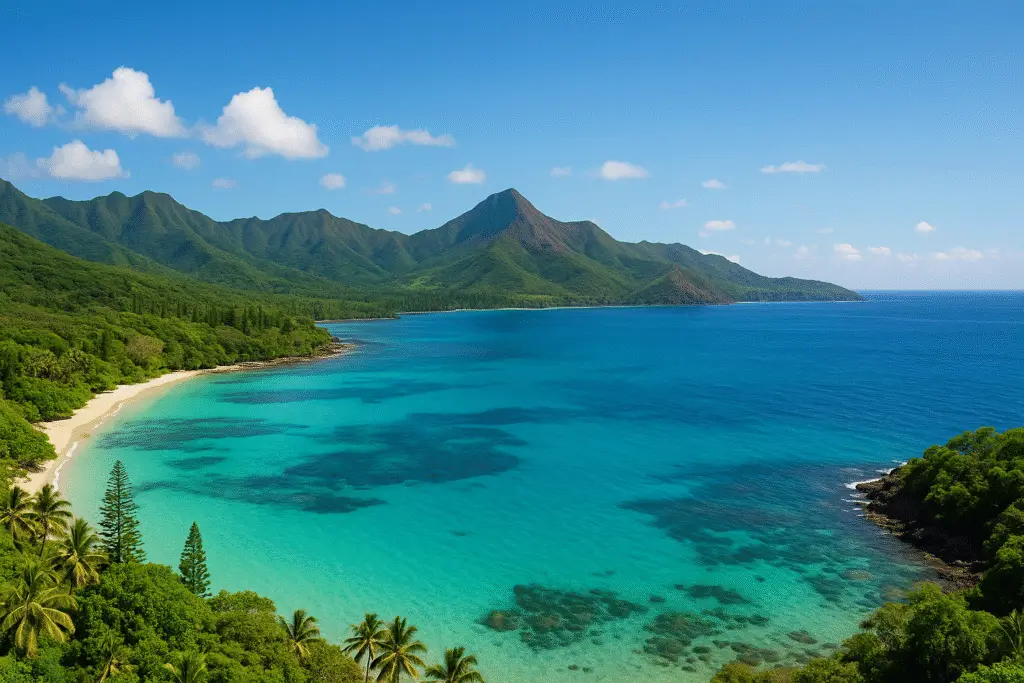
New Caledonia, located in the heart of the South Pacific just east of Australia, is one of the most fascinating and culturally complex island territories in the region. Known for sweeping lagoons, soaring mountains, vibrant Kanak heritage, French influence, and one of the largest barrier reefs on Earth, New Caledonia exists in a space where Melanesian tradition meets European refinement. It is a place of extraordinary nature, dramatic history, remarkable biodiversity, and layered identity.
The islands are home to towering pine forests, turquoise bays, coral gardens, and wide open plains. Thousands of endemic plant and animal species thrive here, including ancient kauri trees and the famous flightless kagu bird found nowhere else on Earth. The lagoon surrounding New Caledonia — protected as a UNESCO World Heritage site — is among the most expansive and pristine in the world, encircled by coral reefs that shelter an extraordinary variety of marine life.
But New Caledonia is more than natural beauty. It is an island world where proud Indigenous Kanak communities maintain deep ancestral ties to the land, while French culture, introduced during colonization, has shaped architecture, language, gastronomy, and governance. Together, these influences create an exceptional cultural landscape unlike anywhere else in Oceania.
The population is a mosaic — Indigenous Kanaks, Europeans, Polynesians, Asian communities, settlers, and migrants form a diverse society rooted in shared stories and contrasting perspectives. Modern life unfolds between traditional ceremonies, village gatherings, lively French-style cafés, political discussions, and island rhythms shaped by trade winds, seasons, and cultural exchange.
This guide explores New Caledonia’s geography, history, culture, nature, landscapes, and way of life — revealing a destination where every valley, reef, and village carries deep meaning.
✅ QUICK FACTS
| Category | Details |
|---|---|
| Official Name | New Caledonia |
| Capital | Nouméa |
| Population | ~270,000 |
| Languages | French (official), Kanak languages |
| Currency | CFP Franc (XPF) |
| Status | Special collectivity of France |
| Major Groups | Grande Terre, Loyalty Islands, Isle of Pines |
| UNESCO Status | Lagoon and Reef System (World Heritage) |
🌏 GEOGRAPHY
New Caledonia lies in the southwest Pacific, approximately 1,200 km east of Australia. It consists of several island groups:
- Grande Terre — the main island
- Loyalty Islands
- Isle of Pines
- Belep Islands
- Numerous smaller islets
Grande Terre, long and narrow, is dominated by a central mountain chain running north–south. Peaks rise over 1,500 meters and give way to deep valleys, fertile plains, and coastal mangroves. The island’s east coast is lush and tropical, while the west is drier with savanna landscapes used for ranching.
Surrounding the islands is a lagoon stretching more than 24,000 square kilometers — one of the world’s largest. Coral reefs form striking turquoise borders around islands, punctuated by passes that lead to deeper ocean channels. Far offshore, seamounts and undersea ridges support rich marine ecosystems.
The Loyalty Islands — including Lifou, Maré, and Ouvéa — are lower-lying and largely limestone. They feature dramatic cliffs, dense evergreen forests, and exceptionally clear water. The Isle of Pines, south of Grande Terre, is known for white beaches, slender pine trees, and smooth lagoon bays.
New Caledonia’s unique geology contributes to biodiversity found nowhere else on Earth. Ancient continental fragments form ultramafic soils rich in minerals, supporting rare plant species adapted to high metal content.
🏛 HISTORY
Early Settlement
The first inhabitants of New Caledonia were Austronesian peoples who arrived around 3,000 years ago. These early settlers established villages, cultivated crops, and developed distinct Melanesian cultural traditions.
Over time, communities built complex social structures based on clan hierarchies, land stewardship, and ceremonial exchange. These ancestral societies formed the foundation of modern Kanak culture.
European Contact
British explorer James Cook arrived in 1774 and named the main island “New Caledonia” due to its resemblance to Scotland (Caledonia). European whalers, traders, and missionaries gradually increased contact.
By the mid-19th century, French Catholic missions were established, influencing local belief systems and social organization.
French Colonial Era
France claimed New Caledonia in 1853. The colony became a penal settlement, receiving thousands of convicts, many of whom stayed after completing sentences.
Indigenous Kanaks faced land dispossession, forced relocation, and restrictive policies. Tensions grew as settlers expanded mining, ranching, and commerce.
Mining & Development
Nickel deposits discovered in the late 19th century transformed the economy. Mining drew migrants from Europe, Asia, and the Pacific, expanding social diversity but deepening economic and political inequalities.
Kanak Resistance & Modern Period
Throughout the 20th century, Kanak communities pushed for recognition, land rights, and autonomy.
Tensions culminated in a political crisis in the 1980s, leading to the Matignon Agreements (1988) and Nouméa Accord (1998).
These agreements granted increasing self-governance and laid paths toward potential independence.
Referendums held between 2018–2021 reflected divided opinion, with independence votes showing strong Kanak support. The future political status remains a topic of active negotiation.
👥 PEOPLE & CULTURE
New Caledonia’s cultural identity arises from a fusion of Indigenous Kanak heritage and French influence, alongside Polynesian, Asian, and migrant communities. This mix creates a society of multiple identities and rich cultural expression.
Kanak Identity
Kanaks represent the Indigenous Melanesian population. Their society is organized around clans, customary lands, and complex kinship ties.
Village life revolves around:
- Extended family networks
- Chiefs and customary authority
- Ceremonial exchange
- Respect for ancestors
- Spiritual connection to land
Traditional dress, dance, carving, and storytelling remain important.
French Influence
French colonization introduced:
- Language
- Cuisine
- Education system
- Legal framework
- Catholicism
Nouméa especially reflects French architectural and cultural aesthetics.
Multicultural Harmony
Communities from Wallis and Futuna, Tahiti, Vanuatu, Indonesia, Japan, and Vietnam contribute to a multicultural society, especially in urban areas.
Daily life reflects these layers — a Kanak feast may coexist with a French-style bakery; church choirs blend with island rhythms; and multiple languages mingle in markets and public spaces.
🌿 NATURE & BIODIVERSITY
New Caledonia is a biodiversity treasure — one of the most remarkable ecological regions on Earth. Its flora and fauna have evolved in relative isolation, producing incredibly high endemism. More than 75% of plant species exist nowhere else, and its reefs host immense marine diversity.
Flora
The islands are home to ancient plant lineages. The most iconic is the Araucaria columnaris, or Cook pine — tall, slender, and clustered dramatically along coastlines and ridges. Other endemic plants include species of kauri pine, palms, and flowering shrubs adapted to mineral-rich soils.
Ultramafic terrain, unique to fragments of ancient Gondwana, produces red earth with high concentrations of metals. Many plants evolved special tolerance, giving rise to distinct ecosystems of scrub, forest, and grassland. Rainforest covers mountains; mangroves line estuaries; dry forests stretch across the western plains.
Fauna
New Caledonia’s fauna includes ancient relics.
The most famous is the kagu, a flightless bird with ash-grey plumage, haunting calls, and crest feathers. It is deeply symbolic of New Caledonia’s natural heritage.
Other wildlife includes:
- Horned parakeets
- Imperial pigeons
- Fruit bats
- Geckos and skinks
- Rare insects
No native mammals existed before human arrival except bats. The reptile population is impressive — New Caledonia has one of the highest lizard diversities in the world.
Marine Life
Inside the vast lagoon, marine ecosystems flourish:
- Coral gardens
- Sea turtles
- Reef sharks
- Rays
- Tropical reef fish
- Dugongs
The lagoon’s calm waters provide habitat for thousands of species. Its coral system is the world’s second-largest barrier reef complex after Australia’s Great Barrier Reef.
Whales migrate seasonally; humpbacks often enter sheltered bays to nurse young. Dolphins inhabit deeper channels, visible from coastal roads and boats.
🏝 REGIONS & MAJOR ISLANDS
New Caledonia is composed of geographically and culturally distinct regions.
✅ Grande Terre
The main island, and by far the largest, houses most of the population. A mountain spine defines the terrain; valleys run east–west, holding rivers, forests, and settlements.
East Coast
Green and humid, with waterfalls, gardens, and Kanak villages.
This region is rural and deeply traditional.
West Coast
Drier landscape of open plains suited to cattle ranching.
Mining communities sit near mountain foothills; coastal villages line protected bays.
✅ Loyalty Islands
A group of low-lying coral islands east of Grande Terre:
- Lifou
- Maré
- Ouvéa
They are known for dramatic limestone cliffs, turquoise lagoons, caves, and strong Kanak identity. Life moves slowly; agriculture and fishing dominate daily rhythm.
✅ Isle of Pines (Île des Pins)
South of Grande Terre, the Isle of Pines is celebrated for:
- White beaches
- Blue lagoons
- Tall pine groves
- Quiet villages
It is often described as one of the Pacific’s most beautiful islands — serene, orderly, and strikingly scenic.
✅ Belep Islands
Remote islands north of Grande Terre, sparsely inhabited and known for deep cultural tradition and rugged landscapes.
🏙 NOUMÉA — Modern Pacific City
Nouméa, on the southwest coast of Grande Terre, is the capital and cultural heart of New Caledonia. It blends French and Pacific heritage —
cafés and patisseries meet palm-fringed bays; bustling wMarkets meet colonial architecture; cosmopolitan neighborhoods overlook coral lagoons.
The city features:
- Museums
- Restaurants
- Marina
- Marketplaces
- Parks
- Art galleries
The waterfront is alive with sailing boats, swimmers, and families strolling coastal promenades. The city’s multicultural vibe is visible in food, languages, and festivals.
The Tjibaou Cultural Center, a landmark designed by Renzo Piano, celebrates Kanak heritage and art. Its soaring wood-and-steel structures echo traditional conical houses and stand in harmony with surrounding forest.
Nouméa is the most European city in the Pacific, yet Kanak customs remain present throughout public life.
🛖 KANAK CULTURE
Kanak identity lies at the spiritual and cultural foundation of New Caledonia.
Village life is built around clan structures; each clan belongs to a network of extended family with land ties, shared history, and reciprocal responsibilities.
Village & Custom
Kanak villages feature:
- A central ceremonial site
- Meeting houses
- Family houses
- Taro fields
- Coconut groves
Chiefs and elders guide social structure. Traditional exchange of gifts, including yams and woven mats, symbolizes peace, respect, and alliance.
Ceremonial events mark:
- Birth
- Marriage
- Mourning
- Harvest
- Reconciliation
Stories, genealogy, and oral memory preserve ancestral power.
Customary Authority
Kanak customary law exists alongside French civil law, particularly in land stewardship and clan matters. Customary areas maintain political representation through councils, which advise on cultural and territorial matters.
Art & Craft
Kanak artistic expression is refined and symbolic:
- Carved wooden posts
- Spears
- Masks
- House façades
Design motifs reflect clan origins, mythologies, and ancestral guardianship.
🍽 FOOD & CUISINE
New Caledonia’s cuisine merges French culinary style with Pacific ingredients.
Common foods:
- Fresh fish and seafood
- Taro and yam
- Coconut
- Avocado
- Pineapple
- Sweet potato
French influence appears in:
- Pastries
- Cheese
- Bread
- Wine
Local markets sell tropical fruit, vegetables, spices, and seafood.
Coastal communities prepare fish in coconut broth; grilled seafood is common along beaches.
A traditional Kanak dish, bougna, is cooked in earth ovens — taro, yam, banana, meat, or fish wrapped in banana leaves and steamed with hot stones.
Meals reflect cultural fusion:
a bakery breakfast; seafood lunch; traditional feast for ceremonies.
🌤 CLIMATE
New Caledonia has a subtropical climate moderated by trade winds.
Dry Season: May–November
- Pleasant temperatures
- Lower humidity
- Cool breezes
Wet Season: December–April
- Warm and humid
- Tropical rains
- Occasional cyclones
Coastal regions are warm year-round; mountains are cooler with misty valleys.
🚗 DAILY LIFE & SOCIETY
Life varies dramatically between Nouméa and rural areas.
Urban Life
Nouméa blends island culture with European amenities. People visit cafés, beaches, offices, and schools; cultural events fill weekends. Commerce, tourism, and services drive the economy.
Rural & Tribal Life
In Kanak villages, community structure revolves around:
- Chiefs
- Family
- Land
- Ceremonies
Agriculture supports households — taro, yam, manioc, and fruit gardens are tended with family labor. Fishing and hunting supplement diet. Village gatherings reinforce social bonds.
⛪ RELIGION & SPIRITUALITY
Religion in New Caledonia reflects its multicultural background.
Christianity is the dominant faith, especially among Kanak communities, where Catholic and Protestant churches play central social roles. Services combine hymns, prayer, and community exchange. Many Kanak rituals coexist with Christian practice — ancestral clan traditions continue to influence cultural identity, ceremonies, and relationships to land.
French influence brought Catholic missions; Protestant and evangelical communities are also present today. Religion remains a foundation of village life, marking milestones from birth to burial. In urban areas, spirituality is diverse, reflecting a mix of cultural backgrounds.
Traditional belief is rooted in nature and ancestry. Certain trees, stones, springs, or mountains hold spiritual meaning. Mythology remains present in storytelling, dance, carving, and ceremonial exchange.
💼 ECONOMY & LIVELIHOOD
New Caledonia has one of the Pacific’s strongest economies, much of it driven by nickel mining — the archipelago holds an estimated 1/3 of the world’s known nickel reserves. Mining has brought infrastructure, industry, and employment but also contributed to political tension and environmental debate.
Other key economic sectors:
- Tourism
- Agriculture
- Fishing
- Public services
- Small exports (vanilla, copra, coffee)
In rural and tribal communities, subsistence agriculture remains important. Families grow root crops and fruit, fish in coastal waters, and raise livestock. Markets sell produce alongside imported goods.
Tourism centers on:
- Nouméa
- Isle of Pines
- Loyalty Islands
Visitors explore reefs, forests, villages, and coastal landscapes. Cultural tourism highlights Kanak heritage — ceremonies, carving, dance, and storytelling.
Despite growth, economic inequality exists between urban and rural populations. Independence debates relate closely to resource governance and wealth distribution.
🌏 ENVIRONMENT & CONSERVATION
New Caledonia’s environment is uniquely precious. The territory is part of the Conservation International Biodiversity Hotspot, largely due to its high number of endemic species.
However, environmental challenges exist:
- Land disturbance from mining
- Erosion
- Invasive species
- Climate change
- Coral bleaching
Efforts to protect nature include:
- National parks
- Marine reserves
- UNESCO World Heritage protections
- Botanical research
- Local reforestation projects
Conservation involves collaboration between Kanak customary authorities, government agencies, researchers, and communities. Traditional ecological knowledge remains invaluable in managing land and water.
🧭 OUTDOOR EXPERIENCES
The islands are a paradise for nature lovers.
Activities include:
- Snorkeling reefs
- Diving coral canyons
- Sailing within turquoise lagoons
- Whale watching (seasonal)
- Hiking mountain trails
- Exploring Kanak villages
- Cave exploration in limestone regions
- Birdwatching — especially for the kagu
- Swimming in freshwater pools
On Grande Terre, mountain trails lead through rainforest and panoramic ridges.
In the Loyalty Islands, limestone caves open to clear underwater pools.
The Isle of Pines offers calm bays with white beaches lined by distinctive slender pines.
The lagoon invites kayakers, sailors, and swimmers. The coral reef protects quiet waters ideal for families and beginners.
🧑🌾 DAILY LIFE & TRADITION
Life in New Caledonia balances tradition and modernity.
In Nouméa, daily routines resemble those of a small French coastal city — cafés, markets, offices, and seaside promenades. French language, style, and food are visible everywhere.
In contrast, rural Kanak communities maintain deep-rooted customs. Homes cluster near ceremonial grounds and gardens. Elders hold authority through knowledge of genealogy and land. Children learn to fish, farm, and weave through family instruction.
Ceremonial exchange — gifting yams, mats, or symbolic items — remains essential, strengthening kinship and marking social responsibilities.
Weddings, funerals, reconciliations, and harvest celebrations bring villages together for speechmaking, feasting, and dance.
🎉 FESTIVALS & CULTURAL EVENTS
Festivals are vibrant expressions of identity.
Notable events:
- Kanak cultural celebrations
- Nouméa Carnival
- Yam Festivals in tribal areas
- Arts concerts at Tjibaou Cultural Center
- Craft fairs, dance performances, and communal feasts
Yam festivals honor ancestral tradition and agricultural cycles. Communities share harvest, sing, and dance. These gatherings symbolize cooperation, gratitude, and spiritual interconnectedness.
Music mixes Polynesian rhythm, Melanesian vocals, and French influence. Dance performances reflect ancient stories — warriors, creation spirits, and clan origins.
🐢 WHY NEW CALEDONIA IS SPECIAL
New Caledonia is special because it embodies a rare blend of nature, culture, and history.
Its towering pines, glowing lagoons, soaring mountains, and ancient birds evoke a world untouched. Yet, at the same time, its cities bring global sophistication, and its people weave traditions with modern identity.
It is a place where:
✅ Coral reefs stretch into endless blue
✅ Kanak villages preserve ancient knowledge
✅ French cafés overlook tropical bays
✅ Pine forests whisper of ancient Gondwana
✅ Nickel mines fuel modern industry
✅ Culture remains deeply rooted in land
The territory’s diversity—both ecological and cultural—sets it apart.
Here, Indigenous heritage remains central, shaping identity and stewardship. French language and culture intertwine, producing a unique island society.
New Caledonia offers not simply scenery but layered meaning — land as ancestor, sea as provider, culture as compass. Its beauty lies not only in landscapes but in the ongoing dialogue between tradition and change.
Visitors remember:
- Unbroken blue lagoons
- Forest trails scented with pine and earth
- Stories shared at village gatherings
- Wind passing through ceremonial houses
- Whales breaching in sheltered bays
New Caledonia teaches balance — between nature and development, custom and modernity, isolation and connection.
To experience it is to witness an island nation still defining its future, carrying ancient memory into a modern world.
Related Amazing Bucketlist Articles
- 5 Once-in-a-Lifetime Floating Stays
- Hurawalhi Island Resort
- Top 10 Most Romantic Countries in the World for Couples