
🇳🇺 NIUE — THE ULTIMATE COUNTRY GUIDE
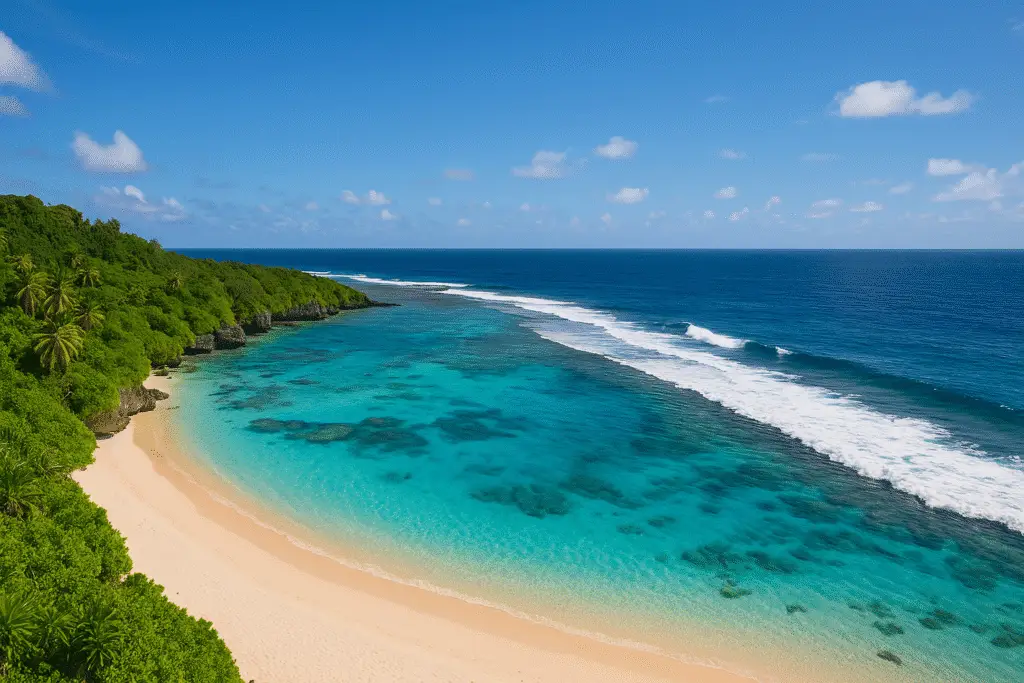
Niue is one of the most unique islands in the Pacific — an elevated coral fortress rising dramatically from the ocean, ringed by crystalline water, etched with coastal caves, and wrapped in quiet rainforest. It sits alone in the vast South Pacific between Tonga, Samoa, and the Cook Islands. Known as “The Rock of Polynesia,” Niue is a place where the land feels ancient, the sea is clear beyond imagining, and the pace of life is gentle, communal, and deeply rooted in Polynesian identity.
Though small in population — roughly 1,600 residents — Niue holds immense cultural and environmental significance. Niueans maintain close connections with family abroad, especially in New Zealand, yet those who remain on the island preserve traditions of storytelling, agriculture, feasting, reef navigation, and respect for land. Villages are scattered along the rugged coastline; each has a church, meeting places, family lands, and coastal access to fishing grounds.
Travelers who reach Niue find a peaceful gem: no traffic lights, no crowds, no rush — just limestone cliffs, warm ocean currents, forest trails, and welcoming smiles. Schools, churches, sports fields, and small shops serve local life. Community is tight-knit; neighbors know one another and support each other during celebrations or hardship.
Niue is a raised atoll, unlike the ring-shaped coral atolls common elsewhere in Polynesia. The island rises sharply from the sea, forming terraces dotted with caves, chasms, and blowholes. Underwater visibility often exceeds 70–90 meters, making Niue one of the clearest ocean environments in the world. Humpback whales migrate close to shore during season; dolphins inhabit coastal waters year-round; and limestone caverns offer unforgettable snorkelling experiences.
This guide explores Niue in full: its geography, history, culture, economy, landscape, wildlife, and the deep emotional language of a place where nature and tradition remain deeply connected.
✅ QUICK FACTS
| Category | Details |
|---|---|
| Official Name | Niue |
| Capital | Alofi |
| Population | ~1,600 |
| Location | South Pacific |
| Official Language | Niuean, English |
| Currency | New Zealand Dollar (NZD) |
| Government | Self-governing in free association with New Zealand |
| Land Area | ~260 km² |
| Time Zone | UTC –11 |
| Nickname | The Rock of Polynesia |
🌏 GEOGRAPHY
Niue is one of the world’s largest raised coral atolls — a single island rather than a cluster. It measures about 260 square kilometers and rises in two main terraces, with the upper level forming a central plateau up to 60–70 meters above sea level.
The coastline is dramatic:
- Sharp limestone cliffs
- Coastal terraces
- Sea caves
- Blowholes
- Hidden pools
- Narrow fishing access points
Reef flat shelves edge the island, especially on western shores, creating calm shallow pools at low tide. The island’s interior is covered in tropical forest — a mosaic of hardwoods, palms, vines, and fern. Beneath this canopy lie taro patches, citrus gardens, and family farms.
Because Niue is a raised atoll, there is no large lagoon inside the island — instead, the ocean meets cliffs and rock shelves directly. This makes Niue visually stunning and unique among Pacific islands.
Freshwater is found in underground aquifers within the porous limestone; there are no large rivers, but subterranean water cavities feed springs and swimming pools carved into stone.
The capital, Alofi, lies midway along the western coast. Villages encircle the island along the main ring road.
🏛 HISTORY
Ancient Settlement
Niue was settled at least 1,000 years ago by Polynesian voyagers. Most oral histories trace origins to Samoa, Tonga, and Pukapuka. Early settlers lived in small kinship groups, cultivating land, fishing reefs, and developing distinct language, customs, and spiritual beliefs. For centuries, Niue remained relatively isolated; traditional warfare between clans occurred at times, but alliances and leadership lines persisted.
European Contact
The first known European arrival was Captain James Cook in 1774. However, local people did not allow him to land. He named it “Savage Island,” likely a misunderstanding that has since been rejected. Later contact with missionaries and traders brought new religious teachings, goods, and cultural exchange.
Mission Influence
Christianity arrived in the mid-19th century, introduced by Polynesian missionaries. Churches gradually became central community institutions. Niuean society blended Christian faith with traditional kinship and ceremonial exchange.
Colonial Era
In 1901, Niue was annexed to New Zealand. Government structures, schools, and medical systems were established. Niueans gained New Zealand citizenship, allowing migration. Many families eventually settled in New Zealand, creating strong diaspora ties.
Self-Government
In 1974, Niue became self-governing in free association with New Zealand. Niue handles domestic affairs; New Zealand assists with defense and diplomatic representation. Both maintain close economic and cultural relationships.
👥 PEOPLE & CULTURE
Niuean culture is Polynesian in foundation — emphasizing community, genealogy, spirituality, and stewardship of land. Family networks extend across villages and abroad. Niueans living overseas maintain connection through remittances, visits, and participation in cultural events.
The Niuean language is related to Tongan and Samoan; English is widely spoken. Many Niueans are multilingual, especially those who split time between Niue and New Zealand.
Villages are central to social organization. Each has:
- A church
- Village council
- Community hall
- Generational family lands
Local identity is strong — people introduce themselves through family names, land areas, and village lineage.
Community Rhythms
Daily life is relaxed. Most families keep home gardens. Soft evening light brings cool breezes; neighbors talk outdoors; children play in communal spaces. Traditional ways of knowing remain strong — planting, fishing, preparing feasts, weaving mats, and caring for elders.
Ceremonial Life
Feasting is at the heart of celebration. Events such as weddings, funerals, birthdays, and coming-of-age rituals involve exchange of food, speeches, dance, and prayer. Gifts often include woven mats, food baskets, and flowers.
Niueans sing hymns with rich harmony; music fills churches on Sundays and marks many ceremonies.
🌿 NATURE & LANDSCAPE
Niue’s landscape blends limestone cliffs, coastal forest, craggy terraces, and underground caves. The interior is green, quiet, and covered with native plants. Footpaths lead to taro pits, family homesteads, and secret swimming spots.
Rainfall supports:
- Pandanus
- Hibiscus
- Coconut palms
- Breadfruit
- Tropical hardwood
The forest shelters birds, fruit bats, reptiles, and insects. The local flying fox (peka) is essential to pollination.
Because Niue is porous limestone, rainwater sinks underground, creating:
- Freshwater pools
- Subterranean streams
- Caverns
Some caves near the coast contain tidal pools — deep, clear, calm spaces illuminated by shafts of sunlight.
Niue is exceptionally clean. Ocean currents maintain pristine water quality; inland areas have little pollution or industry. The result is an island where nature feels untouched.
🌊 OCEAN & MARINE LIFE
Niue’s ocean environment is one of the most extraordinary in the world. Because the island rises steeply from deep water, there is no wide continental shelf — the sea becomes deep only a few meters from shore. This creates phenomenal underwater clarity, often exceeding 70–90 meters. Coral pinnacles, chasms, drop-offs, and caves shape the underwater landscape.
Marine life includes:
- Spinner dolphins (resident year-round)
- Humpback whales (seasonal)
- Reef sharks
- Turtles
- Rays
- Colorful reef fish
- Moray eels
- Octopus
The reef ecosystem is healthy, diverse, and protected. Dolphin pods often swim near shore, weaving around boats. Humpback whales migrate between July and October; mothers and calves rest in Niue’s calm coastal waters.
Niue’s limestone caves continue beneath the ocean surface. Snorkelers swim through tunnels where beams of light illuminate turquoise chambers. Coral gardens flourish on secluded ledges. Divers explore drop-offs where reef walls plunge into blue.
Fishermen catch wahoo, tuna, mahimahi, and reef species. Fishing is central to cultural identity; knowledge of tides, moon cycles, and reef passages is passed from elders to youth.
The ocean does not just feed Niue — it teaches, protects, and inspires. It is a spiritual presence.
🦅 WILDLIFE
Though Niue has few land animals, its ecosystems are rich with unique species.
The most iconic animal is the flying fox (peka) — a large fruit bat that roosts in forest canopy and pollinates native trees. These bats are active at dusk, filling the sky with silhouettes.
Bird species include:
- White-tailed tropicbirds
- Frigatebirds
- Brown noddies
- Kingfishers
- Imperial pigeons
Some seabirds nest along cliffs. Coral atolls nearby host marine bird colonies.
Reptiles include lizards and geckos. Butterflies and insects thrive among flowers and forest.
🌺 FLORA
Niue’s vegetation is a blend of native forest, traditional cultivation, and wild coastal plants. The interior supports:
- Pandanus
- Coconut palm
- Breadfruit
- Hibiscus
- Mango trees
- Citrus orchards
- Ferns
Village gardens grow taro, yam, banana, cassava, and pineapple. Many families maintain plantations inland, visiting several times weekly for tending and harvest.
The limestone substrate encourages deep root systems. Hardwoods like tamanu and tava provide shade and building materials.
🏘 VILLAGES & COMMUNITY
Niue is divided into 14 villages around the coast, connected by a circular road. Each village holds identity through:
- Family lines
- Church
- Village hall
- Coastal pathways
- Plantation lands
The villages, listed clockwise from Alofi:
- Alofi North
- Alofi South
- Makefu
- Hikutavake
- Toi
- Mutalau
- Lakepa
- Liku
- Hakupu
- Vaiea
- Avatele
- Tamakautoga
- Vaiala
- Paliati (broader district)
Some are small clusters of homes; others stretch along the coast. Niue does not have urban centers — even Alofi, the capital, feels like a relaxed village with small stores, offices, a wharf, and an open shoreline.
Roads are quiet. People wave as they pass. Children bike to school. Life is simple and grounded.
Community pride is strong. Villages host events, sports tours, choir performances, and feasts. Residents gather at the village hall to dance, celebrate, and discuss shared concerns.
🏝 MAJOR LANDMARKS & NATURAL SITES
Niue’s top attractions are mostly natural — caves, pools, coastlines, and forests. Each site has cultural significance; many are linked to ancestral stories.
Below are 10 notable locations:
1) Talava Arches
Massive limestone arches shaped by ocean and wind. Visitors walk through forest pathways and caves to reach sea-carved structures towering above turquoise water.
2) Matapa Chasm
A deep coastal inlet where calm, clear water sits between vertical rock walls. Traditionally reserved for Niuean royalty, it is now a popular swimming site. Light reflects off smooth white limestone; the water is refreshing and still.
3) Limahuli Caves
A network of underground caverns with fresh pools and stalactite formations.
4) Togo Chasm
A dramatic trail leads from coastal terrace to a hidden sandy floor surrounded by vertical walls. The path passes through jagged limestone, pandanus groves, and blowholes.
5) Hikutavake Pools
At low tide, reef shelves reveal limestone pools filled with marine life. People swim and picnic here.
6) Avaiki Cave
A coastal cave with calm natural pools beneath overhanging stone. Historically significant as a landing place of early Polynesian ancestors.
7) Vaikona Chasm
A long coastal hike leads to a cavern with inland water channels. Adventurous explorers wade, swim, and climb within limestone chambers.
8) Ulupaka Cave
Sacred place with preserved artifacts.
9) Palaha Cave
Large chambers decorated with limestone formations.
10) Limu Pools
A beloved snorkel spot where ocean water mixes with freshwater springs. Waters are crystal-clear and filled with colorful fish.
🧭 CULTURAL VALUES & TRADITION
Niuean culture emphasizes:
- Family obligation
- Sharing
- Humility
- Respect for elders
- Collectivism
- Stewardship of nature
Ceremonies mark major life events.
Public speeches tell personal stories, honor ancestors, and express gratitude.
Food is central to hospitality. Visitors are given meals and welcomed warmly. Traditional dishes include:
- Fresh fish
- Coconut cream dishes
- Taro
- Pig cooked in earth oven
- Breadfruit
Village feasts (umu) are held during celebrations. Men prepare earth ovens by heating stones and wrapping food in leaves. Women prepare taro, desserts, and seafood. Everyone eats together.
Music fills community life. Harmonized choral singing during church events is powerful, emotional, and deeply rooted.
🏛 GOVERNMENT & IDENTITY
Niue is self-governing in free association with New Zealand. Niueans hold New Zealand citizenship and can freely live and work there. Many Niueans migrate for education and employment but retain strong homeland ties.
Niue’s government operates from Alofi. The island has a single parliamentary chamber, and local village councils play a role in decision-making.
Though closely connected to New Zealand, Niue maintains a distinct identity, expressed in language, culture, land relationships, and community.
💬 LANGUAGE
The Niuean language (Vagahau Niue) belongs to the Polynesian language family and is closely related to Tongan and Samoan. It carries deep cultural meaning — proverbs, chants, genealogies, and oral histories are preserved through speech. Elders are revered as guardians of language; they teach vocabulary tied to land, sea, fishing techniques, and ancestral stories.
English is widely spoken, especially in government, education, and daily communication. Many Niueans are bilingual or trilingual due to their close relationship with New Zealand. Cultural identity, however, remains anchored in Vagahau Niue — the language is heard in church, village gatherings, songs, and family conversations.
Efforts to revitalize and protect the language continue, particularly through education and cultural programming.
📖 ORAL TRADITION & STORYTELLING
Storytelling is central to Niuean culture. Oral histories recount:
- Ancestors who first settled the island
- Lineages of chiefs
- Battles and alliances
- Voyaging journeys
- Ties with Samoa and Tonga
- Legends of spirits living in caves, forests, and sea
Stories are passed through:
- Night gatherings
- Ceremonial speeches
- Song
- Chant
- Proverbs
These tales reinforce values of respect, humility, generosity, and connection to land. Children grow up hearing legends of gods, warriors, and mythical sea creatures. Storytelling also teaches environmental knowledge — which reef passages are safe, where fresh springs lie, when to plant crops, and how to read weather.
🍽 FOOD & CUISINE
Niuean cuisine reflects a blend of land and sea. Meals are simple, fresh, and rooted in tradition.
Common ingredients:
- Taro
- Cassava
- Coconut
- Breadfruit
- Banana
- Citrus
- Fish (reef + pelagic)
- Pork and chicken
Fresh catch — tuna, wahoo, mahimahi — appears in family meals. Fish may be:
- Grilled
- Steamed
- Raw with coconut
- Fried
Pork is prepared during major feasts. Whole pigs are cooked in umu — an earth oven lined with hot stones. Vegetables, breadfruit, and taro surround the meat, wrapped in leaves to retain moisture.
Snacks include coconut treats, ripe fruit, and cakes flavored with banana or pineapple. Meals are communal and often eaten outdoors, especially during celebrations.
Families take pride in home gardens. Visits to plantations are social events where relatives help one another with planting, clearing, and harvest.
🌤 CLIMATE
Niue has a warm tropical climate with consistent temperatures year-round. The weather is influenced by trade winds, ocean currents, and seasonal rain patterns.
General conditions:
- Warm, humid periods
- Occasional heavy rainfall
- Strong sun
- Refreshing sea breezes
Dry months: May–October
Wetter months: November–April
Cyclones can develop during wet season, though most pass north or south. The island’s elevation offers some protection from storm surge, but strong winds may affect vegetation.
Humidity is generally lower than many Pacific islands due to breezes passing over limestone terrain. Evenings are mild; stars illuminate dark skies thanks to minimal light pollution.
🚗 TRANSPORTATION & ACCESS
Niue is remote — access is by air or occasionally by ship.
Arriving by Air
Flights connect Niue with New Zealand. The runway is located near Alofi; planes land on a plateau overlooking the sea.
Getting Around the Island
A single ring road encircles Niue. Travel is easy and relaxed.
Common transport:
- Cars
- Scooters
- Bicycles
- Walking
No traffic lights exist. Villages lie along the coast, spaced evenly. Driving is straightforward — ocean on one side, interior forest on the other.
Side roads lead to sea tracks, caves, and natural pools.
🧑🌾 DAILY LIFE
Life in Niue blends simplicity, community responsibility, and quiet enjoyment of land and sea. Days begin early. Roosters call before sunrise; sea breezes sweep through villages. Many families tend plantations inland — growing taro, yams, bananas, and fruit.
Other daily activities:
- Fishing
- Weaving
- Caring for children
- Construction
- Church events
- School
People gather in the evenings to relax, talk, and share food. Weekends often include family events — birthdays, weddings, feasts, or sports. Rugby is popular; matches bring villages together.
Children ride bicycles along the ring road, swim in coastal pools, and help in gardens. Elders rest beneath shade trees, watching neighbors pass by. Community ensures no one is alone — life is interconnected.
Sundays are quiet. Church services fill the morning. Afternoons are reserved for rest, family, and visiting.
🎶 MUSIC, PERFORMANCE & DANCE
Niuean music blends Polynesian rhythm with gospel harmony. Choral singing in church is emotional and resonant — deep voices and layered harmonies create a powerful experience.
Traditional songs tell stories of:
- Nature
- Seafaring
- Love
- Village history
- Spiritual journeys
Drums and wooden percussion accompany dances. Costumes include woven mats, skirts, floral garlands, and shell ornaments.
Dance performances involve gestures mimicking ocean waves, wind, birds, and village life. Movements express emotion rather than display. During festivals, villages compete in choreographed performances celebrating heritage.
🏛 RELIGION & SPIRITUALITY
Christianity influences daily life. Most Niueans belong to Christian denominations; churches are gathering centers. Hymns, prayer, and ceremonial exchange accompany all major events.
Traditional beliefs coexist subtly, especially in connection to sacred sites, caves, and ancestral spirits. Many natural features — pools, groves, rocks — hold cultural meaning. Respect is shown by speaking softly, seeking permission, and acknowledging the unseen.
Spiritual beliefs emphasize:
- Ancestral guidance
- Harmony with land
- Reverence for sea
- Moral behavior
The result is a worldview blending Christian and traditional Polynesian values.
🧭 ADVENTURE & EXPERIENCES
Niue is a paradise for nature lovers. The landscape encourages exploration:
- Coastal trails
- Caves
- Snorkel pools
- Whale watching
- Forest walks
- Cliff lookouts
There are few crowds. Visitors often have coves or pools to themselves.
Favorite experiences:
- Swimming at Matapa Chasm
- Snorkeling at Limu Pools
- Exploring Avaiki Cave
- Whale spotting from cliffs
- Diving deep drop-offs
- Walking to Togo Chasm
- Watching sunset at Alofi
Night skies are magnificent. The Milky Way spreads across a horizon free of city lights. Stars guide memory to ancient navigators who first found Niue.
💼 ECONOMY & LIVELIHOOD
Niue’s economy is small and community-oriented. Because of the island’s isolation and small population, large-scale industry does not exist. Most income comes from a combination of:
- Small agriculture
- Fishing
- Handcrafts
- Tourism
- Government employment
- Overseas remittances
Families rely on subsistence farming — taro, yam, cassava, banana, and citrus. Many households keep pigs and chickens. Plantations are located inland; families maintain them together, with harvests shared among relatives.
Fishing remains essential. Deep ocean lies just offshore, providing tuna, wahoo, and mahimahi. Reef fishing supplies everyday meals. Fish is shared across households, reinforcing social bonds.
Tourism is slowly growing. Visitors come mainly from New Zealand to experience caves, chasms, whale encounters, and peaceful island life. The government supports eco-tourism with minimal commercial development to protect nature and culture.
Work opportunities on island are limited, so many Niueans spend part of their life in New Zealand for employment, study, or family. Remittances help support relatives at home and fund community projects. Despite outward migration, cultural identity remains strong.
🌏 ENVIRONMENTAL CHALLENGES
Like many Pacific islands, Niue faces environmental pressures:
- Climate change
- Sea-level rise
- Coral bleaching
- Cyclone damage
- Invasive species
- Soil limitations
Niue’s elevated limestone protects it from immediate flooding, but coastal erosion and storm surge can damage infrastructure. Warmer ocean temperatures threaten coral ecosystems. Adaptation strategies include:
- Reforesting coastal zones
- Strengthening local food systems
- Marine reserves
- Community education
The government and villages work together to preserve biodiversity and maintain sustainable fisheries. Traditional ecological knowledge guides decision-making — elders know which areas to leave fallow, where to gather responsibly, and how seasonal patterns affect harvest.
🌿 CONSERVATION
Niue is committed to environmental stewardship. In 2020, it declared the Moana Mahu Marine Protected Area, safeguarding a significant portion of its ocean territory. The initiative protects whales, dolphins, turtles, and coral ecosystems.
On land, reforestation projects and invasive species management aim to strengthen native biodiversity. Flying foxes — critical pollinators — are protected. Caves with cultural and ecological importance are managed carefully.
Village councils help monitor resource use. Respect for nature is deeply woven into Niue’s worldview.
🧗 OUTDOOR HIGHLIGHTS
Niue offers unique, uncrowded nature experiences.
Some key activities:
✅ Snorkelling & Diving
Ultra-clear water reveals coral gardens, pinnacles, drop-offs, and caves.
✅ Whale Watching
Humpback whales arrive seasonally; mothers nurse calves close to shore. Visitors can hear them sing underwater.
✅ Cave & Chasm Exploration
Avaiki, Matapa, Palaha, Vaikona, and Togo are spectacular.
Some involve short hikes through forest, others lead directly to coastal water pools glowing in blue light.
✅ Hiking
Trails cross forested interior, limestone terraces, and coastal plains. Lookouts reveal dramatic cliffs.
✅ Star-Gazing
Minimal light pollution provides clear skies — ideal for night photography and contemplation.
🛍 HANDCRAFTS
Niuean artisans create traditional crafts:
- Woven mats
- Baskets
- Fans
- Shell jewelry
Weaving skills pass through female lineage. Mats are exchanged at ceremonies marking births, weddings, funerals, and homecomings. Shell necklaces are worn during festivals and dances.
Wood carving is practiced, though less widely than weaving. Many carvings depict ancestral motifs or ocean themes.
🏠 HOUSING & VILLAGE SPACES
Homes combine modern and traditional elements.
Concrete walls withstand storms, while open verandas provide airflow. Outdoor cooking shelters allow families to prepare meals communally.
Village spaces often include:
- Meeting hall
- Church
- Small store
- Sports field
- Coastal access
The openness of village layout encourages connection — neighbors visit easily, children play between houses, and elders sit outside observing life.
👶 FAMILY & CHILDHOOD
Children in Niue grow up surrounded by:
- Sea
- Forest
- Animals
- Community
They bike the ring road, swim in natural pools, help in gardens, and learn customs from elders. Education builds skills for both local life and global opportunities. Many study in New Zealand and return for holidays or permanently later in life.
Respect for elders is emphasized. Grandparents help raise children and teach traditional knowledge: how to cook taro, read tides, or choose plants for weaving.
🎉 FESTIVALS & CELEBRATION
Life in Niue is marked by celebration — events strengthen community and reaffirm identity.
Highlights include:
- Village feasts
- Church anniversaries
- Cultural performances
- Sporting tournaments
- New Year celebrations
- Homecoming gatherings
Music, dance, speeches, and gift exchange accompany every major milestone.
📚 EDUCATION
Schools focus on bilingual education — English and Vagahau Niue.
Youth continue studies in New Zealand or overseas for vocational training and university. Migration for education is common, but community ties remain strong.
🧘 PACE OF LIFE
Life in Niue is peaceful and without hurry.
Days begin early with birdsong and trade-wind breeze. People work gardens or fish in morning hours. Afternoons are quiet; some rest, weave, or visit neighbors. Evenings bring community gatherings, exercise on sports fields, or time spent at the shore watching sunset.
There is time to think, breathe, and be.
The absence of heavy traffic, noise, and commercial pressure encourages a deep sense of ease.
🧭 WHY NIUE IS SPECIAL
Niue is one of the Pacific’s most distinctive islands — not for wealth or size, but for spirit, clarity, and connection.
It is special because:
✅ The land is unique
A raised coral fortress filled with caves, chasms, and wild forest.
✅ The ocean is extraordinary
Clear water, dolphins, whales, coral gardens, and dramatic drop-offs just meters from shore.
✅ Culture is strong
Family, faith, sharing, and humility remain central to life.
✅ The pace is peaceful
No crowds. No rush. Nature sets the rhythm.
✅ Community embraces visitors
Guests are treated like friends, welcomed into homes, fed, and given stories to remember.
✅ Tradition and modernity coexist
People move between Niue and New Zealand, building lives that connect global opportunity with ancestral belonging.
To walk Niue’s coast paths, swim in its chasms, listen to church hymns, and share feasts under starlight is to experience a place where simplicity reveals richness, and where land and people remain deeply intertwined.
Niue teaches that treasure lies not in possessions but in:
- Family
- Memory
- Nature
- Story
- Connection
It is a sanctuary of peaceful living, grounded identity, and unbroken ocean horizon.