🇸🇧 THE ULTIMATE TRAVEL GUIDE
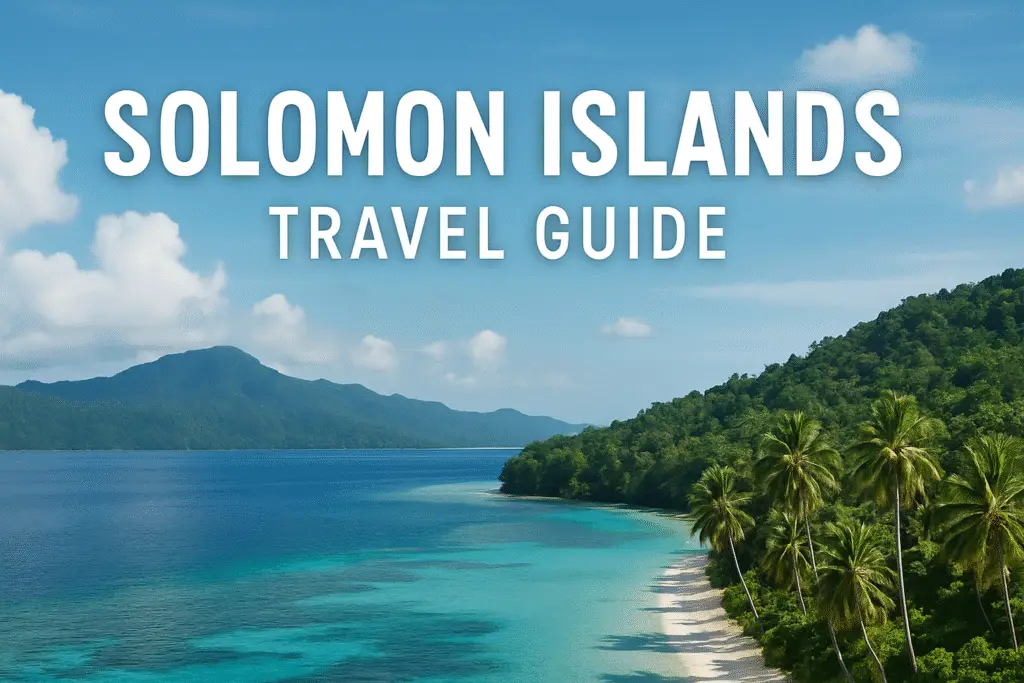
The Solomon Islands, an archipelago scattered across the South Pacific Ocean, is one of the most untouched, culturally intact, and naturally rich countries in Oceania. Comprised of nearly 1,000 islands, the Solomons offer stunning coral reefs, thick rainforests, volcanic mountain ranges, ancient tribal heritage, and quiet coastal villages far removed from the outside world.
This is a land where history is deeply layered: ancestral trade routes, Melanesian tradition, colonial entanglements, and the violent World War II Pacific campaign — all of which have shaped the islands today.
Unlike popular beach destinations with heavy tourism infrastructure, the Solomons remain refreshingly undeveloped. Here, culture comes first; life moves slowly; the ocean and land feed communities; and traditional customs remain strong. Travelers find a place where stories, landscapes, and people exist with remarkable depth.
Whether you are drawn to world-class diving sites, mountain trekking, cultural encounters, WWII history, or secluded tropical landscapes, the Solomon Islands are a world waiting to be discovered.
✅ QUICK FACTS
| Category | Details |
|---|---|
| Official Name | Solomon Islands |
| Capital City | Honiara |
| Major Islands | Guadalcanal, New Georgia, Malaita, Santa Isabel, Choiseul, Makira |
| Location | South Pacific Ocean |
| Population | ~720,000 |
| Languages | English (official), Solomons Pijin, 70+ local languages |
| Currency | Solomon Islands Dollar (SBD) |
| Religion | Mostly Christian |
| Government | Parliamentary democracy under constitutional monarchy |
| Time Zone | UTC +11 |
| Number of Islands | ~1,000 |
| Independence | 1978 (from UK) |
🌏 LOCATION & GEOGRAPHY
The Solomon Islands are located east of Papua New Guinea and north of Vanuatu, spanning a wide arc across the western South Pacific. The archipelago consists of six major island groups and nearly a thousand smaller islands, reefs, and atolls.
The main island clusters include:
- Guadalcanal
- New Georgia Islands
- Malaita
- Santa Isabel
- Makira
- Choiseul
- dozens of smaller groups including Rennell & Bellona, Russell Islands, and the Santa Cruz Islands.
The islands vary dramatically in landscape. Many are volcanic with sharp mountain ridges and dense tropical forest. Others are low-lying coral atolls with palm-lined beaches and lagoons.
Key Natural Features
- Volcanic highlands
- Rainforest valleys
- Coral reefs & lagoons
- Fertile plains
- Seasonal rivers
- Waterfalls
- Mangrove swamps
The interior of major islands is mountainous, with several peaks above 2,000 meters. Some volcanoes are still active, shaping the islands’ geology and soil fertility.
This environment supports exceptional biodiversity and a largely subsistence-based rural population.
🏛 BRIEF HISTORY
Early Settlement
The Solomon Islands have been inhabited for at least 30,000 years, with early Melanesian voyagers arriving by sea. Later, Polynesian navigators also influenced the region, especially in outer island groups.
Over thousands of years, distinct cultures formed, often centered around clan identity, coastal trade, and agriculture.
European Contact
Spanish explorer Álvaro de Mendaña reached the islands in 1568, naming them after the biblical King Solomon. But long-term European presence did not begin until the 19th century.
European interaction was limited to:
- Missionary efforts
- Trading stations
- Blackbirding (forced labor recruitment)
Colonial Era
The Solomons became a British protectorate in 1893. The colonial period brought Christianity, new governance models, and plantation economies, but remote communities continued traditional life.
World War II
The Solomon Islands were a major battleground during WWII. The Guadalcanal Campaign (1942–1943) was pivotal in the Pacific war, involving fierce fighting between Japanese and Allied forces.
Wrecks, weapons, and historical sites remain throughout the islands and waters.
Independence
The Solomon Islands gained independence from the United Kingdom on 7 July 1978. Today it is a parliamentary democracy under a constitutional monarchy.
👥 CULTURE & PEOPLE
The Solomon Islands are one of the most culturally diverse regions in the Pacific. With 70+ languages and hundreds of clan communities, identity is deeply tied to land, ancestry, and village tradition.
Ethnic Roots
The population is primarily Melanesian, with some Polynesian communities in outlying islands. Each group maintains unique:
- Art forms
- Rituals
- Music
- Clothing styles
- Sacred traditions
Languages
- English is the official language, though not widely spoken outside towns.
- Solomon Islands Pijin is the common tongue used for communication across groups.
- Local languages are widely used in villages.
Religion
Christianity is predominant, but traditional beliefs coexist. Many communities weave Christian worship with ancestral rituals, spirituality, and oral tradition.
Community Life
Village life revolves around:
- Family (extended kin)
- Gardening
- Fishing
- Storytelling
- Ceremonies
- Local governance by chiefs
Land and sea territories are usually held collectively.
Custom (“Kastom”)
“Kastom” refers to traditional practices, law, and social structure. It influences:
- Dispute resolution
- Marriage
- Land rights
- Rituals
- Respect for ancestors
Kastom remains central to everyday life in most islands.
🎭 ARTS & TRADITIONS
The Solomon Islands are celebrated for intricate artistic expression.
Art forms include:
- Wood carvings
- War canoes
- Shell jewelry
- Basket weaving
- Storytelling
- Music & dance
- Tattooing
Some areas are particularly renowned:
- Malaita — obsidian tools, shell valuables, traditional music
- New Georgia — ornate canoe carvings
- Rennell & Bellona — song traditions
Music & Dance
Music features:
- Bamboo panpipes
- Drums
- Polyrhythmic singing
Ceremonial dances mark:
- Birth
- Initiation
- Mourning
- Warfare symbolism
- Harvest rituals
Songs pass oral history from elders to younger generations.
🏞 LANDSCAPES & NATURE
The Solomon Islands offer extraordinary natural diversity.
Mountain Regions
Major islands contain dramatic volcanic ridges, covered in dense rainforest. Cloud forests cloak upper slopes, while river valleys host coffee, fruit, and village gardens.
Forests
The Solomon tropical rainforest is among the most biodiverse in Oceania. It contains:
- Hardwoods
- Orchids
- Ferns
- Medicinal plants
These forests are critical habitats for unique species.
Rivers
Seasonal and permanent rivers wind through valleys. Waterfalls, pools, and rapids are common inland.
Coral Reefs & Marine Ecosystems
The Solomon Islands are part of the Coral Triangle, one of the most biodiverse marine zones in the world.
Features include:
- Extensive coral reef systems
- Lagoons
- Seagrass meadows
- Reef passes
- Underwater walls
Marine biodiversity is spectacular:
- Reef fish
- Sharks
- Rays
- Turtles
- Dolphins
- Macro life
Wrecks from WWII add dramatic underwater history.
Atolls & Coastal Landscapes
The outer islands include:
- Coral atolls
- White-sand beaches
- Coconut groves
- Sheltered lagoons
Many are largely untouched.
🐾 WILDLIFE
Solomon Islands wildlife reflects deep isolation.
Mammals
- Bats (flying foxes)
- Possums
- Small native rodents
Most mammals arrived through ancient migration or human introduction.
Birds
Over 200 bird species, including many endemics.
Highlights:
- Solomon sea eagle
- Ultramarine kingfisher
- Eclectus parrot
- Ducorp’s cockatoo
- Honeyeaters
The islands are a major destination for birdwatchers.
Reptiles
- Monitor lizards
- Skinks
- Geckos
- Snakes (few dangerous)
- Sea turtles
Marine Life
Coral Triangle species:
- Manta rays
- Reef sharks
- Barracuda
- Napoleon wrasse
- Moray eels
- Nudibranchs
- Soft + hard corals
🏙 CITIES & TOWNS
✅ HONIARA (Guadalcanal)
The capital is a busy coastal city with markets, shops, museums, and historical remnants. It grew significantly due to WWII military activity.
Key features:
- National Museum
- Memorials
- Government buildings
- Markets
Honiara is a transport hub.
✅ GIZO (Western Province)
A relaxed coastal town surrounded by stunning reefs and islands.
✅ AUKI (Malaita)
Main town on Malaita; gateway to traditional communities.
✅ KIRAKIRA (Makira)
Coastal town near beaches, rainforest, and local villages.
🏖 MAJOR ISLAND REGIONS
✅ Guadalcanal
Largest island; home to Honiara.
Historical WWII battlefields, mountains, waterfalls.
✅ Western Province
One of the most beautiful and visited regions.
Features:
- Coral reefs
- Island lodges
- WWII wrecks
- Remote villages
Gizo + surrounding islands are particularly scenic.
✅ Malaita
Strong Kastom culture, dense population, fascinating traditional life.
Natural scenery: mountains, forests, rivers.
✅ New Georgia Islands
Lush jungle, mangroves, lagoons.
✅ Santa Isabel
Long mountainous island — quiet and green.
✅ Makira
Known for wildlife and traditional culture.
✅ Choiseul
Remote volcanic island with steep mountains and dense forest.
✅ Rennell & Bellona
UNESCO-recognized ecosystems.
Rennell Island hosts Lake Tegano.
🌊 THINGS TO DO & EXPERIENCES
✅ Diving & Snorkeling
The Solomon Islands are one of the world’s greatest diving regions, with:
- UNCANNILY clear water
- WWII wrecks
- Coral reefs
- Drop-offs
- Macro life
Marine life is prolific and reefs incredibly healthy.
✅ WWII History
Major Pacific conflict sites:
- Guadalcanal battlefields
- Ironbottom Sound (dozens of wrecks)
- Airfields
- Museums
WWII history remains visible across the islands.
✅ Cultural Visits
Village stays and custom ceremonies offer deep cultural immersion. Many communities maintain traditional governance and performance traditions.
✅ Trekking & Nature Walks
Highland villages and rainforest trails offer rewarding hiking.
✅ Canoeing & Island Hopping
Traditional wooden canoes connect coastal communities. Lagoon exploration offers serene travel between islands.
🍛 FOOD & CUISINE
Solomon Islands cuisine is based on local agriculture and fishing.
Main ingredients:
- Fish
- Taro
- Yam
- Sweet potato
- Cassava
- Coconut
- Fruits (banana, pineapple, mango, papaya)
- Greens
Meals rely on:
- Earth ovens
- Coconut milk
- Grilled seafood
Urban areas mix influences from Southeast Asia and the Pacific.
🌤 CLIMATE & BEST TIME TO VISIT
The Solomon Islands have a tropical climate.
| Season | Months | Conditions |
|---|---|---|
| Dry | April–October | Best weather |
| Wet | November–March | Rainy + cyclones |
Coastal areas are hot year-round. Mountains are cooler.
🚗 TRANSPORTATION
Main Modes:
- Domestic flights
- Boats
- Ferries
- Limited roads
Many islands lack road networks, so boats and planes are essential.
Remote villages are only accessible by:
- Canoe
- Walking
Infrastructure is minimal but improving.
🛡 SAFETY
The Solomon Islands are generally peaceful, but:
- Healthcare limited
- Remote areas lack services
- Ocean & jungle hazards exist
- Urban petty crime occurs
Caution and preparation are recommended.
Respect for local customs is essential everywhere.
PRACTICAL INFORMATION
- Currency: SBD
- Power: Type I
- Internet: Limited
- ATMs: In larger towns
- Dress: Modest in villages
- Languages: Pijin widely spoken
Village courtesy involves:
- Seeking permission to visit
- Respecting land boundaries
- Asking before photographing
WHY THE SOLOMON ISLANDS ARE SPECIAL
The Solomon Islands are one of the last great untouched regions of the Pacific. Because tourism remains light, the islands retain an authenticity nearly impossible to find elsewhere.
This is a place where:
- Kastom remains strong
- Traditional carved canoes still glide over lagoons
- Coral reefs teem with life
- Volcanoes rise above rainforests
- Clan histories continue in oral tradition
The Solomons are not mass-market; they offer depth, beauty, and real culture. Travelers leave with more than memories — they leave with understanding.
The Solomon Islands remain a rare frontier — a Pacific world where ancient heritage and spectacular nature coexist, waiting for those willing to venture beyond the familiar.
Related Amazing Bucketlist Articles
- 5 Once-in-a-Lifetime Floating Stays
- Hurawalhi Island Resort
- Top 10 Most Romantic Countries in the World for Couples