🇧🇴 BOLIVIA TRAVEL GUIDE
Mountains, Salt Flats, Jungle, Altiplano Culture, Ancient Civilizations & Raw South American Beauty
1. Introduction — Bolivia: A Land of Extremes, Sacred Landscapes and Unfiltered Adventure
Bolivia is one of the most intense, striking, and culturally rich countries in South America — a place where nature feels almost supernatural and traditions remain deeply rooted in Indigenous heritage. While neighboring countries have become mainstream travel destinations, Bolivia has kept much of its wildness, authenticity, and mystery. This is a land of dramatic contrasts: volcanoes rising above endless salt flats, flamingos feeding in red-colored lakes, emerald jungles dripping with humidity, snowy peaks towering above vibrant cities, and remote Indigenous communities preserving ancient customs.
Travelers who come to Bolivia are often surprised by its raw energy. The landscapes redefine what you imagine possible: a desert painted in surreal colors, a salt flat stretching farther than the eyes can follow, lakes that shift to red, green, or turquoise depending on minerals and sunlight, geysers exploding in moonlit silence, and dense Amazon forests echoing with wildlife. Bolivia feels like Earth before modern civilization — powerful, untouched, and sacred.
Culturally, Bolivia is one of the most Indigenous countries in the world. Quechua, Aymara, and Amazonian groups shape daily life, language, weaving traditions, markets, festivals, and ceremonies tied to Pachamama (Mother Earth). You hear Indigenous languages in the streets, witness rituals blending Catholic and Andean beliefs, and see textiles, patterns, and colors that represent stories passed down for generations.
Bolivia is not a “light” destination — it is high altitude, dramatic geography, strong culture, and intense beauty. But for travelers who appreciate authenticity and unforgettable landscapes, Bolivia becomes one of the most extraordinary countries they ever visit.
2. La Paz — A High-Altitude City Suspended Between Mountains and Sky
La Paz is unlike any other city in the world. Built inside a deep bowl-shaped canyon and spilling upward onto the altiplano, it sits at over 3,600 meters above sea level, making it one of the highest capitals on Earth. The air is thin, crisp, and cold, and the city’s neighborhoods climb the cliffs like stacked terraces. Towering above everything rises Illimani, a snow-covered mountain that watches over La Paz like a silent guardian.
La Paz is chaotic, colorful, noisy, spiritual, and endlessly fascinating. Markets spill into the streets, cable cars float overhead, ancient Andean traditions mix with modern shops, and Indigenous women in bowler hats (cholitas) walk confidently through the crowds. The altitude shapes everything — the way people move, work, and speak — giving the city a rhythm that is slower but intense.
2.1 El Alto & The Cable Car System
High above La Paz lies El Alto, a massive plateau city with more than a million inhabitants, mostly Aymara Indigenous people. What makes La Paz-El Alto special is the incredible teleférico, the world’s highest and largest cable car public transport system. The gondolas glide above canyons, cliffs, and city rooftops, offering breathtaking views of mountains and life below.
The cable cars connect different zones, making it easy for travelers to explore markets, neighborhoods, and viewpoints. At twilight, as golden light hits the mountains and the city lights begin to glow, the teleférico becomes one of the most magical experiences in La Paz.
2.2 Witches’ Market — Magic, Rituals, and Andean Beliefs
The Mercado de las Brujas (Witches’ Market) is one of La Paz’s most famous cultural experiences. Here, traditional healers (yatiris) sell herbs, talismans, potions, dried llama fetuses used in construction offerings, and objects for rituals honoring Pachamama. These traditions go back to pre-Inca times and remain central to Bolivian spiritual identity.
Walking through the market feels like stepping into a place where the visible and invisible worlds meet.
2.3 San Francisco Church & Historic Center
La Paz’s colonial core features baroque churches, lively plazas, and narrow streets filled with vendors selling textiles, fruits, herbal medicines, and traditional clothing. The San Francisco Church combines Catholic architecture with Indigenous symbolism carved into its façade.
2.4 Cholitas Wrestling — A Unique Cultural Performance
Cholitas wrestling is one of the most unusual cultural shows in South America. Aymara women in traditional skirts perform theatrical wrestling matches in El Alto. The sport started as a parody of machismo but evolved into a symbol of empowerment and pride.
3. Sucre — Bolivia’s Beautiful White City and Cultural Heart
Sucre is the constitutional capital of Bolivia, known for its whitewashed colonial buildings, elegant churches, leafy plazas, and mild climate. Located at a lower altitude than La Paz, Sucre offers a peaceful, warm, and charming atmosphere.
The city is one of the best-preserved colonial settlements in Latin America and a UNESCO World Heritage Site. Its architecture feels delicate and harmonious, with terracotta roofs, white facades, and shaded courtyards surrounded by orange trees.
3.1 Plaza 25 de Mayo
Sucre’s central plaza is surrounded by museums, restaurants, and historic buildings. Locals gather on benches beneath tall palm trees, creating a relaxed environment far calmer than La Paz.
3.2 Recoleta Viewpoint
A hilltop monastery overlooking the city, offering panoramic views of white buildings glowing in the afternoon sun. It is one of the most romantic places in the city, especially during sunset.
3.3 Textile Culture — The Art of the Andes
Sucre is a major center for Indigenous weaving traditions. The nearby villages of Tarabuco and Jalq’a are famous for intricate textiles using traditional techniques and symbolic designs. Visiting weaving workshops feels like entering a living museum of Andean culture.
4. Potosí — Silver, Mines, and a Dramatic Mountain Past
Potosí is a city shaped by silver — both its wealth and its suffering. During the Spanish colonial era, the nearby mountain Cerro Rico produced so much silver that it financed European empires. The phrase “worth a Potosí” became synonymous with immense wealth. Yet millions of Indigenous and enslaved African laborers died in the mines under brutal conditions.
Today, Potosí stands as a reminder of the cost of colonial extraction. The mountain still operates mines, and guided visits reveal the dangerous working conditions miners face.
4.1 Cerro Rico Mine Tours
Travelers can enter the tunnels of Cerro Rico to learn about contemporary mining culture. It’s a powerful and emotional experience — dark, dusty tunnels, narrow passageways, offerings to the miners’ spirit (El Tío), and the intense realities of daily labor.
4.2 Potosí’s Colonial Architecture
Despite its tragic history, Potosí features beautiful churches, convents, and colonial buildings reflecting the city’s former wealth. The Casa Nacional de la Moneda (Mint House) is one of the country’s most impressive museums.
5. Uyuni & Salar de Uyuni — The World’s Largest and Most Magical Salt Flat
No place in Bolivia is more iconic than Salar de Uyuni, the largest salt flat on Earth. Stretching more than 10,000 square kilometers, this dazzling white desert is a surreal landscape where sky and earth merge into infinity.
When dry, the flat becomes a geometric pattern of hexagonal salt crystals. When wet, it transforms into a giant mirror reflecting clouds, stars, and moonlight in perfect symmetry — one of the most breathtaking natural phenomena on Earth.
5.1 Uyuni Town
A small, simple town that serves as a base for multi-day 4×4 expeditions into the salt flat and surrounding altiplano wilderness.
5.2 Salt Hotel Experience
Some hotels near the edge of the salt flat are built entirely from salt blocks — walls, floors, and even beds. They offer unique, atmospheric stays.
5.3 Incahuasi Island — Cacti in the Middle of the Salt Sea
This rocky island sits in the center of the flats, covered with giant cacti and offering panoramic views of endless white stretching to the horizon.
5.4 The Salt Flat at Sunset & Sunrise
Colors shift from silver to orange, pink, gold, and violet. On mirror days, the sky seems to dissolve into the earth, creating one of the most dreamlike scenes on the planet.
6. Eduardo Avaroa Reserve — Bolivia’s Surreal Altiplano Desert
South of Uyuni lies the Eduardo Avaroa Andean Fauna National Reserve, a place so otherworldly that it feels like a collection of alien planets connected by dusty roads.
6.1 Laguna Colorada — The Red Lake of Flamingos
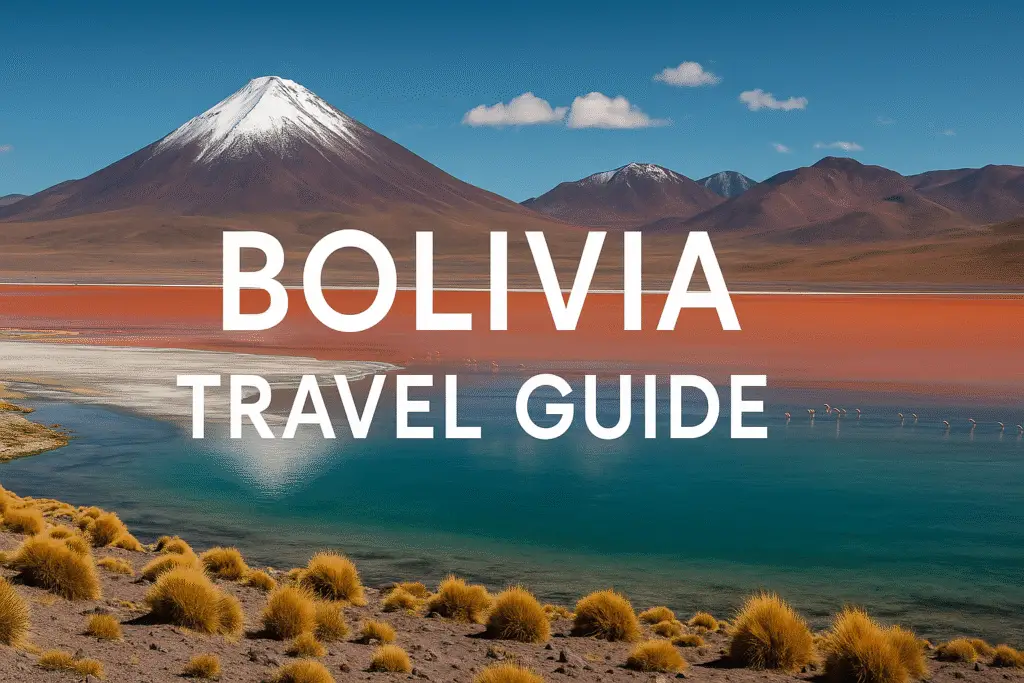
The lake’s deep red color comes from algae and minerals, while flocks of flamingos feed in shallow waters. The contrast of blue sky, red water, and pink birds is unforgettable.
6.2 Laguna Verde — Emerald Water Under a Volcano
Near the Chilean border sits Laguna Verde, glowing green beneath the Licancabur volcano. The colors change with the wind and sunlight.
6.3 Geysers, Hot Springs & High-Altitude Deserts
The reserve includes:
- boiling mud pools
- smoking geysers
- steaming fumaroles
- desert valleys
- windswept rock formations resembling surreal sculptures
This is one of the highest and coldest deserts in the world, with altitudes above 4,500 meters.
7. The Bolivian Altiplano — A Harsh, Beautiful, Sacred Plateau
The Altiplano is a vast high-altitude plateau stretching across western Bolivia. It is a land of extreme conditions — freezing nights, thin air, intense sunlight — yet it sustains vibrant Indigenous communities.
The landscape includes:
- volcanoes
- flamingo lakes
- ancient ruins
- small adobe villages
- llama and alpaca herds
- barren, endless horizons
The silence is profound, and the connection to nature feels ancient.
8. Andean Indigenous Culture — Traditions Older Than Empires
Bolivia’s Indigenous heritage is central to its identity. More than half of the population identifies as Indigenous, with Aymara and Quechua cultures most prominent.
8.1 Cholitas — Strength, Identity, and Tradition
Cholitas wear multilayered skirts, shawls, and bowler hats. Their clothing represents dignity and tradition, and today cholitas are visible in politics, sports, business, and public life.
8.2 Rituals to Pachamama
Offerings to Mother Earth remain a vital tradition. People bury offerings before building houses, planting crops, or traveling long distances.
8.3 Festivals
Bolivia’s festivals are explosive celebrations filled with color, dancing, and music. The Carnaval de Oruro is one of the largest cultural events in South America.
Lake Titicaca, Copacabana, Tiwanaku, Amazon Basin, Death Road, Santa Cruz & Lowlands
9. Lake Titicaca — Sacred Landscapes, Mythology, and High-Altitude Islands
Bolivia’s side of Lake Titicaca is one of the most spiritual and culturally significant regions in the entire Andes. The lake sits at more dan 3,800 meters, surrounded by windswept plateaus, quiet bays, terraced hillsides, and snow-capped Cordillera Real mountains that reflect in the blue water. Everything here feels slow, ancient, and ceremonial. People still farm potatoes, quinoa, and corn using centuries-old techniques, and the lake is deeply tied to Andean cosmology — considered the birthplace of both the sun and the Inca people.
9.1 Copacabana — Gateway to the Sacred Lake
Copacabana is a peaceful lakeside town with colonial churches, colorful markets, paddle boats, and hilltop viewpoints overlooking the lake. Pilgrims from all over Bolivia travel here to seek blessings from the Basilica of Our Lady of Copacabana, a major religious icon whose rituals blend Catholic and Indigenous beliefs. The atmosphere is deeply spiritual; you see locals performing car blessings, candle ceremonies, and offerings to Pachamama.
The waterfront is simple but atmospheric — fishermen mending nets, boats drifting in still water, and long shadows stretching across the calm surface during sunset. Copacabana feels like a place where time moves at half speed.
9.2 Isla del Sol — Birthplace of the Inca Sun God
Isla del Sol (Island of the Sun) is the jewel of Bolivia’s part of Lake Titicaca. According to Andean mythology, the god Inti (the Sun) created the first Inca here. The island is covered with terraced fields, stone pathways, traditional villages, ancient ruins, and spectacular views. There are no cars — everything is walked, carried, or led by mules.
The northern part of the island has the Sacred Rock of Titicaca, Inca ruins such as the Chincana labyrinth, and dramatic high-altitude cliffs. The southern part is quieter, with villages overlooking turquoise bays.
Hiking across Isla del Sol is one of Bolivia’s most memorable experiences — crisp mountain air, sweeping lake views, distant snow peaks, and a strong sense of ancient presence.
10. Tiwanaku — One of the Oldest and Most Mysterious Civilizations in South America
Older than the Inca Empire, the Tiwanaku civilization flourished around Lake Titicaca over 1,000 years ago. Their achievements remain fascinating: advanced stonework, agricultural innovation, cosmological alignment, and monumental ceremonial centers. Many questions remain about how Tiwanaku rose and collapsed, adding a veil of mystery.
10.1 The Temple Complex
The archaeological site includes:
- Akapana Pyramid — a stepped pyramid aligned with the cosmos
- Kalasasaya Temple — massive stone courtyard
- Sun Gate (Puerta del Sol) — carved with the iconic Staff God
- Monoliths — human-like statues representing spiritual leaders
Walking through Tiwanaku feels like entering an ancient portal to a forgotten world. The precision of stone carvings, astronomical alignments, and symbolic motifs show a highly advanced pre-Columbian society.
10.2 Puma Punku — Advanced Stone Engineering
Nearby lies Puma Punku, a site famous for its exact stone cuts and geometrically perfect blocks. Some stones fit together with such precision that theories about their tools and techniques continue to fascinate archaeologists. The site feels powerful and enigmatic.
11. Rurrenabaque & Madidi National Park — Bolivia’s Amazon Paradise
Bolivia’s Amazon region is one of the most biodiverse places on Earth, and unlike many other Amazon destinations, it is relatively affordable and accessible. From high-altitude La Paz, a short flight drops you into hot, humid jungle lowlands.
11.1 Rurrenabaque — The Jungle Gateway
Rurrenabaque is a relaxed riverside town where palm trees sway, monkeys jump between rooftops, and the air feels thick with heat and life. From here, boats take travelers deep into the wilderness of:
- Madidi National Park — dense rainforest
- Pampas del Yacuma — wildlife-rich wetlands
The contrast with the Altiplano is extreme, creating one of the most diverse travel transitions in South America.
12. Madidi National Park — Pure Rainforest & Indigenous Culture
Madidi is considered one of the most biologically rich regions on the planet. The ecosystem includes jaguars, anacondas, tapirs, giant otters, macaws, monkeys, caimans, butterflies, poison frogs, and thousands of plant species.
12.1 Jungle Lodges & Activities
Visitors stay in eco-lodges run by Indigenous communities, offering:
- canoe rides through flooded forests
- night walks listening to the forest’s symphony
- wildlife tracking
- medicinal plant demonstrations
- visits to traditional villages
The rainforest feels immersive and alive — full of smells, sounds, and color.
13. The Pampas — Bolivia’s Amazon Wetlands
While Madidi is dense jungle, the Pampas is the opposite — wide-open wetland plains where animals are easier to spot.
13.1 Wildlife Watching
Travelers often see:
- pink river dolphins
- caimans
- capybaras
- howler monkeys
- giant river otters
- turtles
- hundreds of birds
Boat tours glide along calm waters, and sunsets paint the wetlands in orange light while birds descend into the trees.
14. Santa Cruz — Modern Bolivia, Tropical Lowlands & Wide Horizons
Santa Cruz is the economic engine of Bolivia, a warm, cosmopolitan city in the eastern lowlands. Unlike the Andean highlands, Santa Cruz feels tropical, relaxed, and modern.
14.1 A Very Different Bolivia
Here you’ll find:
- modern malls
- palm-lined plazas
- restaurants
- nightlife
- hot, humid climate
- more Spanish influence than Andean
This region contrasts sharply with La Paz and the Altiplano, showing Bolivia’s diversity.
14.2 Day Trips from Santa Cruz
- Samaipata — cloud forest, vineyards & the mysterious pre-Inca ruin El Fuerte
- Amboró National Park — waterfalls, jungle, birds, giant ferns
- Lomas de Arena — desert-like sand dunes
15. The Yungas — Cloud Forest Between Highlands and Jungle
Descending the Andes into the Yungas is like moving through Earth’s climate zones in real-time. Misty forests cling to cliffsides, coca plantations appear on terraces, and the air transforms from cold and thin to warm and humid.
16. Death Road — The World’s Most Famous (or Infamous) Bike Ride
One of Bolivia’s most legendary experiences is biking the Yungas Road, often called Death Road. This narrow gravel road clings to cliffs with dramatic drop-offs, waterfalls, and cloud forest vistas.
16.1 The Experience
- Riders start high in icy altitudes near La Paz
- Descend through mist, waterfalls, and steep cliffs
- End in the tropical heat of the Yungas
Despite its reputation, guided tours have become much safer, and the route is breathtaking.
17. Oruro — Carnival, Mountains & Andean Devotion
Oruro is famous for the Carnaval de Oruro, one of South America’s most spectacular festivals. Thousands of dancers, musicians, and performers take to the streets in elaborate costumes representing devils, angels, animals, and Andean spirits.
The festival blends Indigenous Andean cosmology with Catholic influences, creating a stunning cultural explosion.
18. Uyuni Region Wildlife — Flamingos, Vicuñas & High-Altitude Life
Bolivia’s high-altitude deserts host:
- three species of flamingos
- herds of vicuñas and llamas
- Andean foxes
- chinchillas
- condors
These animals thrive in one of Earth’s harshest environments, adding life to the surreal landscapes.
19. Bolivian Cuisine — Hearty, Indigenous, and Full of Tradition
Bolivian food reflects its Indigenous roots, altitude, and agricultural heritage.
Highland Dishes
- Salteñas
- Sopa de maní
- Llama steak
- Chuño (freeze-dried potatoes)
- Quinoa soups
Lowland Dishes
- Majao
- Locro
- Cassava-based meals
Street Food
- Anticuchos
- Pastel de queso
- Api morado (purple corn drink)
Food is simple but full of character, shaped by climate and tradition.
20. Languages & Identity — Bolivia’s Multicultural Soul
Bolivia recognizes 36 official Indigenous languages. Quechua and Aymara are dominant in highlands; Guaraní and other languages appear in lowlands. This linguistic diversity reflects a living cultural mosaic where Indigenous identity remains central.
Festivals, Deep Amazon, Wildlife, Transport, Best Time to Visit, Itineraries & Final Conclusion
21. Festivals and Cultural Celebrations — Bolivia’s Explosive Colors and Ancient Traditions
Bolivia’s cultural energy is one of the strongest in Latin America. Its festivals blend pre-Columbian spirituality with Catholic symbolism, creating events that feel larger than life. Color, music, dance, masks, and devotion come together in overwhelming celebrations that reveal the country’s Indigenous soul.
21.1 Carnaval de Oruro — Bolivia’s Greatest Festival
The Carnaval de Oruro is the heart of Bolivian cultural identity, recognized by UNESCO for its spiritual and artistic importance. This is not just a parade — it is a living expression of Andean cosmology.
Highlights include:
- elaborate devil masks representing the Diablada dance
- dancers in shimmering costumes repeating ancient choreographies
- brass bands that echo through the streets with hypnotic rhythms
- processions lasting up to 20 hours in a single day
- ceremonies honoring Pachamama and Virgin del Socavón
The festival is vibrant, intense, and deeply symbolic, blending good and evil, heaven and hell, Andean spirits and Catholic saints.
21.2 Alasitas Festival in La Paz
Celebrated every January, Alasitas is a festival of miniature wishes. People buy tiny houses, miniature cars, small food items, fake money, and symbolic objects to represent dreams and desires for the coming year. These are blessed by yatiris (Andean shamans) to bring good fortune.
21.3 Indigenous New Year (Aymara New Year) — Winter Solstice Ceremony
Each June, communities across Bolivia celebrate the Aymara New Year, also called Willka Kuti, a ceremony marking the return of the sun. At ancient ruins such as Tiwanaku, people gather at dawn, raising their hands to receive the first rays of the winter solstice. Fire, rituals, music, and chants make it one of the most spiritual experiences in the Andes.
21.4 Gran Poder Festival in La Paz
Thousands of dancers and musicians march through La Paz wearing shimmering costumes representing ethnic groups, mythical figures, and ancient spirits. The energy is electric — drums, trumpets, steps in perfect rhythm, and streets filled with color for hours.
22. Deep Amazon — The True Wilderness of Bolivia
Bolivia’s Amazon is immense, remote, and wild. Beyond the tourist trails of Rurrenabaque and the Pampas lies an Amazon that feels untouched — rivers with no sound except birds, forests where jaguars roam unseen, rainstorms that echo for miles, and Indigenous communities living in harmony with nature.
22.1 Indigenous Territories and Wildlife Corridors
Much of northern Bolivia is protected land belonging to Indigenous nations such as the Tacana, Mosetén, Chimane, and Esse Ejja. Their knowledge of plants, wildlife, and natural cycles is profound.
The region includes:
- giant ceiba trees towering above the canopy
- river systems filled with fish, dolphins, and caimans
- medicinal plants used for generations
- remote villages connected by boats rather dan roads
This is one of the least explored parts of South America.
22.2 Madidi’s Biodiversity — A Scientific Treasure
Madidi National Park alone contains:
- over 1,000 bird species
- more than 200 types of mammals
- 12,000 plant species
- countless amphibians and insects
Rainforest scientists consider Madidi one of the most biodiverse habitats on Earth. Every trail reveals layers of life that have existed long before modern humans.
22.3 Night in the Amazon
Night in the jungle is unforgettable. The darkness is complete, the air humid, and the soundscape overwhelming — frogs calling, insects vibrating, monkeys howling, leaves rustling, distant thunder rumbling. It feels alive and ancient.
23. Bolivian Wildlife — From Altiplano to Amazon
Bolivia contains some of the widest biodiversity in the world, thanks to extreme differences in altitude and climate.
23.1 Altiplano Wildlife
The high-altitude plateau hosts animals adapted to freezing nights and strong winds.
- vicuñas grazing on sparse grass
- flamingos feeding in mineral lakes
- llamas and alpacas herded by Indigenous communities
- Andean foxes hunting in rocky plains
- Andean condors soaring over canyons
The combination of barren landscapes and beautiful animals creates striking photography.
23.2 Yungas Cloud Forest Wildlife
As the Andes descend into the Yungas, the climate shifts dramatically. Mist forests appear, home to:
- spectacled bears
- orchids
- hummingbirds
- butterflies
- rare frogs
The cloud forest is a magical transition zone between worlds.
23.3 Amazon Wildlife
The lowlands host:
- jaguars
- tapirs
- sloths
- giant otters
- caimans
- monkeys of all kinds
- macaws and parrots
- pink river dolphins
The density of life is extraordinary and endlessly fascinating.
24. Transportation in Bolivia — A Country of Distances and Altitudes
Traveling through Bolivia is adventurous and requires patience, but the journeys are part of the experience.
24.1 Buses Across the Andes
Long-distance buses connect most cities. Roads are winding and high altitude can make rides slow, but views are spectacular — mountains, valleys, cliffs, and tiny villages scattered across the landscape.
24.2 Domestic Flights
Flights are useful between:
- La Paz ↔ Santa Cruz
- La Paz ↔ Rurrenabaque
- La Paz ↔ Uyuni
They save time and avoid exhausting road trips.
24.3 4×4 Expeditions in the Altiplano
Tours to:
- Salar de Uyuni
- Eduardo Avaroa Reserve
- Laguna Colorada
- Laguna Verde
require sturdy 4×4 vehicles. These multi-day expeditions are iconic adventures, crossing deserts, salt flats, and surreal lakes.
24.4 Cable Cars in La Paz
The teleférico is one of the world’s best public transport systems — clean, efficient, and offering spectacular views.
25. Best Time to Visit Bolivia
Bolivia has two main seasons determined by rainfall rather than temperature.
25.1 Dry Season (May–October)
- clear skies
- perfect for Salar de Uyuni
- ideal for hiking
- best for festivals
- cold nights in the Altiplano
25.2 Wet Season (November–April)
- warmer temperatures
- Amazon is lush
- Salar de Uyuni forms the famous mirror effect
- rain can impact travel in remote desert areas
Key Highlight
For mirror-reflection photos on the salt flat: January–March is best.
26. Suggested Itineraries for Bolivia
7-Day Bolivia Highlights
- La Paz
- Cable car viewpoints
- Death Road biking
- Copacabana & Isla del Sol
- Uyuni Salt Flats (3-day tour)
10-Day Classic Bolivia
- La Paz
- Tiwanaku
- Copacabana
- Uyuni Salt Flats
- Laguna Colorada
- Eduardo Avaroa Reserve
14-Day Andes + Amazon Adventure
- La Paz
- Tiwanaku
- Uyuni
- South Lipez region
- Rurrenabaque
- Amazon lodge and Pampas tour
21-Day Deep Bolivia Experience
- La Paz
- Oruro
- Uyuni multi-day expedition
- Tupiza red canyons
- Potosí mines
- Sucre
- Cochabamba
- Santa Cruz
- Amboró National Park
- Amazon lowlands
30-Day Complete Bolivia Expedition
- Lake Titicaca
- Isla del Sol
- Sorata trekking
- La Paz
- Tiwanaku
- Uyuni and Altiplano
- South Lipez colorful lakes
- Potosí, Sucre, Tarabuco
- Cochabamba valleys
- Santa Cruz & Jesuit Missions
- Rurrenabaque, Madidi, Pampas
- Return to La Paz for festivals
This route covers almost every major ecosystem.
27. Why Bolivia Is a Once-in-a-Lifetime Destination
Bolivia feels raw, powerful, sacred, and completely unique. It is not polished or commercial like many other countries. Instead, it offers something far deeper — a connection to the earth, to ancient cultures, to dramatic landscapes shaped by wind, salt, fire, and ice.
You see colors that do not exist elsewhere: red lakes, green lagoons, white deserts, blue glaciers, golden highlands, pink flamingos, and silver mountains. You witness traditions preserved for centuries, rituals that honor the earth, languages that carry history, and people who live in harmony with land and sky.
Bolivia is a journey into the soul of South America — intense, magical, unforgettable.
 Related Articles
- Kakslauttanen Arctic Resort
- Top 10 Most Unique Places to Stay in Europe
- 10 Incredible Castles Around the World