
🇧🇷 BRAZIL TRAVEL GUIDE
1. Introduction to Brazil — A Land of Rhythm, Rainforest, Color, and Immense Natural Energy
Brazil is a country that doesn’t just exist on the map — it pulses, dances, sweats, sings, and breathes with a kind of vitality that feels alive in every sense. Stretching across almost half of South America, Brazil is vast and sweeping, with landscapes that shift from deep Amazon jungle to white-sand beaches, from canyon deserts and rolling savannas to futuristic mega-cities and tiny colonial fishing towns lost in time. It is a nation filled with contrasts, yet everything is tied together by an unmistakable Brazilian spirit: warm, expressive, joyful, musical, and deeply connected to nature.
Travelers visiting Brazil for the first time often arrive with a sense of curiosity — they imagine Rio’s beaches, São Paulo’s skyscrapers, the Amazon’s mystery, the Carnival’s frenzy. But once inside the country, they discover that Brazil is infinitely more complex and layered than any image or expectation. It is a place where Indigenous heritage meets African rhythms, Portuguese architecture meets tropical weather, modern innovation meets ancient landscapes, and intense urban life meets untamed wilderness.
There is no single “Brazil.” Instead, there are dozens of Brazils, each with its own traditions, food, music, landscapes, and ways of life. From the Afro-Brazilian culture of Bahia, where capoeira is performed on sunlit squares, to the cowboy traditions of the Pantanal, where jaguars roam, to the pulse of Rio, where samba rhythms echo through the hillside neighborhoods — every region reveals a different soul.
What makes Brazil unforgettable is the overwhelming sensory richness. The fragrance of tropical fruit drifting through markets, the heat of the sun sinking into your skin, the beat of drums echoing in old cobblestone streets, the sparkling blue of the Atlantic, the red desert cliffs, the lush green Amazon canopy stretching beyond imagination — everything feels vivid, colorful, immersive, and full of life.
Traveling through Brazil means embracing emotion and energy. It means discovering pockets of quiet solitude in nature and explosive celebration in the cities. It means understanding a nation whose identity has been shaped by Indigenous tribes, African diaspora, colonial history, immigrant communities, and a deep connection to the land. Brazil is not just a trip — it is a mood, a rhythm, a long unforgettable story.
2. Understanding Brazil’s Geography — A Continent-Sized Nation of Regions
Brazil is the fifth-largest country in the world. It covers such an immense range of climates and ecosystems that it feels like a continent in itself. To understand Brazil is to understand its regions, each with its own landscapes, culture, cuisine, and travel experiences.
Below is a detailed overview of Brazil’s major travel regions, forming the backbone for exploring the country.
2.1 The Southeast — Rio de Janeiro, São Paulo, Minas Gerais, Espírito Santo
This is the economic and cultural heart of Brazil. It includes:
- Rio de Janeiro, the iconic coastal city of beaches, mountains, and Carnival
- São Paulo, the largest city in the Southern Hemisphere
- Minas Gerais, a land of colonial towns, mountains, and hearty cuisine
- Espírito Santo, with quiet beaches and offshore islands
The region is a blend of megacity buzz, historic charm, and postcard nature.
2.2 The Northeast — Salvador, Recife, Fortaleza, Lençóis Maranhenses
The Northeast is one of Brazil’s most culturally rich and visually stunning regions. Known for its Afro-Brazilian heritage, tropical beaches, colorful architecture, and unique music and cuisine. This region feels warm, vibrant, rhythmic, and deeply connected to African roots.
2.3 The North — Amazon Rainforest & Jungle Cities
Covering over half the country’s landmass, the North is dominated by:
- The Amazon Rainforest
- Mighty rivers like the Rio Negro and Solimões
- Jungle cities like Manaus and Belém
- Indigenous heritage and deep biodiversity
It is one of the last great wilderness regions on Earth.
2.4 The Central-West — Pantanal, Brasília, and Cerrado Savannas
The Central-West region includes:
- The Pantanal, the world’s largest tropical wetlands and the best place to see jaguars
- Brasília, the modernist capital city designed by Oscar Niemeyer
- The Cerrado, a vast savanna with waterfalls, canyons, and eco-tourism
This region offers both architectural marvels and natural wonders.
2.5 The South — Porto Alegre, Florianópolis, Curitiba, and European-Inspired Towns
Closer to Argentina and Uruguay, Brazil’s South feels very different:
- Cooler climate
- European traditions (German, Italian, Polish, Ukrainian)
- Award-winning wines
- Clean, organized cities
- Dramatic canyons and rolling green hills
It is a region of refined culture and natural elegance.
2.6 Coastal Brazil — 7,500 km of Beaches
Brazil has one of the longest coastlines in the world, lined with:
- Coral reefs
- Dunes
- Surf breaks
- Islands
- Wildlife reserves
- Fishing villages
- Trendy beach towns
From warm turquoise waters in the Northeast to cooler surf in the South, the coastline is one of Brazil’s greatest treasures.
3. Rio de Janeiro — A City of Mountains, Beaches, Rhythm, and Spectacle
If any city captures the spirit of Brazil, it is Rio de Janeiro. Known as “The Marvelous City,” Rio is a place of dramatic contrasts: granite peaks towering over golden beaches, rainforests surrounding urban neighborhoods, historic colonial streets leading to samba clubs, and favelas overlooking luxury districts. The city feels alive at every hour — music, sun, people, celebration.
Rio’s geography is one of the most beautiful urban landscapes in the world. The city seems carved from nature itself. Mountains rise abruptly from the coast, creating viewpoints that look unreal. Beaches stretch like golden ribbons along the Atlantic. Rainforest covers the hills. Lagoons reflect the skyline. The sea breeze moves through the city with tropical warmth.
3.1 Christ the Redeemer — Brazil’s Most Iconic Landmark
The statue of Cristo Redentor stands on Corcovado Mountain, watching over the city with open arms. The view from the top is an unforgettable panorama:
- Sugarloaf Mountain
- Copacabana Beach
- Ipanema
- Tijuca Forest
- Downtown skyscrapers
- Guanabara Bay
Visiting early morning or late afternoon provides calmer crowds and magical light.
3.2 Sugarloaf Mountain — A 360-Degree View Over Paradise
Reached by cable car, Pão de Açúcar offers one of the most breathtaking urban views on Earth. From the summit you can see the beaches, the bay, the mountains, and the city’s stunning geography. The sunset here paints the sky in warm pink and orange tones that reflect off the water.
3.3 Copacabana & Ipanema — Brazil’s Famous Urban Beaches
These two beaches are symbols of Rio:
Copacabana
Lively, energetic, filled with volleyball games, beach bars, music, and people of all ages. The sidewalk’s black-and-white wave pattern is one of Rio’s most recognizable design elements.
Ipanema
Trendy, sophisticated, with relaxed vibes, surfers, and gathering spots marked by “postos” (lifeguard stations). At sunset, crowds applaud as the sun disappears behind the mountains.
3.4 Santa Teresa — Bohemian Hillside District
Santa Teresa is filled with:
- Artistic studios
- Mosaic staircases
- Boutique cafés
- Historic mansions
- Street murals
It has a creative, bohemian atmosphere with narrow winding streets and viewpoints overlooking Rio.
3.5 Lapa — The Heart of Samba & Nightlife
Lapa is the nightlife district, famous for:
- Samba clubs
- Forró dancing
- Street parties
- Concert halls
- Food stalls
The illuminated white arches of the Arcos da Lapa create a dramatic backdrop for evenings filled with music and movement.
3.6 Tijuca National Park — A Rainforest Inside the City
Rio is home to one of the world’s largest urban rainforests. Waterfalls, trails, wildlife, and mountain viewpoints make Tijuca Forest essential for nature lovers. You can walk among giant trees, hear tropical birds, and look down at the city from dramatic rock formations.
3.7 Carnival — The World’s Biggest Celebration
Carnival in Rio is beyond a festival — it is an explosion of:
- Color
- Parades
- Costumes
- Samba rhythms
- Street parties
- Drumming groups
- Cultural expression
The Sambódromo parade with samba schools is a breathtaking visual spectacle. Meanwhile, the “blocos” street parties fill every neighborhood with music, costumes, and dancing throughout the day and night.
4. São Paulo — Brazil’s Powerful, Creative, Urban Giant
São Paulo is the beating economic engine of Brazil and the largest city in the Southern Hemisphere. It is not a postcard city like Rio, but it offers a world of culture, food, art, and diversity. São Paulo is intense, fast, and full of creative energy.
The city is home to more than 20 million people, representing hundreds of cultures. Everywhere you go, you feel the international influence — Japanese districts, Italian bakeries, Lebanese restaurants, Korean neighborhoods, Afro-Brazilian dance schools. São Paulo is a giant cultural mosaic.
4.1 Avenida Paulista — The Modern Heart of São Paulo
This wide avenue is lined with skyscrapers, museums, cafés, and street performers. It becomes pedestrian-only on Sundays and transforms into a massive open-air community space filled with music and markets.
4.2 Liberdade — The Largest Japanese Community Outside Japan
Liberdade is filled with:
- Red lanterns
- Asian shops
- Ramen restaurants
- Sushi bars
- Festivals
It is one of the most unique neighborhoods in Brazil.
4.3 Ibirapuera Park — São Paulo’s Green Escape
Designed by Oscar Niemeyer, Ibirapuera Park combines art, architecture, lakes, and jogging paths. It is São Paulo’s version of Central Park, a peaceful break from the urban rush.
4.4 Street Art & Cultural Diversity
São Paulo is one of the world capitals of street art. The open-air museum Beco do Batman is covered in changing murals. Entire neighborhoods are decorated with enormous urban artworks.
5. The Amazon Rainforest — Earth’s Lungs and One of the Last True Wildernesses
The Amazon is not just a forest — it is a living, breathing system that shapes the planet’s climate, produces oxygen, and hosts an unimaginable amount of biodiversity. Visiting the Amazon means stepping into a world where the canopy blocks out the sun, where rivers stretch endlessly, and where wildlife surrounds you in every direction.
5.1 Manaus — Gateway to the Jungle
Manaus is a surprising city deep inside the rainforest. It has:
- A famous opera house built during the rubber boom
- Marketplaces full of Amazonian fruit and fish
- A dramatic meeting of waters where the dark Rio Negro flows beside the pale Solimões without mixing
From here, travelers join river cruises or venture into jungle lodges.
Bahia, Northeast Beaches, Pantanal, Brasília, Waterfalls & Culture
6. Salvador & Bahia — The Afro-Brazilian Heartbeat of the Nation
If Rio is Brazil’s postcard, then Salvador is Brazil’s soul. Capital of the state of Bahia, this city is a living museum of African influence, colonial architecture, percussion rhythms, spiritual traditions, and some of the most captivating coastal scenery in the country. Salvador feels like a place where the past and present merge in vibrant colors and rhythms. The heat, the scent of street food, the sounds of drums, and the brightness of the colonial façades all mix into a sensory experience that stays with you long after leaving the city.
6.1 Pelourinho — A UNESCO-Colored Old Town Full of Life
Pelourinho is the historic heart of Salvador. The neighborhood is lined with brightly painted colonial houses, baroque churches, cobblestone streets, and open squares where musicians gather. The architecture reflects the Portuguese colonial era, but the energy is Caribbean and African in spirit. Capoeira performers often practice in the squares, forming circles where acrobatic martial arts blend with music, song, and ritual. Drumming groups known as blocos afro parade through the neighborhood, filling the air with powerful rhythms that echo from the colorful walls.
Pelourinho is also home to important historical sites, including churches built by enslaved Africans, museums celebrating Afro-Brazilian culture, and cultural centers focused on dance, music, and literature. Wandering the streets offers a deep lesson in Brazil’s cultural roots.
6.2 The Cuisine of Bahia — Flavorful, Spicy, and Unique
Bahian cuisine is one of Brazil’s richest culinary traditions. African influences combine with local ingredients to create dishes filled with coconut, dendê oil, peppers, and spices. Trying Bahian food is an essential cultural experience.
Key dishes include:
- Moqueca baiana — a fish stew cooked with coconut milk, dendê oil, peppers, and cilantro
- Acarajé — black-eyed pea fritters fried in dendê oil, served with shrimp and pepper sauce
- Vatapá — a creamy, spicy blend of bread, shrimp, peanuts, and coconut
- Bobó de camarão — a shrimp stew with cassava puree
Street vendors selling acarajé in local squares are often dressed in traditional white garments honoring Afro-Brazilian spiritual traditions. Every bite of Bahian food tells a story.
6.3 Beaches of Salvador — From Urban Energy to Tropical Calm
Salvador’s coastline stretches for kilometers, offering beaches that vary from tranquil lagoons to dramatic waves. Porto da Barra is one of the most popular, especially at sunset when crowds gather to watch the golden sky reflect on the calm waters. Flamengo Beach and Stella Maris offer wider sands and excellent spots for swimming or surfing.
6.4 Afro-Brazilian Culture — Candomblé, Music, and Identity
Bahia is the birthplace of many of Brazil’s cultural expressions. Religious ceremonies of Candomblé, a spiritual tradition rooted in African cosmology, are held throughout the region. Samba-reggae music originated here, blending samba with Caribbean and African rhythms. The energy of Bahia is deeply emotional, spiritual, and rhythmic, making Salvador one of the most culturally rich destinations in the Americas.
7. Northeast Brazil — Endless Beaches, Dunes, Lagoons, and Tropical Desert Landscapes
The Northeast is one of the most visually stunning and culturally distinctive regions of Brazil. It stretches across thousands of kilometers of coastline, featuring warm turquoise waters, coral reefs, desert dunes, freshwater lagoons, historic cities, fishing villages, and vibrant local traditions. The Northeast feels like a different world compared to the South or Southeast — more relaxed, tropical, warm, colorful, and deeply connected to the sea.
7.1 Lençóis Maranhenses — Brazil’s Unreal Sand Dune Paradise
One of Brazil’s natural wonders, Lençóis Maranhenses National Park, is a surreal landscape of endless white sand dunes that resemble giant sheets drying in the wind. During the rainy season, freshwater collects between the dunes, creating hundreds of crystal-clear blue and green lagoons that feel like desert oases.
Walking across the dunes is an unforgettable experience. The curves of the sand shift with the wind, creating patterns that change daily. The heat is intense, the sand soft and clean, and the lagoons refreshing after a long walk. Swimming in these natural pools feels like stepping into a painting.
Nearby villages, especially Barreirinhas and Atins, serve as gateways to the park. Atins has become a popular destination for kitesurfers because the winds along the coast create perfect conditions for the sport.
7.2 Jericoacoara — Paradise for Sunset Lovers and Kitesurfers
Jericoacoara, often shortened to “Jeri,” is a remote beach town surrounded by dunes, lagoons, and desert-like landscapes. Once a small fishing village, it is now one of Brazil’s most beloved beach destinations. The village has no paved streets, giving it a charming rustic feel with sandy paths, coconut palms, and casual beach bars.
The main attraction is Sunset Dune, where visitors gather every evening to watch the sun dip into the Atlantic. The town is also a hub for windsurfing and kitesurfing thanks to strong winds and calm waters. Nearby lagoons such as Lagoa Azul and Lagoa do Paraíso offer hammocks in the water, soft sands, and bright turquoise water.
7.3 Pernambuco — Recife, Olinda, and Porto de Galinhas
Pernambuco offers a blend of colonial history, coastal beauty, and cultural pride.
Recife
A major city with canals, bridges, and a vibrant old center. Known for its Carnival and energetic music scene.
Olinda
A UNESCO World Heritage colonial town filled with colorful houses, historic churches, and artistic marketplaces. Olinda’s Carnival is one of Brazil’s most famous, with giant puppets and cultural parades.
Porto de Galinhas
One of Brazil’s most beautiful beaches, known for:
- natural pools
- calm turquoise waters
- coral reefs
- boat tours
Warm, clear, and full of marine life, it is perfect for swimming and snorkeling.
7.4 Bahia’s Coastline — The Best of Tropical Brazil
Beyond Salvador, the coast of Bahia continues for hundreds of kilometers with breathtaking beaches.
Some highlights include:
- Morro de São Paulo — island living with a relaxed vibe
- Boipeba — quiet paradise with untouched nature
- Trancoso — trendy, upscale, but still natural and rustic
- Arraial d’Ajuda & Porto Seguro — vibrant and family-friendly
- Itacaré — surf town surrounded by rainforest
- Chapada Diamantina (inland) — canyons, waterfalls, caves, and epic trekking routes
Bahia offers something for every traveler, from luxury to simplicity, adventure to rest.
8. Pantanal — The Best Wildlife Destination in South America
Of all the natural regions in Brazil, none compares to the Pantanal when it comes to wildlife. Spanning over 150,000 square kilometers, this is the world’s largest tropical wetland and one of the richest ecosystems on Earth. Unlike the dense Amazon rainforest where animals hide in thick vegetation, the Pantanal is open and wide, making wildlife sightings far easier.
8.1 Jaguars — The Stars of the Pantanal
The Pantanal is the best place in the world to see jaguars in the wild. Along the Cuiabá River and its tributaries, jaguars are commonly spotted resting along riverbanks, hunting caimans, or moving through the grass. Tour boats allow travelers to get close enough for incredible photographs while still respecting the animals’ space.
Seeing a jaguar in its natural environment is one of the most thrilling experiences in wildlife travel. Their movements are quiet, powerful, and graceful. The Pantanal offers unmatched opportunities to observe these magnificent cats.
8.2 Other Animals of the Pantanal
The region is home to an astonishing array of wildlife, including:
- Giant river otters
- Capybaras
- Caimans
- Tapirs
- Marsh deer
- Hyacinth macaws
- Jabiru storks
- Anacondas
- Thousands of birds
During the wet season, water covers much of the landscape. In the dry season, animals gather near shrinking water sources, creating ideal conditions for safaris.
8.3 Horseback Riding, Boat Safaris, and Eco-Lodges
Traditional Pantanal culture is similar to cowboy lifestyles, with ranches (fazendas) where cowboys manage cattle on horseback. Visitors can ride through open fields, explore wetlands, or join guided boat tours along the rivers.
Eco-lodges offer comfortable accommodation, knowledgeable guides, night safaris, and boat excursions. Many visitors compare the Pantanal to African safaris due to the abundance of wildlife.
9. Brasília — A Futuristic Capital in the Middle of the Savanna
Brasília is unlike any other city in Brazil. Designed in the late 1950s by architect Oscar Niemeyer and urban planner Lúcio Costa, the city was built from scratch to serve as the new capital. Its layout resembles an airplane from above, with wide boulevards, geometric architecture, and monumental government buildings.
9.1 Modernist Architecture and Futuristic Beauty
Brasília is a masterpiece of modernist design. Its architectural icons include:
- The Cathedral of Brasília — shaped like a crown of thorns
- Palácio da Alvorada — the presidential residence
- National Congress — twin towers with bowl-shaped chambers
- Supreme Court — clean lines and open marble structures
The city feels futuristic, spacious, and symbolic. Large plazas and emerald-green lawns separate the monumental buildings, giving Brasília a grand, almost otherworldly atmosphere.
9.2 The Cerrado — Brazil’s Underrated Savanna
Surrounding Brasília is the Cerrado, one of the world’s most biodiverse savannas. It features waterfalls, rocky plateaus, rivers, and unique plant species adapted to the dry climate.
The region’s best natural escapes include:
- Chapada dos Veadeiros National Park
- Chapada dos Guimarães
- Serra dos Órgãos (further southeast)
These areas offer hiking, swimming, birdwatching, and clear night skies illuminated by stars.
10. Southern Brazil — Wine Regions, Canyons, European Culture & Coastlines
The southern states of Paraná, Santa Catarina, and Rio Grande do Sul feel different from the tropical North. Here, European immigration shaped the architecture, cuisine, and cultural traditions. The climate is cooler, the landscapes greener, and the atmosphere calmer and more organized.
10.1 Florianópolis — Islands, Surf, and Quality of Life
Florianópolis is a beautiful island-city known for:
- Surf beaches
- Sand dunes
- Calm lagoons
- Seafood restaurants
- Friendly lifestyle
It consistently ranks as one of the best places to live in Brazil due to its safety, natural beauty, and relaxed atmosphere.
10.2 Gramado & Canela — Alpine Towns in Brazil
These mountain towns are inspired by German and Swiss culture. They feature:
- Wooden chalets
- Chocolate shops
- Winter festivals
- European-style cafés
Christmas decorations and winter attractions create a magical small-town atmosphere unlike anywhere else in the country.
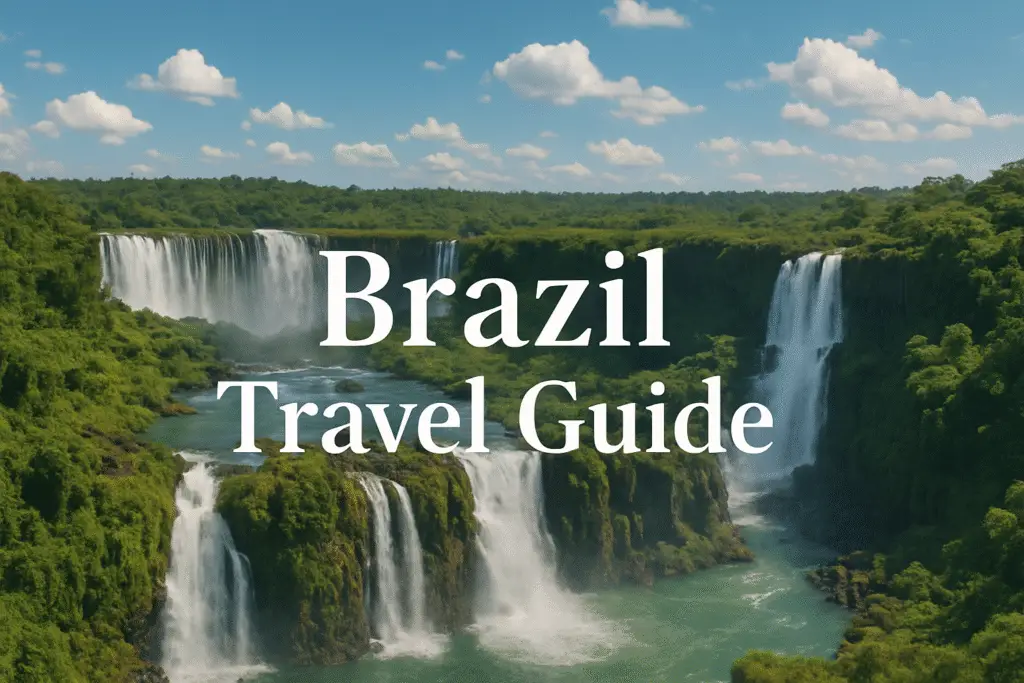
10.3 Iguaçu Falls — One of Earth’s Greatest Waterfalls
Straddling the border with Argentina, Iguaçu Falls is a staggering natural wonder. Hundreds of waterfalls form a massive arc in the rainforest, surrounded by tropical wildlife.
Brazil’s side offers panoramic vistas with wide walkways overlooking the falls. From here, visitors can see the vast curtain of water as it stretches across the landscape, creating mist clouds and rainbows. Boat tours bring you close to the thunderous spray. Helicopter flights reveal the full scale from above.
The Brazilian and Argentine sides complement each other, making Iguaçu one of the most powerful natural attractions in the world.
Amazon deep-dive, Brazilian culture, food, wildlife, itineraries, practical info & final conclusion
11. Deep into the Amazon — Rivers, Rainforest, Tribes, and the Immensity of Life
The Amazon rainforest covers more than half of Brazil and remains one of Earth’s last great wilderness frontiers. It is not simply a forest, but a vast living system with thousands of interconnected rivers, millions of plant and animal species, and Indigenous cultures who have lived in harmony with this environment for thousands of years. The Amazon is raw, humid, mythical, and endlessly mysterious. Traveling here is unlike any other experience in the world because the scale and complexity of this ecosystem go far beyond human perspective.
11.1 Understanding the Amazon’s Immense Scale
The rainforest stretches across nine countries, but Brazil contains the largest portion. The canopy forms an endless sea of green that extends to the horizon. The rivers are so wide that they resemble oceans, with brown-water tributaries mixing with black-water rivers that carry minerals from ancient soils. Giant cloud formations rise over the forest, generating their own weather system, and rainstorms drift in with sudden intensity.
When travelers step into the Amazon, they enter a world where the sounds of insects, birds, frogs, and monkeys fill the air from dawn until late night. The forest is never silent. Every moment brings something new — a rustling leaf, a splash in the river, a call echoing from high in the canopy. It is a place where life exists in every direction, from the branches above to the muddy forest floor.
11.2 Manaus — The Surprising Jungle Metropolis
Manaus is a city that feels out of place, rising in the middle of the rainforest with skyscrapers, markets, and massive ports. Its existence is tied to the rubber boom of the late 19th century, when the Amazon was one of the world’s most valuable resources. Today, Manaus is the gateway for river expeditions, jungle lodges, and Indigenous encounters.
The Teatro Amazonas, a historic opera house built with European materials transported across the ocean and deep into the jungle, stands as a symbol of the region’s strange and dramatic past. Nearby, markets overflow with tropical fruit, fish, medicinal plants, and handmade crafts. From the docks, boats depart into the endless river system.
11.3 The Meeting of Waters — Nature’s Liquid Miracle
One of the Amazon’s most iconic natural phenomena occurs just outside Manaus, where the dark Rio Negro flows beside the lighter Solimões River. For kilometers, the two rivers run side by side without mixing due to differences in temperature, speed, and density. The result is a surreal visual contrast — black water and brown water moving together like ribbons of paint. Speedboat tours allow travelers to witness this spectacle up close.
11.4 Jungle Lodges — Immersion in the Heart of the Forest
Travelers who want a deeper Amazon experience stay in eco-lodges deep within the forest. These lodges are often accessible only by boat and offer a full immersion in jungle life. Days are filled with activities:
- canoeing through flooded forests
- searching for pink river dolphins
- nighttime wildlife excursions
- trekking with Indigenous guides
- learning medicinal plants
- sunrise birdwatching
Nights are accompanied by the forest’s symphony — a continuous orchestra of life.
11.5 Amazon Wildlife — A Hidden World of Biodiversity
Much of the Amazon’s wildlife is elusive, but patient travelers can encounter:
- Pink and gray river dolphins
- Howler monkeys
- Squirrel monkeys
- Sloths
- Piranhas
- Macaws, toucans, and harpy eagles
- Caimans
- Tapirs
- Poison dart frogs
Indigenous guides are invaluable for spotting animals. Their knowledge of tracks, calls, and plant behavior transforms the forest from a chaotic maze into a world rich with stories and meaning.
12. Brazilian Culture — Music, Rhythm, Dance, Identity
Brazilian culture is not something you observe from a distance — you feel it. It is built on rhythm, emotion, community, and storytelling. Music fills streets, festivals overflow with color, dance acts as celebration and expression, and daily life is intertwined with strong regional identities.
12.1 Samba — The Heartbeat of Brazil
Samba is more than music. It is a cultural force born in Afro-Brazilian communities, carrying centuries of history in its rhythm. Samba is played at family gatherings, street parties, bars, and of course, during Carnival. The sound of drums, shakers, and string instruments creates an energy that pulls people into movement.
12.2 Bossa Nova — Brazil’s Smooth, Sophisticated Sound
Bossa nova emerged in the 1950s and blended samba rhythms with soft guitar melodies. Artists like João Gilberto and Tom Jobim transformed Brazilian music into an international sensation. Listening to bossa nova on a warm beach evening feels like tapping into Brazil’s romantic soul.
12.3 Capoeira — Dance, Fight, Ritual
Capoeira is a martial art disguised as dance. It was created by enslaved Africans who blended movement, rhythm, music, and spiritual expression. Today it is practiced in public squares, studios, and beaches throughout Brazil. Watching a capoeira circle is witnessing a living art form filled with flips, kicks, dodges, and acrobatics.
12.4 Folklore and Spirituality
Brazil’s spiritual identity is a mixture of Indigenous beliefs, African religions, and Catholic traditions. Candomblé rituals involve drums, chanting, and colorful garments honoring the Orixás — spiritual entities. These ceremonies are deeply respected and form an important part of Brazil’s heritage.
13. Brazilian Cuisine — Flavor, Color, Heat, Comfort
Brazilian food is warm, diverse, and comforting. Every region has its own signature dishes, and many meals are rooted in Indigenous and African traditions.
13.1 Feijoada — Brazil’s National Dish
Feijoada is a hearty black bean stew prepared with pork and served with rice, oranges, farinha, and kale. It is traditionally eaten on weekends and brings families together.
13.2 Regional Highlights
Amazon
- Grilled pirarucu
- Tacacá soup
- Açaí in its pure, unsweetened form
Bahia
- Moqueca
- Acarajé
- Vatapá
South
- Churrasco (Brazilian barbecue)
- Chimarrão yerba-mate drink
Minas Gerais
- Pão de queijo
- Cheese-based dishes
- Slow-cooked stews
Northeast
- Tapioca crepes
- Carne de sol
- Coconut-rich dishes
13.3 Fruits & Juices
Brazil has an astonishing variety of fruits:
- Cupuaçu
- Graviola
- Pitaya
- Jabuticaba
- Cajú
Fresh juices (sucos) are found everywhere and are part of daily life.
14. Brazil’s Wildlife — A Land of Extraordinary Creatures
Brazil is one of the world’s top biodiversity hotspots, home to rare animals found nowhere else.
Pantanal (best wildlife watching)
- Jaguars
- Giant anteaters
- Capybaras
- Giant otters
- Hyacinth macaws
Amazon
- Pink river dolphins
- Harpy eagles
- Sloths
- Tapirs
- Anacondas
Atlantic Forest
- Golden lion tamarins
- Toucans
- Colorful parrots
Coast & Offshore Islands
- Sea turtles
- Dolphins and whales
- Reef fish
- Sharks in marine parks
Brazil’s ecosystems are breathtaking, diverse, and alive with natural beauty.
15. Best Time to Visit — A Country of Multiple Climates
Because Brazil is massive, seasons vary greatly. The best travel time depends on your region of interest.
Amazon
Best: July–December (drier, easier for hiking)
Rainy: January–June (beautiful rivers)
Pantanal
Best for wildlife: July–October (dry season)
Northeast beaches
Year-round warm
Best: September–February
Rio & Southeast
Best: April–June and August–October
South Brazil
Best: Summer (December–March)
16. Suggested Brazil Itineraries — Build Your Dream Journey
7-Day Brazil Highlights
- Rio de Janeiro
- Iguaçu Falls
- São Paulo or Salvador
14-Day Brazil Classic Route
- Rio
- Amazon
- Salvador
- Iguaçu
21-Day Ultimate Brazil Experience
- Rio
- Paraty & Ilha Grande
- Salvador
- Chapada Diamantina
- Pantanal
- Amazon
- Iguaçu
30-Day Grand Brazil Route
- Rio & Southeast
- Salvador & Bahia coast
- Lençóis Maranhenses
- Amazon
- Pantanal
- South Brazil (Florianópolis)
- Iguaçu Falls
17. Practical Travel Tips for Brazil
Language
Portuguese is the official language. English is spoken in tourist areas, but learning basic Portuguese phrases helps a lot.
Safety
Brazil is safe for millions of travelers per year, but awareness is essential:
- avoid showing valuables
- use reliable transport
- stay in tourist-friendly neighborhoods
Transportation
- Domestic flights are common
- Long-distance buses are comfortable
- Ferries and boats operate in Amazon and coastal areas
Money
Credit cards widely accepted
ATMs available in major cities
Carry small cash for local purchases
18. Why Brazil Is a Bucket-List Destination
Brazil is a country of endless contrasts and infinite experiences. It offers:
- world-famous beaches
- the largest rainforest on Earth
- one of the most biodiverse wetlands
- legendary cities like Rio and Salvador
- vibrant culture, music, and food
- warm, welcoming people
- spectacular waterfalls and deserts
- islands, mountains, jungles, and rivers
Travelers leave Brazil with more than memories — they leave with emotions, impressions, rhythms, and stories that stay with them forever. It is a country that invites you to feel, to explore, to dance, to breathe, and to return.
 Related Articles
- Kakslauttanen Arctic Resort
- Top 10 Most Unique Places to Stay in Europe
- 10 Incredible Castles Around the World