
🇨🇱 CHILE TRAVEL GUIDE
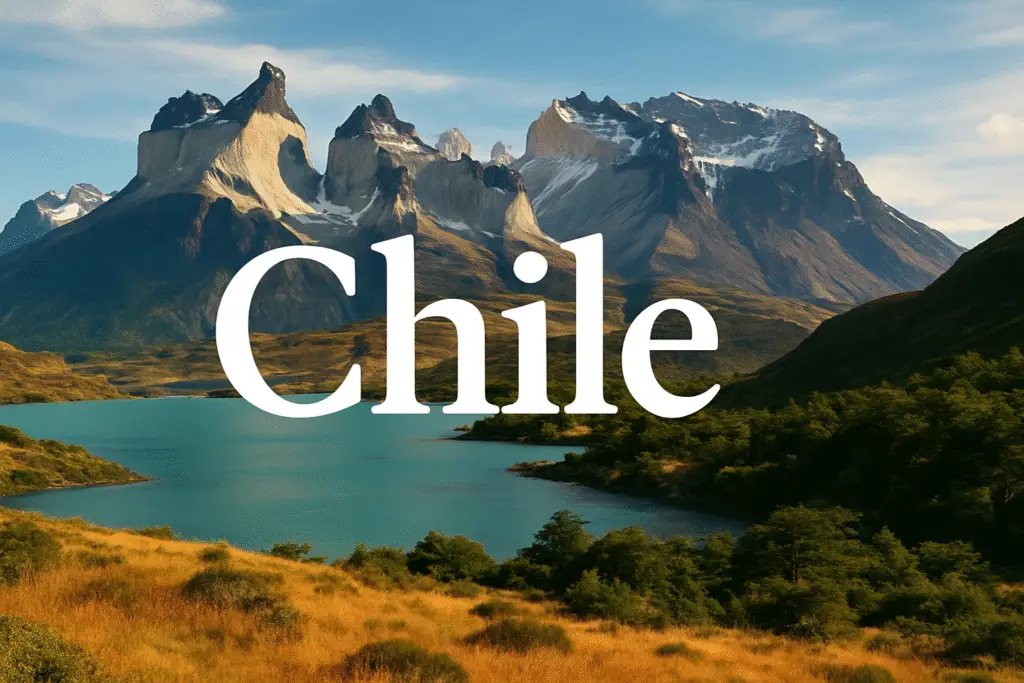
A Land of Extreme Geography, Endless Horizons, Ancient Cultures, Glaciers, Volcanoes and Desert Wonders
1. Chile: A Long, Thin Land of Contrasts and Endless Natural Power
Chile stretches for thousands of kilometers along the edge of South America, a country so narrow that in many regions you can stand in the middle and see mountains in one direction and the Pacific Ocean in the other. This extraordinary geography shapes everything about Chile — its culture, its landscapes, its climate, its wildlife, and its spirit. Few countries on Earth offer such dramatic contrasts in such a linear form. In the extreme north lies the driest desert in the world, a place where some weather stations have never recorded a single drop of rain. Continue south and the landscape shifts gradually into valleys filled with vineyards, coastal cities, snowy peaks, deep forests, volcanic national parks, massive glaciers, and finally the raw icy wilderness of Patagonia that seems to stretch into infinity.
Chile feels like a natural museum where every region tells a different ecological story. It is a place where you can watch stars in skies so clear that scientists built the world’s largest observatories, where you can walk through forests filled with ancient trees older than the Roman Empire, where you can approach geysers at sunrise when steam pillars rise into the freezing morning air, where you can kayak around icebergs that have drifted from distant glaciers, where you can hike volcanic ridges that glow with orange lava at night, where you can witness the silence of Patagonia that feels almost spiritual.
Chile’s culture is as varied as its landscapes. Though Spanish influence is strong, Indigenous heritage plays a powerful role, from the Mapuche communities of the south to the Aymara and Atacameño communities of the north. Chileans are proud, warm and resilient, shaped by earthquakes, volcanoes, wind, ocean, and mountains. Their food reflects this geography, with seafood from the cold Pacific waters, stews from mountain regions, and wines from fertile valleys. Chile feels modern yet deeply connected to nature, a country where cities thrive between some of the most impressive natural barriers on Earth.
Traveling through Chile is not just movement across geography — it is a journey through climate zones, geological eras, and cultural identities that shift hundreds of times along the way. It is a long ribbon of discovery that never stops surprising.
2. Santiago — A Capital Framed by the Andes Mountains
Santiago sits in a broad valley surrounded by the Andes, a city where skyscrapers rise with snow-capped peaks towering behind them. The contrast between urban life and mountain wilderness is dramatic. On some winter days the Andes feel so close they appear almost painted onto the horizon. Santiago is modern, busy, filled with nightlife, food, museums, green parks, and viewpoints. It is Chile’s cultural and economic center, but it also offers easy escapes into nature — within an hour you can be hiking in mountain valleys or tasting wine in world-famous vineyards.
2.1 Historic Center — Plaza de Armas, Cathedrals and Colonial Traces
Santiago’s downtown reflects centuries of history. Plaza de Armas is a cultural hub surrounded by the Metropolitan Cathedral, museums, and colonial buildings with shaded arcades where street artists, vendors, and families gather. It feels lively day and night, a place where old Chile and modern Chile meet.
2.2 Barrio Lastarria — Cafés, Culture and Creative Energy
Barrio Lastarria is one of Santiago’s most atmospheric neighborhoods, with small cafés, boutique shops, art galleries, theaters, book markets, and tree-lined streets. It is a favorite area for travelers because it feels historic but youthful, offering restaurants, local crafts, and cultural spaces within a compact area.
2.3 Cerro San Cristóbal — Santiago’s Mountain Viewpoint
In the center of the city rises Cerro San Cristóbal, a large hill that provides panoramic views of Santiago and the Andes. You can reach the top via funicular, cable car or hiking trail. At sunset the mountains glow pink and orange, a color known locally as cielo rosado, making this one of Santiago’s signature views.
2.4 Museums & Culture
Santiago’s museums tell stories of Chile’s complex past. The Museum of Memory and Human Rights documents the dictatorship era and is deeply emotional. The Pre-Columbian Art Museum showcases Indigenous art from thousands of years across the Andes.
3. Valparaíso — A Hillside City of Color, Poetry, Street Art and Chaos
Valparaíso is unlike any other city in Chile. Built on steep hills covered with colorful houses, staircases, funiculars and murals, it feels like an open-air gallery full of artistic expression. The city has an eccentric, bohemian personality shaped by poets, sailors, immigrants and artists. It was once one of the most important ports in the Pacific, and though its industrial role has changed, its cultural richness remains.
3.1 Cerro Alegre & Cerro Concepción — Artistic Hillsides
These hills are the most famous viewpoints in Valparaíso, filled with street art, artisanal cafés, boutique hotels and viewpoints overlooking the port. Every street corner reveals murals, mosaics, metal staircases and vibrant walls painted by both local and international artists.
3.2 Historic Port District
Down at the port you feel the working-class character of the city, with markets, fishing boats, and historic buildings. Though chaotic and rough around the edges, the area shows the authentic side of Valparaíso’s maritime identity.
3.3 Street Art Culture & Creative Freedom
Valparaíso is considered one of the world’s great street-art capitals. Murals stretch across entire buildings, staircases and alleys. Many works carry cultural, political and poetic messages that reflect Chilean identity and global issues.
4. The Central Valley — Vineyards, Mountains, Mediterranean Climate
South of Santiago lies Chile’s famed Central Valley, one of the top wine-producing regions in the world. Fertile soils, sunlight, ocean winds and Andean meltwater create ideal conditions for vineyards. The region also features rolling hills, peaceful countryside scenery and small colonial towns.
4.1 Casablanca Valley — Cool-Climate White Wines
Near the coast, Casablanca Valley specializes in crisp sauvignon blanc and chardonnay. The morning fog and ocean breezes give the wines refreshing acidity and aromatic complexity.
4.2 Maipo Valley — The Home of Cabernet Sauvignon
The Maipo Valley is one of the oldest and most prestigious wine regions in Chile. Many vineyards sit at the base of the Andes, with dramatic mountain views. Tasting rooms combine architecture, nature and winemaking tradition.
4.3 Colchagua Valley — Rural Beauty and Red Wines
Further south, Colchagua Valley produces bold, fruity red wines including carmenere, Chile’s signature grape. Vineyards here sit among rolling fields and quiet country roads where horses and tractors still play a central role.
5. The Atacama Desert — The Driest Desert and One of the Most Otherworldly Places on Earth
Northern Chile is home to the Atacama Desert, a place so dry and clear that NASA tested Mars rovers here. Some regions have not seen rain for hundreds of years. The landscape is filled with salt flats, dunes, geysers, canyons, lagoons and volcanoes that create surreal colors at sunrise and sunset. At night the sky becomes one of the clearest celestial displays on the planet.
5.1 San Pedro de Atacama — Desert Oasis and Adventure Base
San Pedro is a small adobe town that serves as the gateway to the desert. Dirt lanes, low buildings and traditional architecture give it a charming desert vibe. From here, travelers explore all surrounding natural wonders.
5.2 Valle de la Luna — Moon Valley Landscapes
The Moon Valley features salt formations, dunes and ridges shaped by wind into alien-like patterns. Sunset paints the desert in pink, purple and gold.
5.3 El Tatio Geysers — Sunrise at a High-Altitude Steam World
At over 4,300 meters, El Tatio is one of the world’s highest geyser fields. At dawn hundreds of steam columns rise into the freezing air, creating a mystical atmosphere.
5.4 Altiplanic Lagoons — Flamingos, Volcanoes and High-Altitude Colors
Turquoise lakes surrounded by snow-capped volcanoes host flamingos feeding in shallow mineral-rich waters. The silence is almost sacred.
5.5 Stargazing — The Clearest Skies on Earth
Astronomers choose Atacama for its extreme dryness and altitude. Night skies reveal the Milky Way with dazzling clarity, creating unforgettable astronomical tours.
6. Northern Chile — Tarapacá, Arica and the Aymara Highlands
Beyond Atacama lies the far north, a region strongly influenced by Aymara culture. The terrain includes deserts, highland valleys, ancient terraced agriculture, volcanoes, geothermal fields and historic mining towns.
6.1 Arica — City of Eternal Spring
Arica offers beaches, surfing spots and warm weather year-round thanks to the Humboldt Current. The city blends relaxation with Indigenous heritage.
6.2 Lauca National Park — Lagoons, Volcanoes and Andean Wildlife
Lauca is one of the most scenic parks in Chile, featuring:
- the perfect cone of Parinacota volcano
- Lake Chungará reflecting snow-covered peaks
- vicuñas grazing among volcanic plains
- Andean flamingos in shallow lakes
The altitude is high, but the landscapes are unforgettable.
6.3 Putre — Highland Village Life
Putre is a peaceful Aymara village surrounded by pastoral scenery. Terraced fields, adobe homes, grazing llamas and strong Indigenous traditions make this region culturally rich.
7. The Chilean Lake District — Volcanoes, Forests, Lakes and German Heritage
As you move south, Chile transforms into one of its most enchanting regions — the Lake District. Snow-capped volcanoes rise above clear lakes, dense forests spread across rolling hills, and small towns show European and Mapuche influences.
7.1 Pucón — Adventure Capital of the South
Pucón is dominated by Villarrica Volcano, often smoking gently at its peak. The town is energetic, filled with outdoor activities:
- hiking volcanic trails
- thermal hot springs
- rafting on turquoise rivers
- volcanic cave exploration
7.2 Villarrica and Osorno Volcanoes — Iconic Snow Cones
These volcanoes are symmetrical and snow-covered, looking almost too perfect to be real. Their surrounding parks include forests, lava fields and alpine lakes.
7.3 Valdivia — River City with Nature and Beer Culture
Valdivia sits beside rivers that branch into the Pacific. The city features craft breweries, seafood markets and lush wetlands filled with birds and seals.
🇨🇱 CHILE TRAVEL GUIDE — PART 2
Chiloé, Carretera Austral, Patagonia, Glaciers, Mapuche Culture, Wildlife, Best Time, Itineraries & Grand Conclusion
8. Chiloé Island — Mythology, Wooden Churches and a Culture Shaped by Sea and Rain
Chiloé is one of Chile’s most atmospheric regions, a place that feels separated from time. This archipelago, with its rolling hills, foggy mornings, fishing villages and wooden houses on stilts, carries a mystical charm deeply connected to legends, sea creatures and ancestral spirits. The climate is wet, the landscapes green, and the cultural identity unique. Wooden churches built by Jesuit missionaries and local carpenters form a UNESCO World Heritage group. Many structures fit together using wooden joints rather than nails, a technique that showcases the skill of Chiloé’s craftsmen.
8.1 Castro — Palafitos and Island Life
Castro, the island’s main town, is known for its colorful palafitos, houses built on wooden stilts above the water. When the tide rises, reflections create a dreamlike painting while fishermen prepare boats and repair their nets below. Castro has a vibrant market where local produce, shellfish, smoked salmon, seaweed, potatoes and wool products fill the aisles.
8.2 Chiloé National Park — Rugged Pacific Beaches and Ancient Forests
Chiloé National Park protects a stretch of wild coastline and dense temperate rainforest. Trails wind through moss-covered trees, ferns, bogs and windswept dunes that end in roaring Pacific beaches. The ocean here feels powerful and untamed. Birds circle overhead and driftwood covers the sand, adding to the dramatic atmosphere.
8.3 Mythology and Chilote Identity
Chilote folklore is rich with myths such as the ghost ship Caleuche, the shapeshifting water spirit Pincoya, and the forest creature Trauco. These stories form a core part of the island’s identity, passed down by generations who live close to land and sea.
9. The Carretera Austral — One of the World’s Most Beautiful Road Trips
South of Chiloé begins the legendary Carretera Austral, a remote highway stretching over 1,200 km through Patagonia’s wild interior. The road was built during the late 20th century and transformed remote regions into accessible natural treasures. Today, the Carretera Austral remains a paradise for adventure travelers, photographers and nature lovers who want to explore untouched landscapes far from crowds.
9.1 Pumalín Park — Douglas Tompkins’ Conservation Legacy
Pumalín is a massive national park created by the conservationist Douglas Tompkins. It features ancient alerce trees, glacial valleys, deep fjords and lush forests. Hiking trails reveal pristine waterfalls, volcanic landscapes and peaceful campsites where silence is broken only by birds and wind.
9.2 Queulat National Park — Hanging Glacier and Misty Forests
Queulat is famous for its Ventisquero Colgante, a hanging glacier that spills from a mountain and forms a powerful waterfall crashing into the valley below. The park’s trails lead through temperate rainforest dripping with moss, giving the entire area an enchanted feeling.
9.3 Coyhaique & Surrounding Valleys
Coyhaique is the main settlement along the Carretera Austral, surrounded by hills, rivers and basalt cliffs. From here travelers explore valleys filled with trout streams, forests and rural ranches called estancias.
9.4 Marble Caves — Turquoise Water and Stone Formations
One of Patagonia’s most iconic natural wonders, the Marble Caves (Cuevas de Mármol) sit on the shore of huge Lake General Carrera. Boats glide into swirling blue tunnels carved by waves into marble rock. Sunlight shining through turquoise water creates spectacular patterns on ceilings and walls that look almost translucent.
10. Patagonia — Wind, Mountains, Ice and the Edge of the World
Patagonia is one of the most iconic wilderness regions on Earth, a place of immense power where glaciers carve valleys, winds roar with unbelievable strength, granite peaks rise like jagged towers and the horizon seems endless. Chilean Patagonia is a world of fjords, ice fields, forests, wildlife and mountains that leave travelers speechless.
11. Torres del Paine — Chile’s Crown Jewel of Nature
Torres del Paine National Park is one of the world’s greatest trekking destinations, a place of epic landscapes and dramatic weather. The towering granite pillars, turquoise lakes, windswept fields, glaciers and wildlife create a scenery that feels almost superhuman in its intensity.
11.1 The Towers — Granite Giants of Patagonia
The Torres themselves are three immense granite spires rising above glacial valleys. At sunrise the rock glows in shades of pink and orange, one of Patagonia’s most iconic moments. Reaching the base viewpoint involves a long hike through forests, rivers and rocky slopes.
11.2 The Horns (Cuernos del Paine)
The Cuernos peaks have dark sedimentary caps on top of lighter granite, giving them a dramatic two-toned appearance. They rise directly above Lake Nordenskjöld, creating some of the most photographed scenes in the park.
11.3 The W Trek — A Legendary Route
The W Trek takes several days and covers:
- the Base of the Towers
- the French Valley
- Grey Glacier viewpoint
The route passes forests, lakes, rivers and open plains where guanacos graze. Weather changes quickly — sun, wind, rain and rainbows may all appear within an hour.
11.4 The O Circuit — Patagonia’s Full Circle
The O Circuit circles the entire massif, including remote backcountry areas with fewer visitors. It crosses the dramatic John Gardner Pass overlooking the immense Grey Glacier, part of the Southern Patagonian Ice Field.
11.5 Wildlife — Guanacos, Condors and Pumas
Torres del Paine is home to:
- herds of guanacos
- Andean condors gliding above peaks
- foxes and rheas
- pumas hunting in open valleys
The park is one of the best places in the world for spotting wild pumas.
12. The Patagonian Ice Fields — The Third-Largest Glacial Reserve on Earth
South of Torres del Paine lie the Northern and Southern Patagonian Ice Fields, massive sheets of ice that feed glaciers spilling into fjords and lakes.
12.1 Grey Glacier
Grey Glacier flows into Lake Grey and forms floating icebergs of brilliant blue color. Boat tours or kayaking reveal patterns in the ice created by centuries of compression.
12.2 Amalia Glacier and Fjords of Bernardo O’Higgins National Park
Huge fjords cut deep into Patagonia’s coastline, with glaciers descending from mountains directly into the sea. The silence, broken by the cracking of ice, creates an almost spiritual atmosphere.
12.3 Puerto Natales — Gateway to the Southern Wonders
Puerto Natales is the main town for exploring Patagonia. It sits on the shores of Last Hope Sound, with mountains reflecting in calm water during sunset. The town has cozy cafés, bakeries, trekking shops and warm restaurants offering dishes like lamb roasted over open flames.
13. Southern Patagonia — Wind, Ocean, History and Isolation
Further south lies the remote region of Magallanes, including:
- Punta Arenas
- Tierra del Fuego
- Remote estancias
- Penguin colonies
- Windswept coastlines
The environment here is harsh but astonishingly beautiful.
13.1 Punta Arenas — The Southernmost Large City
Located near the Strait of Magellan, Punta Arenas combines historical architecture with maritime tradition. Colorful houses, museums and viewpoints offer insight into the region’s past as a strategic navigation passage.
13.2 Isla Magdalena — Penguin Paradise
Boat trips visit Isla Magdalena, home to thousands of Magellanic penguins nesting on grassy burrows and walking along sandy paths between ocean and land.
13.3 Tierra del Fuego — End of the World Landscapes
Tierra del Fuego features empty coastlines, peat bogs, lenga forests, lakes and snow-covered peaks. The wind shapes everything, bending trees and creating a rugged beauty that feels remote and ancient.
14. Mapuche Culture — Identity, Resistance and Deep Connection to Land
The Mapuche are the largest Indigenous group in Chile, living mainly in the south. Their culture is deeply tied to land, forest, rivers and spiritual worlds called Wenumapu. For centuries they resisted colonial forces, maintaining autonomy and identity.
14.1 Spiritual Traditions
Mapuche spirituality includes:
- ceremonies led by machi (healers)
- sacred forests and water sources
- offerings to balance nature’s energy
14.2 Weaving and Handcrafts
Mapuche weaving uses geometric patterns representing stars, animals and spiritual symbols. Ponchos, belts and blankets show incredible craftsmanship.
14.3 Food Traditions
Mapuche cuisine uses ingredients like merkén (smoked chili seasoning), wild herbs, maize, pine nuts from Araucaria trees and traditional stews.
15. Chilean Cuisine — Seafood, Stews, Grills and Indigenous Influence
Chile’s long coastline and diverse geography create a rich food culture.
15.1 Seafood
Cold Pacific waters produce:
- king crab
- salmon
- sea bass
- mussels
- clams
- sea urchins
15.2 Traditional Dishes
- Empanadas de pino
- Pastel de choclo
- Cazuela
- Curanto (Chiloé earth-oven feast)
- Asado al palo (Patagonian lamb)
15.3 Wine and Pisco
Chile is famous for carmenere, cabernet, sauvignon blanc and syrah. Pisco, a grape-based spirit, is the national drink.
16. Best Time to Visit Chile
Chile spans many climates.
North (Atacama)
Best: April to October
Dry and cool nights
Central Chile
Best: September to April
Warm Mediterranean climate
Patagonia
Best: November to March
Windy but accessible
Lake District
Best: December to March
Each region offers different experiences depending on season.
17. Suggested Chile Itineraries
7 Days — Central & Atacama Highlights
- Santiago
- Valparaíso
- San Pedro de Atacama
- Moon Valley
- Geysers
- Altiplanic lagoons
10 Days — Desert + Lakes
- Atacama
- Santiago
- Lake District
- Pucón & Villarrica
14 Days — Central + Patagonia
- Santiago
- Valparaíso
- Punta Arenas
- Torres del Paine (W Trek or day hikes)
21 Days — Full Chile Experience
- Arica and Lauca
- Atacama
- Santiago
- Lake District
- Chiloé
- Carretera Austral
- Patagonia
28 Days — The Entire Length of Chile
- From the deserts of the north
- Through valleys and vineyards
- Across forests and volcanoes
- Down to the glaciers and winds of the far south
This is one of the world’s greatest long-distance journeys.
18. Why Chile Is a Bucket-List Destination
Chile is a country shaped by extremes — extreme beauty, extreme geography, extreme climate zones, extreme contrasts. It is a land where desert meets stars, where forests meet volcanoes, where glaciers meet wind, where deep Indigenous traditions meet modern culture. Few places on Earth offer such diversity along a single corridor of land. Every region has its own personality, its own landscape, its own soul.
Chile is for travelers who want to feel small in front of nature, who want to walk through ancient forests, stand at the base of massive granite towers, watch flamingos cross desert lagoons, listen to waves crashing against rocks, and taste dishes made from land and sea. It is a destination that blends adventure with tranquility, mythology with modernity, wilderness with culture.
Traveling through Chile is not just a trip — it is a transformative experience that stays with you long after you leave.
 Related Articles
- Kakslauttanen Arctic Resort
- Top 10 Most Unique Places to Stay in Europe
- 10 Incredible Castles Around the World