
🇪🇨 ECUADOR TRAVEL GUIDE
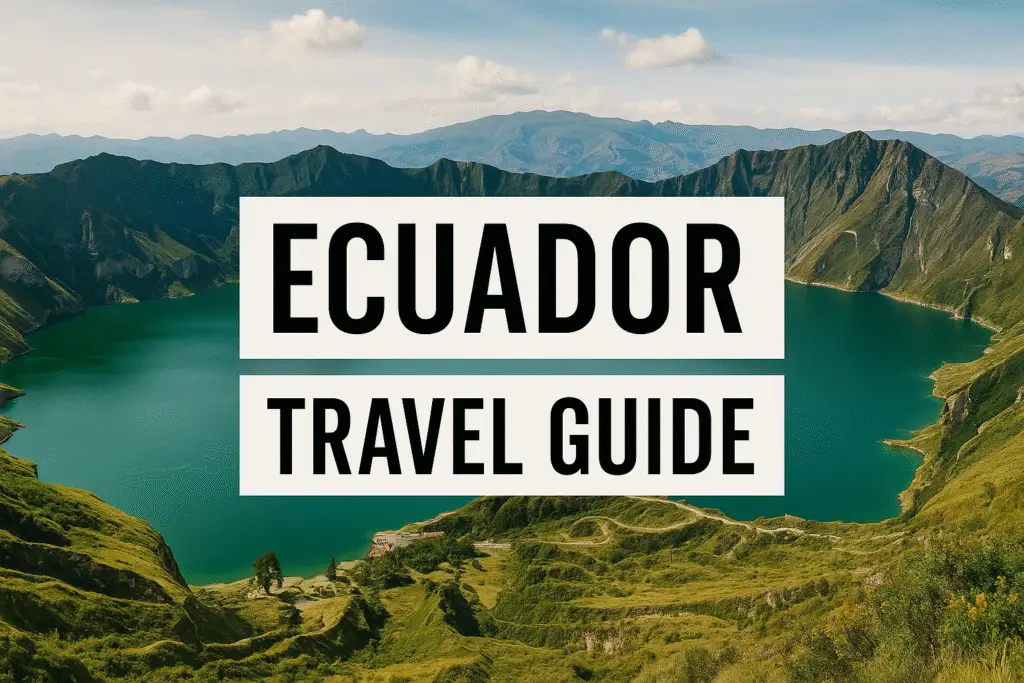
Mountains, Rainforest, Volcanoes, Islands, Culture, Colonial Cities & Coastline
1— Ecuador: A Small Country With the Power of a Continent
Ecuador is one of the most geographically diverse and culturally rich countries in the world, despite being relatively small in size. The entire nation fits into an area smaller dan Italy, yet it contains all four major ecosystems of South America: the Amazon rainforest, the Andes mountains, the Pacific coastline, and the world-famous Galápagos Islands. Few places on Earth offer such extreme biodiversity within such short distances. You can wake up in the misty cloud forests, have lunch in a colonial Andean town surrounded by volcanoes, and fall asleep to the sounds of the Amazon jungle — all in one day.
What makes Ecuador truly magical is how accessible everything feels. Unlike larger countries where regions lie days apart, Ecuador packs astonishing variety into compact distances. Travelers can move from snow-covered mountains to tropical beaches in a matter of hours. This makes the country perfect for adventurous itineraries, wildlife photographers, families, backpackers, luxury travelers, and anyone craving a journey filled with constant discovery.
Culturally, Ecuador blends Indigenous Andean heritage, Afro-Ecuadorian traditions along the coast, Spanish colonial history, and remote Amazon communities that have maintained their ancestral way of life. Markets overflow with colorful textiles, hand-woven fabrics, pottery, wooden carvings, fruits, herbs, and artisanal chocolate. The country’s cuisine mixes mountain comfort food with coastal seafood, rainforest ingredients, ancient recipes, and modern flavors. Everywhere you go, Ecuador feels warm, grounded, authentic, and deeply connected to the land.
Ecuador is not just a destination — it is an experience of nature, culture, people, and landscapes that continue to shift and surprise with every kilometer traveled.
2. Understanding Ecuador’s Four Worlds
Ecuador is divided into four major regions, each one dramatically different:
1. Sierra (Andes Highlands)
Tall volcanoes, glacial lakes, traditional markets, colonial cities, Andean communities, UNESCO-listed towns.
2. Amazon (Oriente)
Dense rainforest, Indigenous tribes, exotic wildlife, river lodges, deep jungle experiences.
3. Coast (Costa)
Golden beaches, surf towns, fishing villages, tropical climate, Afro-Ecuadorian culture.
4. Galápagos Islands
One of Earth’s most unique ecosystems with fearless wildlife, volcanic landscapes, pristine beaches, and endemic species.
Traveling through these four regions offers a full South American experience in one country.
3. Quito — Ecuador’s Historic Andean Capital
Quito is one of the world’s highest capitals, sitting at nearly 2,900 meters above sea level. The air feels cool and crisp, and the city spreads across a valley surrounded by mountains and volcanoes. Quito’s historic center is one of the best-preserved colonial districts in Latin America, filled with baroque churches, monasteries, cobblestone plazas, and ornate buildings that reflect centuries of architectural heritage.
3.1 Quito’s Historic Center — A UNESCO World Heritage Jewel
Walking through the Centro Histórico feels like stepping back in time. Narrow alleyways lead to picturesque plazas lined with churches and convents. The architectural mix includes Spanish baroque, Moorish influences, and indigenous artistic details.
Highlights include:
- Plaza Grande — Quito’s central square, surrounded by the Presidential Palace and the Cathedral
- La Compañía de Jesús — one of the most ornate churches in South America, covered in gold interior decoration
- San Francisco Church — a massive complex dating back to the 1500s
- Calle La Ronda — artsy colonial street with music, cafés, and craft shops
The city’s colonial charm blends with daily life: street vendors selling traditional snacks, kids playing football in quiet plazas, and locals sitting on benches observing the world.
3.2 El Panecillo & Virgin of Quito — Iconic Hilltop Viewpoint
A towering statue of the Virgin Mary stands on a hill overlooking the city. From the top, Quito unfolds like a long ribbon of houses stretching across mountainsides. The dramatic scenery highlights the city’s unique geography.
3.3 Teleférico — Quito’s Gateway to the Sky
A cable car rises from the edge of the city to over 4,000 meters on the slopes of Rucu Pichincha volcano. Here, the air is thin, silent, and breathtaking. The Andean peaks surround the city like a crown. Hiking trails lead higher toward the volcano summit, offering views that feel like the edge of the world.
4. Middle of the World — Where the Equator Splits the Planet
Just outside Quito lies Mitad del Mundo, where a giant monument marks the Equator line. Travelers can stand with one foot in each hemisphere, visit interactive science museums, and learn about equatorial geography. Nearby is the Intiñan Museum, which offers cultural exhibits and experiments demonstrating equator phenomena.
This region blends geographic curiosity with Indigenous history, making it a fun and educational stop.
5. Otavalo & Northern Andes — Markets, Lakes, and Indigenous Culture
North of Quito lies one of the richest cultural areas in the Andes.
5.1 Otavalo Market — Handicraft Capital of the Andes
The Otavalo community is famous for its textile traditions, weaving, and artisan crafts. The market is filled with:
- alpaca scarves
- ponchos
- blankets
- jewelry
- leather goods
- paintings
- wooden carvings
Every color, texture, and design reflects Indigenous heritage. The Otavaleños are globally known for preserving their traditions and wearing traditional clothing daily.
5.2 Cuicocha Lake — Volcanic Crater Beauty
Cuicocha is a deep-blue crater lake located at the base of the Cotacachi volcano. A hiking trail circles the rim, offering stunning views of islands and the surrounding Andean landscape.
5.3 Ibarra, Cotacachi, and Lago San Pablo
This region is peaceful, full of lakes, farming communities, leather workshops, and Andean charm.
6. Avenue of the Volcanoes — One of the Most Dramatic Mountain Routes in the World
South of Quito stretches a corridor of massive volcanoes, many over 5,000 meters, creating one of Earth’s most impressive landscapes. Alexander von Humboldt called it the Avenue of the Volcanoes due to the concentration of high peaks.
Major volcanoes along the route:
- Cotopaxi — one of the world’s highest active volcanoes
- Chimborazo — the point on Earth closest to the sun due to the equatorial bulge
- Antisana — remote and full of wildlife
- Tungurahua — dramatic volcano overlooking Baños
- Illinizas — twin peaks popular for trekking
The region is made for adventure, photography, and nature lovers.
7. Cotopaxi National Park — Glaciers, Wild Horses, and Andean Silence
Cotopaxi’s perfect snow-capped cone rises dramatically from the highland plains. Even from a distance, the volcano feels powerful and iconic.
7.1 Hiking & Refuge
Visitors can ascend to the José Rivas Refuge at over 4,800 meters. The landscape is wind-swept, barren, and rugged, with volcanic rocks, thin air, and sweeping views.
7.2 Wildlife & Andean Ecosystem
The high-altitude páramo landscape is home to:
- wild horses
- Andean foxes
- condors
- hummingbirds adapted to cold climates
The silence here is immense, broken only by the wind.
8. Quilotoa Crater Lake — A Turquoise Gem in the Mountains
Quilotoa is one of Ecuador’s most beautiful natural wonders — a bright turquoise volcanic lake surrounded by dramatic jagged crater edges. The color shifts between green, blue, and deep sapphire depending on the light. Villages surrounding Quilotoa maintain strong Indigenous traditions.
8.1 Quilotoa Loop — A Multi-Day Trek Through Andean Communities
The Loop passes through small farming towns, terraced fields, canyons, and highland plateaus. Travelers stay in local guesthouses, eat home-cooked meals, and meet families living traditional lifestyles.
This trek is one of the best ways to experience Ecuador’s cultural authenticity.
9. Baños — Adventure Capital of Ecuador
Baños, sitting between the Andes and the Amazon, is a hotspot for adrenaline and nature.
Activities include:
- waterfall route cycling
- canyoning
- ziplining
- hot springs
- swing at the end of the world
- hiking to viewpoints of Tungurahua volcano
9.1 Waterfall Route
Dozens of waterfalls cascade into lush valleys. The most famous is Pailón del Diablo, a powerful waterfall surrounded by hanging bridges and mist-covered staircases.
10. Cuenca — Ecuador’s Most Elegant Colonial City
Cuenca is a UNESCO World Heritage city known for its European-style architecture, red-tiled roofs, cobblestone avenues, and artistic atmosphere. It feels peaceful, cultured, and timeless.
10.1 Historic Center
Colonial churches, flower markets, picturesque plazas, and craft shops line the streets. Cuenca is famous for Panama hats (which actually originate from Ecuador).
10.2 Cajas National Park
Just outside Cuenca lies a high-altitude wonderland with lakes, misty hills, polylepis forests, and hiking trails. The landscape feels mystical, cold, and deeply serene.
The Ecuadorian Amazon, Coastal Beaches, Marine Life & Afro-Ecuadorian Culture
11. The Ecuadorian Amazon — Wild, Ancient, and Deeply Alive
The Amazon rainforest in Ecuador is one of the most accessible yet biologically intense regions in South America. While the Brazilian Amazon is massive and remote, Ecuador’s portion is compact, dense, and incredibly rich in wildlife. The smaller territory actually means higher biodiversity per square kilometer, making it one of the best places in the world to experience the rainforest up close. Here, every inch of the jungle vibrates with life — insects humming, birds calling, monkeys rustling through the treetops, and distant thunderstorms rolling across the canopy.
11.1 Gateway Towns: Tena & Coca
Travelers enter the Amazon through two main access points:
Tena
Located at the edge of the rainforest, Tena is a haven for river rafting and gentle jungle experiences. The surrounding waterways are perfect for rafting tours that navigate through lush vegetation, waterfalls, and canyons.
Coca (Francisco de Orellana)
Coca is the departure point for deeper jungle lodges in Yasuni National Park and Cuyabeno Wildlife Reserve. From here, boats travel for hours into pristine rainforest with no roads, only rivers.
12. Cuyabeno Wildlife Reserve — One of the Most Biodiverse Places on Earth
Cuyabeno is a labyrinth of blackwater lagoons, rivers, flooded forests, and floating vegetation. The water is incredibly dark — almost mirror-like — because of natural tannins from decaying leaves. The reflections here are surreal, doubling the sky and canopy in perfect symmetry.
12.1 Wildlife in Cuyabeno
Animals here are easier to spot because waterways offer clear sightlines. Travelers often encounter:
- Pink river dolphins
- Howler monkeys
- Squirrel monkeys
- Toucans
- Caimans
- Giant river otters
- Sloths
- Anacondas
- Hundreds of birds and butterflies
Night canoe rides reveal glowing eyes of caimans and echoes of nocturnal creatures. The forest becomes alive with chirps, croaks, rustles, and distant roars.
12.2 Indigenous Communities
Cuyabeno is home to Indigenous groups like the Siona people. Travelers can visit their communities to learn about:
- traditional weaving
- local foods
- medicinal plants
- spiritual healing practices
- jungle survival techniques
These experiences are authentic and run directly by the communities themselves.
13. Yasuni National Park — The Deep Amazon and Earth’s Most Biodiverse Ecosystem
Yasuni is often called the most biodiverse region on the entire planet. Scientists have recorded record-breaking species densities here, including:
- more than 600 bird species
- over 1,200 tree species
- thousands of insects per hectare
- rare mammals like jaguars and tapirs
This is the Amazon at its wildest and most untouched.
13.1 Jungle Lodges in Yasuni
Eco-lodges in Yasuni offer deep immersion:
- canopy towers with panoramic jungle views
- guided night hikes
- canoe excursions through flooded forests
- parrot clay licks where hundreds of parrots swarm
- quiet mornings listening to the forest waking up
Many lodges are run in collaboration met Indigenous communities, ensuring sustainability and respect for the land.
14. The Ecuadorian Coast — Beaches, Surf Towns & Tropical Relaxation
While Ecuador is famous for the Andes and the Amazon, its Pacific coastline is equally beautiful. The Costa is warm, humid, and filled with beaches, vibrant fishing villages, seafood markets, and Afro-Ecuadorian communities with deep traditions and music.
The coastline stretches from the Colombian border in the north to Peru in the south, changing dramatically as you travel down.
15. Esmeraldas — Afro-Ecuadorian Culture, Music & Green Coastline
Esmeraldas is the northernmost region of the coast and one of the strongest centers of Afro-Ecuadorian culture. The area is lush, tropical, and filled with warm, welcoming communities.
15.1 Afro-Ecuadorian Music & Dance
Esmeraldas is famous for its marimba music, a traditional African-inspired rhythm played with wooden xylophones, drums, and shakers. Performances are energetic, emotional, and deeply cultural. The dances often tell stories of history, freedom, and community.
15.2 Beaches
- Same — calm waters, quiet beaches
- Mompiche — rustic surf town with jungle surroundings
- Playa Escondida — hidden, natural, peaceful
- Súa & Atacames — lively towns with nightlife and beach bars
16. Manabí — Seafood, Beaches & Laid-Back Coastal Towns
Manabí is one of Ecuador’s richest gastronomic regions. The coast here is dotted with fishing villages, surf towns, small resorts, and long sandy beaches.
16.1 The Food of Manabí
The cuisine is famous for:
- ceviche de camarón (shrimp ceviche)
- encebollado (fish and onion soup)
- viche (peanut and seafood stew)
- plantains in many forms
- fresh grilled fish on the beach
You can literally watch fishermen pull their boats from the water in the morning and later eat the catch of the day at a small local restaurant.
16.2 Puerto López — Gateway to Whale Watching
From June to October, humpback whales migrate along the coast, breaching spectacularly close to shore.
Puerto López offers tours to:
- Isla de la Plata — often called “the poor man’s Galápagos”
- Machalilla National Park — tropical dry forests
- Los Frailes Beach — one of Ecuador’s most beautiful
16.3 Montañita — Surf, Backpackers & Nightlife
Montañita is the most famous surf and party town in Ecuador. Known for:
- international backpacker scene
- surf schools
- beach bars
- nightlife
- relaxed, barefoot atmosphere
Yet only a short walk away, the town becomes quiet with yoga studios and eco-lodges overlooking peaceful bays.
17. Santa Elena Peninsula — Desert Coast, Resorts & Archaeology
This region blends beaches, archeological sites, and modern resort development.
Highlights:
- La Chocolatera — dramatic cliffs where waves crash with power
- Salinas — Ecuador’s Miami-style beach town
- Valdivia — archaeological site of one of the oldest cultures in the Americas
The dry landscape contrasts strongly with the tropical greenery of the northern coast.
18. Machalilla National Park — Beaches, Trails & Tropical Dry Forest
Machalilla National Park is one of Ecuador’s most important coastal reserves. It features:
- deserted beaches
- rocky cliffs
- dry forests filled with wildlife
- turtle nesting sites
- archaeological ruins
The star of the park is Playa Los Frailes — a crescent-shaped bay with white sand and turquoise water, often compared to beaches in the Caribbean.
19. Marine Wildlife — Whales, Dolphins & Turtles
Ecuador’s coast is a haven for wildlife lovers.
19.1 Humpback Whales
Thousands migrate each year, making this one of the best whale-watching areas in South America.
19.2 Dolphins
Bottlenose and spotted dolphins are frequently seen in the open ocean.
19.3 Sea Turtles
Multiple species nest on Ecuadorian beaches — sometimes you can witness hatchlings making their brave journey into the sea.
20. Coastal Culture — Fishing Traditions & Daily Life
Life along Ecuador’s coast revolves around the sea. Fishermen head out at dawn in colorful boats, returning with fresh catches that fill markets and small restaurants. Families gather on beaches on weekends, children play fútbol in the sand, and food vendors walk the shoreline selling coconut water, ceviche, and fried plantain snacks.
The coastal lifestyle feels simple, warm, and deeply connected to nature and community.
Galápagos, Food, Culture, Wildlife, Best Time to Visit, Itineraries & Why Ecuador Is Bucket List
21. The Galápagos Islands — One of the Most Extraordinary Places on Earth
No description of Ecuador is complete without the Galápagos, a place so unique that it feels like another planet entirely. Located about 1.000 km off the mainland, the islands are volcanic, rugged, untouched, and filled with species that exist nowhere else on Earth. This archipelago inspired Charles Darwin’s theory of evolution and continues to fascinate travelers with its incredible wildlife, dramatic landscapes, and pristine natural beauty.
The magic of the Galápagos lies not just in the animals, but in their behavior. Because predators are limited and human presence has been regulated for decades, wildlife here remains fearless. Sea lions lie across benches and walkways. Penguins swim beside snorkelers. Iguanas sunbathe in groups along lava rocks. Giant tortoises roam freely in green highland fields. Birds nest in plain sight. Everything feels peacefully natural, as if the animals rule and humans are temporary guests.
21.1 The Islands — Each One with Its Own Personality
The Galápagos archipelago consists of 13 major islands and dozens of islets. Each island has distinct landscapes, wildlife, and experiences.
Santa Cruz — The Heart of the Archipelago
Santa Cruz is the main hub for hotels, restaurants, and boat departures.
Highlights include:
- Tortuga Bay — long stretch of white sand with marine iguanas
- Charles Darwin Research Station — conservation projects & giant tortoise breeding
- Los Gemelos craters — collapsed lava chambers surrounded by lush vegetation
- Highlands giant tortoises — hundreds roaming freely in misty pastures
Santa Cruz offers the perfect blend between wildlife and comfort.
San Cristóbal — Sea Lions Everywhere
San Cristóbal has a relaxed vibe and charming waterfront filled with sea lions lounging on benches, beaches, and docks.
Key attractions:
- Kicker Rock — dramatic tower rising from the sea, excellent for snorkeling
- La Lobería — sea lion colony
- Interpretation Center — great introduction to Galápagos history
- Cerro Tijeretas viewpoint
The island is ideal for snorkeling and marine wildlife.
Isabela — Volcanic, Remote, and Wild
Isabela is the largest island and one of the most adventurous.
Highlights:
- Sierra Negra Volcano — huge caldera with hiking trails
- Los Tuneles — surreal lava tunnels with clear water and sea turtles
- Flamingo lagoons
- Shark-filled mangrove channels
Isabela feels remote, raw, and deeply connected to nature.
Floreana — Peaceful and Mysterious
Known for:
- quiet beaches
- pirate and whaler history
- unique birdlife
- the famous “Post Office Bay” where travelers leave letters for others to deliver
Española — The Best Island for Wildlife Behavior
Española hosts:
- albatrosses performing courtship dances
- blue-footed boobies nesting along trails
- marine iguanas with bright colors
- blowholes firing water into the air
It’s one of the most photogenic islands.
21.2 Wildlife of the Galápagos — Fearless, Rare, and Astonishing
The Galápagos offer a biological theater where evolution plays in real time.
Key species:
- Giant tortoises, some over 150 years old
- Blue-footed, red-footed & Nazca boobies
- Galápagos penguins
- Frigatebirds with iconic red chests
- Marine iguanas — the only swimming lizards on Earth
- Galápagos sea lions — playful and curious
- Hammerhead sharks
- Land iguanas
- Flightless cormorants
Every island provides different encounters, making multi-stop itineraries essential.
21.3 Cruises vs. Island Hopping
There are two ways to explore the Galápagos:
Cruises
- reach remote islands
- see more wildlife
- structured itineraries
- expert guides
Island Hopping
- cheaper
- flexible
- stay in hotels
- explore at your own pace
Both options reveal the full magic of the islands, depending on your travel style.
22. Ecuadorian Cuisine — Flavors From the Mountains, Jungle, and Sea
Ecuador’s cuisine is a delicious fusion of Andean, coastal, Amazonian, and Spanish influences. Dishes change dramatically by region, offering endless variety.
22.1 Andean Cuisine
Highland foods are warm, hearty, and perfect for colder climates.
Popular dishes:
- Locro de papa — creamy potato and cheese soup
- Fritada — slow-cooked pork with corn and plantains
- Cuy — traditional roasted guinea pig
- Llapingachos — potato patties with cheese
- Quinoa-based soups
The highlands are also known for fresh juices, herbal teas, and street snacks like empanadas.
22.2 Coastal Cuisine
The coast is paradise for seafood lovers.
Key dishes:
- Ceviche made with shrimp, fish, or octopus
- Encocado fish cooked in coconut
- Encebollado tuna soup with yuca
- Bolón de verde — mashed plantain ball with cheese or pork
Meals are refreshing, tropical, and flavorful.
22.3 Amazonian Cuisine
The Amazon region uses many jungle ingredients.
Typical foods:
- Maeto fish cooked in leaves
- Guayusa tea — energizing rainforest drink
- Chontacuro (edible larvae — adventurous food!)
- Cassava bread
The Amazon diet is simple, fresh, and tied to the ecosystem.
23. Ecuador’s Wildlife — Beyond Galápagos & Amazon
Ecuador’s wildlife is astonishing even outside its major ecosystems.
23.1 Andean Wildlife
- llamas & alpacas
- Andean condors
- spectacled bears
- vicuñas in high-altitude plains
- hummingbirds of every color
The Andes host unique species adapted to thin air and cold temperatures.
23.2 Cloud Forest Wildlife (Mindo)
Mindo is one of the best birdwatching areas in the world, home to:
- toucans
- quetzals
- tanagers
- owls
- glass frogs
- butterflies
The cloud forest is humid, green, and full of life.
24. Best Time to Visit Ecuador
Because Ecuador straddles the equator, temperatures remain stable year-round. What changes more is rainfall and regional patterns.
Andes (Quito, Cotopaxi, Cuenca)
Best: June–September
Dry season with clear mountain views
Amazon
Best: July–November (drier)
But the rainforest is beautiful every month
Coast
Best: December–May
Warm, sunny, tropical
Galápagos
Year-round, with seasonal highlights
- Warm season: December–May (best snorkeling)
- Dry season: June–November (wildlife activity, cooler water)
Ecuador truly has no “bad” month — only different experiences.
25. Suggested Itineraries — Your Perfect Ecuador Trip
7-Day Highlights
- Quito
- Cotopaxi
- Baños
- Galápagos day trips or Mindo
10-Day Classic Ecuador
- Quito & Middle of the World
- Otavalo
- Cotopaxi
- Quilotoa
- Baños
- Amazon (Cuyabeno or Tena)
14-Day Andes + Amazon + Coast
- Quito
- Cuenca
- Cajas
- Baños
- Amazon lodge
- Montañita or Puerto López
21-Day Ultimate Ecuador
- Quito
- Otavalo
- Cotopaxi
- Quilotoa Loop
- Baños
- Amazon
- Cuenca
- Coast
- Galápagos (5–7 days)
26. Why Ecuador Is a Bucket-List Destination
Ecuador is one of the most extraordinary travel countries on Earth because it combines diversity, accessibility, culture, and nature in ways no other country does. It offers:
- world-class wildlife (Galápagos)
- deep Amazon rainforest
- volcanoes and snow-capped Andean giants
- colorful Indigenous markets
- colonial cities full of charm
- Pacific beaches and surf towns
- cloud forests bursting with birds
- friendly, welcoming people
- travel distances that make it easy to explore everything
Every day in Ecuador feels like a different country. One morning you see giant tortoises in the Galápagos. The next morning you’re hiking on volcanic slopes at 4.000 meters. The next you’re eating ceviche by the Pacific Ocean. The richness of the experience is unmatched.
Ecuador is small but spectacular. It is intense yet peaceful. It is ancient yet young. A land where nature, culture, and people blend into an unforgettable journey.
 Related Articles
- Kakslauttanen Arctic Resort
- Top 10 Most Unique Places to Stay in Europe
- 10 Incredible Castles Around the World