
🇬🇾 GUYANA TRAVEL GUIDE
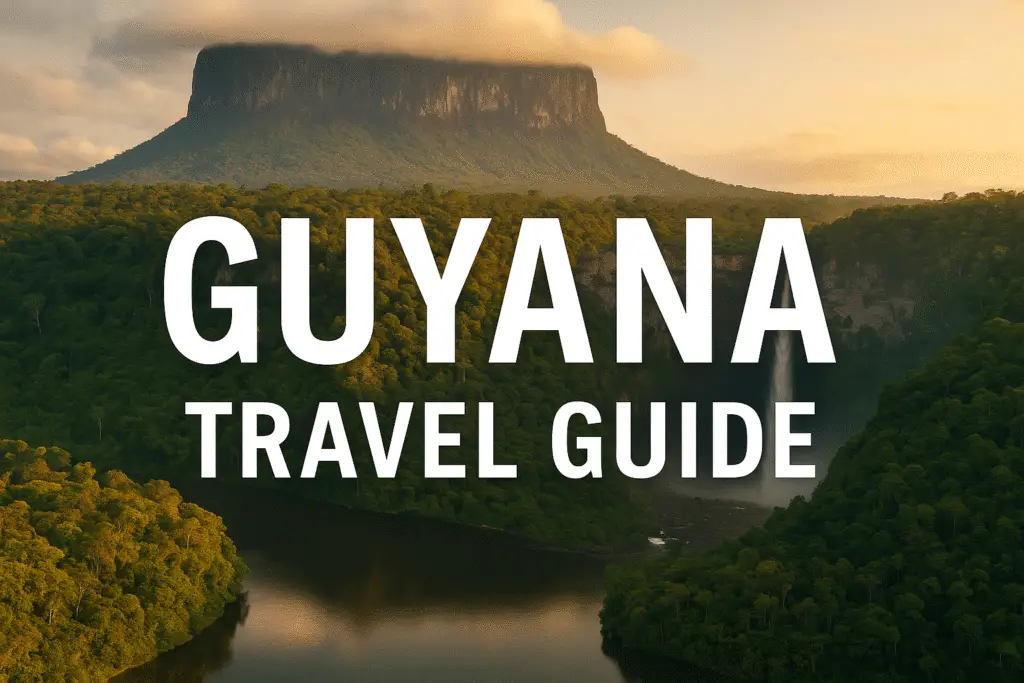
The Wild, Untamed, Jungle-Dominated, Waterfall-Filled, Culture-Rich, Amazonian Heart of South America
1. Guyana: South America’s Hidden Wilderness Treasure
Guyana is one of the most mysterious, untouched and captivating countries in the world, a place where dense rainforest stretches across nearly the entire landscape, where giant rivers cut through vast untouched wilderness, where ancient tepui mountains rise like lost worlds from prehistoric times, and where Indigenous cultures continue to live in harmony with nature as they have for thousands of years. It is the only English-speaking country in South America, and the only nation in the region where Caribbean culture blends with Amazonian ecosystems, creating a unique identity you won’t find anywhere else.
Many travelers overlook Guyana because it is not a mainstream tourist destination, but that is exactly what makes it extraordinary. This is a country defined by raw nature, giant waterfalls that thunder in isolated valleys, pristine forests that cover more than 85% of the land, wildlife encounters that feel like scenes from documentaries, and rivers that stretch endlessly through jungle so untouched that some areas have never seen roads or towns. Guyana is not built around mass tourism. Instead, it offers a rare opportunity to experience a world that still feels wild, sacred and ancient.
Traveling here means entering the beating heart of the Guiana Shield, one of Earth’s most biodiverse regions. Jaguars roam through thick rainforest, giant anteaters graze in the savannah, harpy eagles perch in towering canopy trees, and the Kaieteur Falls — five times higher than Niagara — drop into a roaring gorge deep in the interior with no cities or crowds around them. Indigenous communities, particularly the Makushi, Wapishana, Patamona and Wai Wai peoples, guide travelers into their ancestral lands, offering authentic encounters with traditions, cuisine, stories and daily life.
Guyana feels like a frontier, a place where roads disappear, rivers become highways, and the jungle breathes with ancient rhythms. It is not a luxury escape, but a destination for travelers who want to feel nature in its most powerful form.
2. Georgetown — Colonial Streets, Wooden Architecture and Caribbean Vibes
Guyana’s capital, Georgetown, sits along the Atlantic coast and showcases a blend of British colonial heritage, Caribbean energy, bustling markets, Dutch canal systems and lively street life. The city is vibrant, sometimes chaotic, but full of character and history. Many of its buildings are constructed from wood, giving the city a distinctive appearance.
2.1 St. George’s Cathedral — One of the Tallest Wooden Churches in the World
A towering white cathedral built entirely from wood, St. George’s Cathedral is one of Georgetown’s most iconic structures. Inside, the airy hall, slanted beams and long windows create a quiet atmosphere that contrasts with the busy streets outside.
2.2 Stabroek Market — The Beating Commercial Heart
Stabroek Market is an explosion of colors, sounds, smells and movement. Vendors sell tropical fruits, fresh fish, spices, clothing, household items and locally crafted goods. The iron clock tower, built in the 19th century, stands above the chaos like a historical guardian. Walking through this market immerses you in the daily life of the city.
2.3 Sea Wall Promenade — Atlantic Breeze and Social Life
Georgetown sits below sea level, protected by a long seawall built by the Dutch. Every afternoon, locals walk or relax along the seawall while strong Atlantic winds sweep across the coast. Food stalls, music and street culture bring the area to life, especially on weekends.
2.4 Bourda and Kitty Markets
These traditional markets offer fresh produce, herbs, teas, handmade crafts, and the warm atmosphere of Guyanese daily life. You can find cassareep (cassava extract), ginger beer, bush medicine and local snacks.
2.5 Botanical Gardens & Zoo — Quiet Green Spaces
The botanical gardens contain manatees swimming in ponds, parrots in tall trees and serene pathways lined with tropical plants. They provide a peaceful retreat within the city.
3. Guyana’s Interior — One of the Last Great Wilderness Regions on Earth
Beyond Georgetown lies a massive expanse of untouched nature. Most of Guyana’s land area is covered in dense rainforest, river systems, mountains, waterfalls and savannahs, with very few roads leading into the interior. This isolation has preserved the ecosystems and cultures of the region.
Traveling here often requires small aircraft, motorized canoes or rugged 4×4 vehicles. The scale of the wilderness leaves a deep impression — hours go by without seeing another human, village or building.
4. Kaieteur Falls — One of the World’s Most Powerful Waterfalls
Kaieteur Falls is the crown jewel of Guyana’s natural wonders — a single, massive waterfall that drops more than 220 meters (five times the height of Niagara) from a highland plateau into a dramatic gorge surrounded by pristine jungle. What makes Kaieteur extraordinary is not just its height but its volume — the falls thunder with extraordinary power, sending mist into the air that often creates rainbows across the valley.
The area around the falls remains untouched. No hotels, no large crowds, no fences. Only a small airstrip, a visitor shelter and a few walking paths. When you stand at the cliff’s edge, watching the thunderous water plunge into the abyss, the feeling is awe-inspiring. This is nature in its purest form.
4.1 Wildlife of Kaieteur
This remote ecosystem hosts rare species, including:
- the golden frog (found only in giant tank bromeliads)
- Guianan cock-of-the-rock, a bright orange bird found in the forest
- giant tarantulas
- colorful orchids
- hummingbirds feeding on cliffside flowers
The atmosphere feels ancient and sacred.
5. Iwokrama Rainforest — Jaguars, Canopies and Indigenous Knowledge
Iwokrama is one of the most important conservation areas in South America, protecting a massive section of the Guiana Shield. It is one of the best places in the world to see jaguars in the wild, as well as giant river otters, tapirs, harpy eagles and countless species of birds and reptiles.
5.1 Iwokrama Canopy Walkway — A Bridge Above the Jungle
A series of elevated metal walkways allow visitors to walk high above the forest floor, experiencing the jungle from the treetops. Early mornings reveal birds, monkeys, insects and the glowing gold of sunrise filtering through branches.
5.2 Wildlife Encounters
Iwokrama is known for:
- black caimans resting on riverbanks
- red howler monkeys roaring at dawn
- giant anteaters wandering savannah edges
- macaws flying in pairs
- night walks revealing hidden nocturnal life
5.3 Indigenous Guides and Ancestral Knowledge
Trips often include local Makushi or Patamona guides who share deep knowledge of plants, animals, medicinal uses, sustainable living and spiritual traditions.
6. Rupununi Savannah — Endless Grasslands and Ranching Culture
South of Iwokrama lies the Rupununi region, a broad savannah broken by rivers, forested patches, Indigenous villages and giant mountains that rise abruptly from flat plains. The region feels remote, warm, wind-swept and filled with wildlife.
6.1 Karanambu — Land of Giant River Otters
The Karanambu area is one of the best places to see giant river otters, some reaching over 1.8 meters in length. These charismatic creatures swim in groups through lakes and rivers, diving and splashing in playful patterns.
6.2 Ranching Culture
The Rupununi has a cowboy tradition, with cowboys known as “vaqueros” riding across grasslands on horseback. Many lodges operate as cattle ranches, offering horseback excursions at sunrise or sunset across golden plains.
6.3 Giant Anteaters
These huge, slow-moving mammals roam the savannah in search of ants and termites. Early morning hours provide the best chance to see them wandering gracefully across the open land.
7. Mount Roraima — The Legendary Flat-Topped Mountain of Myths
Mount Roraima is one of the most dramatic mountains on Earth, a massive flat-topped tepui that inspired Arthur Conan Doyle’s The Lost World. The mountain rises abruptly from surrounding jungle as a sheer wall of rock stretching thousands of meters high. At its top lies a plateau containing unique plants, ecosystems and rock formations found nowhere else.
Most travelers reach Roraima through Venezuela or Brazil, but the mountain’s formation and significance extend deep into Guyanese geographical heritage.
7.1 The Tepui Ecosystem
The plateau features:
- rock pools
- carnivorous plants
- bizarre stone formations
- endemic species
- thick clouds rolling across dark rock
The environment feels prehistoric.
8. Kanuku Mountains — Remote Wilderness Filled with Biodiversity
The Kanuku Mountains split the Rupununi into two halves and shelter one of the richest wildlife regions in Guyana. Jaguars, pumas, ocelots, tapirs, monkeys and harpy eagles all thrive here.
8.1 River Expeditions
Travelers navigate rivers like the Essequibo, Rewa and Rupununi, stopping at small Indigenous settlements, fishing spots and wildlife viewpoints.
9. Guyanese Culture — A Blend of Indigenous, African, Indian, Portuguese, Chinese and British Heritage
Guyana’s cultural mix is unique in South America.
9.1 Festivals
Colorful, lively celebrations include:
- Mashramani (Guyana’s Carnival)
- Diwali Motorcade
- Phagwah (Holi festival)
- Emancipation Day
9.2 Languages and Identity
English is the official language, but Creolese is widely spoken, along with Indigenous languages such as Wapishana, Makushi and Patamona.
9.3 Food Culture
Guyanese cuisine blends Caribbean, Indian and Indigenous influences.
Popular dishes include:
- pepperpot (meat stew with cassareep)
- cook-up rice
- roti and curries
- cassava bread
- fish from rainforest rivers
- chow mein (reflecting Chinese influence)
10. Wildlife of Guyana — One of Earth’s Great Biological Sanctuaries
Guyana is part of the Guiana Shield, an ancient geological region known for extreme biodiversity.
Animals include:
- jaguars
- pumas
- harpy eagles
- capybaras
- giant otters
- giant anteaters
- black caimans
- ocelots
- tapirs
- hundreds of reptiles and amphibians
- thousands of bird species
Guyana is a paradise for wildlife photographers and researchers.
11. Best Time to Visit Guyana
Guyana has two rainy seasons and two dry seasons.
Dry Seasons (Best Months)
- February to April
- August to November
These periods offer better road conditions, clearer skies and easier access to wilderness areas.
Rainy Seasons
- May to mid-August
- December to January
Rivers swell, some roads become muddy, but waterfalls and forests look lush.
12. Travel Logistics — Roads, Rivers and Airstrips
Guyana’s interior is vast and sparsely inhabited.
Travel involves:
- small aircraft landing on remote airstrips
- riverboats navigating dozens of kilometers
- 4×4 jeeps crossing rugged terrain
- hiking into remote trails
This is true expedition country.
13. Suggested Itinerary — Ultimate Guyana Journey (12–14 Days)
- Georgetown
- Kaieteur Falls (day trip by plane)
- Iwokrama River Lodge
- Canopy Walkway
- Rewa or Surama Indigenous Village
- Rupununi savannah (Karanambu, anteaters, otters)
- Return to Georgetown
Optional extensions include Mount Roraima, Kanuku Mountains or extended river expeditions.
14. Why Guyana Is a Once-in-a-Lifetime Travel Destination
Guyana is a country that feels completely untouched, a place where nature dominates every horizon, where human presence is minimal, where Indigenous cultures preserve ancient wisdom, and where wildlife thrives in an environment unchanged for millennia. It is a destination for explorers, photographers, adventurers, nature lovers and anyone seeking to experience Earth as it was before mass tourism existed.
Guyana is pure, raw, powerful and unforgettable — a destination that rewards those willing to journey deep into the unknown.
 Related Articles
- Kakslauttanen Arctic Resort
- Top 10 Most Unique Places to Stay in Europe
- 10 Incredible Castles Around the World