🇵🇪 PERU TRAVEL GUIDE
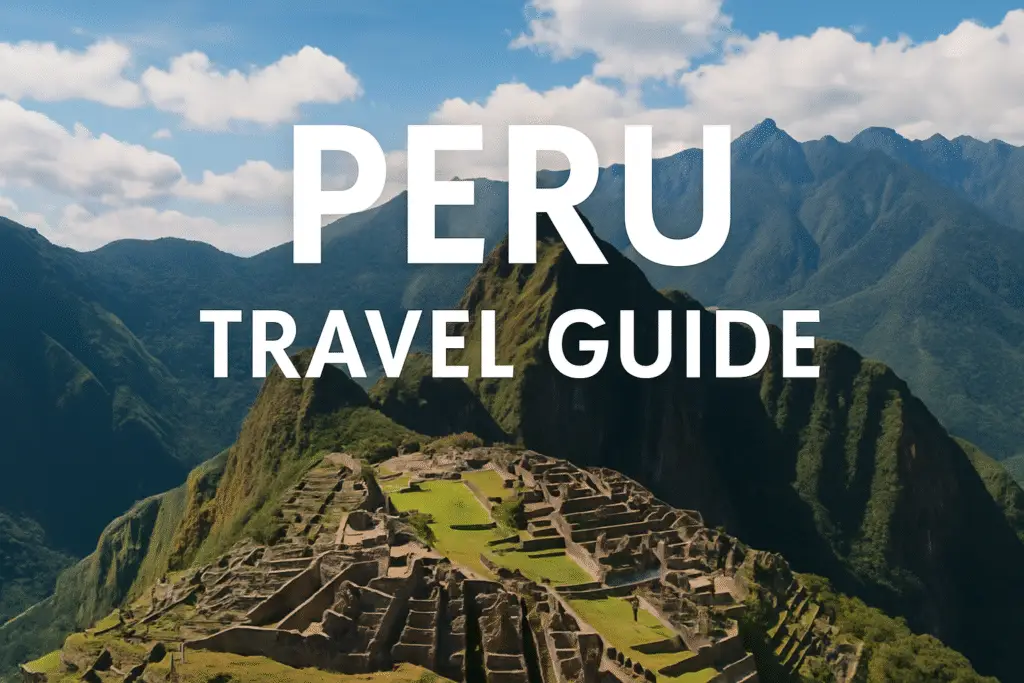
Mountains, Inca Empire, Rainforests, Ancient Civilizations, Coastline & Culture
1. Peru: A Land of Mysteries, Mountains, Empires and Sacred Landscapes
Peru is a country that feels timeless and mythical, a land where ancient civilizations left colossal marks on the landscape, where giant stone cities sit on mountaintops, and where the Andes mountains stretch like an immense spine across the nation. It is one of the world’s most fascinating travel destinations because it combines spectacular nature with deep cultural history, Indigenous traditions, vibrant cities, and ecosystems ranging from deserts to cloud forests to the Amazon rainforest. Peru is not merely a collection of sites — it is an experience that surrounds you with mystery, heritage, and landscapes that feel almost supernatural.
Travelers often imagine Peru as the home of Machu Picchu, but the country is so much more. It includes the Sacred Valley, the ancient capital of Cusco, the floating islands of Lake Titicaca, the Nazca Lines carved into the desert, the wildlife of the Amazon, the dramatic canyons of Arequipa, the Pacific coastline with endless beaches, and modern cities that balance history with innovation. Everywhere you go, Peru feels layered with stories, rituals, and symbols that link past and present.
Indigenous culture remains a fundamental part of daily life, especially in the highlands. Traditional clothing, language, weaving techniques, agriculture, and festivals continue to shape communities from Cusco to Puno. Quechua and Aymara influences appear in textiles, songs, dances, and even in everyday speech. Peru’s culture is vibrant and alive, preserving traditions that date back thousands of years.
From desert dunes to snow-capped peaks, from cloud forests to rainforest rivers, Peru is a country of contrast, power, and beauty. It is a place where every traveler feels a sense of discovery.
2. Lima — Peru’s Capital of Food, Culture, and Coastal Beauty
Lima is often the first stop for travelers, and while many only pass through, the city is one of South America’s cultural and culinary powerhouses. Sitting on dramatic cliffs above the Pacific Ocean, Lima combines colonial buildings, modern neighborhoods, archaeological sites, museums, and one of the world’s most admired food scenes.
2.1 Miraflores — Ocean Views & Modern Comfort
Miraflores is Lima’s most popular district for visitors, combining safety, good restaurants, green parks, and breathtaking views of the Pacific Ocean. The Malecón, a long coastal park stretching along cliffs, is ideal for walking, biking, watching paragliders launch from the cliffs, or relaxing with ocean breezes. Larcomar, a modern shopping complex carved into the cliffs, offers sunset views that paint the sky in warm colors.
2.2 Barranco — Artistic, Colorful, Bohemian
South of Miraflores lies Barranco, a district full of murals, colonial architecture, cafés, galleries, and bars. It is the cultural heart of Lima, known for its artistic energy, music, creative spaces, and street art. The Bajada de los Baños, a pedestrian path leading to the sea, is a favorite spot at sunset.
2.3 Lima’s Colonial Center — History and Architecture
The historic downtown features grand plazas, churches, and government buildings that reflect Peru’s colonial past. Highlights include:
- Plaza Mayor
- Government Palace
- Lima Cathedral
- San Francisco Monastery with its eerie catacombs
The architecture blends Spanish, Indigenous, and Moorish influences.
2.4 Lima: The Gastronomy Capital
Peru is one of the world’s top culinary destinations, and Lima is its gourmet center. Ceviche, the national dish made of fresh fish marinated in lime, is essential. Top restaurants like Central, Maido, and Astrid y Gastón are world-famous.
Peruvian cuisine blends Andean, Amazonian, coastal, Spanish, Chinese (chifa), and Japanese influences, creating flavors that are bold, intricate, and unforgettable.
3. The Sacred Valley — Ancient Cities, High Mountains & Agricultural Terraces
The Sacred Valley stretches between Cusco and Machu Picchu and is one of the most stunning regions in the Andes. Wide river valleys, terraced mountainsides, Indigenous villages, bustling markets, Inca ruins, and peaceful landscapes combine into one of the most culturally rich areas in the world.
3.1 Pisac — Ruins & Traditional Market
Pisac is known for its colorful market, where artisans sell handcrafted textiles, pottery, jewelry, and ceramics. The nearby Inca ruins sit high on a mountain ridge, with terraces cascading down the slopes and temples offering panoramic views of the valley.
3.2 Ollantaytambo — The Living Inca Town
Ollantaytambo is a place where the past is still alive. The town’s layout, canals, and stone foundations all date back to the Inca empire. Above the city rise monumental Inca terraces and a fortress that once served as a strategic defense point. The town is also the gateway for trains to Machu Picchu.
3.3 Moray & Maras Salt Mines
Moray is an archaeological site featuring circular agricultural terraces that may have served as experimental crop labs for the Incas, creating microclimates at each level. Nearby, the Maras salt mines consist of thousands of white salt pools cascading down a mountainside — a mesmerizing sight still harvested using ancient techniques.
4. Cusco — Heart of the Inca Empire & Gateway to the Andes
Cusco is one of the most beautiful cities in South America, blending Inca stonework with Spanish colonial architecture. Streets are lined with carved granite blocks fitted so precisely that not even a sheet of paper can slide between them. The city sits at 3,400 meters, requiring slow adjustment, but the altitude is worth it for the cultural richness.
4.1 Historic Center
Key attractions include:
- Plaza de Armas — the vibrant main square
- Cusco Cathedral — full of colonial art
- Qorikancha — once the most sacred Inca temple, later converted into a church
- San Blas neighborhood — narrow streets, artisans, beautiful viewpoints
4.2 Sacsayhuamán & Inca Engineering
Just outside the city stands Sacsayhuamán, a massive fortress of enormous stone blocks. Some weigh over 100 tons, yet they fit perfectly without mortar. The site offers sweeping views over Cusco and reveals the scale of Inca engineering.
4.3 Andean Culture & Daily Life
Cusco is filled with traditional festivals, music, colorful clothing, and Indigenous markets. It is the cultural heart of modern Peru.
5. Machu Picchu — The Lost City of the Incas
Machu Picchu is one of the world’s most iconic archaeological sites. Hidden high in a cloud forest at nearly 2,500 meters, this ancient city was unknown to outsiders until 1911. Its dramatic location, intricate stone architecture, agricultural terraces, temples, and sacred geometry make it an unforgettable place.
5.1 The Landscape
Steep mountains rise on all sides, covered in mist and lush vegetation. The Urubamba River winds far below. Sunrises illuminate the ruins with a soft golden glow, making the city appear almost mythical.
5.2 The City’s Mystery
Historians still debate its purpose:
- royal retreat
- ceremonial center
- astronomical observatory
- agricultural research site
Whatever its function, Machu Picchu showcases the spiritual vision and engineering brilliance of the Inca civilization.
5.3 Visiting Machu Picchu
Travelers can arrive by:
- train from Cusco or Ollantaytambo
- the famous Inca Trail
- the Salkantay Trek
- the Lares Route
- alternative jungle treks
Each offers a different way to experience the high Andes.
6. The Inca Trail — One of the World’s Greatest Treks
The Inca Trail is a four-day journey through high mountains, cloud forests, ruins, and breathtaking viewpoints. Hikers walk stone pathways built centuries ago. Each day reveals archaeological sites that become more dramatic as the trail approaches Machu Picchu.
The moment you arrive at the Sun Gate, seeing Machu Picchu from above for the first time, is one of Peru’s most unforgettable experiences.
7. Rainbow Mountain & Ausangate — Painted Peaks & High-Altitude Magic
South of Cusco lies Vinicunca, the Rainbow Mountain, famous for its rainbow-colored minerals layered across the slopes. The landscape looks unreal, almost like brushstrokes across a giant canvas.
Nearby, Ausangate Mountain rises over 6,300 meters and is considered sacred by the Quechua people. The surrounding trails, lakes, and valleys are some of the most magical in Peru.
8. Arequipa — The White City of Volcanoes
Arequipa is one of Peru’s most elegant cities, built from white volcanic stone and surrounded by towering volcanoes.
8.1 Historic Center
The city is filled with:
- colonial buildings
- monasteries
- leafy plazas
- elegant architecture
The Santa Catalina Monastery is a dazzling complex of colorful alleys and cloisters that feels like a small, peaceful village.
8.2 Volcano Views
The city sits beneath the shadow of El Misti, Chachani, and Pichu Pichu, creating a stunning skyline.
9. Colca Canyon — Condors, Terraces & Deep Valleys
Colca Canyon is one of the deepest canyons on Earth and home to the Andean condor, a massive bird that soars gracefully on morning thermals. Villages along the canyon preserve ancient agricultural terraces and Indigenous traditions.
Lake Titicaca, The Amazon, Nazca Lines, Northern Peru, Food, Wildlife, Itineraries & Final Conclusion
10. Lake Titicaca — Sacred Waters, Floating Islands & Andean Mythology
Lake Titicaca is one of the most spiritual, surreal, and culturally significant places in South America. Stretching across the border between Peru and Bolivia at an altitude of over 3,800 meters, it is the world’s highest navigable lake and holds deep mythological value for Andean civilizations. According to Inca legend, the first Inca rulers — Manco Cápac and Mama Ocllo — emerged from these waters to found the Inca Empire. As such, the lake is considered a sacred birthplace of culture and civilization.
10.1 Puno — Gateway to the Lake
Puno is the main city on the Peruvian side of Lake Titicaca. While the city itself is modest, it serves as a lively hub filled with folklore, festivals, markets, and restaurants serving traditional highland dishes. The energy here is colorful and musical, especially during major celebrations such as the Fiesta de la Candelaria, one of South America’s most extravagant cultural festivals.
10.2 Uros Floating Islands — Homes Built on Totora Reeds
One of the most unique cultural experiences in Peru is visiting the Uros Islands, floating man-made islands constructed entirely from totora reeds. The Uros people have lived this way for centuries, building their homes, boats, and walkways from the reeds that grow abundantly in shallow parts of the lake. Walking around feels soft and springy underfoot, almost like stepping onto a natural waterbed.
The Uros community preserves ancestral traditions such as reed-boat craftsmanship, weaving, and fishing, while also welcoming visitors to learn about their daily life and ancient heritage.
10.3 Taquile Island — Textiles and Tranquility
Taquile is known for its peaceful atmosphere, terraced hillsides, and UNESCO-recognized textile traditions. Men knit elaborately designed hats that represent their social status, while women weave belts and shawls using techniques passed down for generations. The island has no cars, little noise, and some of the clearest views of the blue lake stretching into the horizon.
10.4 Amantaní Island — Homestays & Andean Hospitality
Amantaní is famous for community-run homestays, where travelers stay with local families. Evenings often include cultural performances, traditional clothing, and shared meals. Watching the sunset from the temple peaks of Pachatata and Pachamama is an unforgettable moment, blending nature and spirituality.
11. The Peruvian Amazon — One of the Most Biodiverse Places in the World
Peru contains a massive portion of the Amazon rainforest. Unlike some other areas where access is difficult, Peru’s Amazon is divided into accessible regions offering deep wildlife immersion.
11.1 Puerto Maldonado & Tambopata National Reserve
Puerto Maldonado is one of the easiest gateways to the Amazon. From here, travelers reach jungle lodges along the Tambopata River, surrounded by rainforest bursting with life. Tambopata is considered one of the most biodiverse places on Earth.
Wildlife includes:
- macaws gathering at clay licks
- capybaras grazing along the riverbanks
- giant river otters
- caimans
- monkeys in the canopy
- jaguars (rare but possible)
- butterflies of every color
- thousands of bird species
Rainforest walks reveal towering trees, medicinal plants, and exotic insects. Canoe rides on oxbow lakes offer mirror-calm reflections and abundant wildlife sightings.
11.2 Iquitos — The Largest City in the World Without Road Access
Iquitos sits deep in the Amazon and is only reachable by plane or boat. The city is vibrant, chaotic, and culturally fascinating, with markets selling rainforest fruits, natural remedies, crafts, and exotic foods. From Iquitos, travelers explore the vast Pacaya-Samiria National Reserve, filled with flooded forests, pink river dolphins, and remote Indigenous communities.
This region offers some of the wildest and deepest Amazon experiences in Peru.
11.3 Indigenous Cultures of the Amazon
The Peruvian Amazon is home to dozens of Indigenous groups such as the Shipibo-Conibo, Asháninka, Boras, Yaguas, and Awajún. Each community has unique languages, artistic traditions, spiritual practices, and deep ecological knowledge. Many lodges collaborate directly with local communities, creating respectful and authentic cultural exchanges.
12. Nazca, Paracas & Peru’s Mysterious Desert Coast
South of Lima lies one of the most intriguing regions of Peru, blending deserts, sand dunes, marine sanctuaries, and ancient archaeological mysteries.
12.1 Nazca Lines — Enormous Drawings Hidden in the Desert
The Nazca Lines are giant geoglyphs carved into the desert floor over 1,500 years ago. Shapes include:
- a hummingbird
- a monkey
- a condor
- a spider
- geometric shapes and long lines
Their purpose remains unknown. Theories include astronomical calendars, water rituals, and spiritual messages to the gods. The best way to see them is by taking a small plane that flies in loops above the desert, offering aerial views of the iconic figures.
12.2 Paracas National Reserve — Desert Meets Ocean
Paracas is a stunning coastal desert where golden sand dunes meet deep blue ocean waters. The landscape feels dramatic, windswept, and otherworldly. Red Beach (Playa Roja), with its red volcanic sand meeting turquoise waves, is one of South America’s most unusual beaches.
12.3 Ballestas Islands — “The Poor Man’s Galápagos”
A short boat ride from Paracas brings travelers to the Ballestas Islands, home to:
- penguins
- sea lions
- pelicans
- boobies
- dolphins
The islands are rugged and loud, full of wildlife that resembles a miniature Galápagos ecosystem.
13. Northern Peru — Pyramids, Temples, Lost Civilizations & Pre-Inca Empires
While the south is dominated by Inca history, northern Peru is rich with much older civilizations such as the Moche, Chachapoya, and Chimú.
13.1 Trujillo — Home of the Moche Civilization
The region around Trujillo hosts two major archaeological wonders:
- Huaca del Sol and Huaca de la Luna — massive Moche pyramids decorated with murals of gods and warriors
- Chan Chan — the largest adobe city in the world, built by the Chimú Empire
These sites reveal sophisticated cultures that thrived centuries before the Incas.
13.2 Chiclayo — The Lord of Sipán
Chiclayo’s museums display treasures from the tomb of the Lord of Sipán, often compared to Tutankhamun for its importance. Gold ornaments, jewelry, ceramics, and textiles reveal the wealth and artistry of ancient Peru.
13.3 Chachapoyas & Kuelap — The “Machu Picchu of the North”
Kuelap is a massive fortress built by the Chachapoyas culture. Its stone walls rise dramatically above the cloud forest. Although lesser known than Machu Picchu, some travelers find it even more mystical due to its remote location and lack of crowds.
Nearby, Gocta Waterfall cascades over 700 meters into lush rainforest, one of the tallest waterfalls in the world.
14. Peruvian Cuisine — One of the World’s Great Food Cultures
Peru’s food scene is extraordinary. Every region contributes unique ingredients, traditions, and cooking methods.
14.1 Coastal & Lima Cuisine
- Ceviche — fresh fish cured in lime
- Tiradito — Japanese-Peruvian sashimi
- Chupe de camarones — shrimp soup
14.2 Andean Cuisine
- Cuy (guinea pig)
- Quinoa soups
- Pachamanca — meat and vegetables cooked underground with hot stones
- Chicha morada — purple corn drink
14.3 Amazonian Cuisine
- Juane — rice and meat steamed in leaves
- Paiche fish
- Plantain-based dishes
- Aguaje fruit, camu camu, cocona
Peru is a culinary paradise for travelers who love rich flavors and cultural diversity.
15. Wildlife of Peru — Andes, Amazon & Coast
15.1 Andean Wildlife
- llamas
- alpacas
- vicuñas
- Andean condors
- spectacled bears
15.2 Amazon Wildlife
- jaguars (rare)
- tapirs
- sloths
- pink dolphins
- monkeys
- macaws and parrots
- frogs, insects, butterflies
15.3 Marine Life
- whales
- dolphins
- Humboldt penguins
- sea lions
- sea turtles
Peru offers one of the widest biodiversity experiences in the world.
16. Best Time to Visit Peru
Cusco & Machu Picchu (Highlands)
Best: May–September (dry season)
Rainy: November–March
Lima & Coast
Best: December–April
Amazon
Best: July–November (drier)
Rainy: December–May
Arequipa/Colca Canyon
Best: April–October
17. Suggested Peru Itineraries
7 Days (Classic Highlights)
- Lima
- Cusco
- Sacred Valley
- Machu Picchu
12 Days (Mountains + Jungle)
- Lima
- Cusco
- Sacred Valley
- Machu Picchu
- Amazon Lodge (Tambopata or Iquitos)
18 Days (All Major Regions)
- Lima
- Paracas & Nazca
- Arequipa
- Colca Canyon
- Cusco
- Sacred Valley
- Machu Picchu
- Lake Titicaca
25 Days (Full Grand Tour)
- Coast
- Nazca
- Arequipa
- Cusco
- Valley
- Machu Picchu
- Ausangate area
- Amazon
- Northern Peru ruins
18. Why Peru Is a Bucket-List Destination
Peru is a country that blends the mystical and the natural with effortless beauty. It offers:
- mountain cities built from perfectly carved stones
- lost ruins suspended between clouds
- desert landscapes full of ancient symbols
- wildlife-filled jungles
- a coastline dotted with marine life
- one of the world’s most diverse food cultures
- Indigenous traditions alive in daily life
Every corner of the country reveals another world. Peru is not just a holiday. It is a deep journey into history, culture, nature, and human civilization — the kind of experience that stays with you forever.
 Related Articles
- Kakslauttanen Arctic Resort
- Top 10 Most Unique Places to Stay in Europe
- 10 Incredible Castles Around the World