
Suriname Travel Guide
Suriname is one of the most fascinating and culturally rich destinations in South America, yet it remains one of the least visited places on the continent, which makes it an incredible choice for travelers seeking nature, history, authenticity and deep cultural diversity. Suriname lies on the northeastern edge of South America between Guyana and French Guiana, with the Atlantic Ocean forming its northern border, and dense Amazon rainforest covering more than 90 percent of its landmass. Unlike most countries on the continent, Suriname has strong ties with the Caribbean, Europe and Asia, creating a mix of languages, religions and traditions that is difficult to find anywhere else. Travelers visiting Suriname often describe it as a peaceful, green, multicultural paradise where everyone lives side by side and nature feels endless.
The capital city Paramaribo, with its Dutch colonial wooden architecture, vibrant markets and riverside promenades, is a UNESCO World Heritage Site. Outside the capital you will find enormous rivers that function as highways into the interior, small villages belonging to Maroon communities descended from escaped enslaved Africans, Indigenous tribes that still live according to ancient Amazon principles, stunning wildlife in untouched jungle, and eco-lodges accessible only by boat or small plane. Suriname does not offer the typical South American iconic landmarks like Machu Picchu or Patagonia glaciers, but instead provides something far more rare: raw, quiet, and unspoiled landscapes combined with a cultural melting pot that feels both warm and completely unique.
Traveling through Suriname is different from most other places. The culture is relaxed, time moves slowly and people value connection, conversation and community. It is normal to arrive somewhere and immediately be offered food or a story. Travelers who embrace that slower rhythm often fall deeply in love with the country. Suriname is also extremely safe compared to many South American regions, with friendly locals who genuinely enjoy sharing their country with visitors. Although tourism is not as developed as in neighboring countries, infrastructure has improved, especially around Paramaribo. Roads are good in the coastal area and tours to the interior are well organized by local guides who know the landscape intimately.
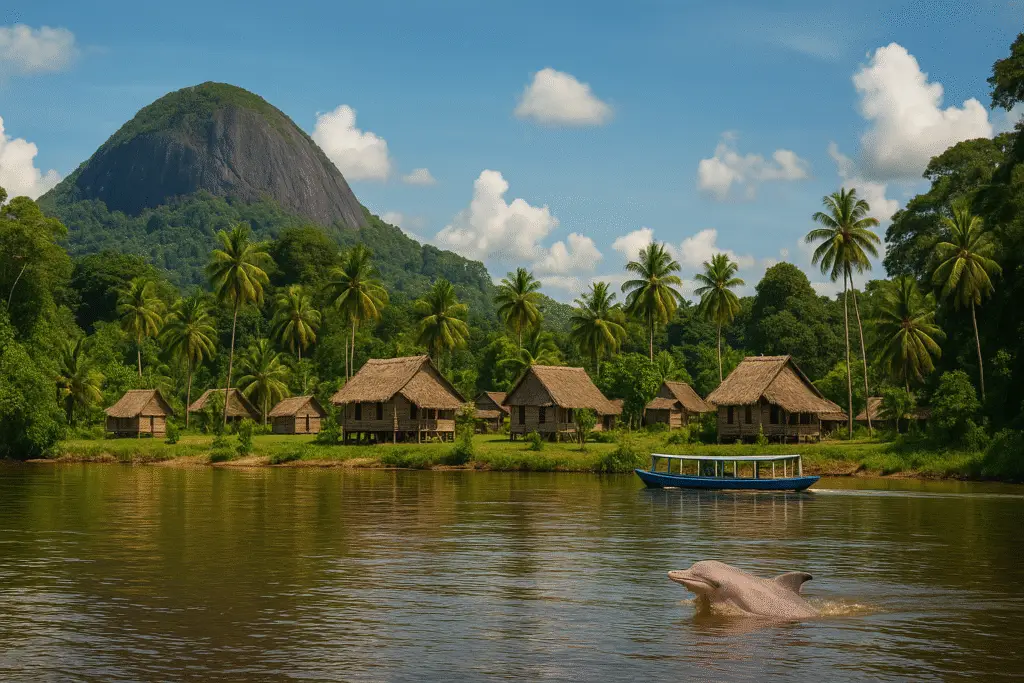
Suriname is also a paradise for biodiversity. Because most of the country is covered by rainforest, animals such as tapirs, giant river otters, jaguars, sloths, monkeys, giant anteaters, macaws and thousands of bird species roam freely. Rivers are so clean that dolphins come close to human settlements, and many lodges offer boat trips specifically to spot pink belly dolphins at sunset. With a warm tropical climate year-round and a relatively small population, the land feels spacious and natural, making it ideal for eco-tourism.
History and Cultural Heritage
The history of Suriname is complex and shaped by Indigenous civilizations, European colonization, African resistance, Asian migration and eventually independence in 1975. Long before Europeans arrived, several Indigenous groups lived in the region, including the Arawak and Carib peoples. They built settlements along the rivers and used the rainforest for hunting, fishing and agriculture. When the Dutch colonized Suriname in the 17th century, they established plantations that grew sugar, coffee and cocoa. Enslaved Africans were brought to work on these plantations under extremely harsh conditions, but many resisted by escaping into the jungle, where they formed Maroon communities. These Maroon groups, such as the Ndyuka, Saramaka and Paramaka, fought long battles for freedom and eventually developed independent societies deep within the rainforest.
After slavery was abolished in 1863, plantation owners brought workers from India (then British India), Java in Indonesia, and China to replace the labor force. These groups settled permanently in Suriname, creating a society where Hindus, Javanese Muslims, Chinese migrants, Dutch descendants, Afro-Surinamese, Maroons and Indigenous communities all live together. This cultural mixture is visible everywhere: in the food, the languages, the music, the religions and the festivals. Walking through Paramaribo, you may hear Dutch spoken next to Sranan Tongo, while Indian temples, mosques and wooden churches stand within meters of each other.
Suriname became an independent country from the Netherlands on November 25, 1975. Since then the country has experienced political challenges, military rule during the 1980s, economic fluctuations and migration waves, but the cultural harmony and natural beauty remain strong. Today, Suriname is a stable democracy with a society where diversity is normal and celebrated.
Paramaribo: A UNESCO World Heritage Capital
Paramaribo is unlike any other capital city. Instead of skyscrapers or concrete, the historic center is filled with tall wooden colonial buildings painted white with green shutters. The downtown area along the Suriname River is a UNESCO World Heritage Site because of its unique blend of Dutch architectural design and tropical adaptation. Many buildings date back to the 17th and 18th centuries and remain impressive despite their age. Strolling through Paramaribo feels like walking through an open-air museum mixed with lively Caribbean street life.
One of the most important landmarks is Fort Zeelandia, a fortress built by the Dutch during colonial times. It overlooks the river and today houses a museum. Nearby you’ll find Independence Square, the Presidential Palace and several government offices. The square is also a popular gathering place where people relax, eat snacks from food stalls or attend cultural events. The Waterkant, Paramaribo’s riverfront boulevard, is a favorite spot for sunset walks, cold drinks and trying local food such as baka bana, saoto soup or roti.
Religious diversity is immediately visible in Paramaribo. The Arya Dewaker Hindu temple is the largest in the Caribbean and features elegant towers and detailed carvings. The Keizerstraat Mosque, one of the most photographed buildings in the city, stands peacefully next to the Neveh Shalom Synagogue, symbolizing Suriname’s long history of religious harmony. In the Palmentuin, a palm tree garden behind the Presidential Palace, families and couples enjoy picnics and relaxation under the shade of hundreds of royal palms.
Markets are also a major part of the city. The Central Market offers everything from fresh fruit to spices and local snacks. The Javanese market in Blauwgrond is a food lover’s paradise where you can try Indonesian dishes such as nasi, bami and satay. Paramaribo is a city that rewards exploration slowly; if you take your time and talk to people, you’ll uncover stories and traditions that reflect its multicultural soul.
The Suriname River and Life on the Water
Rivers play a crucial role in Suriname’s landscape and daily life. Many communities live along rivers rather than roads, and boats serve as the main form of transportation, especially when traveling to the interior. The Suriname River flows right through the country from the Brokopondo Reservoir to Paramaribo, connecting villages, plantations, lodges and natural attractions.
Boat tours from Paramaribo often include dolphin spotting near the river mouth, where the Suriname River meets the Atlantic Ocean. Pink belly dolphins are common here, and at sunset they swim close to local fishing boats. Tours usually stop at small Javanese or Creole villages along the river for snacks or traditional dinners. More adventurous travelers can take multi-day journeys upriver into the rainforest, where life becomes quieter and nature takes over completely.
The Commewijne River, located just east of the capital, is another popular destination. This region was historically filled with plantations, many of which are now ruins overgrown by jungle. Visiting these former plantations offers insight into Suriname’s colonial past. One of the best-known places is Plantage Peperpot, where historic buildings have been restored and transformed into a nature reserve full of wildlife. Cycling through this area is a peaceful way to explore birds, monkeys and old architecture at the same time.
Nature and the Rainforest
Suriname’s interior is one of the world’s last untouched rainforest regions. Enormous green expanses stretch across the southern part of the country, forming part of the Amazon biome. This makes Suriname an extraordinary destination for eco-tourism, wildlife watching and remote adventure. Many areas are protected, including nature reserves and national parks accessible only by boat or small aircraft. Travelers seeking deep nature experiences often describe Suriname as more authentic and less commercial than destinations like Costa Rica or Peru.
One of the most iconic natural features is the Brokopondo Reservoir, also known as the Brokopondomeer. This massive lake was created in the 1960s when a hydroelectric dam flooded the area, leaving thousands of tree trunks sticking out of the water. While artificial, the lake has become an important recreational zone for fishing, boat trips and relaxation at small resorts along its shores.
Farther south, the Central Suriname Nature Reserve is a UNESCO World Heritage Site that protects enormous stretches of primary rainforest. Within this reserve you will find pristine rivers, mountain ranges, waterfalls and rare wildlife. The most famous attraction in the reserve is the Voltzberg, a granite dome rising sharply above the canopy. Climbing Voltzberg is one of Suriname’s signature adventure experiences. The nearby Raleighvallen waterfalls crash dramatically across rocks, creating natural pools where travelers can swim after long jungle hikes.
The Amazonian Interior and Remote Jungle Lodges
Traveling into Suriname’s interior is one of the most memorable experiences a traveler can have. Unlike many countries where you can drive to most tourist attractions, Suriname’s untouched rainforest requires a different kind of journey. You travel by boat, often on rivers that widen into calm glassy waterways or narrow into rushing channels. You sleep in jungle lodges that are surrounded by the sounds of birds, frogs, and rustling leaves, and you wake up to misty mornings where the sunlight slowly filters through the tall green canopy.
Many of the best-known jungle lodges—such as those along the Upper Suriname River—are owned or operated together with local Maroon communities. These lodges give you a chance not only to explore nature but also to learn about Maroon traditions, woodcarving, rituals, music, and daily life. Trips typically include guided hikes through the forest, boat rides, wildlife spotting, visits to local villages, and refreshing dips in the river, where natural rapids act as whirlpools and massage spots.
The Upper Suriname region is home to many Saramaka villages. These communities are descendants of Africans who escaped the plantations during slavery and built their own societies in the interior. Their history of resistance, survival and cultural preservation is one of the most powerful elements of Suriname’s identity. Visiting these villages gives travelers a rare insight into a culture that developed independently for centuries. Houses are often built on stilts, elaborately carved wooden panels decorate entrances and community spaces, and villagers share stories passed down through generations.
In many lodges you will also have the chance to hike through dense forest to find medicinal plants, discover giant trees towering hundreds of meters above, and visit jungle waterfalls. Guides often explain which plants are used for healing, cooking or spiritual traditions. Because of Suriname’s biodiversity, you may encounter colorful frogs, noisy howler monkeys, spider monkeys moving between branches, or even the tracks of jaguars. Night walks reveal a completely different world, where glowing insects, tarantulas and other nocturnal creatures dominate the forest floor.
Berg en Dal Nature Reserve and Adventure Resort
Berg en Dal is one of the most accessible rainforest destinations from Paramaribo, located about an hour and a half south of the city. The area combines eco-tourism, history and light adventure activities. Surrounded by thick forest on the banks of the Suriname River, Berg en Dal offers hiking trails, kayaking, mountain biking and ziplining. Because it is relatively close to the city, it is ideal for travelers who want to experience nature without committing to long boat trips or multi-day jungle expeditions.
The accommodations at Berg en Dal are built with natural materials and positioned in a way that blends into the environment. From your balcony you can sometimes see troops of monkeys moving through the trees or colorful birds flying past. The hiking trails are marked and vary from easy walks suitable for families to more adventurous routes that lead to viewpoints. Bartica Mountain is one of the popular climbs, rewarding hikers with open vistas over the endless forest.
Historically, this region was also a plantation area, and some of the old structures can still be seen along the riverbank. Learning about the plantation past while being surrounded by restored forests offers a powerful contrast and helps travelers understand the country’s complicated history.
Brownsberg Nature Park
Brownsberg Nature Park is another highlight for nature lovers, located in the Brokopondo district. The park sits on a plateau roughly 500 meters above sea level, which means the climate is slightly cooler and the views are spectacular. From various viewpoints—such as Mazaroni Top—you can look out over the vast Brokopondo Reservoir and the endless forest extending beyond it.
Brownsberg is especially known for its waterfalls, which require short or moderately challenging hikes through the jungle. One of the most popular is the Irene Falls, a refreshing spot with cold, clear water surrounded by mossy rocks. The trail to the waterfalls is alive with wildlife. Monkeys frequently swing overhead, and birdwatchers often come here specifically to spot rare species like the Guianan cock-of-the-rock or the screaming piha, whose call echoes through the forest.
The park is also home to mammals such as armadillos, anteaters and occasionally jaguars. Though spotting big cats is rare, their presence adds a sense of wilderness. Accommodation within the park is simple but located in beautiful natural surroundings, making it a peaceful area to spend a night or two surrounded by nothing but forest sounds.
Galibi Nature Reserve
For those who love marine life, Galibi Nature Reserve on the northeastern coast of Suriname is an essential destination. This protected area sits near the border with French Guiana and is accessible by boat from Albina. Galibi is most famous for being one of the most important nesting sites for sea turtles in the region.
From February to August, several species of turtles—including the leatherback, the largest turtle in the world—come ashore to lay their eggs on these beaches. Watching these huge animals crawl out of the water at night to bury their eggs in the sand is one of Suriname’s most magical wildlife experiences. Local guides carefully manage visits to protect the turtles, which adds an educational and conservation-focused element to the trip.
Galibi is also the homeland of the Indigenous Carib (Kari’na) people. A visit here allows travelers to learn more about their traditions, crafts and daily life. The communities depend heavily on fishing, and local meals often include freshly caught seafood prepared in traditional ways. The area is peaceful, with long sandy beaches, coconut trees and a calm atmosphere that feels worlds away from the busy city.
The Maroon Culture of Suriname
Maroon culture is one of the defining features of Suriname and sets it apart from other South American countries. Because Maroon communities developed independently for centuries, their traditions, music, art and language form a distinct cultural world. Many people visiting Suriname choose to explore the interior specifically to learn about the Maroon heritage.
Music plays a central role in daily life, often involving drums and call-and-response singing. Ceremonies, initiation rites and celebrations are deeply rooted in African traditions but have evolved in the rainforest environment. Women weave intricate pangi cloths with bright colors and patterns, while men excel at woodcarving, creating tools, boats and decorative objects with symbolic meanings.
Village life follows a rhythm shaped by the river and the forest. Early mornings start with fishing, bathing or washing clothes in the river. Afternoons are often dedicated to farming or craftwork. Visitors are usually welcomed warmly but must respect local customs, which vary from village to village. Many communities ask travelers to wear pangi wraps or modest clothing during village visits, remove hats, and follow simple etiquette rules that guides will explain.
Understanding Maroon culture adds depth to the Suriname experience, as it reflects a powerful history of resistance and adaptation. These communities preserved their autonomy despite efforts by colonial powers to suppress them, and today they remain one of the strongest cultural identities in the country.
Indigenous Heritage and Communities
Suriname’s Indigenous peoples have lived in the region for thousands of years, long before European colonization. They include groups such as the Arawak, Carib (Kari’na), Trio and Wayana. Each group has its own language, traditions and knowledge of the rainforest. Many Indigenous communities live in remote southern areas accessible only by small planes, using airstrips carved into the forest.
The Trio and Wayana people, in particular, maintain lifestyles closely connected to hunting, fishing and small-scale agriculture. Their traditional knowledge of plants, rivers and forest ecosystems is remarkable. Travelers visiting these communities often gain insight into natural medicine, traditional traps, fishing methods and spiritual beliefs connected to the natural world.
Some eco-tourism projects in Suriname work directly with Indigenous communities, giving them opportunities to share their culture while also generating income that helps protect their land and traditions. Visiting respectfully, listening to stories and supporting local artisans is a meaningful way to contribute to cultural preservation.
Wildlife of Suriname
Suriname’s wildlife is exceptionally diverse because the country’s rainforest has remained intact and sparsely populated. Animals here are not always easy to spot due to the density of the forest, but with patience and good guides you can encounter remarkable species.
Jaguars are the most iconic creatures, though sightings are rare. Other big mammals include pumas, tapirs, ocelots and giant anteaters. Primates are easier to see—howler monkeys, spider monkeys, capuchin monkeys and squirrel monkeys are common in many forested areas. Birdwatching is outstanding, with parrots, toucans, macaws, kingfishers, herons and hummingbirds appearing in great numbers. Some remote areas are home to harpy eagles, one of the world’s largest birds of prey.
Rivers hold caimans, giant river otters and various freshwater fish. In coastal waters, especially near the river mouth, the pink belly dolphins are one of Suriname’s favorite species. Travelers often take boat trips specifically to watch dolphins play around fishing boats at sunset.
Because much of Suriname remains wild and unspoiled, wildlife sightings can feel personal and authentic. Travelers who spend several days in the interior often return with stories of unexpected encounters—monkeys landing on rooftops, curious parrots watching from nearby branches, or giant otters swimming beside their boat.
Beaches and the Coastline
Though Suriname does not have the turquoise Caribbean beaches that many travelers expect in northern South America, the country still has a distinctive coastline worth exploring. Suriname’s coast consists mainly of mudflats, mangroves and wide river estuaries. This environment supports rich birdlife and is essential for the survival of endangered sea turtles.
Galibi is the most famous coastal destination for nature and turtle nesting, but other coastal regions also offer peaceful and remote environments. Braamspunt, near the mouth of the Suriname River, is popular for dolphin spotting and relaxed beach days. The area feels raw and natural, with shifting sands shaped by tides and river currents.
The simplicity of Suriname’s coastline often surprises visitors, especially those expecting resort-style beaches. Instead, what you find is quiet, wide spaces where nature dominates and human development is minimal.
Suriname’s Food Culture
Suriname’s cuisine is an unforgettable part of traveling through the country. Because Suriname is home to so many cultural groups—Hindustani, Javanese, Creole, Chinese, Maroon, Indigenous and Dutch—its food scene is one of the most diverse in the entire region. A single day in Paramaribo might include Javanese bami for breakfast, Creole pom for lunch, Hindustani roti for dinner and a Dutch dessert after. These influences blend into a colorful, flavorful mix that reflects centuries of cultural exchange.
One of the most iconic local dishes is roti, brought by immigrants from India. Surinamese roti is often served with curried chicken, potatoes, long beans and sometimes spicy pickles. Javanese cuisine is another cornerstone, with dishes like nasi goreng, bami goreng, satay with peanut sauce, saoto soup and fried plantains. In Paramaribo’s Blauwgrond neighborhood you’ll find many Javanese warungs—small eateries that prepare traditional food the same way it has been made for generations.
Creole cuisine brings rich, hearty recipes influenced by African heritage. Pom is a beloved dish made from grated pomtajer (a tropical root) mixed with chicken, spices and citrus, then baked until golden. Moksi meti—meaning “mixed meat”—is also popular, combining roasted pork, chicken, duck and spicy sauces. Afro-Surinamese dishes often carry the warmth of home cooking and the depth of flavors created over centuries.
Chinese influences appear in noodles, soups and stir-fried meals, while Dutch traditions bring baked goods, snacks and dairy-based treats. Snacks and street food are everywhere, from simple pastries and fried snacks to spicy bara, filled with chutney and crunchy edges. Fresh fish is common due to the country’s many rivers and coastal waters, and shrimp from the Atlantic waters near Suriname are considered some of the best in South America.
What makes Surinamese food special is not just taste but atmosphere. Meals are often shared between families, friends and neighbors, and it is easy for travelers to join in. People might offer you a homemade dish, invite you to try something new or explain the meaning behind certain recipes. Eating in Suriname becomes more than nourishment—it becomes a way of connecting with the culture.
Local Festivals and Holidays
Suriname’s multicultural identity is reflected in its festivals, which come from different religions and traditions. Because the population includes Christians, Hindus, Muslims, Jews, Indigenous groups and Maroon cultures, celebrations fill the calendar year-round. This makes the country a fascinating place for travelers who enjoy cultural immersion.
Phagwa, the Surinamese version of Holi, is one of the most colorful festivals in the country. People gather in open areas and throw colored powder at each other, celebrating the arrival of spring and the triumph of good over evil. Music, dancing and food make the day vibrant and full of joy. Chinese New Year lights up Paramaribo with fireworks, dragon dances and traditional performances. Eid al-Fitr and Eid al-Adha are celebrated widely in Javanese and Hindustani communities, with family gatherings, prayers and shared meals.
Christian holidays such as Christmas and Easter are celebrated with church services, feasts and family traditions that blend European customs with tropical elements. On Maroon Day, people honor the resilience and heritage of Suriname’s Maroon communities, often with cultural demonstrations, music, crafts and storytelling. Indigenous communities also celebrate traditional ceremonies related to harvests, spiritual beliefs and seasonal changes.
Because Suriname is small and tightly connected, festivals often bring the entire population together. Travelers visiting during these events experience a deep sense of unity and diversity that defines the country.
Exploring Former Plantations
One of the most historically meaningful parts of Suriname lies along the Commewijne and Suriname rivers, where many former plantations operated during the colonial period. Today, some of these plantations have been turned into museums, eco-resorts or preserved ruins that show both architectural beauty and painful history.
Plantage Peperpot is one of the most accessible and interesting sites. Located just across the river from Paramaribo, it has been transformed into a cultural heritage site and nature park. The area includes restored drying sheds, an old coffee factory and numerous wooden buildings surrounded by tropical greenery. Walking or cycling through Peperpot gives visitors a sense of what plantation life once looked like, while the surrounding forest teems with birds, monkeys and butterflies.
Frederiksdorp is another important plantation, carefully restored with charming cottages, gardens and a historical atmosphere. Some plantations along the Commewijne River still maintain original architecture such as sugar mills, colonial houses and old machinery. Visiting these sites can be emotionally complex, but they also provide essential context for understanding Suriname’s past and the roots of its cultural diversity.
Many tours include boat rides along the river, offering peaceful views and chances to see wildlife. Guides often share stories passed down through families, enriching the experience with personal history.
Adventure and Outdoor Activities
Suriname offers plenty of adventure for travelers seeking excitement in the outdoors. Because so much of the landscape is pure rainforest, activities revolve around nature and exploration rather than commercial attractions.
Hiking is one of the best ways to discover Suriname’s natural beauty. Trails vary from short walks in places like Brownsberg to multi-day treks through the interior. The climb to Voltzberg is a highlight for adventurous travelers, combining tough jungle hiking with an exposed granite summit that offers panoramic views over untouched rainforest. Other climbing options include the Tafelberg (Table Mountain) in the Sipaliwini district, a challenging expedition requiring experienced guides and several days of travel.
Kayaking and canoeing offer a peaceful yet exciting way to explore rivers. Paddling along the Suriname River or smaller tributaries lets you move silently through nature, which increases your chances of spotting animals. Swimming in natural rapids is also a favorite activity among locals and tourists. These rapids form small pools that act like natural jacuzzis.
Birdwatching is exceptional across the country. With more than 700 species identified, Suriname is one of the richest bird habitats in the region. The Bigi Pan wetland area near Nickerie is a paradise for bird enthusiasts, especially those hoping to see scarlet ibises, herons and countless migratory species.
Fishing is possible in many rivers and lakes, including the Brokopondo Reservoir. Some remote areas offer sportfishing trips where you can catch peacock bass and other freshwater species. Because Suriname’s interior is so unspoiled, even simple boat rides often feel like adventures.
Travel Practicalities: What You Need to Know
Suriname is a welcoming destination, but traveling here requires some preparation. Most visitors arrive by plane at Johan Adolf Pengel International Airport, located about 45 kilometers south of Paramaribo. Transportation to the city is usually arranged by taxi or pre-booked transfer. Renting a car is possible, though not always necessary if you plan to take tours.
The official language of Suriname is Dutch, a legacy of the colonial period, but many people also speak Sranan Tongo, a Creole language that serves as a unifying local tongue. Hindustani, Javanese and Indigenous languages are also common. Most people in Paramaribo speak enough English to help tourists, and hospitality is a strong cultural value.
The currency is the Surinamese Dollar (SRD). ATMs are available in Paramaribo but can be limited in rural areas, so travelers heading to the interior should bring cash. Credit cards are accepted in hotels and larger restaurants but not everywhere.
Suriname has a tropical climate with temperatures between 24°C and 32°C year-round. There are two rainy seasons—one from April to June and another shorter one from November to January. The dry seasons (February to April, and August to October) are the most convenient for jungle travel, though rain is always possible in the rainforest.
Electricity in Suriname is 127/220 V, depending on the region, with a mix of plug types. Travelers should bring a universal adapter.
Safety-wise, Suriname is considered one of the safest countries in South America. Petty theft can occur in busy areas, but violent crime affecting tourists is rare. The most important safety consideration is nature itself: follow guide instructions during jungle trips, bring insect repellent, wear proper hiking shoes and stay hydrated.
Accommodation in Suriname
Suriname offers a range of places to stay, though not as many as more tourism-heavy destinations. Paramaribo has the widest selection, from small guesthouses and boutique hotels to larger international-style properties. Many travelers choose guesthouses because they are family-run and offer a warm, personal atmosphere.
Eco-lodges are one of the highlights of staying in Suriname. These jungle accommodations are often built with local materials and positioned along beautiful riverbanks. While some offer comfortable beds, private bathrooms and meals included, others are more rustic with shared facilities. Staying in a jungle lodge often includes a full program of activities such as guided hikes, cultural visits and river excursions.
Along the coast and river areas near plantations, visitors will also find heritage lodges and peaceful rural accommodations. These stays allow travelers to immerse themselves in Suriname’s quiet countryside, surrounded by nature and friendly villagers.
Sustainability and Conservation
Suriname plays an important role in global environmental conservation because more than 90 percent of its territory is still covered in forest. The country has committed to protecting these ecosystems through sustainable forestry practices, national parks and Indigenous land rights. Tourism, when done responsibly, directly supports conservation by providing income for communities that protect natural areas.
Travelers can contribute by choosing eco-friendly lodges, respecting wildlife rules, minimizing waste and learning about local cultures. Many river-based lodges participate in reforestation or conservation projects, and visitors can often take part in educational activities.
Because Suriname’s rainforest is one of the last large untouched wilderness areas on Earth, responsible travel is crucial to preserving it for future generations.
Why Suriname Belongs on Every Traveler’s Bucket List
Suriname is a country that surprises nearly every visitor. It offers raw nature, endless rainforest, meaningful cultural encounters and a peaceful atmosphere that contrasts sharply with the fast pace of modern life. It is not a destination for mass tourism or easy luxury—but that is exactly what makes it special.
Travelers who appreciate authenticity, culture, biodiversity and adventure will find Suriname unforgettable. From turtle nesting experiences on remote beaches to climbing rainforest mountains, from learning Maroon history to exploring colonial wooden architecture, every part of Suriname tells a story. The country’s multicultural society adds layers of richness, making every meal, conversation and festival unique.
Suriname is not just a place to visit. It is a place to experience slowly, respectfully and with curiosity. For travelers seeking a travel destination unlike anywhere else, Suriname is one of the last hidden gems of South America—a world of rivers, jungle, history and humanity waiting to be explored.
 Related Articles
- Kakslauttanen Arctic Resort
- Top 10 Most Unique Places to Stay in Europe
- 10 Incredible Castles Around the World