
Exuma Islands – The Turquoise Heart of the Bahamas
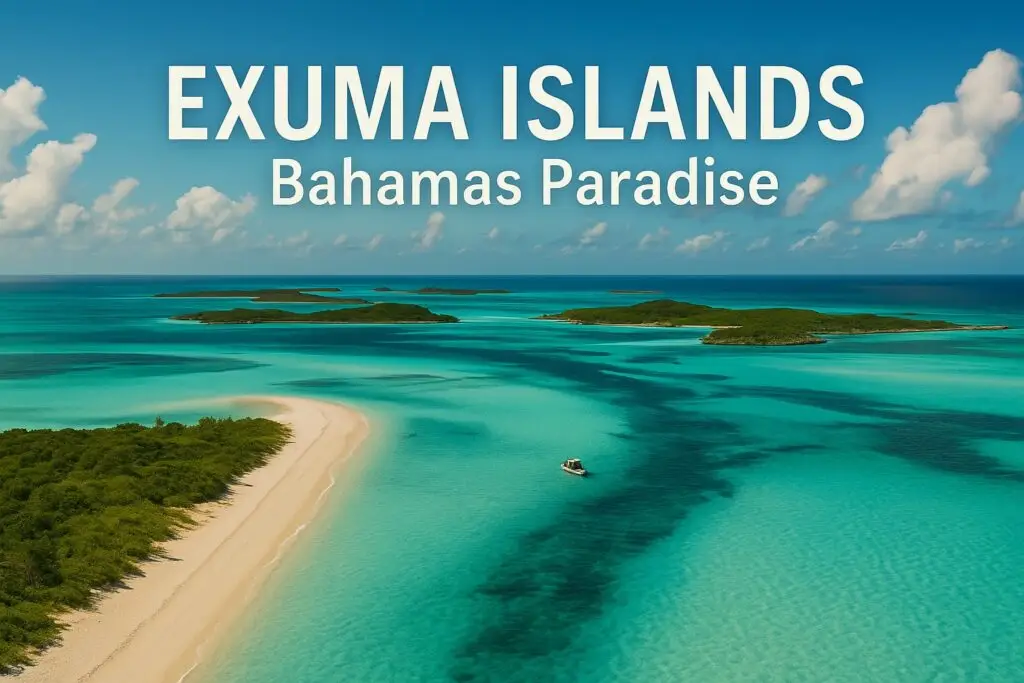
Exuma Islands Scattered like jewels across the southern Bahamas, the Exuma Islands form one of the most breathtaking archipelagos in the world. A chain of 365 cays — one for each day of the year — stretches like a ribbon through waters so luminous they seem lit from within. From pristine white-sand beaches and sapphire lagoons to coral reefs, mangrove channels, and secret sandbars, the Exumas are the living definition of paradise.
Yet beyond their postcard beauty lies a story of heritage, nature, and rhythm — of people shaped by the sea and of islands that whisper both history and freedom.
1. Geography and Landscape Exuma Islands
The Exumas sit in the central Bahamas, about 35 miles southeast of Nassau. The region is divided into:
- Great Exuma, the largest island and home to most of the population.
- Little Exuma, connected to Great Exuma by a bridge.
- The Exuma Cays, hundreds of smaller islands and sandbars stretching northward.
Each cay offers a unique personality. Some are wild and untouched; others host small villages or luxurious private homes. The color of the water changes constantly — from pale turquoise over sandbanks to deep indigo where the sea floor drops away. Aerial views reveal swirls of white sand beneath glass-clear water, a sight so surreal it feels painted.
The islands are composed primarily of limestone, shaped by wind and tide. Shallow coral reefs surround them, protecting their shores and providing some of the best snorkeling in the Caribbean.
2. A Glimpse into History Exuma Islands
Before Columbus’s arrival, the Exumas were inhabited by the Lucayan people, skilled navigators who lived from fishing and shellcraft. Spanish explorers enslaved or displaced them in the 1500s, leaving the islands empty for almost two centuries.
During the 17th and 18th centuries, pirates and privateers found refuge here. Hidden coves like Norman’s Cay and Hog Cay offered ideal shelter from British patrols. Legends of buried treasure still persist, and locals enjoy retelling stories of Captain Kidd and Blackbeard navigating these channels.
After the American Revolution, Loyalists fleeing the newly formed United States settled in the Bahamas with enslaved Africans. On Great and Little Exuma they attempted cotton plantations. The ruins of those estates — notably The Hermitage and Williams Town Plantation — remain among the most striking historical sites.
When slavery ended in 1834, freed Bahamians established fishing villages and developed salt ponds. Their descendants continue to live in small, tight-knit communities defined by hospitality and faith.
3. Great Exuma – The Cultural Heart Exuma Islands
Great Exuma is the largest island (about 37 miles long) and serves as the district’s administrative and cultural center.
George Town Exuma Islands
The capital, George Town, lies beside a calm natural harbor called Elizabeth Harbour. Its pastel houses, modest churches, and breezy waterfront cafés form a picture of Caribbean simplicity. Locals gather near the docks each morning to discuss weather and fishing while mail boats unload fresh supplies. Exuma Islands
Elizabeth Harbour is also a world-class yachting hub. Each spring, it hosts the George Town Cruising Regatta, a lively festival of sailboats, music, and friendly competition that transforms the bay into a sea of color.
Stocking Island
Across the harbor, Stocking Island is a paradise of sand dunes and mangroves. Trails wind through seagrape trees to secluded coves, and stingrays glide in the shallows at Chat ’N’ Chill, the famous beach bar accessible only by boat.
Southern Beaches
Further south lie some of the Bahamas’ most idyllic beaches:
- Tropic of Cancer Beach, where the latitude line crosses the island.
- Forbes Hill Beach, nearly always empty.
- Three Sisters Beach, framed by three rocky outcrops that legend links to love and loss.
Here, the sea changes hue every hour — turquoise in morning light, emerald by noon, sapphire at dusk.
4. Little Exuma – Quiet Grace
Little Exuma, connected to Great Exuma by a small bridge, feels remote and timeless. Narrow roads pass salt ponds, stone walls, and tiny villages like Williams Town and The Ferry. The ruins of Loyalist estates stand among palms and bougainvillea, their coral-limestone walls softened by centuries of sun.
The beaches here are among the most pristine in the Caribbean. Tropic of Cancer Beach continues onto Little Exuma — a ribbon of white sand so fine it squeaks underfoot. In the evenings, fishermen bring in fresh grouper and conch, and families gather along the shore to cook, sing, and tell stories. Exuma Islands
5. The Exuma Cays – A World of Islands
North of Great Exuma begins the Exuma Cays, a stretch of more than 200 small islands extending for 100 miles. It is one of the most stunning marine environments on the planet. Exuma Islands
Staniel Cay
The most famous cay is Staniel Cay, a friendly settlement surrounded by luminous shallows. Just offshore lies Big Major Cay, home of the world-famous swimming pigs — feral pigs that wade into the sea to greet passing boats. Though their origin remains a mystery, they’ve become the icons of Exuma, symbolizing its playful spirit. Exuma Islands
Nearby is the Thunderball Grotto, a dome-shaped sea cave featured in the James Bond film Thunderball. Snorkelers enter through underwater tunnels to find themselves surrounded by beams of light and colorful fish swirling in perfect silence.
Compass Cay and the Sharks
A short boat ride north brings visitors to Compass Cay, where friendly nurse sharks congregate around the marina. These gentle creatures glide through the water like living sculptures, and swimming among them is one of Exuma’s most memorable experiences.
The Exuma Cays Land and Sea Park
Further north, stretching from Shroud Cay to Bell Cay, lies the Exuma Cays Land and Sea Park — a 112,000-acre marine reserve established in 1958. It was the first park of its kind in the Caribbean and remains one of the most successful conservation efforts in the region. Fishing and shell collecting are prohibited, allowing coral reefs, sea turtles, and reef fish to thrive undisturbed.
Crystal-clear lagoons, underwater caves, and mangrove creeks shelter rare species such as the West Indian whistling duck and Exuma Island iguana. Rangers stationed on Wardrick Wells Cay monitor the ecosystem and welcome visitors arriving by yacht or dinghy.
Private and Hidden Cays Exuma Islands
Many cays are privately owned, including Musha Cay (owned by illusionist David Copperfield) and Halls Pond Cay. Yet dozens remain open for exploration: uninhabited islets where the only footprints are your own and the only sound is the rustle of palms.
6. Nature and Wildlife
The Exumas are a sanctuary for life both above and below the water.
- Marine Life: Coral reefs teem with parrotfish, angelfish, rays, and turtles. Dolphins often escort boats through channels, while sharks patrol deeper waters. In spring, migrating humpback whales pass through the Exuma Sound.
- Birds: Herons, egrets, ospreys, and pelicans abound. Offshore cays provide nesting grounds for seabirds like the tropicbird and sooty tern.
- Land Animals: The Exuma Island iguana, found mainly on Allen’s Cay, is one of the rarest reptiles in the world. Large, docile, and pink-hued, they bask in the sun and accept fruit from gentle visitors.
Mangrove wetlands and tidal flats act as nurseries for fish and as natural flood protection. The islands’ delicate ecology depends on clean water and respect from those who visit.
7. Culture and People Exuma Islands
The people of Exuma are known for warmth, humor, and storytelling. Most are descendants of Africans brought by Loyalists or of settlers from other Bahamian islands. Communities are small but tightly woven, with churches and schools forming their heart.
Music and Dance
The islands echo with rake-and-scrape music, created with goatskin drums, accordions, and saw blades played with metal files. It’s rhythmic, joyful, and impossible not to dance to. Every festival, wedding, or regatta ends with this sound.
Crafts and Traditions
Locals make straw baskets, shell jewelry, and wooden boats. Food is shared freely — cracked conch, peas and rice, guava duff, and johnnycake are staples. Evenings often end with laughter, storytelling, and domino games under the stars.
Religion and Festivals
Church life remains central. Sundays fill the air with gospel singing, and annual Homecoming Festivals draw families back from Nassau or abroad to celebrate their roots.
8. Nature’s Playground – Activities and Exploration Exuma Islands
While the Exumas embody peace, they also invite adventure.
- Snorkeling & Diving: Explore reefs, blue holes, and caves like Thunderball Grotto.
- Kayaking & Paddleboarding: Glide through mangrove creeks and shallow bays.
- Sailing: The Exuma Sound is legendary among sailors for its calm winds and dazzling visibility.
- Hiking: Trails on Stocking Island and Great Exuma lead to viewpoints overlooking endless blues.
- Wildlife Encounters: Meet the swimming pigs, feed iguanas, or visit the sharks at Compass Cay.
Each day here unfolds differently — no rush, no crowds, just the rhythm of tide and sky.
Book here a tour
9. Ecology and Conservation
The Bahamas National Trust oversees several conservation projects in the Exumas, protecting coral reefs and restoring mangroves damaged by hurricanes. Local initiatives also promote sustainable tourism and waste reduction.
The Exuma Cays Land and Sea Park is a model of marine protection worldwide. Researchers here study coral resilience and turtle migration, helping safeguard ecosystems that sustain both wildlife and local livelihoods.
Community groups educate residents about preserving seagrass beds and reducing plastic waste, ensuring the islands’ beauty endures for generations.
10. Climate and Seasons
Exuma enjoys a tropical maritime climate with sunshine year-round. Average temperatures range from 24–30°C (75–86°F).
- Dry Season: November to April, with clear skies and cool breezes.
- Wet Season: May to October, when warm rains feed the islands’ vegetation.
Hurricane season peaks between August and October, though direct hits are rare compared to other Caribbean regions.
The sea remains warm all year — around 27°C — making swimming and snorkeling possible every month.
11. How to Reach the Exumas
Great Exuma is accessible via the Exuma International Airport (GGT) near George Town, with regular flights from Nassau, Miami, and Atlanta. Smaller cays are reached by ferry, private boat, or seaplane.
Most transportation within the islands happens by water — locals navigate by sandbars and stars, as their ancestors once did.
12. The Spirit of Exuma
To understand Exuma is to understand the connection between people and sea. Life here flows with the tides — unhurried, radiant, free. Morning begins with fishermen casting nets in still lagoons; afternoon light shimmers through palm leaves; evening ends with laughter carried on the breeze.
Visitors often speak of a transformation — a slowing down that feels like healing. The simplicity of island life, the clarity of the water, and the kindness of its people leave an imprint long after departure.
The Exumas are not a destination to conquer or consume; they are a living rhythm to enter quietly and respectfully.
13. Final Reflection – A Paradise Beyond Imagination
From the turquoise shallows of Great Exuma to the wild serenity of the northern cays, the Exuma Islands embody the essence of the Bahamas: natural beauty, freedom, and light. They are a landscape painted in water and sky, where time drifts and the horizon never ends.
To stand on a deserted cay, feeling the breeze and the pulse of the sea, is to glimpse something eternal. Here, paradise is not a fantasy — it’s simply life as it was meant to be.