
 GREECE – Complete Country Guide (Geography, History & Culture)
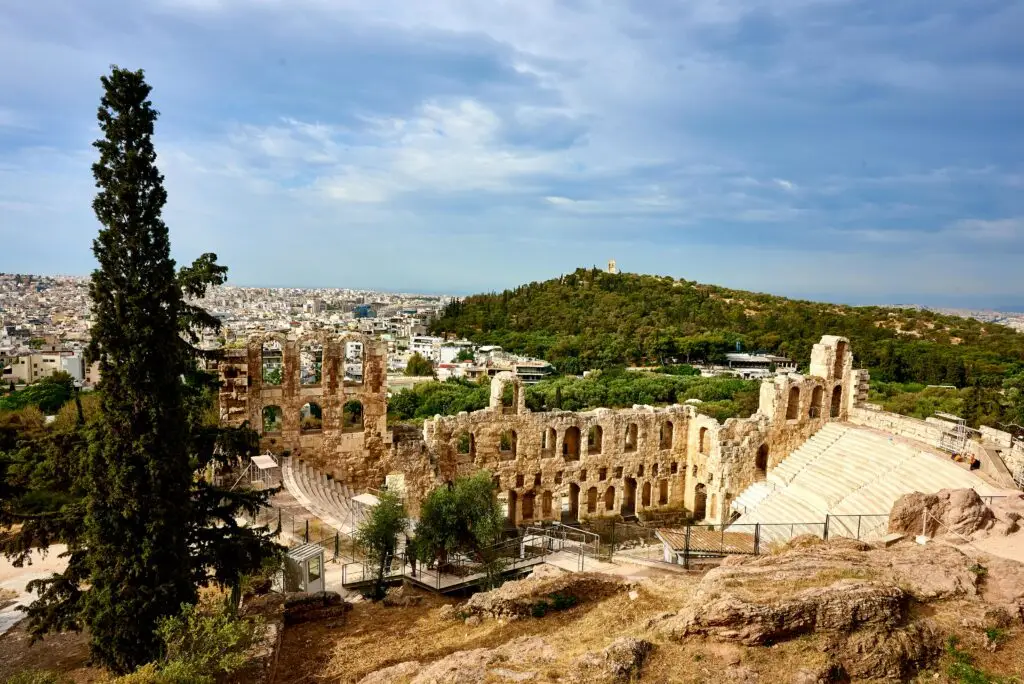
Greece is a land where myth and reality intertwine beneath endless blue skies and sun-soaked seas. It is a country that has shaped Western civilization for millennia and still dazzles visitors with its mosaic of islands, mountains, and vibrant culture. Stretching across the southeastern edge of Europe, Greece offers more than 6,000 islands scattered across the Aegean and Ionian Seas, each one a chapter of history, nature, and tradition. From the snow-capped peaks of Mount Olympus to the sun-bleached ruins of ancient Athens and the dazzling turquoise bays of Crete and Zakynthos, Greece is both a living museum and a paradise for travelers.
The Soul of Greece
To understand Greece is to feel its rhythm — the slow pace of island life, the scent of grilled octopus drifting from a seaside taverna, the laughter echoing through whitewashed alleys where time seems to pause at sunset. The Greek spirit, known as filoxenia (love of strangers), defines the nation’s character: a warmth and generosity that turn every visitor into a temporary friend. Here, hospitality is not a gesture — it’s a tradition rooted in thousands of years of history.
Greek culture is also a celebration of balance — between the old and the new, between mountain and sea, between spirituality and joy. It’s a country of contrasts: bustling cities and forgotten villages, cosmopolitan beaches and silent monasteries perched on cliffs. Every region offers a different perspective on what Greece truly is — an open-air gallery of life.
Geography and Landscape
Greece covers roughly 132,000 square kilometers and consists of both mainland and islands. Its geography is dramatically varied: rugged mountains, fertile plains, winding coastlines, and crystalline waters. Around 80% of the country is mountainous, making it one of the most mountainous nations in Europe. The Pindus Range forms the backbone of the mainland, stretching from Epirus in the north down toward the Peloponnese.
Between these mountains lie valleys filled with olive groves and citrus orchards, while the coastline — one of the longest in the world — extends more than 13,000 kilometers.
The islands, each with its own character, are divided into distinct groups:
- The Cyclades – famous for their whitewashed villages and blue domes.
- The Dodecanese – rich in medieval heritage and sunshine.
- The Ionian Islands – lush, green, and influenced by Italy.
- The Sporades – smaller and quieter, with pine-covered hills and clear waters.
- The North Aegean Islands – authentic, off the beaten path.
- Crete – the largest island, a world unto itself.Together, they offer endless diversity: volcanic beaches, ancient temples, hidden coves, and timeless fishing ports.
Climate and When to Visit
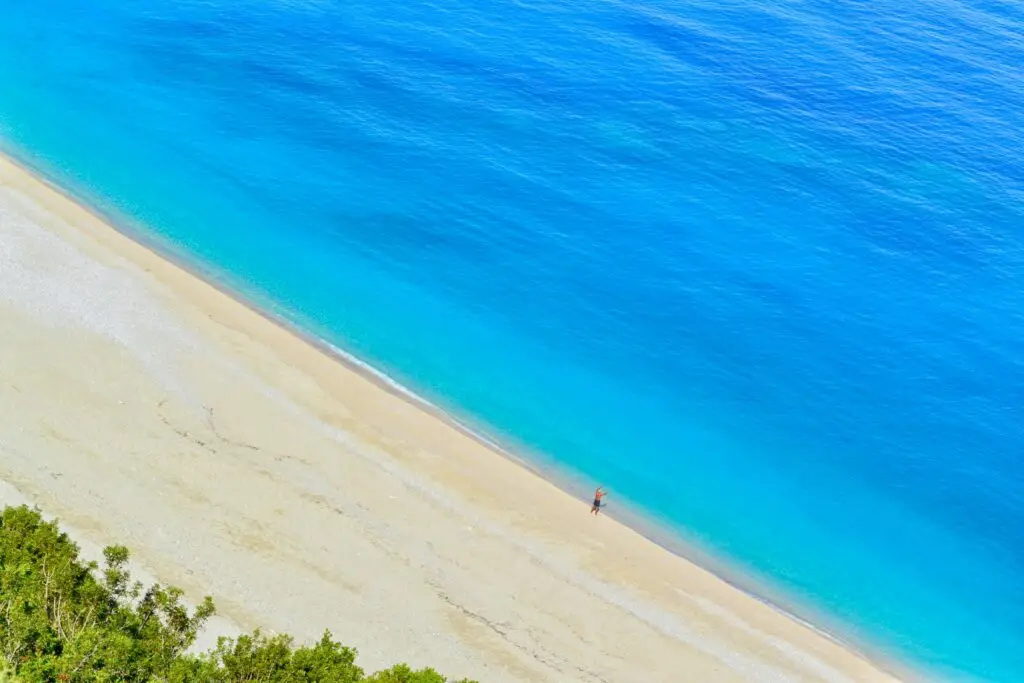
Greece enjoys a Mediterranean climate characterized by long, hot summers and mild, wet winters. July and August are the hottest months, perfect for beach lovers, while May, June, September, and early October bring ideal conditions for exploring and island-hopping. Spring transforms the countryside into a carpet of wildflowers, and autumn offers warm seas and fewer crowds.
In the north, especially around Macedonia and Epirus, winters can bring snow and cold winds — a completely different atmosphere from the sun-drenched islands. Ski resorts like Parnassos and Vasilitsa prove that Greece is also a winter destination.
A Journey Through Time: History of Greece
The story of Greece begins deep in antiquity. Archaeological evidence traces human settlement back more than 7,000 years, but it was during the Bronze Age that Greece’s first great civilizations arose — the Minoans on Crete and the Mycenaeans on the mainland. The Minoans, centered in Knossos, were Europe’s first advanced society, leaving behind palaces filled with vivid frescoes and complex architecture.
After their decline, the Mycenaeans took prominence, building citadels like Mycenae and Tiryns and inspiring the legends of Homer’s Iliad and Odyssey.
Classical Greece
The Classical period (5th–4th centuries BC) was the golden age of Greek civilization. City-states such as Athens, Sparta, and Corinth flourished independently yet shared a common language, religion, and cultural identity. Athens gave birth to democracy, philosophy, theater, and architecture that still shape Western thought today. The Parthenon on the Acropolis remains the symbol of that era — a temple to Athena and an enduring icon of perfection in design.
Philosophers like Socrates, Plato, and Aristotle questioned the nature of existence; playwrights like Sophocles and Euripides brought human emotion to the stage; sculptors and architects defined beauty and proportion. Meanwhile, Sparta embodied the spirit of discipline and military prowess that balanced Athenian intellect.
Hellenistic Greece
After Alexander the Great’s conquests in the 4th century BC, Greek culture spread across an empire that reached as far as India. The Hellenistic period blended Greek art, science, and philosophy with influences from Egypt, Persia, and the East, creating one of the most cosmopolitan ages in human history.
Cities like Alexandria in Egypt became centers of knowledge, while Greece itself continued to evolve — a crossroads between Europe and Asia.
Roman and Byzantine Eras
When Greece fell under Roman rule in the 2nd century BC, its culture deeply influenced Rome. Greek architects, teachers, and artists shaped Roman life; in return, Greece gained roads, theaters, and prosperity.
After the Roman Empire split, Greece became part of the Byzantine Empire, with Constantinople (modern Istanbul) as its heart. For more than a thousand years, Byzantine Greece flourished with Orthodox Christianity, golden mosaics, and fortified monasteries that still crown the mountains today.
Ottoman Rule and Independence
In 1453, Constantinople fell to the Ottomans, and Greece entered centuries of foreign rule. Yet Greek identity persisted — preserved through language, faith, and folklore. In 1821, inspired by Enlightenment ideals and centuries of resistance, the Greeks launched their War of Independence. By 1830, modern Greece was born, small at first but fiercely proud.
Since then, the country has endured wars, occupations, and economic challenges, yet its sense of identity — rooted in history, democracy, and resilience — remains unshaken.
People and Lifestyle
Greeks are known for their warmth, humor, and deep connection to community. Life here revolves around family, food, and conversation. Whether in a small island village or a modern Athens café, social interaction is central — people take time to connect, share, and celebrate.
Music, dance, and storytelling are the lifeblood of Greek culture. You’ll hear traditional bouzouki melodies in tavernas, see spontaneous dancing during festivals, and witness how every meal turns into a gathering.
Greeks also value balance — between work and leisure, urban life and nature. Afternoon siestas are common, and evenings often stretch late into the night, especially during summer when outdoor dining under the stars becomes a national ritual.
Language and Religion
The Greek language is one of the oldest living languages in the world, with a history of over 3,000 years. Modern Greek retains many elements of its ancient form, and even basic phrases like kaliméra (good morning) or efcharistó (thank you) connect visitors to that continuity.
The dominant religion is Greek Orthodox Christianity, followed by nearly 98% of the population. Its influence is visible everywhere — in tiny white chapels perched on cliffs, in Easter celebrations filled with candles and processions, and in the architecture of monasteries like Meteora and Mount Athos.
Greek Cuisine
Greek cuisine is simple, fresh, and deeply regional. Olive oil is its golden thread, connecting everything from salads to grilled meats and desserts.
Dishes vary from north to south: in Crete, you’ll find hearty mountain fare with herbs and honey; in the islands, seafood reigns supreme. Signature dishes include moussaka, souvlaki, spanakopita (spinach pie), and dolmades (stuffed vine leaves).
Meals are social occasions — slow, joyful, and generous. Dining in Greece means sharing plates, laughter, and sometimes spontaneous singing. Local wines, ouzo, and tsipouro flow freely, but always with a toast to life — Yamas!
Festivals and Traditions
Greece celebrates its past and present with endless festivals. Easter is the most important, marked by midnight fireworks and feasts. Summer brings music and theater festivals in ancient amphitheaters like Epidaurus.
On islands, village festivals (panigyria) fill the air with live music and dance, while in winter, carnival season (Apokries) transforms towns into colorful parades. Every region has its customs — from the naval parades of Hydra to the fire-jumping rites of northern Greece.
– Mainland Greece: Mountains, Ancient Ruins & Living History
Mainland Greece forms the geographical and cultural backbone of the nation. It is here that democracy was born, philosophers walked, and epic myths came to life beneath marble temples and jagged peaks. Away from the islands’ shimmering coasts, the mainland reveals another Greece — a landscape of snow-dusted mountains, deep gorges, fertile plains, and timeless villages where stone houses glow golden in the evening sun.
Athens & Attica – Where History Meets Modern Life
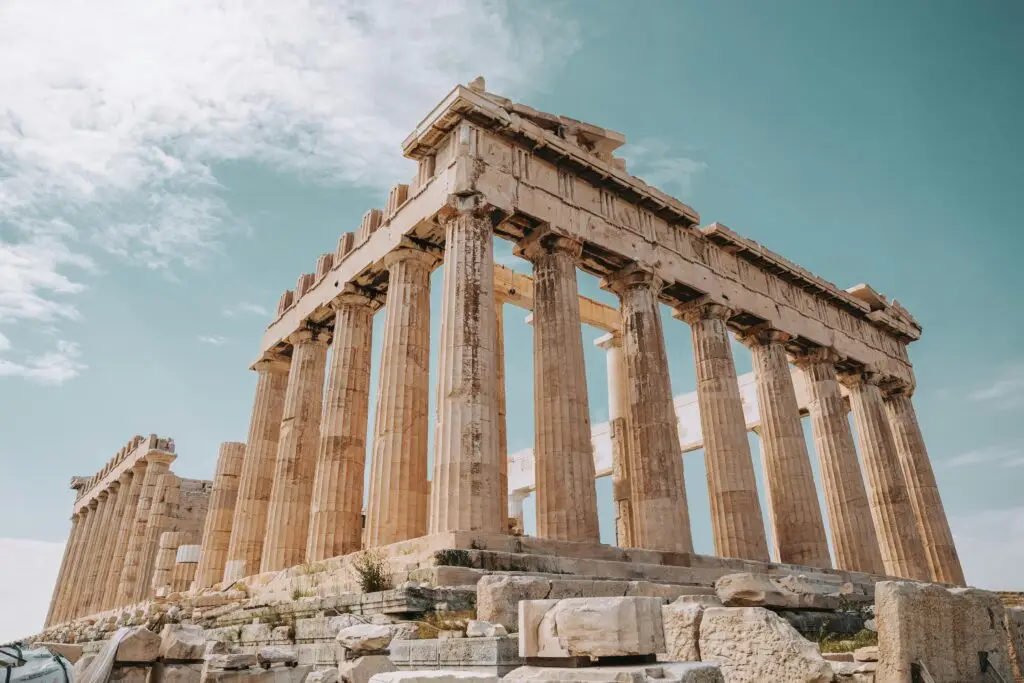
Athens, cradle of Western civilization, is a city that lives simultaneously in the past and present. The Acropolis rises above modern apartment blocks, a reminder that democracy, philosophy, and theatre were born on these hills. The Parthenon glows amber at sunset, while below it, neighborhoods like Plaka, Psyrri, and Monastiraki hum with cafés, art shops, and street musicians.
Beyond the ruins lies a living metropolis: rooftop bars with Acropolis views, contemporary art galleries in repurposed factories, and beaches along the Athenian Riviera stretching toward Cape Sounion, where the Temple of Poseidon overlooks the sea that defined Greece’s destiny. The peninsula of Attica blends urban energy with quiet beauty — vineyards in Spata, marble quarries in Penteli, and pine-covered hills in Hymettus that offer panoramic views across the city.
Peloponnese – The Heart of Ancient Legends
Cross the narrow Corinth Canal, and you enter a land where myth and history intertwine. The Peloponnese is shaped like a giant hand reaching into the sea, each “finger” home to a different story. Mycenae whispers the tales of Agamemnon, while Epidaurus still hosts performances in its 2,300-year-old theatre with perfect acoustics. Nafplio, the first capital of modern Greece, enchants with Venetian fortresses and pastel façades beside a sparkling bay.
Further south lies Mani, a region of tower houses and fierce independence, where rugged cliffs meet the deep blue of the Mediterranean. The Peloponnese also hides idyllic beaches such as Simos Beach on Elafonisos Island, as well as the archaeological wonders of Olympia, birthplace of the Olympic Games. In winter, its mountains transform into ski slopes around Kalavryta, proving that Greece’s heart beats in all seasons.
Delphi – The Navel of the World
High on the slopes of Mount Parnassus, Delphi was once considered the center of the ancient world. Pilgrims came from across the Mediterranean to consult the oracle of Apollo, whose cryptic prophecies shaped empires. Today, the ruins still breathe mystery: the Temple of Apollo, the theater, and the stadium overlooking a valley of silver-green olive trees rolling toward the Gulf of Corinth.
Delphi’s setting is one of the most dramatic in Greece — mountain air scented with pine, distant sea glimmers, and an aura of sacred calm. Nearby, the charming village of Arachova has evolved into a chic alpine retreat, with stone chalets, ski slopes, and traditional tavernas serving hearty stews and local cheese.
Meteora & Thessaly – Monasteries Among the Clouds
Few landscapes on Earth rival the surreal beauty of Meteora, where monasteries cling to vertical sandstone pillars that soar hundreds of meters above the plain of Thessaly. Built by monks seeking isolation and safety from invaders, these “monasteries in the sky” now form a UNESCO World Heritage Site. At sunrise, the rock spires glow gold and orange; at dusk, mist swirls like incense around the ancient walls.
The surrounding Thessalian Plain is one of Greece’s breadbaskets, dotted with small villages and the lively university city of Larissa. Toward the coast, the region opens to the Pelion Peninsula, a lush paradise of chestnut forests and hidden coves. Villages such as Makrinitsa and Tsagkarada preserve traditional stone architecture and panoramic Aegean views — a perfect blend of mountain coolness and seaside charm.
Epirus – Wild Nature & Stone Villages
Northwestern Greece is defined by wilderness. Epirus is a region of deep gorges, fast rivers, and high peaks, where bears and eagles still roam. The Vikos Gorge, one of the deepest in the world, cuts through the Pindus Mountains like a scar carved by time. Along its rim lie the Zagori villages, a cluster of 46 stone settlements connected by arched bridges and cobbled paths. Each village feels untouched by modern life: slate roofs, flower-filled courtyards, and inns serving mountain herbs and honey.
Epirus’s capital, Ioannina, rests beside a tranquil lake and tells stories of Ottoman pashas and silversmiths. Nearby, the ruins of Dodona, Greece’s oldest oracle, whisper through ancient oaks that once served as the medium of Zeus. Epirus invites hikers, rafters, and dreamers — a hidden gem where mist rises from the rivers each morning like ancient breath.
Macedonia – Land of Alexander the Great
Stretching north toward the Balkans, Macedonia is Greece’s largest region and a land of contrasts: cosmopolitan cities, fertile plains, and alpine peaks. Thessaloniki, its capital, is a vibrant blend of Byzantine, Ottoman, and modern architecture. The White Tower guards its waterfront promenade, while Roman arches and early-Christian mosaics remind visitors that the city has thrived for over two millennia.
Further west, the plains of Vergina conceal the royal tombs of ancient Macedonian kings, including that of Philip II, father of Alexander the Great. The region’s mountains — such as Mount Vermio and Mount Paiko — provide a cool escape in summer and snow in winter. Lakes Prespa and Ohrid form tranquil sanctuaries shared with Albania and North Macedonia, home to pelicans and monasteries reflected in still water.
Thrace – The Frontier of Cultures
In Greece’s far northeast lies Thrace, a crossroads of Europe and Asia where cultures merge. Here, Orthodox Christian churches stand near mosques, and ancient Greek theaters overlook Ottoman bridges. The capital, Xanthi, is famed for its colorful carnival and 19th-century mansions, while Komotini and Alexandroupoli pulse with youthful energy and seaside cafés.
Nature dominates Thrace’s borders: the Nestos River Delta teems with flamingos and wild horses, while the Rodopi Mountains hide waterfalls, beech forests, and remote villages where traditional bagpipe music still fills the air. Thrace remains one of the least-visited yet most fascinating parts of Greece — a region of authenticity and balance between East and West.
Mount Olympus – Home of the Gods
Towering above the Aegean coast, Mount Olympus is Greece’s highest peak and the mythical home of Zeus and his pantheon. Today, it is a National Park and a UNESCO Biosphere Reserve, attracting climbers, botanists, and pilgrims alike. Trails wind through beech forests and alpine meadows toward the summit of Mytikas (2,917 m), where clouds drift like ancient spirits.
At the mountain’s foot lies the village of Litochoro, the starting point for most hikes, and nearby the beaches of Pieria offer sea views framed by snow-capped peaks — a reminder that in Greece, mountain and ocean are never far apart.
Mainland Greece embodies the essence of contrast: ancient ruins beside modern life, mountains beside the sea, serenity beside energy. It is the land where heroes walked, philosophers debated, and villages still hum with the same rhythm that has echoed for thousands of years.
Crete: The Island of Legends, Mountains & Endless Blue
Crete is not merely an island — it is a world unto itself. The largest of Greece’s islands and the fifth largest in the Mediterranean, Crete stretches more than 260 kilometers from east to west, dividing the Aegean and Libyan Seas like a mountainous spine rising from deep blue waters. Its landscapes are dramatic and diverse: snow-capped peaks, olive-covered hills, palm-lined beaches, and fertile plateaus dotted with villages where time moves to the rhythm of cicadas and goat bells.
Crete’s story is both ancient and eternal. It was the birthplace of the Minoan civilization, Europe’s first advanced culture, and home to myths that still shape Greek imagination — from the Minotaur in the labyrinth of Knossos to Zeus’s birth in the Diktean Cave. Yet beyond myth and history, Crete remains a living, breathing land of proud people, where every meal, dance, and smile carries centuries of tradition.
Geography and Regions of Crete
Crete is divided into four main regional units — Chania, Rethymno, Heraklion, and Lassithi — each with its distinct landscapes and cultural flavor. The island is crossed by three mountain ranges — the White Mountains (Lefka Ori) in the west, Mount Ida (Psiloritis) in the center, and the Dikti Mountains in the east. Between them lie valleys, plateaus, and gorges that cut through the land like veins.
Chania – Western Crete’s Venetian Soul
The westernmost region of Crete, Chania, captures the island’s essence in a single glance. Its capital, also called Chania, is among Greece’s most beautiful towns: a blend of Venetian, Ottoman, and Greek architecture wrapped around a sparkling harbor. The old lighthouse, stone alleys, and pastel façades make it feel like a living postcard.
Beyond the city, Chania’s hinterland unfolds in breathtaking layers — the Samaria Gorge, one of Europe’s longest, cuts 16 kilometers through the White Mountains, where eagles soar and wild goats (kri-kri) leap across cliffs. At the gorge’s end, the tiny village of Agia Roumeli sits by the Libyan Sea, accessible only by boat or foot.
Chania’s coastline is legendary: Elafonissi Beach, with pink sand and turquoise shallows; Balos Lagoon, with its Caribbean hues and panoramic peninsula; and Falassarna, a vast bay framed by golden dunes. Inland, villages like Theriso and Vamos offer hospitality that feels timeless — olive oil tastings, raki distilleries, and evenings filled with Cretan lyra music.
Rethymno – Between Mountains and Sea
Rethymno lies between Chania and Heraklion, and though smaller, it radiates warmth and authenticity. The Old Town of Rethymno is a labyrinth of narrow alleys beneath Venetian balconies and Ottoman minarets, crowned by the massive Fortezza Fortress that guards the harbor.
South of the city, the landscape turns wild: gorges carved by rivers, ancient monasteries like Preveli, and palm beaches where freshwater streams meet the sea. The Amari Valley, shaded by Mount Psiloritis, hides small stone villages surrounded by orchards and windmills. Here, traditions are sacred — shepherds still make graviera cheese, women bake bread in wood-fired ovens, and village festivals continue through the night.
Heraklion – The Minoan Heart of Crete
In central Crete lies Heraklion, the island’s largest city and gateway to its Minoan past. The Palace of Knossos, just outside the city, was the ceremonial and political center of Europe’s first civilization. Its frescoes of dolphins, dancing women, and bulls bring to life a society that flourished around 2000 BC, long before Athens rose to glory. The nearby Heraklion Archaeological Museum houses one of the world’s most important collections of ancient art, including the mysterious Phaistos Disc and the Snake Goddess figurines.
But Heraklion is not just ancient stones — it is also modern Crete’s beating heart. The city bustles with cafés, markets, and seaside promenades. North of Heraklion, resorts line the coast, while to the south, the Messara Plain unfolds in a landscape of vineyards and olive groves. Inland, the Vorizia and Zaros areas lead into the foothills of Psiloritis, where hikers find silence among herbs and mountain springs.
Lassithi – The Eastern Secret
The easternmost region of Crete, Lassithi, feels more tranquil and remote. Its landscapes range from golden beaches to pine forests and rugged cliffs. The Lassithi Plateau, surrounded by windmills and fertile fields, is said to be the birthplace of Zeus himself. Beneath Mount Dikti lies the Diktean Cave, where the god of thunder was hidden from his father Cronus.
On the coast, Agios Nikolaos charms with its small lake, harbor, and artistic vibe, while Elounda and Plaka gaze across to Spinalonga Island, a Venetian fortress later used as a leper colony — now one of Crete’s most moving historical sites. In the far east, Vai Beach dazzles with its palm forest — Europe’s largest natural palm grove — where the golden sand meets turquoise water beneath whispering fronds.
Mountains and Nature
Crete’s mountains dominate its soul. The White Mountains, Psiloritis, and Dikti Range create a backbone that defines both climate and character. In spring, snow still glitters on their peaks while the coast basks in warmth. The Samaria Gorge is just one of many — Imbros, Aradena, and Richtis are equally stunning, filled with wild herbs, waterfalls, and ancient fig trees.
Flora and fauna here are unique. More than 1,700 plant species grow on Crete, many found nowhere else on Earth. Aromatic thyme, sage, and oregano scent the air, while the rare Cretan wild goat roams free among the cliffs. Beaches range from long, sandy stretches to hidden coves accessible only by boat or footpath. The southern coast, facing Africa, feels wilder and drier — dramatic, unspoiled, and sun-drenched even in winter.
Cretan Culture & People
Cretans are fiercely proud of their heritage, shaped by centuries of resistance and independence. From the Venetians to the Ottomans, Crete has been conquered many times but never subdued. This resilience shines through in local culture — in the fiery rhythms of Cretan music, in the hospitality that greets every traveler with raki and a smile, and in the traditions that still define village life.
Every celebration is an expression of freedom and community. Weddings last for days, festivals (panigyria) fill summer nights with dance, and even mourning is transformed into poetry through the mantinada, a form of improvised verse.
Cretan cuisine deserves special mention — not just for its flavor but for its philosophy. The island’s diet, based on olive oil, vegetables, grains, herbs, and moderate wine, is considered one of the healthiest in the world. Local dishes such as dakos (barley rusk topped with tomato and cheese), gamopilafo (wedding rice cooked in broth), and antikristo (lamb roasted facing the fire) reveal the deep connection between people, land, and food.
History and Mythology of Crete
Crete’s mythological roots run deep. According to legend, Zeus was born here, and King Minos ruled from Knossos, commissioning Daedalus to build a labyrinth to imprison the Minotaur. The myth of Icarus — who flew too close to the sun — also unfolds on these shores.
Yet Crete’s actual history is equally compelling: the rise and fall of the Minoan civilization, the Dorian invasions, Venetian rule, Ottoman occupation, and eventual union with Greece in 1913. The island’s towns bear these layers — Venetian fortresses in Rethymno, Ottoman mosques in Chania, and neoclassical mansions in Agios Nikolaos.
Crete was also central during World War II, where its people mounted fierce resistance against occupation forces — a testament to their unbreakable spirit.
Hidden Corners of Crete
Beyond the famous beaches and towns lies a Crete of unpaved roads and forgotten hamlets. The Sfakia region in the south remains rugged and authentic, while the Loutro village can only be reached by boat or footpath. In the mountains, shepherds still move their flocks to summer pastures, living in stone huts called mitata.
The Lasithi Plateau comes alive each spring when fields bloom, while the Agios Ioannis caves hide stalactites older than civilization itself. Even in winter, Crete offers warmth — literally and figuratively. Locals gather around wood stoves, sipping raki and telling stories that begin, “Once upon a time, on this island…”
Crete embodies Greece in miniature — a land of myth and mountain, olive and sea, passion and poetry. To visit Crete is to encounter the Greek soul in its purest form: strong, free, and eternal.
The Cyclades: Whitewashed Dreams in the Blue Aegean
Few places in the world capture the essence of summer quite like the Cyclades. Scattered across the heart of the Aegean Sea, this archipelago of over 200 islands glows like a necklace of pearls, each one uniquely shaped by wind, sea, and time. Their name, “Cyclades,” comes from the Greek word kyklos, meaning “circle,” as they were thought to encircle the sacred island of Delos, the mythological birthplace of Apollo and Artemis.
The Cyclades represent the classic image of Greece: whitewashed houses tumbling down cliffs, blue-domed churches gleaming against the sky, and donkeys climbing narrow paths under a blazing sun. Yet beyond the postcard views lies a diversity of landscapes and traditions — volcanic craters, marble quarries, vineyards, hidden coves, and villages where life still moves to the rhythm of the Aegean breeze.
A Sea of Light and Wind
The light in the Cyclades is legendary — crisp, bright, and pure. Painters, poets, and travelers have long described its ability to reveal every contour of the islands, from sun-bleached rocks to sapphire waters. The wind, known as the meltemi, blows in summer to cool the heat and fill the sails of ferries, creating the eternal soundtrack of the Greek islands: the whistle of wind through olive trees, the clatter of shutters, and the distant hum of cicadas.
The landscape alternates between barren hillsides and fertile valleys. Olive groves and vineyards cling to terraces carved into the slopes, while the sea wraps every island in a different shade of blue. From the volcanic cliffs of Santorini to the marble mountains of Paros, the Cyclades form a mosaic of beauty — a microcosm of the Greek spirit.
Santorini – The Icon of the Aegean
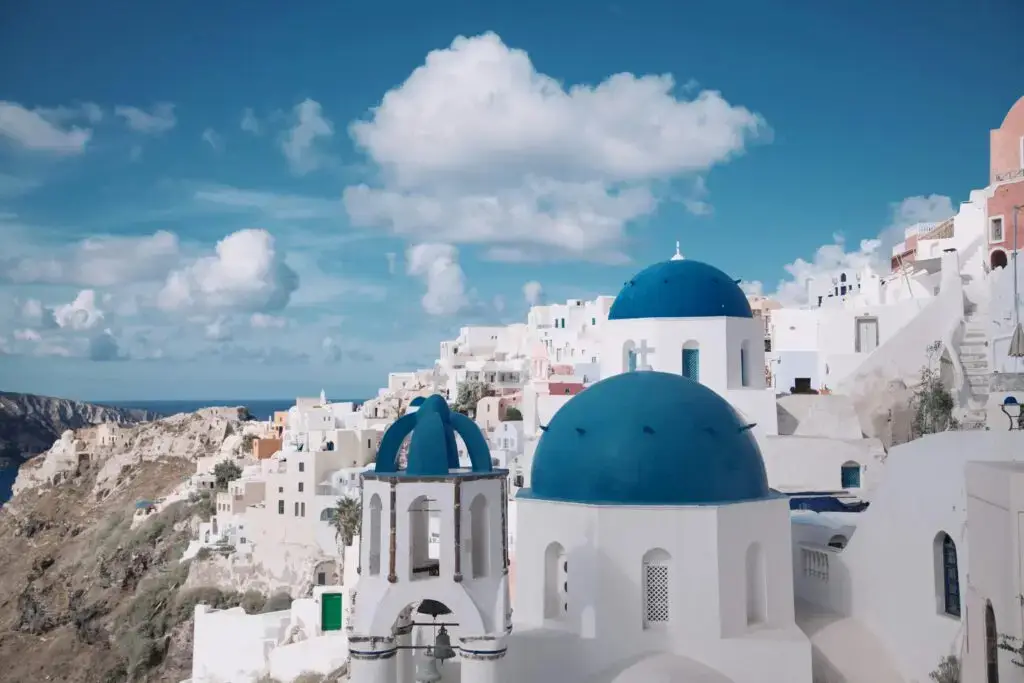
No island is as instantly recognizable as Santorini, the jewel of the Cyclades and one of the world’s most dramatic landscapes. Shaped by a volcanic eruption around 1600 BC, its crescent-shaped caldera cliffs rise nearly 300 meters above the sea, their whitewashed villages clinging to the edge like snow on a mountain.
Fira, the capital, cascades down terraces of houses, churches, and cafés overlooking the deep-blue crater. Nearby Oia is the island’s most famous village, where sunsets draw crowds in silent awe. But beyond the tourist trails, Santorini reveals quiet villages such as Pyrgos and Megalochori, ancient ruins at Akrotiri, and vineyards producing crisp Assyrtiko wine grown in volcanic soil.
The beaches are unique: Red Beach with crimson cliffs, Black Beach at Perissa, and White Beach, accessible only by boat. Santorini embodies both fire and peace — born of destruction yet eternally beautiful.
Mykonos – The Island of Wind and Freedom
If Santorini is dramatic and romantic, Mykonos is bold and celebratory. Known as “the island of the winds,” it is famous for its cosmopolitan energy, lively beaches, and charming old town. Chora, the main town, is a labyrinth of narrow white streets lined with boutiques, bougainvillea, and windmills that have become the island’s emblem.
Yet Mykonos also has a quieter side: remote chapels, small fishing harbors, and beaches that shimmer under the midday sun. Ano Mera, in the island’s interior, offers a glimpse of traditional Cycladic life, with the monastery of Panagia Tourliani standing as its spiritual heart.
Across the short channel lies Delos, once the spiritual and commercial center of the ancient Aegean. Walking among its ruins — temples, theaters, and mosaics — feels like traveling back to the dawn of civilization.
Naxos – The Green Giant of the Cyclades
Naxos is the largest and most fertile island in the Cyclades, a place of towering mountains, green valleys, and long beaches. It has both the agricultural richness of the mainland and the laid-back rhythm of island life.
The main town, Chora, welcomes visitors with the Portara, a massive marble doorway that is all that remains of an ancient temple to Apollo — standing as a timeless symbol against the sunset. Inland, Naxos hides villages like Halki and Apiranthos, where marble streets glisten and local cheese and citrus liqueur are made by hand.
The island’s interior is dominated by Mount Zas, the highest peak in the Cyclades and, according to myth, the childhood home of Zeus. From its summit, one can see the surrounding islands floating on the horizon like ships of stone.
Naxos is a place where travelers linger — not for nightlife or luxury, but for its authenticity and abundance.
Paros – The Island of Harmony
Often described as the “most balanced” of the Cyclades, Paros offers a perfect blend of natural beauty, history, and culture. Its white villages, golden beaches, and soft hills create a landscape that feels both calm and welcoming.
The capital, Parikia, is built around a Venetian castle and the Byzantine church of Panagia Ekatontapiliani — the “Church of a Hundred Doors.” On the north coast, Naoussa enchants with its harbor, where fishing boats bob beside stylish cafés and tavernas.
Paros’s marble, famous since antiquity, was used to sculpt masterpieces like the Venus de Milo. Today, it forms the backdrop for windsurfers at Golden Beach, artists in Lefkes, and ferry routes connecting Paros with its smaller sister island Antiparos, beloved for its caves and serene atmosphere.
Milos – The Island of Colors
Milos is a geological wonder — a volcanic island of vivid contrasts where beaches come in shades of white, pink, and red. It is both dramatic and intimate, a place where cliffs and coves tell stories written in stone.
The moonscape of Sarakiniko, carved by wind and sea into smooth white rock, feels almost lunar. Nearby, Kleftiko offers turquoise lagoons hidden among sea caves that once sheltered pirates. The fishing village of Klima features colorful houses built right on the water — syrmata — where fishermen stored their boats below and lived above.
Milos is also rich in history: it was here that the Venus de Milo was discovered, now displayed in the Louvre. Yet Milos remains quiet and soulful, a sanctuary for travelers who seek beauty without pretension.
Ios – Youthful Spirit and Ancient Soul
Ios dances between myth and modernity. Known for its vibrant nightlife and endless energy, it also holds deep historical roots as the alleged burial place of Homer. The main village, Chora, climbs up a hill of white cubes crowned by windmills and chapels. During the day, the island slows to a gentle rhythm — beaches like Mylopotas and Manganari stretch wide and golden, and small coves invite solitude.
Inland, shepherds still herd goats across the hills, and traditional music drifts from mountain tavernas. Ios is youthful, but not shallow — it captures the joy and light of the Cyclades with honesty.
Amorgos – Island of Mystery and Solitude
Remote and rugged, Amorgos rises steeply from the sea like a sleeping dragon. Its cliffs plunge dramatically into deep blue waters, and its villages seem suspended between sky and ocean. The island’s spiritual heart is the Monastery of Hozoviotissa, clinging to a sheer rock face 300 meters above the sea — one of the most breathtaking sights in Greece.
Amorgos gained fame from the film The Big Blue, and indeed, its waters seem almost otherworldly. Hiking paths crisscross the island, connecting ancient towers, terraces, and chapels. Life here follows the rhythms of wind and wave — slow, meditative, and eternal.
Other Cycladic Gems
- Syros – The administrative capital of the Cyclades, elegant and cultural. Ermoupoli is a neoclassical masterpiece with marble squares and opera houses that reflect Greece’s 19th-century grandeur.
- Tinos – The island of faith and artistry, home to the sacred Church of Panagia Evangelistria and marble-carving villages like Pyrgos.
- Folegandros – Tiny, wild, and poetic; a cliffside haven for those seeking serenity.
- Sifnos – Gourmet traditions and pottery; a balance of authenticity and refinement.
- Serifos & Kythnos – Quiet, unspoiled islands of crystal water and Cycladic charm.
- Andros – The greenest island of the group, known for hiking trails, mansions, and flowing streams.
Life in the Cyclades
Each island may be unique, but all share the same Aegean rhythm — mornings of light, afternoons of sea breeze, and evenings of laughter and meze. Festivals, often dedicated to saints, fill summer nights with dance and raki. Fishermen mend nets by the harbor as cats wait patiently for scraps; elders gather at cafés to play tavli (backgammon); children run barefoot through sunlit lanes.
The Cyclades teach simplicity — that happiness lies in salt on your skin, wind in your hair, and a table shared with friends.
The Cyclades are not just islands; they are a feeling — of clarity, joy, and lightness that stays with you long after you leave. They represent the very soul of Greece: resilient, radiant, and timeless.
The Dodecanese: Sun, History & the Eastern Breeze
At the southeastern edge of the Aegean Sea, close to the shores of Asia Minor, lies a constellation of islands where East and West embrace. The Dodecanese, meaning “twelve islands,” form one of Greece’s most sun-drenched and historically layered archipelagos. Here, medieval castles rise above turquoise bays, domes gleam beside minarets, and every harbor tells stories of conquerors, merchants, and saints.
The Dodecanese were once crossroads of civilizations – Greek, Roman, Byzantine, Crusader, and Ottoman – each leaving traces of architecture, cuisine, and spirit. Today, they blend cosmopolitan charm with authentic island life, welcoming travelers with warm winds that carry scents of jasmine and sea salt.
Rhodes – The Island of the Sun
The largest of the Dodecanese, Rhodes shines as its cultural and historical capital. Known since antiquity as “the Island of the Sun,” it was dedicated to Helios, the sun god, whose legendary bronze statue, the Colossus of Rhodes, once stood at the harbor entrance and ranked among the Seven Wonders of the Ancient World.
Modern Rhodes still glows with grandeur. The Medieval Old Town, a UNESCO World Heritage Site, is one of the best-preserved in Europe: a labyrinth of cobbled streets surrounded by massive walls built by the Knights of St. John in the 14th century. Walking along the Street of the Knights feels like stepping into another time, while the Palace of the Grand Masters crowns the city like a fortress of light.
Beyond the walls, the island unfolds in contrasts: Lindos, a white village nestled beneath an ancient acropolis; the forest of Butterflies Valley, alive with fluttering colors in summer; and the beaches of Tsambika and Anthony Quinn Bay, where the water shimmers with emerald clarity. In the north, modern Rhodes offers elegant cafés, museums, and a harbor bustling with life; in the south, the windswept cape of Prasonisi draws windsurfers from around the world.
Rhodes is a microcosm of the Greek spirit: ancient, cosmopolitan, and forever bathed in sunlight.
Kos – The Island of Hippocrates
Just to the north lies Kos, renowned since antiquity as the birthplace of Hippocrates, the father of medicine. Beneath its palm-lined boulevards and bustling cafés, history breathes quietly. The ancient Asklepion, set on a hillside above the town, was both a temple and a healing center where the sick were treated through ritual, nature, and prayer. Nearby stands the Plane Tree of Hippocrates, under whose branches he is said to have taught his students.
Kos Town blends ancient ruins and Italianate architecture from the 20th-century Dodecanese occupation period. The Castle of the Knights guards the harbor, while Roman mosaics, Byzantine churches, and Ottoman minarets testify to centuries of influence. Outside the capital, fertile plains burst with vineyards and citrus groves, while beaches like Tigaki and Paradise Bay stretch for kilometers.
Kos is a place of balance – between wellness and pleasure, antiquity and modern comfort, harbor life and hinterland tranquility.
Symi – A Neoclassical Dream
Tiny yet captivating, Symi feels like a painting brought to life. Its harbor, Gialos, is lined with rows of neoclassical mansions painted in pastel colors that reflect in the water like a kaleidoscope. Once a prosperous sponge-diving center, Symi still exudes old-world elegance and quiet sophistication.
Beyond the harbor, stone stairs lead to Chorio, the upper village that winds through alleys filled with fragrance from lemon trees and bougainvillea. At the island’s southern tip stands the monastery of Panormitis, dedicated to the Archangel Michael, a pilgrimage site for Greeks from across the Aegean. By night, the harbor shimmers with soft light as boats sway gently under the moon.
Symi is not an island for rushing; it invites you to slow down and breathe in beauty with every step.
Karpathos – Between Crete and Rhodes
Wild, rugged, and authentic, Karpathos lies between Crete and Rhodes, a mountainous island where tradition survives untouched. Villages such as Olympos are living museums of Greek heritage – women still wear embroidered costumes, bake bread in stone ovens, and speak a dialect rich in ancient words. The roads wind through pine forests and cliffs that fall dramatically to turquoise bays.
Karpathos’s coastline offers some of the most untouched beaches in the Aegean: Apella, with its emerald water and white pebbles; Kyra Panagia, a curve of golden sand beneath a chapel-capped hill; and Diakoftis, a hidden paradise reachable only by boat. Everywhere, mountain paths invite hiking through a landscape alive with aromatic herbs and the sound of goat bells.
Karpathos remains a place for the soul – simple, sincere, and wildly beautiful.
Patmos – The Sacred Island
Known as the “Jerusalem of the Aegean,” Patmos is the island of revelation and silence. It was here that St. John the Theologian is said to have written the Book of Revelation inside a cave that still glows with the candles of pilgrims. Above it, the Monastery of St. John rises like a fortress, its stone walls dominating the skyline of Chora.
The town itself is one of the most charming in Greece: a maze of whitewashed mansions, Byzantine chapels, and views that stretch to infinity. Yet Patmos is not only spiritual – its bays and beaches offer peace and clarity, its people welcome you with humility, and its rhythm is contemplative. The island reminds travelers that holiness can be found not only in churches, but in the silence between waves.
Leros – Island of Harbors and Stories
With its gentle bays and green hills, Leros offers tranquility and character. The main port, Lakki, was built in the 1930s by the Italians and still displays rare examples of Art Deco and rationalist architecture. Above it, a Byzantine castle crowns the hill of Panteli, overlooking the blue expanse.
Leros’s small scale makes it ideal for exploration: fishing villages, tiny beaches like Vromolithos and Blefoutis, and olive groves where time stands still. During World War II, it was the scene of fierce battles, and its bunkers now serve as museums of memory. Today, Leros is peaceful – an island of harbors, stories, and gentle light.
Kalymnos – The Climbers’ Island
Once famous for its sponge divers, Kalymnos has reinvented itself as one of the world’s top rock-climbing destinations. Sheer limestone cliffs rise above the Aegean, offering routes for adventurers from across the globe. The main town, Pothia, is a colorful amphitheater of houses wrapped around a harbor filled with boats and energy.
Inland, monasteries and caves hide among the rocks, and secluded bays like Emporios and Vathy offer moments of pure serenity. Kalymnos retains its working-class charm – a place where tradition meets adventure.
Astypalaia – Where the Dodecanese Meets the Cyclades
At the western edge of the Dodecanese lies Astypalaia, a butterfly-shaped island that forms a bridge between two worlds: the Cyclades and the Dodecanese. Its architecture mirrors the Cycladic style – white houses with blue doors – but its spirit is pure Dodecanese calm. The Chora climbs a hill to a castle crowned with windmills, and below it, the bays of Livadi and Maltezana shimmer in azure.
Astypalaia is a place for dreamers: quiet lanes, empty beaches, and a sky so full of stars that you understand why the ancients saw gods in the heavens.
Other Islands of the Dodecanese
- Tilos – A sanctuary for rare birds and gentle travelers, eco-friendly and peaceful.
- Nisyros – A volcanic island where you can walk inside a crater that still smokes with sulfur.
- Kastellorizo – Greece’s easternmost point, a tiny harbor of colorful houses floating on the sea.
- Chalki – A miniature paradise near Rhodes, beloved for its tranquility and honey-colored mansions.
Spirit of the Dodecanese
The Dodecanese islands share a distinct identity – sunny, cosmopolitan, yet grounded in deep tradition. Music here has an eastern flavor, cuisine is spiced with cinnamon and clove, and hospitality is lavish. Locals are proud of their heritage and their freedom; their dialects, songs, and customs reflect a millennia-old blend of Greek and Levantine influence.
Every summer, the archipelago becomes a chain of celebrations – sailboats drifting between islands, village fairs, and the endless sound of laughter carried by the sea breeze.
The Ionian Islands: Emerald Waters & Italian Charm
Where the deep blue of the Ionian Sea meets the emerald green of lush hillsides, a different face of Greece emerges — gentler, greener, and touched by centuries of Venetian grace. The Ionian Islands, strung like emeralds along Greece’s western coast, form an archipelago of contrasts: rugged cliffs plunging into turquoise coves, villages with red-tiled roofs and bell towers, and music that carries the lilting rhythm of Italian serenades.
Lying closer to Italy than to Athens, the Ionians developed a unique identity. For over 400 years they belonged to the Venetian Republic, which left behind an enduring legacy of architecture, cuisine, and art. Olive groves cover the hills, lemon trees scent the air, and the sea glows with every shade of blue.
Corfu – The Queen of the Ionian Sea
Graceful, aristocratic, and endlessly green, Corfu (Kerkyra) has long been the jewel of the Ionian Sea. Homer called it “a rich and beautiful land,” and centuries later it still holds that title.
The island’s capital, Corfu Town, is a UNESCO World Heritage Site — a labyrinth of cobblestone lanes, pastel facades, and arcaded streets reminiscent of Venice. The Old Fortress and New Fortress stand guard above the harbor, while the Liston Promenade, modeled after Paris’s Rue de Rivoli, invites evening strolls beneath flickering lanterns.
Corfu’s landscapes are pure poetry: the Achilleion Palace, built for Empress Elisabeth of Austria, sits amid gardens overlooking the sea; Paleokastritsa curves around sapphire bays framed by olive-clad cliffs; and mountain villages like Lakones reveal views that inspired generations of painters.
Yet beyond the grandeur lies warmth — tavernas serving baked sofrito and pastitsada, children playing under bougainvillea, and the sound of the kantades choirs echoing through the night. Corfu is both refined and real, a meeting of Europe’s elegance and Greece’s soul.
Zakynthos (Zante) – The Island of Smiles
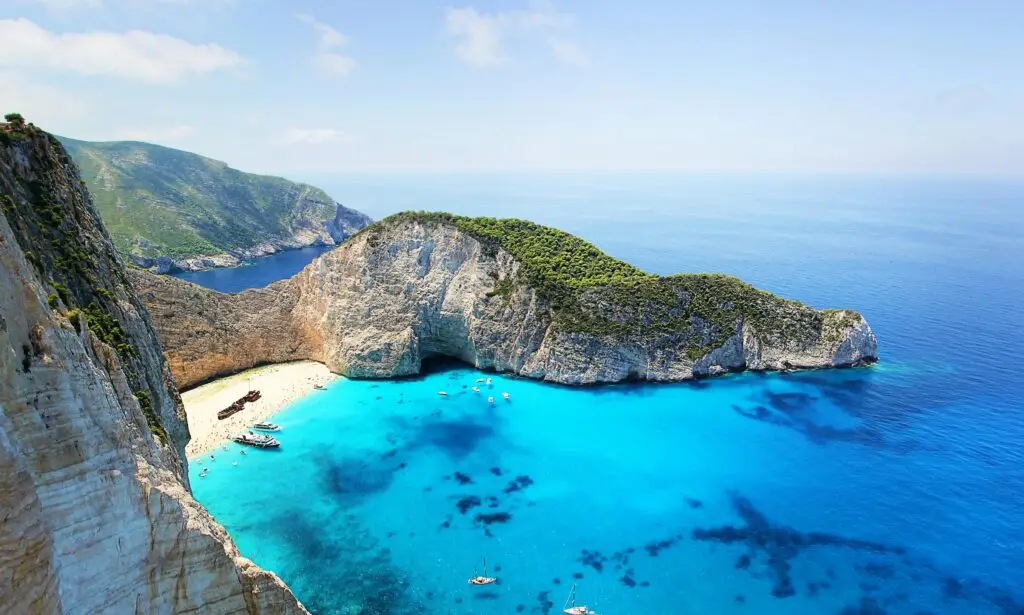
If Corfu is noble, Zakynthos is pure joy. Called “The Flower of the East” by the Venetians, it bursts with color — emerald hills, golden sands, and cobalt seas. Its most famous landmark, Navagio Beach (Shipwreck Bay), lies hidden between towering limestone cliffs where a rusted ship rests on white pebbles, surrounded by water so bright it seems lit from below.
But Zakynthos is more than its postcard. The southern coast shelters Caretta-caretta sea turtles that nest on the sands of Laganas and Kalamaki. In the west, sea caves shimmer with reflections of sky and stone. In the north, the Blue Caves carve luminous arches through solid rock.
The island’s capital, Zakynthos Town, rebuilt after the 1953 earthquake, still bears Venetian grace — bell towers, plazas, and music drifting from open windows. Here, festivals fill the streets with kantades songs and island humor; joy is Zakynthos’s natural language.
Read this blog
Kefalonia – The Majestic Island of Mountains and Myth
Kefalonia, largest of the Ionian Islands, rises from the sea like a sleeping giant. Mount Ainos dominates its skyline, cloaked in fir trees found nowhere else on Earth. From its slopes, the land tumbles toward white beaches and hidden coves that gleam like jewels.
The island’s character is dignified and resilient. After the devastating earthquake of 1953, Kefalonians rebuilt with determination and humor, preserving their famous hospitality. The capital, Argostoli, hums with harbor life; fishing boats unload morning catch beside cafés serving kefalonitiki meat pie.
To the north lies Assos, a storybook village on a tiny peninsula wrapped in turquoise water, and Fiskardo, where pastel houses and sailing boats recall old Venetian days. Nearby, Myrtos Beach unfolds beneath cliffs of pure marble — one of the most photographed places in Greece. Underground, the Melissani Cave Lake glows with sapphire light, a hidden wonder from myth.
Kefalonia is both rugged and refined — an island that rewards slow exploration and deep connection.
Lefkada – The Floating Island
Connected to the mainland by a narrow causeway, Lefkada feels both accessible and untouched. Its name means “white,” from the gleaming cliffs of its west coast where beaches like Porto Katsiki and Egremni drop steeply into aquamarine seas. Every curve of road reveals another panorama of impossible blues.
The capital, Lefkada Town, blends island ease with cosmopolitan flair; its wooden houses painted in bright colors reflect Venetian ingenuity designed to withstand earthquakes. Inland, mountain villages like Karya preserve weaving traditions and quiet authenticity, while the eastern bays shelter yachts among forested slopes.
Wind and water rule Lefkada — the lagoons shimmer with flamingos, and Vassiliki Bay is world-famous for windsurfing. When the evening light fades, the island glows silver, and waves whisper beneath the cliffs where the poet Sappho is said to have leapt for love.
Paxos & Antipaxos – Small Islands, Big Dreams
South of Corfu lie two tiny islands that seem to belong to another time. Paxos, barely 13 kilometers long, is a tapestry of olive groves and coves where water turns glassy green. Its harbor, Gaios, hums gently with yachts and fishing boats; nearby, Loggos and Lakka offer stone houses, sea-view tavernas, and sunsets that melt into gold.
A short boat ride away, Antipaxos is a paradise of transparency — beaches like Voutoumi and Vrika look like liquid light. There are no big hotels, no noise, only the rhythm of waves and cicadas. For many travelers, Paxos and Antipaxos represent the Greece of dreams — intimate, genuine, eternal.
Ithaca – The Home of Odysseus
Few places in Greece carry as much symbolic weight as Ithaca, the mythical homeland of Odysseus, the hero who longed to return after years of wandering. The island, small and mountainous, still feels like a place of return — quiet, introspective, full of echoes from Homer’s epic.
The capital, Vathy, sits in one of the world’s most sheltered bays, its red roofs mirrored in still water. From here, winding roads lead to viewpoints above Polis Bay and the ruins said to be Odysseus’s Palace. Fishing villages like Kioni and Stavros offer the calm of another era. Ithaca invites contemplation: hike its trails, listen to the wind in olive trees, and you’ll feel why even Odysseus’s heart never left.
Meganisi – A Hidden Haven
East of Lefkada lies Meganisi, a secret island of fjord-like bays and tiny hamlets. Its name means “big island,” ironically small but rich in natural beauty. The villages of Vathi, Spartochori, and Katomeri encircle tranquil harbors where locals still greet every visitor by name. Coves accessible only by boat invite solitary swims, and in the evenings, lights reflect on the water like floating stars. Meganisi is Greece in miniature — unhurried, authentic, and kind.
Spirit of the Ionian Islands
The Ionians share a gentler temperament than their Aegean cousins. Their music carries violins instead of bouzoukis; their cuisine favors herbs, wine, and slow-cooked stews. Life here has a melody — a mixture of laughter, rain, and sea breeze.
Architecture reveals Venetian order: bell towers, arcades, and colored shutters instead of Cycladic whiteness. Even the light is softer, filtered through olive leaves and morning mist. This is Greece seen through a painter’s brush — romantic, layered, endlessly inviting.
Nature and Inspiration
Across these islands, landscapes inspire myth and creativity. Writers from Homer to Durrell have found their muse among the Ionian waves. The water seems different — thicker, more reflective — and every sunset feels painted by hand. Seabirds skim the waves; dolphins follow ferries; the air smells of salt, pine, and citrus.
The Ionian Islands embody harmony — between culture and nature, past and present, the individual and the sea. They remind travelers that beauty can be both peaceful and profound.
The Sporades: Green Islands & Crystal Bays
Sailing east from the Greek mainland and north of Euboea, you enter a world of forests, hidden coves, and sapphire waters — the Sporades Islands. Unlike the arid Cyclades or rugged Dodecanese, the Sporades shimmer with greenery. Pine-covered hills descend directly into the sea, and the scent of resin and salt fills the air.
The archipelago’s name means “the scattered ones,” and it fits perfectly: each island stands apart in beauty and character. Skiathos, Skopelos, Alonissos, and Skyros form the main quartet, each offering a blend of traditional charm and natural purity. The Sporades are quieter than the more famous islands to the south, yet their authenticity makes them unforgettable — a refuge for travelers who seek simplicity, nature, and the sound of the waves instead of crowds.
Skiathos – The Gateway of the Sporades
Skiathos is the most accessible and lively of the Sporades, famous for its golden beaches and youthful spirit. Its coastline sparkles with more than 60 beaches, each one different: Koukounaries, framed by pines and dunes; Lalaria, accessible only by boat, with white cliffs that glow like marble; and Banana Beach, where music drifts over turquoise water.
The main town, Skiathos Town, is a cheerful blend of red-tiled roofs, cobbled lanes, and vibrant nightlife. Ferries, yachts, and fishing boats share its harbor, while the scent of grilled fish and jasmine fills the air. Above the town lie the ruins of the medieval Kastro, a clifftop citadel offering sweeping sea views.
Despite its popularity, Skiathos remains deeply Greek at heart. Walk just a few kilometers inland and you’ll find olive groves, monasteries like Evangelistria, and trails that reveal quiet chapels hidden among the pines.
Skopelos – The Island of Green and Blue
Sailing east from Skiathos brings you to Skopelos, often called “the green and blue island” because of its forests that plunge into crystal waters. It is greener, quieter, and more traditional — the essence of the Sporades’ natural soul.
Its main town, Skopelos Town, rises amphitheatrically from the sea — a tangle of white houses, flowered balconies, and winding steps leading up to Byzantine churches. The harbor hums gently with fishing boats, while above it, the Venetian castle watches over rooftops.
Skopelos gained fame as the filming location for Mamma Mia!, and the Agios Ioannis Chapel, perched on a rocky hill above the sea, is now one of Greece’s most iconic sights. Yet beyond that fame lies authenticity — locals tending vineyards, women weaving traditional lace, and tavernas where the day’s catch is served under olive trees.
Beaches like Stafilos, Panormos, and Kastani offer tranquil swimming in clear bays framed by pine forests. Skopelos is a place to breathe deeply and let time slow to the rhythm of cicadas.
Alonissos – The Marine Sanctuary
Further east lies Alonissos, the wildest and most serene of the Sporades. Its coastline is rugged and pristine, surrounded by the National Marine Park of the Northern Sporades, Greece’s largest protected marine area. Here, monk seals (Monachus monachus) — among the world’s rarest mammals — live undisturbed in sea caves, alongside dolphins and sea turtles.
The old hilltop village, Chora, offers views stretching across the Aegean, its narrow lanes lined with stone houses and terracotta roofs. After an earthquake in the 1960s, the village was lovingly restored and today feels timeless. The new harbor, Patitiri, hums quietly with tavernas, boats, and fishermen mending nets by hand.
Alonissos is ideal for hiking, diving, and meditation. Trails wind through pine forests scented with herbs, and small coves like Milia or Chrisi Milia offer translucent waters where the sea floor glimmers like glass. For travelers seeking peace and purity, Alonissos feels like a secret gift from nature.
Skyros – The Wild Southern Outlier
Farther south and slightly isolated from its northern sisters, Skyros stands alone — both geographically and in spirit. The island is divided into two contrasting halves: the fertile north, green with pine forests and olive trees; and the barren, dramatic south, carved by wind and rock.
The main town, also called Skyros, clings to a steep hill beneath a Venetian castle and the white-domed monastery of St. George. Narrow alleys twist between whitewashed houses, revealing workshops where artisans carve the island’s famous wooden furniture and paint its unique ceramics.
Skyros is also home to a rare breed of miniature horse, said to descend from the horses depicted on ancient friezes of the Parthenon. These small, graceful animals roam freely on the southern plains, a living link between myth and life.
Beaches like Molos and Atsitsa blend mountain and sea, while summer festivals fill the island with music and masks. Skyros is different — mysterious, proud, and profoundly Greek.
Nature and Rhythm of the Sporades
The Sporades are the green lungs of the Aegean. Pine, olive, and cypress cloak their hills, and their waters are among the clearest in Europe. The islands’ quiet rhythm feels almost therapeutic: mornings of golden light, afternoons of swimming and laughter, and evenings of starlight and song.
Fishing, farming, and seafaring remain central to life here. Locals harvest olives, honey, and wine much as their ancestors did. In small harbors, you’ll see wooden kaikia boats rocking gently beside cafés where time has no meaning.
Unlike other parts of Greece, the Sporades remain largely untouched by mass tourism. Their charm lies in their simplicity — no grand resorts, no noise, only authenticity. They are a reminder that true luxury is space, silence, and sea air.
Spirit of the Sporades
To travel through the Sporades is to experience serenity. These islands teach you to listen — to the whisper of the wind through pine needles, the call of seabirds over quiet coves, the laughter of friends over shared wine. Their landscapes, bathed in golden light, capture the harmony between mountain and sea that defines Greece itself.
The Sporades are less about seeing and more about feeling. They embody Greece’s tranquil side — timeless, green, and deeply peaceful.
The North Aegean Islands: Authentic, Quiet & Timeless
Far from the glamour of the Cyclades and the bustle of the Ionian, the North Aegean Islands whisper their beauty softly. These islands — Lesvos, Chios, Samos, Ikaria, Limnos, and Thassos — form a bridge between Europe and Asia, between myth and the everyday. Here, olive groves meet pine forests, monasteries sit high on hillsides, and fishing boats glide through harbors that seem unchanged for centuries.
The North Aegean offers travelers something rare in the modern world: authenticity. This is Greece without rush, where locals still greet each other in the street, and every village square feels like a gathering place for generations. It is also a land of poets, philosophers, and saints — of Sappho, Pythagoras, and Saint John — where ideas once flowed as freely as the olive oil that still sustains life here.
Lesvos (Mytilene) – The Island of Olive Trees and Poetry
Lesvos, known to the ancients as Mytilene, is one of Greece’s largest and most soulful islands. Draped in silvery olive groves and framed by volcanic hills, it’s an island of contrasts — vibrant cities, tranquil villages, hot springs, and endless beaches.
The capital, Mytilene Town, is a lively port crowned by a massive Byzantine castle. Its waterfront buzzes with life: fishing boats, cafés, students, and artists all moving to the same gentle rhythm. The city’s architecture blends neoclassical mansions, Ottoman relics, and modern energy.
Lesvos is also a land of poetry. The ancient poet Sappho, one of the world’s first lyric voices, was born here, and her spirit still lingers in the light and language of the island. In the village of Eressos, her birthplace, travelers find long beaches and a creative atmosphere that has made it a haven for artists and writers.
The island’s interior is green and fertile. Villages like Agiassos cling to the slopes of Mount Olympus (not to be confused with the Macedonian peak), surrounded by chestnut forests. In Molyvos, cobbled lanes wind beneath a medieval castle to a harbor of tavernas and fishing boats — one of the most picturesque settings in Greece.
Lesvos is also known for its ouzo, distilled in copper stills and served with meze by the sea, and for its petrified forest — a surreal landscape of fossilized trees dating back 20 million years. It is a place where time feels vast yet comforting, where the sun seems to set a little slower every day.
Chios – The Island of Mastiha and Mansions
Just south of Lesvos lies Chios, an island unlike any other. Its landscapes are shaped by the mastic tree, a species that grows only here and produces mastiha, a resin prized since antiquity for its aroma and healing properties. The southern part of the island, known as Mastichochoria (“mastic villages”), is a living museum of medieval architecture.
Villages like Pyrgi are covered in geometric black-and-white patterns called xysta, decorating every wall with intricate designs. Mesta and Olympoi, fortified villages built to resist pirate raids, preserve a maze of stone alleys and arches that transport you to the 14th century.
Chios Town, the capital, combines modern life with history — Venetian fortresses, Ottoman mosques, and neoclassical mansions line the waterfront. The island’s north is wild and mountainous, with monasteries like Nea Moni, a UNESCO World Heritage Site famed for its glittering Byzantine mosaics.
Chios also has one of the richest maritime histories in Greece; many Greek shipping families trace their roots here. It’s a place of flavor, fragrance, and resilience — where life smells of citrus blossoms, sea spray, and mastic tears.
Samos – Island of Pythagoras and Sweet Wine
Across a narrow strait from the Turkish coast lies Samos, where mythology and mathematics intertwine. It was here that the philosopher Pythagoras was born — the man who turned numbers into philosophy — and where the goddess Hera was worshipped in her grand sanctuary, the Heraion of Samos, one of the largest temples of the ancient world.
Samos is lush and fertile, covered in vineyards that produce Greece’s most famous sweet wine, Samos Muscat. The island’s green valleys, high mountains, and crystal shores make it a paradise for hikers and swimmers alike. The capital, Vathy, curves gracefully around a deep bay, its pastel houses climbing the hillside. Further south, Pythagoreio stands on the ruins of the ancient city, blending antiquity with a modern marina.
Beyond the beaches and ruins, Samos radiates harmony — olive groves rustling in the breeze, monasteries hidden in forests, and locals welcoming travelers with a smile and a glass of amber wine. Few places blend intellect and beauty as effortlessly as Samos.
Ikaria – The Island Where Time Slows Down
Ikaria defies explanation. Named after Icarus, the mythical youth who flew too close to the sun, it seems to exist outside of time. The island’s people are famous for their longevity — many live past a hundred — and scientists have studied its “Blue Zone” lifestyle to uncover the secret: strong community, good food, natural rhythm, and minimal stress.
The landscape is wild and dramatic, with steep mountains, hidden valleys, and remote beaches like Seychelles — a cove of white rocks and turquoise water that feels untouched by the world. Villages like Christos Raches follow their own schedule — literally. Shops may open late at night, and festivals can last until dawn.
Ikaria’s panigyria (village feasts) are legendary: locals gather under plane trees, share food and wine, play violins, and dance in circles that can last for hours. Here, joy is not a luxury — it’s a way of life. To visit Ikaria is to be reminded of what truly matters: connection, laughter, and time measured not by clocks but by the heart.
Limnos (Lemnos) – The Island of Wind and Wheat
Wind-swept and earthy, Limnos lies in the northern Aegean, where rolling plains meet volcanic hills. Unlike many Greek islands, Limnos is largely agricultural — a land of wheat fields, vineyards, and gentle bays. The island’s main town, Myrina, is crowned by a medieval castle that overlooks two sandy beaches and a picturesque harbor lined with colorful boats.
Limnos’s interior hides villages untouched by tourism, like Kaspakas and Kontias, with stone houses and quiet squares. Ancient sites such as Poliochni, one of Europe’s oldest settlements, and Hephaistia, dedicated to the god of fire, reveal its deep roots in prehistory.
Limnos also has some of Greece’s best-kept natural secrets: Ammothines, the island’s miniature desert of golden dunes, and Alyki Lagoon, where flamingos gather each spring. It is a place of soft winds, simple meals, and unhurried hospitality.
Thassos – The Emerald of the North
Closest to the mainland, Thassos is a mountain rising from the sea, blanketed in pine and marble. Known as the “Emerald Island,” it combines the freshness of northern Greece with the spirit of the Aegean. The capital, Limenas, mixes ancient ruins and modern charm — marble temples beside harbor cafés.
The island’s perimeter road winds past endless beaches: Golden Beach, Paradise Beach, Aliki, and countless unnamed coves where pine trees nearly touch the water. Inland, traditional villages like Panagia and Theologos preserve Macedonian-style houses and local crafts.
Thassos’s marble, famous since antiquity, still gleams in ancient quarries, and its honey — amber, thick, and perfumed with mountain thyme — is among the best in Greece. For many, Thassos is the perfect balance: easy to reach, yet still serene and authentically Greek.
Spirit of the North Aegean Islands
The North Aegean Islands are a reminder of Greece’s depth and diversity. They are less about glamour and more about grace — places where daily life unfolds slowly, rooted in earth, sea, and tradition. Olive oil here tastes stronger, music feels older, and the sea seems calmer.
Travelers who venture here find something rare: not escape, but belonging. These islands do not rush to impress; instead, they reveal their beauty gradually, like a story told by the fire over a glass of ouzo. In their silence lies Greece’s truest song.
The Mountains, Nature & National Parks of Greece
Beneath Greece’s image of whitewashed islands and endless beaches lies another landscape — wild, green, and profoundly ancient. Nearly 80% of the country is mountainous, making Greece one of the most topographically diverse nations in Europe. Its mountains are not just geographic features but sacred spaces, woven into myth and memory. They are the realms of gods and heroes, of shepherds and monks, of forests, rivers, and stone villages clinging to cliffs.
From the snowy peaks of Olympus to the gorges of Epirus and the forests of Macedonia, Greece’s nature speaks in whispers and roars — wind in pines, water tumbling through canyons, and eagles circling over deep-blue lakes. Each region offers something unique, yet all share the same essence: raw beauty shaped by time, sun, and story.
Mount Olympus – Throne of the Gods
Rising to 2,917 meters above the Aegean coast, Mount Olympus is Greece’s highest and most iconic mountain. In ancient mythology, it was home to Zeus and his pantheon of gods, who watched over mortals from its mist-shrouded peaks. Today, it remains a place of awe — not only for climbers but for anyone who feels the pull of the divine in nature.
Designated Greece’s first National Park in 1938 and later a UNESCO Biosphere Reserve, Olympus is a paradise of biodiversity. More than 1,700 plant species flourish here, including alpine flowers found nowhere else on Earth. Its slopes are home to deer, chamois, and golden eagles. Trails lead through dense forests of beech and fir to alpine meadows and rocky ridges where clouds gather like veils.
The most famous ascent begins in Litochoro, a charming town at the mountain’s base. From there, hikers can follow the E4 European Path through the Enipeas Gorge, past waterfalls and monasteries, to the Refuge A, the gateway to the summit. Reaching Mytikas, the highest peak, rewards travelers not only with views across the Aegean but with a sense of timeless connection — to myth, to nature, to the essence of Greece itself.
The Pindus Mountains – The Spine of Greece
Stretching from northern Macedonia down to the Peloponnese, the Pindus Range is often called “the spine of Greece.” This vast, untamed landscape is a mosaic of peaks, gorges, and rivers that carve deep scars through stone. It is a world of shepherds and eagles, where villages perch on ridges and monasteries cling to cliffs.
Vikos Gorge and Zagori
At the heart of the Pindus lies Vikos Gorge, one of the deepest canyons in the world, slicing through limestone like a wound of beauty. Its vertical walls rise nearly 1,000 meters above the Voidomatis River, whose crystal waters shimmer turquoise beneath the cliffs. The gorge forms the centerpiece of the Vikos–Aoös National Park, a sanctuary of wildlife including bears, wolves, and rare orchids.
The surrounding Zagori region is a treasure of stone villages connected by arched bridges and cobbled paths. Each village — Papingo, Monodendri, Kapesovo, and others — preserves traditional slate-roofed architecture. The bridges, like Kokkoros and Plakidas, are feats of craftsmanship, arching gracefully over wild rivers. Hiking here feels like stepping into an old folk tale.
Metsovo and Aoös Lake
Further south, Metsovo sits amid peaks and fir forests — a mountain town famous for its cheese, wine, and woodcarving traditions. Nearby, the artificial Aoös Lake glistens like a sapphire in the wilderness, reflecting pine-covered hills and snow peaks. Herds of sheep graze the high meadows, bells echoing through the mist. This is pastoral Greece at its most serene.
The Taygetos Range – The Soul of the Peloponnese
In southern Greece, the Taygetos Mountains dominate the Peloponnese like a sleeping giant. Rising above Sparta, their rugged slopes have witnessed history from the age of heroes to Byzantine times. The highest peak, Profitis Ilias (2,404 m), offers a view stretching from the Myrtoan Sea to the Gulf of Messinia.
The Vyros Gorge, cutting through the western slopes toward the coastal town of Kardamyli, is a natural masterpiece. Olive terraces descend into blue waters, while stone towers and Byzantine chapels mark the trails. Wildflowers bloom even on rocky ledges, and mountain goats navigate paths once used by Spartan warriors.
The Taygetos range embodies the contrast that defines Greece: harsh yet beautiful, ancient yet alive.
Mount Parnassus – Home of Apollo and the Muses
Rising above Delphi, the mountain of Parnassus has been sacred since antiquity. The god Apollo was believed to dwell here, inspiring oracles and poets with divine wisdom. Today, it remains one of Greece’s most beloved mountains, both for its mythic aura and for its natural charm.
In winter, Parnassus becomes Greece’s top ski destination, its slopes dusted with snow and dotted with chalets. In summer, hikers explore trails lined with fir forests and limestone cliffs that reveal panoramic views of the Gulf of Corinth. The Corycian Cave, dedicated to Pan and the nymphs, still exudes mystery, its cool chambers echoing with myth.
Nearby, the town of Arachova balances tradition and modern comfort — stone houses, cobbled streets, and vibrant life year-round. Here, culture, nature, and legend converge in harmony.
Mount Athos – The Holy Mountain
At the easternmost finger of the Halkidiki Peninsula rises Mount Athos, or the “Holy Mountain,” one of the most spiritual places in the Orthodox world. For over a thousand years, its monasteries have been home to monks seeking divine peace. Twenty monastic communities still function here, housing priceless icons, manuscripts, and relics.
Access to Athos is strictly limited: only men may enter, and permits are required. Yet even from the sea, its aura is undeniable. The mountain rises sharply from the water, its peaks often wrapped in clouds, and its monasteries — perched on cliffs or hidden in forests — seem suspended between heaven and earth.
For those who glimpse it from afar, Athos represents the stillness of faith; for those who walk its paths, it offers a glimpse of eternity.
Mount Ida (Psiloritis) – The Cretan Summit
In the center of Crete stands Mount Ida, known locally as Psiloritis, rising to 2,456 meters. According to myth, this was the birthplace of Zeus, hidden as an infant from his father Cronus in the Ideon Cave. The mountain’s slopes are covered in wild herbs, and its high plateaus echo with the bells of sheep and goats.
From the Nida Plateau, trails climb toward the summit, where snow often lingers until early summer. The views stretch across Crete from sea to sea, revealing a land of both mountain majesty and coastal beauty. Psiloritis symbolizes Crete’s indomitable spirit — strong, ancient, and free.
Forests, Lakes, and National Parks
While Greece is famous for its seas, its inland waters are equally enchanting.
- Prespa Lakes, shared with Albania and North Macedonia, host pelicans and cormorants nesting on floating reed islets.
- Lake Plastira, surrounded by pine forests in Thessaly, is an artificial lake that has become a haven for kayakers, cyclists, and birdwatchers.
- Lake Kerkini, near Serres, attracts flamingos, herons, and water buffalo — a paradise for photographers.
- Oeta National Park shelters oak and fir forests, where ancient myths tell of Heracles ascending to immortality.
- Sounion National Park, though near Athens, protects coastal cliffs and the famous Temple of Poseidon, where sunsets ignite the sea in gold.
Greece’s national parks, 10 in total, safeguard everything from alpine meadows to wetlands, preserving a landscape both fragile and eternal.
Flora and Fauna of Greece
Despite its size, Greece ranks among Europe’s richest countries in biodiversity. More than 6,000 plant species thrive here — from alpine violets and endemic orchids to the olive tree that defines its culture. Wolves, bears, lynx, and deer roam the northern ranges, while dolphins and monk seals inhabit the seas.
In spring, wildflowers carpet the countryside, and migrating birds fill the skies. Even in the driest regions, life persists — thyme and oregano bloom from cracks in the rock, their fragrance mingling with salt and sun.
Greece’s landscapes are not merely scenic; they are alive with memory and meaning. Every valley and ridge carries stories — of gods who fought, shepherds who sang, monks who prayed, and travelers who found peace.
The Spirit of Greek Nature
To walk in Greece’s mountains is to feel both small and infinite. The land speaks softly: through the wind over stones, through streams whispering in ravines, through the hum of bees in lavender fields. Nature here is never separate from spirit — it is part of the same continuum.
In every corner of Greece, the wilderness still holds mystery. The forests and peaks that once inspired myths continue to inspire travelers today. The gods may have left Olympus, but their presence lingers in the light, the silence, and the enduring beauty of this land.
The Greek Mainland Coastlines & Lakes: Rivieras, Hidden Bays & Northern Shores
While Greece is celebrated for its islands, the mainland’s coastlines hold treasures that rival any Aegean paradise. Stretching over 13,000 kilometers, Greece’s mainland shoreline curves through gulfs, capes, and lagoons that tell stories of both myth and modern life. From the cosmopolitan charm of the Athenian Riviera to the wild northern beaches of Epirus and the serene lagoons of Western Greece, every corner of this country meets the sea in its own distinct rhythm.
This is where mountains descend dramatically into the water, where fishing villages gleam white against green hills, and where sunsets paint the horizon in shades of fire and rose. For those who explore beyond the islands, the Greek mainland offers another kind of beauty — quiet, expansive, and unexpectedly profound.
The Athenian & Saronic Riviera – Elegance by the Capital
Just a few kilometers from the Acropolis, the sea begins to glitter again. The Athenian Riviera stretches from Piraeus to Cape Sounion, where the marble columns of the Temple of Poseidon stand watch above the Aegean, glowing gold at sunset. Along the way lie palm-lined promenades, luxury marinas, and small coves that capture the essence of Mediterranean leisure.
Towns like Glyfada, Vouliagmeni, and Varkiza mix urban sophistication with beachside calm. The Vouliagmeni Lake, a brackish-water lagoon surrounded by cliffs, is famous for its thermal waters that stay warm year-round — a natural spa within sight of the city.
From the harbor of Piraeus, ferries depart to the Saronic Islands — Aegina, Poros, Hydra, and Spetses — each offering quick escapes from Athens, yet brimming with their own stories. Hydra, with its stone mansions and absence of cars, feels like stepping into another century. Spetses, elegant and green, whispers of maritime legends and heroes of the Greek Revolution.
The Peloponnesian Coasts – Ancient Shores & Secret Bays
Encircling the Peloponnese is a coastline as varied as the history it holds. To the east, the Argolic Gulf shelters tranquil waters and classical ruins — from Epidaurus to Nafplio, Greece’s most romantic town, whose Venetian fortress towers over pastel streets. Southward, the Mani Peninsula reveals another face: wild, untamed, and fiercely beautiful. Stone towers rise above rocky shores, and tiny coves sparkle between cliffs.
On the western side of the Peloponnese, long golden beaches stretch from Kyparissia to Pylos, where the Voidokilia Bay, shaped like the Greek letter omega, ranks among the most perfect natural harbors in the world. The Costa Navarino region blends luxury with ecological awareness, surrounded by wetlands and dunes where herons glide above shallow water.
Further south, Elafonisos Island, just off the coast, dazzles with the pink sands of Simos Beach — one of Greece’s most photogenic coastal spots, accessible by a short ferry. Here, the sea feels infinite and untouched, merging sky and horizon.
Epirus & Western Greece – The Wild Ionian Edge
Facing Italy across the Ionian Sea, the coastline of Epirus feels rugged and elemental. Between steep mountains and blue water lie small towns that have quietly guarded their authenticity for centuries.
Parga, a pastel town crowned by a Venetian castle, tumbles down to the sea like a painting. Offshore, small islands float in emerald bays where fishermen still pull in their nets by hand. To the south lies Sivota, a cluster of coves and islets often compared to the Caribbean for its translucent turquoise waters.
Further inland, Acheron River, once believed to be the mythical river to the Underworld, now flows gently through lush gorges where travelers can wade or kayak among plane trees and butterflies.
The region’s untouched character extends south toward Amvrakikos Gulf, a vast lagoon system that forms one of Greece’s most important wetlands. Flamingos, dolphins, and pelicans thrive here, and small fishing villages continue to harvest the gulf’s famous shrimp and mussels as they have for generations.
Central Greece – Euboea and the Pagasetic Gulf
Just a stone’s throw from Athens, the island of Euboea (Evia) — Greece’s second-largest — is so close to the mainland that it feels like an extension of it. The Euripus Strait at Chalkida is famous for its mysterious tidal currents, which change direction multiple times a day, defying logic and legend alike.
Euboea’s northern shores are green and forested, while the south grows wild and barren, with hidden beaches like Chiliadou, framed by cliffs and forest. Thermal springs at Edipsos have drawn visitors since antiquity — even Roman emperors came to bathe here.
Across the Pagasetic Gulf, the Pelion Peninsula rises dramatically from the sea — a fairytale region where forests meet beaches, and stone villages overlook turquoise bays. The coastline curls around quiet coves such as Mylopotamos, Damouchari, and Agios Ioannis, each one a masterpiece of color and calm. Pelion’s beaches are among Greece’s most photogenic — wild yet gentle, framed by chestnut and olive trees.
Macedonia & Thrace – The Northern Coastlines
To the north, Greece opens toward the Balkans and the Thracian Sea. The coastline of Macedonia stretches from Halkidiki to the Nestos Delta, offering some of the country’s most varied seaside landscapes.
Halkidiki – The Three Fingers
The peninsula of Halkidiki, shaped like Poseidon’s trident, offers three distinct experiences. The western finger, Kassandra, is lively and developed, famous for beach resorts and sunset bars. The central finger, Sithonia, remains wilder — pine forests, hidden coves, and the crystal beaches of Kavourotrypes and Kalamitsi. The easternmost finger, Mount Athos, is a world apart — a monastic republic where nature and faith coexist in eternal stillness.
In the north, Thessaloniki, Greece’s second-largest city, opens to the Thermaic Gulf with a cosmopolitan seafront of cafés, culture, and youth. To the east, Kavala rises amphitheatrically from the sea, its harbor guarded by an Ottoman aqueduct and Byzantine fortress.
Thrace & The Evros Delta
Further east, the Evros Delta, where Greece meets Turkey, forms a maze of lagoons and wetlands teeming with migratory birds. The Nestos River winds through canyons before fanning into a lush delta where fishermen use traditional wooden huts on stilts — the “pelades.” Few travelers reach this far corner of Greece, but those who do find an ecosystem of silence and beauty, where the sea feels eternal.
Lakes, Lagoons & Inland Waters
Though often overlooked, Greece’s inland waters are among its most peaceful and poetic landscapes.
- Lake Plastira, surrounded by mountains in Thessaly, was created by a dam but has become a haven of serenity — perfect reflections, pine-covered hills, and wooden boats drifting across still water.
- Lake Pamvotida in Ioannina holds both legend and life — its small island dotted with monasteries, its misty surface mirroring the old city walls.
- Prespa Lakes, shared by three countries, host pelicans and monasteries on islets that seem to float on air.
- Lake Kerkini, in Macedonia, changes color with the light — pink with flamingos in spring, silver under winter frost.
- Amvrakikos Lagoon in Epirus and Messolonghi Lagoon in Western Greece are havens for fishermen and poets alike — places where tradition and tranquility merge under vast skies.
Greece’s lakes and lagoons, much like its seas, are places of reflection — literally and spiritually. They capture the stillness of the Greek landscape, where even water seems to carry memory.
Spirit of the Mainland Seas
The Greek mainland coastlines are less famous than the islands but perhaps even more soulful. Here, life is quieter, deeper, and closer to nature. Fishing boats still anchor beside ancient ruins; children play in the shallows while old men mend nets under olive trees.
These shores tell the story of continuity — of a people whose lives have always been shaped by the sea. Whether along the rivieras of Attica or the deltas of Thrace, the Greek coastline is not just geography — it is the nation’s pulse, the eternal meeting point between land, light, and longing.
– Greek Culture, Festivals & Daily Life
To understand Greece is to look beyond its ruins and landscapes — to listen to its rhythm. Greek culture is not something confined to museums; it lives in the laughter of tavernas, in the circle of dancers at a village square, and in the echo of church bells rolling over the hills. It is ancient and modern, sacred and joyful, defined by an unbroken chain of language, faith, and community that stretches back more than 3,000 years.
In Greece, culture is life itself — it breathes through every gesture, every meal, every melody carried on the wind.
The Spirit of Filoxenia – Hospitality as a Way of Life
The Greek word filoxenia means much more than hospitality. Literally translated as “love of strangers,” it reflects an ancient moral code — a sacred duty first described in Homer’s epics. In Greek thought, every guest is protected by Zeus Xenios, the god of travelers and strangers.
Today, filoxenia remains the foundation of daily life. In every village, you’ll find it expressed not through luxury but through generosity: a glass of wine offered to a visitor, a neighbor’s insistence that you stay for dinner, a fisherman sharing his catch with the café owner.
Greeks see no divide between giving and living — to welcome others is to honor life itself.
Family and Community
Family is the core of Greek society. Even as urban life has modernized, the bonds between generations remain strong. Grandparents play a vital role in raising children, Sunday lunches stretch into evening conversations, and important decisions often involve the entire family.
Community extends beyond blood ties — the neighborhood, the village, and even the local café form the fabric of Greek social life. People gather not because they must, but because connection is as essential as air and water. In small towns, everyone knows everyone, and even in cities like Athens or Thessaloniki, warmth and informality prevail.
The sense of belonging is not an ideal — it is a lived reality.
Religion and Spirituality
Roughly 98% of Greeks identify with the Greek Orthodox Church, and faith infuses nearly every aspect of daily life. Crosses hang from rearview mirrors, icons adorn living rooms, and festivals honor saints as part of the calendar’s heartbeat.
Church bells mark not only the hours but the emotions of a community — joy, mourning, hope. The architecture of Orthodoxy, with its domes and golden icons, creates an atmosphere of light and mystery. Monasteries such as Meteora, Mount Athos, and Hosios Loukas continue to be centers of both spirituality and art.
Religious observance in Greece, however, is not austere. It is joyful and human — filled with candles, song, and communal meals. Easter, the most important celebration of all, culminates in midnight fireworks and the cry of “Christos Anesti!” (“Christ is risen!”), followed by shared feasts that last until dawn.
Language and Heritage
The Greek language is one of the oldest living tongues in the world, with roots reaching back to Mycenaean times. Modern Greek still echoes the words of Homer, Plato, and Aristotle. Even everyday expressions carry traces of poetry and philosophy — kefi (joyful spirit), meraki (doing something with soul), philoxenia (hospitality), nostos (the yearning to return home).
To Greeks, language is identity. Proverbs and sayings, passed through generations, connect people to wisdom that feels both timeless and practical. Even gestures have meaning — a raised eyebrow, a nod upward, or the hand placed over the heart can express more than words.
Music and Dance – The Pulse of the People
Music is the heartbeat of Greek life. It tells stories of love, loss, pride, and freedom. From the ancient lyre to the modern bouzouki, melody remains central to the Greek soul.
Each region has its own style:
- In Crete, fast-paced lyra music fills mountain villages, accompanied by dancing that mirrors the island’s fiery spirit.
- In Epirus, clarinets play haunting tunes over slow, circular dances that feel older than time.
- The Aegean Islands favor light rhythms and songs of the sea, while Pontic Greeks from the Black Sea dance to the echo of the lyra in steps both mournful and proud.
The most famous dance, the syrtaki, though modern, captures Greece’s essence — slow and deliberate at first, then quick and exuberant, symbolizing the balance between restraint and release. In every festival, wedding, and tavern, music reminds people that life, no matter its hardships, is meant to be celebrated.
Festivals and Feasts
Greece’s calendar overflows with festivals (panigyria), both religious and secular. Nearly every village celebrates the feast day of its patron saint with food, wine, and dancing that lasts until dawn.
Easter is the heart of Greek celebration. The Holy Week begins in solemn reflection and ends in joy — candles illuminating the midnight sky, church bells ringing, and families breaking the fast with roasted lamb and red-dyed eggs symbolizing rebirth.
Carnival (Apokries) precedes Lent with color and laughter — costumes, parades, and satire that trace back to Dionysian rites.
August 15, the Assumption of the Virgin Mary, is the summer’s grandest festival, observed across the nation from Tinos to Kefalonia with processions and dancing.
Even smaller islands have their own signature feasts:
- Patmos honors St. John with candlelit processions.
- Lesvos celebrates the sardine harvest with open-air grills by the harbor.
- Naxos hosts a Wine Festival beneath the full moon.
In Greece, every gathering is an affirmation of community — an invitation to live fully and together.
Cuisine and the Art of Eating Together
Greek cuisine is more than food; it’s philosophy. It celebrates simplicity, seasonality, and sharing. Meals are social events that bring people together, often stretching for hours as dishes arrive one by one: olives, tzatziki, grilled vegetables, feta, seafood, lamb, and honey-soaked desserts.
The foundation is the Mediterranean diet — olive oil, vegetables, grains, legumes, and fresh herbs. Every region adds its signature:
- Crete offers mountain herbs, honey, and soft cheeses.
- The Cyclades serve octopus and sun-dried fish.
- The north favors meats, pies, and rich sauces influenced by Byzantine and Ottoman kitchens.
Wine flows easily, but moderation and gratitude define the table. Greeks say kalí órexi (“good appetite”) not as formality, but as a wish for shared joy.
In the countryside, you’ll often be invited to join a meal even if you’ve just met. It’s not politeness — it’s instinct. To eat together is to share life.
Arts, Literature & Theater
Greece gave birth to Western theater, and drama remains a cornerstone of its cultural identity. Ancient amphitheaters like Epidaurus and Dodona still host performances under the stars — living links to a tradition 2,500 years old.
Modern Greek literature continues the lineage of Homer and Hesiod through poets such as Constantine Cavafy, Giorgos Seferis, and Odysseas Elytis, whose verses blend nostalgia, philosophy, and the light of the Aegean. Both Seferis and Elytis received the Nobel Prize in Literature, proving that the Greek voice remains luminous on the world stage.
Visual arts, sculpture, and Byzantine iconography continue to flourish. From marble statues to religious frescoes, from modern art galleries in Athens to handmade pottery on islands, creativity here is both an inheritance and a way of living.
Everyday Rhythm – Kefi, Siesta, and the Joy of Living
Greeks have a unique relationship with time. The day follows a natural rhythm: early morning energy, slow afternoons, and long, lively evenings. Shops close for siesta, and families gather for late dinners that can last until midnight.
The word kefi captures the Greek attitude — a mix of joy, spirit, and passion for life. It cannot be forced; it arises from good company, music, and the moment. To have kefi is to be fully alive, to laugh even through difficulty, to dance because the heart demands it.
In Greece, even hardship is met with resilience and humor. Perhaps that is the country’s greatest gift — an unbroken faith that beauty and joy are always possible.
The Greek Identity
Modern Greece is a tapestry of influences — ancient and modern, eastern and western, European and Mediterranean. Yet its essence remains uniquely its own: a balance of intellect and instinct, pride and humility, sea and stone.
Greeks see themselves as heirs to a long history, but also as keepers of light — a light that is not only physical but spiritual. It shines in their art, their words, their hospitality, and their love for freedom.
To know Greece is to understand that culture here is not preserved — it is lived, daily, joyfully, and with infinite heart.
Greek Food, Wine & Culinary Traditions
If Greece has a universal language, it is food. Meals here are not just about nourishment — they are rituals of friendship, memory, and celebration. Every ingredient carries a story, every recipe a trace of generations past. Across this sun-drenched land, the table is where life gathers: laughter, argument, love, and philosophy shared over simple, beautiful food.
Greek cuisine is both ancient and alive. From Homeric feasts of roasted meats and wine to modern seaside tavernas serving grilled octopus, the spirit remains the same — respect for nature, joy in sharing, and gratitude for what the earth provides.
The Mediterranean Soul
At its core, Greek cuisine embodies the Mediterranean diet, which UNESCO has recognized as Intangible Cultural Heritage. It is a philosophy as much as a menu — a balance between simplicity and flavor, season and place.
The foundation rests on three golden pillars:
- Olive oil, the essence of Greek life and symbol of peace.
- Grain, from ancient barley to modern bread and pies.
- Wine, “the blood of the earth,” connecting gods and humans in celebration.
Add to these the abundance of vegetables, herbs, honey, fish, and cheese, and you have a cuisine both humble and divine.
Regional Diversity – A Culinary Mosaic
Each region of Greece has its own flavor, shaped by climate, geography, and history.
Crete – The Heart of the Mediterranean Diet
Cretan food is pure, hearty, and deeply tied to the land. Olive oil flows like liquid gold over everything — from barley rusks topped with tomato and feta (dakos) to mountain greens and honey-glazed pastries. Goat and lamb are roasted slowly with wild herbs; cheese such as graviera and myzithra are made fresh in mountain huts. Meals end with a shot of raki and laughter that echoes through stone courtyards.
The Cyclades – Simplicity by the Sea
The Aegean islands favor clean, bright flavors. Octopus dried in the sun, grilled fish, capers, cherry tomatoes, and sea salt define the local tables. Santorini’s volcanic soil produces exceptional wine (Assyrtiko) and fava beans, while Mykonos adds spice with kopanisti cheese and sweet almond cookies.
The Ionian Islands – Venetian Elegance
Centuries of Venetian rule left their mark on the western islands. Dishes like pastitsada (beef in tomato-cinnamon sauce) and sofrito (veal in wine and garlic) echo Italian refinement with Greek warmth. Corfu’s kumquats, turned into syrup or liqueur, add a uniquely fragrant sweetness.
Northern Greece – Bold Flavors and Spices
Macedonia and Thrace blend Balkan and Anatolian influences: roasted meats, peppers, and rich pies filled with spinach, cheese, or pumpkin. In Thessaloniki, street vendors sell sesame bread rings (koulouri), while cafés serve bougatsa, a custard-filled pastry dusted with sugar. Lakeside towns like Kastoria and Ioannina specialize in freshwater fish, walnuts, and wild mushrooms.
The Peloponnese – Olive Groves and Vineyards
The Peloponnese is Greece’s pantry — olive oil from Kalamata, citrus from Argos, and grapes from Nemea, where ancient vineyards still produce deep red Agiorgitiko wine. Rustic dishes like kokkinisto (stewed meat in tomato) and lahanodolmades (stuffed cabbage rolls) fill winter tables, while summer brings roasted vegetables, figs, and honey cakes.
Mountain Greece – Hearth and Heritage
In Epirus and Thessaly, food is earthy and comforting. Thick soups, handmade pasta (hilopites), and countless types of savory pies — spanakopita, tyropita, hortopita — are made with care and patience. In the highlands, hunters and shepherds still cook over open fires, seasoning with nothing but oregano, lemon, and pride.
Meze – The Art of Sharing
The true heart of Greek dining lies in the meze — small dishes meant for sharing. Meze is conversation through food: olives, cheeses, grilled squid, stuffed grape leaves, hummus, tzatziki, and spicy tirokafteri arrive one after another, encouraging slow eating and endless storytelling.
A typical table includes a carafe of local wine, ouzo, or tsipouro, laughter that grows louder with each toast, and plates that never seem empty. The meze tradition transcends class, time, and geography — whether in an Athens café or a remote island harbor, the message is the same: good food is best shared.
Olive Oil – The Liquid Gold
No product defines Greece like olive oil. The olive tree, sacred since ancient times, is both symbol and sustenance. From the Peloponnese to Crete, silver-green groves cover the hillsides, many trees centuries old. Olive oil is used not only in cooking but in every aspect of life — for health, blessing, and beauty.
Greeks consume more olive oil per capita than any other people in the world. It flavors salads, stews, and even desserts, imparting a subtle fruitiness that binds all ingredients together. Each region swears its oil is the best — and each is right, in its own way.
Wine, Spirits & Ancient Traditions
Wine has been part of Greek culture for over 4,000 years. The god Dionysus, patron of wine and ecstasy, still seems to wander through the vineyards. Today, Greece produces wines of remarkable quality and diversity.
- Assyrtiko from Santorini — crisp, mineral, born from volcanic soil.
- Moschofilero from the Peloponnese — aromatic and floral.
- Agiorgitiko from Nemea — deep red and velvety.
- Xinomavro from northern Greece — complex and age-worthy.
Beyond wine, Greece’s spirits hold their own mythology. Ouzo, an anise-flavored liquor, is both aperitif and cultural emblem. Tsipouro (or raki in Crete) accompanies every meal, every song, every new friendship. These drinks are never just alcohol — they are symbols of welcome, of joy, of the enduring human connection that defines Greek life.
Desserts – Sweetness from the Gods
Greek desserts balance earth and heaven. Honey, nuts, and phyllo form the sacred trinity of sweetness.
- Baklava, layers of pastry filled with walnuts and drenched in syrup.
- Galaktoboureko, semolina custard baked in golden phyllo.
- Loukoumades, little honey-dipped doughnuts once offered to Olympian athletes.
- Karydopita, walnut cake infused with cinnamon and syrup.
In the islands, sweets often carry the scent of citrus or rosewater, while in the mountains, desserts are simple — baked apples, yogurt with honey, or a handful of figs.
Every meal ends with something sweet, not out of indulgence but gratitude — a way of saying life itself is worth celebrating.
Coffee Culture – The Daily Ritual
Greeks take their coffee seriously — not for the caffeine, but for the company. Morning begins with ellinikos kafes, the strong traditional brew served in a tiny cup, accompanied by quiet reflection or conversation.
In summer, freddo espresso and frappé dominate — cold, foamy, and endlessly social. Cafés are the pulse of Greek towns: places where deals are made, ideas debated, and hours drift by in lazy contentment.
To drink coffee in Greece is to participate in the flow of everyday life — unhurried, thoughtful, and endlessly human.
Feasts and Fasting
The rhythm of Greek eating follows the rhythm of faith. The Orthodox calendar includes many fasting periods — before Easter, Christmas, and other holy days — during which meat and dairy are avoided. Yet fasting here is not deprivation; it’s renewal. The result is an incredible variety of vegan and vegetarian dishes long before those words became trends elsewhere.
When the fast ends, celebration begins — tables overflow with roasted lamb, cheeses, bread, and wine. The alternation between restraint and abundance mirrors Greek philosophy itself: balance in all things.
The Philosophy of the Table
In Greece, food is not consumed; it is shared, discussed, and remembered. Meals are social glue — binding generations, communities, and strangers. A simple dinner may last hours because it’s not about what’s on the plate but who’s around it.
Even in hardship, Greeks never stop gathering at the table. During crises, people cook for neighbors; during joy, they invite the whole village. The table is democracy — everyone is welcome, everyone is equal.
To eat in Greece is to taste time itself — the continuity of land, light, and love.
Final Reflection – Greece as a Living Tapestry
From snow-tipped peaks to sun-drenched islands, from ancient myths to modern cafés, Greece remains what it has always been: a meeting of worlds. Its history is written in marble and olive trees, its spirit carried in songs, its identity reflected in the sea’s eternal shimmer.
To travel through Greece is not only to see — it is to feel. You walk in the footsteps of gods, you eat from the earth of philosophers, and you breathe the same air that inspired poets and sailors for millennia.
In the end, Greece is not a destination; it is a rhythm, a light, a way of being. Once you’ve known it, it never leaves you.
If you loved exploring Greece, you’ll also enjoy discovering its fascinating neighbors — lands connected by sea, culture, and history. Each offers its own light, flavors, and landscapes, yet shares the same Mediterranean soul.
Related Amazing Bucketlist Articles Croatia Dubrovnik
- Best Hidden Beaches in Zakynthos
- The Ultimate Guide to Santorini
- Top 10 Most Romantic Countries in the World for Couples