
🇮🇹 ITALY – The Complete Country Guide
Italy, the historic heart of Europe, is a land where ancient civilizations laid the foundations of Western culture, where Renaissance thinkers reinvented art and science, and where tradition, cuisine, landscapes, and craftsmanship continue to define daily life.
From the snow-covered Alps in the north to the volcano-dotted Mediterranean islands in the south, Italy is endlessly diverse. Its regions hold distinct dialects, histories, food identities, and architectural styles. Cities such as Rome, Florence, Venice, and Milan anchor its cultural heritage, while hilltop towns, seaside villages, and mountain valleys create an endless mosaic of beauty Italy
Italy feels like an open-air museum — every street corner reveals a fragment of history: a Roman column built into a medieval wall, a Renaissance fresco glowing behind church doors, or a Baroque fountain splashing in a sunlit piazza.
Yet Italy is also profoundly alive: Vespas weave through narrow lanes, markets overflow with fresh produce, espresso bars buzz from morning to night, and family-run trattorie serve the recipes of generations of Italy
This guide explores Italy in deep detail — its regions, landscapes, cities, culture, food heritage, history, and hidden corners — offering a complete foundation for any traveler seeking to understand the country beyond its postcard icons.
Tuscany (Toscana) — Detailed Exploration

8
Landscape & Character
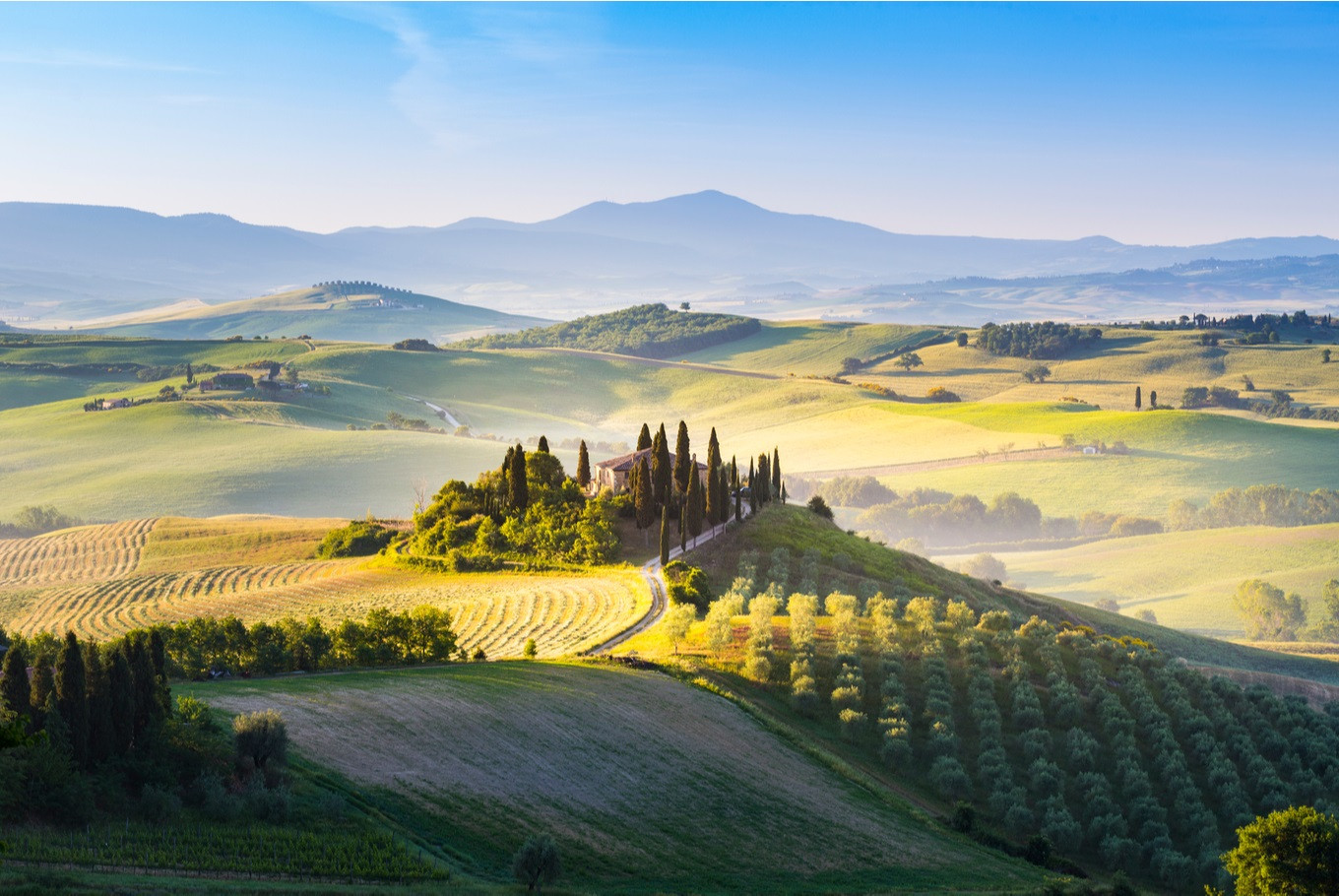
Tuscany encapsulates one of the most evocative images of Italy: gently undulating hills, neat rows of vineyards, olive groves on terraces, cypress-lined roads, hilltop farmhouses made of golden stone, and shimmering sunlight that seems specially tuned for photography. The region covers around 22,994 km² and is made up of ten provinces including Florence, Siena, Pisa, Lucca, Arezzo, Grosseto, Livorno, Massa Carrara, Pistoia, and Prato.
The countryside is divided roughly between the Apennine uplands to the east, the flat Val d’Arno basin around Florence and Pisa, and the Tyrrhenian coastal strip. In the south lie the Maremma and the Tuscan Archipelago. The land is scarred by centuries of agriculture and habitation, and this human imprint only adds to its beauty — vineyards and olive groves fill slopes once grazed by sheep, medieval towers stand sentinel above quiet valleys, and every turn in the road reveals vistas that feel like they’ve been curated for a painting.
History & Culture
Tuscany’s cultural importance is immense. The region was at the heart of the Renaissance: Florence gave birth to the Medici dynasty, bankers and patrons of art; the language of Dante Alighieri from Tuscany became the basis of modern Italian.
Cities such as Siena, Pisa and San Gimignano display medieval and Renaissance architecture in astonishing completeness. Art, sculpture, philosophy and science flourished here. In the countryside, countless castles, abbeys and farm-houses bear witness to centuries of Tuscan rural life. The language, the cuisine, the way of life all exude a special rhythm — slow and considered.
Major Cities & Towns
Florence (Firenze)
The jewel of the region; a living museum of the Renaissance. The Duomo with its iconic dome by Brunelleschi dominates the skyline. The Uffizi Gallery houses some of the world’s greatest paintings. The streets of Florence buzz with art, cafés and artisans.
Walking across the Ponte Vecchio, exploring the Oltrarno district of workshops, or climbing the Campanile for panoramic views remind you that the city is both historic and alive.
Siena
Built on three hills, Siena is an example of medieval urban planning that has remained largely intact. Its Piazza del Campo is one of Italy’s most dramatic public spaces, shell-shaped and surrounded by elegant towers and palazzi. The Palio horse race still divides the city’s contrade (districts) fiercely, twice a year.
San Gimignano
Often called the “Medieval Manhattan” for its skyline of tall stone towers, originally built by powerful families as status symbols. The Scottish Sun Walking its lanes, climbing to the Torre Grossa for views across the vineyards and hills, gives a sense of time encapsulated.
Smaller Towns & Villages
Pienza, Montepulciano, Montalcino, Volterra, and others. Each offers a distinct flavor — wine, stone masonry, Etruscan roots, medieval walls. For example, Montepulciano is the home of Brunello wine; Volterra retains strong Etruscan heritage.
Wine & Food
Tuscany’s gastronomic identity is firmly tied to its land. Chianti vineyards, Brunello di Montalcino, Vino Nobile di Montepulciano are legacies of the region’s terroir. Olive oil production, seasonal truffles (especially in November), wild boar dishes, pecorino cheese, rustic soups like ribollita, and fresh seasonal vegetables define the cuisine.
Countryside & Scenic Gems
Val d’Orcia
Recognised as a UNESCO site, the Val d’Orcia is what many think of when they imagine “Tuscany”. Rolling wheat fields, elegant cypress trees, vantage points where old stone farmhouses stand alone on hills, and golden light that drains slowly across the land. Wandering Italy+1
Maremma
Less visited, south-west Tuscany’s Maremma offers wild coastline, open grazing land, ancient Etruscan remains and thermal springs. lacucinaitaliana.com
Tuscan Coast & Islands
The Tuscan Archipelago includes Elba and smaller islands — clear seas, Mediterranean flora, and a mix of beach and history (Napoleon’s exile on Elba). The coastal belt around Livorno and Grosseto adds a maritime dimension to the region.
Travel Tips & Logistics
- To truly immerse, stay 5-7 days minimum in Tuscany so you can explore countryside as well as cities. kimkim+1
- Driving helps enormously: many of the most scenic spots lie in rural zones beyond major rail links.
- Avoid peak tourist times in Florence and Siena to enjoy quiet mornings or sunset light in the countryside.
- Spring and autumn offer the most gentle light and fewer crowds; late summer can be hot and busy.
Why Tuscany Matters
As one guide notes: “Tuscany as a representation of the ‘real’ Italy has been constructed over centuries”. Regions of Italy
In short, Tuscany offers a microcosm of Italy’s best: art, history, landscape, food, culture — all in one place.
Rome — Immersive Insight
8
The Eternal City in Layers
Rome is many cities in one: the ancient empire’s cradle, the Christian world’s spiritual centre, the Renaissance and Baroque city of fountains and palazzi, and a modern metropolis alive with vitality. Walking through Rome is like leafing through chapters of history.
Ancient Rome
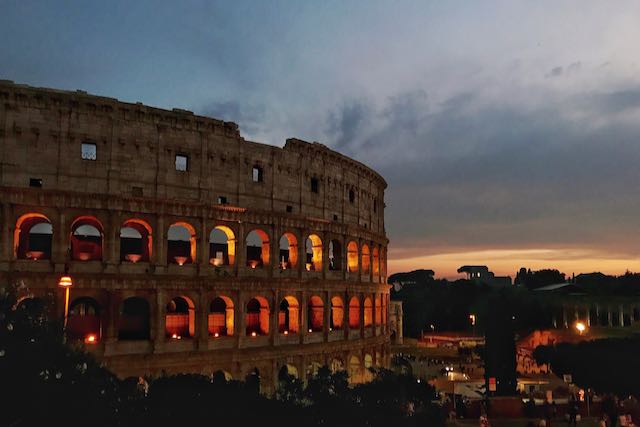
The Colosseum, Roman Forum, Palatine Hill, and the baths of Caracalla remind us of empire, grandeur and spectacle. The sheer scale of ancient engineering — aqueducts, roads, arches — is humbling.
Christian Rome
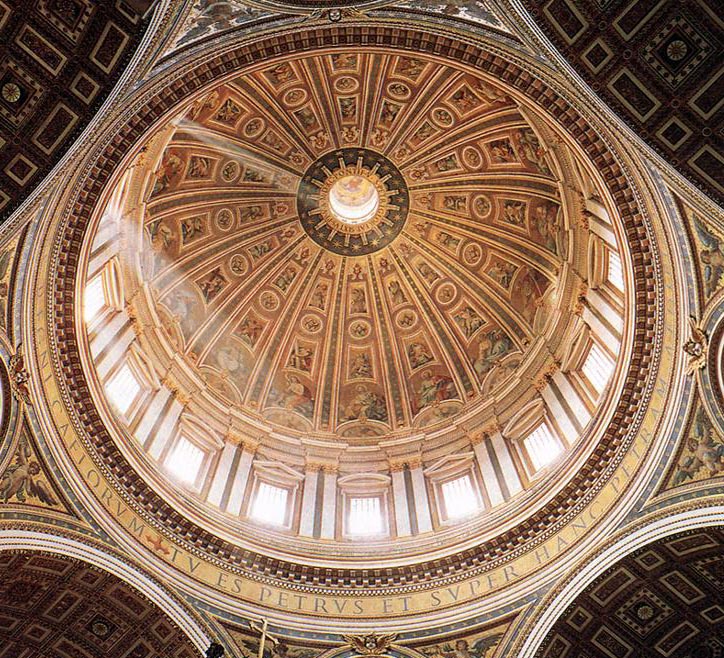
St Peter’s Basilica, the Vatican Museums, the Sistine Chapel, and the remains of early Christian sites remind of Rome’s central role in Christianity. The Lateran, Catacombs, and churches across the city speak similarly.
Renaissance & Baroque
Rome is home to masterpieces of art and architecture: Michelangelo’s dome of St Peter’s, Bernini’s piazzas, the Trevi Fountain, the Spanish Steps, and countless churches with frescoes and chapels.
Modern Rome
Beyond the archaeological zones lies the real city: neighbourhoods like Trastevere, Testaccio, Monteverde where locals eat, drink and live. The city is built for exploration on foot — piazzas, narrow lanes, cafés.
Key Districts
- Historic Centre: Pantheon, Piazza Navona, Campo de’ Fiori
- Vatican / Prati: wealth of museums and churches
- Trastevere: medieval lanes, lively bars and restaurants
- Monti: boutique shops, artisan workshops
- Appia Antica: ancient road lined with ruins, one of Europe’s oldest thoroughfares
Food & Life
Roman cuisine is direct, rooted in simple ingredients and tradition: carbonara, cacio e pepe, supplì (fried rice balls), artichokes (in season). Markets such as Campo de’ Fiori and Testaccio offer local produce and authentic atmosphere.
Experience & Tips
- Early morning visits to the Colosseum or Pantheon beat the crowds.
- Evening walks around the Forum or Palatine Hill under lighting give a magical feel.
- Stay central if you want to walk; peripheral neighbourhoods offer cheaper stays but more commuting.
- Romans eat dinner late — restaurants often begin service around 20:00.
Why Rome Matters
To visit Rome is to visit the foundations of western civilisation: empire, Christianity, art. But it’s also alive — you don’t just observe, you participate in Roman life. Fountains, scooters, trattorias, gelato in hand — side by side with ancient columns.
Sicily — Deep & Diverse


8
Island of History & Heat
Sicily is the largest Mediterranean island, a melting-pot of cultures (Greek, Roman, Arab, Norman, Spanish) and a land of volcanic energy, vast plains, ancient ruins, and wild coastlines.
Landscape & Volcanoes
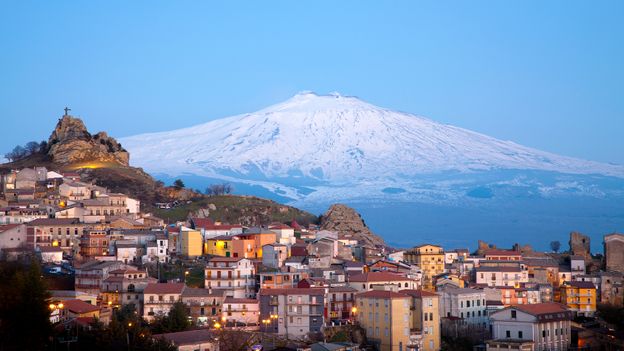
Mount Etna, Europe’s most active volcano, dominates the eastern island, with lava terraces, vineyards, and slopes to explore. The Aeolian Islands north of Sicily offer a volcanic archipelago experience. The central plains (Val di Noto) and the dramatic southwestern coast (Scala dei Turchi, cliffs) add depth.
Cities and Cultural Crossroads
Palermo
Bouillions of street markets (Ballarò, Vucciria), Arab-Norman architecture, and delicious street food (arancini, panelle). The city embodies Sicily’s layered past.
Syracuse & Ortigia
Greek theatre overlooking the sea, narrow alleys of Ortigia, baroque architecture and layered history.
Taormina
Perched high above the sea, the ancient Greek theatre offers one of Italy’s most dramatic settings for performance. Views of Ionian Sea and Mount Etna combine.
Ancient Ruins
- Valley of the Temples (Agrigento): Greek temples in extraordinary condition.
- Segesta: Doric temple on a hill and a Greek theatre with sunset views.
- Selinunte: hillside Greek acropolis.
Food & Taste
Sicilian cuisine is vibrant and uses citrus (blood oranges), almonds, pistachios, seafood, olive oil, and dishes such as couscous in Trapani region, cartocciata (stuffed pastry), fresh tuna (especially in the west). The mix of Mediterranean flavours reflects the island’s history.
Hidden Shores & Beaches
West coast beaches around San Vito lo Capo, Scala dei Turchi; south-east near Syracuse turquoise coves; Ustica Island for diving. Inland, hilltowns of the interior recall pastoral Sicily.
Why Sicily Matters
It’s an island of contradictions: ancient and modern, volcanic and pastoral, secular and spiritual. The light is sharper, the pace slightly slower, the flavours more intense. Sicily offers Italy in a more raw, elemental form.
🇮🇹 VENETO
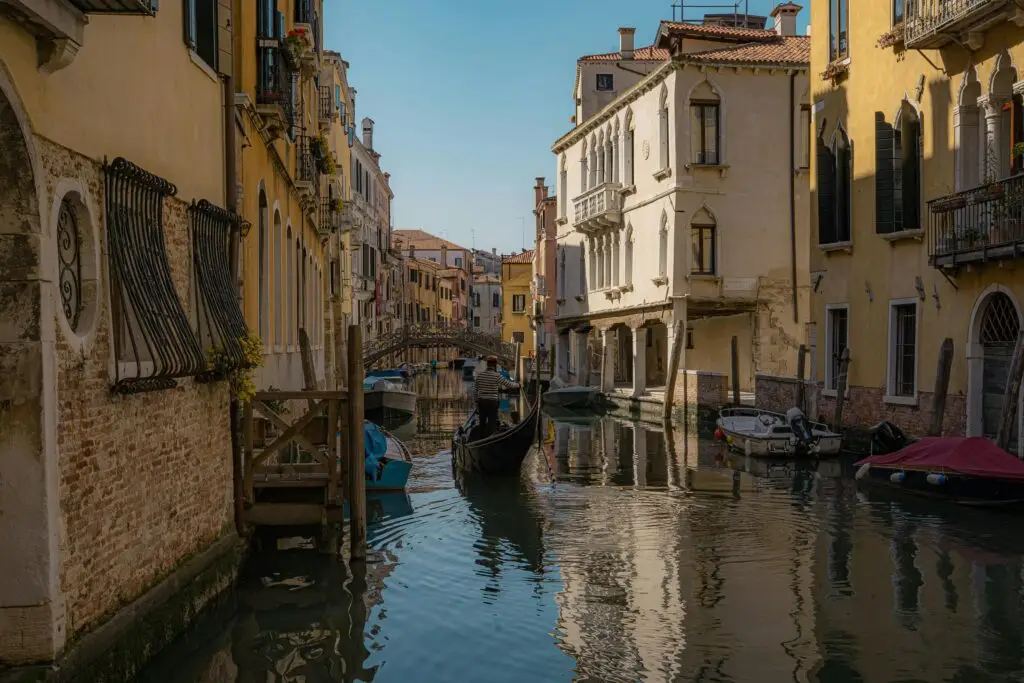
Venice • Verona • Dolomite foothills
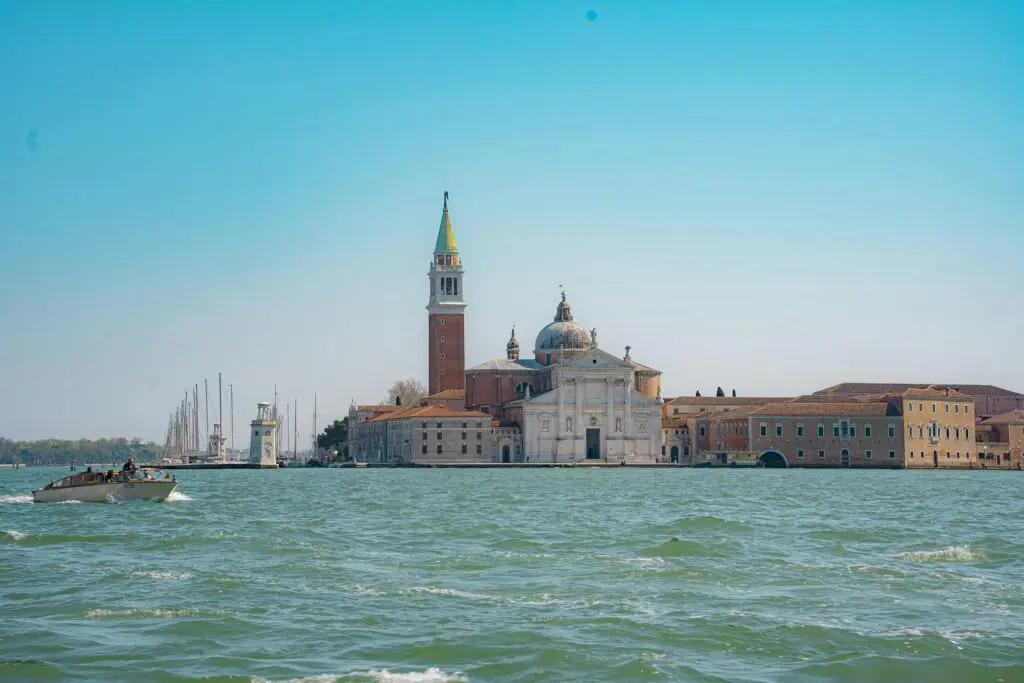
Veneto is a region where water, stone, and mountain light weave into one of Italy’s most poetic landscapes.
From the glassy canals of Venice to the vine-clad slopes of Valpolicella, from Verona’s pink-marble piazzas to the Dolomite foothills glowing orange at dusk — Veneto feels both refined and dreamlike.
It was once the heart of the Most Serene Republic of Venice, a maritime empire famous for art, trade, and diplomacy. Even today, that spirit of elegance and craft defines its cities, villages, and countryside.
✨ Venice — A Floating Dream
Venice rises mysteriously from its lagoon, a city without roads, only canals and narrow alleys.
You hear water slapping quietly against ancient stone; bridges arch like stone ribbons; lanterns shimmer across rippling reflections.
Explore:
- St. Mark’s Basilica
- Doge’s Palace
- Grand Canal
- Rialto Market
- Accademia Bridge
The best moments are unplanned:
a hidden courtyard with ivy; a tiny bakery with warm focaccia; a lonely canal where the world seems to pause.
🌈 Burano, Murano & Torcello
A boat ride reveals lagoon islands, each with its own soul:
- Murano — glassblowers at work
- Burano — brightly painted houses
- Torcello — peaceful, ancient, almost forgotten
💕 Verona — Marble, Romance & Opera
Veneto’s inland jewel, Verona, is elegant and atmospheric — a city of soft colors, graceful piazzas, and Roman stone.
The Arena di Verona, one of the world’s best-preserved Roman amphitheaters, still hosts candlelit opera under summer skies.
Wander old streets where:
- Juliet’s balcony leans over a courtyard
- Cafés burst into the piazza
- River Adige curls quietly around the historic center
Verona’s beauty is subtle — refined instead of flashy — and endlessly romantic.
🍇 Vineyards of Valpolicella & Prosecco Hills
North of Verona, pale stone villages perch on rolling slopes filled with vines.
This is the land of small farms, ancient villas, terraced vineyards, and sleepy roads that wind from hilltop to hilltop.
Further east, the steep Prosecco Hills unfold — a UNESCO-listed landscape of terraced vineyards that glisten in the morning light.
🏔 Dolomite Foothills
Northern Veneto rises up toward the Dolomites — rugged spires that catch the light in shades of pink and fire.
Villages cluster in the valleys; forests climb the slopes; alpine lakes glow turquoise beneath dramatic peaks.
It feels far from Venice — yet shares the same poetic spirit.
💛 Why Veneto Matters
Veneto is a region of contrasts:
Sea + mountains
Classical harmony + wild nature
Grand canals + rustic vineyards
It blends them into a landscape rich in art, memory, and quiet beauty.
🇮🇹 LOMBARDY
Milan • Lake Como • Lake Garda
Lombardy is northern Italy’s cosmopolitan heart — stylish, wealthy, sparkling with lakes, cities, and mountains.
It stretches from the flat Po Valley to alpine passes where snow dusts jagged peaks.
Its lakes — Como, Garda, Maggiore, Iseo — are world-renowned for their elegance and breathtaking scenery.
🏙 Milan — Style, Art & Innovation
Milan is modern Italy — urban energy, chic cafés, fashion houses, sleek skyscrapers — yet anchored by a medieval heart.
Highlights:
- Duomo — a Gothic cathedral of spires
- Galleria Vittorio Emanuele II
- Teatro alla Scala — legendary opera
- Last Supper (Leonardo)
- Brera district — art & boutiques
Milan blends practicality and beauty:
Historic churches stand beside futuristic towers; trams glide past design studios; aperitivo culture turns evenings into celebrations.
🌊 Lake Como — Deep Blue Elegance
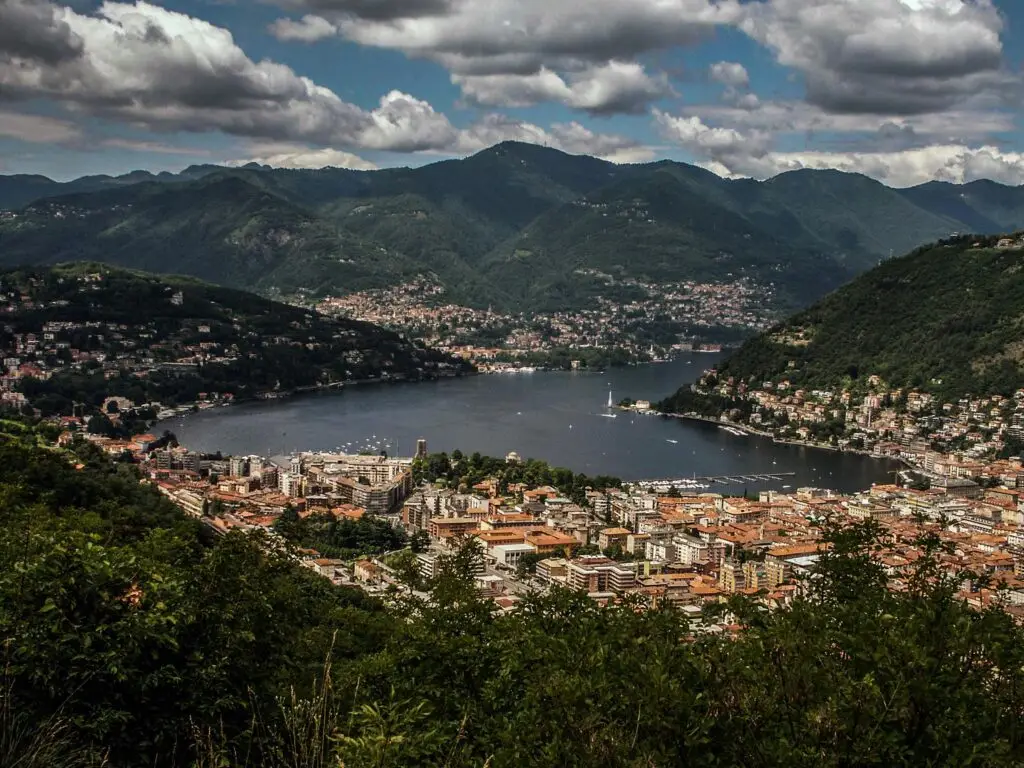
Cradled by steep green mountains, Lake Como feels like a painting —
midnight-blue water, villas wrapped in gardens, tiny villages clinging to the shore.
Towns:
- Bellagio — “the pearl of the lake”
- Varenna — romantic waterfront lanes
- Menaggio — calm and scenic
Take a ferry at sunset:
Mountains turn purple; church bells echo; the lake becomes a mirror.
💙 Lake Garda — Wide, Sunny Shores
Lake Garda is larger, brighter, and more diverse.
Northern shores are dramatic — cliffs rise straight from the water.
Southern shores soften into sandy beaches, citrus groves, and warm breeze.
Explore:
- Sirmione — castle + thermal springs
- Riva del Garda — sailing & mountains
- Malcesine — cable car to Monte Baldo
Water + mountains + pastel towns = pure Italian joy.
🌿 Bergamo & Brescia
These quieter cities capture Lombardy’s medieval charm.
Bergamo’s upper town, ringed by Venetian walls, offers cobbled lanes, stone houses, and sweeping views.
Brescia blends Roman ruins, Renaissance piazzas, and modern life — understated but full of treasures.
💛 Why Lombardy Matters
Because it contains both:
- Italy’s most dynamic modern city (Milan)
and - Some of its most poetic landscapes (Como, Garda)
It is elegance + industry, lake light + urban spark — a region of depth and beauty.
🇮🇹 PIEDMONT
Turin • Langhe • Alps
Piedmont (Piemonte) lies in the northwest corner of Italy, wrapped in the quiet majesty of the Alps. The region feels elegant yet understated — a land of misty hills, noble vineyards, aristocratic cities, and snow-crowned mountains. Autumn brings rolling fog to the countryside, turning the hills into a soft watercolor; winter illuminates the ridgelines with bright snow; spring bursts with wildflowers and fresh vines.
This is a place of thoughtful beauty. Piedmont does not shout — it whispers. The atmosphere is calm, refined, deeply tied to land, tradition, and seasonal rhythms. Roads curve through hazelnut groves and vineyards; villages sit lightly on ridges; farmhouses look out across valleys where church bells echo at dawn.
Turin — Savoy Grandeur
Turin (Torino) is elegant like Paris and intellectual like Vienna. Grand boulevards lined with arcades shelter cafés and chocolatiers beneath stone arches. The river Po runs silvery and calm; the Alps rise behind the city like a painted backdrop.
Turin was once the capital of the Kingdom of Savoy, and that aristocratic heritage remains in its architecture: baroque palaces, symmetrical squares, wide avenues. One can spend hours wandering beneath vaulted arcades, slipping into historic cafés where time seems to slow. The city’s museum culture is extraordinary — from Egyptian collections to film history, all framed by a thoughtful, quiet atmosphere.
Evenings are soft and graceful: light glows on the Mole Antonelliana; pedestrians walk slowly along the Po; conversations linger over long dinners. Turin rewards the traveler who loves architecture, literature, ritual, and slow exploration.
The Langhe — Nebbiolo Hills and Ancient Villages
South of Turin, the land folds into the Langhe, an enchanted region of winding country roads, stone hamlets, and terrace-like vineyards. Fog settles in the valleys in early morning, lifting slowly to reveal patchwork hills dotted with towers and church steeples. The landscape feels old and wise — preserved and cherished, shaped by centuries of devotion.
Villages like Alba, La Morra, Barolo, Barbaresco, and Monforte d’Alba sit on high ridges, each offering its own quiet charm. Narrow streets wind between stone houses; piazzas open suddenly to sweeping views; vineyards cling to steep slopes, their patterns changing color with each season.
The Langhe is a place to wander slowly: park the car, follow the hill path, breathe the scent of earth and grapes, stop at a tiny bakery, sit outside and watch the hills roll away into the horizon. The rhythm of life is unhurried and rooted in land.
Piedmont Alps — Stone Cathedrals of Ice
To the north and west, the Alps rise in breathtaking walls. Valleys like Val di Susa, Val Chisone, and Val d’Aosta (technically a separate region, but culturally intertwined) are landscapes where churches cling to rock and waterfalls burst through gorges.
Trails wind through larch forests and meadows where wooden chalets lie beneath peaks. In summer, air smells of grass, pine, and stone. In winter, the silence is immense — mountains bow under snow, and villages glow with firelight.
Here, life is shaped by altitude: small farms, stone bridges, shepherd paths worn smooth by centuries. The Alps of Piedmont are dramatic yet intimate — nature grand enough to humble you, yet human in scale.
Why Piedmont Matters
Piedmont is quiet power. It does not overwhelm like Rome or Venice — it invites. It offers a different Italy: slow, elegant, reflective. A region where hills breathe fog, cities breathe culture, and mountains breathe sky.
🇮🇹 EMILIA-ROMAGNA
Bologna • Parma • Ravenna
Emilia-Romagna stretches across north-central Italy like a generous banquet table. The land is rich, fertile, profoundly agricultural — green plains dotted with farmhouses, rivers cutting wide paths, Apennine foothills rolling calmly southward. The region feels welcoming, warm, open-armed. Here, tradition is not just preserved — it is lived, daily, joyfully.
Where Piedmont is reflective, Emilia-Romagna is expressive. It is a land of markets and music, opera and workshops, ancient mosaics and grand colonnades. Its towns have a soft, rosy glow — terracotta roofs, archways stretching for kilometers, evenings filled with conversation.
Bologna — Arcades, Towers & Youthful Energy
Bologna feels immediately alive.
The medieval core is wrapped in endless porticoes — arcades that shelter streets for more than 60 km, forming elegant tunnels of brick and marble. Walking beneath them is like moving through a living sculpture — light playing off curves and columns.
Two leaning towers mark the center: Asinelli and Garisenda, both medieval and watchful. From their shadow, lanes spiral outward into markets, libraries, cafés, and music halls. Bologna is home to the oldest university in the Western world, and that intellectual energy fills its streets with students, bookstores, and debate.
Evenings here are vivid: people dine outdoors, voices carry down stone alleys, violins echo under arches. Bologna is an emotional, social city where every night feels like a small festival.
Parma — Grace, Opera & Golden Fields
Parma is elegant and harmonious — a city of soft colors, neoclassical theaters, and luminous Romanesque churches. Life flows gently here. Streets are quiet, lined with pastels; piazzas unfold into open air concerts; bicycles glide by.
The countryside surrounding Parma is peaceful and expansive — wheat fields, orchards, old convents, villages anchored by bell towers. Time feels slower, suspended under blue skies.
There is a sense of refinement in Parma’s character: music, architecture, and daily ritual blend into a serene rhythm.
Ravenna — Quiet Splendor and Byzantine Light
Ravenna seems modest at first glance — but step inside its basilicas and you enter entire galaxies of mosaic. Gold backgrounds shimmer with saints, stars, lambs, palms, and jeweled crosses. The Byzantine imagination lives here in glass fragments that still catch light as they did 1,500 years ago.
The city itself is peaceful, unhurried. Streets remain calm even in summer; bicycles glide past low façades; the scent of the sea hangs in the air. Ravenna feels like a sacred secret — a city where divine art whispers rather than proclaims.
Why Emilia-Romagna Matters
Emilia-Romagna offers warmth, generosity, beauty, thoughtfulness. Its cities are open, its countryside fertile, its traditions alive. It is an Italy of conversation and creativity — where history is not only preserved but shared.
🇮🇹 LIGURIA
Cinque Terre • Portofino • Genoa
Liguria drapes itself along the Italian Riviera like a shining thread between sea and mountains. The coastline is narrow and dramatic — cliffs drop steeply into deep blue water, villages cling to rock as though carved by the waves, and terraced hillsides rise behind them in layers of olive trees, lemon gardens, and pine forest.
The sea here feels close, intimate, always present. Its scent floats through alleyways; its sound echoes between walls; its colors shift from green to sapphire depending on the hour. Life follows the rhythm of wind and tide.
Liguria is a beautiful contradiction: ancient yet lively, glamorous yet humble, rugged yet delicate. Every cove hides a secret, every hill shelters villages painted like jewelry.
Cinque Terre — Painted Cliffs Above the Sea
Cinque Terre is one of Italy’s most iconic landscapes: five small fishing villages — Riomaggiore, Manarola, Corniglia, Vernazza, and Monterosso — strung like gemstones along a rugged coastline.
Pastel houses stack themselves impossibly atop cliffs; small harbors shelter painted boats; narrow footpaths wind between terraces; lemon trees perfume sunlit lanes.
The best way to feel Cinque Terre is to walk.
The famous coastal paths cross terraces built by hand over centuries, passing vineyards, stone walls, olive groves, and wildflowers. Views open suddenly: a village glowing in sunlight; a tower rising above the sea; waves shining white against rock.
Evenings are soft here: lights shimmer on the water, restaurants spill onto tiny piazzas, and the sound of waves replaces conversation.
Portofino — The Riviera’s Quiet Elegance
Portofino is small, refined, perfectly shaped — a crescent of villas and pastel buildings hugging a jewel-like harbor.
The village is surrounded by dense green headlands where pine trees lean over stone paths and hidden coves glow turquoise. Walking up to Castello Brown, you find one of the most graceful views in Italy: the bay curving into rock, boats bobbing like pearls, cliffs rising beyond.
Portofino is elegant, but its beauty is natural rather than extravagant — a harmony of sea, stone, and forest.
Genoa — Port City of Stories
Genoa (Genova) is Liguria’s beating heart — complex, gritty, historical, endlessly fascinating.
A labyrinth of narrow streets, called caruggi, leads from the harbor into a medieval maze where tall buildings almost touch overhead, leaving only strips of sky.
The city once commanded a maritime empire rivaling Venice. That past lives on in palaces along the Strade Nuove, where frescoed ceilings and marble stairs speak of ancient power and trade.
Yet Genoa feels real, lived-in: laundry hangs above alleys; children play football in tiny courtyards; fishermen unload their nets at dawn. It is a city of human scale — urban yet intimate.
Why Liguria Matters
Liguria is a landscape of edges — where mountains fall into sea, where villages cling to stone, where light dances across water. It is subtle, layered, full of life.
Here, time slows. You breathe differently. The world feels close and wide at the same time.
🇮🇹 CAMPANIA
Naples • Amalfi Coast • Capri • Pompeii
Campania feels volcanic — not only because of Mount Vesuvius, but because everything here vibrates.
Cities burst with color; coasts blaze with light; markets erupt with smells and voices; ancient stones sit beneath laundry lines fluttering in the wind. The region is powerful, emotional, expressive — an Italy that sings loudly.
The landscape is dramatic: mountains plunge toward the sea; lemon groves terrace cliffs; islands float like green jewels offshore. This is a place of myth and intensity, where history is never quiet.
Naples — The Electricity of Real Life
Naples (Napoli) is unlike any other city in Italy — raw, poetic, rebellious, musical.
Laundry swings above narrow alleys; scooters streak through the maze; street vendors shout over the hum; children play football against baroque churches.
And then, suddenly, you turn a corner and find the sea, and beyond it, Vesuvius rising like a silent god.
Naples is history layered in real time:
Greek foundations, Roman streets, medieval castles, Spanish palaces, modern chaos. Nothing is hidden; everything lives in the open.
Evenings are magic: restaurants spill into the street; musicians play in piazzas; the smell of baking dough glides through the night.
Pompeii & Herculaneum — Cities Suspended in Ash
In 79 AD, Vesuvius erupted, freezing life beneath ash.
Pompeii and Herculaneum remain like time capsules — streets, houses, frescoes, and tools preserved almost intact. Dust was death, but it became memory.
Walking here is haunting:
The bakery ovens still stand; mosaics gleam in courtyards; frescoes show myth and daily life. Silence fills the air, as though the city is still waiting.
These ruins are among the closest we have to hearing ancient Rome breathe.
Amalfi Coast — Cliffs, Sunlight & Endless Blue
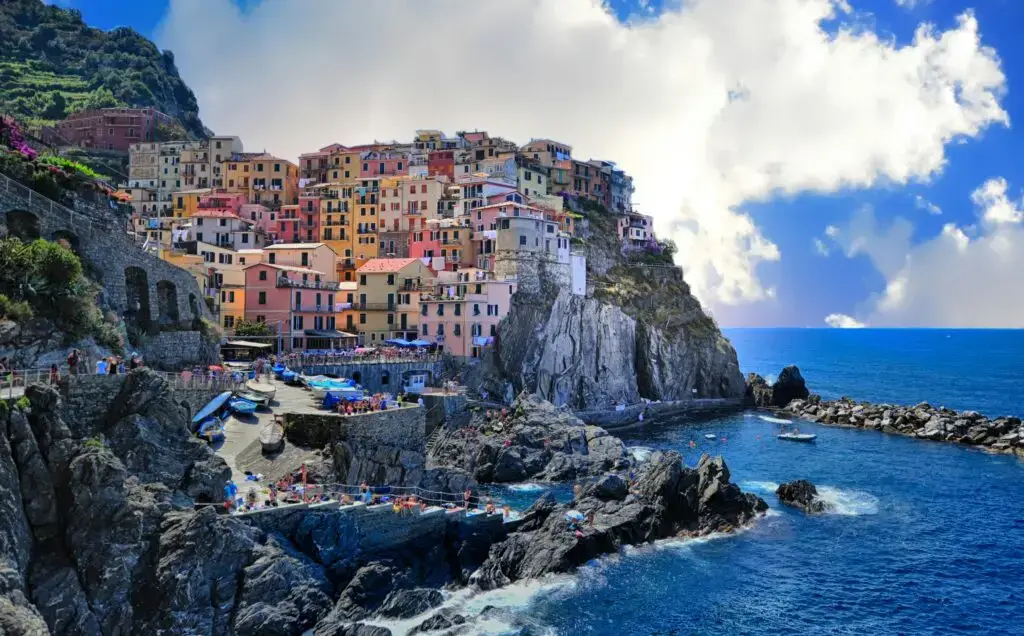
The Amalfi Coast is Italy as a watercolor:
cliffside towns painted pink and gold; terraces of citrus trees; ribbons of road curling between sea and sky.
Villages like Positano, Amalfi, and Ravello cling to steep rock faces, their houses stacked like shells. Stairs and lanes twist beneath bougainvillea; cafes open onto balconies where sea and mountain merge.
Positano is theatrical — vertical, vibrant, playful.
Ravello feels quiet and refined — gardens hanging above infinity, music drifting through ancient villas.
Amalfi is historic — once a maritime republic, still proud.
Capri — Island of Marble & Azure
Capri rises from the sea like a floating palace.
White villas climb the hills; narrow lanes lead to terraces where the sea shimmers cobalt; lemon trees perfume the air.
The Blue Grotto, glowing with electric light beneath the stone, feels unearthly.
Above, cliffs rise in sheer walls, crowned by gardens and Mediterranean pine.
Capri can be glamorous, but at sunrise, before boats arrive, it is quiet and strangely spiritual — a place of wind and water.
Why Campania Matters
Campania is emotion — loud, colorful, sincere.
It refuses to be tamed: history erupts like Vesuvius; beauty spills everywhere; daily life is a celebration.
It is Italy at its most intense — and most alive.
🇮🇹 PUGLIA
Ostuni • Alberobello • Lecce • Adriatic & Ionian coasts
Puglia forms the heel of Italy’s boot — a sun-soaked peninsula stretching between two seas: the Adriatic to the east and the Ionian to the south.
It is a land defined by stone and light: whitewashed towns shining beneath endless blue skies, ancient olive trees twisting over dry red earth, low stone walls dividing vineyards, and turquoise water lapping against long beaches.
Life here feels relaxed, authentic, and tied to tradition. Nothing is rushed; everything is rooted.
You can drive for hours through groves of gnarled olive trees, centuries old, their branches shaped by wind and time. The horizon is always wide, always open.
Ostuni — The White City
Ostuni rises from the plains like a white crown.
An intricate maze of streets winds upward, staircases curling around bright houses, windows trimmed in cobalt blue. The white lime walls glow in the Mediterranean sun, creating a timeless, dreamlike atmosphere.
Wandering here is pure pleasure — every corner reveals a new alley, a hidden terrace, or a breathtaking view over the olive-studded countryside and out to the sea. In the late afternoon, golden light softens the walls and the entire town seems to float.
Alberobello — A Village of Stone Cones
Alberobello is one of Italy’s most iconic villages — a cluster of round, white stone houses capped with gray conical roofs called trulli.
The effect is almost fairytale: hundreds of tiny homes, symbols painted on their rooftops, clustered together like a village of storytellers.
Walking through the narrow lanes, you hear the quiet echo of footsteps on stone. Shops open into small courtyards, and flowers spill from windows. The trulli have stood for centuries, and despite their popularity, the village still feels intimate, whimsical, and deeply rooted in rural tradition.
Lecce — The Baroque of the South
Lecce is sometimes called “the Florence of the South,” but in truth, it is entirely its own masterpiece.
The city’s golden limestone glows warm at sunset; facades ripple with carved angels, vines, and saints; palaces line narrow streets that open suddenly into sun-filled piazzas.
There is drama here — not loud, but elegant.
You feel it in the ornate churches, the quiet courtyards, the way light smooths the stone. In the old town, time seems to stretch; people walk slowly; conversations echo beneath balconies.
Evenings in Lecce are soft and musical: crowds drift through squares; musicians play beneath the moon; architecture glows as though alive.
The Coasts — Turquoise Light
Puglia’s coastline is long, varied, and breathtaking.
Rocky headlands plunge into transparent blue; hidden coves sparkle; sandy beaches stretch for kilometers. On a calm day, the sea is so clear you can see stones glittering beneath the surface.
Towns like Polignano a Mare rise directly from limestone cliffs; swimmers float between sea caves; light dances beneath the arches.
Further south, the beaches of the Salento reach toward Greece — white sand, shallow water, gentle breezes.
The atmosphere is serene: sun, sea, wind, silence.
Rural Puglia — Fields & Stone
Drive inland, and Puglia becomes a patchwork of fields divided by low stone walls.
Farmhouses appear at the ends of dusty paths; roadside shrines stand beneath fig trees; vineyards spread quietly across the landscape.
Ancient olive trees dominate — trunks thick and twisted, hollow in places, yet alive with silver leaves. They look like sculptures shaped by centuries. Some are over 1,000 years old; they hold memory.
Life here is slow and earthy:
people greet neighbors across fields; bakeries smell of warmth; evenings gather families outdoors beneath vines.
Puglia is not a region that impresses with monuments — it touches you with atmosphere, sunlight, and simplicity.
Why Puglia Matters
Puglia captures Italy’s soul stripped to its essentials:
sunlight, stone, sea, time.
It is rustic and refined, ancient and youthful, humble and stunning.
It feels both deeply familiar and wholly unique — a place to breathe, wander, and simply be.
🇮🇹 CALABRIA
Wild mountains • quiet coasts • timeless villages
Calabria forms the toe of Italy — a rugged, dramatic, fiercely beautiful land framed by two seas and crossed by raw mountain ranges.
This is one of the most untamed corners of the country: ancient villages perched on clifftops; pine forests sweeping across high plateaus; quiet beaches of crystalline water; and a spirit that feels rooted, ancestral, determined.
Calabria never fully reveals itself at once.
It is a land of hidden paths, guarded traditions, and landscapes that shift from steep ridges to golden coastlines with stunning suddenness. The region’s character is shaped by wind, stone, and deep memory.
Tropea — The Balcony Over the Sea
Tropea is Calabria’s coastal jewel — a town set dramatically atop cliffs that plunge straight into turquoise.
Narrow cobbled streets wander through the old center, opening occasionally to balconies where the sea spreads out in dazzling bands of blue.
At sunset, the light sets the cliffs aflame, and the sanctuary of Santa Maria dell’Isola — perched on a rocky outcrop — glows like a beacon above the water.
From the beach below, Tropea appears like a dream suspended between rock and sky.
The Mountains — Wild Heart
Beyond the coasts, Calabria rises sharply into the Aspromonte and Sila ranges — wild mountains covered in pine, chestnut, and beech.
Villages cling to rocky slopes; shepherd paths run along ridges; waterfalls hide within forests.
The feeling is remote, almost mystical.
Fog moves through valleys in early morning; hawks circle above; the sound of bells drifts from distant flocks.
In winter, snow folds the mountains into a silent world; in summer, forests smell of resin, grass, and sun-warmed stone.
Nature here has weight — the kind that shifts how you breathe.
Ancient Villages
Scattered across Calabria’s hills are villages built of stone, their houses climbing one upon another like stairways.
Many feel suspended in time: narrow streets twisting beneath arches; small churches crowned with domes; elders sitting in doorways, talking softly.
Some towns have stood nearly unchanged for centuries, their roots Greek or Byzantine.
They hold stories not found in books — you learn them from gestures, silence, landscape.
Calabria’s Coasts
Though less famous than Amalfi or Puglia, Calabria’s coastline is spectacular.
Here, mountains reach so close to the sea that, in places, it seems as if rock and water share the same breath.
The Tyrrhenian side is dramatic, dotted with cliffs and small coves; the Ionian side is emptier and more open, with long beaches and quiet villages.
The waters are brilliantly clear — shades of sapphire, emerald, turquoise.
On a calm day, the sea looks like polished glass.
Why Calabria Matters
Calabria is pure, raw Italy — a land of stone, water, memory, and sky.
It is less polished, less visited, less told — but profoundly alive.
Here, you feel the ancient heartbeat of the peninsula.
It is Italy before postcards.
Italy before museums.
Italy as earth and story.
🇮🇹 BASILICATA
Matera • Silent mountains • Ancient earth
Basilicata lies between the better-known regions of Puglia and Campania, yet it feels worlds apart.
It is one of Italy’s most mysterious landscapes — a place of quiet mountains, deep ravines, thick forests, and stone villages perched like timeless sentinels over the valleys below.
The region is sparse and rugged; the land feels ancient.
It is shaped not by cities or crowds, but by the raw geometry of nature: wind-eroded cliffs, canyon walls carved by water, wheat fields that ripple like a golden sea.
Here, life moves slowly. The sense of time is not measured in hours but in centuries.
Matera — A City Carved from Stone
Matera is unlike anywhere else in the world.
Carved into a great ravine, its ancient districts — the Sassi — are made of stone caves and dwellings stacked upon each other like a honeycomb of history.
As the sun rises, houses glow pale gold; as evening falls, lights flicker within caves, turning Matera into a constellation of warm stars set into rock.
The city feels suspended between eras.
Here, Paleolithic caves sit beside medieval chapels; narrow stairways lead to sunken courtyards; stone facades conceal rooms carved directly into the earth.
Walking through the Sassi is like stepping into time itself:
caves turned into homes, rock churches painted with fading frescoes, tunnels leading to springs and cisterns. Stones breathe memory.
It is quiet; voices echo; air is cool and dry.
Matera is haunting and beautiful — a city that glows from within.
The Rest of Basilicata — Space & Silence
Beyond Matera, Basilicata opens into a vastness few expect.
Mountains rise and fall in long folds; villages gather at hilltops like watchtowers; forests cloak the interior.
Places like Castelmezzano and Pietrapertosa sit high in the Lucanian Dolomites — jagged peaks where houses appear to grow from stone.
Tiny streets thread between ancient walls; wind whistles through mountain pines; in the evening, silence feels complete.
The countryside is wide and lonely in the most beautiful way.
It invites reflection, time, imagination. A place where the landscape is both anchor and story.
Why Basilicata Matters
Basilicata is Italy stripped to its deepest bones:
stone, wind, silence, memory.
It is a landscape made not to impress with glitter, but to move with truth.
Here, beauty is quiet — but unforgettable.
🇮🇹 UMBRIA
Perugia • Assisi • Forested valleys & Etruscan whispers
Umbria lies in the heart of Italy, landlocked and evergreen.
It feels intimate, spiritual, gentle — a region of rolling hills, silver olive groves, deep forests, and hilltop towns where stone houses cluster tightly like families gathered around a table.
Called “the Green Heart of Italy,” Umbria has a quieter rhythm than neighboring Tuscany.
Its landscapes are less manicured, more rustic; its towns smaller, more contemplative.
Here, morning mist lingers in valleys; vineyards and fields patchwork across slopes; monasteries sit on lonely ridges, keeping silent watch.
Perugia — Culture on a Hill
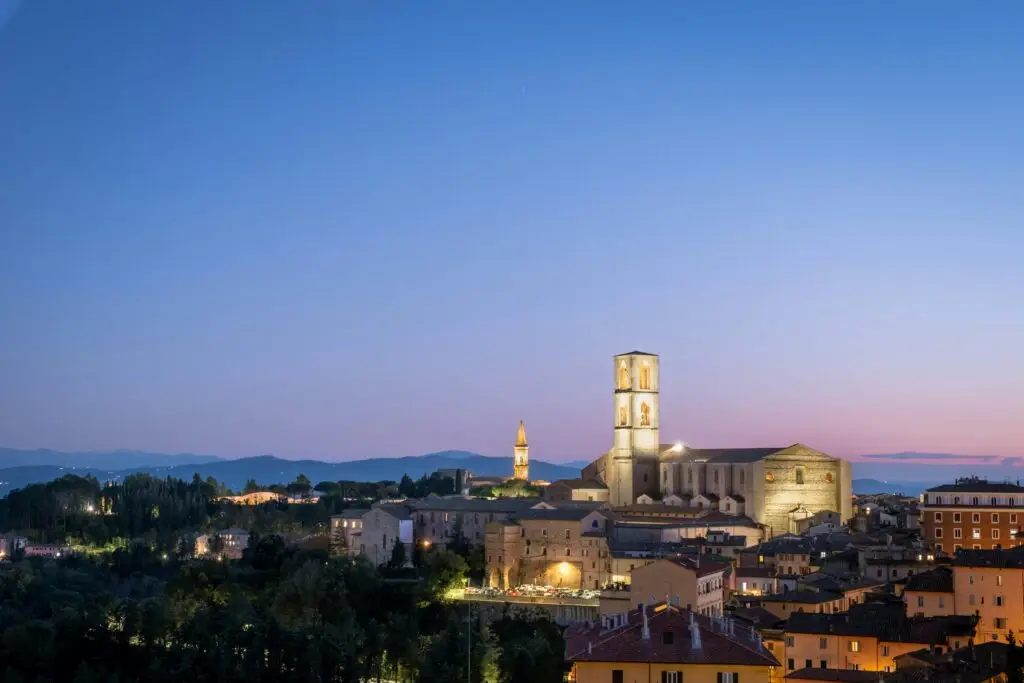
Perugia rises across a long ridge — a cluster of medieval walls, arches, stairways, and hidden squares.
The old town feels like a labyrinth built of stone and sky; every turn reveals a fountain, a terrace, a carved doorway opening to the hills beyond.
It is a city of students, writers, musicians — lively, creative, full of quiet conversation drifting through narrow alleys.
Cafés spill onto cobblestones; artists sketch in sunlit corners; ancient vaults lead to modern shops underground.
At sunset, the rooftops glow amber, and the distant hills fade into dusty blue.
From the upper terraces, the world looks peaceful and vast.
Assisi — Stone & Spirit
Assisi seems born from the earth itself — pale stone houses rising along the slope of Mount Subasio, crowned by the great Basilica of Saint Francis.
The town feels profoundly serene: bells ring through quiet streets; cypress trees stand still against the sky; pilgrim paths wind gently up the hillside.
The Basilica of St. Francis is the heart — a layered masterpiece of frescoes painted by Giotto and others, glowing softly beneath vaulted ceilings.
But the spirit of Assisi is everywhere: on terraces overlooking the valley, in simple chapels, in silent cloisters scented with rosemary.
Walking here feels like walking inside a prayer.
Time slows; thoughts soften; the world grows still.
The Umbrian Countryside
Beyond Perugia and Assisi, Umbria unfolds into gentle hills and quiet valleys.
Fields alternate with vineyards and orchards; villages cling to ridges; narrow roads twist through forests and meadows.
It is an ideal region for slow travel:
drive in the morning, explore a tiny town, eat in a quiet trattoria, rest beneath olive trees, watch the afternoon light warm the hills.
Small places like Spello, Gubbio, Todi, Montefalco feel like secrets shared only with those who linger.
There is a sweetness here — not sugary, but soulful.
Why Umbria Matters
Umbria is the peaceful breath at the center of Italy.
It moves at a human pace — offering space for reflection, gratitude, and quiet joy.
A place where earth and spirit meet in stone villages, green hills, and slow days.
🇮🇹 MARCHE
Urbino • Conero Coast • Hilltowns between mountains and sea
Marche lies quietly along the Adriatic Sea — a region of folded hills, stone villages, Renaissance splendor, and dramatic coastline.
It is one of Italy’s most balanced landscapes: mountains to the west, sea to the east, and a thousand soft green ridges rolling between them like waves of earth.
This is a quieter Italy.
You explore without crowds; you see farmers working along roads lined with cypresses; you hear church bells carried by the wind.
Marche feels authentic and grounded — a place where tradition is strong, beauty is humble, and people greet you with warmth.
Urbino — Renaissance on a Hill
Urbino sits high on a hill, rising like a fortress of art.
It is one of the most important Renaissance cities in Italy — the birthplace of Raphael — and the masterpiece of the powerful Duke Federico da Montefeltro, whose palace crowns the town.
Approaching Urbino, you first see the twin towers of the Palazzo Ducale, elegant and tall, rising above terracotta roofs.
Inside, the palace is a labyrinth of light and harmony, with courtyards, grand halls, and libraries designed as temples of human intellect. You feel the presence of scholars, artists, and philosophers in every corridor.
The town itself is steep and winding: narrow stone streets and arched passages climb slopes; students sit on stairways talking late into the evening; the smell of bread drifts from small bakeries; windows frame rolling countryside in every shade of green.
Urbino is deeply atmospheric — a living Renaissance dream.
Conero Coast — White cliffs, blue sea
The Conero Coast, south of Ancona, is where the Apennines touch the Adriatic.
White limestone cliffs plunge into water so blue it seems unreal. Pines cling to the slopes; small coves lie hidden beneath rocky headlands; narrow roads twist along the coast, offering glimpses of sea and sky.
Beaches like Sirolo and Numana feel Mediterranean yet rugged — a quiet mix of forest shade, rock, and turquoise water.
From the viewpoint above Sirolo, the horizon seems endless, a shimmering plane of color beneath the watchful cliffs.
This is one of Italy’s most secretly beautiful coastlines — serene, intimate, dramatic.
Inland Marche — Rolling Harmony
Beyond the coast, Marche becomes a land of valleys and ridges — a rhythmic pattern of fields, orchards, and hilltop towns.
Villages perch like crowns on mountain spines; tiny churches sit alone among wheat fields; vineyards descend along gentle slopes.
The landscape is pastoral and poetic — never overwhelming, always peaceful.
Small towns such as Loreto, Macerata, Fermo, Ascoli Piceno retain strong identities.
They are places where daily life unfolds slowly in piazzas lined with porticoes; where markets fill the mornings; where grandparents sit and watch the world.
There is balance here — between land and sea, history and present, nature and community.
Why Marche Matters
Marche is Italy without pretense.
It is soft, green, calm — a place of real life and quiet beauty.
Here, the Renaissance spirit lives in small gestures: a carved doorway, a hidden garden, a student reading in a sunlit square.
It is a region for those who seek harmony rather than spectacle.
🇮🇹 TRENTINO – ALTO ADIGE
Dolomites • Alpine valleys • German-Italian spirit
Where Italy meets Austria and Switzerland, the mountains rise sharply — immense, dramatic, and impossibly beautiful.
This is Trentino–Alto Adige, a region defined by the Dolomites: pale limestone towers that glow rose and orange at dawn and dusk, creating a living painting across the horizon.
It feels like the roof of Italy — a world of alpine meadows, silent forests, wooden chalets, and villages where time moves slowly.
German and Italian cultures blend here: bilingual signs, Tyrolean festivals, new Alpine architecture standing beside old stone barns.
The air is clean and sharp; the light crystalline; the mountains solemn yet welcoming.
Dolomite Peaks — Natural Cathedrals
The Dolomites are unlike any other mountains.
Their limestone walls rise suddenly, sheer and vertical, from valleys carpeted with grass and wildflowers. Peaks like the Tre Cime di Lavaredo are symbols of raw power and ethereal beauty — sharp silhouettes against the sky.
Hiking paths weave through meadows and forests into high cirques where silence feels sacred.
In summer, cows graze on slopes under watchful peaks; bells echo softly through the warm air.
In winter, snow covers everything; villages glow beneath blankets of white.
Whether viewed from a valley or a summit, the Dolomites inspire awe.
They are mountains that feel alive — ancient guardians of the land.
Alpine Valleys — Wood, Stone & Quiet
Villages throughout Trentino–Alto Adige blend Italian charm with northern precision.
Houses have sloped roofs, flowered balconies, and carved wooden beams; churches stand with onion domes; farm fields stretch along river flats beneath the cliffs.
The region is full of small surprises:
a hidden chapel painted with saints; a meadow opening suddenly to an alpine lake; a mountain hut serving warm soup and stories.
These valleys feel safe, gentle, human — a soft counterpoint to the jagged peaks rising above.
Lakes — Stillness & Reflection
Lakes in this region are pure and still, enclosed by forests and cliffs.
Lago di Braies is perhaps the most famous: emerald water ringed by towering stone walls, wooden boats drifting quietly across the surface.
Reflection is everywhere — the world doubled in the glassy water.
These lakes are places to pause, breathe, and let the landscape speak.
Why Trentino–Alto Adige Matters
This is Italy at its most elemental — stone, forest, meadow, sky.
The mountains are not just scenery; they are a presence, a story, a memory.
Life here is peaceful yet powerful — shaped by nature, anchored in tradition.
It is a region of purity and awe:
a reminder that sometimes the most beautiful places are the quiet ones.
🇮🇹 FRIULI–VENEZIA GIULIA
Borderlands of sea, mountains, and quiet elegance
Friuli–Venezia Giulia sits in Italy’s far northeast, between the Adriatic Sea and the Julian Alps, touching Slovenia and Austria.
It is a meeting point of cultures — Latin, Slavic, and Germanic — woven together over centuries of trade, migration, conflict, and coexistence.
This creates a region of quiet strength, gentle diversity, and unexpected beauty.
The landscape changes quickly:
from warm coastal plains and lagoons to rolling vineyard slopes, from medieval towns to jagged alpine peaks.
The cultural blend appears everywhere — in language, architecture, recipes, and traditions — giving Friuli a character unlike anywhere else in Italy.
It is Italy, yes —
but with a different accent, a different rhythm, a different light.
Trieste — The Adriatic’s Melancholic Port
Trieste is a city of wind, stone, and stories.
For centuries it was the main port of the Austro-Hungarian Empire, and that heritage remains visible in its grand squares, palaces, and cafés.
Piazza Unità d’Italia opens directly onto the sea — a luminous space where stone meets water, where the horizon feels infinite.
Cafés line the streets, filled with the scent of roasted beans; Trieste is one of Italy’s great coffee capitals, and its cafés still feel like literary salons once loved by thinkers and poets.
The city is introspective — elegant, slightly melancholic, beautifully honest.
Walk the waterfront in the late afternoon: gulls wheel overhead; the Bora wind sweeps across the harbor; light glints off the sea.
Trieste feels like a crossroads of past and present, East and West, thought and memory.
The Carso — Wind-sculpted Stone
The land above Trieste rises into the Carso, a limestone plateau shaped by wind and rain into caves, cliffs, and rugged rock fields.
Villages dot the landscape, built of gray stone, their courtyards shaded by vines; the wind carries the smell of pine and sea.
It is a quiet, elemental place — where earth and sky speak more loudly than people.
Udine & Cividale — Grace and Heritage
Udine is calm and refined — wide piazzas framed by Venetian arcades, elegant passages, and painted palaces.
It feels balanced: historic, gentle, quietly confident.
Nearby, Cividale del Friuli sits above the Natisone River — a jewel of the Lombard past.
A stone bridge leaps across emerald water, connecting medieval lanes where time moves slowly.
Friulian Hills — Vineyards & Quiet Roads
North of Udine, the Collio and Colli Orientali hills roll toward Slovenia.
Vineyards climb the slopes in neat lines; cypress trees stand like brushstrokes against the sky; small villages sit among terraces and orchards.
Roads wind gently through farmland, revealing long views of soft valleys and mountains rising in the distance.
The land is peaceful — rural life unfolding in a slow, thoughtful rhythm.
The Julian Alps — Remote & Majestic
In the far north, the Julian Alps carve sharp silhouettes in the sky.
Rivers run clear and fast through the valleys; forests of fir and beech climb the slopes; rocky peaks guard crystal lakes such as Lago di Fusine, where green waters reflect wild summits.
Nature here feels untouched — calm yet formidable.
It offers solitude, silence, and the thrill of undiscovered trails.
Why Friuli–Venezia Giulia Matters
It is Italy at the threshold —
a cultural and natural borderland where languages mix, landscapes shift, and history moves in quiet, powerful waves.
There is depth here, and a peaceful beauty that invites slow reflection.
🇮🇹 SARDINIA
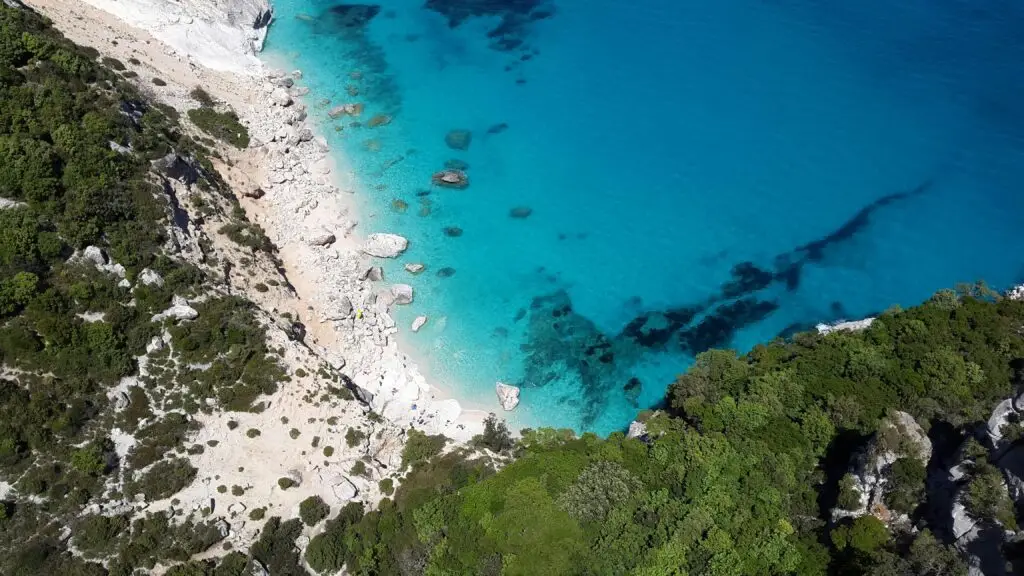
Ancient stone, turquoise seas, wide horizons
Sardinia (Sardegna) lies alone in the Mediterranean, ringed by some of the clearest water on Earth.
It is a land of raw nature, prehistoric mystery, and endless coastline — a place where time feels older, slower, more elemental.
Driving inland, you enter a world of granite mountains, empty roads, isolated villages, and open skies.
The air smells of myrtle and sea; wind passes over scrub and rock; flocks move across hills guarded by stone shepherd huts.
There is silence here — a silence with weight.
Sardinia is both rugged and delicate —
wild cliffs falling into turquoise bays, and quiet coves barely wide enough for a handful of salt-washed boats.
The Beaches — Untamed Mediterranean
Sardinia’s beaches are legendary:
not for glamour, but for purity.
Water shifts from luminous pale green to deep sapphire;
white sand gleams beneath sunlight;
coves hide behind curved headlands where pine forests meet the sea.
In the north, the Costa Smeralda undulates with coves, granite rock formations, and secluded bays where the sea glows like cut glass.
Elsewhere, long beaches stretch into infinity, empty even in summer — places where you feel small beneath a wide sky.
The sea here has a voice — gentle one day, fierce the next.
The Interior — Stone & Silence
Away from the coast, Sardinia reveals another soul.
Mountains rise in jagged waves; oak forests shade valleys; shepherd trails cross the highlands.
Villages rest along slopes, their stone houses faded by sun and wind.
Life moves slowly here — deeply tied to land and ancestry.
This is a place of oral tradition, where stories are passed through generations, and community rituals still shape the seasons.
The landscape feels ancient — heavy with memory.
Nuraghi — Bronze-Age Sentinels
Scattered across Sardinia are thousands of nuraghi — megalithic stone towers built over 3,000 years ago.
They rise from hills and fields like forgotten watchtowers, silent and powerful, older than Rome, older than most Mediterranean civilizations.
Climb inside a nuraghe, and the air feels cool and sacred.
Narrow stairs spiral through stone; the sky shines through openings above; voices echo in ancient chambers.
They are monuments to a deep and mysterious past.
Sardinia never lets you forget how old the world is.
Why Sardinia Matters
Sardinia is a place of light and stone —
earth stripped to its essence, sea stripped to its purest color.
It offers wilderness, history, and stillness in equal measure.
It asks you to slow down,
to listen,
to be present.
Here, the wind tells stories older than memory.
🇮🇹 Why Italy Belongs on Every Bucket List
Italy is not one landscape or one culture —
it is a tapestry woven from glaciers and volcanoes, Renaissance palaces and cliff-side villages, silent monasteries and sun-bleached islands.
It is a country that invites both wonder and stillness — urging you to explore deeply, linger quietly, and return often.
From the Dolomites to Sicily, from Venice’s lagoon to Sardinia’s wild bays, Italy offers worlds within a single peninsula.
Every visit reveals another layer — a new taste, a new path, a new story.
No journey here is ever the same.
That is Italy’s gift —
it grows with you.
When you leave,
you do not say goodbye.
You say,
“Until next time.”
 Related Articles
- Kakslauttanen Arctic Resort
- Top 10 Most Unique Places to Stay in Europe
- 10 Incredible Castles Around the World