
🇯🇵 COMPLETE WORD TRAVEL GUIDE
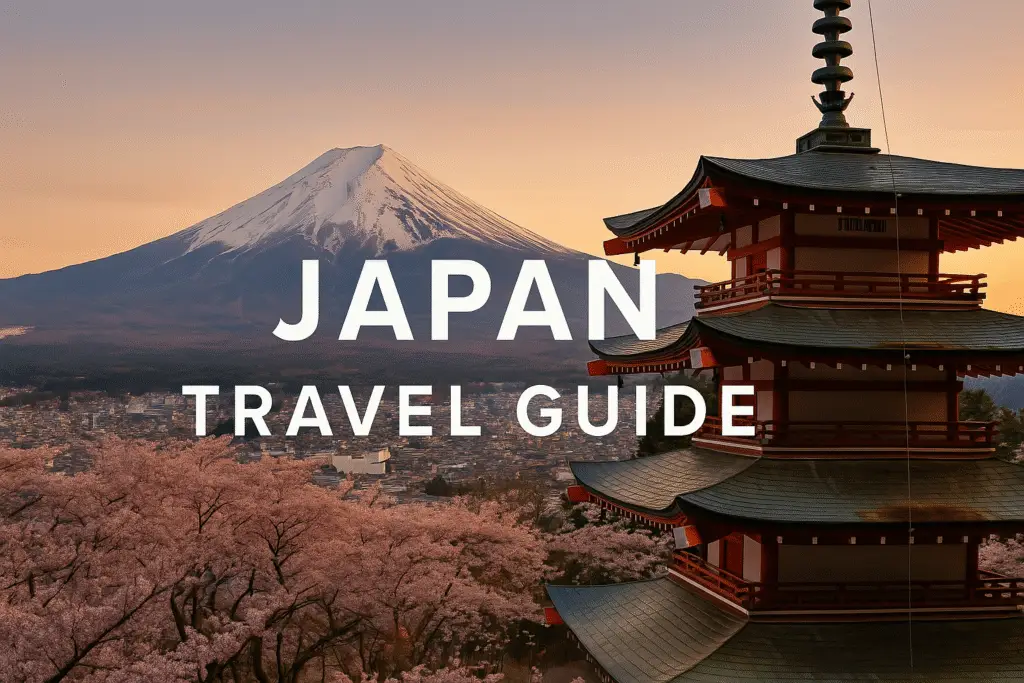
— JAPAN, A LAND OF SEASONS, SILENCE, LIGHT AND ANCIENT STORIES
Japan is an island nation where beauty lives in small details and grand landscapes at the same time, where seasonal change is not just weather but philosophy, where centuries of tradition coexist with neon skylines, where temples stand in deep forests and bullet trains hum across rice fields, where every meal is an art form and every gesture carries meaning. Traveling through Japan means discovering a country shaped by mountains and rivers, earthquakes and volcanoes, poets and monks, emperors and fishermen, artisans and dreamers, cherry blossoms and crimson maples, summer fireworks and winter snowscapes. It is a place where something ancient is always present, even when surrounded by ultra-modern architecture.
Japan stretches from the icy seas of Hokkaido to the coral waters of Okinawa, from the mountains of the Japanese Alps to the subtropical forests of Kyushu, from quiet temples in Kyoto to the dazzling towers of Tokyo. Each region feels distinct, shaped by its own history, climate, cuisine, festivals and character. Yet all are tied together by a cultural thread of hospitality, respect, precision, harmony and aesthetic simplicity that makes Japan feel both calming and exhilarating.
Japanese culture is rich with rituals and intentions. Tea ceremonies transform simple gestures into mindful experiences. Shinto shrines invite visitors to purify themselves and bow before ancient spirits of nature. Zen gardens use rocks, moss and gravel to express eternity and impermanence. Traditional inns, called ryokan, offer futons laid out on tatami floors, hot spring baths surrounded by nature, and meals arranged like edible poetry. Even in the busiest cities, traditions continue quietly in backstreets: an old craftsman sharpening knives, a chef preparing sushi with movements learned over decades, a grandmother arranging flowers for ikebana, schoolchildren walking in uniforms through temple gates.
Japan is a land of atmosphere — soft, misty mornings in mountain villages, lantern-lit nights in Kyoto’s alleyways, waterfalls hidden in sacred forests, shrines glowing beneath ancient cedar trees, night markets filled with sizzling aromas, and city streets shimmering with reflections after rain. Each season transforms the country: cherry blossoms in spring, lush green rice fields in summer, golden and red leaves in autumn, and powder snow in winter.
This guide takes you across all of Japan’s major islands and regions, weaving culture, history, food, nature and emotion into one long journey.
TOKYO — A CITY OF LIGHT, LAYERS, TRADITION AND MODERNITY
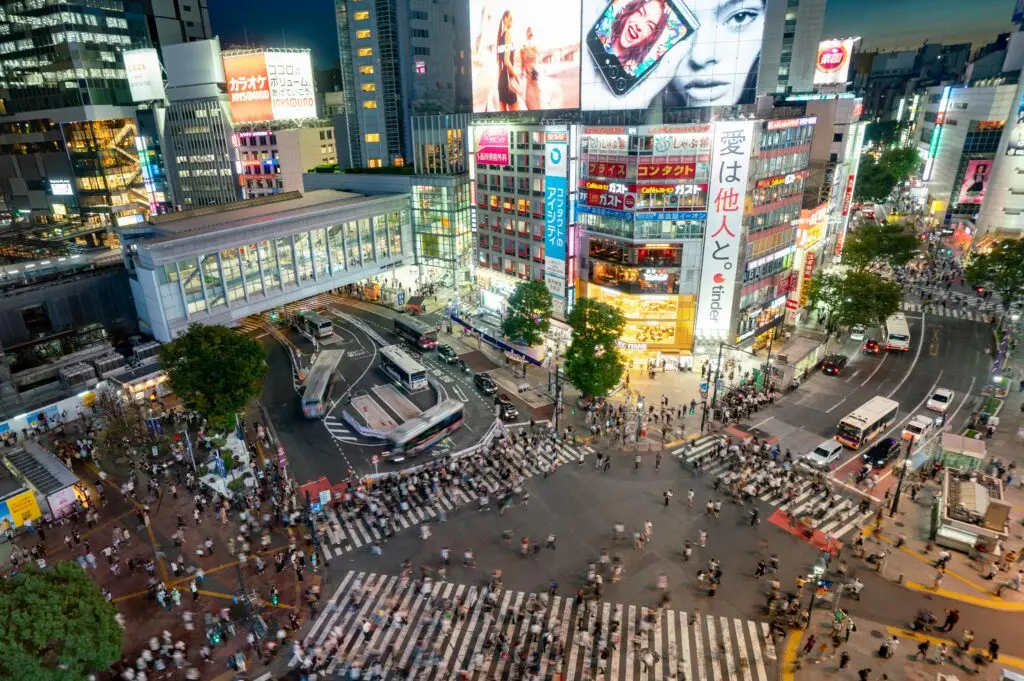
Tokyo is immense, a sprawling world of its own, a city where quiet shrines hide behind skyscrapers, where trains glide like clockwork, where lantern-lit alleyways run parallel to futuristic plazas, where fashion districts stand beside ancient temples. It is a place of contrasts that somehow flow together seamlessly. Every neighborhood feels like its own universe, and you can spend weeks here discovering new corners.
Shinjuku rises with neon towers, department stores, rooftop gardens and train stations that pulse like the heart of the city. Tall buildings glow at night, and side streets lead to tiny izakaya pubs where office workers share grilled skewers and cold drinks. On the other side of Shinjuku, the giant forest of Meiji Shrine offers a completely different world, one of towering trees, cawing crows, stone paths and giant wooden torii gates where visitors wash their hands at purification fountains before stepping into the sacred space.
Shibuya is fast, loud and energetic, with crowds flowing across the famous crossing like waves of movement. Music spills from stores, screens tower above the streets, and cafés hide in unexpected corners. But behind the noise you find quiet residential lanes, trendy boutiques, hidden shrines and peaceful parks.
Asakusa takes you into old Tokyo, where Nakamise Street leads toward Sensō-ji Temple, its giant lantern glowing red beneath the Thunder Gate. The smell of incense mixes with the aroma of fresh senbei crackers and sweet mochi. Narrow alleys around the temple keep edges of Edo-period charm alive.
Ginza shines with luxury shops, elegant buildings and quiet backstreets where traditional tea houses and sushi counters still thrive. Marunouchi, near Tokyo Station, blends modern architecture with tree-lined streets and stylish cafés, while nearby Imperial Palace gardens offer wide lawns, moats and centuries-old stone walls.
Ueno brings museums, cherry blossoms and a giant park filled with families, street musicians and food stalls. Akihabara is electric, colorful and loud, filled with electronics, arcades, anime stores and cafés with playful themes. Odaiba, built on reclaimed land, offers futuristic architecture, seaside promenades and nighttime city views sparkling across the bay.
Tokyo is a city you experience through movement. Every train ride reveals new scenes. Every walk reveals something unexpected. It is chaotic and calming, old and new, crowded and peaceful — a city that never stops unfolding.
KYOTO — TEMPLES, TEA HOUSES, GARDENS AND THE SOUL OF TRADITIONAL JAPAN
Kyoto feels like stepping into another era. The air seems softer, the light warmer, the atmosphere more contemplative. Wooden houses line narrow alleys. Temple bells echo across the city. Kimono-clad women walk beside bamboo fences. Incense floats through historic streets. Lanterns glow at dusk along the teahouse-lined lanes of Gion, and the past feels present everywhere.
Kyoto is home to more than a thousand temples and shrines. Fushimi Inari Taisha, the famous shrine with thousands of red torii gates, winds through a sacred mountain where fox statues guard the pathways and footsteps echo quietly beneath the painted arches. Kiyomizu-dera Temple stands on a hillside offering views over Kyoto’s rooftops, especially magical in spring when cherry blossoms drift like pink snowflakes or in autumn when fiery red leaves frame the wooden balconies.
The Golden Pavilion, Kinkaku-ji, glitters beside a mirror-like pond, surrounded by carefully shaped pines and moss gardens. The Silver Pavilion, Ginkaku-ji, does not actually shine silver, but instead radiates quiet elegance with its Zen sand garden and gentle wooden architecture. Ryoan-ji Temple features a rock garden of striking simplicity, where stones sit in patterns on raked gravel, inviting contemplation and allowing visitors to interpret meaning with their own minds.
Arashiyama, on Kyoto’s western edge, is a world of bamboo groves, rivers, forests and temples. Walking the bamboo path feels like entering a dream, with sunlight filtering through tall green stalks and the wind rustling leaves high above. The nearby river reflects mountains and old wooden boats, and macaques climb across hillsides in the quiet Iwatayama Monkey Park.
Kyoto’s culture goes beyond temples. It lives in tea ceremonies performed with slow, deliberate movements, in kaiseki meals arranged like art, in handmade pottery shaped by generations of craftsmen, in kimono silk dyed with deep colors, in festivals filled with floats and traditional music, in gardens that express nature through balance and restraint, and in geisha performances where dance, music and elegance meet.
Time moves differently in Kyoto. It feels slower, deeper, connected to centuries of tradition that still breathe in every street.
OSAKA — FOOD, ENERGY AND URBAN WARMTH
Osaka is bold, loud, warm and full of flavor. The city is famous for its humor, street food, neon signs and friendly atmosphere. Dotonbori glows with giant billboards and colorful signs, reflecting in the canal water where boats and crowds move beneath a sky filled with electric light.
Street food stalls serve takoyaki, okonomiyaki, skewers, ramen and grilled delights that sizzle on open griddles. The air is thick with aromas that make walking through Osaka an experience of constant temptation. Neighborhoods like Shinsekai bring nostalgia with retro signs, narrow alleyways, lanterns and the towering Tsutenkaku building lighting the streets.
Osaka Castle stands proudly in the middle of the city, surrounded by moats, parkland and seasonal color. In spring, cherry blossoms turn the grounds into a pink celebration. Namba and Umeda show Osaka’s modern side with shopping centers, underground labyrinths, busy train stations and nightlife bursting with energy.
Yet Osaka also has moments of quiet. Shrines sit between buildings with long histories behind wooden gates. Riverside walks offer peaceful views. Markets bring together families, fishmongers, chefs and vendors calling out greetings with smiles.
Osaka is generous, fun, flavorful and alive — a city where daily life and entertainment overlap effortlessly.
THE JAPANESE ALPS — SNOW PEAKS, FORESTS, TRADITIONAL VILLAGES AND CLEAR RIVERS
The Japanese Alps stretch across central Honshu with towering peaks, deep valleys, clear rivers and old mountain towns. It is a world of misty mornings, wooden ryokan inns, warm hot springs and peaceful nature trails.
Takayama captures the charm of a mountain town with old merchant districts, narrow streets, sake breweries, morning markets and traditional wooden houses. Festivals fill the town with floats, music and lanterns that illuminate the night.
Nearby lies Shirakawa-go, a UNESCO World Heritage village where steep thatched-roof houses called gassho-zukuri look like hands pressed together in prayer. In winter, heavy snow blankets the village with a soft, magical glow, and lights reflect off white rooftops under star-filled skies.
Kamikochi is a river valley carved between high peaks, with emerald water so clear you can see rocks glittering beneath the surface. Forest paths lead beside streams, across wooden bridges and toward distant mountains wrapped in cloud.
The Alps bring peace, quiet, fresh air and a sense of timelessness.
NIKKO — FORESTS, SHRINES AND SACRED MOUNTAINS
Nikko sits north of Tokyo in deep forest, where moss covers stone lanterns and mist curls around tall cedar trees. The shrines here feel ancient, ornate and mystical. Toshogu Shrine is decorated with intricate wood carvings, gold leaf and symbolic architecture. Waterfall-filled valleys surround the region, with Lake Chuzenji reflecting mountainsides that turn gold and crimson in autumn.
Nikko is a place of spiritual silence, natural beauty and cultural richness.
KANAZAWA — GARDENS, GEISHA DISTRICTS AND GOLD LEAF
Kanazawa offers traditional atmosphere without the crowds of Kyoto. The Kenrokuen Garden is often called one of the most beautiful in Japan, with seasonal landscapes that transform dramatically from cherry blossom spring to snowy winter. Samurai districts with preserved houses show a window into feudal history, while geisha districts like Higashi Chaya still echo with traditional charm.
HIROSHIMA & MIYAJIMA — PEACE, REFLECTION AND ISLAND BEAUTY
Hiroshima is a city of resilience and peace, with memorial parks surrounded by modern life. Nearby lies Miyajima, an island covered in forests, temples and deer wandering freely along quiet paths. The floating torii gate of Itsukushima Shrine rises from the sea, glowing in the sun and reflecting in the tide. Hiking paths lead to viewpoints overlooking mountains and ocean.
KYUSHU — VOLCANOES, HOT SPRINGS, SAMURAI HERITAGE AND SUBTROPICAL COASTS
Kyushu blends volcanic activity, hot springs, green countryside, samurai history and coastal beauty. Mount Aso’s crater is one of the largest in the world, with steam rising from deep fissures in the earth. Beppu is famous for hot springs that bubble, steam, bubble and boil in colorful pools, creating surreal landscapes.
Fukuoka is a lively gateway city with delicious ramen, seaside parks, festivals and warm local culture. Kagoshima sits beneath the smoking peak of Sakurajima volcano, while the nearby Satsuma Peninsula offers rugged coastlines and spiritual forests.
Nagasaki carries centuries of international influence in its architecture, cuisine and portside hills. The Goto Islands and Amakusa region are peaceful, remote and full of coastal beauty.
Kyushu is warm, lush, volcanic and culturally rich.
SHIKOKU — PILGRIMAGE TEMPLES, MOUNTAIN VILLAGES AND PEACEFUL RIVERS
Shikoku is the smallest major island but deeply spiritual, known for the 88-Temple Pilgrimage that circles the island. Mountain villages, river valleys, vine bridges crossing gorges and quiet coastal towns create a sense of calm.
The Iya Valley is dramatic and peaceful, with green slopes folding into deep ravines. Tokushima is famous for Awa Odori dance festivals, while Kagawa offers stunning island art installations in the Seto Inland Sea.
HOKKAIDO — SNOW, WILDERNESS, LAKES, FLOWER FIELDS AND WIDE OPEN SPACES
Hokkaido is Japan’s northern frontier, a place of snowy winters, cool summers, vast landscapes and abundant wildlife. Sapporo brings winter festivals with illuminated ice sculptures and a relaxed northern city vibe. Nearby ski resorts like Niseko offer powder snow considered some of the best in the world.
Hakodate provides seafood markets and hilltop views of glowing nightscapes. Furano and Biei bloom with lavender, patchwork flower fields and rolling hills. Shiretoko National Park, on the eastern edge, feels wild and untouched, with coastal cliffs, waterfalls and drifting sea ice in winter. Akan National Park offers caldera lakes, steaming vents and forests where red-crowned cranes dance in winter snow.
Hokkaido is spacious, refreshing and completely different from the rest of Japan.
OKINAWA — CORAL ISLANDS, TROPICAL SEAS AND A UNIQUE CULTURE
Okinawa is warm, turquoise, gentle and slow-paced, with beaches and coral reefs that glow beneath tropical sunlight. The islands have their own distinct culture, music, language, traditions and cuisine, shaped by centuries of trade with Asia and the Pacific.
Naha brings traditional markets and unique architecture blended with beach life. The Kerama Islands shimmer with clear blue water and sea turtles. Miyako and Ishigaki feel like hidden tropical jewels, with coral gardens, calm bays, sugarcane fields and sunsets glowing orange over quiet beaches.
Okinawa offers relaxation, warmth and island serenity.
JAPANESE FOOD — A CULINARY JOURNEY THROUGH SEASONS, TEXTURES AND FLAVORS
Japanese cuisine is an art form shaped by precision, harmony, tradition and seasonal awareness. Sushi and sashimi shine with freshness and simplicity, but Japan’s food culture runs far deeper. Ramen bowls vary from creamy tonkotsu broth in Kyushu to soy-based broths in Tokyo and miso ramen in Hokkaido. Tempura transforms vegetables and seafood into crispy elegance. Yakitori grills smoky skewers over glowing coals. Kaiseki cuisine presents courses like edible art, each dish delicate and intentional.
Street foods like takoyaki, taiyaki, yakisoba and grilled corn fill festivals with delicious smells. Onsen towns offer warm bowls of local specialties. Countryside inns serve mountain vegetables, river fish and hot pots. Coastal towns serve seafood pulled from the ocean that morning. Convenience stores surprise visitors with surprisingly good snacks and sandwiches.
Food in Japan is not just nutrition. It is emotion, memory, culture and love.
SEASONS OF JAPAN — A COUNTRY TRANSFORMED FOUR TIMES A YEAR
Japan’s seasons are dramatic and deeply embedded in culture.
Spring brings sakura blossoms that float through the air like pale pink snow. Parks fill with picnics, laughter and soft colors. Mountains bloom with fresh green leaves and riverbanks turn pastel.
Summer brings festivals, fireworks, lush rice fields, deep greens, coastal swims and warm nights full of cicadas. Lanterns glow at obon dances and traditional music fills the air.
Autumn brings fiery red maples, golden ginkgo trees, crisp mountain air and poetic scenery. Temples glow beneath autumn colors and rivers reflect orange and red forests.
Winter brings quiet landscapes, snowy villages, hot springs steaming beneath icy air and the feeling of stillness and purity.
Each season feels like a new country.
ONSEN & RYOKAN CULTURE — TRADITIONAL HOSPITALITY AND RELAXATION
Japanese hot springs and inns offer some of the country’s most memorable experiences. Stepping into an onsen surrounded by rocks, bamboo and nature is calming to the soul. Meals served in ryokan are elaborate, artistic and plentiful. Rooms with tatami floors, sliding wooden doors, futons and garden views create peaceful spaces where time slows down.
The sound of water, the warmth of the bath, the fragrance of cedar and the soft rustle of yukata robes contribute to a sense of deep rest.
UNIQUE CULTURAL TRADITIONS — FROM SHINTO TO ZEN TO FESTIVALS
Shinto shrines dedicated to nature spirits bring gentle rituals like handwashing, bowing and ringing bells. Buddhist temples offer meditative architecture, incense and statues of compassion. Festivals celebrate seasons, harvests, ancestors and community, filling streets with drums, dances, lanterns and portable shrines carried through neighborhoods.
Martial arts like kendo, karate and aikido focus on discipline and spiritual strength. Traditional arts like ikebana, calligraphy and pottery connect creativity with mindfulness. Geisha culture preserves classical music, dance and refined hospitality. Tea ceremonies express harmony, respect and purity in simple movements.
Japan’s cultural depth feels endless.
ITINERARIES (NO DRIVING DETAILS)
7 days: Tokyo → Kyoto → Osaka
10 days: Tokyo → Hakone → Kyoto → Nara → Osaka
14 days: Tokyo → Nikko → Kanazawa → Kyoto → Osaka → Hiroshima → Miyajima
21 days: Tokyo → Alps → Kyoto → Shikoku → Osaka → Kyushu → Okinawa
CONCLUSION — WHY JAPAN TOUCHES THE HEART FOREVER
Japan lingers in memory because it engages every sense and emotion. It is a place where silence is beautiful, where nature is sacred, where food is art, where cities pulse with life, where traditions are honored, where seasons write poetry across landscapes, where tiny details matter, where every journey reveals something new.
It is a country of elegance, mystery, warmth, refinement, history and wonder.
Japan is not just a destination.
It is an experience that stays with you long after you leave, like the scent of cherry blossoms carried by the wind.
Related Amazing Bucketlist Articles
- 5 Once-in-a-Lifetime Floating Stays
- Hurawalhi Island Resort
- Top 10 Most Romantic Countries in the World for Couples