🇲🇻 – THE ULTIMATE COUNTRY TRAVEL GUIDE
A complete exploration of the world’s most iconic paradise
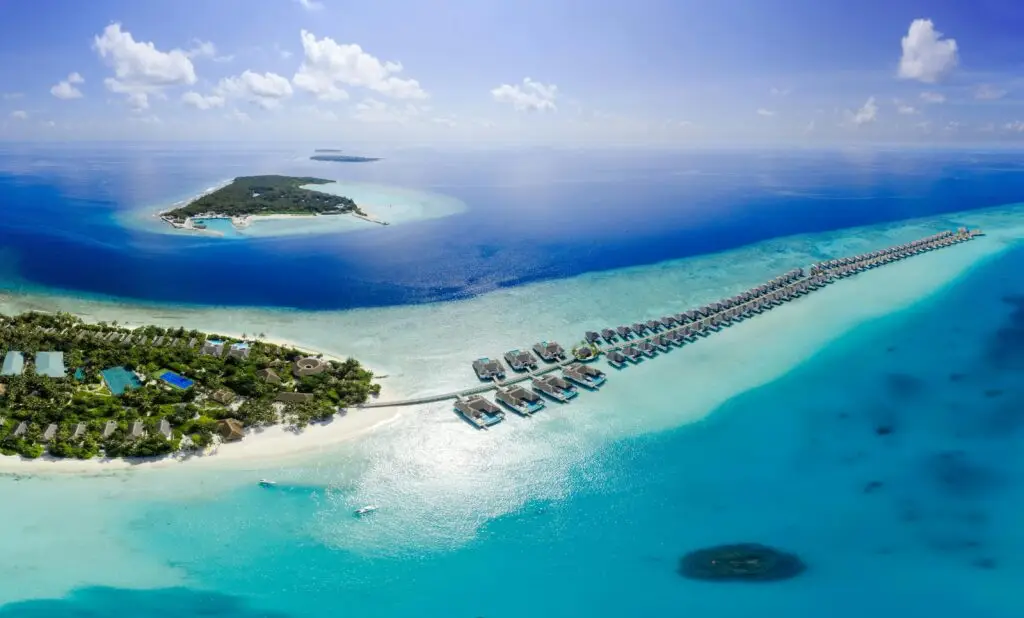
The Maldives is a destination that almost feels like a dream — a place where the boundary between water and sky fades into a magnificent palette of blues, turquoises, and silver reflections. A place where tiny islands with powder-soft beaches rise gently from the ocean like pearls. A place where nature feels perfect, where every sunrise looks painted, and where the rhythm of daily life slows to the gentle movement of the ocean. The Maldives is more than a country; it is a world of water, light, and quiet, where luxury, simplicity, and nature blend seamlessly.
Yet the Maldives is also a complex and culturally rich nation. With more than 1,200 islands spread across 26 natural atolls, it is one of the most geographically unique countries on the planet. Its history, traditions, spirituality, and ocean-based lifestyle have evolved over thousands of years, shaped by migration, trade, and the ever-present sea. Today, the Maldives stands as both a luxury travel icon and a destination where travelers can connect deeply with nature, explore local life, dive with whale sharks, surf world-class waves, or lose themselves in silence on a remote sandbank.
This guide offers an immense, in-depth exploration of the Maldives — its islands, culture, atolls, wildlife, history, and the essence of life in one of the world’s most extraordinary destinations.
1. Introduction — A Floating Paradise in the Indian Ocean
To understand the Maldives, you must first imagine just how vast the ocean around it truly is. The country stretches across nearly 900 kilometers from north to south, yet the total land area is tiny — barely enough to form a single small city. The rest is water: shallow lagoons that glow in neon shades of blue, coral reefs filled with life, deep channels where large fish migrate, and open seas where the horizon feels infinite.
Flying into Malé already feels surreal. From the airplane window, you see rings of coral scattered across the ocean — some forming perfect circles, others crescent shapes or long arcs. Inside these rings lie islands, sandbanks, and aquamarine lagoons that look too beautiful to be real. Many travelers describe this moment as one of the most magical arrivals in the world.
The Maldives is the flattest country on Earth, with the highest natural point reaching just a little over 2 meters above sea level. This creates an unusual sense of fragility — a reminder that paradise is delicate, shaped daily by wind, currents, and coral growth. But this low elevation also gives the Maldives its iconic beauty: no cliffs, no mountains, no hills — only flat islands surrounded by perfect water.
Each island is different. Some are private resort islands with overwater villas stretching into the lagoon. Others are local communities with colorful houses, palm trees, fishing boats, and sandy streets. Some are uninhabited paradises — little more than a stretch of sand with a few palms swaying in the breeze. The Maldives offers every kind of tropical experience imaginable, from opulent 5-star luxury to simple guesthouse stays filled with local warmth.
2. Geography — Understanding the 26 Natural Atolls
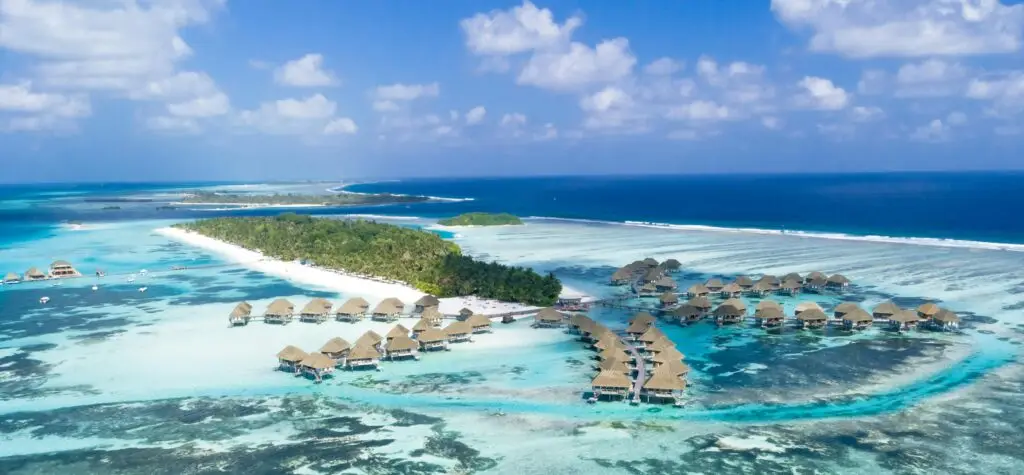
The Maldives is composed of 26 natural atolls, each formed by ancient coral structures that grew around volcanic peaks millions of years ago. Over time, the volcanoes sank, leaving behind coral ring formations. These rings — with their central lagoons — became the basis of Maldivian geography.
An atoll is essentially a coral kingdom: a circular structure with outer reefs, channels (called kandus), shallow plateaus, and dozens of islands dotting the interior. Many atolls have large central lagoons, sometimes over 50 kilometers wide. Others are fragmented, containing labyrinths of reefs and channels that create exceptional diving conditions.
Because the islands sit on coral, their soil is soft and sandy, made mostly of coral fragments. This limits agriculture, but it contributes to the Maldives’ signature white beaches — softer, finer, and brighter than most tropical destinations.
The 26 natural atolls are divided into 20 administrative atolls for modern governance, but for travel purposes, the natural formations matter more. Some are near the capital Malé and easy to access; others lie hundreds of kilometers south and feel like untouched worlds.
3. Climate — Warm, Tropical, and Ever Connected to the Ocean
The Maldives enjoys a tropical climate influenced heavily by monsoon winds. Instead of dramatic seasonal changes, the Maldives has two main weather patterns:
Northeast Monsoon (Iruvai)
December to April
– Dry, sunny, calm seas
– Light winds
– Lower humidity
– The most popular time for travel
– Excellent for snorkeling, diving, and beach relaxation
Southwest Monsoon (Hulhangu)
May to October
– More wind and occasional rain
– Rougher seas
– Fewer tourists and better deals
– Fantastic for surf (especially June–August)
– Reefs still remain beautiful and thriving
Temperatures year-round float between 27–32°C, and the sea temperature is almost always around 28°C — like warm bathwater.
Even during the rainy season, it’s rare to have full days of rain. Showers typically come in bursts, followed by sunshine.
4. A Deep Dive Into Maldivian Culture
Although the Maldives is often marketed as a resort paradise, the culture of the islands is far more fascinating than most travelers realize. It is a blend of South Asian, Arab, East African, and Southeast Asian influences. Over centuries, sailors and merchants passing along the Indian Ocean trade routes stopped in the Maldives, leaving behind languages, customs, beliefs, and trade items.
Language
The national language is Dhivehi, a unique Indo-Aryan language with its own script, Thaana. Words flow with melodic rhythm, often influenced by Arabic terms due to centuries of Islamic influence.
Religion
Islam is the state religion and central to local identity. Mosques are found on every inhabited island, often beautifully decorated with coral stone carvings or intricate lacquer work.
Community Life
Life on local islands revolves around:
– fishing
– family gatherings
– evening strolls along the beach
– playing bashi, a traditional women’s sport
– crafting, especially lacquerware and mat weaving
– festivals like Eid and Independence Day
Maldivians are warm, polite, soft-spoken, and deeply connected to the rhythm of the ocean.
Traditional Boatbuilding
The dhoni, the traditional Maldivian boat, is a symbol of national pride. Built for centuries using coconut timber and handcrafted techniques, the dhoni is perfectly adapted to the currents and reefs of the Maldives.
Traditional Arts
– Boduberu drumming performances (energetic, rhythmic, communal)
– Ufaa dances around the fire
– Coral stone architecture
– Fine lacquerware with red, gold, and black patterns
These traditions blend with modern influences to create a culture that is both ancient and evolving.
5. Local Island Life — The Other Maldives
The Maldives used to be exclusively a resort destination, but everything changed in 2011, when the government allowed guesthouses on local islands. This transformed the country into a destination not only for luxury travelers but also for:
– backpackers
– families
– solo travelers
– divers
– photographers
– budget travelers
Local islands offer something resorts cannot: authentic island life.
What to Expect on a Local Island
– brightly colored houses
– sandy streets
– cafés and local bakeries
– children playing by the beach
– modest dress (since the Maldives is Islamic)
– community markets
– fishing boats anchored offshore
– friendly hospitality everywhere
Popular local islands include:
Maafushi, Thulusdhoo, Ukulhas, Rasdhoo, Dhigurah, Thoddoo, Fulidhoo, Gulhi, Thinadhoo, Mathiveri, and many more.
Each island has its own personality — some lively, some quiet, some surrounded by exceptional reefs.
6. Resorts — Icons of Luxury and Imagination
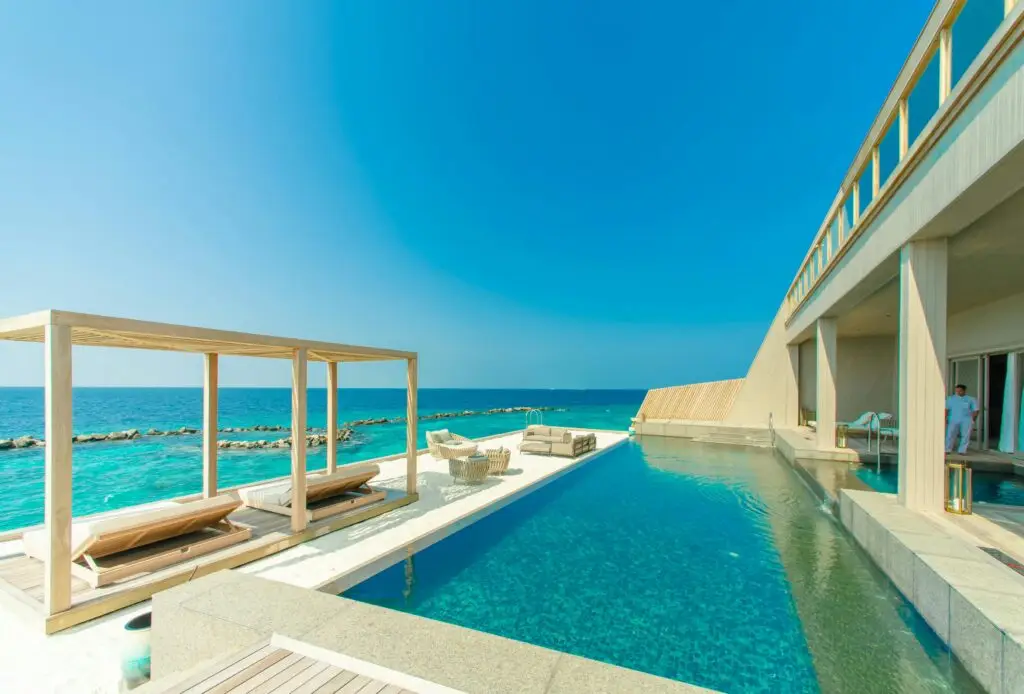
The Maldives is home to more than 160 private island resorts, each occupying its own island. These resorts vary widely in style, atmosphere, and price, but all share a sense of exclusivity and tranquility. Resorts typically include:
– Overwater villas
– Beach bungalows
– Mix of restaurants
– Diving & snorkeling centers
– Spa and wellness treatments
– Water sports equipment
– Immaculate beaches
– Turquoise lagoons
But what truly makes Maldivian resorts special is how they blend architecture with the natural environment. Villas often sit above crystal-clear water, with steps leading directly into the ocean. Infinity pools merge seamlessly with the horizon. Wooden walkways stretch across the lagoon. Palm trees sway gently above white sand.
Some resorts are ultra-luxurious, offering underwater restaurants, floating breakfasts, personal butlers, private pools, silent beaches, and villas designed to feel suspended in the sky. Others are simple, quiet, and focused purely on nature.
No matter the price point, Maldivian resorts create a feeling of escape that is unmatched anywhere else.
7. Nature & Marine Wildlife — One of the Richest Oceans on Earth
Because the Maldives sits on top of massive coral structures, it hosts extraordinary marine biodiversity. The ocean is the lifeline of the islands:
Whale Sharks
South Ari Atoll is one of the few places in the world where whale sharks can be seen year-round.
Manta Rays
Baa Atoll’s Hanifaru Bay attracts huge manta gatherings during peak season.
Reef Sharks
Harmless blacktip sharks often swim near resort beaches.
Turtles
Green turtles, hawksbill turtles, and olive ridleys thrive in Maldivian waters.
Dolphins
Large pods often accompany boats at sunset.
Coral Reefs
The Maldives hosts thousands of reef species — corals, fish, crustaceans, and more.
Birdlife
Herons, fruit bats, and seabirds roam freely across the islands.
The Maldives is a sanctuary of life, where every snorkeling session feels like entering a new world.
8. Activities — More Than Just Beaches
Many travelers assume the Maldives is only about relaxing, but the truth is the country offers endless activities.
Snorkeling
Crystal-clear visibility + vibrant reefs = world-class snorkeling.
Diving
Overhangs, swim-throughs, drift channels, wrecks, sharks, rays — the Maldives is legendary for diving.
Surfing
Some atolls have world-class breaks perfect for advanced and intermediate surfers.
Kayaking & Paddleboarding
Calm lagoons are ideal for peaceful exploration.
Fishing
Night fishing and big-game fishing are popular on many islands.
Sandbank Picnics
Tiny sandbars surrounded by turquoise water create the most surreal picnic experiences.
Spa & Wellness
The Maldives is a leading destination for spa retreats and overwater treatment rooms.
Photography
From drones to underwater shots, the Maldives is a photographer’s paradise.
A Complete Exploration of All 26 Natural Atolls
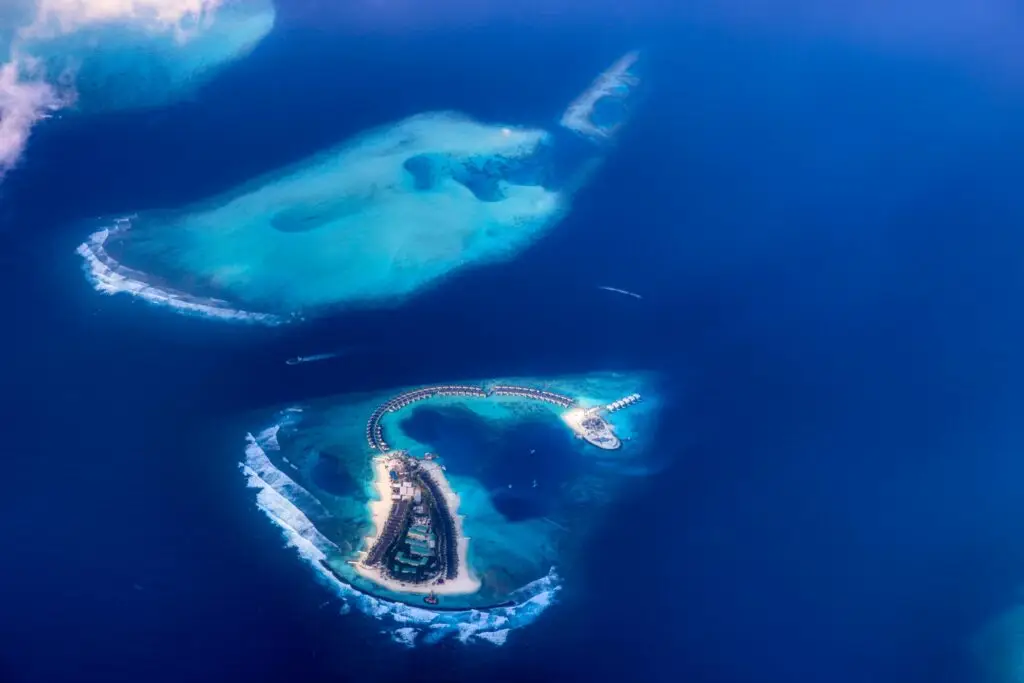
The Maldives is a nation made almost entirely of water, dotted with small islands that sit within ring-shaped coral formations known as atolls. Each atoll has a unique character — some are vibrant hubs filled with luxury resorts, others feel remote and wild, and others reveal authentic Maldivian life untouched by mass tourism. Understanding the atolls is essential to appreciating the depth and diversity of the Maldives. Below is a detailed, immersive exploration of every natural atoll, stretching from the far north to the remote southern equatorial regions.
The Far Northern Atolls
These atolls lie closest to India’s Lakshadweep Islands and are among the least visited, giving them a sense of isolation and untouched beauty. They are culturally rich, naturally wild, and perfect for travelers seeking a deeper, quieter Maldives.
1. Haa Alif Atoll (Thiladhunmathi Uthuruburi)
The northernmost atoll of the country is a cluster of islands where the Maldives’ cultural identity feels strongest. Haa Alif is known for old mosques made of coral stone, traditional boatbuilding, and a way of life deeply connected to the sea. The island of Utheemu is historically significant as the birthplace of Sultan Mohamed Thakurufaanu, a national hero who fought Portuguese occupation in the 16th century.
This atoll has wide, deep channels that open into the Indian Ocean, making it an excellent destination for advanced diving. Reefs here often host large pelagic species, including tuna, rays, and sharks. A few luxury resorts are spread across the region, but the majority of islands remain quiet, authentic, and filled with local charm.
2. Haa Dhaalu Atoll (Thiladhunmathi Dhekunuburi)
South of Haa Alif lies Haa Dhaalu, one of the most biologically diverse atolls in the northern Maldives. Its central lagoon is large and dotted with islands, while the outer reef edges have strong currents and deep channels ideal for drift dives. Islands like Kulhudhuffushi are bustling local centers, known for mangroves, boatyards, and fish-processing harbors.
Haa Dhaalu also offers stunning reefs that feel wild and untouched. Dolphins often swim near dhoni boats, and turtles can be seen gliding over seagrass beds close to shore. A handful of upscale resorts bring travelers to this atoll, but it remains far from crowded.
3. Shaviyani Atoll (Miladhunmadulu Uthuruburi)
Shaviyani is a huge atoll with a wide-open lagoon. It feels vast and remote, with long stretches of ocean between its islands. Many of the reefs here are still pristine due to limited development, making it a paradise for divers seeking colorful coral walls and abundant marine life. The atoll’s large size creates areas of remarkable calm water — perfect for kayaking and paddleboarding — and other areas with strong currents ideal for drift diving.
Local islands such as Funadhoo and Milandhoo offer insight into Maldivian life, while luxury hideaways like Fairmont Maldives Sirru Fen Fushi sit on private islands with wide beaches and expansive lagoons. Shaviyani remains one of the most peaceful places in the Maldives.
4. Noonu Atoll (Miladhunmadulu Dhekunuburi)
Noonu is a rising star among the northern atolls, known for upscale resorts like Soneva Jani, Velaa Private Island, and Joali Maldives — some of the country’s most extravagant properties. But beyond the luxury lies a natural world that feels almost dreamlike.
The lagoon is shallow and impossibly blue, with sandbanks that shift daily with the currents. The water here has a clarity that feels surreal, making snorkeling and swimming a visual feast. The inner reefs are calm and protected, ideal for beginners, while the outer reefs drop dramatically into deep blue channels filled with sharks, rays, and schools of fish.
Local islands like Velidhoo and Manadhoo offer small-town charm, quiet beaches, and relaxed living.
The Northern Central Atolls
These atolls are more accessible from Malé and have a mix of local culture, luxury resorts, and excellent marine biodiversity. They are less isolated than the far north but still maintain a traditional atmosphere.
5. Raa Atoll (Maalhosmadulu Uthuruburi)
Raa is famous for its large, peaceful lagoons and its rapidly expanding collection of high-end resorts. The atoll’s waters are extremely clear, and dolphins frequently travel through the channels. The marine life here is healthy, vibrant, and ideal for photography.
Local islands like Ungoofaaru, the regional capital, and Meedhoo offer colorful houses, busy harbors, and warm community atmospheres. Resorts like You & Me Maldives and InterContinental Maamunagau bring travelers seeking both romance and untouched coral reefs.
Raa Atoll’s geography features broad reef plateaus and sandy-bottom lagoons that glow in shades of blue and turquoise.
6. Baa Atoll (Maalhosmadulu Dhekunuburi)
Perhaps the most famous atoll in this region, Baa Atoll is a UNESCO Biosphere Reserve. It is home to Hanifaru Bay, one of the world’s most spectacular marine feeding grounds. During the southwest monsoon, plankton blooms attract dozens — sometimes hundreds — of manta rays and even whale sharks.
Baa Atoll’s resorts, including Soneva Fushi, Vakkaru, Royal Island, and Amilla Maldives, offer both luxury and sustainability. Many properties operate coral restoration programs and collaborate with marine biologists.
Local islands like Dharavandhoo and Maalhos have guesthouses, making the UNESCO area accessible for budget travelers as well.
Snorkeling in Baa feels like being inside a massive aquarium — clear, calm, warm, and filled with life.
7. Lhaviyani Atoll (Faadhippolhu)
Lhaviyani is known for its shipwreck dives, strong currents, and dramatic drop-offs. It is a favorite among experienced divers who want thrilling underwater encounters. The atoll has a mix of resort islands like Komandoo, Kanuhura, Innahura, and Kuredu — the latter known for its long sandy beaches and vibrant house reef.
The lagoon in Lhaviyani is wide and open, with deep blue channels that attract manta rays and large fish. Dolphins are commonly seen during speedboat transfers and sunset cruises. Local islands like Naifaru offer lively markets, fish processing sites, and a glimpse into daily life.
8. Kaashidhoo (a single isolated atoll/island)
Kaashidhoo is geographically separate from the rest of the central atolls. It’s a large local island surrounded by deep ocean waters, famous for agriculture — particularly coconuts, papayas, and watermelons. Its reefs are less visited but remain healthy and alive with marine life.
The Malé Region — Heart of the Country
These are the most accessible atolls in the Maldives, located near the capital city and airport. They receive the highest number of visitors and host dozens of resorts, local guesthouses, surf breaks, and dining options.
9. North Malé Atoll (Kaafu Atoll — Northern Part)
North Malé Atoll is the beating heart of Maldivian tourism. It contains:
– Malé (the capital)
– Hulhumalé (the airport island)
– Dozens of local islands
– Some of the oldest and most established resorts
It is also home to the Maldives’ best-known surf spots, such as Chickens, Cokes, Jailbreaks, and Sultans. The reefs are rich, the lagoons are clear, and the convenience of being close to the airport makes this atoll incredibly popular.
Local islands like Thulusdhoo, Himmafushi, Gulhi, and Dhiffushi attract budget travelers and surfers. Resorts range from simple, nature-focused retreats to iconic luxury escapes.
10. South Malé Atoll (Kaafu Atoll — Southern Part)
South Malé Atoll is more tranquil than the northern half. The lagoons are wider, the beaches softer, and the atmosphere deeply romantic. Many honeymooners choose this region for its calm conditions and scenic islands.
Resorts like Olhuveli, Rihiveli, Fihalhohi, and Anantara create private, intimate escapes. Local islands such as Guraidhoo and Maafushi are popular guesthouse hubs, offering excursions to sandbanks, snorkeling spots, and nearby resort islands.
Channels between islands here offer excellent drift diving and encounters with nurse sharks and eagle rays.
The Central Atolls — Quiet, Serene, and Traditional
These atolls form the heart of the Maldives’ traditional island culture. They are quieter, more dispersed, and perfect for travelers wanting authentic experiences and world-class diving without crowds.
11. Vaavu Atoll (Felidhoo Atoll)
Vaavu is one of the smallest atolls but also one of the most magical. It is home to:
– Alimatha Night Dive (famous for nurse sharks)
– Thinadhoo (one of the quietest islands in the Maldives)
– Long uninterrupted sandbanks
– Some of the clearest water in the country
Vaavu feels like stepping into an older, more peaceful version of the Maldives. Its reefs are vibrant, its channels full of fish, and its islands quiet and small.
12. Meemu Atoll (Mulaku Atoll)
Meemu is remote and undeveloped, with only a few resorts and a handful of local islands. Its lagoons are enormous, with deep blue water that shifts dramatically depending on light. Diving here offers untouched reefs and encounters with large pelagic species.
The atoll’s isolation gives it a serene atmosphere — perfect for travelers seeking solitude and nature.
13. Faafu Atoll (Nilandhe Atoll)
Faafu is one of the least populated atolls in the Maldives. It has a handful of resorts and islands, most notable for their relaxed vibe, translucent lagoons, and slow-paced life. Snorkeling here is peaceful, with calm waters and fields of branching coral.
Local islands like Feeali and Nilandhoo offer rich archaeological sites, including ancient mosque foundations and ruins that hint at the Maldives’ Buddhist past before conversion to Islam.
14. Dhaalu Atoll (Nilandhe Dhekunuburi)
Dhaalu Atoll is a beautifully balanced region — remote enough to feel untouched but developed enough to offer several excellent resorts, including Kandima Maldives, Baglioni Maldives, and Niyama Private Islands.
The atoll’s reefs offer colorful coral gardens, long swim-throughs, and excellent visibility. Many sandbanks here are vast, stretching out into the ocean like bleached moonscapes.
Dhaalu also has one of the Maldives’ few surf resorts, with gentle waves perfect for beginners.
THE ATMOSPHERE OF THE MALDIVES — MORE THAN JUST BEAUTY
The Maldives is not only visually stunning — it feels different. It has an atmosphere that is difficult to describe unless you have experienced it yourself. It is a combination of stillness, soft light, gentle breezes, and a sense of space that stretches endlessly toward the horizon. The islands are small, the sky is huge, and the ocean frames every moment of daily life. Time slows down here. Noise disappears. Stress feels impossible.
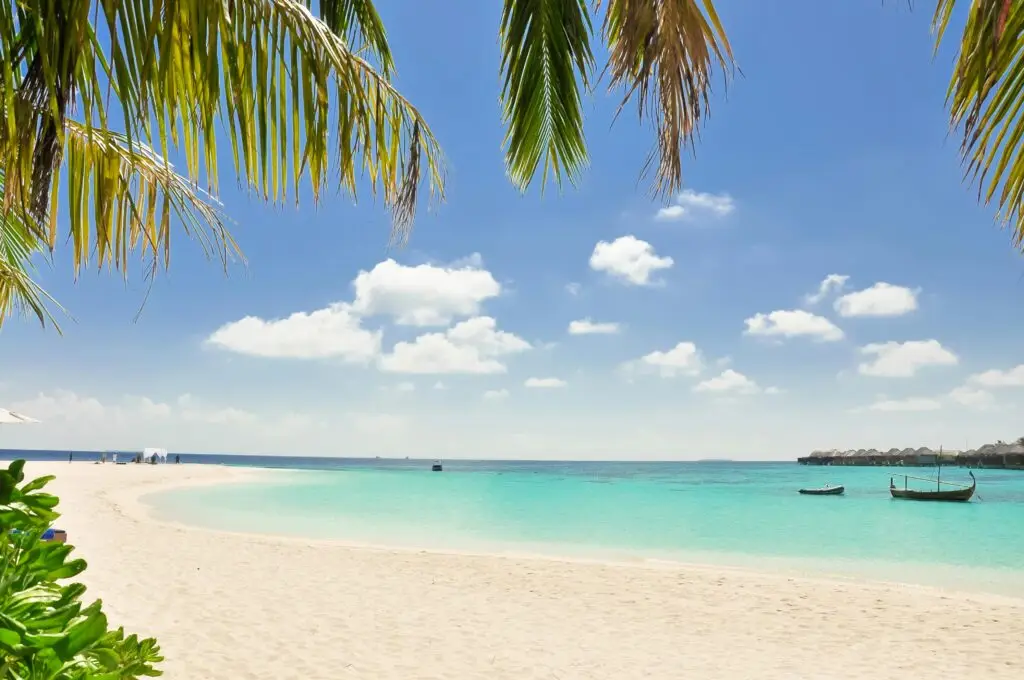
The soft white sand absorbs every footprint and every sound, creating an almost dreamlike quietness. Palm trees sway gently overhead, casting shifting patterns of light across the beach. The lagoons move in a slow rhythm — subtle waves, barely audible, washing against the shore. Even the colors seem softer, more harmonious: pastel blues at sunrise, deep turquoise at midday, molten gold in the late afternoon, and finally a gentle violet glow when the sun sets.
Night in the Maldives is equally magical. The stars shine brighter than almost anywhere else, reflected on the surface of calm lagoons. On some beaches, bioluminescent plankton lights up like tiny blue sparks, creating natural “starry” shorelines that glow with every step. The absence of cars and urban noise makes the sound of water, wind, and distant birds the soundtrack of the night. It creates a sense of intimacy with nature that is rare in the modern world.
OCEAN SEASONS — THE LIVING CALENDAR OF THE MALDIVES
Life in the Maldives follows cycles of the ocean rather than the calendar. Winds shift, currents change direction, plankton blooms rise and fade, and marine life responds in deeply interconnected ways. Understanding these natural rhythms gives travelers a deeper appreciation for the islands.
The Northeast Monsoon (Iruvai) — December to April
This is the dry, calm season. Winds are gentle, skies are clear, and the lagoons turn into mirrors of turquoise and silver. Coral reefs receive abundant sunlight, visibility improves dramatically, and many fish species become more active near the surface. This is the prime time for snorkeling, swimming, and enjoying calm beaches.
The Southwest Monsoon (Hulhangu) — May to October
During this season, winds shift and bring occasional showers. The ocean becomes more dynamic and alive. Plankton levels rise — attracting manta rays, whale sharks, and large schools of fish. Surfers flock to the Maldives during this season because the southern swells create perfect waves across the central atolls. Despite the rain, temperatures remain warm and the sun often returns quickly after showers.
Transition Seasons
April–May and October–November are fascinating times of change. Currents shift, large species migrate, and water movements create unusual combinations of calm lagoons and lively channels. Many divers consider these months the most rewarding because marine life is at its highest activity.
THE EMOTIONAL EXPERIENCE OF THE MALDIVES
More than any other destination, the Maldives creates an emotional experience. Travelers often describe feelings they never expected:
A deep sense of calm
The absence of traffic, noise, crowds, and stress creates a kind of mental reset. People sleep better, breathe deeper, and feel more connected to their surroundings.
Freedom and openness
Standing on a white sandbank surrounded by ocean in every direction feels like standing at the edge of the world. There is no pressure, no schedule, no distractions — only nature.
A feeling of romance
This is one of the reasons why the Maldives is the global capital of honeymoons. Candlelit dinners on the beach, private villas, sunsets from overwater hammocks — everything feels designed for connection.
A sense of awe
The ocean here is alive in a way that few people have ever witnessed. To see a manta ray glide past, or a whale shark rise slowly from the depths, is a humbling and unforgettable experience.
The joy of simplicity
Walking barefoot all day. Swimming at sunrise. Eating fresh fish and coconut. Watching rays glide under your villa. Life becomes simple, slow, and incredibly beautiful.
LOCAL FOOD & MALDIVIAN CUISINE — A TASTE SHAPED BY THE SEA
Food in the Maldives tells the story of the islands. It is simple, flavorful, and deeply connected to the sea. Almost every traditional dish revolves around three essential ingredients:
1. Tuna
Fresh, grilled, smoked, dried, or minced — tuna is the backbone of Maldivian cuisine. Skipjack tuna is especially prized. Fishermen catch it using the traditional pole-and-line method, a sustainable technique that has been used for centuries.
2. Coconut
Coconut milk, grated coconut, coconut oil — it appears in almost every dish. The aroma is subtle and adds creaminess to curries and salads.
3. Rice or Flatbread (Roshi)
Simple staples that balance the rich flavors of fish and coconut.
Some of the most beloved Maldivian dishes include:
- Mas Huni — shredded tuna with coconut, lime, and onion
- Gulha — fried or baked tuna-filled dumplings
- Bajiya — small Maldivian pastries filled with spiced fish
- Garudhiya — a clear tuna broth eaten with rice and chili
- Rihaakuru — a thick, dark fish paste slow-cooked for hours
On local islands, food is hearty, homemade, and filled with family flavors. In resorts, cuisine becomes an art form — world-class chefs create Japanese, Italian, Mediterranean, Peruvian, Indian, Middle Eastern, and fusion menus using local ingredients.
Fresh seafood is everywhere: lobster, snapper, octopus, prawns, and reef fish grilled over coconut husk fires. Tropical fruits like mango, papaya, banana, watermelon, and young coconut complete meals perfectly.
TRADITIONAL ART, MUSIC & HANDICRAFTS
Maldivian culture is expressed not only through food but through a rich artistic heritage.
Boduberu Drumming
Boduberu is the heartbeat of Maldivian music. A group gathers with large drums made from coconut wood, beating rhythmic patterns that grow faster and more energetic until the entire crowd begins to dance. It is communal, joyful, and deeply traditional.
Mat Weaving (Thundu Kunaa)
On some islands, especially in the southern atolls, women weave beautiful mats from natural fibers dyed in earthy colors. These mats were once used as sleeping mats or seating mats and are now cherished as cultural artifacts.
Lacquerwork (Liyelaa Jehun)
Wooden boxes and containers are layered with red, black, and gold lacquer and carved into intricate patterns. This craft is vibrant, polished, and unique to the Maldives.
Dhoni Boatbuilding
The dhoni is more than a boat; it is the soul of Maldivian craftsmanship. Built without blueprints, entirely by experience and memory, the dhoni has been the backbone of transportation, fishing, and ocean life for centuries.
THE SPIRITUAL HEART OF THE MALDIVES
Islam has shaped Maldivian culture for almost 900 years. Every island has at least one mosque — some simple, others elaborately carved from coral stone. Prayer calls echo softly across the islands at dawn and dusk. The cultural values of politeness, modesty, hospitality, and community come from these spiritual traditions.
Even in resorts, this influence remains in subtle ways:
– the respect for nature
– the calmness of daily life
– the deep value placed on gratitude and family
Visitors feel it not through rules, but through the peaceful rhythm of island living.
Transportation, Practical Tips, Travel Styles, Safety, Budget vs Luxury, Best Places to Stay, and the Essence of a Maldives Bucket List Trip
This final section brings the entire guide together — everything you need to know about traveling through the Maldives, how to move between islands, how resorts handle logistics, how local culture influences travel, and how to choose the right island for your dream trip. We will also explore etiquette, safety, climate, packing tips, and what makes the Maldives such a powerful bucket list destination.
TRANSPORTATION IN THE MALDIVES — HOW TO MOVE BETWEEN ISLANDS
The Maldives has one of the most unusual transportation systems in the world. Because the country is made up of water and tiny islands, you won’t find cars or trains connecting destinations. Instead, transportation happens entirely over the sea and sky.
Understanding how transportation works helps travelers choose the right island, resort, or guesthouse.
1. Speedboats — Fast, Common, and Convenient
Speedboats are used primarily around the Malé region (North and South Malé Atolls) but also connect some central atolls. They are the most flexible and most affordable transfer method compared to flights.
- Travel times range from 20 minutes to 2 hours
- Operate day and evening
- Cheaper than seaplanes
- Perfect for travelers staying close to Malé
Local islands like Maafushi, Thulusdhoo, Gulhi, and Dhiffushi are all accessible by speedboat multiple times daily. Many resorts in Kaafu Atoll also use speedboat transfers — ideal for visitors who want to keep logistics simple.
2. Seaplanes — The Iconic Maldivian Experience
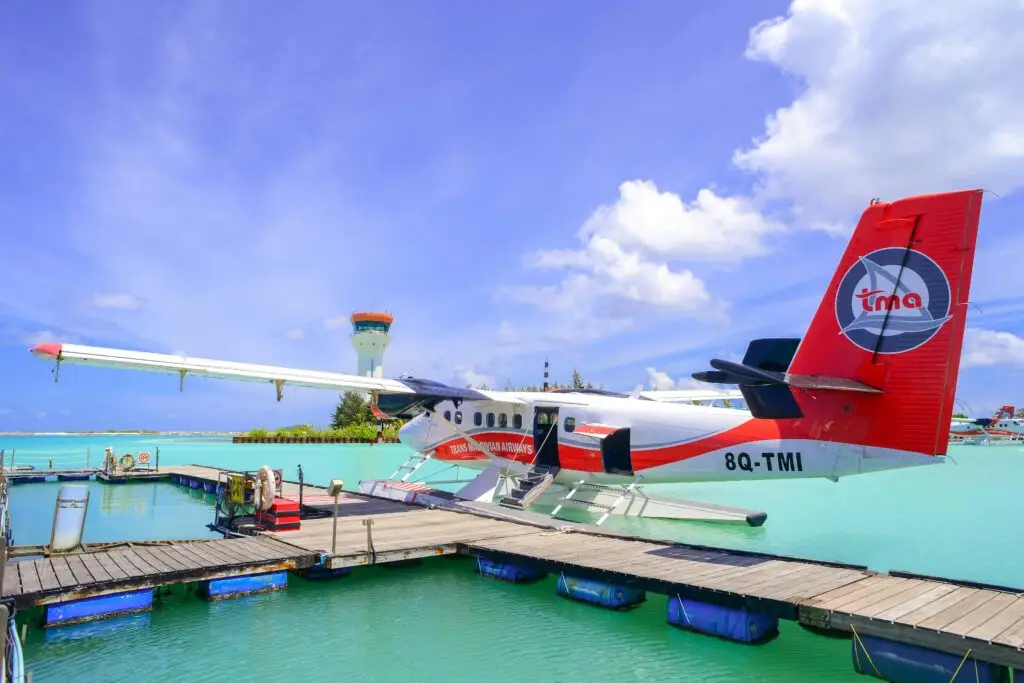
Seaplanes are the quintessential Maldivian transfer. They offer one of the most beautiful flights on Earth — floating above hundreds of islands, sandbanks, and lagoons.
Seaplanes are used for remote resort islands, especially in:
- Baa Atoll
- Raa Atoll
- Noonu Atoll
- Lhaviyani Atoll
- Ari Atoll
- The central atolls
What to expect from a seaplane transfer:
- Seating for 10–20 passengers
- No air-conditioning, but wide-open windows
- Breathtaking views during takeoff and landing
- Operates only during daylight
- Typically arranged by the resort, not by the traveler
- Takes between 25 and 55 minutes depending on distance
A seaplane landing on water near your resort is truly unforgettable — the perfect start or end to a dream trip.
3. Domestic Flights — Reliable and Good for the Far South
For longer distances, especially to the southern atolls (Gaafu, Fuvahmulah, Addu), the Maldives uses small domestic aircraft that land on “real” runways on local islands.
- Comfortable cabins
- Operate day and evening
- Safe and well-maintained
- Used for long-distance transfers across the country
After landing, travelers usually continue by speedboat to their final island.
4. Public Ferries — Budget-Friendly but Slow
Public ferries (MTCC ferries) connect local islands at very low prices.
Pros:
- Extremely cheap
- Great for slow travel
- Good for island-hopping between local islands
Cons:
- Very slow (sometimes 2–7 hours)
- Fixed schedules
- No service to resort islands
- Often don’t operate on Fridays (Islamic weekend)
Backpackers on a budget use ferries to travel around Kaafu, Ari, Vaavu, or sometimes the northern atolls.
5. Private Boats & Charters
Some resorts or dive centers offer private charters:
- Luxury yachts
- Catamarans
- Speedboats
- Fishing dhonis
Private charters are perfect for honeymooners, underwater photographers, or travelers wanting exclusive experiences like:
- sandbank lunches
- dolphin cruises
- manta searching
- sunset yacht tours
SAFETY IN THE MALDIVES — ONE OF THE SAFEST COUNTRIES FOR TRAVEL
The Maldives is considered one of the safest destinations in the world. Crime rates on resort islands are nearly zero, and local islands have tight-knit communities where everyone knows each other.
Key safety notes:
✔ Violent crime is extremely rare
✔ Resorts have 24/7 security
✔ Ocean conditions are monitored closely
✔ Sharks are generally harmless reef species
✔ Local islands are quiet and community-oriented
Ocean safety tips:
- Be aware of currents while snorkeling
- Avoid stepping on coral
- Use reef-safe sunscreen
- Stay within visibility of lifeguards or guides
- Look out for boat traffic near harbors
Sharks in the Maldives are not dangerous to humans — they are small reef sharks that avoid people. Snorkeling with them is very common and safe.
CULTURAL ETIQUETTE — RESPECTING LOCAL MALDIVIAN LIFE
While resorts are liberal and cater to global tourism, local islands follow traditional Islamic customs.
When visiting local islands:
- Dress modestly (shoulders and knees covered)
- Swim only at designated “bikini beaches”
- Avoid alcohol (only allowed on resort islands)
- Be respectful around mosques
- Ask before taking photos of people
- Avoid public displays of affection
The Maldives is warm and welcoming, and simple respect for local customs goes a long way.
BUDGET VS LUXURY — THE TWO SIDES OF THE MALDIVES
Many people think the Maldives is only for wealthy honeymooners — but that is no longer true. Since the opening of guesthouses in 2011, the Maldives has options for every budget.
1. Budget Travel — Local Islands & Guesthouses
Budget travelers can stay on beautiful islands for prices similar to Thailand or Bali.
Typical prices:
- Guesthouse room: €40–€90 per night
- Local meals: €3–€7
- Speedboat transfers: €20–€40
- Public ferry: €1–€5
- Activities (snorkeling, manta tours): €25–€40
Local islands such as Maafushi, Thoddoo, Thulusdhoo, Dhigurah, Fulidhoo, Ukulhas, and Rasdhoo are perfect for this type of travel.
2. Mid-Range Travel — Boutique Resorts & Stylish Stays
Between guesthouses and 5-star luxury, the Maldives has a growing category of:
- affordable resort islands
- boutique hotels
- stylish, modern islands with fewer villas
These offer private beaches, great snorkeling, and beautiful room designs without extreme pricing.
3. Luxury & Ultra-Luxury — The Iconic Maldives Experience
This is where the Maldives truly shines. Overwater villas, private pools, glass floors, underwater restaurants — these experiences have made the Maldives famous worldwide.
Ultra-luxury resorts include:
- Soneva Jani
- Soneva Fushi
- Joali Maldives
- Velaa Private Island
- Waldorf Astoria Ithaafushi
- Cheval Blanc Randheli
- St. Regis Vommuli
- One&Only Reethi Rah
These islands offer world-class service, gourmet dining, award-winning spas, and villas designed for ultimate privacy.
BEST ISLANDS FOR DIFFERENT TYPES OF TRAVELERS
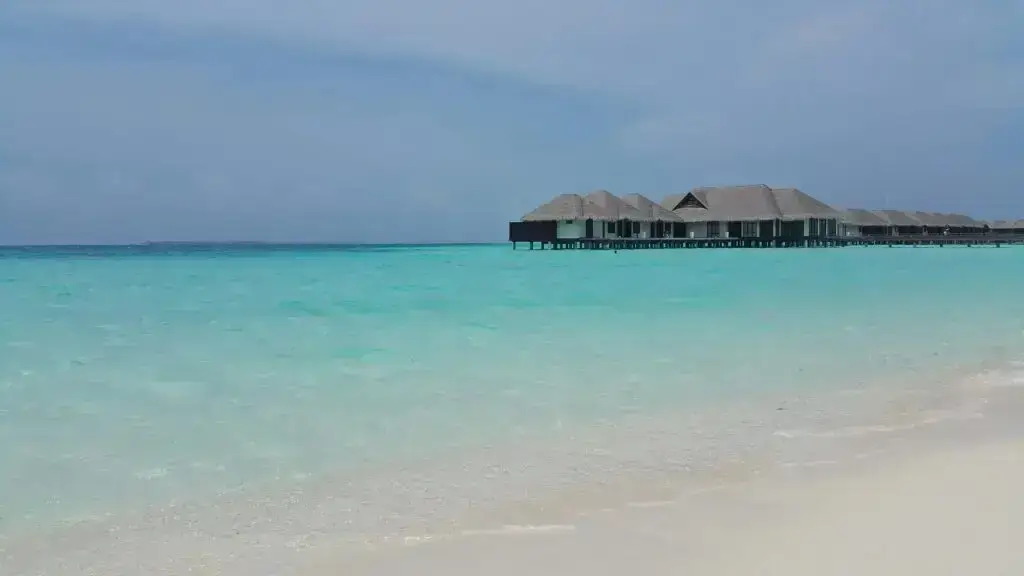
The Maldives is diverse — different islands suit different travel styles. Here’s a complete breakdown.
Best for Honeymoons:
- Hurawalhi
- Baros
- Constance Halaveli
- Gili Lankanfushi
- Kandolhu
- Milaidhoo
- St. Regis Maldives
- Soneva Jani
Expect:
– Overwater villas
– Sunset dinners
– Privacy
– Calm lagoons
Best for Families:
- Niyama Private Islands
- Kuramathi
- Sun Siyam Iru Fushi
- Siyam World
- Amilla Maldives
- LUX South Ari
Features:
– Kids clubs
– Shallow beaches
– Water villas with safety railings
Best for Budget Travelers:
(Local islands)
- Maafushi
- Thulusdhoo
- Thoddoo
- Rasdhoo
- Dhigurah
- Ukulhas
- Gulhi
- Fulidhoo
Best for Snorkeling:
- Kandolhu
- Vilamendhoo
- Reethi Beach
- Vakkaru
- Ellaidhoo
- Outrigger Konotta
House reefs here are close to shore and incredibly vibrant.
Best for Divers:
- Fuvahmulah (tiger sharks)
- Addu Atoll (manta sightings & WWII wreck)
- Gaafu Alifu (strong channels)
- Rasdhoo (hammerheads)
- Baa Atoll (mantas)
WEATHER, SEASONS, AND THE BEST TIME TO VISIT
Best Overall Time:
December to April
– perfect weather
– calm seas
– peak visibility
Best for Budget Trips:
May to October
– cheaper
– fewer tourists
– great surfing
Best for Manta Rays:
June to November (Baa Atoll)
December to April (South Ari, Laamu)
Best for Whale Sharks:
Year-round in South Ari Atoll
PACKING FOR THE MALDIVES — WHAT TO BRING
Essentials:
- Reef-safe sunscreen
- Light clothing
- Swimwear (2–4 sets)
- Snorkel mask (optional but nice)
- Flip-flops
- Underwater camera or GoPro
- Light long-sleeve for sun protection
- Dry bag for boat trips
Optional:
- Drone (check resort rules)
- Sarong or beach cover
- Water shoes
- Aloe vera gel
- Reusable water bottle
WHY THE MALDIVES IS A TRUE BUCKET LIST DESTINATION
It is rare for a place to look exactly like the photos.
The Maldives looks better.
Every moment feels surreal:
- The water is unbelievably blue.
- The sand is so soft it feels like powder.
- Palm trees look perfectly arranged.
- Overwater villas glow at sunrise.
- Sandbanks stretch into the horizon like natural runways.
- Manta rays glide beneath your feet.
- Dolphins appear at sunset, jumping beside your boat.
There is no other place on Earth where luxury, nature, and tranquility merge so seamlessly.
The Maldives is not only a destination.
It is a feeling.
A dream.
A once-in-a-lifetime experience.
A reminder of how beautiful the world can be.
 Related Articles
- Kakslauttanen Arctic Resort
- Top 10 Most Unique Places to Stay in Europe
- 10 Incredible Castles Around the World