
🇳🇿. The Ultimate Travel Guide
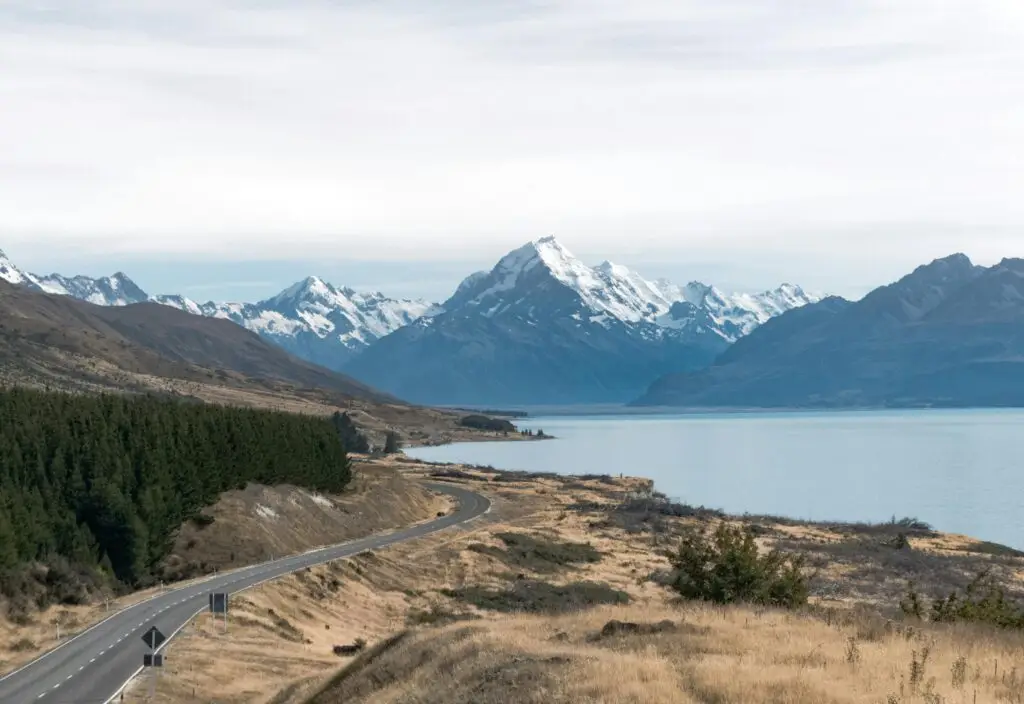
New Zealand—known in te reo Māori as Aotearoa: “The land of the long white cloud”—is one of the world’s most extraordinary travel destinations. A country where snow-capped Southern Alps rise above turquoise lakes, where fjords cut deep into untouched wilderness, where volcanic landscapes steam and glow, and where Māori culture lives deeply intertwined with modern Kiwi life.
Although relatively small, New Zealand feels vast. The two major landmasses—the North Island and the South Island—are dramatically different in character. The lush North Island blends geothermal wonders, golden beaches, and thriving cities like Auckland and Wellington. The South Island is wilder—a realm of jagged mountains, glaciers, deep fiords, and lonely coasts.
Whether you dream of hiking alpine trails, sipping local wines in sun-drenched vineyards, exploring glowworm caves, or watching penguins shuffle along deserted beaches, New Zealand is a life-changing travel experience.
Below is a complete deep-dive into the country: geography, cities, things to do, wildlife, Māori culture, nature parks, adventure activities, driving routes, weather, safety, transportation, and more—all text-only, no affiliate content.
🌏 Orientation & Geography
New Zealand lies in the southwestern Pacific Ocean, separated from Australia by roughly 2,000 kilometers of sea. It consists of:
- North Island (Te Ika-a-Māui)
- South Island (Te Waipounamu)
plus hundreds of smaller islands, including Stewart Island/Rakiura, Chatham Islands, and remote sub-Antarctic islands.
The country stretches across multiple climate zones—from subtropical far-north beaches near Cape Reinga to the snowy alpine regions of Aoraki/Mount Cook. Tectonic forces are strong here: the landscape is dotted with volcanoes, geysers, boiling pools, and thermal springs.
🧭 A Very Short History
- Māori settlers arrived from Polynesia around 1200–1300 CE.
- Europeans first arrived in the 17th century (notably Abel Tasman), with major settlement beginning in the 19th century.
- The Treaty of Waitangi (1840) established British governance, though its interpretation remains debated.
- Today, New Zealand is an independent democratic nation with a vibrant bicultural foundation—Māori and Pākehā (European) cultures together shaping daily life.
Māori culture remains central: language, beliefs, storytelling, art, carving, kapa haka dance, and deep connection to land.
🌟 Top Highlights of New Zealand
• Fiordland National Park
Majestic fjords, waterfalls, mirror-still lakes, glacier-carved cliffs. Milford Sound is often called the 8th Wonder of the World.
• Aoraki / Mount Cook
NZ’s tallest mountain; surreal alpine scenery, glaciers, stargazing.
• Rotorua
The heart of geothermal activity: geysers, boiling mud pools, lakes, and Māori culture.
• Auckland
NZ’s largest city; volcanoes, islands, beaches, sailing, food.
• Queenstown
Adventure capital of the world—bungy, jetboating, hiking, skiing.
• Abel Tasman National Park
Golden beaches, turquoise water, coastal hiking and kayaking.
• Hobbiton
Rolling farmland transformed into the real Middle-earth film set.
• Tongariro Alpine Crossing
One of the world’s greatest day hikes—volcanoes, emerald lakes, steaming vents.
🏝 NORTH ISLAND
(Te Ika-a-Māui)
The North Island is warmer and more populated than the South Island. It’s known for beaches, geothermal areas, volcanic peaks, rolling farmland, Māori culture, and large urban centers.
🌆 Auckland
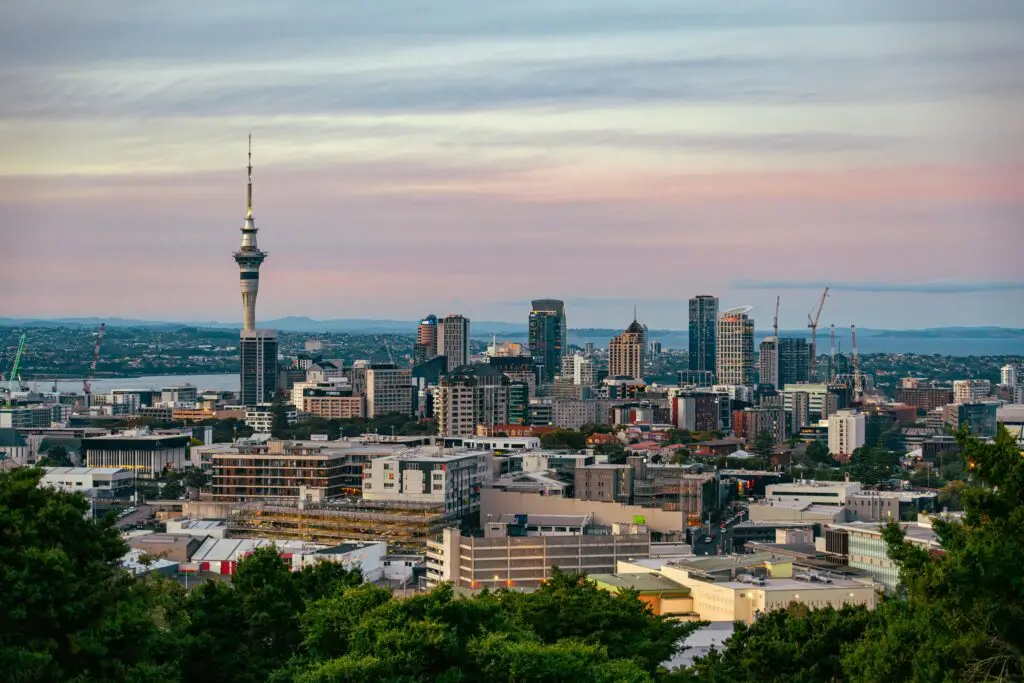
Auckland is built on 50+ dormant volcanoes and surrounded by water. Expect harbors, beaches, upscale neighborhoods, and ferry access to scenic islands.
Top areas:
- Viaduct Harbour
- Ponsonby
- Britomart
- Mount Eden volcanic cone
- Mission Bay beach
Day trips:
- Waiheke Island – vineyards, beaches
- Rangitoto Island – volcanic hiking
- West Coast beaches – Piha, Muriwai gannet colony
🌋 Rotorua
Rotorua is New Zealand’s geothermal and Māori cultural capital. Walk amid bubbling mud pools, steaming vents, and colorful mineral terraces. Rotorua’s geothermal smell—sulphur—is unmistakable.
Top things:
- Thermal valleys
- Māori cultural villages
- Lake Rotorua
- Redwood forests
Nearby is Wai-O-Tapu, famous for bright sulfur pools and terraces.
🏞 Taupō
Built beside the country’s largest lake, created by ancient volcanic eruption. From here, travelers access:
- Tongariro Alpine Crossing
- Huka Falls
- Lake cruises
- Trout fishing
🌋 Tongariro National Park
A dramatic volcanic wilderness with active cones, emerald lakes, and stark black lava landscapes. The Tongariro Alpine Crossing is a bucket-list day walk.
Volcanoes:
- Mount Tongariro
- Mount Ruapehu
- Mount Ngauruhoe (Mount Doom)
In winter, Ruapehu becomes a ski destination.
🕳 Waitomo Caves
The Waitomo system is famous for glowworms—small bioluminescent insects that light up cave ceilings like a starry sky. Visitors can float through caverns on a raft or walk through limestone galleries.
🌿 Bay of Islands
A subtropical region known for turquoise coves, dolphins, quiet islands, and colonial history (including Waitangi Treaty Grounds). Base in Paihia or Russell.
Top things:
- Dolphin spotting
- Island boat cruises
- Snorkeling
- Waitangi Treaty Grounds
🌊 Coromandel Peninsula
A paradise of white-sand beaches, clear water, and lush forest.
Highlights:
- Cathedral Cove
- Hot Water Beach
- Coromandel Forest Park
🏛 Wellington
New Zealand’s capital blends creative energy, politics, waterfront scenery, galleries, and great dining. Cable cars climb the hillside; Te Papa museum explores natural history and culture.
Windy—very windy.
🏔 SOUTH ISLAND
(Te Waipounamu)
The South Island is wilder, with dramatic mountains, glaciers, deep fjords, rugged coastline, and small villages. If you dream of nature adventures, this island is your playground.
🏔 Southern Alps
The backbone of the South Island. Snowy peaks, deep valleys, and alpine lakes define the scenery.
At the heart stands Aoraki / Mount Cook (3,724 m), the highest peak in the nation.
💎 Queenstown
Queenstown is built around Lake Wakatipu and surrounded by dramatic peaks. It calls itself the Adventure Capital of the World and lives up to the name.
Activities include:
- Hiking
- Jet boating
- Bungee jumping
- Paragliding
- Skiing (winter)
- Scenic drives
Nearby Arrowtown is a historic mining village worth visiting.
🏞 Fiordland National Park
A UNESCO World Heritage site. Deep glacial fjords, sheer rock walls, waterfalls dropping hundreds of meters, black-glass water reflecting mountains—it is otherworldly.
Two fjords stand out:
Milford Sound
Easily accessed by road; dramatic cliffs, rainforests, and waterfalls. Very rainy—mists make it magical.
Doubtful Sound
More remote, larger, and quieter than Milford. Wildlife thrives here, including dolphins and seals.
🌄 Aoraki / Mount Cook National Park
Home to glaciers, alpine valleys, and New Zealand’s highest peak. The Hooker Valley Track is a classic hike: swing bridges, moraine lakes, dramatic views.
The region is part of the Dark Sky Reserve—excellent for stargazing.
❄ Franz Josef & Fox Glaciers
These glaciers descend rainforest valleys just kilometers from the sea—an unusual phenomenon globally. Heavy rainfall reinforces glacial movement.
🌊 West Coast
Wild, remote, storm-lashed and deeply forested. Small towns, rugged beaches, pancake-rock formations (Punakaiki), and mining heritage.
🍇 Marlborough
Sun-drenched region known for vineyards and sheltered bays. The Marlborough Sounds are a maze of waterways and rolling green hills. The Queen Charlotte Track is a beloved multi-day trail.
🏖 Abel Tasman National Park
Golden sand, turquoise waters, kanuka forest, and sheltered bays. Many explore by kayak, water taxi, or walking the coastal track.
❄ Dunedin & Otago Peninsula
Dunedin feels Scottish; its university fuels a lively culture. The peninsula offers some of NZ’s best coastal wildlife: albatross, sea lions, penguins.
🐧 Southland & Stewart Island
Few visitors reach this far south, but rewards include:
- Pristine wilderness
- Rare birds (including kiwi in the wild)
- Rugged coast
🏞 National Parks of New Zealand
New Zealand has 13 national parks. Nature is central to Kiwi identity; these parks protect vast landscapes, forests, glaciers, and coastlines.
A few highlights:
| National Park | Island | Notable For |
|---|---|---|
| Fiordland | South | Fjords, waterfalls, wilderness |
| Aoraki/Mount Cook | South | Highest peaks, glaciers |
| Tongariro | North | Volcanoes, emerald lakes |
| Abel Tasman | South | Golden beaches, kayaking |
| Arthurs Pass | South | Alpine scenery |
| Mount Aspiring | South | Backcountry wilderness |
| Egmont/Taranaki | North | Iconic volcano |
The national parks support hiking, wildlife viewing, scenic drives, and backcountry exploration.
⛰ Major Hikes & Great Walks
New Zealand’s famous Great Walks network includes premier multi-day trails. Some highlights:
- Milford Track – Lush valleys & waterfalls
- Routeburn Track – Alpine passes & lakes
- Kepler Track – Panoramic ridge walks
- Abel Tasman Coast Track – Beaches & forest
- Tongariro Northern Circuit – Volcanic terrain
- Paparoa Track – Wild West Coast landscape
- Whanganui Journey – Canoe adventure (not a hike)
From day hikes to multi-day treks, everyone finds their level.
🦘 Wildlife
New Zealand is a land of unique wildlife due to long isolation:
- Kiwi – national bird
- Tuatara – ancient reptile species
- Kea – mischievous alpine parrot
- Little blue penguins
- Yellow-eyed penguins
- New Zealand fur seals
- Marine mammals: dolphins, whales
Introduced species threaten native wildlife, so conservation is a priority.
🌀 Geology & Volcanoes
New Zealand straddles the Pacific and Australian plates. This creates:
- Earthquakes
- Volcanoes
- Geothermal fields
- Mountain building
Major volcanic areas:
- Taupō Volcanic Zone (Rotorua, Taupō)
- Taranaki / Egmont
- Auckland volcanic field
Thermal phenomena include:
- Geysers
- Mud pools
- Hot rivers
- Fumaroles
🌏 Māori Culture
Māori are the indigenous people of Aotearoa. Their culture shapes the identity of the nation.
Key elements:
- Te Reo Māori (language)
- Whakapapa – ancestry
- Mana – authority, prestige
- Tapu – sacredness
- Marae – meeting grounds
- Haka – group war dance
- Traditional carving & weaving
Visitors encounter Māori culture in museums, performances, carvings, and place names. Respect for land and ancestors is strongly expressed.
🧭 Scenic Road Trips
New Zealand is perfect for road tripping. Roads wind through mountains, past vineyards, along rugged coasts, and into deep wilderness.
Classic routes:
- Auckland → Northland
- Auckland → Coromandel → Rotorua → Taupō
- Wellington → Napier → Gisborne
- Picton → Nelson → Abel Tasman
- Christchurch → Lake Tekapo → Aoraki/Mt Cook → Queenstown
- Queenstown → Milford Sound
Driving distances appear short on paper but take time—scenery often demands repeated stops.
🚗 Transportation
Getting Around
- Car or campervan is best for flexibility.
- Domestic flights connect major cities quickly.
- Scenic trains are limited; notable is the TranzAlpine from Christchurch to Greymouth.
- Intercity buses connect towns.
Driving Tips
- Drive on the left.
- Many roads are narrow and winding.
- Weather changes quickly.
- Remote regions have limited fuel.
🌤 Climate & Best Time to Visit
New Zealand spans multiple climates.
- Summer (Dec–Feb): Warm, best for beaches & hiking.
- Autumn (Mar–May): Mild, colorful foliage.
- Winter (Jun–Aug): Skiing, crisp, snowy mountains.
- Spring (Sep–Nov): Blossoms, green landscapes, fewer tourists.
Weather can shift suddenly regardless of season—layered clothing is wise.
🍽 Food & Drink
New Zealand’s culinary scene blends:
- Indigenous Māori influence
- British heritage
- European & Asian flavors
- Farm-to-table emphasis
Expect:
- Lamb
- Seafood (green-lipped mussels, snapper, crayfish)
- Kumara (sweet potato)
- Manuka honey
- Wine regions—Marlborough, Central Otago
The Māori cooking technique hāngi—food slow-cooked underground—remains central to gatherings.
🏙 Major Cities Overview
| City | Island | Character |
|---|---|---|
| Auckland | North | Diverse, maritime, volcanic |
| Wellington | North | Creative capital, wind |
| Christchurch | South | Rebuilding after earthquakes |
| Queenstown | South | Adventure & mountain scenery |
| Dunedin | South | Historic & wildlife |
🛡 Safety
New Zealand is one of the world’s safest destinations.
Main safety notes:
- Weather changes fast
- Hiking requires preparation
- Sun exposure is strong
- Seismic activity possible
- Remote areas = limited services
📱 Practical Tips
- Currency: New Zealand Dollar (NZD)
- Language: English + Māori
- Outlets: Type I
- Water: Safe to drink
- SIM cards: Easily purchased
- Public Wi-Fi: Common in major towns
🧳 Suggested Travel Durations
| Length | Good For |
|---|---|
| 7 days | One island highlights |
| 10–14 days | Best of both islands |
| 3–4 weeks | Deep exploration |
✨ Why New Zealand Feels Special
Few countries combine so many landscapes in such a small area: volcanoes, beaches, fjords, glaciers, farmland, rainforests, vineyards, and alpine peaks.
But scenery isn’t the only reason visitors fall in love. The Kiwi spirit—laid-back, friendly, resourceful—makes traveling effortless. Māori heritage adds cultural depth and spiritual connection to land.
New Zealand feels open, wild, expansive. Even in popular areas, it’s easy to find quiet corners that feel untouched by time.
Together, landscapes and culture create a journey that feels both grounded and magical—a place where nature still leads.
Conclusion
New Zealand is more than a destination—it’s a complete experience.
A place of raw nature, deep cultural roots, peaceful energy, and limitless outdoor adventure. Whether road-tripping mountain valleys, soaking in geothermal springs, or quietly watching penguins return to shore at dusk, you will carry New Zealand with you long after you leave.
From the volcanic heart of the North Island to the wild, icy edges of the South, Aotearoa invites you to slow down, explore, and reconnect with the natural world.
It is simply one of the most beautiful and inspiring countries on Earth.
 Related Articles
- Kakslauttanen Arctic Resort
- Top 10 Most Unique Places to Stay in Europe
- 10 Incredible Castles Around the World