
– Complete Travel Guide
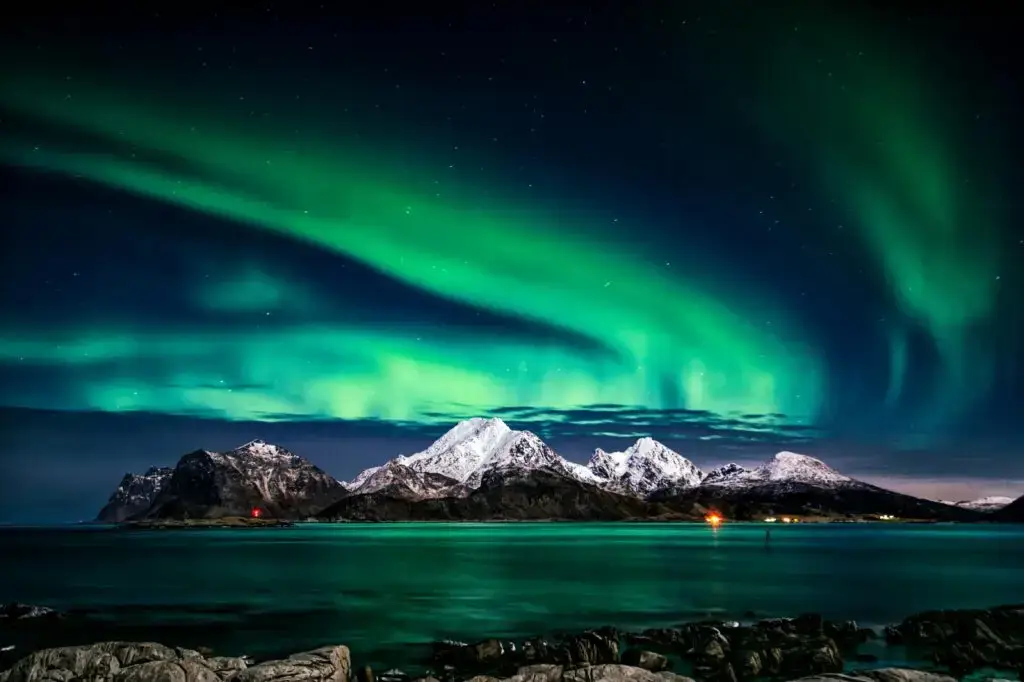
Norway is a country where nature does not simply serve as a backdrop — it defines every moment of the journey. From the moment you arrive, the landscape feels almost alive: fjords plunge deep into the earth like ancient scars carved by ice; mountains rise sharply from the sea, their peaks often hidden in drifting mist; and the air smells clean, fresh, a mixture of saltwater, pine, and the quiet promise of winter. Norway is more than a place to visit — it is a world that unfolds slowly around you, encouraging you to pause, breathe deeply, and simply look.
Traveling here creates the feeling that you are moving between two very different worlds. In summer, daylight stretches endlessly, painting the horizon in soft gold even at midnight. Locals sit outside long after evening should have fallen, enjoying meals near the water or wandering forest trails that remain bright well into the night. Time feels elastic, as though the day refuses to end. The winter months bring an entirely different personality: darkness settles over the land and silence becomes a companion. In this stillness, the Aurora Borealis begins its slow, hypnotic dance across the sky — ribbons of green, purple, and white drifting above snowy valleys and frozen harbors. That contrast between endless light and endless night is one of Norway’s most remarkable features, shaping not just the natural environment but also the culture, traditions, and humor of its people.
Despite its dramatic terrain, Norway maintains an atmosphere of peace. Villages cling to steep shores, with their colorful wooden houses reflecting on calm water. Roads wind gently around cliffs and through green pastures, connecting tiny communities where life still moves at a thoughtful pace. Even the largest cities feel spacious, well-organized, and animated by a quiet sense of balance. This harmony between modern life and wilderness is perhaps Norway’s greatest achievement. It is a country that has embraced innovation and design, while still honoring its ancient landscapes and seafaring past.
For travelers seeking discovery, Norway offers limitless possibilities. You can sail through narrow fjords that echo with the call of seabirds; hike to mountain plateaus where the land drops suddenly into deep blue water; kayak in the Arctic Ocean while the Midnight Sun burns above you; or travel north to remote Sámi communities to learn about reindeer herding and ancestral traditions. Each experience feels genuine, unforced, and connected to the rhythms of the land.
A Brief History
Norway’s story is carved into its mountains, harbors, and fjords. Long before written history, people lived among these rugged landscapes, hunting, fishing, and traveling by boat along the long and complex coastline. Around the 8th century, the Vikings emerged — not simply raiders as legend often presents them, but skilled navigators, farmers, traders, and explorers. With their longships, they reached as far as Iceland, Greenland, and even North America, centuries before Columbus set sail. Their voyages were guided by the same forces that define Norway today: the sea, the wind, and an unending curiosity about what lies beyond the horizon.
By the 9th century, regional chieftains began unifying under a single kingdom, establishing the foundations of modern Norway. After the Viking Age, the country eventually entered a long union with Denmark, followed later by one with Sweden. These centuries shaped Norwegian language, traditions, and governance, while also strengthening a national identity that developed quietly beneath the surface. In 1905, Norway peacefully dissolved its union with Sweden and became fully independent — an event that remains a source of pride among Norwegians.
During World War II, Norway was occupied for five years. Many Norwegians joined resistance movements or fled to remote valleys and mountains to avoid control. After liberation, the country rebuilt quickly, helped by natural resources such as hydropower and, later, offshore oil and gas. Today, Norway is known for its social welfare model, strong democracy, and commitment to environmental stewardship. Yet despite its prosperity, the country has remained deeply connected to its past, honoring both the long-standing coastal cultures and the nomadic Sámi communities whose traditions predate modern political borders.
Geography & Landscape
To understand Norway, one must understand its geography, because the land itself dictates everything — settlement patterns, culture, transportation, and lifestyle. Stretching over 1,700 kilometers from its southern tip to the remote Arctic, Norway is long and narrow, bordered by Sweden, Finland, and Russia. Yet the coastline is astonishingly complex: countless fjords, bays, islands, and peninsulas form a labyrinth that seems endless. If every curve and inlet were measured, Norway would have one of the longest coastlines in the world.
The fjords — deep, narrow waterways surrounded by steep mountains — are remnants of the last Ice Age, when massive glaciers carved valleys that later filled with ocean water. These fjords create dramatic landscapes where waterfalls tumble thousands of meters from snowfields above, while villages rest peacefully beside still water below. The geography forces roads to twist and climb, often crossing mountain passes where snow lingers even in July.
Further inland, forests stretch across endless hills. Lakes lie hidden among valleys, reflecting the sky so perfectly that the boundary between water and air disappears. The mountains are not only scenic but also deeply symbolic. They represent endurance, isolation, and resilience — qualities celebrated in Norwegian culture. In the north, the terrain becomes harsher and more open. Tundra replaces forest, reindeer graze along gentle slopes, and the Arctic coastline meets ice-cold seas that stretch toward the North Pole.
Because of the Gulf Stream, the climate along the coast is milder than one might expect at such northern latitudes. Oslo and Bergen rarely experience the extreme cold found inland, where winter can last many months. Meanwhile, seasons shift dramatically: long bright summers, vivid autumns, dark winters softened by snowlight, and springs that arrive like sudden miracles when waterfalls burst to life and valleys begin to bloom.
Oslo – Modern Nordic Capital
Oslo is the heart of Norway, yet it never feels overwhelming. It is a city that blends modern architecture with vast natural surroundings so seamlessly that you can wander from the city center into deep forest within an hour. The atmosphere is calm, spacious, and clean, and even the busiest streets seem balanced by thoughtful design and an underlying respect for nature. The city stretches along the Oslofjord, giving it a nautical quality — ferries glide in and out of the harbor, seabirds cross the water in sweeping arcs, and on sunny days locals gather along the waterfront as though it were a public living room.
Much of Oslo’s charm lies in its quiet confidence. The Opera House rises from the harbor like a sheet of marble floating on the sea, inviting visitors to walk up its angled roof and watch the water shimmer below. Nearby, the MUNCH museum — home to the works of Edvard Munch — stands tall, its glass structure reflecting clouds and shifting northern light. If you wander deeper into the city, you’ll find long boulevards lined with cafés, and open spaces where cyclists, families, and students share the pedestrian zones. Unlike many capitals, Oslo never demands your full attention; instead, it invites you to explore at your own pace, to slow down, and to notice the texture of daily life.
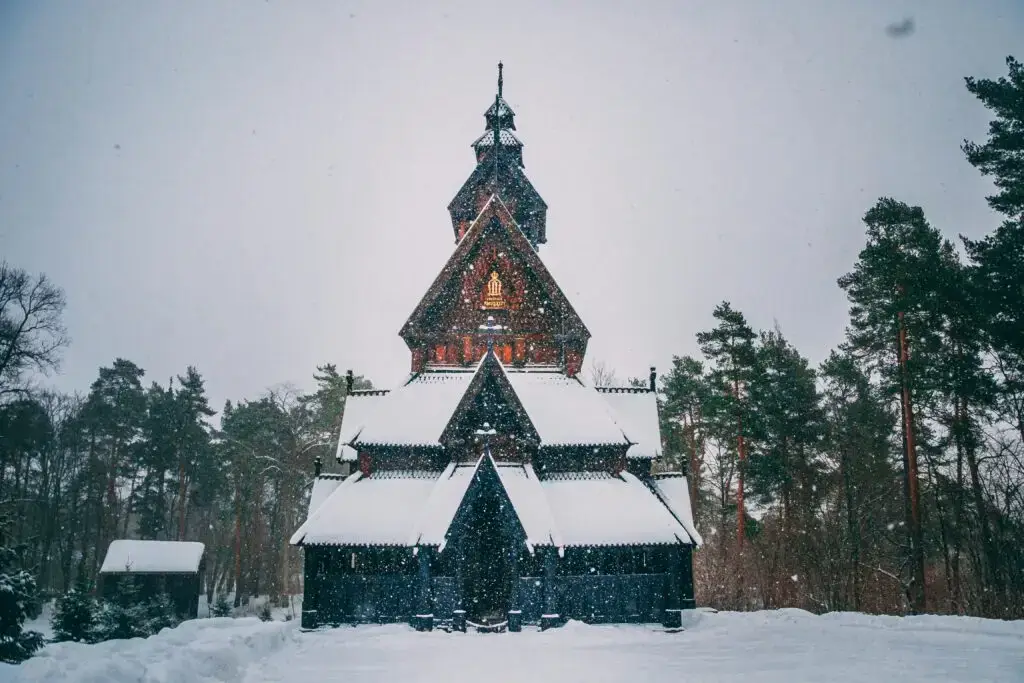
Exploring Oslo often leads you toward its cultural treasures. In Vigeland Sculpture Park, hundreds of expressive stone and bronze figures stand among lawns and tree-lined paths. Their emotional simplicity — people embracing, arguing, dancing — captures both the fragility and strength of human connection. Farther west lies the peninsula of Bygdøy, where traditional wooden buildings sit next to ornate stave churches brought from rural regions and reassembled at the Norwegian Museum of Cultural History. Here, life from different centuries feels preserved in small details: carved doorframes, grass-covered roofs, narrow alleys, and painted barns that speak of earlier generations. Even the Viking Ship Museum — undergoing renovation — reminds visitors that Norway’s heritage is deeply connected to the sea.
Yet what sets Oslo apart is how accessible nature feels. In winter, cross-country skiers glide along snowy forest tracks just a short metro ride from downtown. In summer, locals swim in the fjord, sunbathe on rocky coastlines, or take ferries to quiet islands where meadows bloom and beach paths circle rocky inlets. Oslo’s urban culture grows in harmony with nature rather than in opposition to it, creating a rhythm that feels both lively and restful.
Bergen – Gateway to Fjords
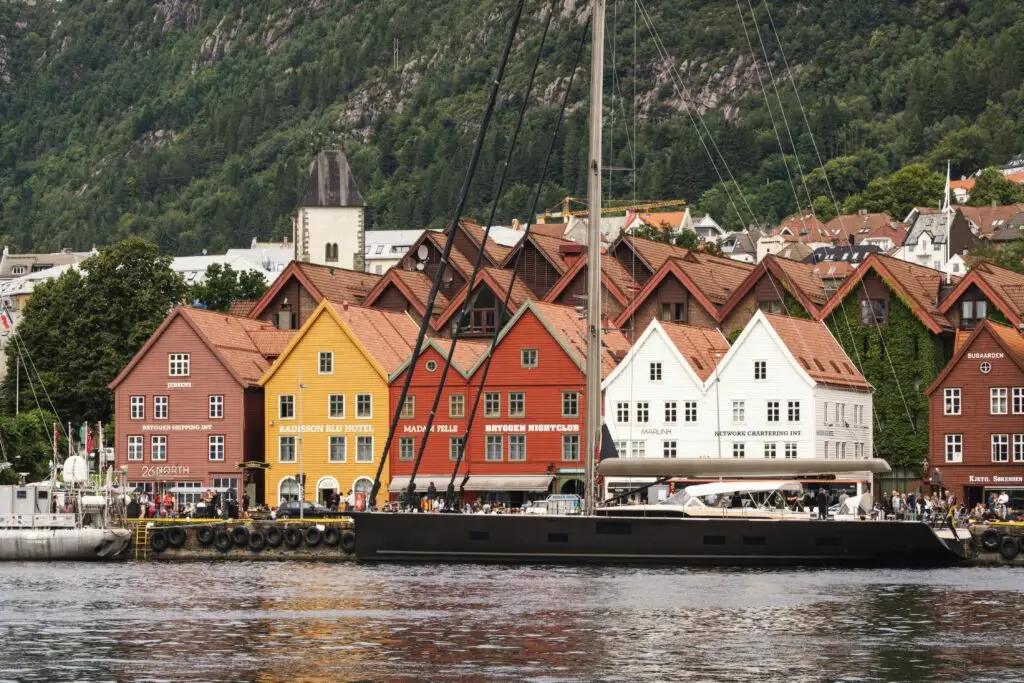
If Oslo feels spacious and controlled, Bergen offers a more intimate, poetic experience. Nestled between mountains and sea, it often feels as though the landscape is holding the city in a protective embrace. The air is damp with ocean mist, the streets shine with rain, and pastel-colored wooden houses glow softly against dramatic mountain backdrops. The weather here changes constantly. One moment sunlight catches the rooftops, the next a passing cloud rolls in to cover the harbor with silver light. Rain is frequent — almost a character of its own — but it gives the city a reflective, nostalgic beauty that only enhances the experience.
At the center of Bergen lies Bryggen, a row of leaning, centuries-old wooden merchant buildings that line the harbor. Once a bustling trading hub of the Hanseatic League, this district still feels alive with history. When you wander between the narrow wooden passages, each creaking floorboard seems to hold a memory of ships full of fish, grain, and tools arriving from far-away ports. Today the buildings house small shops and cafés, where artisans sell woolen sweaters, handmade jewelry, and ceramics inspired by the surrounding mountains and sea.
Because Bergen rises from sea level directly into steep slopes, many streets feel almost vertical. Climbing these paths leads to viewpoints that reveal the city’s geography: the harbor surrounded by mountains, boats drifting between islands, and clouds drifting just low enough to touch the rooftops. For the best view, you can take the Fløibanen funicular to Mount Fløyen, where trails thread through pine forest and open meadows. On clear days, children feed the mountain goats and families picnic on the rocky outcrops; when fog settles, the landscape becomes mysterious, soft, and quiet.
Bergen is also an ideal base for exploring the fjords, which stretch like deep fingers into a mountainous interior. The city has an easy blend of old and new, and despite its importance as a cultural hub, it remains small enough to feel personal. Musicians often perform in the streets, students gather around cafés by the water, and fishing boats arrive in the morning with their catch. Life revolves around the weather and the sea, just as it has for centuries.
The Norwegian Fjords – Nature’s Cathedrals
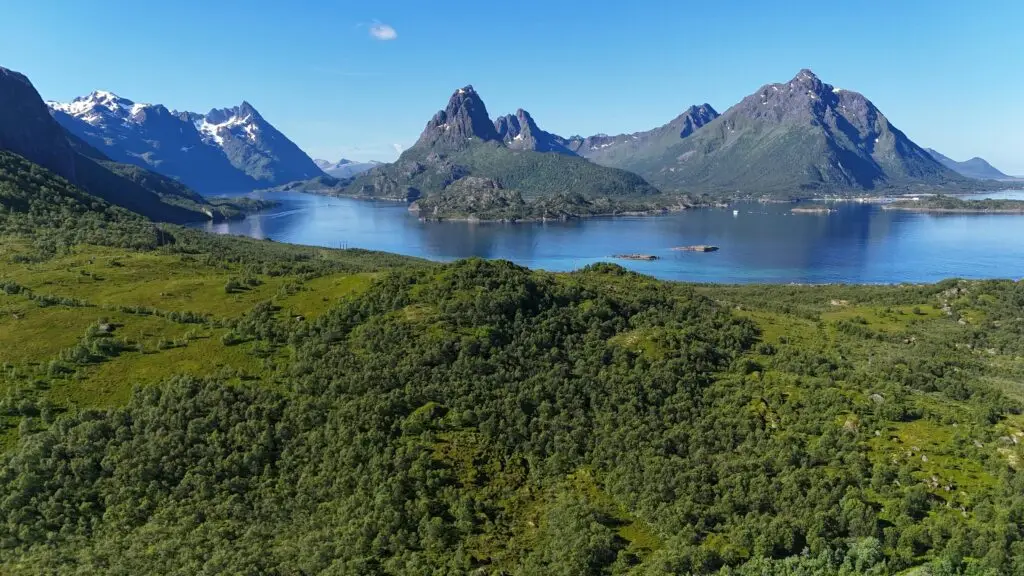
Nothing defines Norway more profoundly than its fjords. They embody the country’s spirit: quiet, powerful, ancient. Formed by glaciers that carved their way through solid rock over thousands of years, these waterways stretch deep into the land, with sheer cliffs rising on either side. Standing at the edge of a fjord feels like standing inside a natural cathedral — the walls are too tall to measure with the eye, and the still water mirrors the mountains with such clarity that the world seems doubled.
Each fjord carries a slightly different personality. Some are narrow and shadowed, with waterfalls spilling in delicate threads down moss-covered cliffs. Others open into broad valleys where villages cluster beside orchards and farms. Morning fog often hangs above the water, drifting slowly as the sun rises; by afternoon the light sharpens, turning the fjords deep blue or emerald green. The silence is striking. Apart from the occasional ferry, birdcall, or distant waterfall, the fjords remain incredibly still, as if time here moves more gently.
Traveling through the fjords can happen in many ways. Ferries are the most common and allow passengers to watch the landscape shift from one bend to the next. Roads weave along the water’s edge, passing through tunnels or climbing into high passes that offer panoramic views. Some people choose to hike into the mountains that surround the fjords, reaching viewpoints where the landscape reveals its full depth — sheer cliffs, winding water, tiny villages far below. Sitting on a rock at such heights, the wind cool against your face, you feel both small and deeply connected to the land.
What makes the fjords special is not their size alone, but their mood. They are peaceful yet overwhelming, ancient yet constantly changing. On a clear day, sunlight brightens the mountains and makes the water glisten bright blue. On a stormy day, clouds descend, rain patters, and the landscape becomes dark and dramatic, as though the mountains are telling old stories of ice, time, and memory. No two visits feel the same, which is why travelers return again and again.
Lofoten Islands – Wild Beauty at the Edge of the Sea
Far to the north lies the Lofoten archipelago, a chain of islands where sharp peaks rise out of the ocean like black stone sails. Reaching Lofoten feels like arriving at the edge of the world. The road follows narrow bridges that leap from island to island, passing bays of turquoise water so clear that you can see the sand beneath even on cloudy days. White beaches appear suddenly beneath towering cliffs, while fishing huts painted deep red stand silently along the harbors, their reflections stretching across icy water.
Life in Lofoten has always been shaped by the sea. For centuries, cod fishing sustained the communities here, and traces of that history remain everywhere — wooden frames covered with drying fish, old boats resting on rocky shorelines, tiny villages gathered around protected coves. Today, fishermen still head out into the open sea, though tourism has become equally important. Travelers come to hike along knife-edge mountain trails, to camp beside untouched beaches, or simply to sit on rocks and listen to waves crash against the shore.
Hiking in Lofoten feels like entering a dramatic theater. Trails climb steeply into the mountains, but each step rewards you with new perspectives: a quiet lake hidden in a bowl of stone, a ridge revealing islands scattered like jewels across the sea, a summit where the world opens in every direction. Many travelers climb Reinebringen, one of the region’s most famous viewpoints, where a carved stone staircase leads up the slope to a dramatic overlook of Reine, its cluster of houses framed by towering peaks.
In winter, the islands transform into something close to magical. Snow softens the mountains, darkness settles early in the afternoon, and then — when the sky is clear — the Northern Lights sweep in, shimmering across the islands and reflecting over frozen bays. It feels otherworldly, like a secret performance offered only to those patient enough to wait in the cold.
Tromsø & the Arctic North
Farther still, beyond the jagged islands, lies Tromsø — a lively Arctic city that has earned the nickname “the Gateway to the North.” Despite its remote location, Tromsø has a surprisingly warm spirit. Its streets are filled with cafés, pubs, small shops, and museums, and the atmosphere is energetic thanks to the large student population. Snow often falls early and stays late, muffling the sounds of the city so that even the busiest days feel peaceful.
The surrounding landscape is wild and thrilling. Beyond the harbor rise snowy peaks and deep fjords, and in winter it becomes one of the world’s best places to see the Northern Lights. People gather outside the city or sail into quiet fjords, waiting for the sky to begin its silent dance. When the aurora appears, it drifts and coils, changing shape and color as though alive. The experience is both humbling and deeply emotional.
Tromsø is also home to Arctic traditions. The Sámi people, whose ancestors have lived in the region for thousands of years, maintain strong cultural ties to the land and to reindeer herding. Visitors can learn about Sámi history, listen to the haunting tones of joik singing, or spend time in traditional tents warmed by fire while snow falls quietly outside.
✅ Additional Major Cities of Norway (Expanded Narrative Sections)
Stavanger
Stavanger is a city where old and new blend naturally, shaped by the sea and surrounded by some of Norway’s most dramatic landscapes. Its historic heart, known as Gamle Stavanger, is a gentle maze of narrow streets bordered by white 18th- and 19th-century wooden houses. Flowers spill from doorsteps, windows glow warmly in the evening, and cobblestones curve beneath your feet. The neighborhood feels preserved in time, yet full of life. Cafés, small workshops, and local galleries appear behind every corner, encouraging slow wandering.
The city’s waterfront, lined with restaurants and sailboats, reflects a more contemporary energy. People sit outside in the sun, enjoying freshly caught seafood and the mild coastal climate. Stavanger is deeply connected to Norway’s offshore energy industry, and its modern prosperity can be seen in sleek buildings, open public spaces, and a lively cultural scene.
Beyond the center, nature rises suddenly into great walls of stone. The Lysefjord stretches inland like a colossal corridor, its vertical cliffs forming one of Norway’s most breathtaking environments. From here, travelers embark on journeys to Preikestolen — the famous “Pulpit Rock,” a flat cliff that towers dramatically above the fjord — or to the equally striking Kjerag plateau, where hikers stand on polished granite high above blue water. Returning to Stavanger after such adventures feels like returning to a welcoming harbor: peaceful, friendly, and infused with the relaxing rhythm of coastal life.
Ålesund
Ålesund is a city that captivates almost immediately. Spread across small islands surrounded by mountains and sea, it rises in elegant curves of stone and color. Most of the town was destroyed by a fire in 1904 and rebuilt in the Art Nouveau style, which gives Ålesund its distinctive appearance — graceful buildings with towers, mosaics, decorative facades, and winding roofs that seem taken from a fairytale. Walking through its streets feels like moving through a living architectural museum, yet the city’s character remains warm, quiet, and deeply Norwegian.
The harbor bends gently through the town, leading toward calm waterways where fishing boats sit next to modern vessels. Shops and cafés line the waterfront, and even the busiest areas hold a sense of balance. One of the city’s most impressive experiences lies just above it: Mount Aksla. A long staircase winds up to the viewpoint, and from the top the entire city spreads out like a painting — Art Nouveau buildings, silver water, and distant mountain ranges that fade into the horizon. The view, whether wrapped in summer warmth or winter frost, leaves a lasting impression.
Ålesund’s location makes it an ideal base for exploring the western fjords. Deep valleys, waterfalls, and winding roads are never far away. The combination of architectural beauty, coastal serenity, and easy access to nature has made Ålesund a beloved destination for both Norwegian travelers and visitors from across the world.
Bodø
North of the Arctic Circle lies Bodø, a coastal city marked by open sky, bold weather, and a sense of wide northern space. Though modern in appearance, Bodø carries an atmosphere shaped by the sea and wind. The waterfront stretches long and low toward the horizon, with fishing boats, ferries, and seabirds always in motion. Waves crash against rocky shores, and storms gather quickly, giving the landscape dramatic character.
Bodø is a gateway to the Lofoten Islands, with frequent ferry connections that link the two regions. Yet the city has its own distinct charm. Not far away is Saltstraumen, one of the world’s strongest tidal currents. Here, the ocean funnels through a narrow strait, creating swirling whirlpools and powerful movement that attracts not only visitors but also seabirds and marine life.
Despite Bodø’s remote location, the cultural life is surprisingly rich. Music festivals, museums, and cafés appear throughout the city, and on clear evenings people gather along the shore to watch sunsets that last far longer than you expect. When winter arrives, darkness brings new magic — the sky glows with Northern Lights reflected on snowy peaks and icy water, turning Bodø into a quiet theater of Arctic color.
Kristiansand
In the far south of Norway, Kristiansand offers a softer, lighter mood than the dramatic mountains further north. The atmosphere feels sunny and relaxed, defined by sandy beaches, a charming city grid, and gentle coastal scenery. Locals gather at the waterfront, where children play along shallow waters and sailboats drift toward nearby islands. Summer brings festivals, open-air concerts, and long warm evenings where families stroll along the harbor eating ice cream or fresh shrimp.
The old town, Posebyen, is a neighborhood of white wooden houses arranged neatly along quiet streets. It has a small-town feel — people greet one another easily, and flowers decorate porches and windows. Kristiansand feels welcoming, grown outward from a peaceful core rather than shaped by strict industry or harsh landscape.
Beyond the city, the southern coast offers countless hidden bays, lighthouses, and quiet spots that feel almost private. This region is often called “the Norwegian Riviera” because of its mild climate and a summer atmosphere that encourages slow days, swimming, sailing, and carefree exploration. For many Norwegians, Kristiansand represents holiday memories, warm weather, and the gentle rhythm of seaside life.
Narvik
Narvik sits surrounded by tall mountains and deep fjords, its history and identity shaped by steel, snow, and the Arctic Sea. The city developed rapidly in the early 20th century when iron ore from Sweden began passing through its ice-free harbor, linking the port with distant global trade. This industrial past gives Narvik a different character — it feels purposeful and resilient, a community built at the edge of the Arctic for people who understand both hardship and beauty.
The surrounding landscape carries immense drama. Mountains rise steeply from the water, creating a sense of grandeur even from the city streets. In winter, Narvik becomes a magnet for skiers attracted to slopes that descend toward the sea, offering views that few alpine destinations can match. Snow covers rooftops and the air becomes sharp and crystalline, while the Northern Lights stretch above the city in shifting arcs.
Narvik is also a crossroads. The railway that connects the port to Swedish Lapland passes through landscapes marked by wilderness, frozen lakes, and distant peaks. The line serves as both a physical path and a historical reminder of how intertwined the region is with its neighbors. In many ways, Narvik feels like an Arctic threshold — a place where the journey north truly begins.
Alta
Alta lies deep in Northern Norway, where the landscape opens into wide plateaus, frozen rivers, and calm fjords. Despite its small size, the town holds great cultural significance. Thousands of years ago, early inhabitants carved images into stone surfaces near the water. These petroglyphs — depicting humans, animals, and ancient rituals — are now a UNESCO World Heritage site, and walking among them feels like touching the distant past.
Winter defines Alta’s rhythm. The long dark season transforms the town into a quiet sanctuary of snow and stars. Dogsleds glide across silent fields, reindeer herds move slowly over frozen ground, and the Northern Lights appear regularly, illuminating the sky with green and violet tones. People gather around wood-burning fires, sharing stories and warm food while snow falls softly outside.
Alta’s modern life revolves around a blend of tradition and innovation. Shops, schools, and cultural centers give the town a contemporary pulse, while Sámi heritage remains strong in the surrounding region. Travelers come to experience the Arctic in its most gentle form: peaceful, wide, and open to the sky.
Culture, Traditions & Everyday Life
Norwegian culture is rooted in a close relationship with nature, and this connection can be felt everywhere — in daily routines, social gatherings, and even national holidays. The concept of friluftsliv, which translates loosely to “open-air life,” describes the belief that spending time outdoors is not only enjoyable but essential to well-being. It is common to see families hiking together on weekends, coworkers heading out for cross-country skiing after work, and children playing outside regardless of weather. Being active in nature is not treated as a hobby; it is a lifestyle.
Social interaction in Norway tends to be calm, thoughtful, and unpretentious. Norwegians may seem reserved at first, but once you begin talking, their warmth and curiosity emerge naturally. Conversations often revolve around nature, travel, and local life rather than grand declarations or strong opinions. There is a quiet pride in the country’s egalitarian values; hierarchy is soft, and most people approach one another with respect and fairness. Even in big cities, life feels surprisingly gentle, as though everyone recognizes the shared responsibility of keeping society harmonious.
Norway’s long winters have shaped many cultural traditions. During the darkest months, homes become sanctuaries of warmth and light. People gather with candles, cook slow meals, and create cozy environments — a mindset similar to the Danish hygge, but uniquely Norwegian in its embrace of the wild outdoors. When the sun returns in spring, the mood shifts upward. The arrival of sunlight feels like a celebration; people sit outside with coffee, even if the air is still cold, and festivals begin to fill town squares and coastal harbors.
Cuisine & Local Food Culture
Norwegian cuisine draws from the sea, mountains, and forests. Because the coastline stretches endlessly and the waters are rich with fish, seafood plays a central role. Fresh cod, salmon, mussels, and shrimp appear in many dishes, often prepared simply with butter, herbs, and salt to let the natural flavor speak for itself. In the northern regions, dried cod — known as stockfish — forms a traditional foundation of both local cooking and export trade.
Inland, the cuisine reflects pastoral life. Slow-cooked lamb, hearty stews, and root vegetables bring comfort during long winters. Brown cheese, or brunost, has a caramel-sweet flavor that surprises many visitors; it is usually enjoyed with bread or crispbread for breakfast. Norwegians value simplicity in their ingredients, taking pride in the purity of the products rather than elaborate presentation.
Seasonality is an important part of food culture. In autumn, berries and mushrooms fill forest floors, and locals head into the woods to gather what nature offers — blueberries, cloudberries, chanterelles. Summer brings outdoor dining, grilled fish, and picnics near lakes and fjords. Coffee holds a special place in Norwegian daily life; it is common to share conversation over a cup no matter the time of day, and many people carry thermoses on hikes, enjoying small breaks while surrounded by mountains.
Nature, Wildlife & Wilderness
Norway’s wilderness is vast and largely untouched. Even close to cities, landscapes feel pristine, as though they have changed little in thousands of years. Forests dominate the south and east, where spruce, pine, and birch grow thickly across hillsides. In the west, mountains meet the sea in a dramatic collision of rock and water, producing fjords that cut deep into the land. Traveling inland often leads to high plateaus, where the land opens into rolling tundra rich with reindeer, rivers, and moss.
Wildlife thrives across these regions. The country is home to moose, foxes, lynx, and in certain remote areas, even polar bears on the island of Svalbard. Reindeer roam across the northern plateaus, especially in Sámi regions where herding remains an important tradition. Along the coast, seabirds nest on cliffs overlooking stormy waters. Puffins gather on islands during breeding season, and sea eagles glide overhead with slow, powerful wings. In the far north, whales follow ancient migration routes, and seeing them surface in the cold Arctic water is an unforgettable experience.
Norway protects much of its wilderness through national parks, where visitors can hike for days without meeting another person. These parks are not designed to control nature; they exist to preserve wildness. Trails are often simple paths rather than constructed walkways. The silence here can be intense — the kind that allows you to hear distant rivers, wind brushing across stone, or the rhythmic steps of your boots in snow.
Northern Lights & Midnight Sun
Two natural events define Norway’s seasonal rhythm: the Midnight Sun and the Northern Lights. In summer, especially above the Arctic Circle, the sun does not set for weeks, bathing mountains, fields, and fjords in a soft golden glow at all hours. Nights become long, luminous twilights where birds keep singing and people stay outside as though time has momentarily stopped. Many travelers describe this season as dreamlike; a walk at two in the morning feels just as bright as early afternoon.
Winter brings the opposite. Darkness stretches over the north, but instead of feeling oppressive, it creates a quiet stage for the Aurora Borealis. These shifting lights begin as faint clouds and soon stretch into long curtains of green that ripple across the sky. On rare nights, flashes of purple and pink appear at the edges, pulsing with an energy that feels intimate yet beyond human understanding. Seeing the lights dance above snowy mountains or frozen fjords is one of the most powerful experiences Norway offers, and people from around the world travel to Tromsø, Alta, and remote valleys to witness them.
The Coastal Way of Life
Life along Norway’s coast is shaped by the meeting of sea and mountains. Many towns seem carved directly into cliffs, their houses perched just above deep blue water. Fishing has defined the rhythm of these communities for centuries. Early morning boats leave the harbor, returning with cod, salmon, or shrimp that locals enjoy later that day, often in simple, delicious meals shared with family and friends. The ocean is both a provider and a challenge; storms can arrive suddenly, and strong winds test the strength of harbors and ships.
In summer, the coast becomes a playground. People sail between islands, swim in surprisingly clear waters, and spend long afternoons on rocky beaches warmed by the sun. Wooden cabins dot the shorelines, many passed down through generations as places where families escape the pace of everyday life. There is a strong sense of continuity here — a respect for tradition but also a deep appreciation for moments of quiet spent watching waves move in and out like breathing.
Getting Around & Scenic Travel
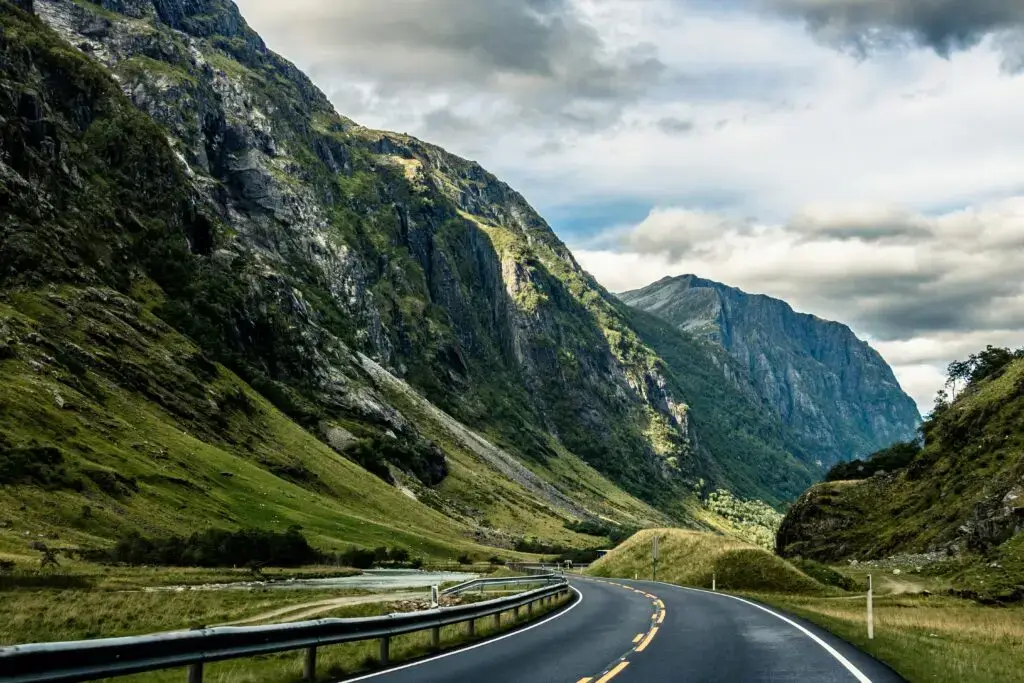
Traveling through Norway is a journey in itself. Roads wind between fjords, climb into snowy passes, and cross islands through bridges that feel like floating ribbons. On long drives, every corner reveals a new scene; sometimes villages appear suddenly between cliffs, other times the road dives through tunnels that seem to burrow beneath entire mountains. Taking your time is essential, because rushing would mean losing the pleasure of simply seeing.
Norway’s trains offer another perspective. The Bergen Railway crosses the mountains between Oslo and Bergen, passing high plateaus where snow covers the ground even in late spring. One branch of this line leads to Flåm, descending steep valleys dotted with waterfalls and rivers that race down to the fjord. Ferries tie the entire coastline together; in many fjord regions, they are not tourist attractions but everyday transportation, linking communities that rely on the sea as their road.
Best Time to Visit
Norway’s seasons each reveal a different face of the country. Summer is the most accessible — warm days, long light, and lush green valleys make it ideal for hiking, kayaking, and exploring coastal towns. Autumn paints forests gold and orange while crowds thin and mountain air becomes crisp. Winter is enchanting in the north; snow covers the land and the Northern Lights spread across the sky, while ski resorts offer endless slopes farther south. Spring arrives slowly but dramatically as waterfalls roar back to life and meadows blossom beneath melting snow.
Suggested Ways to Experience Norway
A perfect introduction to Norway might begin in Oslo, where you explore the city’s quiet energy before traveling by train or car toward the mountains. Bergen serves as a gateway to the fjords; a few days here allow time for wandering historic streets, sailing into deep valleys, and hiking mountain ridges that overlook the coast. From here, you may travel north to the Lofoten Islands or Tromsø, where the Arctic landscape expands and the pace of life slows further. Whether you travel for a week or a month, the goal is not to check every box, but to let the journey unfold at a human rhythm.
Safety & Practical Notes
Norway is one of the safest countries to travel in. People are helpful, infrastructure is reliable, and the outdoors is well-managed. The only real dangers come from underestimating nature; weather can change quickly, especially in mountainous or coastal areas. Travelers are encouraged to prepare for sudden shifts in temperature, carry proper clothing, and respect local advice. Beyond this, moving through the country is pleasant, peaceful, and straightforward.
Conclusion
Norway is not a place you simply visit — it is a place you absorb. Its beauty lives not only in grand landscapes but in the quiet details: early morning mist floating above a fjord, the smell of rain on wooden houses, the warmth of a cabin in winter, or the sense of peace felt while sitting on a mountain ledge. The country’s strength lies in its contrasts: light and darkness, sea and stone, tradition and modernity. Traveling here deepens your appreciation for both nature and life’s simplest moments. Whether you come for the Northern Lights, the fjords, the Arctic wilderness, or simply to breathe clean northern air, Norway offers not just scenery but a feeling — one that stays with you long after you leave.
 Related Articles
- Kakslauttanen Arctic Resort
- Top 10 Most Unique Places to Stay in Europe
- 10 Incredible Castles Around the World