
Russia – Complete Travel Guide
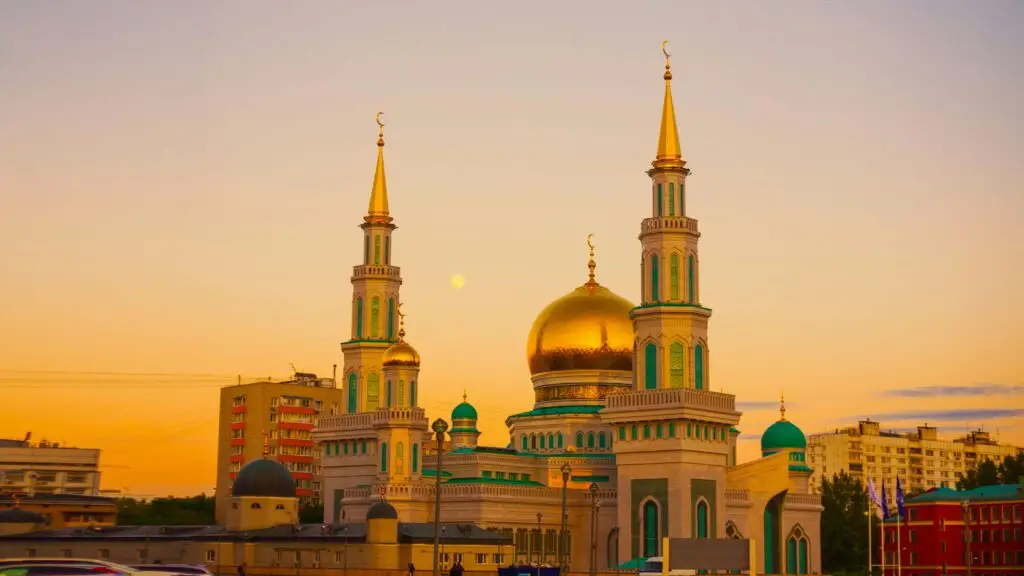
Russia is not just a country; it is a world unto itself — a vast and layered realm stretching across two continents, eleven time zones, and a history that feels both ancient and immediate. It is a land of contrasts: imperial palaces set beside Soviet monoliths; golden-domed cathedrals rising over wide boulevards; icy wilderness stretching to horizons without end; and cities alive with poetry, music, and philosophical thought. Russia is immense, quiet, emotional, dramatic. A place where memory weighs heavily, where art flourishes in both splendor and sorrow, and where nature remains so powerful that human presence seems small in comparison.
Traveling through Russia feels like drifting between centuries. One moment, you stand before the onion-shaped domes of a medieval monastery, their colors glowing against the sky; the next, you ride a high-speed train between gleaming business districts and Soviet-era neighborhoods. In tiny villages surrounded by birch forests, life carries a quiet rhythm: wooden houses with carved window frames, bells ringing from distant churches, and smoke rising from stoves in winter air. In enormous cities, metro stations shine like palaces underground, and literature, science, and music continue to shape daily conversation.
The land itself defines Russia. Forests cover millions of square kilometers, rivers slice through plains, and mountains rise suddenly in wild formations. The taiga — endless coniferous forest — stretches so far that it seems like another universe. In the far east, volcanic landscapes burst into clouds and steam. In Siberia, winter feels like a kingdom of ice, where silence becomes almost tangible. On the Black Sea coast, warm sunlight touches resorts and vineyards. Through it all, the Russian spirit persists — proud, questioning, frequently melancholic, but always resilient.
Russia is a place that asks you to look deeply. Its vastness demands contemplation; its complexity invites reflection. This is not a country to be consumed quickly or understood casually. It is a journey of emotions, landscapes, and stories — layered with triumph and tragedy, art and suffering, grandeur and simplicity. To explore Russia is to explore the human soul in all its mystery.
A Brief History
To understand Russia, one must look far into the past — to a landscape where tribes settled among forests and rivers, where trade routes connected Europe with Asia, and where a new cultural identity slowly formed. The story begins with Kievan Rus’, a medieval state centered in Kyiv and Novgorod that flourished in trade, religion, and law. The adoption of Eastern Orthodox Christianity in 988 from Byzantium shaped Russian culture profoundly, influencing art, spirituality, and architecture through icons, frescoes, and majestic domes.
The Mongol invasion of the 13th century shattered the early state. For centuries, Russian lands lived under the shadow of the Golden Horde, paying tribute and navigating shifting power. Yet from this period of struggle arose the principality of Moscow, eventually unifying surrounding territories. Under Ivan the Terrible in the 16th century, Russia expanded both east and south, becoming a multi-ethnic empire. The Romanov dynasty followed, ruling for more than 300 years. Under Peter the Great, Russia turned toward the West, building a modern navy, reforming society, and founding Saint Petersburg — a window to Europe.
The 18th and 19th centuries brought enormous cultural growth. Literature, music, and art flourished — Pushkin, Tolstoy, Dostoevsky, Tchaikovsky — each forging masterpieces that defined the Russian soul. At the same time, social inequality grew, and revolutionary ideas spread. The early 20th century erupted in turmoil: revolution in 1917 ended the monarchy, leading to civil war and the creation of the Soviet Union under Lenin and later Stalin.
The Soviet era marked dramatic industrial development, scientific achievement, and cultural influence — but also deep suffering. Political repression, famine, and war carved trauma into the nation’s memory. The Second World War, known in Russia as the Great Patriotic War, brought both devastation and victory; millions died, yet the Soviet triumph remains central to national identity.
After the war, Russia became a superpower, engaging in the Cold War with the United States. In later decades, stagnation set in until the Soviet Union dissolved in 1991. The transition to a market economy was turbulent; life changed quickly, and inequality rose. Modern Russia continues to evolve, balancing memory with ambition, and holding tightly to the cultural depth forged across centuries.
Russian history is filled with contrasts — openness and isolation, grandeur and oppression, freedom and control. Yet through it all, its culture has remained rich, its sense of identity strong, and its emotional depth profound.
Geography & Nature
Russia’s geography defies imagination. It spans Europe and Asia, reaching from the Baltic Sea to the Pacific Ocean, from the Arctic tundra to the foothills of the Caucasus. The sheer scale of the land shapes everything — climate, culture, movement, and identity. In the west, cities cluster around plains; in the east, wilderness stretches uninterrupted for thousands of kilometers.
Much of European Russia is blanketed in birch and pine forests, intersected by rivers such as the Volga, the Don, and the Northern Dvina. The land here feels open but grounded, with rolling hills, fertile fields, and long summer evenings. As you move north, the landscape shifts into taiga — dense coniferous forest that spans from the Urals to the Pacific. This vast ecosystem supports wolves, bears, elk, and countless birds. The taiga is both beautiful and intimidating; winter brings deep silence, while summer bursts with green and insects.
Beyond the Urals — low mountains considered the border between Europe and Asia — lies Siberia. Here, the scale grows immense. Endless forests, rivers, and plains stretch toward the horizon. In winter, temperatures plummet, turning the land into crystal silence. Yet Siberia is not empty — cities like Novosibirsk, Krasnoyarsk, and Irkutsk thrive along railways and rivers. Villages settle along valleys, and indigenous communities maintain traditions tied to reindeer, forest, and sky.
Lake Baikal, in southern Siberia, is one of the world’s most extraordinary natural treasures. The oldest and deepest freshwater lake on Earth, it holds one-fifth of the world’s unfrozen freshwater. Its waters are so clear that you can see meters into the depths; its shores are lined with cliffs, forests, and quiet villages. Winter transforms Baikal into a frozen realm of blue ice that fractures into crystalline patterns.
In the far east, Kamchatka rises in volcanic splendor — steaming fumaroles, active volcanoes, geysers, and wild rivers. Brown bears roam freely; salmon return to rivers each year; and landscapes feel untouched, ancient, and sacred. The Kuril Islands extend southward toward Japan, a chain of volcanic peaks floating in cold ocean.
To the south, the Caucasus Mountains form a dramatic border with Georgia and Azerbaijan. Snowy peaks soar above forests and vineyards; traditional villages cling to high slopes; and rivers carve deep valleys. Mount Elbrus, Europe’s highest peak, stands in icy stillness.
Along the Black Sea coast, the climate softens, creating a world of palm trees, beaches, and resort towns. Sochi lies here — a city where summer sun and mountain snow coexist within a short distance.
The Russian Arctic is another universe: tundra stretching beneath endless skies, reindeer herds moving across frozen plains, and nights glowing green with the Northern Lights. Cities like Murmansk survive in harsh cold, marking humanity’s resilience.
Russia’s nature feels infinite — wild, raw, powerful, and deeply spiritual. It shapes the national psyche with its vastness and silence.
Moscow – The Monumental Capital
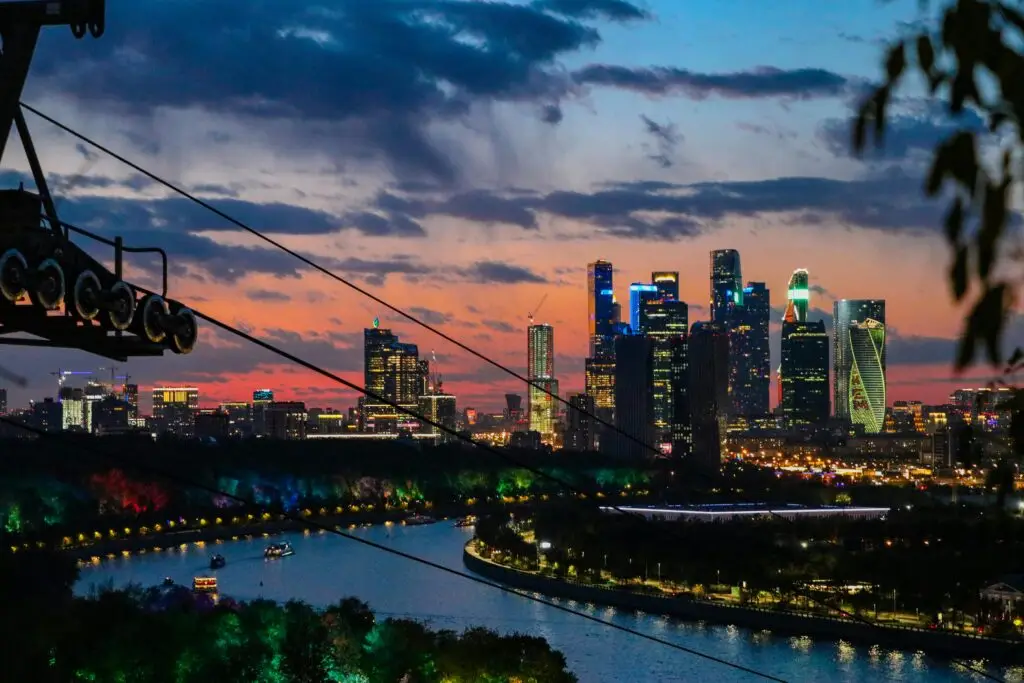
Moscow is Russia’s beating heart — a vast metropolis where centuries collide in a single breath. It is grand, restless, powerful, contemplative. Here, medieval churches stand beside Stalinist towers; luxury boutiques share space with Soviet apartment blocks; and the Moscow Metro glitters underground like a palace of stone and light.
At the city’s center lies the Kremlin, a fortress of museums, palaces, and ancient cathedrals. Its walls rise red and solemn, enclosing centuries of power. Adjacent is Red Square, an expanse of stone framed by icons: Saint Basil’s Cathedral with its swirling, colorful domes; the GUM department store glowing like a palace of glass; and Lenin’s Mausoleum, austere and dark. Standing here, you feel history layered beneath your feet — imperial pageantry, Soviet parades, modern celebration.
The Moscow River curves through the city, passing golden domes, leafy parks, and skyscrapers in the business district. Bridges arch over the water, connecting boulevards that pulse with movement. Traffic hums all day; cultural life explodes at night. Yet the city contains quiet corners too — monasteries hidden in courtyards, tree-shaded streets where elderly women carry bags of bread, and small cafés tucked beneath old facades.
The Moscow Metro is a masterpiece of architecture and symbolism. Stations built during the Soviet era glow with chandeliers, marble pillars, mosaics, and sculptures. Riding the metro feels like traveling through an underground museum, each stop revealing another artistic world.
Cultural life thrives everywhere. Concert halls host Tchaikovsky and Rachmaninoff; theaters perform classics and avant-garde works; galleries feature both old icons and modern abstraction. Students gather in libraries and bookshops, debating philosophy and politics. Moscow is a city that thinks — deeply, passionately, constantly.
But it is also a city that dreams. In winter, snow wraps rooftops in silence; in summer, parks fill with laughter and picnics. The city never sleeps, yet it never loses its capacity for reflection.
Saint Petersburg – Poetry on the Baltic
Saint Petersburg is Russia’s cultural soul — a city of elegance, grandeur, and quiet melancholy. Built by Peter the Great as a “window to Europe,” it stands along canals and the Neva River, its pastel palaces glowing softly in northern light. Snow settles gently on statues in winter; in summer, the sun barely sets, and the city lives in perpetual twilight — the magical season known as the “White Nights,” when walking at midnight feels like moving through a dream.
Saint Petersburg is a city of water and stone. Straight boulevards open into wide plazas framed by cathedrals, bridges, and ornate façades. The architecture blends Baroque, Neoclassical, and Art Nouveau influences; every street feels composed, refined, deliberate. Life here moves at a slower rhythm than Moscow — gentler, more introspective. Writers and poets once gathered along these canals, debating philosophy, telling stories late into the night. The spirit of Pushkin, Dostoevsky, Akhmatova, and Tchaikovsky lingers in the wind.
The Hermitage Museum is one of the world’s greatest treasures — an immense collection spread across the Winter Palace and surrounding buildings. Its rooms glow with gold, marble, and light; paintings by Rembrandt, Leonardo, and countless masters hang beside jeweled thrones and vast galleries. Walking through it feels like entering a universe of beauty and memory, where time becomes fluid.
Nearby stands the Church of the Savior on Spilled Blood, its colorful domes rising like painted flames. Inside, mosaics shimmer across every surface, creating an atmosphere both mystical and intimate. St. Isaac’s Cathedral soars with a golden dome visible from afar; climbing its colonnade reveals a panorama of rooftops, waterways, and northern sky.
Beyond the city center, the imperial estates — Peterhof, Tsarskoye Selo, and Pavlovsk — unfold like fairy tales. Peterhof’s fountains dance across gardens facing the sea; Tsarskoye Selo dazzles with Catherine Palace’s gilded chambers; Pavlovsk whispers elegance through quiet parks. These are worlds built for beauty, where art and nature merge.
Saint Petersburg is both majestic and fragile — a city born from ambition yet filled with longing. Its winters can be harsh, its history often tragic, yet its resilience, poetry, and luminous charm endure. To wander here is to feel transported into a novel, where every street holds a secret and every view carries emotion.
The Golden Ring – Towns of Ancient Spirit
North and east of Moscow lie a constellation of ancient towns known collectively as the Golden Ring — places where Russia’s early identity was shaped. Their white-stone cathedrals, cloisters, and kremlins rise above rivers and meadows, forming a quiet world where domes glint in morning mist and bells echo across fields. These towns — including Vladimir, Suzdal, Yaroslavl, Rostov Veliky, Kostroma, Pereslavl-Zalessky, and Sergiev Posad — hold the essence of medieval Rus’: devotion, craftsmanship, community.
Among them, Suzdal feels almost unreal — a town where church towers rise above wooden houses, and green hills roll into farmland. Horses graze near rivers, onion domes reflect in still water, and the quiet is so deep it feels timeless. Walking here is like stepping into an icon painting. Suzdal’s kremlin, monasteries, and white towers blend seamlessly into nature; evenings bring a soft glow over grass and stone.
Vladimir was once a grand capital; its cathedrals still radiate nobility. The Assumption Cathedral holds frescoes painted by Andrei Rublev, Russia’s most beloved iconographer — works of silence, tenderness, and faith. The Golden Gate stands as a medieval monument to the city’s role in defending Kievan Rus’.
Yaroslavl, spread along the Volga River, bridges past and present. Its churches and riverside parks create calm beauty, yet it hums with modern life. Rostov Veliky is quieter still — a lakeside town whose kremlin seems to drift between heaven and earth, its towers reflected in water like a dream.
In Sergiev Posad, the Trinity Lavra of St. Sergius rises in brilliant white and sky-blue. Monks pass beneath arches, candles burn in fragrant chapels, and prayers linger in vaulted halls. This monastery is among Russia’s holiest sites — a center of faith for centuries.
The Golden Ring is not a single destination but a state of mind — a journey into the early soul of Russia, where history whispers through grass, water, and stone.
Kazan – Crossroads of Cultures
Kazan, capital of Tatarstan, sits at the meeting point of Europe and Asia — a city where Islamic minarets and Orthodox domes rise side by side. Its skyline reflects centuries of coexistence, blending cultures into something uniquely its own. The result is a place of peaceful dialogue, where languages, cuisines, and traditions weave together.
The heart of the city is the Kazan Kremlin, a UNESCO site that feels both ancient and modern. Inside, the stunning Qol Sharif Mosque lifts its turquoise domes toward the sky, while nearby the Annunciation Cathedral stands with quiet dignity. The kremlin’s white walls glimmer beneath sunlight, reflecting Kazan’s identity — harmonious, diverse, confident.
Beyond the kremlin, Kazan unfolds into wide boulevards, riverfront promenades, and neighborhoods alive with cafés, bakeries, and museums. The city blends Russian and Tatar cuisines: flavorful pies, grilled meats, spiced soups, and delicate sweets. The Volga River flows steadily, giving the city space to breathe.
Kazan feels youthful, educated, energetic — a major university center that pulses with curiosity. Yet traditional craft survives: embroidered clothing, carved wood, and hand-painted ceramics fill small shops. The atmosphere balances serenity and motion, heritage and innovation.
Travelers often describe Kazan as peaceful — a place where difference is not merely tolerated but celebrated. Its beauty lies not in dramatic architecture alone, but in its quiet harmony.
Sochi & The Black Sea – Warmth at the Edge of Mountains
Along Russia’s southern coast, where mountains descend into subtropical shores, lies Sochi — a city of long beaches, palm trees, mineral springs, and snowy peaks standing just inland. The contrast is remarkable: you can swim in the Black Sea and, within hours, ski in the Caucasus Mountains. This unique geography makes Sochi feel like two worlds blended into one.
The coastline stretches gently — small resorts, seaside promenades, gardens bursting with flowers. Summers are warm and bright; evenings glow with music and laughter. The sea changes color with the hour — sometimes deep blue, sometimes silver beneath overcast sky.
Inland rises Krasnaya Polyana, a mountain region transformed into a modern ski destination during the 2014 Winter Olympics. Cable cars climb into peaks where forests turn to alpine meadows and cliffs. Winter blankets the mountains in smooth snow; summer opens hiking trails through forests filled with birdsong and fresh air. Wild rivers carve deep gorges; waterfalls hide among rocks.
Yet even beyond the resorts, the region holds quiet villages, tea plantations, and ancient dolmens scattering hillsides. Nature here feels lush, humid, almost tropical — a world apart from Siberian snow or Moscow frost.
Sochi is a place of relaxation — black tea on terraces, sunsets over the sea, long walks along the water. The mountains provide a counterbalance, grounding the coast in cool, green silence.
Lake Baikal – The Sacred Sea of Siberia
Lake Baikal is not simply a destination — it is a presence. The world’s oldest and deepest freshwater lake holds a spirit so vivid that travelers describe it with reverence. Surrounded by mountains, forest, and silence, Baikal feels like the heart of Siberia — pure, ancient, mysterious.
Its waters are famously clear; in winter, frozen Baikal becomes a blue crystal desert. Cracks stretch across the ice like lightning, revealing unimaginable depth below. Wind sweeps snow into patterns; sunlight creates a glow that feels almost unreal. Travelers cross the ice on foot, skates, or vehicles, hearing deep echoes as the lake shifts beneath.
In summer, the lake softens into shimmering blue. Small villages — Listvyanka, Olkhon Island settlements, bays along the eastern shore — offer quiet places to walk, reflect, and watch water meet sky. Wooden houses glow in evening light; smoke curls from bathhouses where locals warm themselves; boats glide across calm water.
Olkhon Island is Baikal’s spiritual center — a place of cliffs, steppes, and sacred sites. The Burkhan Cape, with its twin shamanic rocks, rises above waves like a monument to sky and earth. Here, shamanic traditions survive; ribbons flutter from trees; prayers travel with wind across the water.
Wildlife flourishes in Baikal — nerpa seals, endemic fish, and countless birds. Forests around the lake are home to bears, deer, and foxes. Trails climb into mountains, offering views where the lake stretches so far it looks like the sea.
Baikal is a place to breathe, to listen, to feel time slow. Its beauty is not loud — it is deep, quiet, and transformative.
Siberia & The Russian Far East – The Infinite Wilderness
Beyond the Urals begins a land so vast that distance loses meaning. Siberia stretches across plains, forests, and icy plateaus, covering millions of square kilometers. It is a realm of extremes — burning summers, freezing winters, endless silence, and sudden beauty. The air feels clearer; the sky seems larger; and time slows until moments expand like the open land itself.
The Spirit of Siberia
Life here follows nature. Villages appear along rivers; roads run straight through forests and snowfields; wooden houses sit behind fences carved with folk designs. Winters can last half the year, blanketing everything in a blue-white stillness. Snow creaks beneath boots; smoke curls from chimneys; stars blaze in cold night skies. In spring, the thaw awakens the land, turning rivers into torrents that rush through valleys.
The Trans-Siberian Railway, one of the world’s most iconic journeys, crosses this domain from Moscow to Vladivostok. Days pass as forests, lakes, and towns slide across the window. It is not merely a train ride — it is a meditation. The rhythm of wheels feels like breathing; stations bring glimpses of local life — tea vendors, small cafés, quiet platforms beneath wide sky.
Siberia is not empty. Cities thrive: Novosibirsk, Krasnoyarsk, and Irkutsk each have their own character — academic, industrial, cultural. Yet only minutes outside their centers, the wilderness returns. Bears roam forests; reindeer herds migrate; and rivers hold salmon that swim thousands of kilometers.
Yakutia (Sakha Republic)
Farther northeast lies Yakutia, a land of permafrost, diamonds, and myth. Winters here define what cold truly means: temperatures plunge below –50°C, and villages survive in deep frost. Houses stand on stilts to prevent melting the ground; breath freezes in air. Yet despite the climate, Yakutia is full of life — indigenous cultures with rich traditions, warm hospitality, and spiritual connection to land and sky.
The Lena River cuts through the region, wide and dignified. Along its banks rise the Lena Pillars — stone towers that stretch skyward like frozen flames. They form one of Russia’s most surreal landscapes, especially at sunrise when light paints them gold.
In summer, Yakutia transforms. Forests glow with green, rivers open for travel, and wildflowers spread across tundra. Festivals celebrate light and rebirth; families gather around fires; shamans bless new seasons.
Kamchatka – Fire & Ice
Kamchatka is perhaps Russia’s most dramatic natural stage — a peninsula where volcanoes, geysers, and wild rivers rule the land. More than 300 volcanoes rise here, around 30 of them active. They smoke, rumble, and glow, reminding visitors that Earth is alive beneath their feet. Snow-covered peaks stand above valleys where steam rolls across hillsides. Hot springs bubble beneath the open air, offering warmth against cold winds.
Bears wander freely, massive yet calm, fishing in rivers that rush with salmon. Eagles circle above; foxes follow trails through grass; and reindeer cross distant ridges. Human presence feels humble here — small villages, scientific stations, and fishing camps are swallowed by wilderness.
The Valley of Geysers is a hidden world — steamy vents, boiling pools, moss-covered stones. Reaching it often requires helicopter travel, the flight offering views of untouched forests, craters, and rivers winding like silver threads.
Kamchatka feels remote yet intimate, raw but beautiful — a place where nature speaks first, and humans listen.
The Kuril Islands
South of Kamchatka, the Kuril Islands form a volcanic chain stretching toward Japan. Mist settles over black beaches; fumaroles rise from slopes; and fishing villages dot the shoreline. The climate is rough — storms roll in from the Pacific, waves crash against cliffs, and fog lingers for days. Yet the islands carry a strange, poetic majesty — a mix of ocean, volcano, and isolation.
Ural Mountains – Between Continents
The Ural Mountains form a long, narrow spine dividing Europe from Asia. Though not the tallest mountains in the world, they hold symbolic significance — a natural boundary between cultures, histories, and geographies. The Urals feel ancient, weathered, grounded. Forests climb their slopes; rivers carve deep channels; and mining towns recall centuries of extracting riches from stone.
Small villages sit along valleys, often centered around simple churches and wooden houses painted in soft colors. Hiking trails lead into quiet hills filled with birch and pine. In autumn, the woods ignite into gold and red; in winter, snow buries everything in quiet purity. Beyond the forests, tundra rolls into misty horizons.
Yekaterinburg, the main city in the region, stands as both industrial center and cultural hub. Its streets reflect Soviet strength, modern wealth, and historical memory — including the tragic story of the last Russian royal family, executed here in 1918. Museums, theaters, and squares keep the city lively, while nature remains only a short journey away.
The Urals are not dramatic like the Caucasus nor wild like Siberia, but they carry a calm, ancient dignity — a meeting point where continents touch.
The Russian Arctic – Ice, Silence & Northern Light
In Russia’s far north lies a realm of tundra, ice, and midnight sun. The Arctic feels otherworldly — a land where daylight can last for months, where winter night becomes eternal darkness, and where nature decides everything. The air is sharp, clear; the wind carries the scent of snow; and silence stretches so wide that even the smallest sound feels amplified.
Cities like Murmansk, Norilsk, and Arkhangelsk survive in this environment through resilience. Murmansk, one of the largest Arctic cities, stays ice-free in winter thanks to warm currents. Ships enter port under dim skies; trams climb snowy streets; people move with purpose through cold winds.
Farther east, the land becomes emptier. Tundra stretches beneath the aurora borealis, and reindeer herds travel ancient migration paths. Indigenous peoples — Nenets, Chukchi, and others — continue nomadic traditions, living with herds, building portable homes, and reading the land with ancestral knowledge. Their clothing, crafted from reindeer hide, keeps them warm through unimaginable cold.
Summer transforms the Arctic. Moss and tiny flowers bloom across the tundra; rivers open; birds arrive in huge flocks. The sun never sets, casting golden light across northern seas. Sailors, scientists, and adventurers travel to far islands — Franz Josef Land, Novaya Zemlya, Wrangel Island — where polar bears roam and cliffs teem with seabirds.
The Arctic is not forgiving, but it is magnificent — a place where humans feel their smallest, and nature reveals its greatest power.
Rural Russia – The Heartbeat of Tradition
Beyond the great cities and industrial centers lies rural Russia — a world of wooden houses, quiet lanes, fruit orchards, and timeworn customs. Villages stretch along roads like beads on a string; churches with onion domes rise above fields; and forests press close, providing wood, berries, mushrooms, and myth.
Traditional houses feature carved window frames — nalichniki — intricate designs that transform simple dwellings into works of folk art. Gardens grow vegetables, herbs, and flowers; wells provide clean water; and stoves warm homes through long winters. Life moves with the seasons: spring planting, summer harvest of berries and mushrooms, autumn pickling and wood chopping, winter nights spent with tea, stories, and song.
Village life carries both simplicity and richness. People gather to celebrate holidays — Easter, Maslenitsa, village festivals — with tables full of pies, pickles, honey, and bread. Folk music echoes through courtyards; dances continue deep into night; elders share memories of ancestors who lived on the same land.
The connection to nature remains strong. Forests provide mushrooms, berries, and herbs that families preserve for winter. Rivers offer fish; fields produce rye and potatoes; orchards grow apples and cherries. Even with modern life reaching villages, many traditions endure — weaving, carving, and storytelling.
In rural Russia, hospitality is profound. A stranger may be invited for tea, soup, fresh bread, and conversation. Time slows; hearts open; and the beauty of simple life reveals itself.
Culture & Identity – Soul & Story
Russian culture runs deep — layered with spirituality, poetry, hardship, and resilience. The Russian soul is often described as wide — capable of immense joy, deep sorrow, fierce passion, and quiet reflection. This emotional range appears everywhere: in music, where Tchaikovsky’s melodies ache with longing; in literature, where Tolstoy and Dostoevsky explore moral and existential questions; in painting, where icons shine with golden stillness.
Orthodox Christianity shapes artistic and spiritual life. Churches glow with candlelight; icons shimmer in red, gold, and blue; and services fill with chanting that seems to suspend time. Yet Russian culture is not only religious — it is philosophical, introspective, curious. People discuss literature, history, and human nature with seriousness and humour.
Folklore remains alive — tales of firebirds, forest spirits, and witches living in houses on chicken legs. These stories, told around stoves in cold winters, shaped imagination for centuries. They reflect both fear and wonder, humor and wisdom.
Community is essential. Families gather across generations; friends sit long into the night discussing life; neighbors share food, tools, and news. Hospitality is genuine — visitors are offered tea, sweets, and warmth as though old friends.
Russian identity blends many influences — Slavic, Turkic, Finno-Ugric, European, Asian. This diversity gives the culture depth and complexity, making it both expansive and intimate.
Cuisine & Eating Traditions
Russian cuisine is shaped by climate, geography, and centuries of cultural exchange. It is hearty, warm, soulful — food designed to comfort during long winters and bring families together around large tables. Meals often emphasize bread, soups, grains, dairy, potatoes, fish, and seasonal vegetables, yet regional variations are immense. From the Black Sea coast to Siberia, ingredients and methods change as landscapes shift.
Bread forms the foundation. In Russian culture, bread is never taken lightly — it symbolizes hospitality and abundance. Dark rye breads, dense and flavorful, are beloved across the country. Butter, sour cream, dill, and herbs accompany many dishes, bringing soft brightness to even the simplest meals.
Soups are central. Borscht — beetroot soup — is perhaps the most recognizable, though its variations are endless. Some versions include beef, others cabbage, mushrooms, or potatoes; some are served steaming hot with thick sour cream, others chilled in summer. Shchi, a cabbage soup, carries the warmth of tradition; solyanka, rich with smoked meats or fish, brings strong flavors balanced by lemon and olives. Soups are not starters — they are meals of comfort, eaten slowly with black bread.
Dumpling traditions run deep. Pelmeni, originating in Siberia, are small meat-filled dumplings often served with butter or sour cream. They were once prepared in large batches and frozen outdoors during severe winters, becoming easy nourishment for hunters and travelers. In the west, vareniki — filled with potatoes, cheese, or cherries — reflect Ukrainian influence and often appear at family gatherings.
Fish holds importance, especially near rivers, lakes, and coasts. Salmon and whitefish are salt-cured or smoked; herring appears in layered salads, especially during holidays. On the Black Sea coast, grilled fish and fresh produce create lighter, Mediterranean-inspired meals.
Meat dishes include shashlik — skewered, marinated meat grilled outdoors — a tradition shared with Central Asia and the Caucasus. Families gather in forests and backyards to cook shashlik over open flames, laughing and talking as smoke rises through trees. Stews made with veal, beef, or game simmer slowly, filling houses with deep aroma.
Russia’s dairy culture is rich. Farmers produce fresh cheeses, kefir, and cottage cheese. Smetana, a thick sour cream, appears everywhere — on soups, dumplings, pancakes, and bread.
Pancakes — blini — are iconic. Thin and golden, they may be served with jam, honey, meat, mushrooms, or caviar. Maslenitsa, the week before Lent, celebrates blini as symbols of the sun — warm, round, and golden, marking winter’s gradual retreat.
Desserts include honey cakes, poppy seed pastries, fruit pies, and sweet dumplings. Tea, brewed strong and served in tall glasses, accompanies nearly every meal. It is a ritual — pouring tea, offering sweets, sitting together for conversation. Sometimes it is served from a samovar, a traditional metal urn that keeps water hot for hours.
Vodka, though internationally associated with Russia, is only one part of the drinking culture. It appears at celebrations and with ceremonial toasts — but it is accompanied by food, conversation, and warmth. Wine thrives in southern regions near the Black Sea, while beer and fruit liqueurs are enjoyed across the country.
Russian cuisine is not about extravagance; it is about nourishment, memory, and togetherness. Meals gather families, strengthen friendships, and bring comfort, especially in winter. The table becomes a place of connection, storytelling, and silence shared without discomfort.
Arts, Literature & Intellectual Life
Russia’s artistic heritage is immense — towering figures in literature, music, visual arts, theater, and dance have shaped not only national identity but global culture. To engage with Russian art is to enter an emotional universe — reflective, questioning, and deeply human.
Russian literature is central to its cultural soul. Writers such as Pushkin, Gogol, Turgenev, Tolstoy, Dostoevsky, and Chekhov explored themes of morality, society, suffering, love, and identity with a depth rarely matched elsewhere. Their works still influence daily conversation; characters from novels feel like national archetypes. Reading Russian literature is not merely entertainment — it is a philosophical encounter.
Classical music echoes with emotional intensity: Tchaikovsky, Rachmaninoff, Prokofiev, and Shostakovich composed works of profound feeling, blending melancholy, grandeur, and innovation. Ballet flourished in Saint Petersburg and Moscow; the Bolshoi and Mariinsky theaters remain world icons, where dancers tell stories with movement shaped by discipline and grace.
Visual art developed along two paths — religious and secular. Icons, painted on wood, shine in churches and museums; their calm faces and gold halos reflect centuries of devotion. Later painters — Repin, Vrubel, Kandinsky, Malevich — explored realism, symbolism, and abstraction, contributing to global modernism. Soviet art, confined by ideology, still produced powerful images depicting workers, landscapes, and dreams of progress.
Theater and opera remain central to cultural life. Performances are deeply valued, not reserved for elites. Students, workers, families — all attend. Discussion about plays and performances continues in cafés and kitchens long after the curtain falls.
Russian intellectual life is vibrant, shaped by a history of philosophical inquiry. Even in casual settings, discussions drift toward meaning: What is truth? How should one live? What is the nature of suffering? This tendency reflects a cultural inclination toward depth rather than frivolity.
Education is strongly valued; universities in Moscow, Saint Petersburg, and beyond produce scientists, mathematicians, linguists, and thinkers. Russia’s achievements in science — space exploration, physics, engineering — remain sources of pride. The launch of Sputnik in 1957 and Yuri Gagarin’s 1961 spaceflight shaped a national identity grounded in ambition and curiosity.
Art in Russia is not separate from life. It is a lens through which people understand the world — a bridge between sorrow and hope, history and future.
Practical Travel Information
Traveling through Russia can be vast in scale yet surprisingly straightforward once one understands its rhythm. Distances are significant, but trains, planes, and local transport knit the country together.
The railway network is extensive. The Trans-Siberian Railway remains the most legendary route, connecting Moscow to Vladivostok across nearly 9,300 kilometers. Trains become temporary homes — passengers share tea, stories, and quiet reflections while forests and rivers slip by outside. Other train routes link major cities efficiently, often offering comfortable overnight sleepers.
Domestic flights cover long distances quickly, connecting Moscow and Saint Petersburg to Siberia, the Far East, and the south. In cities, metros are essential: Moscow’s and Saint Petersburg’s are not only practical but architectural marvels.
Road travel varies; highways near big cities are well maintained, but rural areas may require slower driving. Buses serve villages and towns widely, though schedules can be flexible.
Language varies by region. In major cities, English is increasingly understood, especially among younger generations. In rural areas, knowledge of Russian phrases is helpful and often warmly appreciated.
The ruble (RUB) is the currency. Costs vary widely: major cities can be moderately expensive, while rural areas remain very affordable. Food and accommodation offer good value, especially outside metropolitan centers.
Safety depends on context. Cities are generally safe, and petty crime is limited; however, caution should be exercised in crowded places, as anywhere. Nature poses its own risks: weather in the mountains or Siberia can shift suddenly; proper preparation is essential.
Russia rewards patience. Understanding the culture — generosity, quiet respect, emotional depth — helps travelers connect with people and landscapes more fully.
Best Time to Visit
Russia transforms dramatically with the seasons. Each season offers its own mood, landscape, and cultural rhythm.
Summer brings warmth, long days, and vibrant life. In Saint Petersburg, the White Nights bathe the city in endless twilight; festivals fill streets with music and celebration. Across the country, fields turn green, rivers flow freely, and nature opens. It is the most comfortable time for exploring rural regions and the far north.
Autumn offers golden beauty. Birch and larch forests ignite with yellow and orange; mountains glow beneath crisp skies. Harvest festivals bring markets rich with mushrooms, berries, and honey. The air feels cool and clear, ideal for walking.
Winter transforms the country into a realm of ice and snow. Cities glitter beneath frosty light; Orthodox Christmas fills churches with candle glow. In Siberia, winter is severe — temperatures drop dramatically, and landscapes freeze into silent white. Yet winter has deep beauty: frozen Lake Baikal, snow-covered forests, and cozy homes warmed by wood stoves.
Spring arrives slowly, felt first in sunlight. Snow melts into rushing streams; flowers bloom in meadows; city parks fill with people savoring warmth. Days stretch longer; festivals celebrate renewal.
Choosing the best time depends on one’s desire:
→ For nature and warmth — summer and early autumn.
→ For culture and White Nights — June.
→ For winter beauty and Baikal ice — January–February.
Russia is never the same twice.
Suggested Itineraries
Classic European Russia (1–2 weeks)
Begin in Moscow, exploring its cathedrals, the Kremlin, and the metro; take a fast train to Saint Petersburg, where canals, palaces, and museums fill days with beauty. Add a short journey into the Golden Ring for medieval landscapes.
Trans-Siberian Journey (2–4 weeks)
Start in Moscow and ride east through endless forest and mountain to Irkutsk and Lake Baikal. Continue to Khabarovsk and finish in Vladivostok, where the Pacific shimmer meets the edge of Eurasia.
Caucasus & Black Sea (1–2 weeks)
Fly to Sochi, then travel inland to the Caucasus foothills. Explore mountains, vineyards, quiet villages, and ancient fortresses; return to the coast for rest and sun.
Far East & Volcanoes (10–14 days)
Travel to Kamchatka to witness volcanic landscapes, hot springs, and raw wilderness; continue to the Kuril Islands if time allows.
Russia allows endless variations — the adventure lies not only in destinations but in the journey itself.
Conclusion
Russia is a vast, complex tapestry — woven from forests, rivers, villages, cities, memory, and thought. It is a country of extremes: icy winters and sunlit fields, imperial palaces and wooden huts, philosophical depth and quiet everyday life. Beneath its history — proud, troubled, brilliant, painful — lies a spirit both resilient and deeply emotional.
To travel here is to confront scale — geographic, cultural, human. One moves not just from place to place, but from mood to mood: the grandeur of Moscow, the poetry of Saint Petersburg, the silence of Siberia, the fire of volcanoes, the peace of rural villages. The land offers endless space to think; the people offer warmth and sincerity; the culture offers insight into the soul.
Russia is not easily defined. It is a place to feel rather than summarize — a world where beauty often hides beneath simplicity, where sorrow and joy coexist, where landscapes stretch so far they seem to merge with time itself.
Those who come with curiosity leave with reverence.
Because Russia changes you — not through spectacle, but through depth.
 Related Articles
- Kakslauttanen Arctic Resort
- Top 10 Most Unique Places to Stay in Europe
- 10 Incredible Castles Around the World