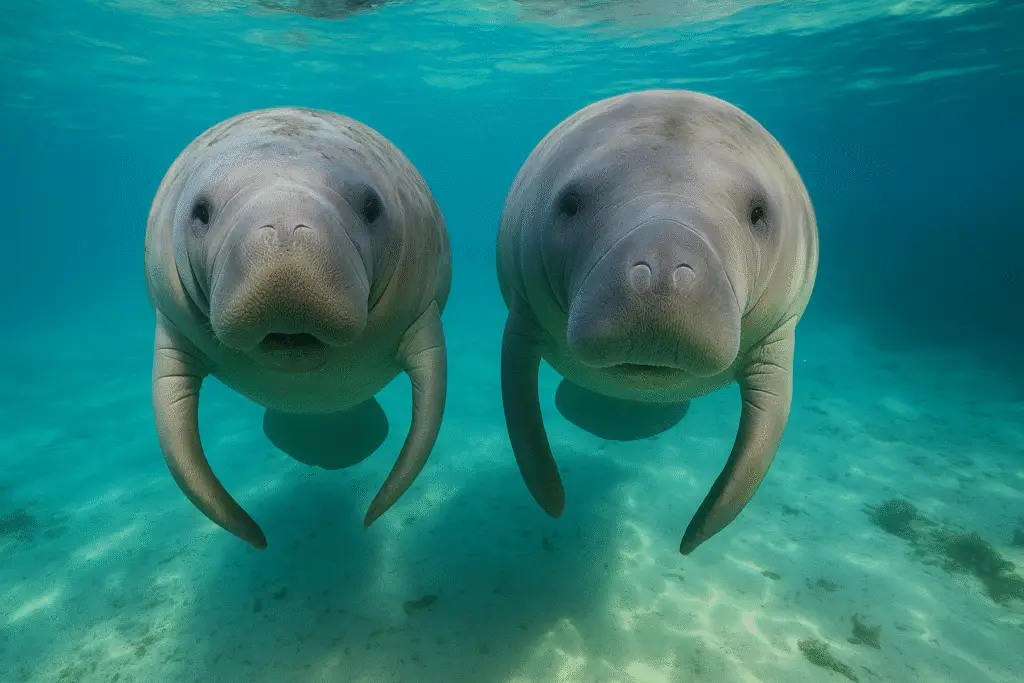
Swimming with manatees in Crystal River, Florida is one of those bucket list experiences that feels almost unreal. You slip quietly into the water, lower your face into the clear spring, and suddenly a giant, gentle shape appears out of the blue. A manatee. Calm, slow, almost curious. It’s a magical wildlife encounter that you’ll remember for the rest of your life.
Crystal River is one of the only places in the United States where you can legally swim with wild manatees. Because the water stays a constant 72°F (22°C) year-round, hundreds of manatees gather here in the colder months to stay warm. With the right tour, you can float among them in a safe, respectful and unforgettable way.
In this guide, you’ll find everything you need to know about swimming with manatees in Crystal River: the best time to go, how to choose a responsible tour operator, what the rules are, what to expect on your trip and how to plan the rest of your Crystal River getaway.
Why Crystal River Is So Special

Crystal River sits on Florida’s Gulf Coast, about 1.5–2 hours north of Tampa. At the heart of the town is Kings Bay, a large, spring-fed bay connected to the Gulf of Mexico. Over seventy freshwater springs pump out clear, warm water all year long, turning the bay into a natural spa for manatees.
In winter, when the Gulf of Mexico cools down, manatees seek out warmer water. Crystal River’s constant temperature makes it an ideal refuge. On cold mornings, you can sometimes see dozens or even hundreds of manatees resting shoulder to shoulder in the springs and canals.
To protect them, the U.S. Fish & Wildlife Service created the Crystal River National Wildlife Refuge. This refuge includes famous spots like Three Sisters Springs, along with other sanctuaries where manatees can rest undisturbed. Carefully managed access and clear rules mean you can have a close encounter while still putting the manatees’ well-being first.
What makes Crystal River truly unique is this combination of:
- Reliable manatee sightings
- Crystal-clear water in many of the springs
- Legal, regulated in-water encounters with licensed tour operators
- Strong conservation focus, helping protect the manatees long-term
It’s not just a tourist activity – it’s also an opportunity to support conservation and learn how to be a responsible wildlife traveler.
Best Time to Swim with Manatees in Crystal River
You can see manatees in Crystal River all year, but the experience is very different depending on the season.
Winter (Mid-November to March): Peak Manatee Season
Winter is the absolute best time if your main goal is to see as many manatees as possible.
- Water temperature in the Gulf drops, so manatees move into the springs to stay warm.
- On cold mornings, they gather in huge numbers in warm-water refuges like Three Sisters Springs and other spring areas.
- Guided tours leave early in the morning, and it’s not unusual to see multiple manatees in a single spot, sometimes right next to your boat.
The downside? It’s also the busiest time of year. Tours sell out quickly on weekends and during school holidays, so it’s smart to book in advance.
Shoulder Season (Spring & Fall)

In spring (April–May) and fall (October–early November):
- Fewer manatees stay in the springs full-time, but some are still present, especially if the temperatures fluctuate.
- There’s less crowding from other visitors, which can mean a more peaceful experience.
- You may see fewer manatees at once, but the encounters can still be very special.
Summer (June–September): Fewer Manatees, But Still Possible
In summer, most manatees spread out and travel along the coast, where the water is warm enough. You might still see some manatees, especially resident individuals that stay in the area, but big gatherings are less common.
The benefits of visiting in summer:
- Fewer tourists compared to winter.
- Warm air temperatures, which make getting in and out of the water more comfortable.
- Plenty of other things to do (kayaking, scalloping season, boating, nature walks).
If seeing a large number of manatees is your top priority, winter is your best bet. If you’re flexible and happy with a smaller number of manatees and a quieter atmosphere, shoulder seasons and even summer can still be rewarding.
Manatee Rules and Responsible Wildlife Encounters
Manatees are protected by federal and state law, so there are strict rules about how you can interact with them. A responsible tour operator will explain everything before you get in the water, but it’s good to know the basics in advance.
Here are the main guidelines you must follow:
- Do not chase, harass or crowd manatees. Let them come to you. Always move slowly and calmly.
- No diving, splashing or loud noise. You’ll be wearing a snorkel and floating on the surface – the goal is to be quiet and relaxed.
- Do not stand on or step on manatees. This sounds obvious, but in shallow water it’s easy to lose your sense of distance. Keep your body horizontal and float.
- No riding or grabbing. If a manatee swims up to you, enjoy the moment, but avoid wrapping your arms around it, pulling on its fins or trying to “hug” it.
- Don’t separate a mother and calf. If you see a small manatee near a larger one, give them extra space.
- Stay out of sanctuary zones. These are clearly marked areas where people are not allowed – they’re safe resting zones for manatees.
- No feeding or giving water. Manatees must remain wild and not dependent on humans.
A good rule of thumb:
If your behavior would scare, stress or annoy a wild animal on land, don’t do it in the water either.
By following these rules, you help make sure manatees stay safe and calm, and future visitors can enjoy the same magical experience.

How to Choose an Ethical Manatee Tour Operator
There are several tour companies in Crystal River that offer manatee tours, and it’s worth choosing carefully. Not all tours are equal in terms of group size, guide quality and respect for the animals.
Look for an operator that:
- Limits group size. Smaller groups mean less disturbance for the manatees and a better experience for you.
- Provides a detailed briefing. Before you get in the water, they should clearly explain the rules, safety guidelines and how to interact responsibly.
- Uses “passive observation.” They encourage you to float calmly and let the manatees approach you, rather than actively chasing them.
- Supplies proper equipment. Wetsuits, snorkels, masks and sometimes pool noodles to help you float quietly.
- Supports conservation. Some companies donate to manatee charities or participate in local education programs.
Reading recent reviews (for example on Google or TripAdvisor) can give you a good idea of how the tours are run, how respectful they are of the animals and how organized the experience feels.
Book Here:
What to Expect on a Typical Manatee Tour
Every tour company is slightly different, but most Crystal River manatee tours follow a similar pattern.
1. Check-In and Getting Suited Up
You’ll start at the tour office or dock, usually early in the morning.
- You’ll sign waivers and confirm your booking.
- Staff will help you choose a wetsuit in the right size. This helps keep you warm and gives you extra buoyancy so you can float without effort.
- They’ll hand out snorkels and masks and show you how to use them if needed.
2. Safety and Manatee Briefing
Before heading out, your guide will:
- Explain all the manatee interaction rules.
- Show you how to float quietly and keep your legs up so you don’t bump into manatees or stir up the sand.
- Go over basic boat safety, including how to climb in and out of the boat.
This briefing is super important – it sets the tone for an ethical, peaceful encounter.
3. Boat Ride to the Springs
You’ll then hop on the boat and head out into Kings Bay. The exact location depends on recent manatee activity and weather.
Along the way, your guide might:
- Point out wildlife like birds, turtles or dolphins.
- Talk about manatee biology, their history and conservation efforts.
- Prepare you for what will happen once you’re in the water.
4. Getting into the Water

When the guide finds a good spot with manatees nearby:
- The boat engine will be turned off or kept at idle.
- You’ll be asked to slide quietly into the water, often using a ladder.
- You’ll hold onto a pool noodle or simply float on your stomach, face in the water, breathing through your snorkel.
At first, you might not see anything. Then your eyes adjust and the shapes start to appear: big, gray, slow-moving shadows below you. That’s when the magic happens.
5. The Manatee Encounter
During the encounter:
- You’ll gently drift or stay in one area while the manatees move around.
- Some may ignore you completely, while others may swim past to take a look.
- If a manatee comes very close, stay calm, still and quiet. Let it decide how close it wants to be.
Sometimes, playful younger manatees might show more curiosity. They might come up beside you, roll slightly, or even bump into your wetsuit with their snout. It’s important not to encourage this too much and still respect their space.
Your guide may be in the water with you, helping direct the group, making sure everyone follows the rules and pointing out manatees you might have missed.
6. Back to the Boat
After a while (often 60–90 minutes total water time, depending on the tour), you’ll return to the boat:
- You’ll climb back up the ladder, peel off part of your wetsuit and warm up with a towel or hot drink if provided.
- The boat will head back to the dock while you warm up and talk about the experience.
Many tours also offer photos or videos of your encounter, taken by the guide. This can be a nice way to remember the experience without constantly worrying about your own camera.
What to Pack for a Manatee Swim
Here are some useful things to bring for your Crystal River adventure:
- Swimsuit – Wear it under your clothes so you can change quickly into your wetsuit.
- Towel – Essential for warming up afterward.
- Warm layers – In winter, it can be chilly when you get out of the water. Bring a hoodie or jacket.
- Flip-flops or water shoes – Easy to slip on and off at the dock.
- Dry bag – To keep your phone, wallet and other valuables dry on the boat.
- Waterproof camera or GoPro – Optional, but great for capturing the experience (as long as you can still pay attention to the manatees and follow the rules).
- Reusable water bottle and snacks – Check with your tour if food is allowed on board.
- Change of clothes – For after the tour.
Most operators provide wetsuits, snorkels and masks, so you usually don’t need to bring your own unless you have a strong preference.

Three Sisters Springs and Other Spots to See Manatees
One of the most famous places in Crystal River is Three Sisters Springs, a stunning trio of crystal-clear springs surrounded by cypress trees. In winter, it can be absolutely packed with manatees when temperatures drop.
However, access to Three Sisters Springs is carefully controlled:
- Sometimes the springs are closed for in-water access when too many manatees are inside.
- You can often still see them from the boardwalk at the Three Sisters Springs Refuge, which is accessible by land with an entrance fee.
- Your tour operator will know the current rules and conditions and decide where to bring you.
Other springs and channels around Kings Bay also offer great manatee viewing, and your guide will choose the best spot based on conditions, visibility and manatee activity.
Other Ways to See Manatees (If You Don’t Want to Swim)
Not everyone wants to get in the water, and that’s completely fine. You can still have amazing manatee encounters from dry land or from a boat.
Some options:
- Boardwalk at Three Sisters Springs – Walk the loop trail and stop at the viewing platforms. On cold days, you might see dozens of manatees from above.
- Manatee boat tour (no swimming) – Many companies offer “dry” tours where you stay on the boat and watch manatees from the surface.
- Kayak or paddleboard tours – Some tours let you glide silently over the water in a kayak or on a paddleboard. There are special rules for paddlers near manatees, so it’s best to go with a guided tour if you’re new to the area.
These options are perfect for anyone who prefers not to snorkel, families with small children or visitors who want a more relaxed experience.

Where to Stay in Crystal River
Crystal River offers a mix of cozy hotels, motels, waterfront lodges and vacation rentals. When choosing where to stay, think about:
- Location – Staying near Kings Bay or the main marina makes early-morning tours easier.
- Waterfront access – Some accommodations have their own docks or on-site tour companies.
- Parking and breakfast – Handy if your tour leaves early; a quick breakfast and easy parking make your morning smoother.
Check guest reviews to find a place that’s clean, comfortable and convenient for your manatee adventure.
How to Get to Crystal River, Florida
Crystal River is located on Florida’s west coast, roughly:
- About 1.5–2 hours drive north of Tampa
- About 1.5–2 hours drive west of Orlando
Most visitors arrive by car:
- Fly into a major Florida airport such as Tampa (TPA) or Orlando (MCO).
- Rent a car and drive to Crystal River. The roads are good, and the drive is easy and scenic.
Having a car also makes it easier to explore other nearby attractions, like springs, state parks and small coastal towns.
FAQs About Swimming with Manatees in Crystal River

Do I need to be a strong swimmer?
Not necessarily. Wetsuits and noodles help you float, and you’ll always be close to the boat. Basic comfort in the water is helpful, but you don’t need to be an athlete.
Is it safe to swim with manatees?
Yes, as long as you follow the rules and go with a licensed tour operator. Manatees are gentle herbivores and not aggressive. The main safety concerns are boat traffic and cold weather, which your guide will manage.
Can children join manatee tours?
Many tours allow children, but age limits vary by company. If you’re traveling with kids, check the minimum age, life jacket policies and tour length before booking.
Will I definitely see manatees?
In winter, chances are very high, especially on cold days. There’s always a small possibility that manatees will move around, but reputable tours do their best to find them. In summer, sightings are less predictable.
Can I wear fins?
Some operators allow them, others don’t, because fins can stir up the sand and accidentally bump manatees. If fins are allowed, you’ll be asked to move very slowly.
Is it ethical to swim with manatees?
When done correctly, with strict guidelines and respect for the animals, swimming with manatees can be both ethical and educational. The key is choosing a responsible tour and following all rules.
Final Tips for an Unforgettable Manatee Experience
To make the most of your Crystal River manatee adventure:
- Book in advance, especially in winter and on weekends.
- Choose a responsible operator that focuses on small groups and conservation.
- Dress warmly, even in Florida winter – mornings on the water can be chilly.
- Listen to your guide and follow the rules; they’re there to protect you and the manatees.
- Be patient and calm in the water. Manatees move slowly, and the best moments often happen when you relax and simply float.
Swimming with manatees isn’t just a quick photo opportunity – it’s a chance to connect with one of the ocean’s most peaceful creatures. When you float quietly and watch them glide by, you’ll understand why so many people call this a truly life-changing encounter.
My Own Experience Swimming with Manatees in Crystal River

One of the reasons I recommend swimming with manatees in Crystal River so highly is because I’ve done the tour myself — and it was honestly one of the most magical wildlife experiences I’ve ever had.
I joined an early-morning manatee tour, when the air was still cool and the water looked like glass. After getting our wetsuits and snorkel briefing, we rode out into Kings Bay just as the sun was rising. The light hit the water in a way that made everything look almost unreal.
When we reached the springs, our guide quietly pointed to a few large shapes resting near the bottom. I slid into the water slowly, face down, and within seconds one of the manatees floated up toward the surface. It was huge but incredibly calm — almost gentle in the way it moved.
Then came the best moment.
A curious young manatee drifted toward our group and swam right past me, just a few meters away. It looked directly at me for a moment, almost as if it was checking me out. I stayed completely still, just floating, and let the manatee decide how close it wanted to be.
You can hear guides talk about “passive observation,” but when you’re actually there — floating quietly while these peaceful giants glide around you — it hits differently. It’s humbling and emotional at the same time.
That experience made me appreciate even more why the rules are so important: the silence, the calm movements, the respect. When you follow the guidelines, the manatees feel relaxed, and the encounter becomes incredibly special.
If you’re thinking about doing it — I can say from personal experience: don’t hesitate. It’s one of those rare bucket list activities that truly lives up to the hype.
 Related Articles