

Bucketlist the United States
The United States of America is one of the most geographically, culturally, and historically diverse countries on the planet. Stretching from the Atlantic Ocean to the Pacific, and from the Arctic landscapes of Alaska to the volcanic islands of Hawaii, the U.S. spans more than 9.8 million square kilometers, making it the third-largest nation in the world. It contains vast deserts, snowy mountain ranges, tropical rainforests, temperate coastlines, fertile plains, and some of the most iconic cities and national parks ever created. The country’s landscapes alone could fill an entire library of travel guides, yet what truly makes the United States unique is its blend of cultures, innovations, transportation systems, and regional identities that shape daily life. The United States of America is one of the most geographically, culturally, and historically diverse countries on the planet.
The U.S. is made up of 50 states, one federal district (Washington, D.C.), and several territories in the Caribbean and Pacific. Each state feels like a small country with its own traditions, cuisine, landscapes, and lifestyle. California is famous for surfing culture, Hollywood glamour, Mediterranean climate, and Silicon Valley tech. New York is defined by skyscrapers, finance, world-class art, and dense multicultural neighborhoods. Texas blends cowboy history, Mexican influence, big cities, oil culture, barbecue traditions, and desert beauty. Alaska feels like an Arctic wilderness larger than many countries. Hawaii sits isolated in the Pacific, with volcanic mountains, tropical beaches, and rich Polynesian heritage.
The United States is a destination of contrasts. Travelers can explore dense metropolises with futuristic infrastructure or wander through small towns where life moves slowly. They can hike canyon systems carved over millions of years, or drive through enormous forests that stretch to the horizon. The country is home to the world’s first national park system, created to protect immense natural wonders such as Yellowstone, Yosemite, and the Grand Canyon—lands so stunning they helped define modern conservation movements.The United States of America is one of the most geographically, culturally, and historically diverse countries on the planet.
Equally important is the cultural aspect. The U.S. is a “melting pot,” shaped by centuries of immigration from Europe, Africa, Asia, Latin America, and the Caribbean. Its music, food, festivals, languages, and architecture reflect influences from all over the world. Jazz, blues, rock, country, and hip-hop were all born in America. Iconic foods such as hamburgers, barbecue, bagels, burritos, and deep-dish pizza are rooted in immigrant communities. Cities like Miami, New Orleans, Seattle, Chicago, San Francisco, Las Vegas, Boston, Atlanta, and Washington, D.C. all have distinctive atmospheres and identities.
This travel guide provides a long, detailed, overview of the United States, with special attention to landscapes, states, national parks, geography, culture, and travel tips—ideal for your website’s U.S. landing page.
Geography of the United States
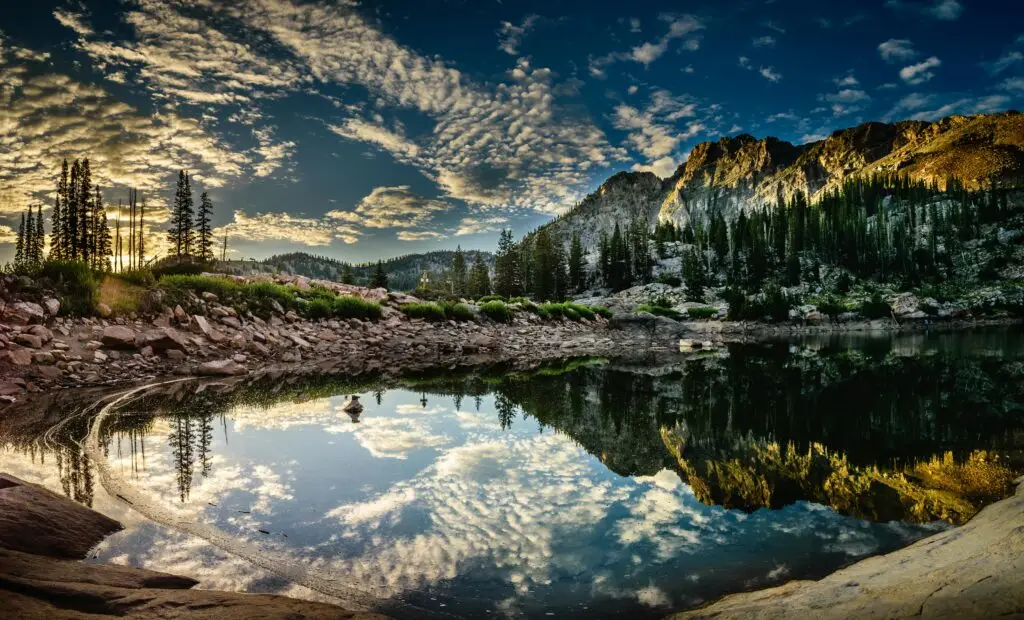
The geography of the United States is so diverse that many travelers feel like they’re visiting several continents in one nation. The U.S. stretches across six primary geographic zones: The United States
This region spans from New England down to Florida. It includes rugged coastlines in Maine, sandy beaches along the Carolinas, barrier islands, marshlands, and the tropical environments of southern Florida.
2. The Appalachian Mountains
Running from Alabama to Canada, the Appalachian chain is one of the world’s oldest mountain systems. Its rolling hills, dense forests, and culturally rich towns define states such as West Virginia, Tennessee, Virginia, and North Carolina.
3. The Interior Plains
Covering parts of the Midwest and Great Plains, this region includes vast prairies, farmland, grassy steppes, wheat fields, and major rivers such as the Mississippi and Missouri.
4. The Rocky Mountains
A towering mountain range stretching from New Mexico to Montana, the Rockies include snow-capped peaks, alpine lakes, forests, ski resorts, and world-famous national parks like Rocky Mountain, Grand Teton, and Glacier.
5. The Desert Southwest
States like Arizona, Nevada, Utah, and New Mexico feature dramatic red-rock canyons, slot canyons, deserts, mesas, sandstone arches, and formations that look almost extraterrestrial. The Grand Canyon, Zion, and Monument Valley belong to this region.
6. The Pacific Coast and Mountain Systems
California, Oregon, and Washington are home to rugged coastlines, redwood forests, fertile valleys, volcanic mountains, modern cities, and some of the country’s most varied ecosystems. The United States
The Regions of the United States
The U.S. is typically divided into five major travel regions, each with unique character:
1. The East Coast (Northeast + Mid-Atlantic + Southeast)
The East Coast is a blend of colonial history, big cities, mountain ranges, beaches, and cultural diversity. The Northeast includes New York, Boston, Philadelphia, and Washington, D.C.—all significant urban centers with famous museums, government landmarks, universities, and historical sites. New England states such as Vermont and Maine offer forests, autumn foliage, small towns, and mountain scenery. Further south, the Mid-Atlantic and the Southeast bring warmer weather, beaches, coastal wetlands, and southern charm.
2. The Midwest
The Midwest is known as “America’s Heartland.” States like Illinois, Ohio, Michigan, Wisconsin, and Minnesota combine farmland, industrial cities, lakeside towns, and natural beauty. The Great Lakes are so large that they resemble oceans, and Midwest cities like Chicago and Detroit have strong cultural identities. The Dakotas and Nebraska offer wide-open prairies, national parks, and unique rock formations.
3. The South
The South is culturally rich with influences from African, European, and Caribbean heritage. It includes Texas, Louisiana, Georgia, Florida, South Carolina, Tennessee, and others. Travelers come for music (blues, country, jazz), food (barbecue, Cajun, soul food), historic towns, tropical beaches, and warm hospitality. Cities like New Orleans, Nashville, and Miami attract millions.
4. The Mountain West
This region includes Colorado, Utah, Wyoming, Montana, and Idaho. It is defined by dramatic landscapes: snow-covered mountains, national parks, natural arches, canyons, deserts, and ski resorts. Outdoor enthusiasts love this region for hiking, climbing, skiing, rafting, and camping.
5. The West Coast + Pacific States
The Pacific region includes California, Oregon, Washington, Alaska, and Hawaii. From Hollywood and Silicon Valley to giant redwoods, volcanic landscapes, glaciers, and tropical islands, this region is incredibly diverse. Alaska and Hawaii feel like separate worlds, each offering unique environments and cultures.
The geography and regional diversity of the U.S. make it a destination where travelers can experience beaches, deserts, mountains, rainforests, plains, cities, and rural life all in one country.
CULTURE, SOCIETY, LANDSCAPES, CLIMATE & REGIONAL IDENTITY
The United States is one of the most culturally complex nations in the world, shaped by centuries of immigration, regional traditions, indigenous heritage, and global influences. To understand the U.S. as a traveler, it helps to see the country not as a single cultural unit, but as a vast collection of micro-cultures. These micro-cultures are tied to specific landscapes, climates, histories, and communities. Every region, state, and city has its own personality, and travelers often feel as though they are crossing into new countries as they move from coast to coast.
American Culture: A Mosaic, Not a Monolith
The culture of the United States cannot be defined by one story. Instead, it is a mosaic of contributions from Native Americans, African Americans, European settlers, Asian immigrants, Latin American communities, Pacific Islanders, Middle Eastern families, and countless other groups who shaped the nation. This diversity is reflected in the nation’s food, music, art, dialects, architecture, and social norms.
Walk through the streets of New York City and you’ll hear dozens of languages within minutes. Visit Los Angeles and you’ll find Korean neighborhoods beside Mexican districts and Hollywood glamour beside beach culture. In the Deep South, traditional American storytelling, blues music, and soul food connect deeply to African American heritage. In the Midwest, Scandinavian and German influences shape food, festivals, and architecture. The Southwest is infused with Mexican, Spanish, and Native American traditions, seen in adobe buildings, chili-based cuisine, and colorful crafts. Hawaii is distinctly Polynesian, blending tropical traditions with American comforts, while Alaska’s indigenous cultures remain central to the state’s identity.
Because of this diversity, there is no “typical American.” Culture varies so greatly across states that travelers experience something completely different depending on where they go. The open-mindedness, innovation, and multiculturalism of the U.S. create an environment where new cultural blends constantly emerge. Music genres such as jazz, blues, rock, country, hip-hop, techno, and R&B all originated in America. The country’s food scene evolves from immigrant kitchens, regional harvests, and local interpretations of global cuisine.
Social Identity and Daily Life
Daily life in the U.S. varies widely. In big cities like Chicago, Boston, and Seattle, life is fast-paced, multicultural, and connected to business and technology. People use public transportation, live in apartments, and enjoy global cuisine. In rural areas, life is quiet, nature-focused, and heavily community-driven, with small-town values and a slower rhythm.
One feature that defines American social identity is individualism. The U.S. places high value on personal freedom, self-expression, entrepreneurship, and the idea that anyone can pursue their own path. This mindset has shaped innovation, technology, art, and even travel culture. The American road trip—an iconic travel style—is rooted in the national love for freedom and exploration.
Religion also plays a role in American identity. Christianity remains the dominant religion, but the country is extremely diverse, with Jewish, Muslim, Hindu, Buddhist, Sikh, and non-religious populations growing steadily. Religious buildings—from massive cathedrals to desert mission churches and modern mosques—are important cultural landmarks for travelers.
Despite its diversity, Americans share some cultural tendencies: friendliness, openness, curiosity about visitors, and a tendency toward enthusiasm and optimism. Travelers often notice that Americans smile frequently, engage in small talk, and are quick to offer help.
American Cuisine: A Fusion of Flavors
American food is not defined by a single cuisine but by thousands of regional dishes influenced by different cultures, climates, and ingredients. Travelers discover that each region has its own signature flavors.
In the South, barbecue is a cultural art form. Every state—from Texas to Tennessee—has its own style. The Lowcountry of South Carolina features seafood stews and rice dishes influenced by West African traditions. New Orleans cuisine blends French, Spanish, Caribbean, and African flavors into gumbo, jambalaya, and beignets.
The Northeast brings lobster rolls, clam chowder, bagels, and traditional bakeries. The Midwest is known for deep-dish pizza, cheese curds, hot dish casseroles, and hearty farm-style meals. The Southwest features Mexican-inspired dishes with chili peppers, corn, tortillas, and spices. California’s cuisine is heavily influenced by fresh produce, seafood, health-focused trends, and fusion dishes created by immigrant communities.
Seafood lovers find incredible fish along the coasts. In Alaska, salmon and halibut are staples. In Hawaii, poke bowls, tropical fruits, and slow-cooked pork reflect Polynesian traditions. Travelers often notice that portion sizes in the U.S. are larger than in Europe, and dining options are extremely diverse—especially in cities.
Street food culture is strong in many regions, with food trucks offering everything from Korean BBQ tacos to gourmet burgers and vegan meals. Farmers markets highlight local produce, while festivals celebrate regional specialties like Maine lobster, Wisconsin cheese, Louisiana crawfish, and Washington apples.
Languages and Dialects
Although English is the dominant language across the U.S., regional dialects vary significantly. Travelers might notice differences in pronunciation, vocabulary, and speech patterns depending on where they visit. Southern states have a gentle drawl, New York has a fast-paced accent, California speaks with a more neutral tone, and the Midwest is known for clear, flat speech.
Spanish is the second most spoken language in the country, especially in states like California, Texas, Florida, Arizona, and New Mexico. Other languages—Chinese, Tagalog, Vietnamese, Arabic, French, Hindi, and dozens more—are widely spoken in communities across the nation. This linguistic diversity reflects the country’s immigrant history and contributes to its multicultural richness.
American Landscapes: One Country, Many Worlds
One of the most striking aspects of the United States is the sheer variety of landscapes. No other country offers such dramatic contrasts in such a large territory. These landscapes define the travel experience and shape the lifestyles of the people who live in them.
The U.S. features towering mountain ranges such as the Rockies, Sierra Nevada, and Appalachians. The deserts of Arizona, Nevada, and Utah look like alien worlds, filled with sandstone arches, canyons, spires, and mesas. The Great Plains stretch endlessly across the center of the country, with waving grasses and wide-open skies. Tropical environments thrive in Hawaii and South Florida, while Alaska offers glaciers, fjords, tundra, and snow-covered forests.
The coastlines of the United States vary dramatically. The Atlantic Coast features historic fishing towns, sandy beaches, and rugged cliffs in New England. The Gulf of Mexico brings warm waters and palm trees. The Pacific Coast combines rocky shorelines, giant redwoods, and surf culture.
Travelers can experience almost every climate on Earth without leaving the country—arctic, alpine, desert, tropical, temperate, subtropical, Mediterranean, and coastal environments all coexist within U.S. borders.
Climate and Seasons
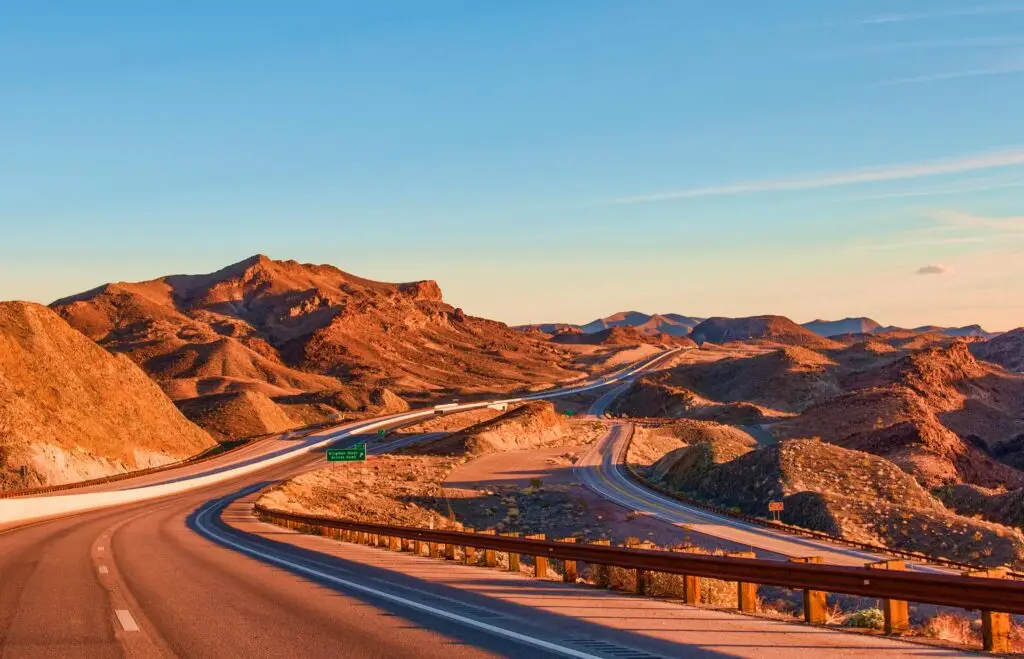
Because the U.S. spans multiple climate zones, weather varies widely depending on the region.
New England experiences cold, snowy winters and warm summers. Autumn is especially beautiful, drawing visitors for its vibrant fall foliage. The Southeast has a humid, subtropical climate with hot summers and mild winters. The Southwest is dry and desert-like, with scorching summers but pleasant winters. The Rockies have long winters and excellent skiing conditions. The Pacific Northwest is known for rainy weather and evergreen forests.
California is particularly diverse—Southern California has a Mediterranean climate, the Central Valley is hot and dry, the Sierra Nevada has snow, and Northern California features cool forests. Alaska has Arctic conditions in the north and subarctic forests in the south. Hawaii is tropical year-round.
Understanding seasonal variations is important for travelers planning road trips, nature exploration, or city visits. The best time to visit depends on the region. National parks like Yellowstone or Glacier can be difficult to access in winter, while Florida and Arizona become ideal winter escapes. Fall is one of the most popular seasons across the East Coast, while spring blooms are iconic in Washington, D.C. and the Deep South.
Regional Identity Across the U.S.
The U.S. can be divided into cultural regions that shape daily life and travel experiences.
New England
Known for colonial history, seafood, small towns, autumn colors, and traditional American architecture.
The Mid-Atlantic
Urban, fast-paced, diverse, and culturally rich, home to New York City, Philadelphia, and Washington, D.C.
The South
Warm hospitality, deep history, strong musical traditions, and unique comfort foods.
The Midwest
Friendly people, agricultural landscapes, lake culture, and historic industrial cities.
The Mountain West
Outdoor adventure, national parks, ranching culture, and rugged mountain towns.
The Southwest
Deserts, canyons, Native American heritage, Hispanic influences, and dramatic red-rock landscapes.
The West Coast
Laid-back lifestyles, innovative cities, surfing, forests, and coastal beauty.
Alaska
Frontier wilderness, indigenous heritage, wildlife, and remote adventure travel.
Hawaii
Polynesian culture, volcanoes, beaches, spiritual traditions, and tropical island life.
Each region offers a different version of the American experience, shaped by climate, history, and multicultural influences. Travelers can spend weeks or months exploring the U.S. and still only scratch the surface of its complexity.
THE MAJOR REGIONS OF THE UNITED STATES
The United States covers an immense amount of land, stretching across multiple climates, landscapes, and cultural zones. For travelers, understanding the major regions of the U.S. helps shape realistic and impactful travel plans. Each region offers not only different scenery, but also distinct lifestyles, traditions, cuisines, and atmospheres. The contrast between a small New England fishing village and a sprawling Texan metropolis, between a Rocky Mountain alpine town and a Hawaiian beach community, is so vast that travelers often feel like they’re visiting entirely different worlds.
Below is a long, in-depth overview of the primary travel regions of the United States, written for your landing page as a high-quality, evergreen resource.
THE EAST COAST
(Northeast + Mid-Atlantic + Southeast)
The East Coast is the birthplace of the United States and one of the most historically rich and geographically varied regions. Stretching from the rocky shores of Maine to the tropical beaches of Florida, this coast offers a mix of historic cities, academic hubs, colonial towns, and modern urban centers.
New England
New England is known for its charming small towns, lighthouses, sailing communities, and some of the most stunning autumn foliage on Earth. States like Vermont and New Hampshire offer mountain scenery, ski resorts, covered bridges, and serene lakes. Maine’s coastline is famous for rugged cliffs, pine forests, untouched islands, and the iconic Acadia National Park. Massachusetts blends history with modern innovation—Boston, in particular, is home to world-class universities, historic districts, museums, and neighborhoods filled with brick architecture and old-world character.
Culture in New England reflects a mix of traditional American values and progressive urban lifestyle. Seafood is central to the cuisine—lobster rolls, clam chowder, and freshly caught fish define coastal dining. Inland, maple syrup farms and orchards highlight the agricultural heritage. New England’s identity is deeply tied to its landscapes, and many travelers visit for seasonal beauty, especially during the fall months when forests turn vibrant shades of red, orange, and gold.
The Mid-Atlantic
This subregion includes New York, New Jersey, Pennsylvania, Delaware, and Maryland. It is one of the most densely populated and culturally vibrant parts of the United States. New York City, one of the most famous cities in the world, is the center of finance, fashion, food, and global arts. Travelers can wander through sprawling parks, visit world-renowned museums, experience nightlife, and explore dozens of multicultural neighborhoods within a single borough.
Philadelphia and Washington, D.C. are two of the country’s most historically significant cities. Philadelphia is home to Independence Hall and the Liberty Bell, while Washington offers museums, monuments, political institutions, and the National Mall. The Mid-Atlantic region blends industry, agriculture, beaches, mountains, and forests. It is a place where history meets modernity, offering endless travel opportunities.
The Southeast
The Southeastern states—including the Carolinas, Georgia, Florida, Alabama, Mississippi, and Tennessee—are rich in cultural diversity, music history, warm hospitality, and coastal beauty.
Georgia combines historical districts, modern skyscrapers, and southern charm. Tennessee is the heart of American music, with Nashville’s country music scene and Memphis’s blues and rock ‘n’ roll heritage. The Carolinas offer beaches, barrier islands, mountain landscapes, and elegant southern cities like Charleston and Savannah—known for cobblestone streets, moss-draped oak trees, and preserved antebellum homes.
Florida, the southeasternmost state, is a world of its own. With tropical climate, theme parks, Everglades wetlands, nightlife, Cuban culture in Miami, and the Florida Keys archipelago stretching into turquoise waters, Florida remains one of the most-visited states in the country.
The Southeast as a region has a slower pace of life, strong family traditions, and a mix of African American, Native American, and European influences. Its food culture—southern comfort dishes, barbecue, seafood, and soul food—makes it one of the most flavorful culinary regions in the United States.
THE MIDWEST
(The American Heartland)
The Midwest is often called “America’s Heartland,” known for its agricultural landscapes, friendly communities, cultural festivals, and major cities surrounding the Great Lakes. It includes states such as Illinois, Indiana, Ohio, Michigan, Wisconsin, Minnesota, Iowa, Missouri, Kansas, Nebraska, and the Dakotas.
The region features enormous plains and farmland that stretch endlessly toward the horizon. Travelers driving through Kansas or Nebraska will encounter landscapes shaped by wheat fields, small towns, prairies, and massive skies. In contrast, states like Minnesota, Michigan, and Wisconsin are defined by their lakes—thousands of them—making the Midwest a paradise for boating, fishing, and nature escapes.
Chicago, the most prominent Midwestern city, is famous for its architecture, lakeside skyline, museums, theaters, and deep-dish pizza. Detroit, once the automotive capital of the world, is experiencing a renaissance with new development, art districts, and music culture. The Midwest blends old-world immigrant traditions—German, Scandinavian, Polish, and Irish—with modern American innovation.
Weather in the Midwest can be extreme, with cold winters and warm summers, but the region’s seasonal changes also bring some of the most spectacular autumn scenery. Many travelers come to experience rural festivals, Route 66 heritage, Great Lakes beaches, and friendly Midwestern hospitality.
THE SOUTH
(Rich traditions, music, cuisine & warm climate)
The South is one of the most culturally distinctive regions of the United States, shaped by African American heritage, colonial history, Native traditions, European influences, and Caribbean culture. It stretches from Texas to the Atlantic Coast and north into Kentucky, Arkansas, and Virginia.
The region is known for warm weather, vibrant music scenes, diverse food culture, and deep-rooted traditions. New Orleans stands out as a cultural treasure, famous for jazz, Mardi Gras, Creole cuisine, historic districts, and a blend of French, African, and Caribbean influences. Nashville, Memphis, Austin, and Houston are major music and creative hubs.
The South’s landscapes range from Appalachian Mountains to bayous, river deltas, marshlands, rolling hills, and Gulf Coast beaches. Florida’s emerald waters, Alabama’s sugar-white beaches, and the Carolinas’ barrier islands offer some of the finest coastline on the East Coast.
Southern hospitality is legendary—visitors often describe locals as warm, welcoming, and eager to share stories. Food is a major attraction, from barbecue to seafood boils, Cajun dishes, cornbread, fried green tomatoes, pecan pie, and sweet tea. The South’s multicultural history also makes it one of the most historically rich travel regions in America today.
THE MOUNTAIN WEST
(Rocky Mountains, deserts, canyons, national parks)
The Mountain West region includes Colorado, Utah, Wyoming, Montana, Idaho, Nevada, and parts of New Mexico and Arizona. It is one of the most visually stunning regions of the United States—defined by towering mountain ranges, desert landscapes, red-rock canyons, alpine lakes, ski resorts, and massive national parks.
This is where travelers find some of the most iconic natural scenery in the world. The Grand Canyon in Arizona, with its immense scale and glowing layers of rock, is a geological masterpiece. Utah’s red-rock parks—including Zion, Arches, Canyonlands, Capitol Reef, and Bryce Canyon—are filled with hoodoos, arches, slot canyons, mesas, natural bridges, and desert cliffs. Colorado offers alpine peaks, forests, ski towns like Aspen and Vail, and vibrant cities such as Denver and Boulder.
Wyoming is home to Yellowstone and Grand Teton, two of the world’s most breathtaking national parks. Montana offers Glacier National Park and vast wilderness areas where travelers can escape into nature for days. Idaho is filled with mountains, rivers, and hidden hot springs, making it a paradise for outdoor enthusiasts.
The Mountain West is less densely populated than other regions, giving it a sense of openness and freedom. Road trips are extremely popular here, with scenic drives like the Million Dollar Highway, Highway 12 in Utah, and Beartooth Pass offering unforgettable landscapes.
THE WEST COAST (AND PACIFIC STATES)
(California, Oregon, Washington, Alaska, and Hawaii)
The Pacific region stretches from the beaches of California to the volcanic landscapes of Hawaii and the icy fjords of Alaska. It is arguably the most diverse region in the United States.
California
California alone feels like multiple countries in one state. Southern California features beaches, surfing culture, Hollywood glamour, palm trees, and warm sunshine. Central California is known for vineyards, agriculture, and coastal cliffs like those on Big Sur. Northern California blends tech innovation, redwood forests, rugged coastline, and cool maritime climate. Yosemite, Sequoia, and Kings Canyon are massive national parks filled with mountains, waterfalls, and giant trees.
Cities like Los Angeles, San Francisco, and San Diego provide endless cultural experiences—from museums and entertainment districts to food scenes that reflect the state’s global influence.
Oregon and Washington
The Pacific Northwest is famous for evergreen forests, dramatic coastlines, volcanic peaks, craft coffee, outdoor culture, and rainy weather. Portland and Seattle are creative hubs known for technology, music, and environmentally conscious lifestyles. Mount Rainier, Crater Lake, Olympic National Park, and the Oregon Coast attract millions of nature lovers every year.
Alaska
Alaska is America’s final frontier—vast, wild, and remote. It contains more coastline than the rest of the country combined, along with glaciers, fjords, mountains, tundra, and wildlife such as moose, bears, and whales. Denali National Park, Kenai Fjords, Glacier Bay, and the Arctic regions are among the most spectacular landscapes anywhere in the world.
Hawaii
Hawaii is a tropical paradise shaped by volcanic activity and Polynesian culture. Each island has its own identity—Oahu for city life and beaches, Maui for luxury and landscapes, Big Island for volcanoes, Kauai for dramatic cliffs and rainforests, and Molokai and Lanai for tranquility. Hawaiian culture is warm, spiritual, community-centered, and deeply connected to nature.
THE 50 STATES
The United States is composed of 50 states, each functioning almost like a small country with its own landscapes, cities, cuisine, culture, and traditions. Below begins a deep, long-form exploration of each state. These descriptions are designed to work perfectly on your U.S. landing page and to help readers understand what each state offers to travelers.
1. Alabama
Alabama is a state deeply rooted in history, culture, and natural beauty. Located in the Deep South, it tells one of the most powerful stories of American identity through civil rights history, southern traditions, warm hospitality, and diverse landscapes. The state stretches from the Appalachian foothills in the north to the Gulf of Mexico in the south. Huntsville, known as “Rocket City,” played a key role in the U.S. space program, housing NASA’s Marshall Space Flight Center. Birmingham is a city defined by steel-industry heritage, museums, and a strong civil rights legacy. Montgomery, the state capital, was a central location during the Civil Rights Movement, and travelers can visit landmarks like the Rosa Parks Museum and the Dexter Avenue King Memorial Baptist Church.
Nature lovers find plenty to enjoy. Northern Alabama has mountains, waterfalls, and scenic river valleys, including Little River Canyon National Preserve—one of the deepest canyons east of the Mississippi River. Gulf Shores and Orange Beach offer warm waters, soft sand, and family-friendly beach resorts. Southern cuisine is a major part of life in Alabama, with barbecue, fried chicken, seafood, and soul food widely celebrated. Travelers come to Alabama for its authenticity, warm people, and powerful history.
2. Alaska
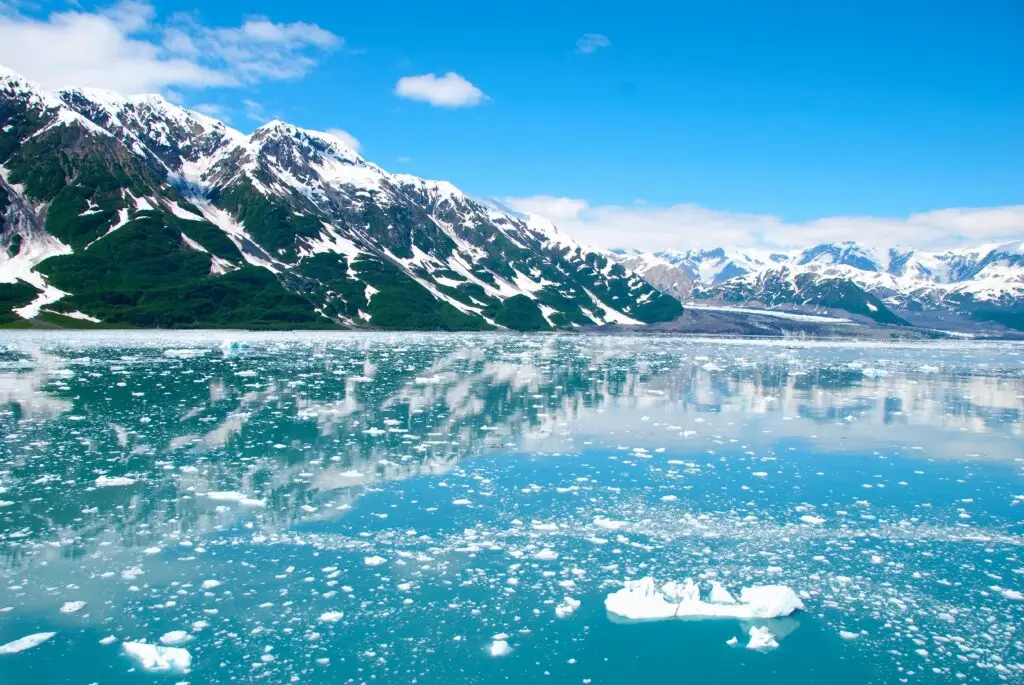
Alaska is the largest state in the United States by land area and one of the world’s last true wildernesses. It feels more like a frontier than a state, a place of enormous mountains, icy fjords, glaciers, Arctic tundra, and wildlife that roams freely across vast territory. Denali, the continent’s tallest peak, towers over Denali National Park, where visitors can see grizzly bears, wolves, moose, and caribou in their natural environment. Alaska’s landscapes are shaped by volcanic activity, tectonic forces, and glaciers carved over millions of years.
The coastlines are breathtaking—fjords filled with icebergs, whale-watching tours, and remote fishing villages surrounded by snow-capped mountains. Juneau, the capital, is accessible only by boat or plane and sits at the edge of the Tongass National Forest, the largest temperate rainforest in the world. Anchorage is the main transportation hub, offering access to national parks, ski resorts, and hiking trails. Fairbanks, in the interior, gives travelers the chance to see the Northern Lights during winter months.
Alaska is a paradise for adventure travelers: kayaking among glaciers, hiking through alpine passes, dog sledding, snowmobiling, fishing for salmon, or taking scenic flights over untouched wilderness. The state’s indigenous cultures, including the Inuit and Athabascan peoples, contribute to a rich cultural heritage that visitors can explore through museums, villages, and festivals. Alaska feels magical and immense—an unforgettable destination.
3. Arizona
Arizona is a state defined by iconic desert landscapes, red-rock formations, and some of the most dramatic natural wonders in the U.S. The Grand Canyon is the state’s crown jewel—a vast chasm carved by the Colorado River over millions of years. It stretches for 277 miles and offers sunrise viewpoints, hiking trails, helicopter tours, and deep geological layers that reveal Earth’s ancient history. But Arizona is far more than the Grand Canyon.
Sedona is a mystical desert town surrounded by glowing red rocks, mesas, and vortex sites that attract spiritual travelers. Scottsdale and Phoenix combine luxury resorts, golf courses, desert gardens, and a vibrant arts scene. Further north, Monument Valley offers cinematic landscapes of sandstone buttes rising from the desert floor—an iconic symbol of the American West. Antelope Canyon, with its swirling sandstone walls and beams of light, is one of the most photographed slot canyons in the world. Lake Powell, Horseshoe Bend, and Petrified Forest National Park all add to Arizona’s extraordinary natural diversity.
Arizona’s Native American cultures—Navajo, Hopi, Apache, and others—play a major role in the state’s identity. Travelers can explore ancient ruins, trading posts, and cultural centers. The desert climate brings hot summers, but winters are mild and ideal for outdoor adventure. Arizona is a dream destination for hikers, photographers, and road trip travelers.
4. Arkansas
Arkansas, often called “The Natural State,” is filled with forests, rivers, lakes, and hot springs. It is a destination that surprises many travelers with its peaceful scenery and slower pace of life. The Ozark Mountains in northern Arkansas offer winding roads, hiking trails, caves, and scenic overlooks. The Buffalo National River is one of the country’s few undammed rivers, perfect for canoeing, kayaking, and camping along limestone bluffs.
Hot Springs National Park is one of the oldest protected areas in the U.S., centered around historic bathhouses and natural thermal springs. Little Rock, the state capital, is known for its role in the Civil Rights Movement, particularly the Little Rock Nine, whose bravery is commemorated at the Little Rock Central High School National Historic Site.
Arkansas is also home to crystal mines, picturesque state parks, and small mountain towns that reflect Appalachian and Ozark culture. Travelers often come for outdoor recreation, scenic road trips, and the chance to experience a quieter side of America.
5. California
California is one of the most visited states in the United States and one of the most diverse in the world. It stretches from the redwood forests of the north to the deserts of the south, from the Sierra Nevada mountains to the Pacific coastline. The state is culturally influential, home to Hollywood, Silicon Valley, major universities, and a thriving arts scene.
Southern California includes Los Angeles, San Diego, Santa Barbara, and Orange County. It is known for beaches, surfing, sunshine, theme parks, entertainment studios, nightlife, and coastal beauty. The climate is warm and Mediterranean, with palm trees lining streets and sunsets illuminating the Pacific Ocean.
Central California features the stunning Big Sur coastline, the fertile Central Valley agricultural region, and wine regions such as Napa and Sonoma. Northern California is known for San Francisco’s hills, landmarks like the Golden Gate Bridge, historic cable cars, and diverse neighborhoods. The region also includes tech-centric Silicon Valley, redwood forests, and rugged coastline.
California’s national parks are legendary: Yosemite, Sequoia, Kings Canyon, Joshua Tree, Death Valley, and Lassen Volcanic. These parks offer mountains, waterfalls, giant trees, desert landscapes, and volcanic wonders. California’s food scene is world-class, shaped by fresh produce, fusion cuisine, and multicultural influences. The state is a dream destination for travelers of all kinds.
6. Colorado
Colorado is a mountain paradise and one of the most naturally beautiful states in the U.S. The Rocky Mountains dominate the landscape, offering peaks over 14,000 feet, alpine lakes, ski resorts, forests, and dramatic geological formations. Colorado attracts millions of outdoor enthusiasts every year for hiking, skiing, snowboarding, rafting, and climbing.
Denver, the state capital, is a modern city with breweries, art districts, and easy access to nature. Boulder is a lively college town with mountain views and hiking trails right on its doorstep. Colorado Springs is home to the iconic Pikes Peak and Garden of the Gods, a stunning red-rock park with towering formations.
Rocky Mountain National Park is one of the country’s most visited parks, featuring elk herds, scenic alpine roads, and glacier-carved valleys. The state also includes Mesa Verde National Park, where travelers can explore ancient cliff dwellings built by the Ancestral Puebloans. In southwestern Colorado, towns like Durango, Telluride, and Ouray offer historic charm and mountain adventure.
Colorado’s climate brings snowy winters, mild summers, and crisp autumns. The state’s mix of culture, scenery, and outdoor adventure makes it one of America’s most beloved destinations.
7. Connecticut
Connecticut is a small but historically rich state located in New England. Its landscape includes coastal towns, rolling hills, forests, and picturesque villages filled with colonial architecture. The state is one of the oldest in the country, and its towns reflect centuries of American history. Mystic is a popular seaside destination known for its maritime museums, historic ships, and New England charm. Hartford, the capital, is home to important literary and cultural landmarks.
Connecticut offers scenic drives, fall foliage, lighthouses, and peaceful beaches along Long Island Sound. Yale University, located in New Haven, contributes to the state’s intellectual and cultural atmosphere. Travelers enjoy exploring covered bridges, farmers markets, and historic inns. The state has a calm, elegant character that appeals to visitors looking for relaxation, culture, and classic Americana.
8. Delaware
Delaware is one of the smallest states in the U.S., but it plays an important role in American commerce and colonial history. Located on the Atlantic Coast, it offers beautiful beaches, quiet coastal towns, and historic landmarks. Rehoboth Beach and Dewey Beach are popular summer destinations known for soft sand, boardwalks, and family-friendly attractions.
Wilmington is the state’s largest city, with parks, museums, and scenic riverfront areas. Dover, the capital, hosts historical sites dating back to the 1700s. Delaware’s proximity to major East Coast cities makes it a convenient getaway for travelers from Washington, Philadelphia, and New York. The state also has a strong nature presence with wildlife refuges, marshlands, and scenic waterways.
9. Florida
Florida is one of the most visited states in the world, famous for its beaches, tropical climate, theme parks, and diverse cultures. The peninsula extends between the Atlantic Ocean and the Gulf of Mexico, offering hundreds of miles of coastline, white-sand beaches, and warm temperatures year-round.
Orlando is home to world-famous attractions like Walt Disney World, Universal Studios, and SeaWorld. Miami is a vibrant, multicultural city known for nightlife, art, Cuban influence, and Art Deco architecture. The Florida Keys stretch into turquoise waters, offering snorkeling, boating, tropical landscapes, and the iconic Overseas Highway road trip.
The Everglades form a unique ecosystem of wetlands, mangroves, alligators, and subtropical wildlife. Tampa, Naples, and Jacksonville offer beaches, museums, parks, and vibrant food scenes. Florida blends American, Caribbean, and Latin influences, making it one of the most culturally exciting regions in the U.S.
10. Georgia
Georgia combines southern history, modern cities, mountains, beaches, and warm hospitality. Atlanta is a major metropolis known for film production, music history, civil rights landmarks, and cultural diversity. The city played a crucial role in the Civil Rights Movement and is home to museums honoring Martin Luther King Jr.
Savannah is one of the most beautiful cities in America, with cobblestone streets, moss-draped oak trees, historic squares, and coastal charm. The Blue Ridge Mountains in northern Georgia offer hiking, scenic drives, and peaceful mountain towns. The state’s coastline—especially Tybee Island and the Golden Isles—features beaches, marshlands, and wildlife.
Georgia’s food culture includes southern comfort dishes, peaches, pecans, seafood, barbecue, and international influences from Atlanta’s diverse population. The state blends old and new, offering travelers a mix of history, nature, and modern culture.
11. Hawaii
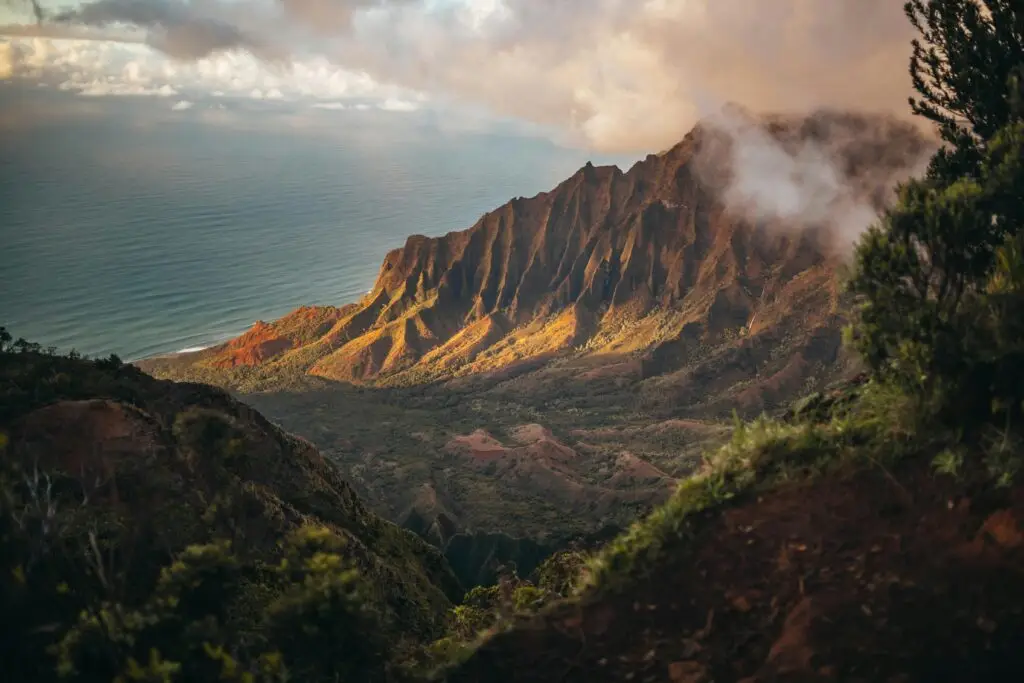
Hawaii is unlike any other state in the United States—geographically, culturally, and spiritually. Located in the middle of the Pacific Ocean, the Hawaiian Islands are volcanic in origin, lush with rainforests, dramatic coastlines, waterfalls, and tropical beaches. Hawaii’s identity reflects deep Polynesian heritage, ocean traditions, and a strong sense of community known as “ohana.” Travelers experience a slower rhythm of life, where sunsets, palm trees, ocean breezes, and volcanic landscapes shape a paradise-like environment.
Each island has a unique personality. Oahu is the most visited, home to Honolulu, Waikiki Beach, Pearl Harbor, and the iconic North Shore surfing beaches. Maui is known for luxury resorts, whale-watching, the scenic Road to Hana, and Haleakalā volcano. Hawaii Island (the Big Island) features active volcanoes, black-sand beaches, lava fields, rainforests, and stargazing atop Mauna Kea. Kauai, the Garden Island, offers dramatic cliffs along the Nā Pali Coast, the deep Waimea Canyon, and some of the lushest scenery in the U.S. Molokai and Lanai offer peace, culture, remote landscapes, and traditional Hawaiian experiences.
Hawaiian food reflects Asian, Polynesian, and American influences—poke bowls, fresh fish, shaved ice, malasadas, tropical fruits, and dishes cooked in underground “imu” ovens. The islands are also filled with cultural traditions such as hula, luaus, lei making, and storytelling. Hawaii’s beaches are among the most beautiful in the world, offering turquoise water for snorkeling, diving, surfing, and paddleboarding. Travelers come for adventure, romance, relaxation, and the chance to experience a culture rooted in respect for nature and community.
12. Idaho
Idaho is one of the most underrated states in the U.S., often surprising travelers with its rugged mountains, deep forests, wild rivers, and geothermal springs. The state is dominated by wilderness, making it a paradise for hikers, kayakers, skiers, and outdoor explorers. Idaho is home to parts of the Rocky Mountains, the Sawtooth Range, and vast stretches of protected land.
The Sawtooth Mountains are particularly breathtaking, with jagged peaks, alpine lakes, and scenic campsites. Sun Valley is one of America’s most famous ski resorts, attracting winter travelers from around the world. The Salmon River, known as “The River of No Return,” offers legendary whitewater rafting. Craters of the Moon National Monument features volcanic landscapes that look like another planet. Idaho also has hundreds of natural hot springs that can be visited year-round.
Boise, the capital, is a growing cultural hub with art, dining, and outdoor lifestyle. Small mountain towns such as Stanley, McCall, and Coeur d’Alene offer lake activities, scenic hiking, and peaceful retreats. Idaho is also part of the historic Lewis and Clark Trail, adding historical depth to its natural beauty. The state remains one of the best destinations for travelers seeking authentic wilderness and uncrowded landscapes.
13. Illinois
Illinois is best known for Chicago, one of the largest and most dynamic cities in the United States. Chicago’s skyline, shaped by innovative architecture, rises along the shores of Lake Michigan. The city is famous for museums, jazz music, sports culture, deep-dish pizza, comedy clubs, and multicultural neighborhoods. Millennium Park, Navy Pier, and the Art Institute of Chicago are major attractions, while the city’s elevated trains, riverfront walkways, and lakefront beaches make exploring easy.
Beyond Chicago, Illinois offers historic towns, prairies, farmland, and sites tied to Abraham Lincoln. Springfield, the state capital, preserves Lincoln’s home, law offices, and the presidential library dedicated to his life and legacy. Starved Rock State Park features canyons, waterfalls, and hiking trails. The southern part of the state has forests, vineyards, and the scenic Shawnee National Forest.
Illinois blends urban excitement with Midwestern charm, making it a diverse travel destination. Whether exploring skyscrapers or peaceful trails, travelers find a lot to enjoy.
14. Indiana
Indiana is a Midwestern state known for small-town charm, rural landscapes, college culture, and iconic sporting traditions. Indianapolis, the capital, is home to the famous Indianapolis Motor Speedway, host of the Indy 500—the world’s largest single-day sporting event. The city also offers museums, parks, and a growing food scene.
Much of Indiana is agricultural, with peaceful countryside, barns, and scenic farmlands. Bloomington, home to Indiana University, has a vibrant arts and music culture. Northern Indiana includes Amish country, where visitors can explore farms, handcraft shops, and traditions rooted in simplicity and community. Lake Michigan’s shoreline offers beaches, dunes, and scenic state parks.
Indiana’s history includes pioneer heritage, Native American settlements, and industrial development. Travelers seeking a slower pace enjoy its small-town festivals, historic districts, and friendly Midwestern character.
15. Iowa
Iowa might seem simple at first glance, but it is a state filled with rolling prairies, charming small towns, agricultural beauty, and strong community traditions. Known as the heart of the Midwest, Iowa features scenic farmland, historic river towns along the Mississippi, and vibrant college cities such as Iowa City.
Des Moines, the capital, has a modern downtown, art installations, and cultural events. The Iowa Great Lakes region offers boating, fishing, and summer vacations. The Field of Dreams Movie Site in Dyersville attracts baseball fans. Effigy Mounds National Monument preserves ancient Native American mound structures.
Travelers come to Iowa to experience peaceful landscapes, friendly locals, and authentic midwestern living. The state’s covered bridges, river valleys, and rural charm make it a relaxing travel destination.
16. Kansas
Kansas is often associated with wide prairies, big skies, and farmland stretching far into the horizon. But the state also has historical depth, cultural attractions, and scenic surprises. Wichita, the largest city, is known for aviation history, museums, and a revitalized downtown. Topeka, the capital, played a role in the civil rights era, with the Brown v. Board of Education National Historic Site.
Kansas’s natural landscapes include the Flint Hills, a rare stretch of tallgrass prairie that feels untouched by modern development. Monument Rocks—massive chalk formations rising from flat plains—offer a dramatic and unexpected natural wonder. Small towns across Kansas preserve western heritage, pioneer history, and Route 66 nostalgia.
Kansas is a peaceful destination, ideal for road trips, scenic drives, and exploring the quiet beauty of America’s heartland.
17. Kentucky
Kentucky blends southern charm, Appalachian culture, rolling farmland, and horse-country tradition. The state is famous for bourbon, bluegrass music, fried chicken, and the Kentucky Derby, held annually at Churchill Downs in Louisville.
Nature lovers enjoy the Red River Gorge, a canyon system filled with cliffs, arches, and hiking trails. Mammoth Cave National Park contains the world’s longest cave system, offering tours through underground chambers and passages. The Appalachian region in eastern Kentucky has mountains, forests, and mining towns that reflect the state’s cultural roots.
Lexington, known as the Horse Capital of the World, is surrounded by equestrian farms and picturesque fields. Louisville blends historic architecture with modern arts, food, and festivals. Travelers come to Kentucky for bourbon tours, natural beauty, cultural heritage, and southern hospitality.
18. Louisiana
Louisiana is one of the most culturally distinctive states in the U.S., shaped by French, African, Spanish, Caribbean, Native American, and Creole traditions. New Orleans is the heart of Louisiana’s cultural identity—famous for jazz music, Mardi Gras, Creole cuisine, historic French Quarter architecture, and vibrant street life. The city feels unlike anywhere else in America, with its mix of elegance, creativity, and celebration.
Beyond New Orleans, the state offers bayous, swamps, Cajun country, plantation homes, and charming small towns. The Atchafalaya Basin is the largest swamp in the U.S., home to alligators, birds, and wetlands. Lafayette, the center of Cajun culture, features zydeco music, food festivals, and rural heritage. Baton Rouge, the capital, mixes college-town energy with history and government landmarks.
Louisiana cuisine is world-famous—gumbo, jambalaya, étouffée, beignets, crawfish, and spicy dishes rooted in centuries of cultural blending. Louisiana is perfect for travelers who want vibrant culture, music, food, and nature.
19. Maine
Maine is the northeasternmost state, known for rugged coastlines, pine forests, old-fashioned coastal towns, and natural beauty. The state’s identity is tied to the sea—fishing villages, lighthouses, lobster shacks, and rocky beaches are common sights along the Atlantic Coast.
Acadia National Park is one of the state’s biggest attractions, featuring granite cliffs, hiking trails, mountain peaks, and sweeping ocean views. Bar Harbor is a popular coastal town filled with restaurants, shops, and harbor views. Portland, the largest city, blends historic architecture with modern food culture, breweries, and artistic neighborhoods.
Inland Maine is filled with lakes, forests, mountains, and quiet wilderness areas. Travelers visit Maine for seafood, scenery, fall foliage, outdoor activities, and peaceful coastal charm.
20. Maryland
Maryland sits between the Mid-Atlantic and the South, offering a unique blend of coastal landscapes, colonial history, urban energy, and nature-rich environments. The Chesapeake Bay is central to the state’s identity, providing seafood, sailing culture, and scenic waterways. Annapolis, the capital, is one of America’s most historic and picturesque towns, filled with colonial buildings and naval heritage.
Baltimore, the largest city, has a distinct personality—historic neighborhoods, waterfront districts like Inner Harbor, world-class aquariums, and a strong artistic community. Maryland’s coast includes Assateague Island, home to wild horses and pristine beaches. The state also contains forests, farmlands, and Appalachian foothills in the west.
Maryland cuisine is famous for blue crabs, crab cakes, oysters, and other Chesapeake seafood dishes. The state offers a mix of history, nature, and coastal beauty, perfect for travelers seeking variety in a compact area.
21. Massachusetts
Massachusetts is a state where American history, coastal beauty, academic prestige, and cultural richness come together. As one of the original 13 colonies, it played a key role in the American Revolution, and its towns blend colonial architecture with modern innovation. Boston, the state capital, is one of the oldest cities in the U.S., filled with cobblestone streets, historic sites, universities, and waterfront neighborhoods. The Freedom Trail connects visitors to landmarks like Faneuil Hall, the Old North Church, and the site of the Boston Tea Party. Harvard University and MIT in nearby Cambridge contribute to the region’s intellectual atmosphere.
Beyond Boston, Massachusetts offers lovely seaside towns such as Cape Cod, a long peninsula famous for beaches, lighthouses, seafood shacks, whale watching, and summer resorts. The islands of Martha’s Vineyard and Nantucket attract travelers seeking peaceful beaches, boutique shops, and charming villages. Western Massachusetts is wooded and mountainous, home to the Berkshires—an area known for music festivals, art museums, and scenic hiking trails. Massachusetts blends coastal elegance, educational heritage, and historic significance into one diverse travel experience.
22. Michigan
Michigan is shaped by the Great Lakes, with more freshwater coastline than any other state in the country. It is divided into two distinct landmasses: the Lower Peninsula, known for cities, farmland, and lake beaches; and the Upper Peninsula (U.P.), a rugged wilderness with forests, waterfalls, and rocky shorelines. The Upper Peninsula feels almost untouched, offering peaceful hiking, wildlife, and scenic drives. Pictured Rocks National Lakeshore features colorful sandstone cliffs, emerald water, and hiking along forested bluffs.
Lake Michigan’s western coast has sandy beaches and picturesque towns like Holland, Grand Haven, and Saugatuck. Mackinac Island is a popular summer escape where cars are banned and visitors travel by horse-drawn carriage or bicycle. Detroit, once the center of the automotive world, is undergoing a cultural revival with art installations, historic buildings, and new entertainment districts. Ann Arbor, home to the University of Michigan, is known for arts, food, and lively college culture.
Michigan offers four distinct seasons—snowy winters perfect for skiing, warm summers ideal for beach trips, and vibrant fall foliage. The state combines natural beauty with industrial history and charming small towns.
23. Minnesota
Minnesota is known as the “Land of 10,000 Lakes,” though it actually has far more. Water defines much of the state’s landscape—lakes, rivers, wetlands, and the headwaters of the Mississippi River are all major attractions. The Boundary Waters Canoe Area Wilderness is one of the most peaceful places in the U.S., offering canoeing routes through interconnected lakes surrounded by forests and wildlife.
Minneapolis and Saint Paul, known as the Twin Cities, blend modern culture with nature. Minneapolis is filled with art museums, music venues, and bike trails, while Saint Paul reflects historic charm. Mall of America, one of the largest malls in the world, draws millions of visitors each year. Northern Minnesota features dense forests, small towns, and beautiful Lake Superior shoreline, where cliffs, beaches, and lighthouses create dramatic scenery.
Minnesota’s winters are cold but magical, with ice fishing, snowshoeing, hockey, and winter festivals. Summers are warm and filled with lakeside activities. The state offers a balance of wilderness and urban culture.
24. Mississippi
Mississippi has a deep cultural identity shaped by southern history, blues music, river heritage, and traditional cuisine. The Mississippi River, one of the longest rivers in the world, flows along the western border, shaping the region’s agricultural and cultural landscapes. The Delta region is considered the birthplace of blues music, and towns such as Clarksdale host historic clubs, museums, and festivals honoring musical legends.
Jackson, the state capital, is filled with civil rights history, museums, and cultural landmarks. The Gulf Coast region, including Biloxi and Gulfport, offers beaches, casinos, seafood restaurants, and water activities. Natchez, located along the Mississippi River, has stunning antebellum mansions, river views, and historic districts.
Mississippi’s food culture is characterized by soul food, catfish, barbecue, cornbread, and southern comfort dishes. The state’s slower pace, warm hospitality, and strong cultural traditions make it a unique destination for travelers interested in history and music.
25. Missouri
Missouri lies at the center of the United States and blends Midwestern, southern, and western influences. The state is home to two major cities—St. Louis and Kansas City—each with its own distinctive culture. St. Louis is famous for the Gateway Arch, a monument symbolizing westward expansion. The city also has vibrant neighborhoods, historic sites, and popular attractions like the Saint Louis Zoo and Missouri Botanical Garden.
Kansas City is known for jazz music, barbecue, art museums, and a lively downtown. Missouri’s natural scenery includes the Ozark Mountains, filled with lakes, forests, rivers, and popular recreation areas. Branson, a major entertainment destination, offers live shows, theme parks, and lake activities.
The state has a mix of rolling farmland, limestone caves, and scenic byways. Missouri’s central location and variety of landscapes make it a popular destination for family trips, road trips, outdoor adventures, and cultural exploration.
26. Montana
Montana, known as “Big Sky Country,” is one of the most breathtakingly beautiful states in America. Its landscapes stretch endlessly—mountain ranges, wide prairies, glacial valleys, alpine lakes, and rivers flowing through dramatic canyons. The state feels open, wild, and largely untouched by modern development.
Glacier National Park is Montana’s crown jewel, featuring towering peaks, turquoise lakes, and the legendary Going-to-the-Sun Road. Travelers often see mountain goats, bears, and elk along hiking trails. Yellowstone National Park also partly lies in Montana, offering geysers, hot springs, and wildlife.
Bozeman and Missoula are lively college towns with art, food, breweries, and outdoor culture. The western part of Montana is mountainous and forested, while the eastern portion features wide plains and badlands. Montana is a dream destination for hikers, campers, photographers, and travelers wanting solitude in nature.
27. Nebraska
Nebraska is a Great Plains state filled with prairie landscapes, sand dunes, farmland, and pioneer history. Although often overlooked, the state has surprising natural beauty. The Sandhills region is one of America’s most unique ecosystems—rolling grass-covered dunes stretching for thousands of square kilometers. Chimney Rock and Scotts Bluff National Monument are historic landmarks along the Oregon Trail.
Omaha, the largest city, has a vibrant arts community, modern riverfront areas, and one of the country’s top zoos. Lincoln, the state capital, blends college-town energy with cultural attractions. Nebraska’s small towns preserve western heritage, frontier stories, and rural traditions.
Travelers appreciate the state’s quiet beauty, wide-open skies, and peaceful atmosphere. Nebraska is perfect for scenic drives, stargazing, and learning about America’s pioneering past.
28. Nevada

Nevada is a state of extremes—glittering nightlife, desert wilderness, red-rock landscapes, and remote mountain ranges. Las Vegas is the world’s entertainment capital, filled with resorts, casinos, shows, restaurants, and neon lights. Beyond the Strip, travelers can explore natural attractions such as Red Rock Canyon, Valley of Fire State Park, and the Hoover Dam.
Nevada’s desert landscapes are shaped by ancient seas, volcanic activity, and erosion, creating unique rock formations and colorful canyons. Lake Tahoe, on the border with California, is one of the most beautiful lakes in the world, offering skiing, hiking, beaches, and crystal-clear water. Reno and Carson City provide access to outdoor adventure and historic districts.
Much of Nevada is rural and remote, with ghost towns, open highways, and mountain peaks rising from desert valleys. The state attracts road-trippers, hikers, skiers, and travelers drawn to both excitement and silence.
29. New Hampshire
New Hampshire is a quintessential New England state known for lakes, forests, mountain scenery, and colonial towns. The White Mountains dominate the northern region, offering hiking, skiing, waterfalls, and scenic drives. Mount Washington, the tallest peak in the Northeast, is known for extreme weather and breathtaking views. The Kancamagus Highway is one of the world’s most beautiful fall foliage routes.
Lake Winnipesaukee is a summer vacation hotspot, surrounded by charming towns and water activities. New Hampshire’s short but scenic coastline includes small beach communities and seafood shacks. The state is known for its independent spirit, outdoor recreation, and seasonal beauty—especially during autumn.
30. New Jersey
New Jersey is a densely populated state with a surprising variety of landscapes, attractions, and cultural hubs. Many travelers associate New Jersey with the Jersey Shore—a long coastline of beaches, boardwalks, fishing piers, and vacation towns. Places like Atlantic City, Wildwood, and Cape May each offer their own character, from casinos and nightlife to Victorian architecture and quiet beaches.
The northern part of the state is urban and industrial, connected to New York City by bridges, tunnels, and transit lines. Cities like Newark and Jersey City offer art, food, and international communities. Central and southern New Jersey feature farms, forests, and suburban towns.
New Jersey is famous for diners, Italian-American food, and cultural diversity. Its location between New York and Philadelphia makes it a convenient and popular place to visit.
31. New Mexico
New Mexico is known as the “Land of Enchantment,” and it truly earns the name. It is one of the most culturally rich states in America, deeply shaped by Native American, Spanish, and Mexican heritage. This fusion of cultures is reflected in New Mexico’s architecture, food, traditions, and spiritual atmosphere. Adobe homes, ancient pueblos, towering mesas, desert valleys, and sacred sites dot the landscape. Santa Fe, the state capital, is the oldest capital city in the U.S. and a major center for art, creativity, and architecture. Its adobe buildings, historic plaza, and world-famous galleries give it a timeless charm.
Albuquerque provides a blend of urban life, desert scenery, and Native American traditions. Every October, the city hosts the Albuquerque International Balloon Fiesta, where hundreds of hot air balloons rise above the desert. New Mexico’s natural wonders include White Sands National Park, with glistening dunes of pure white gypsum; Carlsbad Caverns, one of the world’s most impressive cave systems; and Bandelier National Monument, home to cliff dwellings that connect visitors to early Puebloan culture.
Taos is a mountain town famous for Taos Pueblo, a UNESCO World Heritage Site that has been continuously inhabited for over 1,000 years. The state’s cuisine is defined by red and green chiles, enchiladas, sopapillas, and dishes influenced by centuries of cultural blending. New Mexico offers a mystical beauty—sunsets, starlight, desert silence, and mountain vistas that stay with travelers long after they leave.
32. New York
New York is one of the most iconic states in the U.S., home to vibrant cities, mountains, beaches, lakes, and global culture. New York City is the most famous city in the world—a massive, multicultural metropolis filled with skyscrapers, theaters, museums, parks, fashion, nightlife, and cuisine from every corner of the globe. Visitors flock to Times Square, Central Park, the Statue of Liberty, the Empire State Building, the Metropolitan Museum of Art, Broadway theaters, and many distinctive neighborhoods.
But New York State extends far beyond the city. The Hudson Valley features vineyards, forested hills, historic estates, and quaint towns. The Catskills offer cabins, waterfalls, scenic drives, and outdoor recreation. The Adirondack Mountains, one of the largest protected areas in the U.S., contain thousands of lakes, forests, hiking trails, and ski resorts. Niagara Falls, on the border with Canada, is one of the most visited natural attractions in North America.
New York blends urban excitement with peaceful nature, making it a state where every type of traveler finds something memorable.
33. North Carolina
North Carolina is one of the most geographically and culturally diverse states in the South. It stretches from the Appalachian Mountains in the west to the Atlantic Ocean in the east, offering everything from hiking and skiing to beach vacations and coastal exploration. Asheville, a vibrant mountain city, is known for craft breweries, arts, live music, and access to the scenic Blue Ridge Parkway. The Great Smoky Mountains National Park sits on the border between North Carolina and Tennessee, offering mist-covered peaks, wildlife, and a wealth of hiking trails.
The Outer Banks, a chain of barrier islands, is one of the East Coast’s most scenic coastal destinations. Here, visitors can explore historic lighthouses, shipwreck sites, wild horse herds, sand dunes, and long stretches of quiet beach. Charlotte, the largest city, is a financial hub with modern architecture and museums.
North Carolina’s cuisine is famous for its barbecue, seafood, and southern comfort dishes. The state prides itself on its natural beauty, warm hospitality, and rich heritage.
34. North Dakota
North Dakota is a Great Plains state with a peaceful, wide-open landscape of prairies, farmland, and badlands. It is one of the least populated states, making it ideal for travelers seeking solitude and natural beauty. Theodore Roosevelt National Park is the state’s main attraction, named after the president who spent time here and was inspired to protect America’s natural landscapes. The park features rugged badlands, bison herds, wild horses, and scenic drives.
Bismarck, the capital, has museums and parks, while Fargo offers arts, culture, and a lively downtown. Native American history is strong in North Dakota, and travelers can visit cultural sites connected to the Mandan, Hidatsa, and Arikara tribes.
North Dakota experiences dramatic seasonal change—warm summers, colorful autumns, and snowy winters. Its peaceful simplicity, wildlife, and open space make it a hidden gem for nature-focused travelers.
35. Ohio
Ohio is a Midwestern state with a mix of cities, rural landscapes, amusement parks, lakes, and history. Cleveland sits on Lake Erie and offers a growing food scene, museums, and the iconic Rock & Roll Hall of Fame. Columbus, the capital, is a modern city with trendy districts, parks, and Ohio State University. Cincinnati is known for historic neighborhoods, river views, and sports culture.
Ohio is home to Cedar Point, one of the world’s most famous amusement parks with record-breaking roller coasters. Hocking Hills State Park is filled with caves, waterfalls, and hiking trails. The state also preserves important historical sites such as presidential homes, aviation museums, and Underground Railroad landmarks.
Ohio is a versatile destination, appealing to families, history lovers, and outdoor enthusiasts.
36. Oklahoma
Oklahoma is a state where western, Native American, and southern cultures intersect. The state has strong Native American heritage, with 39 tribes represented. Travelers can explore museums, cultural centers, and festivals that highlight indigenous traditions. Oklahoma City and Tulsa blend cowboy culture, art districts, and modern dining.
Route 66 runs through the state, offering roadside attractions, diners, neon signs, and nostalgia. Western Oklahoma features rugged plains, mesas, and red-rock canyons such as those in the Wichita Mountains Wildlife Refuge. Tornado Alley runs through the state, giving Oklahoma dramatic seasonal weather patterns.
Oklahoma’s identity is shaped by ranching, oil history, and multicultural influences. It’s a state filled with small towns, friendly people, and open landscapes.
37. Oregon
Oregon is one of the most naturally diverse states in America, offering volcanic mountains, forests, coastline, deserts, rivers, and waterfalls. Portland is a creative, eco-friendly city known for coffee culture, food trucks, bookstores, and artistic neighborhoods. The Columbia River Gorge, just outside the city, is filled with waterfalls, hiking trails, and dramatic cliffs.
Mount Hood dominates the skyline and offers skiing and mountain adventure. The Oregon Coast is rugged and beautiful, with sea stacks, cliffs, beaches, and quaint towns such as Cannon Beach and Newport. Crater Lake National Park features a deep blue lake formed in a volcanic caldera—one of the most stunning natural features in the country.
Central Oregon includes desert landscapes, lava fields, and the outdoor town of Bend. Southern Oregon has forests, vineyards, and historic towns. Oregon is ideal for travelers who love nature, road trips, and outdoor activities.
38. Pennsylvania
Pennsylvania combines colonial heritage, Amish culture, cities, mountains, and forests. Philadelphia is one of America’s most historic cities, home to Independence Hall, the Liberty Bell, and many sites connected to the nation’s founding. The city also has a strong arts scene, museums, and iconic foods like cheesesteaks and soft pretzels.
Pittsburgh, once a steel capital, has transformed into a modern city with riverfront parks, bridges, museums, and sports traditions. Pennsylvania’s countryside features rolling hills, forests, and farmland. Lancaster County is famous for Amish communities who maintain traditional lifestyles.
The Pocono Mountains offer resorts, lakes, and outdoor adventure. Pennsylvania’s location in the Northeast makes it easy to reach from major cities, and its diverse attractions appeal to travelers interested in history, culture, and nature.
39. Rhode Island
Rhode Island is the smallest state in the U.S., but it is rich in coastal beauty, colonial history, and New England charm. Its nickname, “The Ocean State,” comes from its long coastline filled with beaches, bays, coves, and sailing culture. Newport is one of the state’s most famous towns, known for its Gilded Age mansions, yacht culture, and scenic cliffside walks along the ocean.
Providence, the capital, is a historic yet youthful city filled with universities, art districts, and creative energy. Rhode Island’s small size makes it easy to explore multiple towns, beaches, and landmarks in a short time. Travelers enjoy seafood, lighthouses, scenic drives, and relaxing coastal villages.
40. South Carolina
South Carolina is a southern state with a warm climate, beautiful beaches, historic towns, and strong cultural identity. Charleston is one of the most beautiful and well-preserved cities in the U.S., with cobblestone streets, pastel-colored homes, palm trees, and a blend of African, Caribbean, and European influences. The city has a rich history, from colonial architecture to Civil War sites.
Myrtle Beach is a major family destination, offering long beaches, entertainment complexes, and golf courses. Hilton Head Island is known for its upscale resorts, cycling paths, and sandy beaches. Inland South Carolina offers forests, lakes, southern cuisine, and small towns.
The state’s cuisine includes Lowcountry dishes such as shrimp and grits, she-crab soup, barbecue, rice dishes, and fresh seafood. South Carolina blends charm, history, and coastal beauty into a well-rounded travel experience.
41. South Dakota
South Dakota is a state of striking contrasts: rolling prairies, dramatic badlands, granite mountains, and some of the most iconic monuments in America. The state is best known for Mount Rushmore, the massive sculpture carved into the granite face of the Black Hills. Visitors come from around the world to see the four presidential faces and the surrounding hiking trails, forests, and viewpoints.
But Mount Rushmore is only the beginning. Badlands National Park features jagged rock formations, layered cliffs, and colorful sediment created by millions of years of erosion. The landscape looks almost alien, with fossil beds, bison herds, and a powerful sense of silence and vastness. Nearby, Wind Cave National Park is home to one of the longest cave systems in the world, filled with rare boxwork formations.
The Black Hills region offers pine forests, lakes, scenic byways, and wildlife. Custer State Park is famous for its free-roaming bison and scenic drives such as Needles Highway. Deadwood, once a wild frontier town, brings the Old West back to life with historic saloons, gold rush history, and museums. South Dakota is a peaceful, affordable, and naturally stunning destination for road trips, hiking, history, and wildlife.
42. Tennessee
Tennessee is a state filled with music, mountains, southern hospitality, and cultural depth. Nashville is known as the “Music City,” home to the Grand Ole Opry, country music history, live venues, recording studios, and vibrant nightlife. Memphis, on the Mississippi River, is the birthplace of blues and rock ’n’ roll, with landmarks like Beale Street, Sun Studio, and Graceland—Elvis Presley’s legendary home.
Eastern Tennessee is home to Great Smoky Mountains National Park, the most visited national park in the United States. Fog-covered mountains, lush forests, waterfalls, wildflowers, historic homesteads, and scenic drives make the Smokies one of the country’s most beloved nature destinations. Nearby towns like Gatlinburg and Pigeon Forge offer family attractions, cabins, and entertainment.
Knoxville and Chattanooga blend outdoor adventure with city culture, riverfronts, and history. Tennessee’s cuisine includes barbecue, hot chicken, biscuits, comfort food, and traditional southern dishes. The state offers a perfect mix of culture, music, nature, and welcoming communities.
43. Texas
Texas is one of the largest and most diverse states in America—almost a country in itself. It spans deserts, forests, prairies, beaches, mountains, and massive cities. Houston is one of the most multicultural cities in the U.S., with global cuisine, museums, NASA’s Johnson Space Center, and thriving arts districts. Dallas and Fort Worth combine modern skyscrapers with cowboy heritage, rodeos, and Western culture.
Austin, the state capital, is known for live music, tech innovation, food trucks, natural springs, and a laid-back personality. West Texas features stunning desert landscapes and creative towns such as Marfa. Big Bend National Park—one of the most remote and beautiful parks in the country—offers canyons, desert mountains, hot springs, and views of the Rio Grande.
In East Texas, forests and lakes dominate the landscape. South Texas blends Mexican and Texan cultures, especially in cities such as San Antonio, home to the Alamo and the famous River Walk. The Gulf Coast provides beaches and coastal towns like Corpus Christi and Galveston. Texas cuisine is legendary: barbecue, tacos, Tex-Mex, brisket, chili, and flavors influenced by its multicultural heritage.
44. Utah
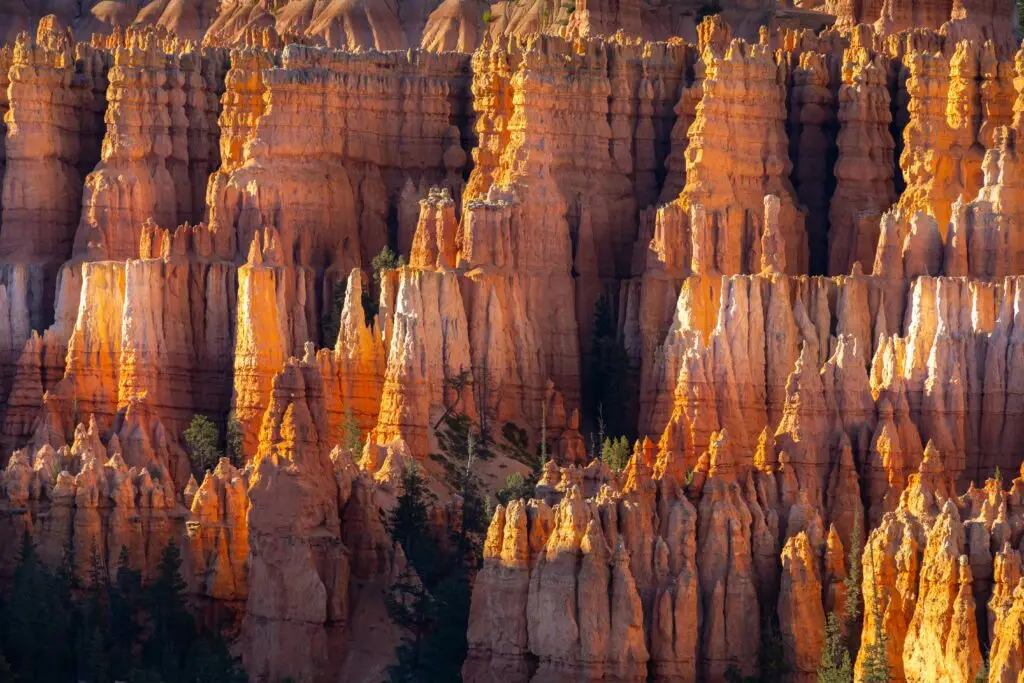
Utah is one of the most visually spectacular states in America, filled with red-rock deserts, natural arches, canyons, mountains, and surreal geological formations. The state is home to the “Mighty Five” national parks: Arches, Zion, Bryce Canyon, Canyonlands, and Capitol Reef. Each one offers unique landscapes—towering spires, slot canyons, sandstone arches, hoodoos, mesas, and glowing red cliffs.
Zion National Park features epic canyon hikes such as Angels Landing and The Narrows. Bryce Canyon is famous for its amphitheaters of hoodoos. Arches National Park contains more than 2,000 natural stone arches. Canyonlands offers deep canyons carved by the Colorado River. Capitol Reef blends red rock domes with pioneer orchards.
Salt Lake City, the capital, sits between mountains and the Great Salt Lake, offering skiing, historic sites, and access to outdoor recreation. Park City is a world-class ski and film festival destination. Utah’s landscapes attract photographers, hikers, road trippers, and adventurers from around the world.
45. Vermont
Vermont is a small, peaceful state known for mountains, forests, charming villages, maple syrup, and classic New England beauty. The Green Mountains run through the center of the state, offering hiking, skiing, and scenic drives. Stowe is a popular ski town with covered bridges, cozy inns, and mountain views.
Autumn in Vermont is legendary—forests transform into fiery shades of red, orange, and yellow. Travelers come from all over the world to experience fall foliage along winding rural roads and picturesque valleys. Burlington, located along Lake Champlain, blends college-town energy with beautiful waterfront scenery.
Vermont’s rural character includes dairy farms, orchards, historic barns, and locally made cheese, cider, and chocolate. Small towns like Woodstock, Manchester, and Brattleboro provide boutique shopping, farm-to-table dining, and artisan culture. Vermont is slow-paced, inviting, and deeply connected to nature.
46. Virginia
Virginia is a state of mountains, coastline, colonial history, and modern cities. The Blue Ridge Parkway and Shenandoah National Park offer some of the most scenic mountain drives and hikes in the eastern U.S., with panoramic views, waterfalls, and wildlife.
Virginia’s connection to American history is strong—Jamestown was the first permanent English settlement, Williamsburg preserves colonial life through living history museums, and Yorktown marks the site of the final battle of the American Revolution. These three locations make up the “Historic Triangle,” a major travel destination.
Northern Virginia blends into the Washington, D.C. metro area and features museums, monuments, and international communities. Richmond, the capital, mixes history with modern arts and food. Virginia Beach offers long stretches of sand and a lively boardwalk. The state’s diverse landscapes and historical depth make it a favorite for road trips.
47. Washington
Washington State, located in the Pacific Northwest, is known for its dramatic natural beauty—towering mountains, evergreen forests, volcanic peaks, islands, and rugged coastline. Seattle, the largest city, combines technology, waterfront culture, markets, coffee shops, international cuisine, and iconic landmarks like the Space Needle and Pike Place Market.
The state is home to three major national parks. Mount Rainier National Park showcases a massive snow-covered volcano and wildflower meadows. Olympic National Park features rainforests, mountains, coastlines, and lakes. North Cascades National Park contains jagged peaks, glaciers, and some of the most dramatic alpine scenery in the U.S.
Eastern Washington has a dry climate, rolling hills, vineyards, and small towns—very different from the rainforest conditions near the coast. Washington is perfect for hikers, nature lovers, food enthusiasts, and travelers seeking both urban culture and wilderness.
48. West Virginia
West Virginia is a mountainous state filled with forests, rivers, hollows, and small Appalachian towns. It is one of the best places in the U.S. for outdoor adventure, especially whitewater rafting, rock climbing, hiking, and mountain exploration. The state’s most iconic landmark, the New River Gorge Bridge, spans a deep canyon and attracts adventurers from around the world. In 2020, the New River Gorge was designated America’s newest national park.
West Virginia’s mountains preserve rural traditions, folk music, crafts, and a strong sense of community. Towns like Fayetteville and Harpers Ferry blend historical significance with outdoor access. The state’s landscapes transform dramatically with the seasons, offering snowy winters, blooming springs, and vibrant autumns.
Travelers come to West Virginia for the scenery, the friendliness of locals, and the sense of stepping into a quieter, more authentic America.
49. Wisconsin
Wisconsin is a Great Lakes state known for dairy farms, forests, outdoor recreation, and friendly Midwestern culture. The state is famous for cheese, lakeside resorts, supper clubs, and picturesque countryside. Door County, a peninsula along Lake Michigan, offers charming towns, orchards, lighthouses, and scenic cliffs.
Milwaukee is a lively city with breweries, festivals, museums, and riverfront districts. Madison, the capital, features a youthful atmosphere thanks to the University of Wisconsin, along with parks, lakes, and bike trails. Northern Wisconsin is heavily forested, with thousands of lakes perfect for boating, fishing, and cabin getaways.
Wisconsin’s mix of nature, food, festivals, and small-town charm makes it a popular destination year-round.
50. Wyoming
Wyoming is one of the most spectacular and sparsely populated states in America. It is home to two of the world’s most famous national parks—Yellowstone and Grand Teton. Yellowstone contains geysers, hot springs, waterfalls, canyons, and abundant wildlife, including bears, wolves, bison, and elk. Grand Teton National Park features sharp, dramatic mountain peaks reflected in alpine lakes, attracting hikers and photographers.
Jackson Hole is a luxury ski town with western charm, art galleries, and mountain culture. Much of Wyoming is wide-open land—sagebrush plains, ranches, badlands, and rugged desert. The Wind River Range, one of the most beautiful mountain chains in the U.S., offers remote wilderness and world-class backpacking.
Wyoming preserves the spirit of the Old West with rodeos, cowboy traditions, and frontier towns. Travelers come for solitude, nature, wildlife, and some of the most unforgettable landscapes on Earth.
NATIONAL PARKS OF THE UNITED STATES
The United States National Park System is one of the greatest achievements in global conservation. Today it includes 63 official national parks and more than 400 protected sites such as monuments, historical parks, lakeshores, battlefields, and recreation areas. These parks preserve some of the most extraordinary landscapes on Earth—ancient forests, volcanic peaks, coral reefs, deserts, glaciers, canyons, and wild rivers. Together they tell the geological and cultural story of America while offering millions of travelers the chance to experience nature in its purest form.
What makes the American national parks extraordinary is not only their beauty but their diversity. No two parks are alike, and each park offers a different adventure. From the geysers of Yellowstone to the coral reefs of Florida, from the redwood giants of California to the volcanic landscapes of Hawaii, the parks reveal the full spectrum of America’s natural environments.
Below is an extensive overview of the most iconic and significant national parks—written to serve as a flagship section on your website. These descriptions are long, immersive, and ideal for SEO and travel inspiration.
Yellowstone National Park (Wyoming, Montana, Idaho)
Yellowstone is the world’s first national park and remains one of its most remarkable. Sitting atop a massive supervolcano, it contains more geothermal features than any other location on the planet. Visitors encounter erupting geysers, steaming hot springs, bubbling mud pots, fumaroles, and brilliantly colored pools such as the Grand Prismatic Spring, whose rainbow-like appearance is created by heat-loving bacteria.
Beyond its geothermal wonders, Yellowstone is a wildlife kingdom. Bison roam in enormous herds, wolves prowl the valleys, grizzly bears forage in forests, elk bugle in autumn, and bald eagles soar overhead. The Lamar Valley is often called the “Serengeti of North America” for its density of wildlife.
Yellowstone also contains vast forests, alpine lakes, waterfalls, and canyons, including the stunning Grand Canyon of the Yellowstone, carved by the Yellowstone River over thousands of years. The park is immense, often requiring several days to explore. Its combination of geology, ecosystems, and wildlife makes it a destination that feels like stepping back into Earth’s primeval past.
Grand Canyon National Park (Arizona)
The Grand Canyon is one of the world’s most iconic natural wonders—a vast chasm carved by the Colorado River that reveals nearly two billion years of geological history. Standing at the canyon rim, travelers witness a landscape of towering cliffs, layered colors, deep valleys, and dramatic shadows that shift with the sun. The canyon stretches 277 miles long and up to a mile deep.The United States
Most visitors explore the South Rim, where viewpoints such as Mather Point, Yavapai Point, and Desert View offer unforgettable vistas. The North Rim is more remote, higher in elevation, and significantly quieter, appealing to travelers seeking solitude.The United States
Hiking the canyon is an unforgettable challenge, with trails like Bright Angel and South Kaibab descending into the canyon’s depths. Rafting trips on the Colorado River offer multi-day adventures through rapids and ancient rock walls. Sunrises and sunsets here are among the most spectacular on Earth.The United States
Yosemite National Park (California)
Yosemite is a masterpiece of granite cliffs, waterfalls, giant trees, and high mountain wilderness. The park’s most famous features—El Capitan, Half Dome, and Yosemite Falls—tower above Yosemite Valley, creating one of the most dramatic landscapes in the The United States
Climbers from around the world attempt Yosemite’s vertical granite walls, while hikers explore trails to alpine lakes, meadows, and viewpoints such as Glacier Point. Waterfalls crash down cliffs in spring, fueled by snowmelt from the Sierra Nevada.The United States
The park is also home to giant sequoia groves—ancient trees that can live for thousands of years. Mariposa Grove contains hundreds of these towering giants. Yosemite Valley itself is a glacially carved wonder, framed by sheer rock walls and lush forest. It is one of the most beloved and photographed national parks in the country.
Glacier National Park (Montana)
Glacier National Park showcases the rugged beauty of the northern Rocky Mountains. It contains glacier-carved valleys, turquoise lakes, mountain peaks, and alpine meadows blooming with wildflowers in summer. The highlight of the park is the Going-to-the-Sun Road, a spectacular mountain highway that winds past cliffs, waterfalls, and sweeping vistas.
Although climate change has reduced the park’s glaciers dramatically, the landscape remains breathtaking. Wildlife is abundant, with grizzly bears, moose, bighorn sheep, mountain goats, and wolves inhabiting the park. Trails such as Highline Trail and Grinnell Glacier Trail are bucket-list hikes for adventure travelers.
Few parks offer such raw wilderness and dramatic mountain scenery. Glacier feels like stepping into a postcard from another era.The United States
Great Smoky Mountains National Park (Tennessee, North Carolina)
The Great Smoky Mountains are the most visited national park in the U.S., and for good reason. The Appalachian Mountains here are ancient, covered with dense forests, misty ridges, waterfalls, and abundant wildlife. The park is famous for its blue-hazed appearance, caused by natural vapors emitted by trees—hence the name “Smoky Mountains.”The United States
The park is also a center of biodiversity, containing thousands of plant and animal species. In spring, wildflowers bloom in spectacular variety. In autumn, the mountains blaze with red, orange, and gold leaves, attracting travelers from around the world.The United States
Historic Appalachian cabins, mills, and churches offer glimpses into 19th-century mountain life. Popular areas include Cades Cove, Clingmans Dome, Newfound Gap, and Roaring Fork Motor Nature Trail. The Smokies are ideal for hiking, photography, wildlife viewing, and scenic drives.The United States
Zion National Park (Utah)
Zion is a red-rock paradise filled with steep canyon walls, emerald pools, sandstone cliffs, and narrow slot canyons. It is one of Utah’s Mighty Five national parks and a dream destination for hikers.
Two trails define the Zion experience:
Angels Landing — One of America’s most thrilling hikes, featuring chain-assisted ridges and dizzying drop-offs.
The Narrows — A slot canyon hike where travelers wade directly through the Virgin River, surrounded by towering sandstone walls.
Zion Canyon itself is breathtaking, with towering rock faces glowing red in the sunlight. Wildlife such as bighorn sheep, mule deer, and condors inhabit the park. Zion blends adventure and tranquility in one unforgettable landscape.
Rocky Mountain National Park (Colorado)
Rocky Mountain National Park showcases towering peaks, alpine lakes, forests, and some of the most spectacular high-altitude scenery in the United States. More than 60 peaks exceed 12,000 feet, including the famous Longs Peak.
Trail Ridge Road, one of America’s highest paved roads, crosses the Continental Divide and offers sweeping views of tundra, valleys, and mountains. Wildlife such as elk, marmots, moose, and pikas appear frequently, especially in meadows and alpine areas. The United States
The park changes dramatically with the seasons—winter brings snow-covered forests, while summer offers wildflowers and accessible hiking trails. Rocky Mountain National Park is a symbol of the American West’s rugged beauty.The United States
Acadia National Park (Maine)
Acadia is the crown jewel of the Northeast, combining granite cliffs, ocean views, rocky beaches, forests, and mountain summits. Cadillac Mountain, the highest peak on the U.S. East Coast, offers sunrise views that illuminate the coast in shades of pink and gold.The United States
The park’s carriage roads, built by John D. Rockefeller Jr., are perfect for cycling and hiking. The rugged coastline includes dramatic cliffs such as Thunder Hole and Otter Point. Bar Harbor, a charming coastal town, serves as a gateway to the park.
Acadia offers a unique blend of Atlantic beauty, forest wilderness, and historic charm. It is one of the most beloved parks in the eastern United States.
Arches National Park (Utah)
Arches contains the world’s largest concentration of natural sandstone arches—over 2,000 of them. The park’s red-rock landscape includes stone fins, pinnacles, balanced rocks, and windows carved by wind and erosion.
The most famous feature is Delicate Arch, a freestanding arch that stands as a symbol of Utah. At sunset, the arch glows a fiery orange, attracting photographers from around the world. Other highlights include Landscape Arch, Double Arch, and the Fiery Furnace.The United States
Arches offers a mix of scenic drives, short hikes, and longer trails through surreal geological formations. It is one of the most visually stunning desert parks in America.The United States
Everglades National Park (Florida)
Everglades National Park protects a vast subtropical wilderness unlike anything else in the U.S. The park consists of wetlands, mangroves, sawgrass prairies, and sheltered bays. It is home to alligators, manatees, dolphins, panthers, and hundreds of bird species.The United States
Visitors explore the Everglades by boat, kayak, boardwalk trails, or airboat tours. The park plays a crucial ecological role as the largest remaining subtropical wilderness in North America.The United States
The Everglades’ mixture of wildlife, tropical wetlands, and unique ecosystems gives it global significance.The United States
Grand Teton National Park (Wyoming)
Grand Teton National Park is famous for its sharp, dramatic mountain peaks rising straight from the valley floor. The Teton Range is one of the most photogenic mountain ranges in the world, with reflections shimmering in lakes such as Jenny Lake and Jackson Lake.The United States
Wildlife such as moose, bears, antelope, and elk roam the park, and many trails offer breathtaking views. The Snake River winds through the valley, creating iconic photography opportunities.The United States
Grand Teton is often paired with Yellowstone, but it deserves its own dedicated visit, offering serenity, elegance, and world-class mountain scenery.The United States
MORE NATIONAL PARKS + LANDSCAPES + LEGENDARY AMERICAN ROAD TRIPS
America’s national parks are far too numerous and diverse to capture fully in a single section, so this part continues with the remaining major parks—not just the famous ones, but also the underrated treasures. After that, we go into the legendary landscapes of the U.S. and finally the iconic American road trips known around the world.
Sequoia & Kings Canyon National Parks (California)
Sequoia and Kings Canyon are twin parks in the Sierra Nevada that protect some of the largest trees on Earth. The giant sequoias are ancient, towering giants—some over 3,000 years old. The most famous is the General Sherman Tree, which is considered the largest tree on Earth by volume. Its trunk is wider than a small house, and standing beside it feels almost unreal.The United States
Kings Canyon adds deep glacial valleys, rugged mountains, alpine lakes, and vast wilderness areas. The canyon itself is one of the deepest in North America, often compared to Yosemite but without the crowds. High-elevation forests, meadows, and granite cliffs create a landscape of pure serenity. These parks are heaven for campers, hikers, and anyone who wants to feel the scale of Earth’s ancient forests.The United States
Joshua Tree National Park (California)
Joshua Tree is a surreal desert landscape where two major ecosystems— the Mojave and the Colorado Desert—meet. The park gets its name from the Dr. Seuss–like Joshua trees that dot the landscape, twisting upward against glowing sunsets. Massive boulders, rugged rock formations, and open desert plains dominate the scenery.
At night, Joshua Tree is one of the best stargazing locations in the United States. Travelers often camp under the Milky Way, watching the desert sky light up with thousands of stars. The park draws rock climbers, photographers, spiritual travelers, musicians, and road-trippers looking for peace in the desert.
Death Valley National Park (California & Nevada)
Death Valley is the hottest, driest, and lowest national park in the United States. Despite its name, the park is filled with dramatic beauty—salt flats, colorful hills, sand dunes, volcanic craters, and mountains that rise sharply above the desert floor.The United States
Badwater Basin, the lowest point in North America at 86 meters below sea level, glistens with polygon-shaped salt formations. Zabriskie Point glows gold and orange at sunrise. The Mesquite Flat Sand Dunes create golden waves of sand that shift with the wind. The park’s extremes give it an otherworldly feeling—you feel like you’ve traveled to Mars.
Because of the intense heat, Death Valley is best visited from November to April.The United States
Olympic National Park (Washington)
Olympic National Park is one of the most ecologically diverse parks in the U.S., featuring rainforests, rugged coastline, alpine peaks, lakes, and glaciers in one protected area. The Hoh Rain Forest is filled with moss-covered trees, ferns, and emerald light filtering through the canopy.The United States
The park’s Pacific coastline includes tide pools, dramatic sea stacks, black sand, and beaches that feel wild and untouched. Inland, Hurricane Ridge offers panoramic mountain views and summertime wildflowers. Lake Crescent is a glacial lake of incredible clarity, surrounded by deep forests.
Olympic is the perfect park for travelers who want multiple ecosystems in one visit.The United States
Canyonlands National Park (Utah)
Canyonlands is a massive, rugged desert park divided into three distinct districts: Island in the Sky, The Needles, and The Maze. Each area offers different types of sandstone cliffs, canyons, mesas, and desert wilderness.
Island in the Sky offers sweeping panoramic viewpoints that stretch for hundreds of miles. The Needles features colorful sandstone spires and long backcountry trails. The Maze is one of the most remote regions in the U.S., accessible only by experienced explorers.The United States
Canyonlands’ connection to the Colorado and Green Rivers gives it dramatic depth and color. This park shows the vast, raw power of erosion in the desert.The United States
Bryce Canyon National Park (Utah)
Bryce Canyon is famous for its hoodoos—tall, thin rock spires formed by millions of years of freeze-thaw cycles. These formations glow orange and pink during sunrise, creating one of the most magical scenes in the national park system.
Travelers can walk along the canyon rim or descend into the amphitheaters, following winding trails that weave among the hoodoos. Bryce Canyon is also one of the best stargazing destinations in the world due to its high elevation and low light pollution.The United States
Redwood National & State Parks (California)
Redwood National and State Parks preserve the tallest trees on Earth. Some coast redwoods stretch over 110 meters high—taller than the Statue of Liberty. Walking among these giant trees feels like wandering through a prehistoric world.
The parks include ancient forests, foggy coastlines, fern-filled canyons, and scenic drives such as the Redwood Highway. Wildlife includes elk, black bears, and countless forest birds. Redwood is peaceful, spiritual, and timeless.
Haleakalā National Park (Hawaii)
Haleakalā protects the massive dormant volcano that dominates Maui. The summit feels like the surface of another planet—red cinder cones, volcanic rock, and clouds drifting far below. Sunrise from Haleakalā is one of Hawaii’s most celebrated experiences, with the sun rising above a sea of clouds.
The lower part of the park includes waterfalls, bamboo forests, and lush valleys along the famous Road to Hana. Haleakalā reflects Hawaii’s volcanic origins while offering vast contrasts between barren high-altitude landscapes and tropical rainforest.The United States
Carlsbad Caverns National Park (New Mexico)
Carlsbad Caverns contains more than 100 caves, including some of the largest underground chambers in the world. Travelers descend into the Earth through enormous natural openings, discovering stalactites, stalagmites, and cathedral-like rooms.
The Big Room, the largest single cave chamber in North America, is a subterranean wonder filled with bizarre formations. Every evening in summer, thousands of bats emerge from the cave entrance in swirling patterns—one of nature’s most unusual spectacles.The United States
Congaree National Park (South Carolina)
Congaree protects one of the last remaining old-growth floodplain forests in the United States. Its towering hardwoods reach impressive heights, creating a cathedral-like canopy. The park is known for its boardwalk trails, wildlife, and swampy wetlands filled with life.The United States
At night, part of the forest lights up with synchronized fireflies—an event that attracts nature lovers from around the world.
Hot Springs National Park (Arkansas)
Hot Springs is one of the oldest protected areas in the United States and centers around natural thermal springs that have drawn travelers for centuries. Unlike most national parks, Hot Springs blends nature with history. Bathhouse Row features beautiful historic bathhouses where visitors can still experience the healing mineral waters.
The surrounding hills offer forest hikes and scenic viewpoints. Hot Springs National Park combines wellness tradition with quiet natural exploration.
Virgin Islands National Park (U.S. Virgin Islands)
This Caribbean national park includes beaches, coral reefs, tropical forests, and ruins from sugar plantations. The island of St. John is two-thirds protected land, offering world-class snorkeling, hiking, and turquoise water.
Beaches such as Trunk Bay are often ranked among the most beautiful on Earth. The United States
Wrangell–St. Elias National Park (Alaska)
Wrangell–St. Elias is the largest national park in the United States—bigger than Switzerland, Yellowstone, and Yosemite combined. It is a land of glaciers, volcanoes, mountains, and remote wilderness. Very few roads penetrate the park, making it ideal for adventurous travelers, bush plane tours, and backcountry expeditions.The United States
Wildlife includes bears, moose, wolves, and Dall sheep. This park is raw, untouched Alaska at its finest.
Lassen Volcanic National Park (California)
Lassen contains all four major types of volcanoes—cinder cones, shield volcanoes, composite volcanoes, and lava domes. The park also has boiling mud pots, steaming fumaroles, and alpine lakes. Lassen Peak last erupted in 1914–1917, making it one of the most recent volcanic events in the continental The United States
Part 11b — Landscapes of the United States
The U.S. is a land of extreme geographic diversity. Travelers can experience:
Deserts — glowing sandstone, canyons, mesas, salt flats, and cacti
Mountains — snow-capped peaks, glaciers, alpine lakes, and forests
Coastlines — rocky shores, tropical beaches, cliffs, dunes, surfing
Plains — endless grasslands, wheat fields, “big sky” horizons
Rainforests — Pacific Northwest temperate rainforests
Volcanic islands — Hawaii’s lava fields and crater summits
Arctic tundra — northern Alaska, permafrost landscapes
River valleys — Mississippi, Colorado, Columbia, and Ohio Rivers
Redwood forests — ancient trees towering over the coastline
This vast diversity makes the United States one of the most visually varied destinations on Earth. The United States
Part 11c — Legendary American Road Trips
The United States is the birthplace of the modern road trip, offering some of the most iconic journeys in the world.
1. Route 66 — The Mother Road
Stretching from Chicago to Los Angeles, Route 66 passes ghost towns, diners, neon signs, desert landscapes, and classic attractions from the golden age of American travel.
2. Pacific Coast Highway (California)
This coastal drive winds along cliffs overlooking the ocean, connecting Los Angeles, Big Sur, Monterey, and San Francisco.
3. Blue Ridge Parkway (Virginia & North Carolina)
A scenic mountain road famous for fall colors, overlooks, and peaceful curves through the Appalachians.
4. Great River Road (along the Mississippi River)
A journey through 10 states following America’s most iconic river.
5. The Loneliest Road (Nevada’s Highway 50)
A remote desert drive through quiet landscapes and star-filled skies.
6. Alaska’s Parks Highway
Connecting Anchorage and Denali, with mountain views and wildlife encounters.
7. Utah’s Mighty Five Road Trip
A desert loop connecting Zion, Bryce Canyon, Capitol Reef, Arches, and Canyonlands.
Each road trip offers a unique lens into American culture, history, and geography. The United States
MAJOR CITIES & TOP ATTRACTIONS ACROSS THE UNITED STATES
The United States is home to some of the most dynamic, influential, and culturally rich cities in the world. Each major U.S. city has its own identity defined by history, architecture, food, music, neighborhoods, and lifestyle. From coastal metropolises and desert hubs to mountain cities and historic ports, the urban diversity of the U.S. adds another layer to its travel experience. The United States
Below is a long, detailed overview of the country’s most important cities for travelers. These descriptions are perfect for your USA landing page and provide a compelling introduction to each destination. The United States
New York City, New York
New York City is often described as the cultural capital of the world—a place where millions of people from every background live, work, create, and inspire. The city is divided into five boroughs: Manhattan, Brooklyn, Queens, The Bronx, and Staten Island. Manhattan is the heart of New York, filled with skyscrapers, corporate towers, historic neighborhoods, and iconic landmarks such as the Empire State Building, Times Square, Central Park, and the Statue of Liberty.
Cultural institutions such as the Metropolitan Museum of Art, American Museum of Natural History, and MoMA make New York an international center of arts and history. Broadway’s theaters attract visitors from across the globe, while neighborhoods like SoHo, Greenwich Village, Chinatown, and Harlem offer unique identities and culinary traditions.
Brooklyn has become a creative powerhouse with waterfront parks, markets, galleries, and craft food scenes. Queens is one of the most diverse counties in the world, offering global cuisine from every continent. New York is fast-paced, loud, inspiring, and endlessly interesting—its energy is unmatched.
Los Angeles, California
Los Angeles is a sprawling, sunny metropolis shaped by entertainment, beaches, palm trees, and cultural diversity. It is the home of Hollywood—the global center of film and television—where travelers can visit studios, walk the Hollywood Walk of Fame, or tour the Griffith Observatory overlooking the city.
LA’s neighborhoods are as diverse as its residents. Beverly Hills reflects luxury and glamour, while Santa Monica and Venice Beach offer coastal vibes, surf culture, and pier attractions. Downtown LA has experienced a renaissance with new arts districts, museums, and food markets. The city’s cuisine reflects its multicultural population, blending Mexican flavors, Asian influences, and Californian creativity.
Nearby attractions include Malibu’s beaches, Disneyland in Anaheim, and the desert escape of Palm Springs. LA’s endless sunshine and cultural mix make it a major travel destination.
Chicago, Illinois
Chicago rises along the shores of Lake Michigan with a skyline defined by innovative architecture. It is the birthplace of the skyscraper and home to landmarks such as the Willis Tower, Cloud Gate (“The Bean”), and Navy Pier. Visitors stroll the Magnificent Mile, relax on lakefront beaches, and explore world-class museums like the Art Institute of Chicago.
Chicago’s food culture is legendary—deep-dish pizza, Chicago-style hot dogs, Italian beef sandwiches—but the city also boasts Michelin-star restaurants and vibrant international cuisine. Neighborhoods such as Wicker Park, Pilsen, and Lincoln Park reveal the city’s artistic, historic, and cultural layers.
Chicago blends big-city excitement with Midwestern friendliness. It is a city of music, architecture, sports, and diverse communities. The United States
Miami, Florida
Miami is one of the most vibrant and multicultural cities in the U.S., known for its beaches, nightlife, Cuban influence, and Art Deco architecture. South Beach features pastel-colored hotels, palm-lined streets, luxury boutiques, and lively entertainment. The warm tropical climate makes Miami a year-round destination.
Little Havana reflects Cuban heritage through cafés, restaurants, music, and street festivals. Wynwood is famous for colorful murals and street art, attracting artists from all over the world. Miami also offers luxury shopping, high-end dining, and waterfront districts overlooking Biscayne Bay. The United States
Beyond the city are the Florida Keys, Everglades National Park, and tropical waters perfect for boating and diving. Miami is a destination full of color, energy, and warm coastal beauty. The United States
San Francisco, California
San Francisco is known for its iconic Golden Gate Bridge, steep hills, cable cars, and charming Victorian houses. The city blends history, innovation, and scenic beauty. Fisherman’s Wharf, Chinatown, and North Beach offer cultural depth, while Alcatraz Island tells stories of America’s most notorious prison.
Silicon Valley, just south of the city, is the global center of technology and innovation. Meanwhile, neighborhoods such as Haight-Ashbury and Castro reflect artistic and cultural movements that shaped American history. The surrounding region includes redwood forests, the Pacific coastline, wine country, and national parks.
San Francisco’s foggy weather, creative spirit, and scenic landscapes make it one of the most atmospheric cities in the U.S.
Las Vegas, Nevada
Las Vegas is the entertainment capital of the world—filled with neon lights, themed resorts, luxury hotels, casinos, theaters, and nightlife. The famous Las Vegas Strip offers incredible shows, fountains, restaurants, and attractions. Travelers can visit the Bellagio fountains, Eiffel Tower replica, Venetian canals, roller coasters, and immersive entertainment complexes.
But beyond the Strip, Las Vegas is surrounded by natural wonders. Red Rock Canyon features glowing sandstone cliffs and hiking trails. Valley of Fire State Park is filled with dramatic red formations. The Hoover Dam and Lake Mead offer engineering marvels and boating.
Vegas is a destination where nightlife, luxury, and desert adventure come together.
Houston, Texas
Houston is one of the most diverse cities in the United States, offering global cuisine, major museums, space exploration sites, and vibrant neighborhoods. The city is home to NASA’s Johnson Space Center, where visitors can learn about space missions, astronauts, and America’s exploration history. The United States
Houston’s Museum District includes dozens of cultural attractions, while its food scene reflects influences from Mexico, Vietnam, India, Nigeria, and beyond. The city’s mix of skyscrapers, leafy neighborhoods, and urban parks make it one of the most interesting cultural destinations in the South. The United States
Seattle, Washington
Seattle sits between mountains and the ocean, offering a balance of urban energy and Pacific Northwest wilderness. The Space Needle, Pike Place Market, and waterfront attractions draw millions of visitors each year. The city is also known for its coffee culture, technology companies, and local arts.
Surrounding Seattle are forests, islands, and volcanic peaks such as Mount Rainier. Ferries cross Puget Sound, offering scenic views of the city and nearby mountains. Seattle’s weather is rainy but mild, creating a lush environment of evergreen trees and coastal landscapes. The United States
Boston, Massachusetts
Boston is one of America’s oldest cities and a center of history, education, and culture. Walking the Freedom Trail takes visitors to historic sites from the American Revolution. The city’s neighborhoods—Beacon Hill, Back Bay, North End, and South End—each offer unique architecture, food, and charm.
Boston is also an academic powerhouse, thanks to Harvard University and MIT in nearby Cambridge. The city blends colonial character with modern innovation, making it a fascinating place for history lovers, students, and travelers seeking culture. The United States
Atlanta, Georgia
Atlanta is a major southern metropolis known for film production, civil rights history, music, and diverse neighborhoods. The city is home to the Martin Luther King Jr. National Historical Park, the Georgia Aquarium (one of the largest in the world), and major sports venues.
Atlanta’s food culture is strong, with southern dishes, global cuisine, and innovative chefs defining its culinary scene. The city’s tree-filled neighborhoods and modern skyline create a dynamic blend of old and new.
Honolulu, Hawaii
Honolulu blends tropical paradise with city life. Located on Oahu, it features world-famous Waikiki Beach, volcanic Diamond Head crater, and historic Pearl Harbor. The city reflects Hawaiian culture through music, dance, food, and traditions such as lei making and hula. The United States
Honolulu offers shopping, nightlife, nature trails, and beaches with turquoise water. It is the gateway to the Hawaiian Islands and a destination in itself. The United States
Washington, D.C.
Washington, D.C. is the capital of the United States and home to the country’s most important political institutions. The National Mall features the U.S. Capitol, Washington Monument, Lincoln Memorial, and world-class Smithsonian museums (all free to visit). The United States
Neighborhoods such as Georgetown and Adams Morgan offer history, food, and culture. The city is also filled with cherry blossoms each spring, drawing visitors to the Tidal Basin.
D.C. blends democracy, history, and diversity into a fascinating, walkable destination. The United States
Philadelphia, Pennsylvania
Philadelphia is one of America’s most historic cities—home to the Liberty Bell, Independence Hall, and the birthplace of the U.S. Constitution. Its colonial neighborhoods, cobblestone streets, and museums attract history enthusiasts.
The city also has a strong food culture—especially cheesesteaks, Italian markets, and bakeries. Philadelphia’s mix of modern downtown and historic districts creates a rich urban experience. The United States
Denver, Colorado
Denver is a mile-high city surrounded by the Rocky Mountains. Travelers use it as a gateway to skiing, hiking, national parks, and outdoor adventure. The city itself has craft breweries, food markets, museums, and a vibrant arts scene.
Denver’s sunny weather, clean air, and mountain views make it one of America’s most livable and travel-worthy cities.
New Orleans, Louisiana
New Orleans is a city unlike any other in America—defined by jazz, Creole cuisine, French architecture, and a festive spirit. The French Quarter’s balconies, music clubs, and historic streets give the city its timeless flavor. Mardi Gras celebrations bring millions of visitors every year. The United States
Cajun and Creole dishes such as gumbo, jambalaya, and beignets are essential parts of the experience. The city’s mix of African, Caribbean, French, and Spanish heritage creates a rich cultural identity that is deeply felt in its music, food, and daily life. The United States
BEST BEACHES, SKI RESORTS, SMALL TOWNS & HIDDEN GEMS IN THE UNITED STATES
The United States is not just defined by its major cities and national parks. It is also home to world-class beaches, snow-covered ski destinations, charming small towns, and remote hidden gems that many international travelers rarely get to see. This section gives your readers a detailed look at some of the most beautiful, unique, and unforgettable places across the country. The United States
BEST BEACHES IN THE UNITED STATES
The coastlines of the U.S. are incredibly diverse—from tropical islands and warm Gulf beaches to rugged Pacific cliffs and New England seaside villages. Below are some of the most beautiful and iconic beaches in the country.
Waikiki Beach – Oahu, Hawaii
Waikiki Beach is one of the most famous beaches in the world—a long stretch of soft sand, turquoise water, palm trees, and views of the iconic Diamond Head volcanic crater. The beach is lined with hotels, restaurants, surf schools, and entertainment, making it a vibrant beachfront destination. Its warm, gentle waves make it perfect for beginners learning to surf.The United States
Waikiki is energetic, beautiful, and filled with Hawaiian culture, blending relaxation with endless things to do.
Clearwater Beach – Florida
Clearwater Beach is known for its powdery white sand and crystal-clear water. Located on Florida’s Gulf Coast, it consistently ranks among the best beaches in the United States. The long boardwalk, calm waves, and stunning sunsets make it ideal for families and couples alike.
Dolphin tours, parasailing, and beachfront restaurants are popular activities, while the soft sand makes it a favorite for relaxing days under the sun. The United States
Myrtle Beach – South Carolina
Myrtle Beach is a classic East Coast vacation spot known for wide beaches, family attractions, entertainment complexes, and golf courses. The beachfront skyline is filled with resorts, shops, arcades, and amusement rides. The warm Atlantic waters and soft sand make it one of the most visited beach destinations in the The United States .
Cannon Beach – Oregon
Cannon Beach is one of the most dramatic beach destinations in America. Known for Haystack Rock, a towering sea stack rising from the ocean, it offers a rugged Pacific Northwest coastal experience. The beach is backed by forests, cliffs, and misty weather, creating an atmospheric and picturesque landscape.
Wandering barefoot across the sand at low tide reveals tide pools, starfish, and marine life. The United States
Malibu – California
Malibu is the epitome of California beach culture—surfing, sunshine, golden sand, and oceanside homes. Zuma Beach and Malibu Lagoon are popular for swimming and surfing, while nearby hiking trails offer scenic coastal views. Malibu blends natural beauty with a peaceful, upscale atmosphere.
Outer Banks – North Carolina
Stretching for more than 100 miles, the Outer Banks is a chain of barrier islands offering remote beaches, wild horses, historic lighthouses, and rolling dunes. It feels peaceful and untouched compared to more commercialized beach towns. Activities include kayaking, off-road driving, kite surfing, and exploring maritime history.
BEST SKI RESORTS IN THE UNITED STATES
From the Rocky Mountains to the Sierra Nevada, the U.S. offers world-class skiing with fresh powder, scenic alpine views, and luxurious resorts. The United States
Aspen – Colorado
Aspen is one of the most famous ski towns in the world. Its four separate ski areas—Aspen Mountain, Snowmass, Aspen Highlands, and Buttermilk—offer a variety of terrain for all skill levels. Aspen is known for its glamorous atmosphere, luxury hotels, fine dining, and vibrant après-ski culture.
Vail – Colorado
Vail is one of the largest ski resorts in the United States, offering endless terrain, high-quality snow, and a charming European-style village. It’s perfect for both beginners and advanced skiers, with wide groomed runs, challenging bowls, and excellent resort amenities.
Park City – Utah
Park City Mountain Resort is the largest ski resort in the U.S., connected with the charming town of Park City. The region is also home to Deer Valley, known for luxury service and perfectly groomed runs. Park City hosts the Sundance Film Festival, adding a cultural edge to the snowy experience.
Jackson Hole – Wyoming
Jackson Hole is famous for steep terrain, deep powder, and dramatic mountain views. It’s known as one of the most challenging ski destinations in the U.S., attracting advanced skiers and snowboarders. The nearby town of Jackson adds western charm and atmosphere to the journey.
Lake Tahoe – California & Nevada
Lake Tahoe offers multiple ski resorts around an enormous alpine lake. Heavenly, Squaw Valley (now Palisades Tahoe), Kirkwood, and Northstar each provide unique terrain. The combination of skiing and stunning lake views makes Tahoe unforgettable. The United States
BEST SMALL TOWNS IN AMERICA
The charm of the United States often shines brightest in its small towns—places filled with history, character, and natural scenery. These towns are perfect for road trips, weekend escapes, and discovering authentic American life.
Sedona, Arizona
Sedona is a desert town surrounded by glowing red-rock formations, cliffs, mesas, and pine forests. It attracts hikers, artists, and spiritual travelers who believe the area contains mystical “energy vortexes.” Shopping, spas, jeep tours, and art galleries add to its relaxed, magical atmosphere.
Bar Harbor, Maine
Bar Harbor is the gateway to Acadia National Park. The town is filled with coastal charm—harbors, seafood restaurants, boutique shops, and historic inns. Travelers can explore islands, hike mountain trails, and watch sunsets over the Atlantic.
Gatlinburg, Tennessee
Located at the edge of Great Smoky Mountains National Park, Gatlinburg is a lively mountain town with attractions, restaurants, and scenic lookouts. It’s ideal for family vacations, cabin stays, and exploring the misty peaks of the Smokies.
Telluride, Colorado
Telluride is one of the most beautiful mountain towns in the U.S. Nestled in a box canyon and surrounded by steep peaks, it offers ski slopes, hiking trails, waterfalls, and a charming main street lined with historic buildings. The United States
Carmel-by-the-Sea, California
Carmel is a fairy-tale coastal village with European-inspired architecture, art galleries, boutique shops, and white-sand beaches. Its cozy atmosphere, stunning sunsets, and scenic drives along the Pacific Coast make it a romantic getaway.
Savannah, Georgia
Savannah blends southern charm, historic squares, moss-draped oak trees, colonial architecture, and coastal culture. Its romantic streets, historic cafés, and riverfront make it one of the most beautifully preserved towns in America.
HIDDEN GEMS ACROSS THE UNITED STATES
These are destinations not known to every traveler but absolutely worth discovering. The United States
1. Moab, Utah
A gateway to Arches and Canyonlands, offering red-rock scenery, stargazing, rafting, and desert adventure.
2. Door County, Wisconsin
A peninsula filled with cherry orchards, lighthouses, cliffs, and peaceful lake towns.
3. Marfa, Texas
A desert art town known for mysterious lights, art installations, and minimalist architecture.
4. Lake Placid, New York
A former Winter Olympics town surrounded by mountains, forests, and alpine lakes.
5. Leavenworth, Washington
A Bavarian-style village with mountain views, holiday festivals, and German-inspired shops.
6. Homer, Alaska
A fishing town overlooking glaciers, mountains, and the icy waters of Kachemak Bay.
7. St. Augustine, Florida
The oldest city in the U.S., filled with Spanish architecture, cobblestone streets, and seaside forts.
U.S. CULTURE, FOOD, MUSIC, HOLIDAYS & REGIONAL CUISINE
The United States is one of the most culturally diverse nations on Earth. Its traditions, cuisine, music, and celebrations reflect centuries of immigration, indigenous heritage, regional evolution, and global influence. Understanding American culture means recognizing that it is not a single identity but a mosaic of different lifestyles, attitudes, and histories.
This section explores the cultural fabric of the U.S., from food and music to holidays and regional traditions.
AMERICAN CULTURE: A LAYERED IDENTITY
American culture is shaped by millions of stories: Native American ancestry, African American history, European and Asian immigration, Latin American influence, and distinct regional practices. The result is a constantly evolving national identity where new cultural trends emerge every decade.
Americans value individual freedom, creativity, diversity, and innovation. These values show up in their education system, businesses, entertainment, and personal interactions. Travelers often notice that Americans are enthusiastic, open, optimistic, and quick to engage in small talk.
The U.S. also has a strong tradition of community involvement, from local festivals to sports events and volunteer activities. Each region celebrates this in its own way—New England’s village fairs, the South’s church gatherings, the Midwest’s county festivals, and the West’s outdoor events reflect local identity. The United States
THE FOOD CULTURE OF THE UNITED STATES
American cuisine is not a single cuisine—it is a vast collection of traditions influenced by immigration, geography, and creativity. Every state and region has its own flavors, ingredients, and dishes. Below is a long, deep overview of American food culture. The United States
THE MAJOR REGIONAL CUISINES OF THE UNITED STATES
1. Southern Cuisine (The American South)
Southern food is warm, comforting, flavorful, and deeply tied to history. African, European, Caribbean, and Native American influences blend into iconic dishes such as: The United States
- Fried chicken
- Biscuits & gravy
- Gumbo and jambalaya
- Collard greens
- BBQ ribs & pulled pork
- Cornbread
- Peach cobbler
- Sweet tea
Louisiana adds Creole and Cajun flavors, known for spices, sausages, seafood boils, and dishes cooked with the holy trinity of onions, bell peppers, and celery. The United States
Southern cuisine is emotional and cultural—every dish tells a story. The United States
2. New England Cuisine
New England’s food traditions reflect its coastal environment and colonial history. It is famous for:
- Clam chowder
- Lobster rolls
- Fresh oysters
- Maple syrup
- Cranberries
- Cornbread and baked beans
Small seaside towns serve fresh seafood straight from the Atlantic. Farm traditions in Vermont and New Hampshire contribute to a strong local food movement. The United States
3. Southwestern & Tex-Mex Cuisine
States like Texas, New Mexico, and Arizona offer bold flavors inspired by Mexican, Native American, and cowboy traditions:
- Tacos & enchiladas
- Burritos and fajitas
- Chili con carne
- Salsa, guacamole, and queso
- Hatch green chiles
- Tamales
Dishes are spicy, colorful, and deeply connected to desert landscapes and Hispanic culture. The United States
4. Midwest Cuisine
The Midwest is known for comfort food, hearty dishes, and simple ingredients:
- Deep-dish pizza
- Cheese curds
- Hotdish casseroles
- Bratwurst
- Corn on the cob
- Apple pie
Wisconsin’s dairy farms make it the cheese capital of the U.S., while Chicago influences regional cuisine with its famous pizzas and beef sandwiches. The United States
5. West Coast Cuisine
California, Oregon, and Washington offer some of the most innovative, fresh, and diverse food scenes:
- Farm-to-table cuisine
- Sushi and Asian fusion
- Avocado dishes
- Vegan & vegetarian creations
- Pacific seafood
- Wine country cuisine
The West Coast embraces global flavors and health-focused food trends, reflecting its multicultural cities.
6. Hawaiian Cuisine
Hawaii’s cuisine is tropical, Polynesian, and heavily influenced by Japanese, Filipino, and Portuguese traditions. Signature dishes include:
- Poke bowls
- Lau lau
- Kalua pork
- Spam musubi
- Malasadas
- Shave ice
Fresh fish, pineapple, coconut, taro, and tropical produce shape daily meals. The United States
FAMOUS AMERICAN FOODS & ICONIC DISHES
While regional cuisine is diverse, some dishes are recognized nationwide as symbols of American food culture:
- Burgers
- Hot dogs
- Macaroni and cheese
- Pancakes
- BBQ brisket
- Apple pie (“as American as apple pie”)
- Buffalo wings
- Donuts
- Chocolate chip cookies
These foods show up at diners, barbecues, sports events, and celebrations. The United States
THE MUSIC OF THE UNITED STATES
America has influenced global music more than almost any country in the world. Many of the world’s most iconic genres originated in the The United States
Blues — Mississippi Delta
Born out of African American experience and storytelling.
Jazz — New Orleans
Improvisation, rhythm, and soul define this genre.
Rock ’n’ Roll — Memphis, Tennessee
Elvis Presley, Chuck Berry, and others changed the world of music.
Country Music — Nashville, Tennessee
America’s storytelling genre, deeply tied to southern culture.
Hip-Hop — New York City
The Bronx created a global movement of music, dance, and culture.
Pop — Los Angeles & New York
Two major hubs for global entertainment.
Techno & House — Detroit & Chicago
Electric and dance music originated in Midwest cities.
Music festivals across the U.S., such as Coachella, Lollapalooza, and New Orleans Jazz Fest, attract global travelers.
AMERICAN HOLIDAYS & CELEBRATIONS
Holidays in the U.S. reflect cultural diversity, patriotism, family traditions, and local customs. Some are common worldwide, while others are uniquely American.
Independence Day (July 4th)
Fireworks, barbecues, parades, and patriotic celebrations nationwide.
Thanksgiving
A major family holiday celebrating gratitude, tradition, and food—especially turkey, stuffing, and pumpkin pie.
Halloween (October 31st)
Costumes, trick-or-treating, haunted houses, and spooky events.
Christmas
Celebrated widely with lights, music, and winter traditions.
New Year’s Eve
Massive celebrations, especially in New York’s Times Square.
Mardi Gras
A colorful, high-energy festival celebrated especially in New Orleans.
Memorial Day & Veterans Day
Honoring soldiers and national history.
Labor Day
End-of-summer celebrations before school resumes.
Cultural Holidays
Chinese New Year, Diwali, Eid, Jewish holidays, and Latin festivals reflect America’s diversity.
AMERICAN TRADITIONS & SOCIAL CUSTOMS
- Tipping is expected in restaurants (15–20%).
- Americans engage in friendly small talk.
- Personal space is valued.
- Sports culture is strong—NFL, NBA, MLB, NHL, college sports.
- Road trips are a major part of travel identity.
- Outdoor recreation—camping, hiking, skiing—is deeply embedded in the culture.
These customs help travelers understand American daily life more clearly.
TRANSPORTATION, BEST TIME TO VISIT, SAFETY, COSTS & TRAVEL TIPS FOR THE UNITED STATES
The United States is one of the easiest—and simultaneously one of the most complex—countries to travel through due to its enormous size, diverse climates, and wide variety of transportation options. Understanding how to get around, when to visit, what things cost, and how to stay safe allows visitors to plan efficiently and enjoy the best of this vast nation.
This section is designed to help travelers navigate the country smoothly, whether they are visiting for a few days or embarking on a cross-country adventure. The United States
TRANSPORTATION IN THE UNITED STATES
The U.S. has a highly developed transportation network, but the experience varies greatly depending on the region. Some cities offer excellent public transit, while rural and suburban areas rely heavily on cars. Travelers should plan transportation carefully based on where they intend to explore. The United States
Flying in the United States
Flying is the fastest and easiest way to cover long distances. The country contains hundreds of domestic airports and dozens of international hubs. Major airport hubs include:
- Los Angeles (LAX)
- San Francisco (SFO)
- Seattle (SEA)
- Denver (DEN)
- Chicago O’Hare (ORD)
- Dallas/Fort Worth (DFW)
- Atlanta (ATL)
- New York JFK & Newark (EWR)
- Miami (MIA)
- Boston (BOS)
- Washington D.C. (IAD & DCA)
Flying between cities like New York and Los Angeles can take 5–6 hours, while short domestic flights (like Miami to Orlando) may take under an hour.
Domestic airlines include Delta, American Airlines, United, Southwest, JetBlue, Alaska Airlines, Spirit, and Frontier. Southwest is known for free checked bags, while JetBlue is famous for comfort and service. Budget airlines offer cheap fares but charge extra for luggage.
Driving in the United States
Driving is the most popular way to explore the U.S. The interstate highway system connects all major cities, and scenic routes—like Pacific Coast Highway or Route 66—are legendary.
Driving is especially ideal for:
- National parks
- Small towns
- Coastal routes
- Mountain regions
- Desert landscapes
- Rural states
Car rentals are widely available at airports and in major cities. International visitors should note:
- Automatic transmission is standard
- Gasoline is cheaper than in Europe
- Roads are long, wide, and well-maintained
- Distances between destinations can be huge
- Parking is easy in rural areas but expensive in cities
- Speed limits vary by state
In major cities like New York, San Francisco, and Boston, public transit is easier than driving due to traffic and limited parking. The United States
Public Transportation
Public transportation quality depends entirely on the city.
Excellent Public Transit Cities:
- New York City
- Boston
- Washington, D.C.
- Chicago
- San Francisco
- Philadelphia
- Seattle (good bus system, limited metro)
These cities have subways, light rail, buses, ferries, and commuter trains.
Moderate Public Transit:
- Los Angeles (improving but still car-focused)
- Miami
- Denver
- Phoenix
- Portland
- Minneapolis
Minimal Transit (Car Highly Recommended):
- Most of Florida (outside Miami)
- Texas cities (except Dallas light rail)
- Nashville
- Charlotte
- Smaller Midwestern and Southern cities
Rural areas typically have no public transportation at all.
Trains in the United States
Amtrak provides long-distance train routes, but passenger rail is not as widespread as in Europe. Train travel is ideal for scenic journeys such as:
- California Zephyr — Chicago ⇄ San Francisco
- Coast Starlight — Los Angeles ⇄ Seattle
- Empire Builder — Chicago ⇄ Seattle/Portland
- Northeast Corridor — Washington ⇄ New York ⇄ Boston
Trains are slower than flying but offer beautiful scenery and relaxed travel.
Buses
Intercity bus travel is one of the cheapest ways to get around. Major companies include:
- Greyhound
- Megabus
- FlixBus
- BoltBus (limited routes)
Buses connect most major metropolitan areas, though travel times are long.
BEST TIME TO VISIT THE UNITED STATES
The best time to visit depends heavily on the region and type of travel. The U.S. spans multiple climate zones, from Arctic Alaska to tropical Hawaii.
Spring (March–May)
Spring is one of the best times to visit most of the U.S. Weather warms up, flowers bloom, and crowds are still manageable.
Best places in spring:
- Washington, D.C. (cherry blossoms)
- California’s coast
- National parks in Utah
- Texas bluebonnet fields
- Florida beaches
- New York & Boston (mild weather)
Summer (June–August)
Summer is peak travel season. Schools close, families travel, and national parks become busy.
Best places in summer:
- Alaska
- The Rocky Mountains
- Pacific Northwest
- New England
- Great Lakes states
- Beaches nationwide
Crowds and prices are higher, especially in August. The United States
Autumn (September–November)
Autumn is magical across the U.S. Cool weather, fewer tourists, and spectacular fall foliage make this a favorite season for many travelers.
Best autumn destinations:
- New England (legendary fall colors)
- The Blue Ridge Parkway
- Colorado’s golden aspens
- National parks in the Southwest
- New York City (perfect climate)
Winter (December–February)
Winter in the U.S. varies widely. Northern states get snow, while southern areas remain warm.
Best winter destinations:
- Florida
- Hawaii
- Southern California
- New Orleans
- Arizona
- Ski resorts in Colorado, Utah & Wyoming
Winter is the best time for desert hiking, skiing, or escaping to warm beaches. The United States
SAFETY IN THE UNITED STATES
The U.S. is generally very safe for travelers, but safety varies by region, city, and neighborhood.
General Safety Tips
- Avoid unfamiliar neighborhoods late at night
- Keep valuables secure
- Follow local advice in large cities
- Stay aware in crowded areas
- Respect wildlife in national parks
- Do not hike alone in remote areas without preparation
- Never approach bears, moose, bison, cougars, or alligators
Driving Safety
- Follow speed limits
- Drive defensively
- Never drive tired on long highways
- Check weather conditions in winter
Natural Hazards
The U.S. is geographically diverse, so hazards vary:
- Hurricanes (Gulf Coast, Atlantic Coast)
- Tornadoes (Great Plains)
- Wildfires (California, Oregon)
- Snowstorms (Northeast, Midwest)
- Extreme heat (deserts)
Most travelers will not encounter extreme conditions, but awareness helps.
COST OF TRAVEL IN THE UNITED STATES
The U.S. is moderately expensive compared to global standards, but costs vary dramatically by region.
Expensive Places
- New York City
- San Francisco
- Hawaii
- Los Angeles
- Miami
- National parks during high season
Affordable Places
- Texas
- Arizona
- New Mexico
- Midwestern states
- The South (Alabama, Georgia, Mississippi)
- Rural areas
Average Daily Budget (per person)
- Budget: $60–$120
- Mid-range: $150–$250
- Luxury: $300+
Hotels are often the biggest cost. Eating at restaurants adds up quickly.
TRAVEL TIPS FOR VISITING THE UNITED STATES
Here are essential tips for a smooth experience:
1. Distances are huge
Driving from New York to Los Angeles takes about 40 hours. Many travelers underestimate the scale of the country.
2. Tipping is expected
Restaurants: 15–20%
Taxis: 10–15%
Hotels: $1–$5 for assistance
Tipping is part of American culture and workers rely on it.
3. Sales tax is added at checkout
Prices on shelves do not include tax, so the final price is slightly higher.
4. Americans are friendly & open
Expect small talk, casual communication, and helpful attitudes.
5. Weather changes fast
Packing layers is essential, especially in mountain and desert regions.
6. Healthcare is expensive
Travel insurance is strongly recommended.
7. Book national parks early
Popular parks like Yosemite, Yellowstone, and Zion require lodging reservations months ahead.
8. Public transport is limited in rural areas
Renting a car is often the best way to explore.
SAMPLE ITINERARIES FOR TRAVELING THE UNITED STATES
Because the United States is so large and diverse, planning an itinerary can feel overwhelming. Travelers often underestimate distances and the variety of landscapes. To help guide visitors, below are several example itineraries covering different lengths and themes—coastlines, cities, national parks, deserts, and cross-country adventures.
These itineraries are written in long, narrative-style paragraphs so they fit perfectly into your comprehensive USA guide.
7-DAY ITINERARY #1 — CLASSIC AMERICAN CITIES (EAST COAST)
New York → Washington, D.C. → Philadelphia → Boston
This one-week itinerary explores some of the most historic and culturally rich cities on the East Coast. Travelers start in New York City, exploring iconic highlights such as Times Square, Central Park, the Statue of Liberty, museums, and Broadway. After two or three busy days in Manhattan and Brooklyn, a short train ride takes them to Philadelphia, where they can visit Independence Hall, the Liberty Bell, and the charming streets of the Old City.
Continuing south, Washington, D.C. offers monuments, museums, and political landmarks. The National Mall provides easy access to the Lincoln Memorial, Washington Monument, U.S. Capitol, and Smithsonian museums. On the final days, travelers head to Boston, walking the Freedom Trail and exploring Harvard University in nearby Cambridge. This itinerary blends history, city culture, museums, and the cosmopolitan energy of America’s most famous cities.
7-DAY ITINERARY #2 — WESTERN WONDERS (NATIONAL PARKS & DESERTS)
Las Vegas → Grand Canyon → Antelope Canyon → Monument Valley → Zion → Bryce Canyon
Travelers begin in Las Vegas, where a night of exploring the Strip contrasts sharply with the natural wonders that follow. From Vegas, the itinerary heads to the Grand Canyon’s South Rim. Over two days, visitors explore viewpoints, short hikes, and sunrise vistas. Moving onward, travelers visit Antelope Canyon and Horseshoe Bend in Page, Arizona, both known for dramatic sandstone formations and canyon photography. The United States
The route then continues to Monument Valley, where sandstone mesas create cinematic scenery associated with the American West. Next, travelers head into Utah’s legendary Zion National Park, hiking famous trails like The Narrows or Angels Landing. The final stop is Bryce Canyon National Park, where hoodoos glow in shades of red and orange during sunset. This itinerary is ideal for nature lovers, photographers, and adventure travelers.
10-DAY ITINERARY #1 — CALIFORNIA DREAMING (CITIES, COAST & NATIONAL PARKS)
San Francisco → Yosemite → Monterey → Big Sur → Santa Barbara → Los Angeles → San Diego
This 10-day route showcases California’s incredible diversity. Travelers begin in San Francisco, visiting neighborhoods such as Fisherman’s Wharf, Chinatown, and the Mission District, while crossing the Golden Gate Bridge at sunset. From there, the trip continues east into the Sierra Nevada to explore Yosemite National Park, where visitors see waterfalls, granite cliffs, giant sequoias, and alpine meadows. The United States
After Yosemite, the itinerary returns to the coast at Monterey and Carmel-by-the-Sea before heading along the Pacific Coast Highway (Highway 1). Big Sur offers towering cliffs, turquoise water, redwood forests, and scenic pullouts. Santa Barbara, with its Spanish architecture and beaches, provides a relaxing stop before reaching Los Angeles. The final days can be spent exploring Hollywood, Santa Monica, and San Diego’s beaches, historic districts, and vibrant neighborhoods.
10-DAY ITINERARY #2 — AMERICAN SOUTH ROAD TRIP
New Orleans → Baton Rouge → Natchez → Jackson → Memphis → Nashville → Great Smoky Mountains
This itinerary takes travelers through the music, food, and cultural heritage of the American South. The trip begins in New Orleans with jazz music, Creole cuisine, and walks through the French Quarter. After two or three days, travelers follow the Mississippi River north to Baton Rouge and Natchez to explore antebellum homes, river history, and southern charm.
Continuing north, Jackson highlights civil rights history and soul food. Memphis is the heart of blues and rock ’n’ roll—visitors tour Graceland, Sun Studio, and Beale Street. The route then heads to Nashville for country music, honky-tonks, and the Grand Ole Opry. The last days are spent in Great Smoky Mountains National Park, hiking scenic trails and exploring small mountain towns such as Gatlinburg.
14-DAY ITINERARY #1 — THE ULTIMATE WESTERN NATIONAL PARK LOOP
Las Vegas → Zion → Bryce Canyon → Capitol Reef → Arches → Canyonlands → Monument Valley → Page → Grand Canyon → Sedona
This two-week itinerary dives deep into the American Southwest’s red-rock wonderland. Starting in Las Vegas, travelers move straight into Zion National Park, exploring its towering cliffs and narrow canyons. Bryce Canyon comes next, offering amphitheaters filled with colorful hoodoos.
Capitol Reef National Park, one of the most underrated parks in the U.S., offers orchards, cliffs, and quiet trails. Arches and Canyonlands provide dramatic sandstone landscapes, with rock formations, mesas, and desert valleys. From there, the trip continues to Monument Valley for iconic sandstone towers, followed by Page, Arizona, where travelers explore Antelope Canyon, Horseshoe Bend, and Lake Powell.
The final destinations are the Grand Canyon and Sedona. Sedona’s red rocks, art galleries, spiritual energy, and nearby trails create a peaceful ending. This itinerary is ideal for photographers, hikers, and travelers seeking epic scenery.
14-DAY ITINERARY #2 — EAST COAST THROUGH CITIES & NATURE
Boston → Cape Cod → New York City → Philadelphia → Washington, D.C. → Shenandoah → Charleston → Miami
This trip begins in Boston with historic streets, seafood, and the beautiful Bay Area. The next stop is Cape Cod for beaches and coastal charm. Travelers then head to New York City for a mix of skyscrapers, museums, and global cuisine. Philadelphia adds historic sites and vibrant neighborhoods, followed by Washington, D.C.’s monuments and Smithsonian museums.
After the cities, Shenandoah National Park offers scenic mountain drives along Skyline Drive. The route continues south to Charleston, one of the most beautiful cities in the U.S., with cobblestone streets and antebellum charm. The itinerary finishes in Miami with its beaches, Art Deco architecture, and multicultural food scene.
21-DAY ITINERARY — CROSS-COUNTRY ADVENTURE
San Francisco → Yosemite → Lake Tahoe → Las Vegas → Grand Canyon → Route 66 → Chicago → Great Lakes → Niagara Falls → New York City → Boston
This three-week itinerary spans the entire country, offering a once-in-a-lifetime coast-to-coast experience.
Starting in San Francisco, travelers cross the Golden Gate Bridge and explore neighborhoods, parks, and the bay. They then travel inland to Yosemite’s waterfalls and granite cliffs before continuing to Lake Tahoe for crystal-clear water and mountain beauty. After Tahoe, Las Vegas brings nightlife and energy before the itinerary enters Arizona for a multi-day exploration of the Grand Canyon.
Next, travelers join historic Route 66 toward the Midwest, passing through small towns, diners, neon signs, and classic Americana. Chicago offers architecture, jazz clubs, and waterfront culture. The route continues to the Great Lakes, where travelers enjoy lake towns, beaches, and peaceful forests. Niagara Falls provides dramatic scenery before the final stretch to New York City. After several days exploring NYC, the journey ends in Boston’s historic streets and harbors.
This itinerary blends national parks, cities, road trips, and cultural immersion.
BONUS ITINERARY — HAWAII ISLAND HOPPING (10 DAYS)
Oahu → Maui → Big Island → Kauai
Travelers start on Oahu for Honolulu’s city life and iconic Waikiki Beach. Maui offers luxury, whale watching, and the Road to Hana. The Big Island features volcanoes, lava fields, black-sand beaches, and stargazing atop Mauna Kea. Kauai ends the journey with dramatic cliffs, waterfalls, rainforests, and peaceful beach towns. The United States
The United States is a country of extraordinary diversity—geographically, culturally, historically, and socially. With 50 states, thousands of cities, 63 national parks, countless scenic routes, and more hidden gems than most travelers could discover in a lifetime, it represents one of the most layered travel destinations on Earth.The United States
This guide was created to give your readers a deep and immersive introduction—something much more comprehensive than typical online articles. It is built to help travelers understand the scale and variety of the nation, to spark inspiration, and to prepare them for practical travel planning.
Now we wrap it all together.The United States
THE UNITED STATES: A COUNTRY OF ENDLESS DISCOVERY
What makes the United States unique is not simply its size, but how dramatically the landscape and culture change every few hours of driving. A single cross-country road trip can take travelers from misty rainforests to deserts, from skyscraper skylines to tiny fishing towns, from snow-capped mountain passes to tropical beaches.
The Pacific Northwest offers volcanic peaks and evergreen forests. The Southwest glows with red sandstone canyons and desert plateaus. The Midwest spreads out into wide-open prairies and farmlands. The South blends warm weather, music, soul food, and historic towns. The Northeast offers colonial architecture, rugged coastlines, and autumn foliage. Alaska brings glaciers, wildlife, and Arctic wilderness. Hawaii feels like a separate world of volcanoes, beaches, and tropical rainforests.
Every state has its own identity, shaped by history, immigration, climate, and tradition—a tapestry of cultures unlike any other in the world. The United States
WHAT TRAVELERS CAN EXPECT FROM A U.S. JOURNEY
Visitors often arrive with specific expectations—New York’s bright lights, California’s sunshine, Florida’s beaches, the Grand Canyon’s scale. But the U.S. constantly surprises travelers with how much more it contains. The United States
Travelers can expect:
- Huge, open landscapes that create a sense of freedom
- Road trips that feel like adventures from a movie
- Cities buzzing with creativity
- Incredible wildlife in national parks
- Friendly locals who are open to conversation
- Food from every culture on Earth
- Strong regional identities that change from state to state
Whether a visitor is exploring jazz clubs in New Orleans, hiking in Colorado, surfing in Hawaii, skiing in Utah, relaxing on a Florida beach, or discovering small towns in New England, the U.S. offers experiences that feel vast, powerful, and memorable. The United States
 Related Articles
- Kakslauttanen Arctic Resort
- Top 10 Most Unique Places to Stay in Europe
- 10 Incredible Castles Around the World
Grid

Wyndham Grand Desert Las Vegas – Luxury Resort Living Just Off the Strip 🇺🇸

Gordon Ramsay Steak Las Vegas