
❄️ AROUND THE WORLD
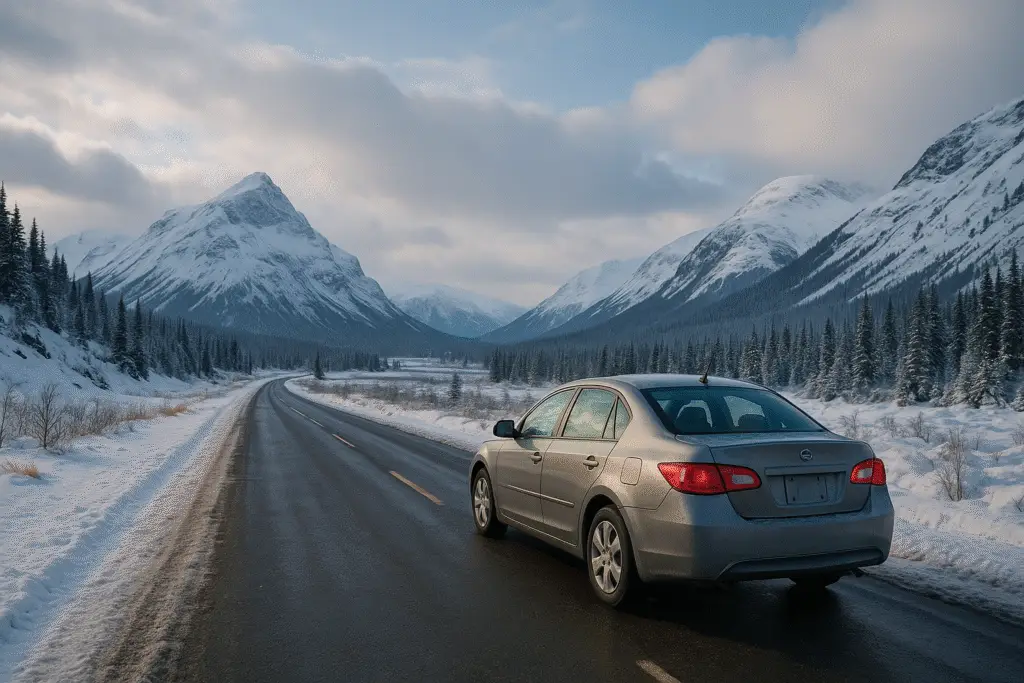
🌐 — Why Winter Road Trips Are Magical
Winter completely transforms the road-trip experience.
Landscapes change into minimalistic white worlds; frozen lakes turn into mirrors; mountain valleys become bright with fresh snow; towns glow with fireplaces and holiday lights. The quiet of winter, combined with the sharp beauty of frost and mountains, creates a sense of serenity and adventure that no other season matches.
A winter road trip is not only about reaching a destination — it is also about embracing the cold, the stillness, and that unmistakable sense of discovery that comes with driving through snow-dusted forests, icy fjords, volcanic highlands, and wild Arctic tundra. Winter Road Trips
This guide explores the most extraordinary winter road trips across the globe, each combining snowy nature, seasonal traditions, and stunning contrasts. From Scandinavian aurora routes to Canada’s frozen lakes, Alpine villages to Chilean volcano valleys, these journeys celebrate the world’s most magical cold-season scenery.
Let’s begin with Europe — the birthplace of Alpine winter culture. Winter Road Trips
🇪🇺 EUROPE — Alpine Culture, Frozen Lakes & Holiday Villages
Europe is winter road-trip heaven. Distances are short, infrastructure strong, and villages appear like lanterns between snowy peaks. The Alps dominate the centre of the continent, but Scandinavia, Scotland, Iceland, and Eastern Europe also deliver dramatic cold-season scenery.
Below are some of Europe’s most iconic winter routes.
🇳🇴 1) Tromsø → Lyngen Alps → Alta (Northern Lights Route)
Distance: ~350–450 km
This Arctic route feels like another world. Tromsø is lively with cafés, Arctic museums, and fishing heritage.
Drive north and you enter fjord country — steep mountains rising straight from dark blue water. In winter, the Lyngen Alps glow with white pyramids, and nights promise aurora dancing over the sea. Winter Road Trips
Highlights:
- Tromsø island & cathedral
- Lyngen Alps fjords & villages
- Night-sky aurora viewing
- Dogsled & reindeer areas
- Alta’s winter canyon country
The journey is calm, reflective, dreamlike.
🇮🇸 2) Reykjavík → Golden Circle → South Coast → Vík
Distance: 350–450 km
Iceland is a winter marvel: waterfalls rimmed with ice crystals, black-sand beaches dusted in snow, glaciers sweeping across volcanic plains. Leaving Reykjavík, you reach the Golden Circle — geysers erupting steam into snowy air, the rift valley at Þingvellir, then continue to the south coast’s cliffs and beaches. Winter Road Trips
Highlights:
- Þingvellir snow ridges
- Geysir steam plumes
- Gullfoss winter falls
- Waterfalls + basalt cliffs
- Vík black-sand winter shore
The low winter sun paints everything gold.
🇨🇭 3) Zurich → Lucerne → Andermatt → Furka / Oberalp Region
Distance: 200–350 km
A Swiss classic: Zurich’s polished urban scene turns into snowy lakeside Lucerne, then narrow mountain passes leading to small alpine towns. In deep winter, high passes close, but the Oberalp region remains a snow globe of quiet valleys and frozen rivers. Winter Road Trips
Highlights:
- Lake Lucerne
- Snowy timber towns
- Glacier viewpoints
- Hot chocolate lodges
🇦🇹 4) Salzburg → Hallstatt → Dachstein Alps → Bad Aussee
Distance: 150–250 km
Winter here is pure storybook: frozen lakes framed by steep rock, cable cars rising into snowfields, and villages wrapped in warm timber architecture. Hallstatt becomes atmospheric in winter — quieter, gentler, brighter. Winter Road Trips
🇮🇹 5) Venice → Cortina d’Ampezzo → Dolomite Passes (if open)
Distance: 200–300 km
Start among Venetian canals, then climb into the Dolomites. Cortina is a winter capital; nearby peaks — Tre Cime, Tofane — tower over frozen valleys. Winter Road Trips
Highlights:
- Venetian lagoon mist
- Alpine ski villages
- Pale Dolomite cliffs
🇫🇮 6) Rovaniemi → Saariselkä → Inari (Lapland Aurora Drive)
Distance: ~320 km
Finnish Lapland is calm, silent, sublime. Reindeer tracks cut across snowy forest roads. Nights are long — perfect for aurora. Inari is a Sámi cultural heart.
Highlights:
- Santa village
- Snow forest
- Sámi culture
- Frozen lakes
🇸🇪 7) Kiruna → Abisko National Park → Narvik
Distance: 150–300 km
An easy winter driving corridor with fjord finales. Abisko is known worldwide for stable aurora viewing. Narvik sits dramatically on a narrow fjord.
🇸🇰 → 🇵🇱 8) Bratislava → Tatra Mountains → Kraków
Distance: ~400 km
A central European winter gem: baroque Bratislava → Tatra peaks → Kraków’s medieval charm. Snowy mountains frame wooden churches and icy valleys.
🇸🇮 → 🇮🇹 9) Ljubljana → Lake Bled → Lake Bohinj → Dolomites
Distance: 200–350 km
Quiet winter lakes, hushed valleys, pastel towns. Postcard beauty at every turn.
European Winter Themes
- Perfect snow infrastructure
- Holiday villages + warm lodges
- Aurora in the far north
- Alpine peaks + frozen lakes
- Short drives → big scenery
Europe offers the easiest + most romantic winter road-trip settings.
🇺🇸🇨🇦 NORTH AMERICA — Snowy National Parks, Frozen Lakes, Holiday Towns
North America delivers large-scale winter scenery: the Rockies, Canadian wilderness, and East-coast villages decorated with lights. Roads are generally reliable; winter culture thrives. Winter Road Trips
🇺🇸 1) Denver → Rocky Mountain National Park → Estes Park → Grand Lake
Distance: 150–250 km
Denver’s skyline gives way to pine valleys and snowy granite peaks. Elk frequent meadows; frozen lakes reflect blue skies.
🇨🇦 2) Calgary → Banff → Lake Louise → Icefields Parkway
Distance: 300–400 km
The Icefields Parkway is one of the world’s finest winter drives.
Peaks crowd the road; ice sheets blanket river valleys; Lake Louise becomes a frozen mirror beneath Victoria Glacier.
Highlights:
- Banff winter streets
- Frozen Bow Valley
- Endless white world
🇺🇸 3) Vancouver → Whistler → Pemberton
Distance: 200–300 km
Sea-to-Sky Highway in winter feels mythical: coastal fjords → icy waterfalls → ski valleys → stillness.
🇺🇸 4) Seattle → Leavenworth → Snoqualmie Pass
Distance: 200–300 km
Urban Seattle → snowy pass → Bavarian village vibes in Leavenworth — lit with thousands of Christmas lights.
🇺🇸 5) Salt Lake City → Park City → Uintas
Distance: 100–200 km
Utah winter roads are scenic, surrounded by granite bowls and deep snow forests. Winter Road Trips
🇺🇸 6) Anchorage → Girdwood → Turnagain Arm → Kenai
Distance: 100–350 km
Arctic North America in full. Frozen inlet against jagged mountains; moose roam snow fields.
🇨🇦 7) Quebec City → Charlevoix → Tadoussac
Distance: 300–400 km
French heritage → snow river cliffs → icy St. Lawrence coast. Winter Road Trips
🇺🇸 8) Portland → Mount Hood → Hood River
Distance: 150–250 km
Volcano winter culture + snowy gorge trails. Winter Road Trips
North America Winter Themes
- Huge landscapes
- Alpine highways
- Frozen lakes + evergreen forests
- Long-distance calm
- Iconic national parks
Winter magnifies North American nature.
🇿🇦🇲🇦🇪🇬 AFRICA — Unexpected Snow & High-Altitude Winters
Winter road trips in Africa reveal an overlooked season. High mountains like the Atlas, Drakensberg, and Kilimanjaro foothills offer crisp air, occasional snow, and quiet landscapes.
🇲🇦 1) Marrakech → High Atlas → Ouarzazate
Distance: 200–300 km
Snowy peaks soar above clay villages; warm tajine restaurants meet crisp mountain air.
🇿🇦 2) Johannesburg → Drakensberg → Lesotho Highlands
Distance: 300–500 km
A dramatic ascent: grassy hills → basalt cliffs → isolated snowy plateaus in winter.
🇪🇬 3) Cairo → Sinai Mountains → St. Catherine
Distance: 450+ km
Desert winter brings cold nights, starlit silence, and biblical mountains turning pink at sunrise.
🌏 ASIA — Snowy Kingdoms, Frozen Lakes & Sacred Mountains
Asia is wildly diverse in winter:
from Siberian frost steppes to Japanese powder mountains, from Himalayan valleys to Korean pine forests. Winter shifts culture — temples feel quieter, landscapes sharper, and cities cozier with hot springs and steaming street food.
Here are the most incredible winter road routes across Asia. Winter Road Trips
🇯🇵 1) Sapporo → Otaru → Niseko → Lake Toya (Hokkaido Loop)
Distance: ~250–350 km
Hokkaido is a winter dream: deep powder snow, volcanic peaks, and hot-spring villages.
Start in Sapporo, a city known for its winter festival, beer heritage, and lantern-lit streets.
Drive to Otaru, a charming canal town glowing under snow.
Continue to Niseko, one of the world’s premier ski destinations — famous for perfect dry powder.
Finish at Lake Toya, where steam rises from volcanic hot springs, surrounded by white hills.
Highlights:
- Sapporo Snow Festival
- Otaru ice-lit canal district
- Niseko powder skiing
- Lake Toya volcanic crater lake
One of the easiest, most rewarding winter drives on Earth. Winter Road Trips
🇯🇵 2) Nagano → Matsumoto → Kamikochi winter valley
Distance: ~120–200 km
Nagano prefecture hosted the 1998 Winter Olympics and remains a snowy paradise.
Matsumoto Castle looks surreal in winter — black walls capped with fluffy snow.
The valley of Kamikochi, partially closed in midwinter, is still reachable via nearby winter trails and onsen towns.
Nature themes:
- Powder forests
- Historic castle town
- Quiet mountain valleys
🇯🇵 3) Tokyo → Nikko → Aizu → Yonezawa
Distance: ~350–450 km
This northeast loop moves from Tokyo skyscrapers into temple-mountain culture.
Nikko’s shrines glow in snowy cedar forests; Aizu region features samurai heritage; Yonezawa is known for winter cuisine and hot springs.
🇰🇷 4) Seoul → Seoraksan National Park → Sokcho
Distance: ~160–220 km
Seoul transforms into a winter-lit metropolis; head east to Seoraksan — granite peaks soaring above pine valleys.
Snow here is peaceful; frozen streams carve through quiet forests.
Highlights:
- Buddhist temples
- Frozen ridges
- Coastal town Sokcho
A scenic, compact winter escape.
🇰🇷 5) Busan → Gyeongju → Andong → Taebaek
Distance: ~400–500 km
Busan’s beaches trade palm breezes for winter cliffs; inland, Gyeongju’s ancient tomb hills dust with snow.
Taebaek Mountains host Korea’s coldest areas — stark and cinematic.
🇨🇳 6) Harbin → Snow Country → Yabuli → Changbai Mountains
Distance: 450–700 km
Northeast China holds some of Asia’s harshest, most beautiful winters.
Harbin hosts the world-famous ice festival — an illuminated city of ice towers.
Drive to snowy Yabuli — China’s top ski area — then onward to Changbai Mountains, where sacred crater lakes lie beneath volcanic rims.
Highlights:
- Giant ice palaces
- Deep forests
- Volcanic plateaus
- Siberian influence
🇨🇳 7) Chengdu → Xiling Snow Mountain → Siguniangshan
Distance: 200–350 km
Chengdu’s mild urban winter shifts abruptly into snowy peaks west of the city.
Xiling Snow Mountain offers accessible winter landscapes; further on, Siguniangshan (Four Sisters Mountains) rises in dramatic Himalayan-style spires.
Quiet villages, yak pastures, river valleys — all shimmering under snow.
🇨🇳 8) Lhasa → Yamdrok Lake → Gyantse → Shigatse
Distance: 350–450 km
Winter in Tibet means crystal air, quiet roads, and frozen turquoise lakes.
The crossing from Lhasa to Yamdrok Lake is one of the world’s most spectacular viewpoints.
Nature themes:
- High-altitude passes
- Frozen sacred lakes
- Snowy monastery towns
A deeply spiritual journey.
🇳🇵 9) Kathmandu → Nagarkot → Dolakha → Jiri
Distance: ~150–200 km
Leave the busy Kathmandu Valley; pine forests begin; vistas open toward Himalayan walls that glow pink at sunset.
Dolakha + Jiri are atmospheric in winter — peaceful, snowy, simple. Winter Road Trips
🇮🇳 10) Shimla → Kufri → Narkanda → Sangla (Himachal Pradesh)
Distance: 250–400 km
Northern India offers incredible winter drives through deodar forests and remote villages.
Snow-covered orchards, steep cliffs, and traditional wooden houses create deep charm.
Continue toward Sangla Valley — white peaks tower above stone hamlets.
🇮🇳 11) Srinagar → Gulmarg → Sonmarg → Kargil
Distance: 300–400 km
This Kashmir road is a winter masterpiece: snowy meadows, frozen pine valleys, and Himalayan walls.
Gulmarg is India’s ski heart. Winter Road Trips
🇰🇿 / 🇰🇬 12) Almaty → Shymbulak → Kolsai Lakes
Distance: 120–300 km
Kazakhstan’s modern city of Almaty lies right beside the mountains.
Shymbulak ski village sits above snowy gorges; Kolsai Lakes shine dark and icy beneath pine slopes.
🇺🇿 13) Tashkent → Chimgan → Charvak Lake
Distance: ~120–150 km
Uzbekistan’s winter scenery includes quiet white valleys, frozen lakes, and walnut forests.
Charvak reservoir becomes a still, reflective bowl. Winter Road Trips
Asia Winter Themes
- Aurora in Hokkaido
- Powder mountains
- Frozen lakes
- Temples in snow forests
- High-altitude quiet
Asia in winter blends spiritual stillness with wild contrast.
🌍 MIDDLE EAST — Snowy Peaks & Desert Winter Quiet
Winter here is unusual, subtle, and soulful. Snow dusts mountains, desert nights turn frigid and star-filled, and ancient holy sites feel serene beneath cold skies.
🇹🇷 1) Istanbul → Bolu → Cappadocia (Snowy Fairy Chimneys)
Distance: 600–750 km
Urban Istanbul → rolling hills → Anatolian plateaus.
Cappadocia’s spires shine under snow — a surreal lunar winter world.
Highlights:
- Underground cities
- Snowy valleys
- Sunrise overlooks
Evenings in cave hotels feel warm and secluded.
🇹🇷 2) Ankara → Erzurum → Kars (Eastern Heritage Route)
Distance: ~900 km
This is one of the most atmospheric winter drives in Turkey.
Erzurum is a high-altitude winter hub; Kars is a snowy, windswept town with dramatic stone architecture.
Further east lies the ancient Armenian capital of Ani — dramatic ruins above a frozen gorge.
🇮🇷 3) Tehran → Dizin → Shemshak → Mount Damavand Region
Distance: 100–200 km
Iran’s winter mountains lie incredibly close to the capital.
Within hours you can reach steep snow valleys + ski villages.
Mount Damavand — a perfect volcanic cone — dominates the skyline.
🇯🇴 4) Amman → Dana → Petra (quiet winter trails)
Distance: ~300 km
Winter is low season, meaning Petra’s canyons glow in peace.
Dana Biosphere Reserve brings frosted stone villages + winter clouds hugging cliffs.
🇱🇧 5) Beirut → Cedars → Qadisha Valley
Distance: ~120–170 km
Beirut’s Mediterranean urban life → snowy cedar forests → holy Qadisha gorge.
Ancient monasteries sit beneath winter cliffs. Winter Road Trips
🇴🇲 6) Muscat → Jebel Akhdar → Jebel Shams
Distance: 200–350 km
Despite desert surroundings, high-altitude Oman receives winter frost.
Deep canyons, rugged cliffs, and quiet plateaus create a dramatic contrast with Muscat’s warm coast. Winter Road Trips
Middle East Winter Themes
- Desert nights + frost
- High plateaus
- Snow on ancient sites
- Quiet canyons
A subtle but hauntingly beautiful winter world.
🌏 OCEANIA — Southern Winter Roads (For June–August)
Because the Southern Hemisphere winter occurs June–August, road-tripping here in the “opposite season” is a fascinating flip.
Australia and New Zealand both offer atmospheric cold-season journeys — snowy alps, rugged coasts, and deep rainforest.
🇳🇿 NEW ZEALAND — Winter Mountains & Wild Coasts
New Zealand is famous for dramatic landscapes — fjords, peaks, volcanoes.
Winter adds quiet purity. Winter Road Trips
🇳🇿 1) Christchurch → Lake Tekapo → Mount Cook National Park
Distance: ~300–350 km
Drive inland: plains fade into snowy mountains.
Lake Tekapo’s turquoise waters glow under frosted peaks.
Mount Cook National Park brings giant glaciers. Winter Road Trips
Highlights:
- Lupin fields (summer)
- Observatory + star nights
- Aoraki snow world
🇳🇿 2) Queenstown → Wanaka → Haast → West Coast
Distance: 250–350 km
Queenstown’s winter energy → Wanaka calm → icy rainforest → stormy coast.
A route full of glassy lakes surrounded by vertical rock. Winter Road Trips
🇳🇿 3) Wellington → Tongariro National Park → Taupō
Distance: 400–500 km
Drive volcanic heartlands capped with snow.
Tongariro’s cones glow beneath clear winter skies. Winter Road Trips
🇦🇺 AUSTRALIA — Alpine Highlands & Wild Coast
Australia’s mountains receive snowfall June–September — creating a rare winter scene.
🇦🇺 1) Melbourne → Mount Hotham → Dinner Plain
Distance: ~350 km
Victoria’s most iconic winter drive.
Mountain curves rise into snow valleys lined with rustic lodges.
🇦🇺 2) Canberra → Kosciuszko National Park
Distance: 200–300 km
Snow gums, frozen rivers, and big-sky alpine scenery.
Quiet winter magic.
🇦🇺 3) Hobart → Mount Field → Lake St Clair
Distance: 200–250 km
Tasmania’s southwest wilderness feels ancient — moss valleys, black lakes, icy eucalyptus.
Oceania Winter Themes
- June–August winter
- Snow alps + fjords
- Deep rainforest
- Quiet roads
New Zealand = the winter wonderland of the Southern Hemisphere.
🌎 SOUTH AMERICA — High Volcanoes, Empty Plateaus & Andean Snow
South America’s winter landscapes offer some of the most dramatic road-trip scenery on earth. While the northern half of the continent remains largely warm, the southern regions of Chile and Argentina experience a true winter climate — with snow in the Andes, icy fjords in Patagonia, and volcanic valleys glowing under white peaks. Winter Road Trips
Winter road travel here feels raw, cinematic, and deeply adventurous.
Villages sit beneath 6,000-meter volcanoes; condors circle snowy cliffs; lakes gleam like polished stone under pale skies.
Below are some of South America’s most memorable winter road journeys. Winter Road Trips
🇨🇱 1) Santiago → Cajón del Maipo → Termas Valle Nevado
Distance: ~200–260 km
The Chilean capital lies at the foot of the Andes, meaning that within minutes of leaving its urban grid, the road rises into steep valleys.
Cajón del Maipo is a gateway canyon framed by snow peaks and icy rivers.
Continue upward: curves become tighter; peaks close in; pine trees appear; and thermal springs lie beneath white cliffs.
Valle Nevado is one of the top ski areas in South America — a balcony above the Andes. Winter Road Trips
Winter themes:
- Big mountain viewpoints
- Hot springs
- Deep valleys & narrow ridges
A compact yet unforgettable winter route.
🇨🇱 2) Temuco → Villarrica → Pucón → Huilo Huilo Reserve
Distance: 250–350 km
Central Chile’s lake district is breathtaking in winter.
Volcanoes dominate the skyline — especially Villarrica, with its perfect cone shape.
Pucón is a lively adventure town that slows down in winter, offering quiet hot-spring resorts surrounded by snow-covered rainforest.
Continue toward Huilo Huilo, a private biosphere reserve blending waterfalls, wooden lodges, and deep southern beech forests dressed in white.
Winter highlights:
- Snow volcano silhouette
- Forest cabins
- Frozen waterfalls
It feels like Patagonia-lite — magical and accessible.
🇨🇱 / 🇦🇷 3) Puerto Varas → Ensenada → Paso Cardenal Samoré → Bariloche (Chile → Argentina)
Distance: ~300 km
One of the most incredible cross-border winter drives in the southern hemisphere.
Start in Puerto Varas, overlooking Lake Llanquihue and massive Osorno Volcano.
Drive east through snowy forests and lakes, then climb into the Andes at Paso Samoré — peaks loom close; snow fans off ridges; wind sculpts patterns on the asphalt.
Descending into Bariloche, the scenery shifts to Argentina’s lake district — alpine lakes beneath chocolate-colored wooden chalet towns.
Winter themes:
- Volcanoes
- High passes
- Snow lakes
- Chocolate cafés
A European-style winter road trip with Patagonian scale.
🇦🇷 4) Bariloche → Villa La Angostura → San Martín de los Andes (Seven Lakes Route)
Distance: ~200 km
The legendary “Ruta de los Siete Lagos” is stunning year-round, but winter adds a dreamlike quiet.
Frozen lakes appear in calm valleys; snowy lenga forests surround the road; sunlight turns peaks silver.
San Martín de los Andes feels gentle and calm — a place of wooden houses and still water. Winter Road Trips
Best features:
- Mirror lakes
- Snow peaks
- Peaceful villages
A slow, scenic winter masterpiece.
🇦🇷 5) El Calafate → El Chaltén (Los Glaciares)
Distance: ~210 km
Southern Patagonia is never truly mild, but winter transforms it into a sharp, empty landscape where wind sweeps across plains and clouds tear against the peaks. Winter Road Trips
The road from El Calafate to El Chaltén is hypnotic — straight lines across desert tundra, then suddenly, Fitz Roy appears — a saw-tooth granite crown rising from white valleys.
Winter themes:
- Harsh beauty
- Silence
- High wind
- Immense space
A trip for minimalism-lovers.
🇦🇷/🇨🇱 6) Punta Arenas → Puerto Natales → Torres del Paine
Distance: ~350 km
Torres del Paine is one of the most recognizable mountain silhouettes in the world.
In summer, trails are busy; in winter, the region becomes empty, still, and icy blue.
Driving north from Punta Arenas through rolling steppe, guanacos graze in herds; snow collects in shallow patches; clouds reveal huge icy towers piece by piece.
Puerto Natales provides a warm base; from there, the road into the park feels mythic.
Winter highlights:
- Granite towers
- Glacial lakes
- Frozen pampas
- Condor cliffs
A pilgrimage into wild winter.
🇦🇷 7) Ushuaia → Tierra del Fuego National Park → Tolhuin
Distance: 150–200 km
The “End of the World Road Trip.”
Ushuaia is the world’s southernmost city, enclosed in a horseshoe by snow peaks and icy ocean.
Drive into the national park where lenga forests bow under snow, and beavers build frozen dams.
Continuing northeast toward Tolhuin, the landscape becomes stark and tundra-like. Winter Road Trips
Winter themes:
- Remote frontier vibe
- Deep silence
- Subpolar atmosphere
Raw, poetic, unforgettable.
🇨🇱 8) Coyhaique → Carretera Austral → Puyuhuapi → Queulat National Park
Distance: 200–350 km
The Carretera Austral is one of the most remote and extraordinary roads on Earth — a ribbon through icy rainforest, granite towers, and wild rivers.
In winter, traffic is extremely light, giving the journey an almost mystical quality.
From Coyhaique, snow coats the valleys; waterfalls turn to crystalline threads; and the road curves beneath fjord walls.
At Queulat, a hanging glacier plunges into fog — epic and mysterious.
Puyuhuapi is a tiny thermal-village refuge, complete with smoky woodstoves and steep, snowy shores.
Winter themes:
- Remote fjords
- Hanging glaciers
- Mossy snow forest
Pure Patagonia.
🇨🇱 9) Punta Arenas → Cabo Froward (End of Continental America)
Distance: varies
For the true winter adventurer, driving south from Punta Arenas and hiking toward Cabo Froward puts you at the southernmost point of the continental Americas.
The road + trekking combination is extremely raw — battered by wind, surrounded by icy seas and bare mountain ridges.
It’s a route of isolation and endurance; winter here feels ancient.
🌎 WHY SOUTH AMERICA WINTER ROAD TRIPS ARE SPECIAL
South America’s winter driving is defined by:
✅ Empty wilderness
✅ Immense peaks
✅ Harsh beauty
✅ Dramatic lake–volcano landscapes
✅ Frontier spirit
You feel small — yet deeply connected to land and sky.
Snow highlights geology: volcano cones look sharper, cliffs more dramatic, lakes darker and deeper.
Patagonian winter = cinematic minimalism.
🌎 THEMATIC HIGHLIGHTS OF WINTER ROAD TRAVEL
Winter road trips are not only about snow — they are about perspective.
The season shifts the entire emotional palette of travel.
Below: global themes that define winter roads everywhere.
✅ 1) Silence
Summer travel often feels energized — markets, crowds, traffic, voices.
Winter replaces that with stillness.
Forests fall quiet under snow.
Lakes freeze, muffling sound.
Villages sleep.
Roads grow empty.
Travel becomes more internal, introspective.
✅ 2) Contrast
Winter enhances contrast:
- Warm café → cold air outside
- City bustle → silent countryside
- Dark basalt → bright snow
Sunlight sits low, shadows long; everything feels more sculptural.
✅ 3) Light & Color
Winter light is uniquely soft —
gold at noon, lavender at dusk, mysterious blue between.
Snow refracts color; mountains glow pastel; the world looks painted.
Night is equally rich — skies glitter; aurora dances; stars sharpen in freezing air.
✅ 4) Culture & Seasonality
Many winter regions have:
- Hot spring traditions
- Lodge culture
- Wool crafts
- Holiday villages
- Winter rituals
From Scandinavian cheer to Hokkaido snow festivals, culture adapts beautifully to the season — and travelers naturally join the rhythm.
✅ 5) Wildlife
Winter reveals:
- Tracks in snow
- Wolves + foxes hunting
- Arctic birds
- Reindeer + elk migration
With foliage gone, animals are easier to spot — especially in Nordic and North American forests.
✅ 6) Still Roads = Intimate Travel
There are fewer people on the highway.
You become part of the landscape rather than passing through it.
Winter roads slow you down — literally and emotionally — leading to deeper connection.
✅ 7) Simple Beauty
Winter removes visual clutter; everything becomes pure form:
- Lines of cedar
- Black rivers
- White fields
- Hard mountains
It’s minimalist nature at its finest.
🌎 WINTER ROAD TRAVEL — PRACTICAL NOTES
Driving in winter demands preparation — especially in mountains or remote areas.
Key realities:
- Short daylight hours
- Cold temperatures
- Snow + ice
- Rapid weather change
- Limited services
But with sensible planning, winter road trips are safe and spectacular.
Below are universal winter travel tips (detailed list follows later).
🌡 Temperature Awareness
Winter road trips vary dramatically by region:
| Region | Typical Winter Range |
|---|---|
| Hokkaido, Japan | -5°C to -25°C |
| Iceland | -2°C to -15°C |
| Norway (Arctic) | -5°C to -30°C |
| Canadian Rockies | -10°C to -30°C |
| Patagonia | -5°C to +5°C |
| Alps | -5°C to -20°C |
| Tibet | -10°C to -25°C |
Knowing expected conditions prevents unpleasant surprises.
🚗 Driving Skill & Confidence
Winter road travel requires comfort with:
- Snow
- Ice
- Fog
- Wind
You drive slower.
You brake earlier.
You respect weather.
The reward: stunning landscapes with almost no traffic.
🔥 Atmosphere & Emotion
Winter evokes feelings other seasons don’t:
- Reflection
- Serenity
- Mystery
You feel in dialogue with weather, mountains, and time.
A snowy road is a meditation.
❄️ MORE WINTER THEMES — HOW LANDSCAPE SHAPES EXPERIENCE
Winter road trips reveal how geography and culture interact. Cold reshapes human movement, wildlife patterns, and architecture. Roads become storytelling tools.
Below: deeper thematic observations from snowy highway travel around the world.
✅ 8) Time Feels Different
Winter slows everything down.
Roads are slower; daylight is shorter; nights grow long.
This creates a different rhythm of travel — meals become longer, evenings quieter, mornings deliberate.
The stillness is not inactivity, but presence.
In Iceland and Norway, many travelers speak of time stretching — days feel rich even though sunlight is brief.
By contrast, long Arctic nights create deep introspection.
✅ 9) Geography Becomes More Apparent
In summer, forests can hide mountain structure.
In winter, snow outlines every ridge and valley, exposing the skeleton of the land.
Mountain profiles sharpen; volcanic cones appear clean; glaciers glow blue against white snow.
Winter makes topography easier to read.
✅ 10) Weather is Dynamic Storytelling
Summer weather is predictable; winter is a narrator of mood:
- Fog rolling across frozen lakes
- Snowstorms swallowing mountains
- Sudden sunbursts lighting peaks gold
- Clear nights filled with aurora
Driving becomes a sequence of visual chapters — no two hours feel the same.
✅ 11) Night Travel Becomes Mythic
Cities look magical in winter nights —
streetlamps glowing against snowflakes, cafés steaming, windows lit warmly.
Beyond cities, winter night drives create silence, isolation, and beauty.
- The Milky Way in Patagonia
- Aurora along Norwegian fjords
- Moonlight turning snowfields silver
It feels like traveling through myth.
✅ 12) Architecture + Climate
Winter culture shapes building style:
- Steep roofs → Alps & Japan
- Thick wooden chalets → Rockies
- Turf houses → Iceland
- Low stone homes → Andes
Driving through winter settlements reveals how humans adapt to cold over centuries.
🌨 WINTER ROAD TRIP PLANNING — GLOBAL PRINCIPLES
Regardless of continent, successful winter road travel follows universal preparation patterns. Planning ahead allows you to enjoy scenery without stress.
Below: essential pillars.
✅ 1) Seasonal Windows
Winter is not uniform.
Even within the same season, certain roads are only open during certain months.
Examples:
- Norway Arctic roads → open
- Iceland Highlands → closed
- Rocky Mountain passes → sometimes seasonal
- Tibet → limited access in storms
Research expected closure dates.
✅ 2) Know Your Road Type
Winter roads vary dramatically:
A) Coastal Roads
Often milder; dramatic cliffs + ocean.
Examples:
- Norway fjords
- Chilean Patagonia coast
B) Mountain Passes
Steep, icy, potentially closed.
Examples:
- Alps
- Andes
C) Plateau Roads
Cold, windy, wide sky.
Examples:
- Mongolia
- Argentine Patagonia
D) Forest Roads
Quiet, snowy, protected from wind.
Examples:
- Japan Hokkaido
- Finland Lapland
Each requires different pace + awareness.
✅ 3) Daylight Strategy
In winter, sunlight is limited:
- Scandinavia: very short days
- Japan: modest daylight
- Rockies: medium
- Patagonia: medium–short
Plan arrival at viewpoints before dusk.
Night driving is atmospheric — but icy roads demand care.
✅ 4) Small Distances = Big Experiences
Winter roads emphasize quality vs. quantity.
A 150 km day can feel full — landscapes shift, light changes, weather evolves.
Unlike summer road trips where you may cover 300–500 km per day, winter is about slow immersion.
✅ 5) Hot Springs + Warm Havens
Around the world, winter road cultures create warm “nodes” along routes:
- Japan → onsen towns
- Iceland → geothermal pools
- Alps → spa villages
- Chile → volcanic hot springs
These are more than attractions; they are transitions — spaces where body & mind reset.
❄️ THE NATURE OF WINTER ROADS — TYPES & CHARACTER
Winter road trips are not monolithic — each type pairs with certain feelings.
✅ A) The Alpine Snow Road
Feeling: High peaks, crisp air, frozen rivers
Regions: Alps, Rockies, Andes, Japan Alps
Keywords: dramatic, pure, icy light
✅ B) The Arctic Coastal Road
Feeling: Black sea, white mountains, aurora
Regions: Norway, Iceland, Alaska
Keywords: mystical, elemental
✅ C) The Volcanic Winter Road
Feeling: Steam + snow, lava domes, fierce beauty
Regions: Hokkaido, Iceland, Chile
Keywords: contrast, surreal
✅ D) The Plateau Winter Road
Feeling: Endless horizon, minimal color
Regions: Mongolia, Patagonia, Tibet
Keywords: silent, spacious
✅ E) The Forest Winter Road
Feeling: Snow tunnels, soft quiet, wildlife
Regions: Finland, Sweden, Rockies
Keywords: calm, intimate
Each road type changes how winter feels.
Alpine routes amplify grandeur; forest routes create coziness; plateau roads evoke solitude.
Most epic winter journeys combine multiple types — like Iceland’s south coast (volcanic + coastal + glacial).
❄️ EMOTIONS ONLY WINTER ROADS DELIVER
Winter road trips cultivate specific emotional tones not found in summer:
✅ 1) Stillness
Snow absorbs sound → time slows.
✅ 2) Clarity
Cold air sharpens vision → landscapes appear etched.
✅ 3) Solitude
Fewer travelers → deeper presence.
✅ 4) Resilience
Nature feels powerful → travelers feel alive.
✅ 5) Appreciation
Warmth becomes luxury → tea tastes better; wool feels softer.
Everything is heightened.
🔭 WINTER SKY — A COMPANION
Night skies define winter travel:
- Arctic = aurora
- Tibet = star fields
- Patagonia = deep southern sky
Driving beneath galaxies feels ancient — grounded and cosmic.
🦌 WINTER WILDLIFE — ROADSIDE MOMENTS
Winter concentrates wildlife along valleys & roads:
- Moose + caribou → Canada
- Reindeer → Lapland
- Condors → Andes
- Foxes → Hokkaido
- Penguins → Tierra del Fuego
Tracks decorate snow like stories.
❄️ WINTER ROAD TRIP PRACTICALITY — HOW TO TRAVEL WELL
Winter road trips are deeply rewarding, yet they come with a unique set of physical and logistical challenges.
Understanding these helps you travel smoothly, confidently, and safely.
Below: global best practices gathered from winter travelers in Scandinavia, Japan, the Alps, Rockies, Andes & beyond.
🧭 1) Understanding Winter Road Conditions
Snow driving is only a part of winter road reality. The real challenge is the variability of conditions.
You may encounter:
- Dry pavement
- Light snow
- Packed snow
- Ice
- Black ice
- Wet snow → slush
- Blow-snow (wind pushing snow across the road)
- Fog
Often these conditions alternate every 15–20 km.
Being prepared mentally = success.
🚗 2) Vehicle Type & Tire Setup
✅ Tires
Winter tires are the #1 safety factor — more important than AWD.
Regions that expect snow will commonly require:
- Snow tires (Europe, Japan, North America)
- Studded tires (Arctic roads)
- Chains where required (Alps, Andes)
All-season tires are NOT enough for most serious winter regions.
✅ AWD vs. 4×4
- AWD is ideal for most paved winter roads.
- 4×4 is useful on steep or remote Andean, Patagonian, or Arctic routes.
But remember:
AWD helps you go →
Winter tires help you stop.
Stopping is what keeps you safe.
🌨 3) Speed & Spacing
Winter road travel is slower by nature —
and that’s part of its beauty.
General guidance:
- Increase following distance (3× summer distance)
- Brake earlier
- Turn gradually
- Drive by condition, not speed limit
If the scenery is beautiful — slow down and enjoy.
🔦 4) Daylight Management
Winter days are short, especially in the north.
Approximate daylight windows:
- Norway Arctic: 3–5 hours (Dec)
- Iceland: 4–6 hours (Dec)
- Rockies: 8–9 hours (Dec)
- Patagonia: 8–10 hours (Jul–Aug)
- Hokkaido: 8–10 hours (Jan–Feb)
Because of this:
✅ Start early
✅ Prioritize high-mountain sections during day
✅ Keep night driving optional
Night driving is beautiful, but ice is harder to see.
Plan your route around safe daytime windows.
🔥 5) Warmth Strategy
Winter travel isn’t about suffering —
it’s about harvesting comfort from cold.
Think in layers:
- Base: wool or synthetic
- Mid: fleece or wool
- Outer: waterproof + windproof
- Accessories: hat, scarf, gloves
Keep:
- Thermos
- Blanket or sleeping bag
- Pocket warmers
Warm clothes turn winter from challenge → joy.
🔌 6) Essential Gear Checklist
✅ Vehicle Essentials
- Winter tires
- Snow brush + scraper
- Headlamp
- Jumper cables
- De-icer spray
- Basic toolkit
- Snow chains (where required)
✅ Personal Essentials
- Extra socks
- Insulated gloves
- Thermos
- Snacks
- Backup powerbank
✅ Navigation
- Offline maps
(Winter storms can limit signal)
Paper maps still shine in deep winter.
❄️ 7) Fuel & Food Strategy
In remote winter areas:
- Gas may be sparse
- Stores may be closed
- Restaurants seasonal
Good practice:
- Refill at half tank
- Carry snacks + water
This gives flexibility in storms or closures.
🧊 8) Ice Management — Reading the Road
Winter roads speak in texture.
Shiny surface = possible ice
Matte surface = packed snow → more traction
Bridge decks freeze first.
Shaded forest roads stay icy longer.
If unsure:
- Slow down
- Light, smooth steering
- Gentle throttle
- No sudden braking
You are not racing — winter is poetry, not speed.
🌨 9) Storm Behavior
If visibility drops:
- Slow or stop
- Hazard lights ON
- Stay far from oncoming lane
A storm can change everything in minutes.
Pausing for safety is part of the winter rhythm.
🏔 10) Mountain Driving Essentials
Mountain areas add:
- Steep switchbacks
- Wind gusts
- Avalanche zones
Golden rule:
Ascend + descend in control —
Never rush.
Descending in low-gear helps stability.
In avalanche-prone countries (Norway, Switzerland, Japan), closures are common → respect signage.
📡 11) Connectivity & Isolation
Some of the most magical winter drives occur in remote regions:
- Patagonia
- Arctic Norway
- Iceland’s east
- Andes passes
Signal can be limited.
Download maps offline.
Tell someone your plan.
The silence is part of the gift.
🏨 12) Overnight Strategy
Winter road trips pair beautifully with:
- Alpine cabins
- Fjord villages
- Hot-spring towns
- Glacier lodges
Even small towns feel atmospheric —
warm interiors glowing against snow.
Booking ahead is wise in:
- Japan
- Alps
- Rockies
But Patagonia, Iceland, and Andes often run quieter in winter.
❄️ 13) Cultural Rhythm of Winter Travel
Winter road trips follow a different emotional + cultural rhythm than summer journeys.
Where warm-season travel leans outward — festivals, hiking, swimming — winter turns inward.
You are invited to:
- Slow down
- Appreciate fewer moments
- Enjoy conversation & silence
- Feel time deepen
In Scandinavian, Japanese, and Alpine traditions, winter is a season of balance — quiet outdoors + cozy indoors.
Driving between landscapes lets you experience both.
🏠 Small Town Culture
Winter road trips often move through towns shaped by cold seasons:
- Wool markets
- Hearth-cooking
- Seasonal pastries
- Hot drinks at dusk
Villages glow like embers against frozen backgrounds.
Whether it’s:
- A Norwegian fjord cabin,
- A Banff timber lodge,
- A Japanese onsen inn,
- A Slovenian farm house —
you feel how winter creates community.
🔥 Seasonal Comfort Food
Winter road travel is tied to food, often simple + warm:
- Soups, broths
- Fire-baked breads
- Slow stews
- Mountain cheeses
- Thick hot chocolate
Meals feel earned after a day in cold, becoming anchors of memory.
Even humble road cafés can feel sacred in winter.
🌌 Night Experience — More Than Darkness
Night is an essential part of winter travel, not simply the absence of light.
🌟 Stars
Cold, dry air = crisp constellations;
the Milky Way stretches across remote valleys.
💚 Aurora
In northern regions (Iceland, Norway, Finland, Yukon, Alaska), green curtains pulse against mountains — a cosmic dance.
🌕 Full Moon
Snow under moonlight glows blue-white;
shadow lines stretch across ice fields;
the world becomes surreal.
Night is not downtime — it is half the experience.
🦋 Slow Exploration: “Short Distances, Deep Journeys”
Unlike summer road trips — where people often chase long distances —
winter is defined by slow exploration.
A typical day might be:
- Drive 70–150 km
- Visit one village
- Walk a frozen lake shore
- Drink something warm
- Watch the sky
It is less about covering ground
→ more about absorbing atmosphere.
🌍 WHEN TO GO — Seasonal Breakdown
Winter is not the same everywhere; timing shapes the journey.
| Region | Best Period |
|---|---|
| Scandinavia | Dec–Mar |
| Iceland | Nov–Mar |
| Alps | Dec–Mar |
| Rockies | Dec–Mar |
| Hokkaido | Jan–Feb |
| Himalaya (accessible regions) | Dec–Feb |
| Patagonia | Jun–Aug |
| New Zealand Alps | Jun–Aug |
| Andes North | May–Aug |
Shoulder months (Nov, Mar, May) can be excellent if you prefer fewer storms + quieter roads.
🧭 WINTER ROAD TRIP CHECKLIST
✅ Pre-Trip
- Check road + weather reports
- Download offline maps
- Pack layers + blankets
- Confirm fuel station distribution
- Bring reusable thermos + snacks
✅ On the Road
- Drive slower than you think
- Keep distance
- Use lower gears downhill
- Stop often — enjoy views
- Never rush mountain sections
✅ Post-Drive
- Warm up gradually
- Dry gloves + socks
- Charge devices
A good winter road trip feels like a cycle of exposure + recovery →
cold → warm → cold → warm.
Very human.
🚫 WHEN NOT TO DRIVE
Winter road travel requires judgment.
Do not continue when:
- You cannot see pavement
- Winds are strong enough to sway your vehicle
- Visibility drops under ~20–30 m
- Avalanche warnings are active
- You feel nervous or rushed
Stopping is not failure →
it is wisdom.
🌐 BEST REGIONS FOR BEGINNERS
If you want an easier introduction to winter road travel:
✅ Japan – Hokkaido
→ Exceptional snow management, short distances, onsen culture.
✅ Switzerland / Austria / South Germany
→ Good infrastructure, predictable conditions, short hops.
✅ Canada – Banff / Jasper corridor
→ Wide roads, spectacular scenery, good services.
✅ New Zealand South Island (winter)
→ Good balance of snow + mild valleys.
🌐 BEST REGIONS FOR EXPERIENCED DRIVERS
For adventurous winter explorers:
✅ Iceland South + North Coast
✅ Norway Arctic fjords
✅ Patagonia (Argentina + Chile)
✅ High Andes passes
✅ Siberia (experienced only)
Remote, wild, minimalist.
🔥 WHY WINTER ROAD TRIPS ARE TRANSFORMATIVE
Winter road trips change you because they restore perspective:
you glimpse the planet as it was before noise, crowds, and fast life.
You feel:
- Small beside mountains
- Deeply alive in cold air
- Connected to land + sky
- Grateful for warmth + food
- Present in each moment
The farther you go from cities,
the more silence grows —
not empty, but full of clarity.
Winter reveals what is essential.
🌨 THE PHILOSOPHY OF WINTER TRAVEL
Winter reminds us:
- Beauty can be simple
- Strength can be quiet
- Movement and stillness coexist
A winter road teaches that time is not something to fight —
it is something to join.
You follow:
- The light
- The fire
- The stars
Life becomes primitive in the best way.
🏁 CONCLUSION — THE WORLD IN WHITE
From:
- Norway’s aurora fjords
- Canada’s frozen lakes
- Japan’s quiet onsens
- Alps’ snowy passes
- Patagonia’s jagged towers
- Andes’ volcano valleys
- Iceland’s black-white beaches
Winter road trips reveal a raw, poetic version of Earth.
Landscapes become reduced to line + texture + light —
a minimalist canvas.
The world feels larger in winter,
yet also more intimate.
Cities fade.
Mountains rise.
Stars burn brighter.
Silence deepens.
You return changed.
 Related Articles
- Kakslauttanen Arctic Resort
- Top 10 Most Unique Places to Stay in Europe
- 10 Incredible Castles Around the World